NASDAQ 100
The Nasdaq 100 attempted to rally early in the week but ultimately tumbled as market fear intensified. With U.S. interest rates continuing to rise, the index has now broken below the key 23,800 level.
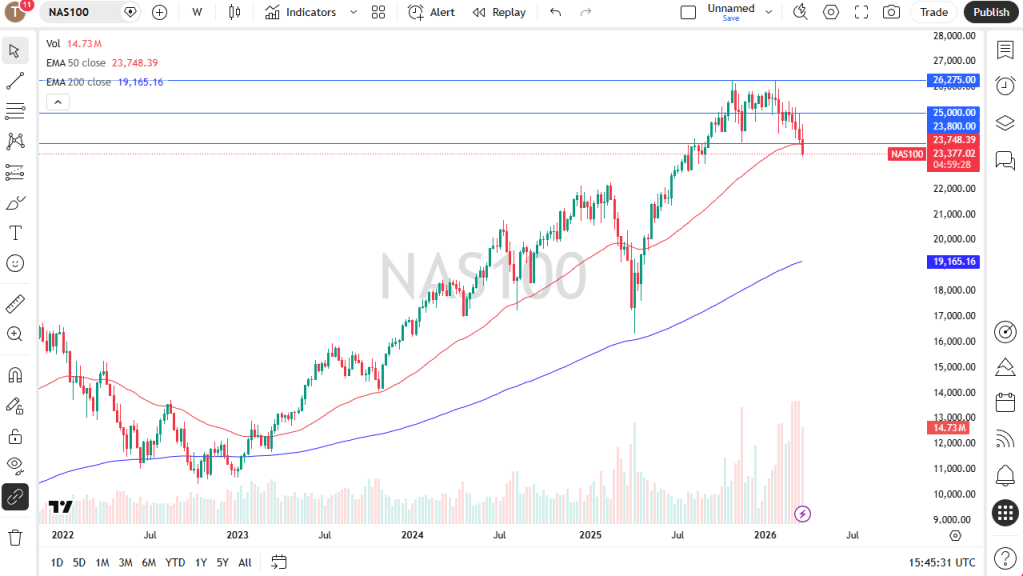
We are also trading below the 50-week EMA, and quite frankly, this is a market being driven almost entirely by the latest headlines out of Washington or Tehran, as they are causing sharp swings in interest rate expectations. As rates climb, they put significant pressure on technology stocks—and that dynamic is clearly playing out now.
USD/MXN
The U.S. dollar initially declined against the Mexican peso but has now formed a hammer pattern for the third consecutive week. This suggests the peso may start to weaken, and with U.S. interest rates rising, the negative swap cost associated with buying this pair becomes less of a burden.
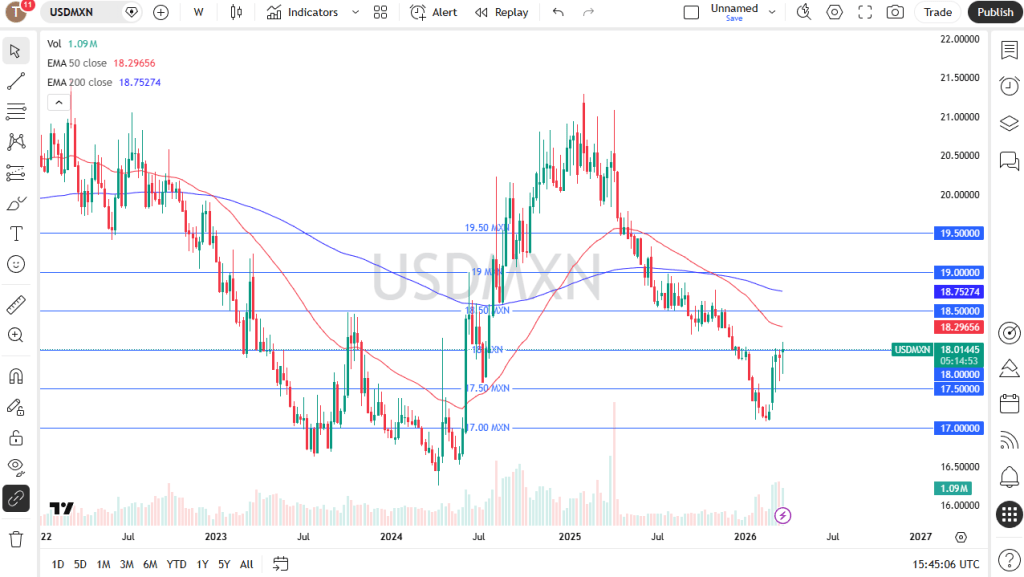
On the upside, the 50-week EMA is near the 18.29 level, with the 18.50 area as the next likely target. If the pair pulls back from here, pay close attention to next week’s candlestick formation, as it would take significant downside pressure on the U.S. dollar to shift the trend. While the interest rate differential makes me hesitant to buy the dollar against the peso, the market still appears to be attempting a rally.
GBP/JPY
The British pound edged higher against the Japanese yen this week, and the key level to watch now is 214 yen, which has acted as a significant barrier. A break above this level would likely open the door for further upside.
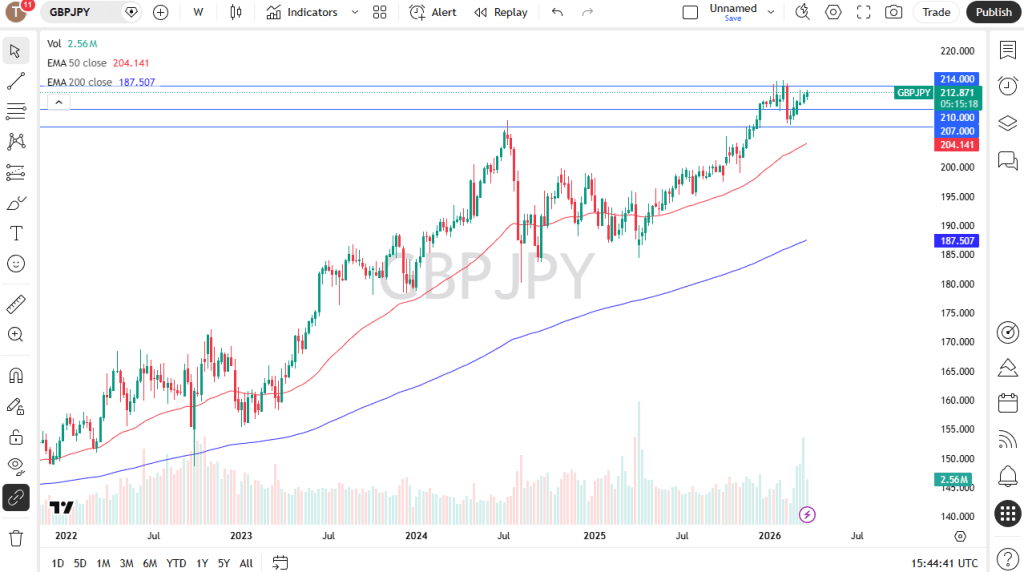
Short-term pullbacks should continue to present buying opportunities, but there is always the risk of intervention from the Bank of Japan. That said, it’s likely a challenging task for the central bank to prevent the yen from weakening significantly. The ongoing interest rate differential will keep driving yen-denominated pairs higher, with the British pound standing out as a key beneficiary.
EUR/USD
The euro has been quite volatile this week, ultimately forming something resembling a shooting star. We remain within the same range that’s held for some time, suggesting little has fundamentally changed. However, a breakdown below the 1.14 level could trigger a sharp strengthening in the U.S. dollar.
In that scenario, you’d likely look to buy the U.S. dollar against most currencies—not just the euro—since this pair often acts as a broader signal for how the greenback performs globally. On the other hand, if we break to the upside and clear this past week’s highs, that would be broadly dollar-negative and could pave the way for a move toward the 1.18 level.
Gold (Xau/Usd)
Gold prices dropped sharply over the week but staged a solid recovery. A large weekly hammer is beginning to form, though a break above $4,600 is needed to confirm strong momentum. While there are many factors supporting further gains, rising U.S. interest rates remain a key headwind.
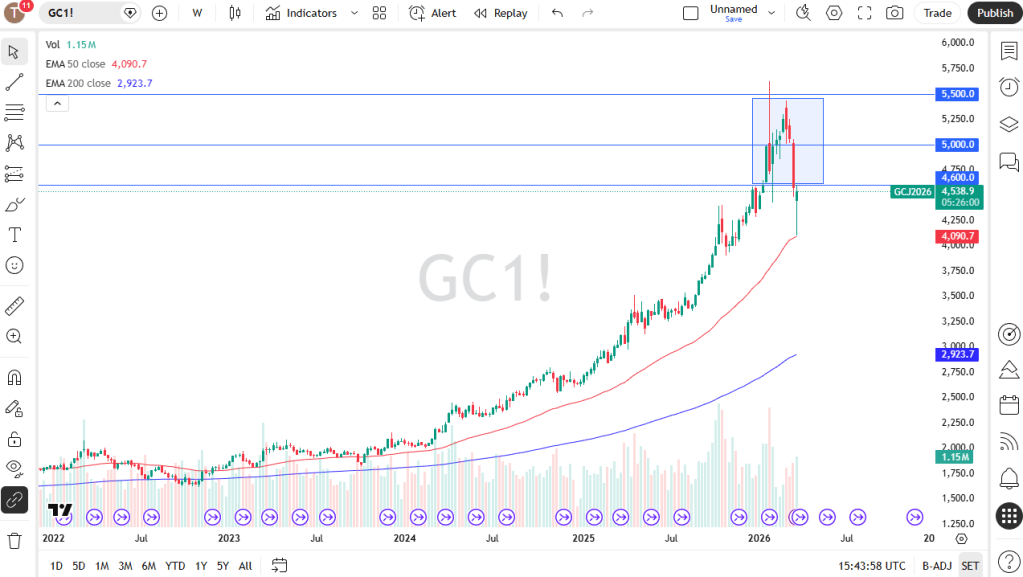
Rising interest rates remain a significant headwind, weighing on gold despite ongoing geopolitical tensions that could otherwise push prices higher. A drop below the $4,000 level would be severely bearish, but for now, the market appears to be attempting a rebound.
BTC/USD
Bitcoin has been a bit weak over the week, but it’s still holding within the same range. Given the ongoing conflict between the U.S. and Iran, that actually counts as relatively strong performance. The price is currently hovering around the 200-week EMA, a key long-term support level.
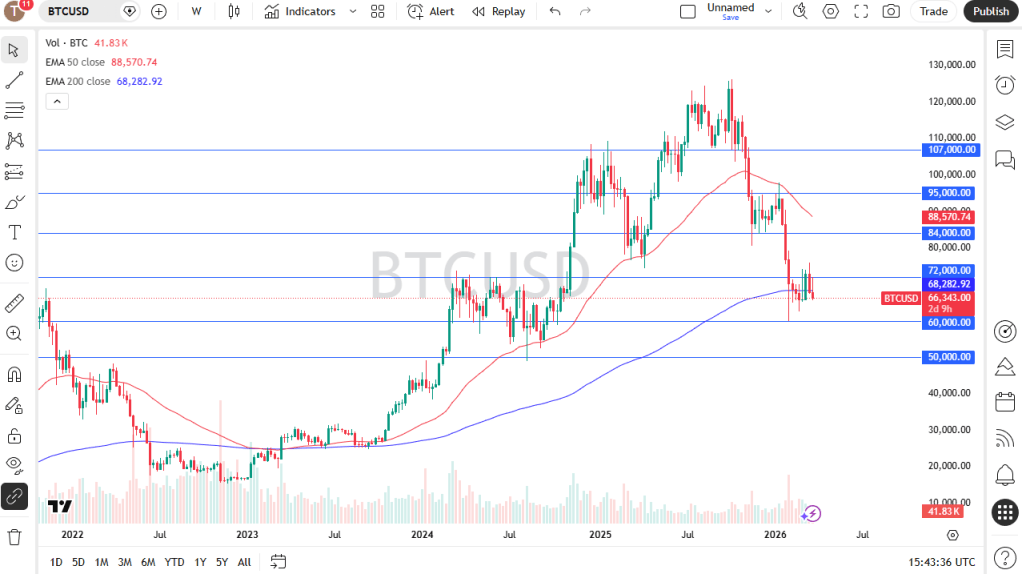
The $72,000 level continues to act as resistance, while $60,000 below remains a solid support zone. Overall, the market is quite choppy, but it appears to be in the process of building a base for a potential longer-term move.
Natural Gas
Natural gas declined over the week but has shown a modest rebound. However, it’s likely a market retail traders should avoid for now, as demand is dropping sharply.
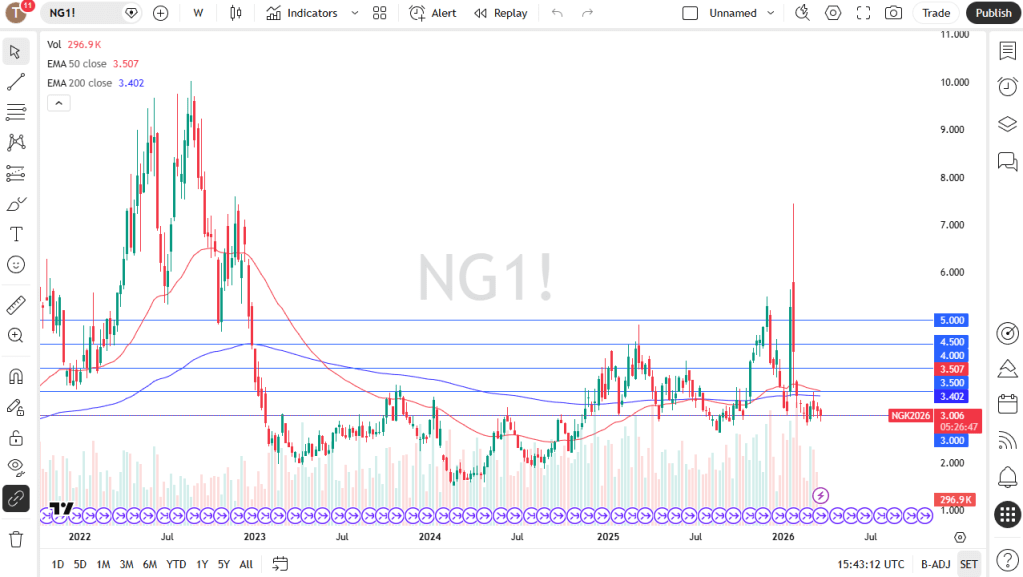
While Europe may continue to face supply challenges, this is seasonally a weak period for natural gas demand. Many retail traders also overlook that they are trading a U.S.-centric contract. With spring approaching, the typical strategy is to sell into rallies once signs of exhaustion appear.
USD/CHF
The U.S. dollar has gained solid ground against the Swiss franc and is now approaching the key 0.80 level. A breakout above that point could trigger a stronger upward move, but for now, such a scenario seems unlikely.
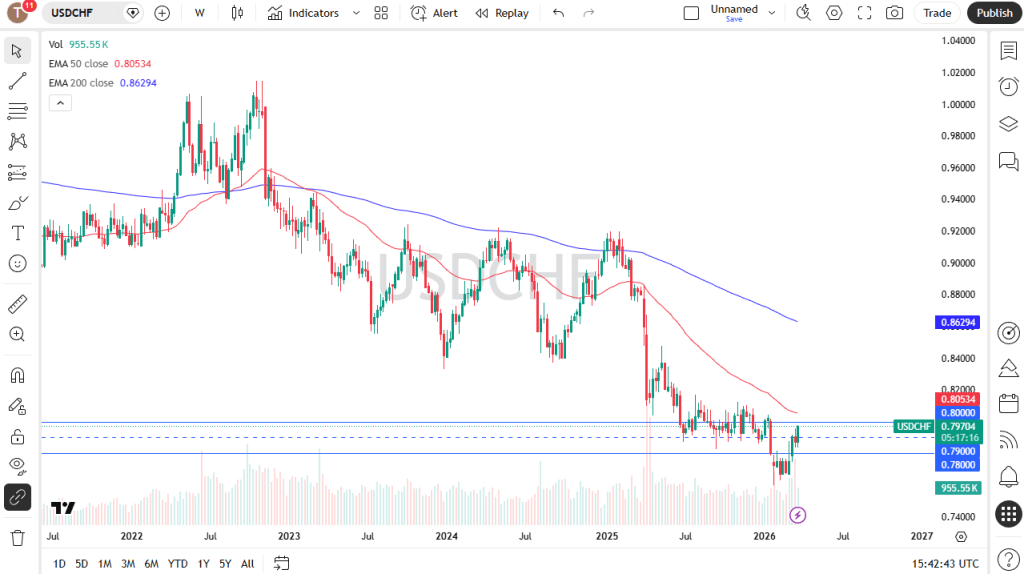
In this environment, the outlook remains bullish, with interest rate differentials continuing to support further upside. The Swiss central bank also provides a form of downside protection, having signaled it may intervene if the franc strengthens excessively. This creates a favorable “buy on dips” setup, with the added benefit of earning daily swap.
Sources: Lewis
 THE ETERNAL SOVEREIGN
Leave a comment