BTC/USD
One of the most compelling charts this week is Bitcoin. Despite widespread hesitation and global risk aversion, it has remained relatively resilient instead of breaking down. In addition, Wall Street–based ETFs tied to Bitcoin continue to attract inflows, even as overall market sentiment stays cautious.
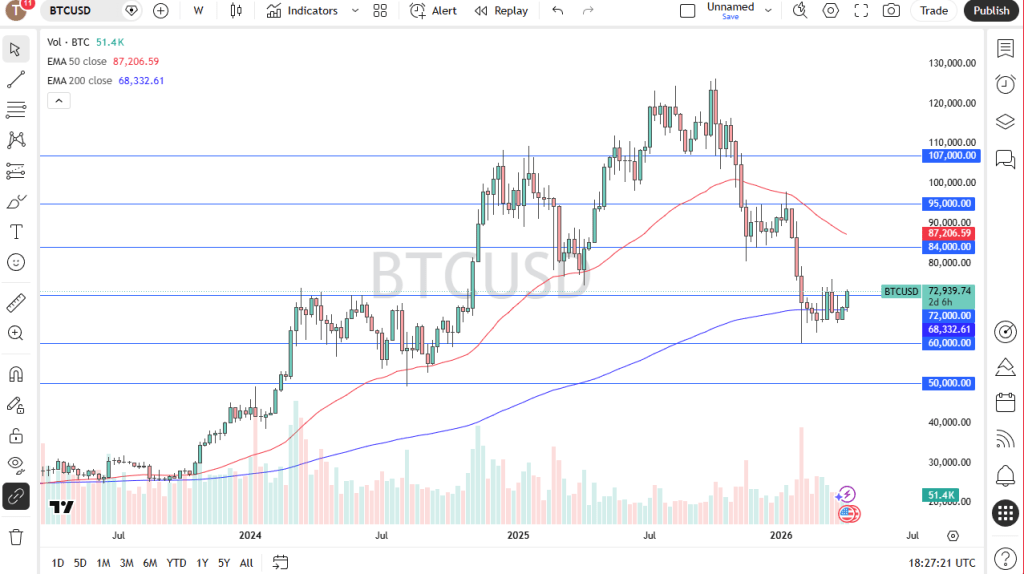
That said, this suggests a level of resilience in the Bitcoin market that shouldn’t be overlooked. At some point, the market will need to make a longer-term move, and based on current signals, it appears to be leaning toward a bullish outcome.
This outlook is somewhat logical, considering Bitcoin has already dropped around 50% from its highs. For long-term holders, that kind of correction often signals a potential buying opportunity. While I’m not strongly bullish on Bitcoin overall, the technical picture indicates that a move above $76,000 could quickly become significant.
NASDAQ 100
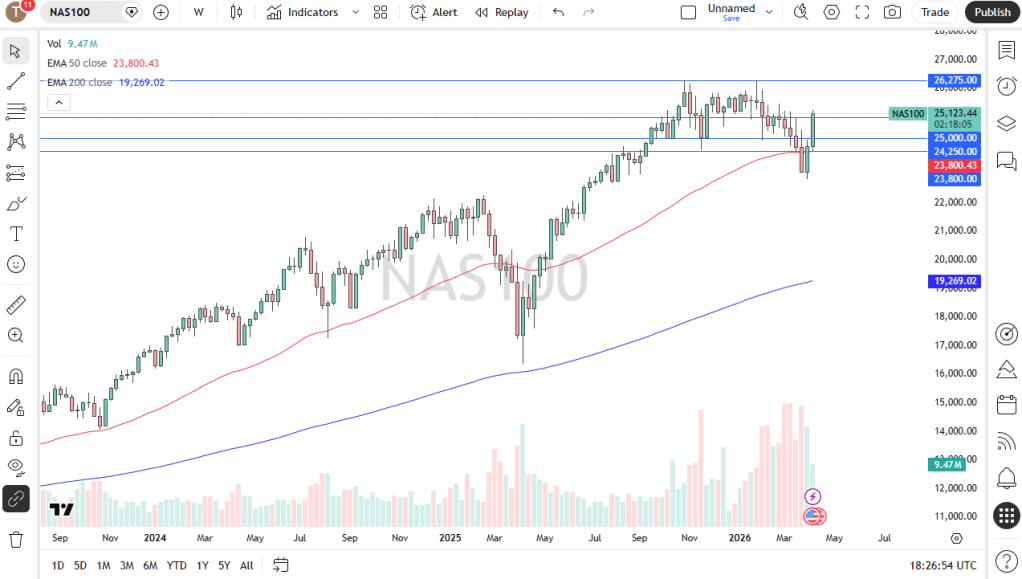
The Nasdaq 100 moved higher over the week, largely driven by the ceasefire announcement, which boosted overall risk appetite. By the end of the week, the index was hovering around the 25,000 level. However, with key talks taking place in Pakistan over the weekend, market sentiment could shift quickly as early as Monday. For this reason, I remain optimistic about equities—but only with a strong sense of caution.
USD/MXN
The US dollar declined sharply against the Mexican peso over the week as risk appetite returned. It’s also important to note the significant interest rate gap between the two economies, which encourages traders to short this pair, as holding Mexican pesos allows them to earn daily carry.
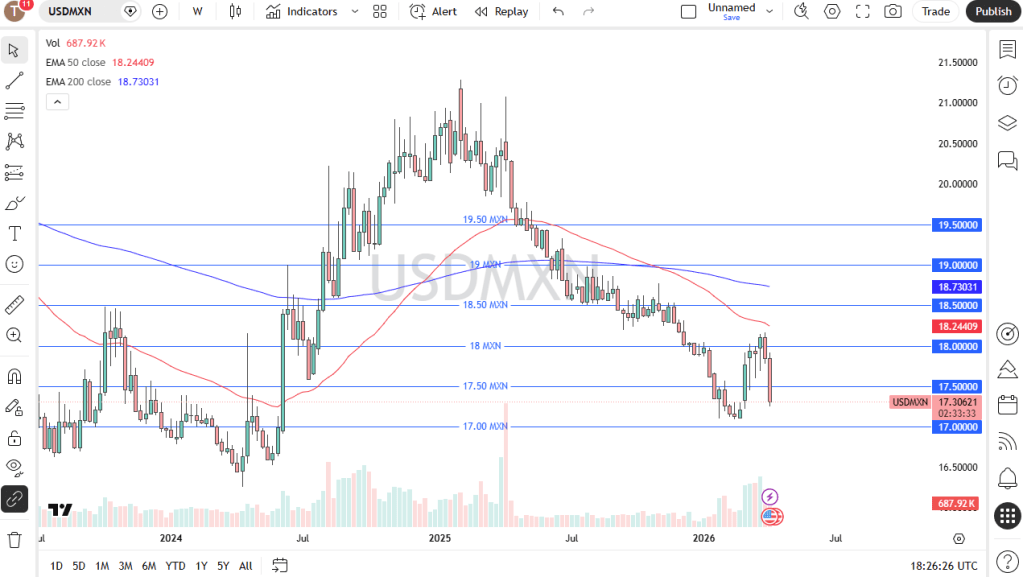
It now appears that the pair is on the verge of breaking down toward the 17 peso level. However, that level may not matter much at this stage due to the upcoming meeting in Pakistan over the weekend. If the outcome is negative, the US dollar is likely to strengthen; if not, the current downward trend should continue.
DAX
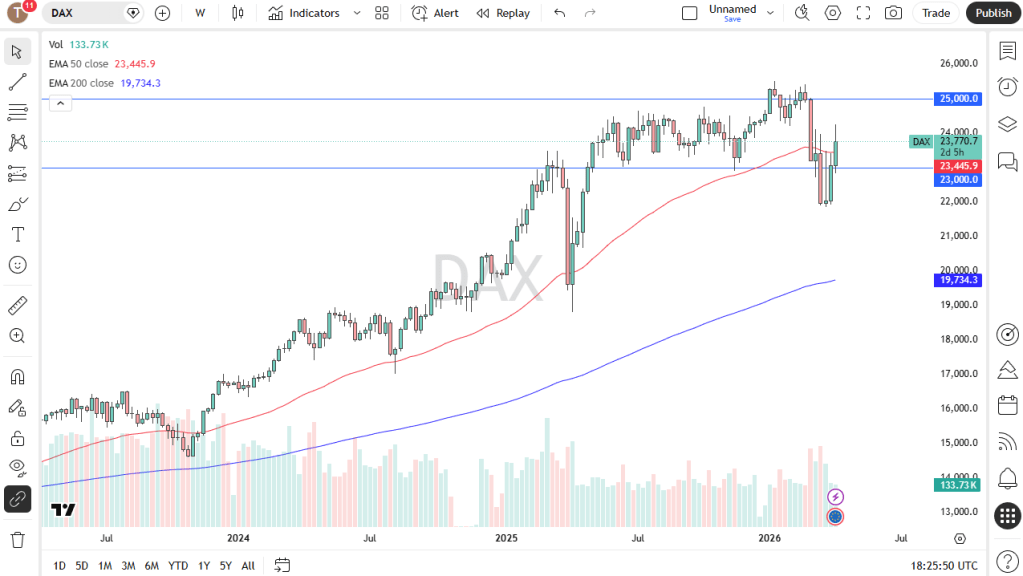
Germany’s DAX ended the week in positive territory, although it closed on a weak note on Friday. This likely reflects caution ahead of the weekend meeting, as Germany remains highly sensitive to energy supply risks—particularly LNG from Qatar and crude shipments through the Strait of Hormuz. Any disruption there could create significant challenges for its industrial sector. As a result, many traders appear to be locking in profits and reducing exposure ahead of potentially impactful developments from the talks in Pakistan.
USD/CAD
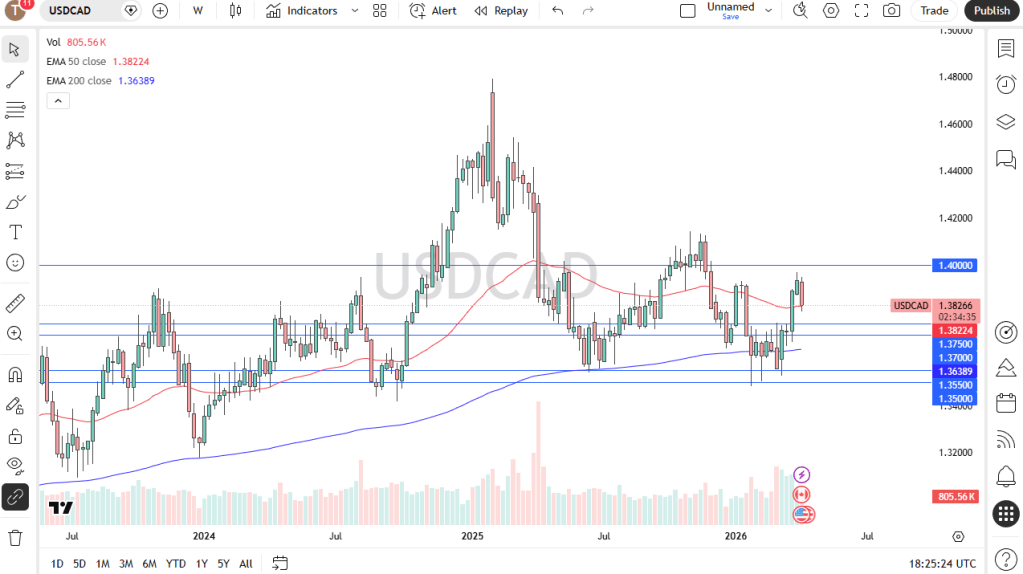
The US dollar has declined against the Canadian dollar and is now hovering around both the 50-week EMA and the 200-day EMA, making a pause at this level quite reasonable. As with other markets, Monday’s open will likely be influenced by developments in Islamabad. Overall, this appears to be a market attempting to establish support before potentially moving higher. The 1.3750 level stands out as a key area to watch for a possible bounce if the pair continues to pull back, while the 1.40 level remains a significant resistance to the upside.
EUR/USD
The euro posted a solid rally over the week, largely supported by improving risk appetite. It has now climbed above the 1.17 level for the first time in about five weeks. If this momentum holds, the next target to watch would be the 1.18 level.
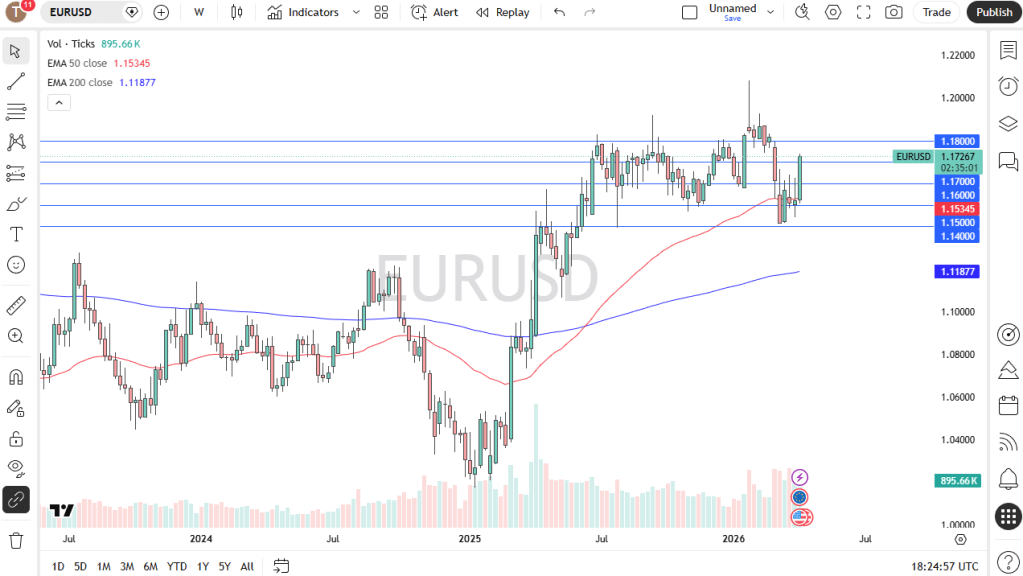
The 1.18 level represents a major resistance zone. However, if the talks between Iran and the United States produce positive outcomes, it could trigger a broad relief rally—potentially pushing this market higher along with others.
Silver
Silver has been volatile but clearly positive over the week as it continues to search for a bottom. The market is likely to remain choppy, and while a larger move will eventually take shape, it may not be the ideal time to take on significant positions.
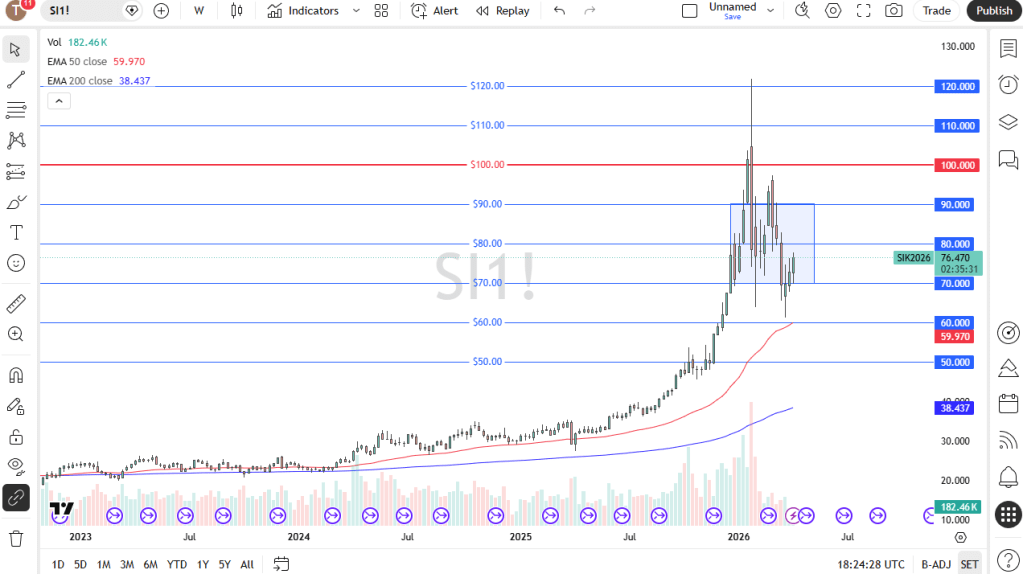
Interest rates will remain a key driver here, so it’s important to watch the US 10-year yield closely. Generally, a move above 4.30% tends to be negative for this market—though it’s not a definitive rule, just one of several influencing factors. Additionally, developments coming out of Islamabad and the ongoing talks are likely to have a significant impact on interest rate expectations, which will in turn affect price action here.
Gold
The gold market has also moved higher, but this seems to have caught many traders off guard, as the main driver has been interest rates rather than geopolitical fear. Many people are puzzled by gold’s weakness during times of conflict, but the explanation lies in the bond market—yields are now significantly higher than before, prompting portfolio managers to shift allocations toward interest-bearing assets instead of gold.
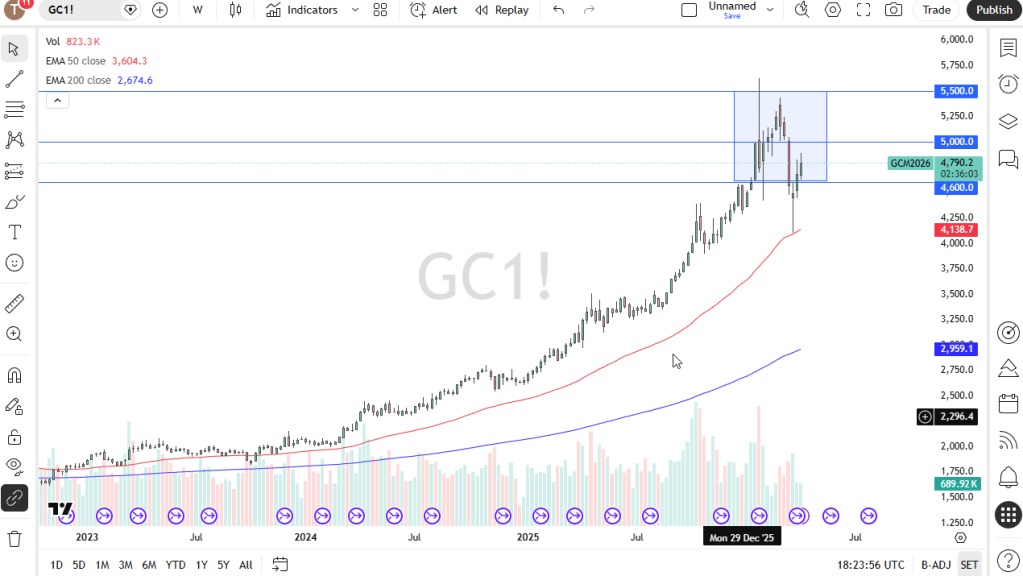
I remain bullish on gold over the longer term, but I also recognize that a renewed spike in yields—possibly triggered by disappointing outcomes from the talks in Islamabad—could push the market down toward the $4,600 level. On the upside, the $5,000 mark stands out as the first major resistance zone.
Sources: Lewis
 THE ETERNAL SOVEREIGN
Leave a comment