
Last Updated on 11/06/2026
The Bitcoin ecosystem continues to face mounting challenges, with another major setback emerging from the Layer-2 sector. In a surprising development, Botanix, a prominent Bitcoin Layer-2 network, has announced that it will cease operations, giving users until July 9 to withdraw their assets.
The shutdown comes amid a sharp downturn in the cryptocurrency market. Bitcoin has fallen to around $61,000 during the latest wave of selling pressure, raising concerns that the current correction could evolve into a more prolonged bearish phase.
Botanix confirmed a phased closure of its EVM-compatible Layer-2 network, warning users to remove their funds before the July 9 deadline. Any assets left on the platform after that date will be transferred to the custody of a validator group known as the Federation, making direct withdrawals no longer possible.
The closure marks a disappointing end for a project that previously secured $11.5 million in funding from leading venture capital firms, including Polychain Capital and Placeholder Capital.
In an unusually candid post-mortem, the Botanix team acknowledged that limited user adoption ultimately led to the project’s downfall. According to the developers, demand for Bitcoin-based programmability and decentralized finance remains underdeveloped. Most DeFi participants continue to favor wrapped Bitcoin on Ethereum and other established platforms, while many Bitcoin holders still view BTC primarily as a long-term store of value rather than an asset for active on-chain trading.
As a result, the network struggled to generate sufficient transaction fees to support its operational and infrastructure costs, leading to the decision to shut down the platform.
Bitcoin Price Plunge
The shutdown of Botanix comes at a particularly difficult time for the cryptocurrency market, which is already facing intense selling pressure. Bitcoin has experienced a sharp decline this week, falling below several key psychological support levels and dropping to around $61,600, according to market data from CoinMarketCap.
The latest sell-off has further weakened investor sentiment, triggering concerns that the market could be entering a deeper correction phase. As Bitcoin struggles to regain momentum, risk assets across the crypto sector—including smaller Layer-2 networks and DeFi projects—have come under increased pressure.
For emerging ecosystems such as Botanix, the unfavorable market environment has only amplified existing challenges. With declining trading activity, weaker user engagement, and reduced fee generation, many smaller blockchain projects are finding it increasingly difficult to sustain operations during the downturn.

The sharp decline has significantly weakened retail investor sentiment and sparked a wave of liquidations across major cryptocurrency exchanges. The rapid correction highlights deteriorating market liquidity, creating a more challenging environment for smaller blockchain networks and emerging ecosystems. As capital flows out of riskier assets, projects with limited adoption and weaker financial foundations become increasingly exposed to market stress.
Analysts Predict Bitcoin Bear Market Could Persist
Several well-known cryptocurrency analysts argue that the current downturn may have further room to run. Influential market commentators on X, including Ash Crypto and 0xChiefy, suggest that prevailing macroeconomic conditions and historical Bitcoin market cycles indicate the potential for additional downside pressure.
According to their analysis, a combination of economic uncertainty, tightening liquidity conditions, and recurring bearish patterns from previous market cycles could lead to deeper corrections before a sustainable recovery takes hold. As a result, traders and investors are closely monitoring key support levels and broader market developments for signs of stabilization.

Analysts believe the current bearish momentum could continue to weigh on Bitcoin prices, potentially driving the market lower before a durable macroeconomic bottom is established. Their outlook is further reinforced by a significant wave of institutional selling, with reports indicating that more than 52,500 BTC have been liquidated through spot Bitcoin ETFs.
The large-scale distribution by institutional investors has added considerable selling pressure to the market, creating a supply overhang that may limit the prospects for a near-term recovery. As long as this excess supply remains in circulation, upward price movements could face substantial resistance.
Nevertheless, historical market data offers a more optimistic longer-term perspective. According to CoinMetrics, deeper declines during Bitcoin bear markets have often been followed by stronger and more explosive recoveries. While the current environment remains challenging, past cycles suggest that periods of extreme weakness can ultimately lay the foundation for powerful bullish reversals once market sentiment and liquidity conditions improve.
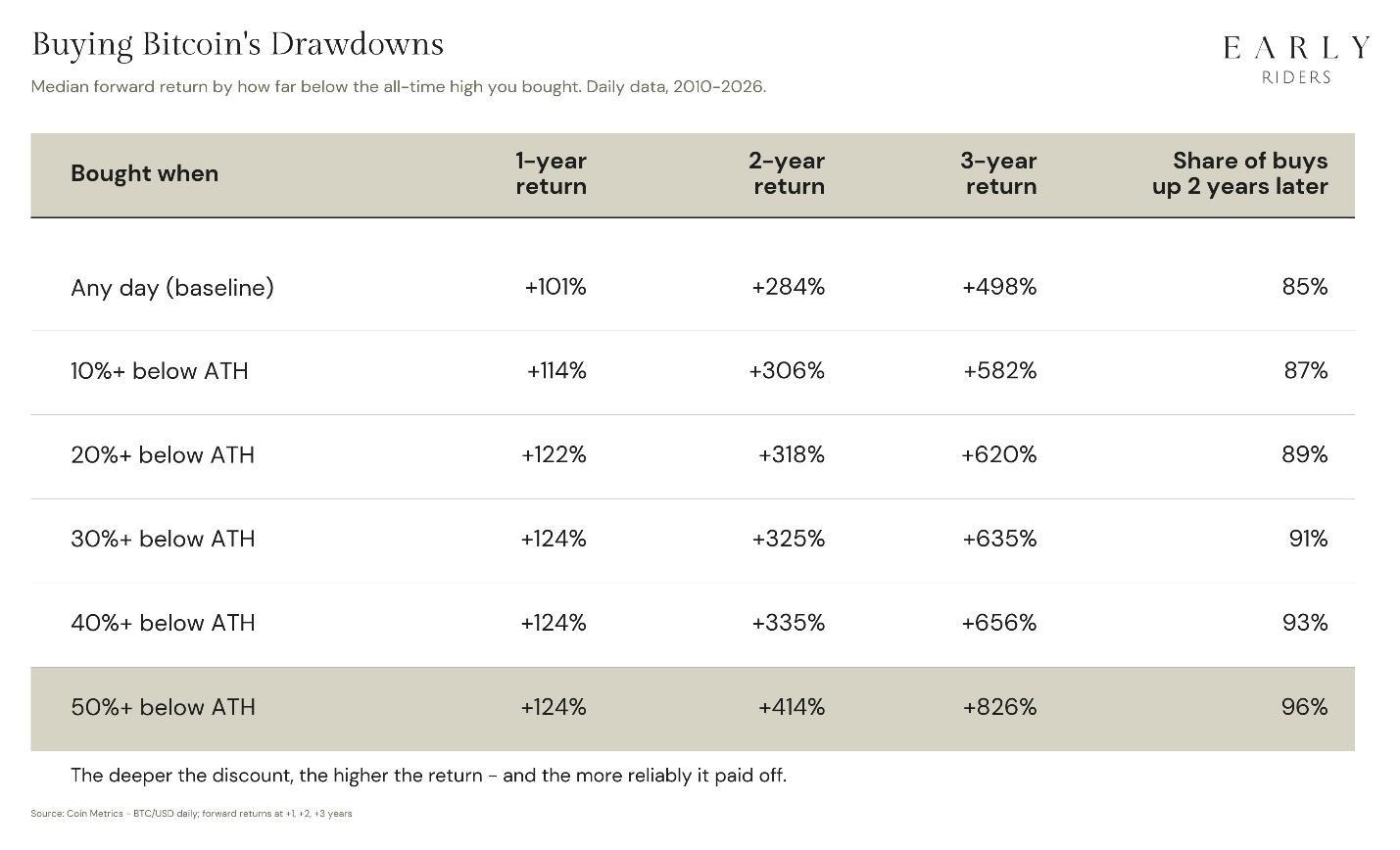
The chart provides Bitcoin investors with a reason for cautious optimism. Historical market cycles suggest that while bear markets can be painful and prolonged, they have often been followed by powerful recoveries. As a result, many investors believe that once the current downturn reaches its macro bottom, Bitcoin could stage a significant rebound and potentially climb to new all-time highs.
Past performance indicates that deeper corrections have frequently laid the groundwork for stronger bull runs, driven by renewed investor confidence, improving liquidity conditions, and growing institutional participation. Although short-term risks remain elevated, long-term market participants continue to view the current weakness as part of Bitcoin’s broader cyclical pattern.
BTC Technical Indicators Signal Continued Weakness
A review of Bitcoin’s technical indicators reinforces the prevailing bearish sentiment across the market. According to live technical data from Investing.com, Bitcoin is currently generating a strong sell signal on the daily, weekly, and monthly timeframes, suggesting that downward pressure remains firmly in control.
The 14-day Relative Strength Index (RSI) is hovering around 34.8, a level that reflects weakening buying interest and sustained selling activity. While not yet in deeply oversold territory, the indicator points to a market where bears continue to hold the upper hand.
Adding to the negative outlook, key moving averages—from the short-term 5-day MA to the long-term 200-day MA—remain above Bitcoin’s current trading price. This bearish alignment indicates that major trend indicators continue to act as resistance, limiting the potential for a near-term recovery.
As long as Bitcoin trades below these critical moving averages, technical momentum is likely to remain tilted to the downside, with sellers maintaining control of the broader market trend.
Leave a Reply