US Dollar – DXY Index
- The US Dollar Index holds onto Monday’s pullback around the 100.00 mark as attention turns to the Fed’s policy decision.
- Iran has permitted multiple countries to move their energy tankers through the Strait of Hormuz.
- The Fed is widely anticipated to leave interest rates unchanged on Wednesday.
The US Dollar (USD) is holding onto Monday’s corrective move, which was triggered by a sharp pullback in oil prices that helped ease concerns about unanchored consumer inflation.
At the time of writing, the US Dollar Index (DXY), which measures the Greenback against a basket of six major currencies, is edging slightly higher near 99.90.
The index retreated notably from Friday’s more-than-nine-month high of 100.54 as oil prices dropped after Iran permitted several countries to transport oil and Liquefied Petroleum Gas (LPG) shipments through the Strait of Hormuz, potentially reducing worries over energy supply disruptions.
In recent weeks, the USD has rallied strongly, supported by its safe-haven appeal amid escalating tensions involving Iran, the United States, and Israel. Additionally, elevated oil prices have dampened expectations for near-term interest rate cuts by the Federal Reserve (Fed).
Data from the CME FedWatch tool suggests that markets are largely convinced the Fed will keep rates unchanged until at least the September meeting, with the probability of a rate cut at that time standing at around 50%.
Looking ahead, investors will closely watch Wednesday’s Fed policy decision for further guidance. Attention will also be on the FOMC’s Economic Projections report, which will provide updated forecasts for interest rates, inflation, and economic growth.
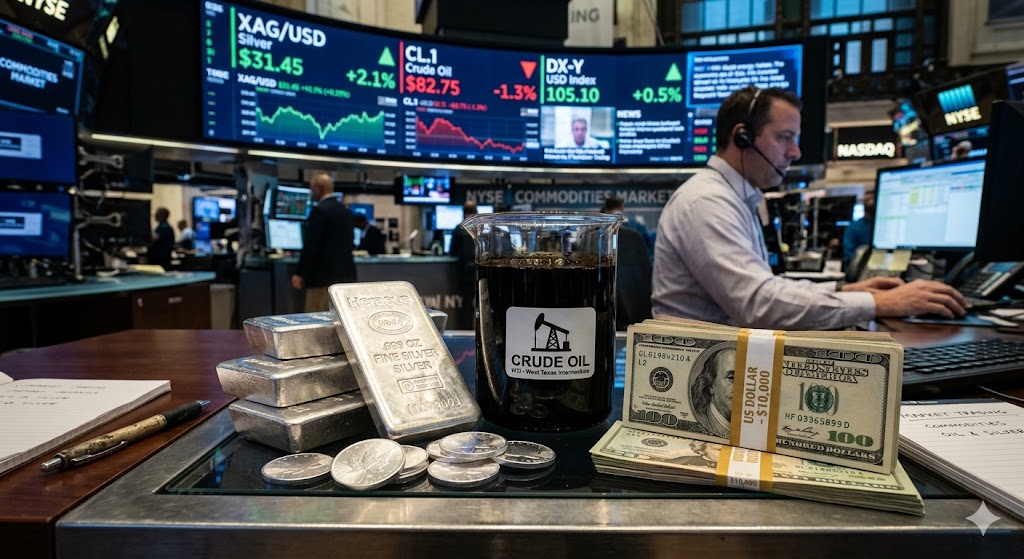
WTI
- WTI prices advance to around $94.20 during early Tuesday trading in Asia.
- Rising geopolitical tensions in the Middle East continue to support crude prices.
- The IEA is considering releasing additional oil reserves to mitigate the economic fallout from the US–Israel conflict with Iran.
West Texas Intermediate (WTI), the US crude benchmark, is hovering near $94.20 during early Tuesday trading in Asia, supported by ongoing tensions surrounding Iran, with no clear signs of de-escalation. Market participants are also awaiting the American Petroleum Institute (API) report due later in the day.
On Tuesday, the Israeli military reported detecting missiles launched from Iran toward Israeli territory, urging residents in impacted areas to seek shelter immediately. Meanwhile, the United Arab Emirates (UAE) announced a temporary full closure of its airspace as a precautionary step, with its defense ministry confirming responses to incoming missile and drone threats from Iran.
Fears of retaliatory Iranian strikes targeting ships, infrastructure, and key transit ports for oil shipments have raised concerns that the conflict could evolve into a prolonged regional war. Such risks may continue to provide near-term support for WTI prices.
However, on the supply side, the International Energy Agency (IEA) is considering releasing additional oil reserves into the global market to ease upward pressure on prices. The agency indicated a potential release of up to 400 million barrels, which, if coordinated among member countries, could temporarily boost supply and help limit sharp price spikes.
Silver (XAG/USD)
- Silver declines as traders adjust positions ahead of Wednesday’s Federal Reserve policy decision.
- Higher oil prices, driven by escalating tensions in the Middle East, are fueling inflation concerns and dampening expectations for near-term Fed rate cuts.
- At the same time, geopolitical risks involving the United States, Iran, and Israel are helping to cap deeper losses by maintaining demand for safe-haven assets like silver.
Silver (XAG/USD) is trading near $80.50 on Tuesday, down about 0.60% on the day. The metal remains under pressure as fading expectations for near-term US rate cuts—amid rising inflation concerns tied to Middle East tensions—continue to weigh on sentiment.
Markets broadly expect the Federal Reserve to keep its benchmark rate unchanged within the 3.50%–3.75% range at Wednesday’s meeting, according to the CME FedWatch tool. If confirmed, this would mark a second straight pause following the prior easing cycle. Prolonged higher rates tend to pressure non-yielding assets like Silver, as they raise the opportunity cost of holding them.
Escalating geopolitical tensions in the Middle East have driven Oil prices higher, fueling fears of persistent inflation. Rising gasoline costs in the US are adding strain on households and may keep inflation expectations elevated, reinforcing the case for the Fed to maintain restrictive policy for longer.
Geopolitical developments continue to influence the precious metals market. Recent US strikes on Iran’s key export hub on Kharg Island have intensified concerns over global energy supply disruptions. While Washington has indicated the conflict could be resolved within weeks and is exploring an international effort to secure shipping routes through the Strait of Hormuz, uncertainty remains high.
This fragile geopolitical backdrop may help limit further downside in Silver. As a safe-haven asset, it tends to attract demand during periods of heightened risk, which could cushion losses even as higher interest rate expectations dampen overall investor appetite.
Sources: Ghiles Guezout, Lallalit Srijandorn and Sagar Dua
 THE ETERNAL SOVEREIGN
Leave a comment