Oil Still Matters: Ranking the World’s Top 10 Producers
Oil has been pronounced obsolete countless times, yet global consumption still exceeds 100 million barrels per day.
Beyond fueling airplanes, trucks, and cargo ships, petroleum serves as a key ingredient in plastics, fertilizers, chemicals, pharmaceuticals, and thousands of everyday products that consumers rarely connect to crude oil.
According to OPEC projections, worldwide oil demand is expected to rise to 113.3 million barrels per day by 2030 and 124.1 million by 2050, with non-OECD nations driving most of the increase. Despite the global push toward alternative energy, oil is set to remain a cornerstone of the world economy for decades.
Below is a ranking of the world’s 10 largest oil-producing nations based on the latest data from the U.S. Energy Information Administration (EIA), reflecting 2025 production levels.
10. Kuwait | 2.6 Million Barrels Per Day
Although Kuwait ranks last on this list, it remains one of the richest countries in terms of oil reserves. The nation holds an estimated 101.5 billion barrels of crude, enough to sustain current production levels for roughly 100 years, while also benefiting from some of the lowest extraction costs globally.
Production, however, has fallen below its traditional pace of around 3 million barrels per day. Through the state-owned Kuwait Petroleum Corporation, the oil sector remains the backbone of the economy, generating approximately 90% of government revenues and export earnings.
Kuwait highlights an important reality: possessing vast reserves is not the same as maximizing their economic value.
9. Brazil | 3.8 Million Barrels Per Day
Brazil has emerged as one of the most compelling offshore oil success stories in recent decades. Its massive pre-salt reserves, buried beneath deep Atlantic waters and thick salt formations, require advanced technology and significant capital investment to develop.
Those investments are yielding results. Petrobras recently reported record output of 1.1 million barrels per day from the Búzios field alone, which now accounts for roughly one-third of the company’s Brazilian production.
As production expands, Brazil has become a major crude exporter and continues to offer investors exposure to highly productive fields with substantial growth potential.
8. United Arab Emirates | 3.8 Million Barrels Per Day
The UAE matched Brazil’s output at roughly 3.8 million barrels per day in 2025 but entered 2026 with a more aggressive production strategy.
Following its departure from OPEC in May, the country boosted output to a record 4.1 million barrels per day by June, signaling a desire to prioritize national production goals over cartel quotas.
Serving key Asian markets such as China, India, and Japan, the UAE has also invested heavily in refining, storage, port infrastructure, and pipeline networks. In periods of supply disruption, especially around the Strait of Hormuz, that logistical flexibility becomes a major strategic advantage.
7. Iran | 4.1 Million Barrels Per Day
Iran’s energy sector has long been shaped by geopolitics. Despite holding the world’s fourth-largest proven oil reserves and second-largest natural gas reserves, sanctions, conflict, and limited foreign investment have prevented the country from reaching its full production potential.
Output once exceeded 6 million barrels per day during the 1970s. Today, much of Iran’s oil trade relies on Chinese demand and a complex network of intermediaries designed to navigate sanctions.
Iran remains a critical player because any disruption to its exports can have an outsized effect on oil prices, particularly when tensions threaten traffic through the Strait of Hormuz, one of the world’s most important energy chokepoints.
6. China | 4.3 Million Barrels Per Day
While China is widely recognized as the world’s largest crude importer, it is also a significant producer.
Driven by energy-security concerns, Beijing has encouraged state-owned producers to boost domestic output. As a result, production climbed from approximately 3.8 million barrels per day in 2020 to a record 4.3 million in 2025.
PetroChina remains the country’s largest producer, while offshore specialist CNOOC has delivered notable growth. Increased exploration spending and new discoveries have also expanded reserve estimates.
Even so, China still imported roughly 11.55 million barrels per day in 2025. Aging fields and rising development costs suggest domestic production may be approaching practical limits, leaving imports as a crucial component of the nation’s energy strategy.
5. Iraq | 4.4 Million Barrels Per Day
Iraq possesses around 145 billion barrels of proven reserves, ranking among the largest resource holders globally.
Its oil fields are both extensive and relatively inexpensive to operate, giving the country the potential to produce far more crude than current levels suggest.
The challenge lies in infrastructure and export reliability. Roughly 93% of Iraqi crude exports pass through terminals near Basra on the Persian Gulf. Any disruption in the Strait of Hormuz can quickly create bottlenecks, forcing storage facilities to fill and production to slow.
Despite enormous geological advantages, logistical constraints and political challenges continue to limit Iraq’s full potential.
4. Canada | 5 Million Barrels Per Day
Canada stands as the only non-U.S. nation in the top five located entirely within North America, a valuable advantage amid growing geopolitical uncertainty.
Most Canadian production comes from Alberta’s oil sands, where heavy bitumen is either mined or extracted using steam-assisted recovery techniques.
Although oil sands projects require substantial upfront investment, they offer exceptionally long production lives and relatively low decline rates compared with shale wells.
Canada set another production record in 2025, with crude and equivalent output averaging 5.35 million barrels per day under broader regulatory measurements. Alberta alone contributed nearly 84% of national production.
3. Saudi Arabia | 9.6 Million Barrels Per Day
Saudi Arabia remains the most influential nation in the global oil market despite no longer holding the top production spot.
Output rose to approximately 9.6 million barrels per day in 2025 as OPEC+ gradually relaxed voluntary supply cuts.
Saudi Aramco oversees more than 260 billion barrels of proven reserves and operates some of the largest and lowest-cost oil fields ever discovered. More importantly, Saudi Arabia maintains significant spare production capacity that can be activated relatively quickly.
While most producers pump at maximum capacity, Saudi Arabia often has the ability to increase or decrease output strategically, giving it extraordinary influence over global oil prices.
2. Russia | 9.9 Million Barrels Per Day
Despite sanctions, production restraints, and the ongoing conflict in Ukraine, Russia remained the world’s second-largest oil producer in 2025 with roughly 9.9 million barrels per day.
The country has successfully redirected much of its crude exports toward Asia, with China and India becoming its dominant buyers.
However, the long-term outlook is more uncertain. Mature fields require increasing investment, while sanctions continue to limit access to advanced Western technology and financing.
Russia remains an energy giant, but sustaining current production levels could become increasingly challenging over time.
1. United States | 13.6 Million Barrels Per Day
The United States did more than lead the rankings in 2025—it achieved the highest crude oil production ever recorded by any country.
U.S. crude and condensate output averaged a record 13.6 million barrels per day, roughly 40% higher than production from either Russia or Saudi Arabia. Monthly production reached an all-time high of 13.93 million barrels per day in April.
At the center of this achievement is the Permian Basin in Texas and New Mexico, which produced approximately 6.6 million barrels per day and accounted for nearly half of total U.S. output.
Technological advances in horizontal drilling and hydraulic fracturing, combined with private mineral ownership, deep capital markets, and a competitive oil-services industry, transformed the United States into a global energy powerhouse.
Today, the country is also a major exporter of crude oil, gasoline, diesel, and refined petroleum products, strengthening both its trade position and domestic economy.
Why Oil Still Matters
Across much of the world, oil production is dominated by governments and state-owned enterprises. In contrast, private investment and publicly traded companies play a far greater role in North America.
Understanding where global oil supplies originate—and the economics behind bringing those barrels to market—can help investors better navigate future commodity cycles. Despite rapid growth in renewable energy, oil remains one of the most important resources underpinning modern civilization and the global economy.
The global oil market is losing many of its key shock absorbers as inventories remain tight, shipments through the Strait of Hormuz face ongoing disruptions, and spare supply continues to shrink, increasing the likelihood of stronger oil prices.
One factor that has kept prices from climbing further is China’s sharp decline in crude oil imports. However, analysts believe that support may soon disappear, with the world’s largest oil importer expected to return to the market after drawing down its existing stockpiles.
Should disruptions in the Strait of Hormuz continue while Chinese buying accelerates, market analysts warn that global oil supplies could tighten considerably. The resulting imbalance between supply and demand may place the greatest upward pressure on crude prices in the latter part of the year.
The oil market could soon lose the key supply and demand buffers that have prevented crude prices from surging despite the massive disruption to shipments through the Strait of Hormuz.
A temporary U.S.-Iran memorandum of understanding had allowed Middle Eastern producers to accelerate exports of crude that had accumulated in Gulf storage over the previous four months. That opportunity has now effectively ended as hostilities resumed and the ceasefire collapsed.
At the same time, crude and refined fuel inventories across major consuming regions, including the United States, have fallen to critically low levels. Much of the oil released through the largest coordinated strategic stock drawdown in history has already reached refiners, leaving few reserves available to cushion further supply shocks.
Another important stabilizing factor may also be fading. China, whose reduced crude imports have helped moderate global demand in recent months, is expected to return to the market soon. If that happens, one of the largest forces restraining oil prices during the March-to-June period could disappear.
China’s Demand May Be Reawakening
China cut crude imports to their lowest level in a decade during June, extending three months of unusually weak buying as elevated prices and constrained Middle Eastern supplies discouraged purchases. Compared with its 2025 average, imports are estimated to have declined by roughly 4.4 million barrels per day.
Official customs figures showed June crude imports totaled 29.27 million metric tons, or about 7.12 million barrels per day—down 41.3% from the same month a year earlier and marking the weakest monthly import level since October 2016.
The country’s large commercial and strategic reserves, accumulated before the conflict with Iran intensified, allowed Beijing to sharply reduce imports while still meeting domestic demand. Those stockpiles have acted as a major buffer for the global market, helping prevent prices from soaring despite the disruption of more than 10 million barrels per day of oil flows through the Strait of Hormuz.
As the world’s largest crude importer, China entered the supply crisis better prepared than any other major consumer. Analysts estimate it built reserves of between 1.2 billion and 1.3 billion barrels before the conflict began, although the true size of those inventories remains uncertain because official data are limited.
Recent estimates suggest China began drawing on those reserves in May and continued doing so through June. According to the International Energy Agency (IEA), inventories declined by roughly 41 million barrels last month.
While Goldman Sachs believes China still holds ample reserves and faces no immediate pressure to increase purchases, analysts expect the turning point may be approaching. Lower official selling prices from Gulf producers for July and August could encourage Chinese refiners to step up imports in the coming months.
Since the Middle East conflict escalated in February, China’s restrained buying has effectively acted as the global oil market’s swing demand factor. If imports recover, that important demand buffer could disappear.
Shrinking Inventories Raise Risks
A rebound in Chinese demand could coincide with continuing uncertainty surrounding the Strait of Hormuz, where shipping activity remains well below the pace seen during the brief period following the U.S.-Iran agreement.
Any renewed disruption to tanker traffic would further delay the recovery of Middle Eastern exports and tighten global supplies of both crude oil and refined fuels.
According to Energy Aspects founder Amrita Sen, slower vessel movements through the Strait, combined with renewed U.S. restrictions on Iranian oil exports and rapidly declining inventories, are laying the groundwork for higher oil prices if current conditions persist.
Sen estimates that global oil inventories have fallen by roughly 600–700 million barrels since the crisis began. She warned that if the current situation extends into the end of this month or early next month, the market may face its greatest pressure later in the third quarter or early in the fourth quarter.
Speaking separately to the Financial Times, Sen said that nearly all excess commercial inventories have now been exhausted, leaving only government-held strategic reserves as a meaningful emergency backstop. As a result, confidence that oil flows through the Strait of Hormuz will remain uninterrupted is increasingly being tested.
GBP/USD slips toward 1.3470 during Friday’s Asian session.
The US carried out a sixth consecutive day of strikes against Iran, fueling geopolitical tensions.
Markets continue to increase expectations for additional Bank of England rate hikes this year.
The GBP/USD pair remains under modest pressure, slipping to around 1.3470 during Friday’s Asian session as heightened geopolitical tensions in the Middle East dampen investor risk appetite and lend support to the US Dollar. Market participants are also awaiting the preliminary University of Michigan Consumer Sentiment Index for July, due later in the day.
Risk aversion intensified after the United States launched a sixth consecutive day of military strikes against Iran. Authorities in Bandar Abbas reported damage to civilian infrastructure, including electricity facilities and a railway station, adding to concerns over a widening regional conflict.
The US Central Command (CENTCOM) stated that the latest operations were aimed at further weakening Iran’s military capabilities and confirmed that naval forces had boarded a vessel as part of efforts to enforce the blockade around the strategic waterway. Earlier this week, President Donald Trump warned that Iranian bridges and power infrastructure could become targets unless Tehran returned to negotiations. The escalating conflict has increased demand for traditional safe-haven assets, providing additional support for the US Dollar against Sterling.
Meanwhile, recent US inflation figures have offered mixed signals. Consumer price inflation eased in June, while producer prices also declined, reinforcing expectations that inflationary pressures are moderating. Even so, traders continue to assign roughly a 55% probability to a Federal Reserve interest rate hike in September, according to the CME FedWatch Tool.
In the UK, Bank of England Governor Andrew Bailey acknowledged concerns over the renewed hostilities between the US and Iran but said the conflict has not materially altered the country’s inflation outlook. Markets continue to expect the BoE to raise interest rates at its November meeting, with another increase largely priced in by April 2027, according to Reuters.
WTI edges higher during the Asian session, although buying interest remains limited. Escalating tensions between the US and Iran continue to underpin geopolitical risk premiums, while fears of supply disruptions across key shipping routes lend further support to crude prices.
West Texas Intermediate (WTI), the US benchmark for crude oil, trades modestly higher during Friday’s Asian session but continues to move within a well-established multi-day trading range. The commodity is hovering near $79.35, up roughly 0.5% on the day and close to Tuesday’s one-month peak, leaving it on course for a second consecutive weekly gain as investors remain focused on the possibility of further escalation between the United States and Iran.
Market sentiment remains supported after the US military conducted a sixth straight night of airstrikes against Iran on Thursday, including a strike on an empty oil tanker bound for Kharg Island as part of its renewed naval blockade of Iranian ports. In response, Iran launched attacks on US military positions across the region, intensifying concerns that the conflict could evolve into a broader confrontation. These developments have kept geopolitical risk premiums elevated and continue to provide underlying support for crude prices.
Additional concerns emerged after authorities in Bandar Abbas reported damage to civilian infrastructure, including electricity facilities and a railway station. Iran’s Islamic Revolutionary Guard Corps has also warned of expanding military operations by targeting more regional energy transport routes. Adding to supply concerns, Reuters reported that Tehran has instructed Yemen’s Houthi movement to prepare for the possible closure of the Red Sea oil corridor, creating another potential threat to global energy flows.
At the same time, declining shipping activity through the Strait of Hormuz has reinforced fears of tighter oil supplies, strengthening the case for further upside in crude prices. Even so, traders may prefer to wait for a decisive breakout above the current consolidation range before committing to fresh bullish positions. Nevertheless, the broader fundamental backdrop continues to favor buyers, suggesting that any near-term pullback is likely to attract renewed demand and remain relatively limited.
Gold prices fell to around $3,995 during Tuesday’s early Asian trading session.
The decline followed President Trump’s decision to reinstate the Iran port blockade and his pledge to impose a 20% levy on cargo transiting the Strait of Hormuz.
Investors are now awaiting the release of the US June Consumer Price Index (CPI), which is expected to be the key market catalyst later on Tuesday.
Gold prices (XAU/USD) continued to trade under pressure, hovering around $3,995 during Tuesday’s early Asian session. The precious metal remained on the defensive as escalating tensions between the United States and Iran reinforced concerns over persistent inflation. Investors are now focused on the release of the US June Consumer Price Index (CPI) and testimony from Federal Reserve Chair Kevin Warsh, both scheduled for later on Tuesday.
According to Bloomberg, US President Donald Trump reinstated the blockade on Iranian vessels passing through the Strait of Hormuz and announced a 20% fee on all other cargo transiting the strategic waterway. Trump also pledged to intensify military action against Iran, stating that the US would continue launching heavy strikes over the coming days.
The renewed blockade raises the risk of retaliation from Tehran, potentially increasing attacks on commercial shipping in the Strait of Hormuz. Such disruptions could fuel higher energy prices, adding to inflationary pressures and reinforcing expectations that the Federal Reserve will keep interest rates elevated for longer. Although gold typically benefits from heightened geopolitical uncertainty, its appeal is often limited in a high-interest-rate environment because it does not generate yield.
Market participants are also awaiting the latest US inflation figures for further policy clues. Economists expect the headline CPI to decline 0.1% month-over-month in June, while core CPI is forecast to increase 0.3% over the same period. If inflation comes in below expectations, the US Dollar could weaken, providing short-term support for dollar-denominated gold prices.
WTI is trading within a narrow range as investors remain cautious amid conflicting signals from the US and Iran.
Ongoing exchanges of fire between the US and Iran continue to fuel geopolitical concerns, providing underlying support for crude oil prices.
However, market anxiety has eased after US President Donald Trump stated that Iran is willing to negotiate a deal, limiting further gains in WTI.
West Texas Intermediate (WTI), the US benchmark for crude oil, remains stable during Friday’s Asian trading session after recovering from the previous day’s decline. Mixed signals from Washington and Tehran have encouraged traders to stay on the sidelines, with prices hovering near $71.75 and showing little change on the day as markets await fresh developments in the Middle East.
Geopolitical concerns returned to the forefront this week after the US launched a new round of military strikes against Iran in response to attacks on commercial vessels transiting the Strait of Hormuz. Tehran retaliated by targeting regional US allies and striking American military facilities in Bahrain and Kuwait. Adding to the tensions, US President Donald Trump announced on Wednesday that the ceasefire was effectively over, helping drive crude prices higher earlier in the week.
However, sentiment improved on Thursday after Trump stated that Iran had reached out seeking negotiations to prevent further escalation. A White House official also reaffirmed Washington’s commitment to the existing memorandum of understanding with Tehran. These developments, combined with OPEC+’s decision to raise production targets once again, may limit upside momentum in oil prices and prompt traders to remain cautious about initiating new bullish positions.
Meanwhile, the latest report from the US Energy Information Administration (EIA) showed an unexpected increase in crude inventories for the week ending July 3, marking the first stockpile build in eleven weeks. Commercial crude inventories climbed by 2.998 million barrels, well above market expectations. The larger-than-forecast increase could continue to weigh on prices, although WTI remains on track to post a modest weekly gain and potentially end a four-week losing streak.
Gold prices edge higher toward the $4,120 mark during Friday’s early Asian trading session. The precious metal finds support after US officials indicated that Washington remains committed to its memorandum of understanding (MOU) with Iran, despite President Trump’s statement that the agreement is “over.” However, expectations that the Federal Reserve will maintain a hawkish policy stance could limit further gains in Gold.
Gold prices rebounded to around $4,120 during Friday’s early Asian session as investors assessed the risk of renewed conflict in the Middle East. Demand for the safe-haven metal strengthened amid persistent geopolitical uncertainty surrounding the US-Iran situation.
The White House indicated that it remains committed to the memorandum of understanding (MOU) with Iran, despite President Donald Trump’s recent statement that the framework agreement aimed at ending the conflict was “over” following Iranian attacks on vessels in the Strait of Hormuz and neighboring countries.
Nevertheless, tensions remain elevated. Trump warned that military action would intensify if Iran launched further attacks on shipping in the strait. On Thursday, Iran reportedly targeted US military bases in Bahrain, Kuwait, and Qatar, while Jordan intercepted eight missiles fired by Tehran, according to Axios.
Rising hostilities between the US and Iran have fueled concerns over potential disruptions to global oil supplies. Higher crude oil prices could increase inflationary pressures, potentially prompting the Federal Reserve to keep interest rates elevated for a longer period, which may limit Gold’s upside.
Meanwhile, minutes from the Fed’s June policy meeting—the first chaired by Kevin Warsh—revealed significant disagreement among policymakers regarding the future path of interest rates. While many officials suggested that the federal funds rate could end the year within or slightly below its current range, others argued that rates may need to remain above current levels, reflecting continued uncertainty over the inflation outlook.
WTI crude extends its advance as renewed geopolitical tensions in the Strait of Hormuz raise concerns over potential supply disruptions. Iran reportedly launched at least two missiles at commercial vessels passing through the key maritime chokepoint on Monday, bolstering risk premiums in the oil market. However, gains may be tempered after Saudi Aramco reduced the price of its Arab Light crude for Asian customers by $11, bringing it to a $1.50 discount to the regional benchmark.
West Texas Intermediate (WTI) crude oil edged higher to around $69.20 per barrel during Tuesday’s Asian session, recovering part of the previous day’s decline as renewed tensions in the Strait of Hormuz provided short-term support to prices.
Market sentiment improved after a Bloomberg report, citing a US official, indicated that Iran launched at least two missiles at commercial vessels navigating the crucial shipping corridor late Monday. Although two ships suffered significant damage, no fatalities were reported. Meanwhile, the UK Maritime Trade Operations (UKMTO) said a southbound tanker was hit by an unidentified projectile on its port side, triggering a fire onboard.
However, the upside in crude prices remained limited, with WTI hovering near a four-month low amid growing signs of ample global supply. Easing some immediate concerns over disruptions, maritime traffic through the Strait of Hormuz has begun to normalize. Data showed that at least eight Japan-linked vessels, including five supertankers capable of carrying roughly two million barrels of crude each, successfully transited the waterway via routes close to Iran.
Further weighing on the market, Saudi Aramco slashed the official selling price of its benchmark Arab Light crude for Asian customers by $11 per barrel, leaving it at a $1.50 discount to the regional benchmark. The rare and aggressive price cut—previously seen only during the oil market downturns of 2015 and 2020—underscores weakening demand conditions. The move came shortly after OPEC+ agreed over the weekend to increase production quotas for next month, reinforcing expectations of a more oversupplied global oil market and limiting the scope for sustained gains in WTI.
Energy – Brent Forward Curve Signals Improving Supply Conditions
The oil market is heading for a fourth straight weekly decline as traffic through the Strait of Hormuz continues to recover. Rising crude flows are placing increasing pressure on the front end of the ICE Brent forward curve, which has been shifting deeper into contango—a market structure often associated with ample near-term supply. The return of disrupted barrels, combined with ongoing releases from strategic petroleum reserves, has improved supply availability. However, lower outright prices and a contango market structure may begin attracting additional buying interest.
In the ARA hub, data from Insight Global showed total refined product inventories declined by 22,000 tonnes week-on-week to 4.53 million tonnes. The decrease was mainly driven by lighter products, with gasoline and naphtha stocks dropping by 75,000 tonnes and 26,000 tonnes, respectively. Meanwhile, middle distillates posted gains, as jet fuel inventories increased by 66,000 tonnes and gasoil stocks rose by 16,000 tonnes.
Singapore’s refined product inventories also moved lower, falling by 1.73 million barrels to 40.45 million barrels. Although stock levels remain below the five-year average of 45.32 million barrels, they have recovered significantly from early-June lows of 34.41 million barrels. Declines were recorded across all major categories, with light products, middle distillates, and residual fuels decreasing by 665,000 barrels, 420,000 barrels, and 648,000 barrels, respectively.
In the natural gas market, front-month Henry Hub futures came under pressure after U.S. storage data showed a larger-than-expected build. Gas inventories increased by 87 billion cubic feet last week, surpassing both market expectations of 84 bcf and the five-year average increase of 64 bcf. Nevertheless, persistent heatwaves across parts of the United States are expected to support gas demand for electricity generation as cooling requirements remain elevated.
Metals – Aluminium Retreats as Supply Concerns Ease
LME aluminium prices weakened again, with three-month contracts slipping toward $3,000 per tonne as traders continued to remove the geopolitical risk premium that had accumulated during the Middle East conflict.
Market sentiment was dampened by an update from Emirates Global Aluminium (EGA), which announced that approximately 7% of production pots at its Al Taweelah smelter have been restarted. The progress highlights a gradual recovery in output following missile and drone attacks that disrupted operations earlier this year.
The development strengthened expectations that supply interruptions in the Gulf region will be temporary. Earlier fears of production losses and shipping disruptions through the Strait of Hormuz had fueled a strong rally in aluminium prices. However, improving production levels and easing geopolitical tensions have significantly enhanced the supply outlook.
Although a large share of Al Taweelah’s capacity remains offline and a complete recovery is still some distance away, the latest progress indicates that lost supply is steadily returning to the market, helping to alleviate concerns about aluminium availability.
Precious Metals – Gold Advances on Softer U.S. Economic Data
Gold posted strong gains after weaker-than-expected U.S. employment figures reduced concerns that the Federal Reserve might need to tighten monetary policy further this year. The softer labor market data pushed both Treasury yields and the U.S. dollar lower, increasing the attractiveness of non-yielding assets such as gold.
The rally extended gains already supported by less hawkish remarks from Fed Chair Kevin Warsh earlier in the week. Investors are increasingly reassessing the trajectory of U.S. monetary policy, with upcoming economic releases likely to play a crucial role in determining whether labor market weakness persists. Continued moderation in economic activity could lessen pressure on the Fed to raise rates, providing further support for gold prices.
Central banks also remained significant buyers of gold in May, purchasing a net 41 tonnes according to the World Gold Council. Poland led acquisitions with 18 tonnes, bringing its purchases for the year to 64 tonnes. China continued its long-running accumulation strategy, adding 10 tonnes and extending its buying streak to 20 consecutive months. Uzbekistan and Kazakhstan increased their reserves by 9 tonnes and 7 tonnes, respectively.
In contrast, Russia was a net seller, reducing its gold holdings by 6 tonnes during May and bringing year-to-date sales to 34 tonnes. Turkey also trimmed reserves by 3 tonnes, resulting in total sales of 81 tonnes so far this year. Despite these sales, robust demand from central banks continues to provide a strong underlying foundation for the gold market.
WTI crude continues to trade lower below the $68.00 level as investors remain optimistic that diplomatic negotiations will bring an end to the conflict between the United States and Iran. Reports from Qatari mediators indicate that talks held in Doha this week have made meaningful progress, easing concerns over potential supply disruptions. Adding to the bearish pressure, Reuters reported that OPEC+ is considering raising output by 188,000 barrels per day in August, further improving the global supply outlook.
Crude oil prices continued to move lower on Thursday as signs of progress in diplomatic efforts between the United States and Iran reduced concerns about potential supply disruptions. West Texas Intermediate (WTI), the US benchmark crude grade, slipped below the $68.00 mark and was trading around $67.80 at the time of writing, its lowest level since the conflict began in February.
According to Qatar’s Foreign Ministry, indirect negotiations held in Doha earlier this week produced encouraging results. Officials stated that both sides made headway on matters related to the memorandum that ended hostilities in June and were building on discussions initiated during a recent summit in Switzerland.
Uncertainty Remains Despite Diplomatic Progress
While reports suggest the talks are moving in a constructive direction, key details remain limited. US President Donald Trump said the negotiations yielded progress regarding potential restrictions on Iran’s nuclear program, adding that efforts toward denuclearization were advancing positively. However, US Vice President JD Vance indicated that nuclear-related issues would likely be addressed in future discussions.
Meanwhile, Iran’s Deputy Foreign Minister Kazem Gharibabadi stated that both parties had agreed to establish a communication mechanism to monitor and report any violations of the existing memorandum of understanding.
A major source of uncertainty remains the Strait of Hormuz. Although shipping activity through the vital waterway has increased since the ceasefire, traffic levels remain well below pre-conflict norms, suggesting that full normalization has yet to occur.
On the supply side, oil prices also came under pressure after reports that the OPEC+ alliance is considering raising production quotas by 188,000 barrels per day in August. Expectations of additional supply entering the market have further weighed on crude prices, reinforcing the bearish sentiment driven by easing geopolitical risks.
WTI crude oil prices slid to around $69.60 during early Asian trading on Monday as optimism grew over a potential diplomatic breakthrough between the US and Iran. Market sentiment improved after reports indicated that both countries were moving back toward negotiations aimed at ending the conflict, with Axios reporting that US and Iranian officials are scheduled to meet in Qatar on Tuesday.
WTI crude oil retreated to around $69.60 during early Asian trading on Monday as easing geopolitical tensions weighed on prices. The decline followed reports that the United States and Iran had agreed to suspend military strikes and resume negotiations, with officials from both countries expected to meet in Qatar on Tuesday.
According to Axios, citing unnamed US officials, Washington and Tehran have agreed to halt more than three days of retaliatory attacks in and around the Strait of Hormuz and continue technical discussions aimed at de-escalating the conflict. The move marks a shift from the weekend, when talks were reportedly suspended after US strikes on Iranian military targets in response to Tehran’s attacks on shipping vessels in the strategic waterway.
Meanwhile, Iran’s Islamic Revolutionary Guard Corps (IRGC) claimed responsibility for attacks on eight US military sites in Kuwait and Bahrain, describing them as retaliation for recent American strikes on Iranian facilities.
Market participants will remain focused on the outcome of the upcoming US-Iran talks. Any diplomatic progress could help secure oil flows through the Strait of Hormuz, a critical route that handles roughly one-fifth of global oil shipments, potentially putting further pressure on crude prices. Conversely, renewed hostilities could reignite concerns over supply disruptions and support higher oil prices.
Investors are also awaiting the latest weekly crude inventory data from the American Petroleum Institute (API) on Tuesday. A larger-than-expected decline in stockpiles would signal stronger demand and could provide support for WTI, while an unexpected inventory build may point to weaker consumption or excess supply, weighing on prices.
USD/CAD weakens as the oil-sensitive Canadian Dollar draws support from higher crude prices.
Oil prices advanced after an attack on a vessel near Oman disrupted UN evacuations through the Strait of Hormuz, reviving concerns over global energy supplies.
Meanwhile, the US Dollar could remain supported by rising expectations of a Federal Reserve rate hike, which continue to bolster demand for the Greenback.
USD/CAD extends its decline for a second straight session, hovering near 1.4200 during Friday’s Asian trading hours. The pair comes under pressure as the commodity-linked Canadian Dollar gains support from stronger crude oil prices. Canada, one of the world’s largest net oil exporters, relies heavily on petroleum exports as a key source of foreign exchange revenue.
Oil prices climbed after a suspected projectile strike on a cargo vessel near Oman forced the United Nations to suspend evacuation operations through the strategically important Strait of Hormuz, reigniting concerns over global energy supply disruptions.
Geopolitical tensions escalated further late Thursday after two US officials claimed Iranian forces had opened fire on the vessel while it was transiting the strait. Iranian authorities later warned that ships operating outside designated Hormuz routes could no longer be assured safe passage.
However, losses in USD/CAD may remain capped as the US Dollar continues to draw support from increasing expectations of another Federal Reserve rate hike. CME FedWatch data currently shows markets pricing in a 63.4% chance of a rate increase at the Fed’s September 15–16 meeting.
The hawkish outlook has been reinforced by stronger inflation readings. The headline Personal Consumption Expenditures (PCE) Price Index accelerated to 4.1% year-over-year in May from 3.3% previously, marking the first time in three years that the gauge has risen above 4.0%. The surge was largely driven by higher energy costs linked to Middle East tensions, keeping expectations for additional tightening alive.
Meanwhile, the Fed’s preferred inflation measure, the core PCE index, edged higher to 3.4% annually from 3.3%, its strongest pace since October 2023, underscoring persistent inflation pressures that continue to underpin the Greenback.
WTI crude oil entered a phase of bearish consolidation after sliding to its lowest level since March, with sentiment remaining weighed down by easing supply concerns. The resumption of shipping activity through the Strait of Hormuz reduced fears of major supply disruptions, putting additional pressure on oil prices.
However, the downside appears somewhat limited as traders remain cautious amid mixed signals surrounding relations between the United States and Iran. Conflicting statements regarding nuclear negotiations and broader geopolitical developments have discouraged market participants from aggressively increasing bearish positions, helping WTI hold above the mid-$72.00s region.
West Texas Intermediate (WTI) crude oil traded in a narrow range during Wednesday’s Asian session, consolidating just above the mid-$72.00s per barrel after falling to its lowest level since early March in the previous session.
Oil prices remained under pressure as signs of improving supply conditions eased market concerns. Shipping activity through the Strait of Hormuz has gradually resumed, with reports indicating that a limited number of vessels are being allowed to transit the strategic waterway each day under coordination with Iran’s naval authorities. At the same time, the United States Department of the Treasury granted a temporary 60-day sanctions waiver permitting the production, transportation, and sale of Iranian crude oil, petroleum, and petrochemical products through August 21. Combined with progress in diplomatic discussions between the United States and Iran, as well as a reduction in hostilities involving Lebanon, these developments have helped alleviate fears of supply disruptions and reinforced the bearish outlook for crude prices.
However, sellers remain cautious about extending losses aggressively due to lingering geopolitical uncertainty. While Donald Trump stated that Iran had agreed to extensive long-term nuclear inspections, Iranian officials pushed back against the claim, insisting that no new commitments had been made regarding inspections. The conflicting narratives have kept geopolitical risk premiums embedded in the market, offering some support to oil prices.
From a technical perspective, the absence of strong follow-through selling below the closely watched 200-day Simple Moving Average (SMA) suggests that downside momentum may be losing pace in the short term. Even so, with supply concerns continuing to ease and diplomatic progress reducing immediate geopolitical risks, the broader fundamental backdrop still points to a bearish bias for WTI crude oil.
The US Dollar Index (DXY) advanced to a fresh 13-month high of 101.45 on Wednesday, supported by strong domestic economic data and a complex geopolitical backdrop that continued to underpin demand for the Greenback. Further boosting sentiment, the US S&P Global Composite PMI rose to 52.2, surpassing May’s 51.5 reading and indicating that business activity in the United States remained on a solid expansionary path.
The US Dollar Index (DXY), which tracks the US Dollar’s performance against a basket of six major currencies, remained firmly supported for a third straight session, trading near a fresh 13-month high of 101.45 during Wednesday’s Asian trading hours.
The Greenback continued to draw strength from a combination of solid US economic fundamentals and an evolving geopolitical environment. Market participants weighed conflicting developments surrounding a potential diplomatic opening between the United States and Iran. While Donald Trump claimed that Tehran had fully agreed to allow nuclear inspections, Iranian Foreign Minister Abbas Araghchi cautioned that meaningful nuclear negotiations have yet to commence.
Geopolitical tensions remained elevated after Iran’s lead negotiator emphasized that the strategic Strait of Hormuz would not return to its pre-conflict status and would remain under Iranian control. At the same time, diplomatic efforts elsewhere appeared constructive, with Washington hosting a new round of discussions between Israel and Lebanon aimed at securing a ceasefire involving the Iran-backed Hezbollah.
On the economic front, upbeat US data reinforced the narrative of American economic resilience. The preliminary June S&P Global Composite PMI rose to 52.2, exceeding May’s 51.5 reading and signaling continued expansion in overall business activity.
The manufacturing sector remained particularly strong, with the output index climbing to 55.7 from 55.1, outperforming expectations of 54.8. Meanwhile, the Services PMI improved to 51.3 from 50.7, slightly above the market forecast of 51.0, highlighting persistent strength in service-sector demand. Investors now turn their attention to the May Personal Consumption Expenditures (PCE) Price Index, due on Thursday, for further clues on inflation trends.
According to the CME FedWatch Tool, expectations for a more hawkish stance from the Federal Reserve have strengthened considerably. Markets are currently pricing in an 86.1% probability of a rate hike in December, up sharply from 61% prior to last week’s FOMC meeting.
Recent tensions in the Middle East have reignited discussion over whether the petrodollar system is beginning to weaken. Our view remains cautious. While a degree of diversification in how oil trades are settled is plausible, the more important issue is where Gulf oil revenues are ultimately invested. In both areas, any shift is likely to be incremental rather than disruptive.
The latest geopolitical developments have once again put the petrodollar debate in the spotlight. Markets are now asking whether disruptions in energy flows could speed up the adoption of non-dollar currencies in oil-related transactions. This is significant, as it feeds into broader questions about the dollar’s global dominance.
However, it would be premature to declare the “end of the petrodollar.” As with other de-dollarisation narratives, the underlying reality appears far more measured than headline-driven commentary suggests. It is useful to distinguish between trade invoicing and capital allocation. On the trade side, factors such as China’s rising role as a major Gulf energy buyer, the gradual expansion of renminbi payment systems, and experimentation with alternative settlement mechanisms are all noteworthy. Yet the dollar’s international position is equally, if not more, dependent on how surplus revenues from energy exporters are invested globally.
This is the central issue examined here. Overall, while there may be some gradual diversification in both trade settlement and investment flows, the core structure of the petrodollar system still appears deeply entrenched and difficult to displace.
Executive Summary
Oil settlement shift remains unproven. Data from March 2026 shows a temporary increase in renminbi-denominated settlement activity through China’s Cross-Border Interbank Payment System (CIPS), coinciding with the outbreak of the Iran conflict. However, this spike proved short-lived, with flows normalising in April and May. SWIFT trade finance data similarly indicates only a modest uptick in March, set against a broader gradual rise that began in 2022–2024. China’s expanding economic footprint in the Gulf remains an important structural factor, with its share of GCC trade rising to roughly 21% over the past decade. This has been accompanied by incremental progress in non-dollar settlement infrastructure, including the UAE–China swap arrangement, participation in mBridge, and cooperation between the UAE central bank and CIPS.
Gulf savings accumulation keeps sovereign wealth in focus. Excluding Saudi Arabia, GCC economies are expected to generate combined current account surpluses of around $150bn annually over the next five years, translating into roughly $0.8tr in external savings accumulation by 2030. Gulf sovereign wealth funds collectively manage about $6tr in assets, with the UAE alone estimated at around $2.7tr. This raises the central question of how these large pools of capital are allocated globally. On balance, GCC external portfolios remain heavily dollar-weighted, with around 69% of BIS-tracked international assets denominated in USD versus 46% globally, suggesting a stronger USD bias than the global average, even if sovereign wealth fund allocations are not fully captured in these figures.
What de-dollarisation could realistically look like. From a trade invoicing perspective, China’s role in GCC energy trade implies an upper bound of roughly $300bn in annual flows that could, in theory, shift toward yuan settlement under extreme scenarios. From an investment perspective, de-dollarisation would more likely emerge through a slowdown in new USD allocations rather than large-scale reallocation of existing holdings. Even a reduction in incremental USD investment flows to below about $100bn per year would signal a meaningful directional change.
GCC’s global role: significant but not system-defining. The Middle East accounts for roughly a quarter of global fuel exports, while fuel trade itself represents only 10–12% of total global merchandise trade. This limits the systemic impact of any GCC-driven de-dollarisation on the broader international monetary system. Overall de-dollarisation trends remain gradual, pointing to incremental diversification rather than a structural break. While the euro and renminbi may increasingly compete at the margins, the dollar’s dominance continues to be supported by entrenched network effects.
Market implications. Persistent USD dominance in GCC energy invoicing reinforces dollar network advantages, while USD funding markets demonstrated resilience even during the March peak in geopolitical stress.
Shift in Oil Settlement: Evidence Remains Inconclusive
The renewed conflict in the Middle East has reignited debate over whether momentum is building toward greater use of non-dollar currencies in energy invoicing. However, publicly available data remains limited and does not yet point to a clear structural shift. The increase in renminbi settlement activity seen in March through China’s CIPS system has been highlighted by some observers, including the European Central Bank, as a potential early signal of changing energy trade dynamics.
That said, the overall picture remains mixed. Following a temporary surge in March, CIPS transaction volumes eased back toward more typical levels in April and May, despite continued geopolitical tensions. SWIFT trade finance data offers a similar pattern: while renminbi usage had already been gradually rising through 2022–2024, the March 2026 increase was relatively modest and was followed by some decline in April, suggesting no sustained acceleration in non-dollar settlement activity so far.
The surge in CNY transactions seen in March so far looks to be a one-time event
China’s expanding economic footprint in the Gulf is an important factor to monitor. Expectations of greater renminbi use in Gulf energy trade are primarily driven by commercial rather than geopolitical considerations, as GCC countries are not subject to sanctions and retain flexibility in their choice of settlement currencies.
The commercial rationale begins with trade patterns. China’s share of GCC exports and imports has almost doubled over the past decade, reaching roughly 21%.
At the same time, Gulf trade has shifted increasingly toward emerging markets, which now represent about 60% of the GCC’s external trade—reversing the situation seen 25 years ago.
This shift is significant for global energy flows, given that the GCC accounts for 51% of total external trade turnover among emerging market fuel exporters in IMF classifications (excluding Russia, which is treated separately as a more diversified commodity producer). Within the GCC, the UAE has also surpassed Saudi Arabia in total external trade volumes over the past decade.
China’s share of GCC trade flows has almost doubled over the past decade, reaching 21% in annual turnover terms.
From a global trade and increasingly multipolar perspective, there is a gradual trend toward less dollar-exclusive energy settlement. This reflects China’s deepening trade ties with major exporters and the parallel development of alternative payment systems. Initiatives such as the UAE–China currency swap agreement, participation in mBridge, and the UAE central bank’s MoU with CIPS all indicate a slow but steady expansion of supporting infrastructure.
China’s renminbi internationalisation has progressed unevenly over the past two decades, but the overall direction has been toward broader use in trade settlement and payments. As China has become the largest trading partner for an increasing number of countries, greater RMB-denominated settlement has followed as a natural outcome of deeper trade integration.
A notable recent development during the Iran conflict was reports that Iran requested payments in Bitcoin or CNY, highlighting growing consideration of the renminbi as an alternative to the US dollar system, particularly as a way to mitigate exposure to US sanctions. Geopolitical factors may therefore continue to influence RMB adoption.
At the same time, policymakers have prioritised financial stability over rapid internationalisation. This approach is unlikely to change even amid de-dollarisation narratives. Limited capital account convertibility continues to constrain RMB internationalisation, and its role as a reserve currency remains relatively modest.
Nonetheless, policy efforts are ongoing. President Xi Jinping has emphasised the goal of a “powerful currency”. The People’s Bank of China has recently introduced a repo facility for foreign central banks, international financial institutions, and sovereign wealth funds, allowing them to access RMB liquidity using Chinese government bonds, central bank bills, and policy bank bonds as collateral. This could support greater RMB usage by providing access to China’s relatively low interest rates.
China currently maintains 32 currency swap lines totalling up to RMB 4.5 trillion. These arrangements have increasingly evolved from symbolic frameworks into operational liquidity tools. By the end of 2025, outstanding RMB drawn by overseas central banks had reached RMB 94.2 billion.
China continues to expand the infrastructure supporting RMB internationalisation.
However, greater Gulf exposure to China does not imply an erosion of the dollar’s role as a petro-currency. China’s rising share in global trade does not automatically translate into a proportional increase in RMB usage. Moreover, if Gulf economies continue to invest heavily in domestic energy, logistics, and defence infrastructure, their import demand is likely to remain diversified across both advanced and emerging market partners.
On swap lines, earlier this year there was significant attention on the UAE’s reported request for a standing US dollar swap line to join the group of major developed-market central banks such as the euro area, Japan, the UK, Switzerland, and Canada. Although this discussion has since faded from view, it suggests that the UAE continues to view itself firmly within the dollar-based monetary system, supported by its USD/AED currency peg.
The Gulf Continues to Build Oil-Related Savings…
The Gulf continues to build up significant oil-related savings. A key issue for the dollar narrative is not simply how Gulf trade is invoiced, but whether the region still generates sufficiently large external surpluses to remain influential in global capital flows. Some analysts argue that higher domestic spending and imports have reduced GCC current account surpluses to the point where the region is no longer a meaningful capital exporter.
However, IMF forecasts suggest a different picture. They indicate that the GCC as a whole will still accumulate substantial external surpluses. While Saudi Arabia is expected to remain closer to a balanced or even deficit position, the rest of the GCC—particularly the UAE, Qatar, and Kuwait—continues to stand out as a major source of savings. Excluding Saudi Arabia, the region is projected to generate around $150 billion in annual current account surpluses over the next five years, even assuming oil prices of $70–80 per barrel. This would amount to roughly $0.8 trillion in cumulative surpluses by 2030, which would need to be deployed into global financial assets.
The Gulf Continues to Build Oil-Driven Financial Surpluses
A key issue for the dollar narrative is not simply how Gulf trade is invoiced, but whether the region still generates sufficiently large external surpluses to remain influential in global capital markets. Some argue that higher domestic spending and imports have eroded GCC current account surpluses, reducing its role as a major exporter of capital.
However, IMF projections point in a different direction. Even if Saudi Arabia is expected to hover closer to balance or even modest deficits, the broader GCC remains a significant source of external savings. Excluding Saudi Arabia, countries such as the UAE, Qatar, and Kuwait are projected to generate combined current account surpluses of around $150bn per year over the next five years, assuming oil prices remain in the $70–80 per barrel range. Over this period to 2030, this translates into an estimated cumulative surplus of roughly $0.8tr that will need to be deployed into global financial assets by the GCC excluding Saudi Arabia.
Excluding Saudi Arabia, the GCC is projected to generate around $0.8tr in current account surpluses through 2030
Persistent external surpluses in the Gulf mean the region remains structurally important not only for trade invoicing, but also for shaping the currency composition of global financial assets. In the GCC, sovereign wealth funds play a central role in recycling these surpluses. As discussed previously, in hydrocarbon-exporting economies these funds often dominate external investment activity, far outweighing central bank reserve holdings.
Originally designed to preserve and grow finite oil and gas wealth for future generations, GCC sovereign wealth funds have expanded into major global investors, with combined assets under management of roughly $6tr. This represents more than one-third of the total assets held by the world’s 100 largest sovereign wealth funds. The UAE alone accounts for an estimated $2.7tr, making it the largest sovereign wealth hub in the region. Four of the six GCC countries rank among the world’s top ten sovereign wealth fund holders, underscoring the scale of their global financial footprint. These allocation decisions are therefore as relevant to the evolution of the petrodollar system as trade invoicing patterns.
GCC sovereign wealth: Scale and global relevance
Top-tier sovereign wealth ownership is heavily concentrated in the Gulf, reinforcing its systemic importance in global capital flows.
At the same time, the GCC remains broadly USD-oriented in its external investment profile. However, measuring this exposure precisely is difficult due to limited transparency. The IMF’s COFER dataset captures only central bank reserves, which are relatively small in the Gulf compared with sovereign wealth funds. Meanwhile, SWFs disclose little detail on currency composition. Even US Treasury data is distorted by custodial holdings in financial hubs such as the UK, Switzerland, and the Benelux countries.
As a result, indirect measures are used. One useful proxy comes from BIS locational banking statistics, which track the currency composition of cross-border banking claims and liabilities. While imperfect and not fully capturing sovereign wealth activity, it provides a useful indicator of external financial currency exposure.
On this basis, GCC external portfolios remain heavily dollar-centric. By end-2025, around $0.6tr—about 69% of international assets linked to GCC financial and non-financial sectors—were denominated in US dollars, significantly above the global average of roughly 46%. In contrast, euro exposure is relatively low at around 8%, compared with a global share of 34%. The region also shows a somewhat higher allocation to non-core currencies. Notably, rather than declining, the dollar share of GCC cross-border assets has actually increased over the past decade, diverging from broader global diversification trends.
GCC External Financial Exposure Remains Strongly USD-Weighted by Global Standards
Pre-2025 currency shares have been recalculated using end-2025 FX rates.
While BIS locational banking statistics are an imperfect proxy for sovereign wealth fund currency allocation—since most SWFs are structured outside domestic banking systems—they still offer a useful directional signal.
There are several reasons why this proxy is informative. First, the GCC’s currency pegs to the US dollar naturally reinforce USD dominance across both trade and capital flows, anchoring financial behavior to the dollar. Second, international comparisons provide validation. Norway is a useful benchmark because its sovereign wealth fund discloses detailed currency composition. In Norway’s case, BIS cross-border banking data does not exactly mirror the sovereign fund’s allocation, but it does reproduce the broad hierarchy of currencies quite accurately: the US dollar is dominant, followed by a group of non-core currencies, with the euro lagging behind. This supports the view that BIS-based measures can still capture meaningful structural patterns.
Norway cross-check supports BIS signal reliability
The Norwegian case suggests BIS banking data may not precisely match sovereign fund allocations, but it does reflect their overall currency ordering.
If the BIS-derived GCC data similarly reflects sovereign wealth fund behavior, it implies that a substantial share of Gulf sovereign wealth is already concentrated in dollar assets. On this basis, at least around $4tr of assets may be USD-denominated, compared with much smaller exposures to non-core currencies (approximately $0.6tr) and the euro (around $0.5tr).
In other words, the evidence suggests that GCC sovereign wealth is already heavily dollar-centric at scale, even if precise allocation data remains opaque.
What Gulf De-Dollarisation Could Realistically Look Like
The question is not whether Gulf de-dollarisation is likely, but what its practical upper bound would be if it were pursued as a stress scenario rather than a baseline forecast.
A useful extreme reference point is Russia. Since 2014—and especially after 2022—Russia’s external trade and reserves have shifted sharply toward China and the renminbi, driven by sanctions and constraints on access to traditional reserve assets. By 2025, the RMB share of Russia’s trade invoicing had risen to roughly match China’s share of its trade (around 30–33%), and the yuan also became a dominant reserve asset due to limited alternatives.
In Russia’s case, trade settlement increasingly aligned with the structure of its external trade, with China playing a central role in both imports and exports.
However, the GCC is fundamentally different. Its geopolitical position, financial integration, and market depth make a direct analogy misleading. At most, Russia provides a “stress boundary” for how far currency diversification can go under extreme constraints. In the Gulf, China accounts for roughly 20% of external trade, implying that even in an aggressive scenario, RMB invoicing might plausibly rise only to around that level. On that basis, up to roughly $300bn of the GCC’s estimated $1.5tr annual trade turnover could, in an extreme case, be invoiced in renminbi.
Trade shift potential is bounded, not open-ended
Even under aggressive assumptions, currency diversification in trade would likely remain structurally capped by actual trade composition.
The constraints are even more binding on the asset side. GCC sovereign wealth funds are too large and too globally embedded to be rapidly reallocated. As a result, any de-dollarisation process would likely occur incrementally through new annual flows rather than through reshaping the existing stock of assets.
Given projected current account surpluses of about $150bn per year, even a scenario where USD allocation falls below 70% of new inflows—roughly $100bn annually—would already represent a meaningful shift toward diversification. But even then, the dollar would remain dominant in accumulated wealth.
Importantly, this still falls far short of any rapid or wholesale exit from USD exposure as the primary store of Gulf wealth.
So far, most of the discussion around alternatives has focused on the renminbi. However, a more realistic end-state is likely multipolar rather than binary, with dollars, euros, RMB, and other currencies coexisting. The euro, in particular, appears unlikely to displace the dollar in energy markets. The eurozone accounts for only about 11% of GCC trade, and Europe itself has shown limited appetite to challenge USD dominance in oil pricing, despite some success in gas and carbon benchmarks.
That said, Europe’s financial markets are gradually becoming more competitive. Euro-denominated debt issuance rose sharply in 2026, up around 30% to a record $1.1tr, driven by stronger international participation and increased “Reverse Yankee” activity. While policy progress on deeper capital markets integration remains uneven, demand for euro-denominated assets has improved.
Stablecoins are sometimes mentioned as a potential new settlement layer for energy trade, but current evidence remains highly speculative. Where they are used, they tend to reinforce dollar dominance rather than weaken it, since most stablecoins are ultimately backed by USD assets. For example, Tether ranks among the largest holders of US Treasuries globally.
The Gulf remains central, but not decisive alone
Even if GCC invoicing or allocation patterns were to diversify, global outcomes would still depend on the broader energy system, not just the Gulf.
The Middle East accounts for roughly one-quarter of global fuel exports, meaning it is influential but not determinative of global pricing or currency use. Post-2022 shifts have also increased the role of the United States as a major energy exporter, especially in LNG.
According to the IEA’s medium-term projections, the Americas are expected to retain a strong position in global fuel markets, particularly in oil, with North and Latin America together holding about a 38% share versus roughly 33% for the Middle East.
In that context, the global energy system may be becoming more geographically fragmented, but not necessarily less dollar-centric.
Middle East Still Accounts for About a Quarter of Global Fuel Exports, While the Americas Remain a Strong Competitor
This underscores a key point: any serious “petrocurrency” argument must address two dimensions simultaneously. First, whether the Gulf itself gradually reduces its reliance on the US dollar in trade settlement and external savings. Second, whether any such shift is large enough to meaningfully alter global currency aggregates.
Broader de-dollarisation remains gradual
The petrocurrency debate is an important subset of the wider de-dollarisation discussion, particularly in relation to the UAE’s increasing global energy ambitions following its BRICS+ participation and more assertive production strategy. However, current evidence still points toward a slow-moving global adjustment rather than a structural break.
To begin with, global fuel trade itself is relatively small in the context of world commerce—only around 10–12% of total merchandise exports.
More importantly, international institutions consistently find that the US dollar remains the dominant currency in trade invoicing. The IMF reports no clear, broad-based shift away from the dollar in oil trade, while ECB analysis similarly shows that the dollar and euro together still account for more than 80% of global invoicing, with the renminbi remaining marginal at the global level.
Limited transmission from Gulf shifts to global currency structure
This matters for interpreting any potential diversification in Gulf energy settlement. Even if parts of energy trade become less exclusively dollar-based, the global impact would likely be muted unless accompanied by a broader reconfiguration of global financial markets.
The dollar’s dominance is not anchored solely in trade flows, but in the deeper structure of global finance—central bank reserves, private cross-border assets and liabilities, and the scale of USD-denominated debt and securities markets.
In fact, broader dollarisation indicators suggest that while there has been some long-term diversification—particularly on the asset side—this process has recently slowed. By 2025, several measures of de-dollarisation show signs of stagnation, reflecting the lack of deep alternative markets outside the US dollar and euro segments.
De-dollarisation has stalled at the margin
A key structural constraint remains the limited depth of non-USD and non-EUR debt markets, which restricts the ability of global investors— including sovereign wealth funds—to meaningfully diversify at scale.
Incremental change, not systemic shift
None of this implies a static system. Gradual increases in euro and renminbi settlement in selected energy transactions are plausible, as is a modest rebalancing in how Gulf surpluses are deployed.
But the broader picture remains one of incremental adjustment rather than systemic rupture: parts of the Gulf economy may become slightly less dollar-centric at the margin, without materially dislodging the dollar’s central role in global trade and financial architecture.
Market Implications
The advantages of the US dollar in international finance and invoicing are well established, largely driven by powerful network effects. Recent ECB analysis estimates that of the roughly 190 basis points of “convenience yield” earned by foreign investors holding US Treasuries, about 170 basis points is attributable specifically to the dollar’s reserve-currency status and global utility. In that context, continued Gulf exporters’ earnings and reinvestment in USD assets remain an important structural support for relatively low US government borrowing costs.
A related question that emerged during periods of geopolitical stress was whether developments in the Middle East could materially affect global dollar funding conditions. Specifically, could GCC economies—given their role as global oil exporters and financial intermediaries—be large enough providers of dollar liquidity through wholesale funding or commercial paper markets to tighten global USD funding if disrupted?
In FX markets, stress in dollar liquidity is typically reflected in the cross-currency basis swap market, where European institutions, for example, may effectively pay up to obtain dollars by swapping euros at a discount. During the peak of recent tensions in March, however, this indicator remained broadly stable, suggesting that global dollar funding markets were resilient and that any shock from the region remained localised rather than systemic.
Dollar funding resilience during stress episodes
Cross-currency basis swaps showed limited movement, reinforcing the depth and stability of USD funding markets even under geopolitical strain.
The broader petrodollar framework may be evolving, but only gradually. Recent geopolitical tensions have renewed attention on whether major energy producers and consumers will increasingly settle transactions in non-dollar currencies, and there are signs of marginal diversification—particularly with China’s growing role in Gulf trade and the gradual development of alternative payment infrastructures.
However, this should not be mistaken for a rapid erosion of dollar dominance. The key issue is not only the currency used in trade invoicing, but the destination of accumulated oil surpluses. On this front, the adjustment appears even slower. The Gulf continues to generate sizeable external surpluses, sovereign wealth funds remain the primary mechanism for recycling them, and available balance-sheet evidence still points to a financial system that is more dollar-weighted than the global average.
Bottom line
While the euro, the renminbi, and other non-core currencies can introduce greater competition at the margin—both in settlement and in incremental portfolio allocation—the evidence does not support a rapid de-dollarisation of the global system. Structural constraints, limited deep alternative markets, and entrenched network effects mean that any transition is likely to remain gradual. For now, the US dollar remains firmly embedded at the centre of global energy and financial flows.
Oil prices weakened after the US and Iran signaled advances in diplomatic talks.
Tehran says it secured waivers allowing continued oil and petrochemical exports.
A sustained reopening of the Strait of Hormuz could push WTI back toward the pre-war area around $67.20.
West Texas Intermediate (WTI) crude futures on NYMEX fell 1.2% to around $75.50 during Monday’s Asian session, surrendering early gains as optimism grew over diplomatic progress between the United States and Iran following negotiations held in Switzerland over the weekend.
Iranian Foreign Minister Abbas Araghchi described the talks as having achieved “great progress,” stating that Tehran had secured waivers for oil and petrochemical exports, the lifting of the US naval blockade on Iranian ports, the release of certain frozen assets, and the initiation of a reconstruction and development program.
The positive remarks from Tehran carried particular weight because Iran had recently announced the renewed closure of the Strait of Hormuz, citing ongoing hostilities in Lebanon. Any indication of easing tensions reduces concerns over potential disruptions to global oil supplies.
US Vice President JD Vance also welcomed the outcome of the negotiations, describing the discussions with Iranian representatives as productive and highlighting substantial progress toward a broader agreement.
Adding to the constructive sentiment, mediators from Qatar and Pakistan reported meaningful advances in the peace process. A joint statement indicated that a high-level committee had agreed on a roadmap aimed at reaching a final agreement within 60 days, paving the way for immediate technical negotiations.
Further easing supply concerns, a spokesperson for Iran’s Foreign Ministry announced that a formal transit mechanism had been established to ensure the safe passage of commercial vessels through the Strait of Hormuz, a crucial chokepoint for global energy shipments.
With geopolitical risk premiums fading and concerns over supply disruptions diminishing, oil markets are increasingly pricing in the possibility that WTI could continue retreating toward pre-conflict levels if stability in the region is maintained.
WTI Technical Analysis
WTI crude remains under pressure, trading near $75.50 and maintaining a bearish short-term outlook. The commodity continues to trade significantly below its 20-day Exponential Moving Average (EMA) at approximately $84.05, indicating that any near-term rebounds are likely to be corrective rather than the start of a sustained uptrend. Meanwhile, the Relative Strength Index (RSI 14) is hovering around 33, reflecting persistent selling momentum and suggesting that downside risks remain dominant.
On the upside, the 20-day EMA at $84.05 serves as the first major resistance level. A decisive break above this barrier would be required to weaken the current bearish structure and could pave the way for a stronger recovery toward the $90.00 region.
To the downside, immediate support is located at the June 18 low of $72.79. A breakdown below this level could accelerate selling pressure and expose the market to a deeper decline toward the pre-conflict price zone around $67.20. As long as WTI remains below the 20-day EMA, the broader near-term bias is likely to stay tilted to the downside.
Crude oil prices continued their sharp decline on Thursday, with West Texas Intermediate (WTI) dropping nearly 3% to around $74.52 per barrel and Brent crude losing 2.7% to trade near $77.40. Both benchmarks fell to their lowest levels since early March as markets reacted to the newly signed US-Iran peace agreement and the partial reopening of the Strait of Hormuz. These developments have significantly reduced the geopolitical risk premium that had supported oil prices for months, reversing one of the largest supply-driven rallies in recent years. As tanker traffic resumes through the world’s most critical oil transit route, downward pressure on crude prices remains dominant.
The magnitude of the pullback has been remarkable. Since reaching a four-month peak in April, oil prices have fallen by roughly 38%. At the height of the US-Iran conflict, the effective closure of the Strait of Hormuz disrupted a substantial portion of global seaborne oil flows, driving Brent crude to levels not seen since the 2022 energy crisis. More than 11 million barrels per day of Middle Eastern production were temporarily removed from the market, inventories tightened sharply, and prices surged into triple-digit territory. With the ceasefire now in place and shipping activity gradually returning, traders are rapidly adjusting expectations to reflect the prospect of recovering supply.
However, the outlook remains far from straightforward. Global inventories are still under pressure after months of heavy drawdowns, and restoring Iranian and regional oil production could take considerably longer than current market pricing suggests. In addition, uncertainty surrounding the ceasefire persists, as unresolved nuclear negotiations and warnings from President Trump about potential renewed military action continue to pose risks. As US markets head into the Juneteenth holiday closure, crude oil finds itself caught between two opposing forces: the bearish impact of reopening supply routes and the supportive influence of tight inventories and lingering geopolitical uncertainty. The key question is whether returning production will outweigh supply tightness, or whether a slower recovery process will help stabilize prices before any meaningful surplus emerges.
Current Oil Market Levels: WTI, Brent, and the 38% Retreat From April Peaks
Recent price action underscores the scale of the oil market’s reversal. On Thursday, West Texas Intermediate (WTI) slipped nearly 3% to approximately $74.52 per barrel, while Brent crude declined around 2.7% to $77.40. Both benchmarks reached their lowest levels since early March, extending losses as optimism surrounding the US-Iran peace agreement strengthened throughout the week. At the same time, the premium between Brent and WTI has narrowed from the elevated levels recorded during the peak of shipping disruptions.
The sharp decline illustrates the unwinding of a substantial geopolitical risk premium. During the height of the conflict, when the Strait of Hormuz was effectively closed and more than 11 million barrels per day of Middle Eastern production were offline, Brent surged into triple-digit territory, reaching its highest levels since the 2022 energy crisis. WTI also rallied dramatically, climbing from below $60 earlier in the year to nearly $100. April marked the peak of that fear-driven advance. Since then, expectations of a diplomatic resolution have steadily gained traction, triggering a roughly 38% correction as the market reassesses the likelihood of supply returning.
The speed of the selloff highlights how heavily oil prices had become dependent on geopolitical concerns rather than underlying supply-and-demand fundamentals. Once traders began pricing in the restoration of disrupted barrels, the risk premium rapidly evaporated. With crude now trading at three-month lows and even below levels seen before the conflict’s most severe phase, market participants are evaluating how much downside remains. The answer will largely depend on whether returning supply outweighs the ongoing effects of historically tight inventories. As a result, both WTI and Brent are attempting to establish a new equilibrium in a post-conflict environment, a process likely to remain volatile as developments surrounding Hormuz and regional production recovery continue to unfold.
The Agreement That Triggered the Selloff
The primary catalyst behind oil’s sharp decline has been the interim peace agreement signed by President Trump and Iran’s leadership, aimed at ending months of hostilities in the Middle East. According to US officials, the memorandum of understanding is already in effect and extends the current ceasefire while creating a framework for reopening the Strait of Hormuz and ending the US naval blockade. Under the arrangement, Iran will permit vessels to transit the waterway without fees for 60 days, while the United States begins lifting restrictions, with the broader objective of fully restoring maritime traffic and easing sanctions on Iranian oil exports.
The deal marks a major shift after months of severe disruption. Since the conflict erupted in late February, oil flows through one of the world’s most critical energy corridors had been heavily constrained. The prolonged closure of Hormuz forced Gulf producers to curtail output as storage capacity tightened and export routes became inaccessible. By facilitating the reopening of the strait, the agreement paves the way for suspended production and exports to gradually return to the market.
Investors have responded by aggressively removing the geopolitical premium embedded in crude prices. As confidence grows that oil shipments can once again move freely through Hormuz, fears of prolonged supply shortages are fading. Although the agreement remains temporary and key issues—particularly negotiations surrounding Iran’s nuclear program—have yet to be resolved, the reopening of the strait has convinced many traders that the most severe phase of the supply disruption has passed. That shift in sentiment has fueled the rapid decline that has pushed oil prices to their lowest levels in three months.
Hormuz Reopens: Shipping Flows Signal a Return of Supply
One of the clearest signs of easing tensions in the Middle East is the revival of maritime traffic through the Strait of Hormuz. Government officials reported that more than 12 million barrels of crude oil have already passed through the waterway, marking the highest volume since the conflict began. They also noted that Iran has refrained from targeting commercial vessels for several consecutive days, adhering to the terms of the ceasefire agreement. Saudi crude tankers, LNG carriers, and fuel shipments have resumed departures from Gulf ports, providing tangible evidence that the reopening is progressing beyond diplomatic commitments and into operational reality.
The importance of this development cannot be overstated. Prior to the conflict, the Strait of Hormuz handled roughly 14 million barrels of crude oil per day, along with approximately 6 million barrels of refined petroleum products, making it the world’s most critical energy transit corridor. The prolonged disruption of this route removed a significant portion of global supply from international markets, fueling the sharp rally in oil prices. As traffic gradually normalizes, confidence is growing that those lost volumes will return. Every successful transit through the strait strengthens market belief that the ceasefire is holding and that supply chains are being restored.
The faster-than-expected return of shipping activity has become the primary driver behind this week’s sharp selloff in crude prices. Markets had largely anticipated a prolonged disruption, and the rapid reopening has forced traders to reassess supply expectations. The movement of more than 12 million barrels through the corridor serves as concrete evidence that the bottleneck is easing, while the absence of attacks on commercial shipping reinforces confidence in the agreement. Although risks remain—particularly given the temporary nature of the ceasefire and the 60-day implementation window—the restoration of physical oil flows has emerged as the dominant bearish factor. As long as vessels continue to navigate Hormuz without disruption, pressure on crude prices is likely to persist.
Returning Production: Saudi Arabia, the UAE, and Iraq Prepare to Ramp Up
The reopening of Hormuz also creates a pathway for major Gulf producers to restore output that was suspended during the conflict. Saudi Arabia, the United Arab Emirates, and Iraq collectively curtailed millions of barrels per day as export routes became constrained and storage facilities approached capacity limits. At the peak of the crisis, more than 11 million barrels per day of regional production were effectively removed from the market. Even a partial recovery of these volumes would significantly increase global oil supply.
How quickly this production returns will play a crucial role in determining future price movements. During the closure, producers were forced to either store unsold crude or shut in wells as inventories accumulated. With shipping routes reopening, they can gradually reduce storage levels, resume exports, and reactivate idle production. Some facilities may be able to restart relatively quickly, while others could require additional time before reaching normal operating levels. Given the substantial revenue losses incurred during the disruption, Gulf producers have strong incentives to accelerate the recovery process wherever possible.
The prospect of returning supply remains the central reason behind the market’s bearish repricing. Traders are increasingly factoring in the return of millions of barrels per day that were previously unavailable, shifting expectations from severe scarcity toward the possibility of future oversupply. This helps explain why crude prices have fallen not only from their conflict-driven highs but also below some pre-crisis levels. However, the timing of the recovery remains critical. A rapid production restart would reinforce downward pressure on prices, while a slower-than-expected return could allow tight inventories to provide support. Ultimately, the interaction between recovering supply and depleted stockpiles will shape the next phase of the oil market, making production trends in Saudi Arabia, the UAE, and Iraq key indicators for investors to watch.
How Quickly Can Oil Production Recover?
One of the most important questions facing the oil market is how quickly physical supply can return compared with the pace at which prices have already adjusted. While crude prices have plunged on expectations of renewed supply, industry experts warn that restoring Iranian production and refining operations may take considerably longer than markets currently assume. Damage to infrastructure, the need to clear mines and secure shipping routes around the Strait of Hormuz, and the technical complexity involved in restarting oil fields and refineries all suggest that recovery will likely be gradual rather than immediate.
Most official projections reflect this more measured outlook. Energy analysts generally expect shipping activity through Hormuz to normalize in stages, with tanker traffic gradually increasing and production levels recovering over an extended period. Trade flows and regional output may not fully return to pre-conflict conditions until well into next year. In several Gulf countries, prolonged production shut-ins and operational challenges could further delay the restoration of output. Forecasts vary widely, with some financial institutions expecting a relatively quick recovery in maritime traffic, while others believe the process could take months before reaching full capacity.
The disconnect between market pricing and physical recovery remains a key source of uncertainty. If supply returns more slowly than traders currently anticipate, tight inventories could remain in place longer, providing support for oil prices and potentially triggering periodic rebounds. On the other hand, a faster-than-expected recovery would reinforce the current bearish outlook by accelerating the return of supply to the market. As a result, investors will closely monitor tanker movements, production data, and refinery activity for clues about the pace of normalization. The possibility of a slow recovery remains one of the strongest arguments against an extended decline in crude prices.
Inventory Constraints: Cushing, OECD Stocks, and the Global Drawdown
Despite the bearish implications of reopening supply routes, the oil market continues to face an important counterbalance: exceptionally tight inventories. Months of supply disruptions forced countries and companies to rely heavily on stored crude, resulting in significant stockpile reductions across major consuming regions. At Cushing, Oklahoma—the delivery hub for WTI futures—inventory levels have fallen to roughly 20 million barrels, highlighting the strain placed on available supplies. Recent US data also showed a decline of more than 8 million barrels in crude inventories within a single week, reinforcing evidence of ongoing stock depletion.
The global inventory situation appears even more restrictive. Analysts project that OECD inventories could decline to approximately 50 days of forward demand coverage by year-end, potentially marking the lowest level in more than twenty years. During the second quarter, limited oil flows through Hormuz forced the market to draw heavily from existing stockpiles to satisfy consumption needs. As a result, inventories were depleted at a rapid pace and are unlikely to return to pre-conflict levels anytime soon, even with shipping routes gradually reopening.
These depleted inventories provide a meaningful source of support for oil prices. Before the market can experience a true oversupply, much of the returning production will likely be absorbed by the need to rebuild stockpiles. Thin inventory buffers also leave the market vulnerable to renewed price spikes if any disruptions occur during the recovery process. Consequently, the oil market remains caught between two competing forces: the bearish impact of returning supply and the bullish influence of historically low inventories. While the reopening of Hormuz has triggered a sharp selloff, the need to replenish depleted stocks suggests that the path lower may be uneven, with periods of support emerging as market participants assess the scale of future restocking demand.
The IEA’s Surplus Warning Meets OPEC’s Skepticism
Adding to the bearish outlook for crude oil is the International Energy Agency’s warning that global markets could face a significant supply surplus in the years ahead. According to the agency’s latest projections, oil production is expected to expand substantially while demand growth remains comparatively modest. As shipping activity through the Strait of Hormuz normalizes and Gulf producers restore previously curtailed output, the resulting increase in supply could outpace consumption growth, creating downward pressure on prices.
The implications of this supply-demand imbalance are substantial. A market that only recently grappled with severe shortages could quickly transition into one characterized by abundant supply. The conflict itself has also weakened demand in some regions, as elevated energy costs and economic disruptions weighed on consumption, particularly across Asia, where many economies depend heavily on Middle Eastern oil imports. If demand recovery remains sluggish while production rebounds aggressively, conditions for a sustained oversupply could emerge.
However, not all market participants agree with the IEA’s assessment. OPEC officials and several industry observers have challenged the surplus narrative, arguing that the pace of supply recovery may be slower than anticipated and that depleted inventories will continue to absorb a portion of the returning barrels. The divergence between those expecting a glut and those emphasizing tight stock levels highlights the uncertainty currently facing the market. While the IEA’s warning has contributed to recent price weakness, its realization ultimately depends on supply recovering more rapidly than demand—a scenario that remains far from guaranteed. The debate between surplus risks and inventory-driven support is likely to remain a key driver of oil prices during the second half of the year.
Banks Cut Oil Price Forecasts
The rapid improvement in geopolitical conditions has triggered a broad reassessment among major financial institutions, with most revisions pointing toward lower oil prices. Investment banks that had previously incorporated a prolonged closure of Hormuz into their forecasts have quickly reduced their expectations following the breakthrough in US-Iran negotiations. The return of regional supply and the reopening of a critical shipping corridor have significantly reduced the scarcity premium that previously supported elevated forecasts.
Updated projections now point to Brent crude averaging around $80 per barrel during the fourth quarter, compared with earlier estimates that frequently exceeded $90 per barrel. Several institutions have also lowered their outlooks for the following year. These revised forecasts reflect expectations that tanker traffic through Hormuz will steadily recover over the coming months, easing supply constraints and reducing market tightness. Importantly, the adjustments extend beyond spot prices and have reshaped expectations across the entire forward curve.
The scale of these revisions illustrates how quickly market sentiment has shifted. Only weeks ago, many analysts were raising their forecasts based on assumptions that the disruption in Hormuz would persist through the summer, with some expecting Brent to trade above $100 per barrel for an extended period. The unexpectedly rapid progress toward a ceasefire has rendered those assumptions obsolete. The transition from increasingly bullish forecasts to widespread downgrades underscores the extent to which geopolitical developments have dictated market direction. While the revised outlook favors lower prices in the near term, institutions continue to acknowledge significant risks tied to the durability of the agreement and the pace at which supply ultimately returns.
The Trump Factor: Why Geopolitical Risk Has Not Disappeared
Despite the recent de-escalation, one of the biggest uncertainties facing the oil market remains the fragile nature of the agreement itself. President Trump has repeatedly emphasized that the memorandum should be viewed as an interim arrangement rather than a permanent settlement, warning that military action could resume if Iran fails to meet its commitments. While the agreement extends the ceasefire for 60 days and establishes a framework for broader negotiations, unresolved issues—including discussions surrounding Iran’s nuclear program—continue to pose risks to long-term stability.
Recent market reactions demonstrate how sensitive crude prices remain to geopolitical developments. Earlier in the week, oil prices briefly surged more than 1.5% after comments suggesting that military operations could restart if negotiations deteriorate. This response highlighted that a portion of the geopolitical risk premium remains embedded in the market and can quickly re-emerge whenever tensions escalate. The temporary nature of the agreement ensures that the coming weeks will be heavily influenced by headlines and diplomatic developments.
For oil traders, this remains the primary upside risk to an otherwise bearish narrative. The reopening of Hormuz and the prospect of returning supply support lower prices, but any breakdown in negotiations could rapidly reverse sentiment and trigger a renewed rally. Market participants must therefore balance improving fundamentals against the possibility of renewed conflict—a risk that remains difficult to quantify. As long as the ceasefire remains conditional and negotiations continue, crude prices are likely to remain highly sensitive to developments in US-Iran relations, leaving room for significant volatility despite the broader downward trend.
WTI crude prices could come under pressure after the United States and Iran reached a preliminary agreement to end their conflict, reducing concerns over potential supply disruptions.
At the same time, signals from the Federal Reserve pointing to possible interest rate hikes in 2026 have reinforced expectations of tighter monetary conditions, weighing on energy prices.
Adding to the bearish outlook, the International Energy Agency (IEA) projects global oil supply to increase by 8 million barrels per day, significantly exceeding the expected 2 million barrels per day recovery in demand by 2027.
West Texas Intermediate (WTI) crude oil prices are showing a modest recovery during Thursday’s Asian session, trading near $75.10 per barrel after posting losses for five consecutive days. The rebound comes despite easing geopolitical tensions in the Middle East and reduced concerns over potential supply disruptions.
Oil prices remain vulnerable after reports emerged that the United States and Iran have signed a preliminary agreement aimed at ending hostilities. According to the White House, US President Donald Trump and Iranian President Masoud Pezeshkian approved a memorandum of understanding designed to pave the way for a broader peace settlement. The framework follows earlier electronic endorsements by Vice President JD Vance and Iranian Parliamentary Speaker Mohammad Bagher Ghalibaf.
Initial details suggest the agreement establishes a 60-day negotiation period to finalize a comprehensive peace accord. Key provisions include the rapid reopening of the Strait of Hormuz and the immediate removal of significant sanctions on Iranian oil exports. While the deal secures a ceasefire across active conflict zones, discussions surrounding Iran’s nuclear program and long-term economic arrangements are expected to continue in the months ahead.
Meanwhile, the Federal Open Market Committee (FOMC) unanimously decided to keep the federal funds rate unchanged at 3.50%–3.75%. In his first policy meeting as Federal Reserve Chair, Kevin Warsh reaffirmed the central bank’s commitment to bringing inflation under control and restoring price stability.
However, policymakers also indicated growing support for potential rate increases later this year, reinforcing expectations of tighter monetary conditions. The prospect of higher borrowing costs weighed on energy markets, limiting oil’s upside potential.
Adding to the bearish narrative, the International Energy Agency (IEA) warned of a substantial global oil surplus by 2027 in its latest monthly report. As the market adjusts to the normalization of flows through the Strait of Hormuz, the agency expects production growth to significantly outpace demand. Supported by a strong recovery in Gulf exports and expanding non-OPEC+ output, global oil supply is projected to rise by 8 million barrels per day, while demand is expected to increase by only 2 million barrels per day, creating a sizeable supply-demand imbalance that could pressure prices over the longer term.
Oil prices tumbled to around $79.50 per barrel after U.S. President Donald Trump announced that the Strait of Hormuz would be reopened as part of a peace agreement with Iran. Iran stated that shipping traffic through the strategic waterway would resume within 30 days under its own arrangements, easing concerns over global supply disruptions. However, despite the reopening plans, oil supplies may remain constrained in the near term due to extensive damage to energy infrastructure across the Middle East caused by the conflict.
West Texas Intermediate (WTI) crude oil futures traded more than 4% lower, hovering around $79.50 per barrel during Monday’s European session. The sharp decline followed U.S. President Donald Trump’s announcement that the Strait of Hormuz—a key route for nearly 20% of global energy shipments—would reopen after the United States and Iran reached a memorandum of understanding (MoU), scheduled to be formally signed in Switzerland on June 19.
In a post on Truth Social on Sunday, President Trump stated that he had authorized the toll-free reopening of the Strait of Hormuz and ordered the immediate removal of the U.S. naval blockade.
Despite the announcement, Iran’s Mehr News Agency reported that shipping through the strait would resume within 30 days under Iranian supervision. Likewise, according to Seatrade Maritime News, the U.S. blockade on Iran is also expected to be lifted within the same timeframe.
Oil prices had surged earlier in the conflict after Iran closed the Strait of Hormuz and sought international recognition of Tehran’s authority over the strategic waterway. While the latest agreement has eased immediate supply concerns and triggered a sharp correction in prices, analysts remain cautious about the potential for further declines.
Market participants note that extensive damage to Middle Eastern energy infrastructure caused by the conflict between the U.S.-Israel alliance and Iran could continue to support crude prices. Analysts at ANZ suggested that oil could temporarily fall below $80 amid optimism surrounding the deal, but warned that prices may remain elevated if the agreement proves less favorable than expected and infrastructure disruptions continue to constrain supply.
WTI Technical Analysis
WTI crude oil is trading weaker near $79.50 at the time of writing, maintaining a bearish short-term outlook as it remains firmly below the 20-day Exponential Moving Average (EMA) at $89.44. This highlights ongoing selling pressure and a strong supply overhang following the recent decline.
The Relative Strength Index (RSI) has fallen to 34.84, indicating that bearish momentum remains dominant and could strengthen further in the near term.
On the upside, the 20-day EMA at $89.44 serves as the first key resistance level. A sustained move above this barrier would be required to reduce downside pressure and pave the way for a broader corrective recovery. On the downside, a break below the April 17 low of $78.88 could expose the March 10 low at $75.95. Additional support levels are located around $70.00 and the February 27 high at $67.74, which corresponds to the pre-war price level.
Silver prices retreat as renewed military tensions in the Middle East weigh on the recent wave of diplomatic optimism.
US forces reportedly intercepted and destroyed two Iranian attack drones aimed at commercial vessels near the Strait of Hormuz. Meanwhile, President Trump indicated that a peace agreement with Iran could be reached over the weekend after calling off planned US strikes on Iranian energy facilities.
Silver prices (XAG/USD) retreat during Friday’s Asian session after surging more than 6% in the previous trading day, with the metal hovering near $67.00 per troy ounce. The pullback comes as renewed military tensions in the Middle East undermine the recent improvement in diplomatic sentiment.
According to Fox News, US forces intercepted and destroyed two Iranian one-way attack drones near the strategically vital Strait of Hormuz after the aircraft allegedly targeted commercial ships. Meanwhile, Iranian state media said the explosion noises reported in Sirik were linked to an encounter with a vessel accused of violating regional maritime restrictions. Tehran claimed the Islamic Revolutionary Guard Corps (IRGC) warned an oil tanker and compelled it to follow the imposed traffic controls.
Even so, hopes for a diplomatic breakthrough remain alive. US President Donald Trump stated that a broad peace agreement with Iran could potentially be completed as soon as this weekend, marking a notable change after he suspended planned US military action against Iranian energy facilities. Although the agreement still awaits formal approval from both sides, Iran’s semi-official Fars news agency suggested Tehran is expected to endorse the proposal. Trump added that the deal would focus on reopening shipping routes through the Strait of Hormuz and securing firm Iranian commitments to halt its nuclear weapons ambitions.
At the same time, geopolitical instability continues to influence global monetary policy and reinforce hawkish central bank expectations. On Thursday, the European Central Bank (ECB) delivered its first interest rate increase since 2023 and revised its inflation outlook higher for both 2026 and 2027. In the United States, producer prices climbed 6.5% year-over-year in May, highlighting persistent inflationary pressure tied to Middle East-related energy disruptions. The data further strengthened market expectations that the Federal Reserve (Fed) could raise interest rates again later this year.
For several weeks, reports have indicated that Washington and Tehran are edging closer to a memorandum of understanding (MOU). Such an agreement would effectively extend the current ceasefire for around 60 days, providing both sides with time to pursue a broader and more durable peace arrangement. Many investors view this as a positive development for energy markets, expecting oil flows through the Strait of Hormuz to stabilize rapidly and potentially return to normal in short order.
However, that expectation may be overly simplistic. Even if an MOU is reached, it would not automatically trigger a significant increase in oil supply. In the near term, any additional barrels entering the market would likely come from crude that has already been produced, including oil held in storage or aboard stranded and floating vessels, rather than from a meaningful recovery in production or exports. As a result, the initial impact would be more about easing existing logistical bottlenecks than expanding the overall supply base.
The market also appears to be underestimating the operational challenges involved. Over the past two months, tanker fleets have been repositioned worldwide, insurance costs have risen sharply, and shipping risks remain elevated. Restoring normal trade flows is far more complicated than simply reopening a route. Shipowners and insurers will require confidence that vessels can safely transit the region before committing substantial capacity. Concerns over mines, navigation risks, military miscalculations, or renewed hostilities are unlikely to disappear immediately, meaning confidence may take time to rebuild.
From a broader perspective, a lasting recovery in supply would likely require something much more comprehensive than a temporary MOU. A full-scale agreement between the United States and Iran remains difficult to achieve, with major differences still unresolved regarding nuclear restrictions, sanctions relief, and the long-term framework governing transit through the Strait of Hormuz. These issues are deeply interconnected and unlikely to be settled quickly, even under favorable circumstances.
Realistically, negotiations could consume much of the proposed 60-day period, pushing discussions into the peak U.S. summer driving season. Moreover, the path toward a final agreement is unlikely to be smooth. The complexity that makes a comprehensive deal difficult to secure also increases the possibility of setbacks, delays, or periodic flare-ups. While markets often focus on eventual outcomes, they are generally less effective at pricing the risks associated with the negotiation process itself. In this case, that process matters greatly, as any disruption could quickly affect both sentiment and physical oil flows.
At the same time, underlying supply conditions remain tight. Inventories continue to decline steadily, and a prolonged negotiation period could accelerate those draws. Against this backdrop, the near-term balance of risks for crude oil prices still appears tilted to the upside. For that outlook to change meaningfully, investors would likely need to see not only a short-term MOU but also tangible progress toward a broader agreement capable of restoring shipping activity on a more permanent basis. For now, market pricing seems to reflect a level of confidence that may be running ahead of actual developments.
Gold prices move lower during Friday’s Asian trading session.
The precious metal remains under pressure as ceasefire negotiations between the United States and Iran show no meaningful progress.
Market participants are now awaiting the release of the US Nonfarm Payrolls (NFP) report for May, scheduled later on Friday.
Gold prices (XAU/USD) come under renewed selling pressure during Friday’s Asian session, slipping toward their lowest level of the week. The precious metal remains highly sensitive to ongoing geopolitical developments, with investors closely watching both the status of US-Iran ceasefire negotiations and the release of the US May employment report later in the day.
On Wednesday, Iran’s Foreign Minister, Abbas Araghchi, stated that negotiations aimed at ending the Middle East conflict had produced “no tangible progress.” While he noted that communication channels with Washington remain open, he warned that any Israeli strike on Beirut as part of operations against Hezbollah could trigger a full-scale renewal of the US-Iran confrontation.
Despite Iran’s assessment that talks have stalled, Donald Trump maintained that ceasefire discussions are nearing their final stage. Tensions escalated further on Wednesday after Iran launched missiles and drones at Kuwait and Bahrain, resulting in one fatality and multiple injuries at Kuwait’s main airport, following a US strike on an oil tanker bound for Iran.
The continued lack of progress toward a ceasefire after the most intense violence seen in weeks has heightened concerns about inflation and reinforced expectations that interest rates could remain elevated for longer. These factors have weighed on gold, which offers no yield to investors.
According to Bart Melek of TD Securities, rising inflation expectations linked to negative supply shocks have pushed bond yields higher, supported the US Dollar, and led markets to begin pricing in a potential Federal Reserve rate hike in late 2026.
Attention now turns to the US labor market report. Economists expect the May Nonfarm Payrolls (NFP) report to show an increase of 85,000 jobs, while the unemployment rate is forecast to remain unchanged at 4.3%. Any unexpectedly weak labor market data could pressure the US Dollar and provide support for gold prices in the near term.
Gold Daily Chart
Gold remains under bearish pressure in the near term
From a technical perspective, Gold (XAU/USD) continues to exhibit a negative near-term outlook. On the daily chart, the metal is trading below both the 100-day Moving Average and the middle Bollinger Band, reinforcing the prevailing downward trend. Meanwhile, the Relative Strength Index (RSI) is hovering around 40, indicating weak momentum without yet reaching oversold territory, which suggests there is still room for additional downside before sellers become exhausted.
On the upside, immediate resistance is seen near the middle Bollinger Band at around $4,545. Further barriers emerge at the upper Bollinger Band near $4,715, followed by the 100-day Moving Average at $4,795, which could limit any stronger recovery attempt.
On the downside, initial support lies near the lower Bollinger Band at approximately $4,370. A decisive break below this level could accelerate the correction and expose deeper losses. Conversely, if prices remain above this support area, Gold may enter a period of consolidation while maintaining its broader bearish structure.
The US Dollar Index retreats as improving market sentiment follows reports that Israel and Lebanon agreed to renew their ceasefire on Wednesday.
Risk appetite remains tempered, however, after President Trump warned that the ceasefire could be scrapped if Iran-backed forces were responsible for the deaths of US troops.
The Greenback could regain momentum if robust US employment data for May strengthens expectations that the Federal Reserve will keep interest rates elevated or raise them further.
The US Dollar Index (DXY), which tracks the Greenback against a basket of six major currencies, remains under pressure after posting gains for three consecutive sessions, hovering near 99.50 during Thursday’s Asian trading hours.
The US Dollar softened as risk sentiment improved following news that Israel and Lebanon agreed on Wednesday to renew their ceasefire. The deal, reached after US-mediated talks in Washington, is contingent on a “complete cessation” of hostilities by Iran-backed Hezbollah.
Although Israel and Lebanon do not maintain formal diplomatic ties, both sides also agreed to establish several pilot security zones where the Lebanese Armed Forces will exercise exclusive control, preventing the presence of non-state armed groups.
However, the improvement in market sentiment remained limited. According to reports from the Wall Street Journal, US President Donald Trump told advisers he could reconsider the ceasefire arrangement if Tehran were responsible for the deaths of US troops. Trump maintained that the week-long suspension of airstrikes remains in effect despite continued clashes in the region. He also indicated in an interview with the New York Post that a blockade extending through Labor Day remains a possibility, potentially delaying expectations for the reopening of the Strait of Hormuz.
Meanwhile, the Greenback could find renewed support as investors increasingly anticipate that the Federal Reserve may tighten monetary policy further this year. Better-than-expected US labor market indicators, including May’s ADP private employment figures and JOLTS job openings data, reinforced confidence in the resilience of the US economy and strengthened the case for higher interest rates for a longer period.
Market expectations have shifted notably as the ongoing conflict involving Iran continues to disrupt energy markets, lifting oil prices and fueling inflationary pressures. According to the CME FedWatch Tool, traders are now pricing in roughly a 42% probability of a Federal Reserve rate hike by December.
USD/CAD edges higher as risk-off sentiment leaves the Canadian Dollar unable to benefit from stronger crude oil prices. WTI crude extends gains after Iran launched unsuccessful ballistic missile attacks on Kuwait and Bahrain, heightening concerns over Middle East supply disruptions. Meanwhile, the US Dollar strengthens as fears surrounding a potential Strait of Hormuz closure fuel inflation worries and reinforce expectations that the Fed could keep interest rates higher for longer.
USD/CAD trades modestly higher around 1.3850 during Wednesday’s Asian session after posting slight losses in the previous session. The commodity-linked Canadian Dollar (CAD) remains subdued despite a continued rise in crude oil prices, as heightened market risk aversion keeps traders cautious and limits demand for risk-sensitive currencies.
West Texas Intermediate (WTI) crude extends its rally for a third straight session, hovering near $92.60 per barrel at the time of writing. Oil prices surged following renewed tensions in the Middle East after Iran launched ballistic missiles toward Kuwait and Bahrain. According to reports, the US Central Command (CENTCOM) intercepted the missile and drone attacks while carrying out self-defense strikes on Iran’s Qeshm Island.
Concerns over a prolonged closure of the Strait of Hormuz have intensified fears of wider energy supply disruptions, potentially fueling global inflation pressures. This environment continues to strengthen expectations that the Federal Reserve (Fed) will keep interest rates elevated for longer, providing additional support to the US Dollar (USD). The higher-for-longer rate outlook is also backed by resilient US economic data, with the May 2026 ISM Manufacturing PMI rising to 54.0 from 52.7 and exceeding market forecasts to mark the strongest expansion in factory activity since May 2022.
Further signs of economic resilience emerged from the labor market, as April JOLTS job openings climbed to a near two-year high of 7.61 million while layoffs declined. With both manufacturing and employment indicators remaining firm, investors are now turning their focus to Friday’s Nonfarm Payrolls report for further insight into the future direction of Fed monetary policy.
WTI could regain some ground as Tehran has suspended indirect talks with the United States.
Iran and its allies are reportedly planning to block the Strait of Hormuz and the Bab el-Mandeb Strait in a move aimed at pressuring Israel and its supporters.
Meanwhile, Goldman Sachs has cautioned that weaker-than-expected demand in China and Europe could pose significant downside risks to its fourth-quarter oil price outlook.
WTI crude slipped slightly after a sharp 4.71% rally in the previous session, trading near $90.60 per barrel during Asian hours on Tuesday. The pullback came despite heightened geopolitical tensions following reports from Iran’s Tasnim news agency that Tehran has suspended indirect negotiations with the United States.
The report also indicated that Iran and its “Resistance Front” allies across Yemen, Lebanon, and Iraq have coordinated plans to disrupt key maritime routes, including a potential blockade of the Strait of Hormuz and increased activity around the Bab el-Mandeb Strait, aimed at pressuring Israel and its allies.
Adding to the concerns, an Axios report on X suggested Iran deployed additional naval mines in the Strait of Hormuz last week, intensifying fears over the security of one of the world’s most critical energy chokepoints. These developments have raised doubts over any near-term de-escalation in the region.
However, US President Donald Trump struck a more optimistic tone, saying negotiations are still ongoing and hinting that a memorandum of understanding to reopen the Strait of Hormuz could be reached within a week. At the same time, regional diplomatic efforts continue, with Lebanon pushing to broaden ceasefire arrangements involving Hezbollah and Israel.
On the demand side, broader macroeconomic concerns are weighing on sentiment. Weak manufacturing data from China has added to worries about slowing growth in the world’s second-largest economy. Reflecting this, Goldman Sachs warned that softer oil demand in both China and Europe could pose significant downside risks to its fourth-quarter price forecasts, though it noted that persistent supply disruptions in the Middle East could still provide upside support.
The US Dollar Index (DXY) rises toward 99.50 as Iran’s strikes on US military bases reignite tensions between Washington and Tehran. The Islamic Revolutionary Guard Corps (IRGC) warned of stronger retaliation if the US launches further attacks. Meanwhile, markets are increasingly pricing in a hawkish Federal Reserve stance, with the probability of at least one Fed rate hike this year climbing above 50%.
The US Dollar (USD) attracts strong buying interest during Thursday’s Asian session after Iran retaliated against recent US strikes near Bandar Abbas airport, according to Tasnim news agency.
At the time of writing, the US Dollar Index (DXY), which measures the Greenback against a basket of six major currencies, is up around 0.25% on the day and trading near the 99.50 level. The renewed escalation in US-Iran tensions has boosted demand for safe-haven assets, supporting the USD.
Iran’s Islamic Revolutionary Guard Corps (IRGC) stated that it had launched attacks on US military bases and warned that any further US aggression would trigger an even “more decisive” military response.
The IRGC had previously pledged retaliation following Wednesday’s so-called “defensive strikes” by the US Central Command, which targeted Iranian boats allegedly involved in deploying naval mines.
The renewed military confrontation between Washington and Tehran has sharply weakened hopes for a lasting peace agreement. Iran’s counterattacks have also fueled a strong rebound in oil prices, raising concerns about higher inflation and prompting traders to increase expectations of a more hawkish Federal Reserve (Fed) stance.
According to the CME FedWatch Tool, markets currently see a 43.1% probability that the Fed will keep interest rates unchanged through the year, while the remaining expectations point toward at least one rate hike. This marks a major shift from earlier market expectations that anticipated two rate cuts before the conflict escalated.
Looking ahead, investors are closely watching the release of the US April Personal Consumption Expenditures (PCE) Price Index data at 12:30 GMT. The Fed’s preferred inflation measure is forecast to rise 3.8% year-over-year, compared with the previous reading of 3.5%.
WTI attracts strong buying interest during the Asian session after fresh US strikes on Iran.
In retaliation, Iran’s IRGC launched attacks on a US airbase and warned of a stronger response ahead.
However, a sharp rise in US Dollar demand could limit further gains in crude oil prices ahead of key US economic data releases.
West Texas Intermediate (WTI), the US benchmark for crude oil, edges higher during Thursday’s Asian session and recovers a large portion of the previous day’s decline, which had dragged prices to their lowest level since April 21. The commodity climbed to a fresh intraday high in the past hour and is attempting to push back above the $91.00 level amid fears of a broader escalation in the Middle East conflict.
According to Reuters, the US launched fresh overnight strikes on an Iranian military facility believed to pose a threat to American forces and commercial shipping in the Strait of Hormuz. Meanwhile, Iran’s Islamic Revolutionary Guard Corps (IRGC), cited by Tasnim news agency, said it had targeted a US airbase in retaliation for an attack near Bandar Abbas airport and warned that any further US aggression would provoke a “more decisive” response. The rising geopolitical tensions continue to support crude oil prices by keeping the market’s risk premium elevated.
At the same time, US President Donald Trump stated that he was dissatisfied with the current terms of negotiations with Iran and stressed that he would not rush into an agreement, reducing optimism for a diplomatic resolution to the three-month-long conflict. In addition, shipping activity through the Strait of Hormuz remains constrained due to Iranian movement restrictions and a US naval blockade on Iranian ports. Further underpinning oil prices, data from the American Petroleum Institute showed that US crude inventories declined for a sixth consecutive week.
Overall, the fundamental backdrop continues to favor bullish sentiment in the oil market and reinforces the near-term positive outlook for crude prices. However, a sharp rebound in the US Dollar could limit additional upside, as a stronger greenback typically weighs on demand for dollar-denominated commodities. Traders are now turning their attention to upcoming US economic releases, including the Personal Consumption Expenditures (PCE) Price Index and the preliminary first-quarter GDP report, for fresh market direction later in the North American session.
Silver weakens as renewed US-Iran tensions fuel inflation concerns and reinforce expectations of higher-for-longer interest rates. Iran claimed it struck a US F-35 fighter jet and multiple drones after Washington confirmed “self-defense” strikes in southern Iran. Meanwhile, investors continue to evaluate the Federal Reserve’s policy outlook after May consumer confidence fell amid rising inflation fears linked to the Middle East conflict.
Silver prices (XAG/USD) stayed under pressure for a second straight session, hovering near $76.90 per troy ounce during Wednesday’s Asian trading hours. The precious metal remained subdued amid renewed geopolitical tensions and uncertainty surrounding the strategically important Strait of Hormuz, although investors continued to watch for possible progress in US-Iran peace negotiations.
Market sentiment was shaken by fresh military confrontations in the Middle East, heightening concerns over a potential energy-driven inflation surge. These fears reinforced expectations that major central banks may maintain restrictive monetary policies for a longer period.
The US military confirmed carrying out self-defense strikes in southern Iran, while Iran’s Revolutionary Guard stated it had targeted an American F-35 fighter jet along with several drones allegedly entering Iranian airspace.
Adding to tensions, Iran’s foreign ministry condemned the recent US airstrikes in Hormozgan province, calling them a “gross violation” of the fragile seven-week ceasefire. Iranian media also reported explosions across the region early Tuesday.
Investors are also evaluating the Federal Reserve’s policy outlook, a key driver for non-yielding assets such as silver. The US Consumer Confidence Index slipped to 93.1 in May from a revised 93.8 in April, as concerns over inflation tied to the Iran conflict weighed on sentiment. Although consumers remained pessimistic about current labor market conditions, many still expected improvement later in the year.
Attention is now turning to upcoming comments from Federal Reserve officials, including Vice Chair Philip Jefferson and Governor Lisa Cook, for further insight into the inflation and interest-rate outlook. Traders are also awaiting Thursday’s US Personal Consumption Expenditures (PCE) report, which could provide additional clues on the future path of Fed policy.
WTI advances amid renewed supply concerns after US self-defense strikes in southern Iran on Monday. President Donald Trump said talks on a deal with Iran are “proceeding nicely,” though he warned that failed negotiations could lead to fresh military action. Meanwhile, three LNG tankers and a previously stranded Iraqi crude supertanker have recently transited the Strait of Hormuz en route to Asia.
West Texas Intermediate (WTI) crude oil prices rebounded during Tuesday’s Asian session, recovering from four consecutive daily losses to trade near $90.60 per barrel. The recovery was driven by renewed concerns over supply disruptions after US forces carried out self-defense strikes in southern Iran on Monday.
According to Fox News, a spokesperson for US Central Command said the strikes targeted missile launch sites and Iranian vessels allegedly attempting to deploy naval mines. While Washington reaffirmed its commitment to protecting US personnel, officials also stressed that the military would continue exercising restraint under the current ceasefire arrangement. Iranian media outlets reported explosions in and around the coastal city of Bandar Abbas near the Strait of Hormuz.
Despite Tuesday’s rebound, WTI had plunged more than 6% on Monday after Bloomberg reported that US President Donald Trump said negotiations with Iran aimed at ending the conflict and reopening the Strait of Hormuz were “proceeding nicely.” Trump nevertheless warned that a breakdown in talks could prompt renewed military action, although reports suggested that a Pakistani mediator had informed China that an agreement was close.
The US and Iran are currently negotiating a framework that would extend the ceasefire for roughly two months. Under the proposed arrangement, Washington would ease its maritime blockade while Tehran would reopen the Strait of Hormuz.
Both sides have reportedly made progress toward a memorandum of understanding intended to pause hostilities and grant negotiators a 60-day window to finalize a broader peace agreement. Supporting signs of tentative de-escalation, ship-tracking data showed that three LNG tankers recently transited the strait en route to Pakistan, China, and India. In addition, a supertanker carrying Iraqi crude oil resumed its voyage to China after being stranded for nearly three months.
Gold comes under renewed selling pressure as geopolitical tensions and hawkish Fed expectations continue to support the US Dollar.
Iran’s uranium enrichment program and control over the Strait of Hormuz remain major obstacles in negotiations.
The technical outlook also favors the bears, reinforcing the likelihood of additional downside pressure.
Gold (XAU/USD) faces renewed selling pressure after Thursday’s volatile price action, although it continues to hold above the key $4,500 psychological level during Friday’s Asian session. The US Dollar (USD) stays near a six-week high reached earlier this week, supported by growing expectations that the Federal Reserve will maintain a hawkish stance. In addition, uncertainty surrounding a possible US-Iran peace agreement boosts demand for the Greenback’s safe-haven appeal, weighing on the precious metal.
Markets have now fully ruled out any Fed rate cuts for the rest of 2026 and are increasingly pricing in at least one rate hike before year-end amid concerns over rising energy costs and persistent inflation. Minutes from the April 28–29 FOMC meeting showed policymakers leaning toward keeping interest rates elevated — or even tightening further — if inflation remains above the Fed’s 2% target. According to the CME Group FedWatch Tool, traders currently see more than a 60% probability of a 25-basis-point rate increase in December. This outlook has fueled a recent rise in US Treasury yields, strengthening the USD and reducing the appeal of non-yielding assets like Gold.
Meanwhile, a senior Iranian official stated that although no agreement has been finalized with the US, differences between both sides have narrowed. However, Iran’s uranium enrichment program and control over the strategically important Strait of Hormuz remain major obstacles in negotiations.
Marco Rubio warned that Iran’s proposal to impose tolls on vessels passing through the Strait could effectively undermine prospects for a peace deal. US President Donald Trump also reiterated that Washington opposes any toll system in the Strait of Hormuz and stated that the US military would move to secure Iran’s highly enriched uranium stockpile. These geopolitical risks continue to support the USD, reinforcing the broader bearish outlook for Gold.
WTI edged lower after Iranian media reported that 30 vessels had successfully passed through the Strait of Hormuz. Still, crude remains on track for a weekly gain of more than 6% as stalled US-Iran negotiations continue to disrupt traffic through the key shipping route. Meanwhile, the White House noted that President Xi could increase purchases of US oil, potentially helping China reduce its dependence on the Strait of Hormuz.
West Texas Intermediate (WTI) crude remained under pressure on Friday during Asian trading, hovering near $97.60 per barrel after posting modest gains in the previous session. Despite the pullback, WTI is still set for a weekly increase of more than 6%, as diplomatic negotiations aimed at ending the conflict between the United States and Iran continue to stall, leaving the critical Strait of Hormuz effectively shut down.
Oil prices eased slightly after Iranian state media reported that 30 ships had successfully passed through the Hormuz Strait. Nevertheless, investor concerns remain elevated amid ongoing vessel seizures and attacks in the region.
The so-called “dual blockade” of the strategic waterway has become a major obstacle in peace discussions. US President Donald Trump recently described the ceasefire as being on “massive life support” after rejecting Tehran’s latest response to his proposed peace framework.
Meanwhile, a possible change in global energy trade dynamics emerged after a two-hour meeting in Beijing between Presidents Trump and Xi Jinping. According to the White House, Xi signaled interest in increasing Chinese purchases of US crude oil in an effort to diversify energy imports and reduce dependence on the unstable Strait of Hormuz route.
Still, the broader supply outlook remains concerning. The International Energy Agency (IEA) said oil and fuel shipments through the Strait fell by roughly 4 million barrels per day during March and April. The agency also cautioned that even if the conflict is resolved next month, global oil markets may continue facing significant supply shortages through October.
WTI prices climb toward $95.70 during Tuesday’s early Asian trading session, supported by rising US-Iran tensions and growing concerns over potential disruptions in the Strait of Hormuz. Meanwhile, markets are also watching as Trump is expected to arrive in Beijing later this week.
West Texas Intermediate (WTI), the US crude oil benchmark, is trading near $95.70 during Tuesday’s early Asian session, extending gains as renewed geopolitical tensions in the Middle East support oil prices.
According to CNN, US President Donald Trump has become increasingly dissatisfied with Iran’s approach to negotiations aimed at ending the conflict. Some of Trump’s advisers reportedly believe he is now more open to restarting major military operations than at any point in recent weeks.
At the same time, Iranian Parliament Speaker Mohammad Bagher Ghalibaf stated that Iran’s military is fully prepared to respond to any future attacks. The remarks followed Trump’s rejection of Tehran’s latest peace proposal over the weekend, describing it as “simply unacceptable.” Concerns over a potential prolonged disruption of the Strait of Hormuz — a key global energy shipping corridor — continue to provide support for WTI prices.
Meanwhile, Trump and Chinese President Xi Jinping are expected to meet on Thursday and Friday during Trump’s first visit to China since 2017. The two leaders are set to hold their first in-person talks in more than six months as both sides attempt to ease tensions linked to trade disputes, the US and Israeli conflict with Iran, and broader geopolitical disagreements.
Market participants are also awaiting the release of the American Petroleum Institute (API) crude oil inventory report later on Tuesday. A larger-than-expected decline in inventories could signal stronger demand and further support WTI prices, while a surprise increase in stockpiles may point to weaker demand or oversupply, potentially pressuring crude prices.
WTI weakens as concerns over supply disruptions subside, with the US Navy taking steps to reopen the Strait of Hormuz.
Maersk reported that its US-flagged vehicle carrier, Alliance Fairfax, successfully transited the strait under US military escort.
Meanwhile, Iran launched drone and missile attacks on the UAE, and the US stated it had destroyed Iranian boats in the Hormuz region.
West Texas Intermediate (WTI) crude edges slightly lower during Tuesday’s Asian session, hovering near $101.80 per barrel after posting modest gains a day earlier. Prices are under pressure as immediate supply disruption fears ease, with the United States Navy working to restore traffic through the crucial Strait of Hormuz following Iran’s attempted shutdown.
On Monday, Washington initiated a fresh operation to reopen the waterway, and Maersk later confirmed that its US-flagged vehicle carrier, Alliance Fairfax, successfully exited the strait under US military escort.
According to Reuters, Tim Waterer, chief market analyst at KCM Trade, noted in an email that the incident demonstrates limited safe passage is still possible under current conditions, easing worst-case supply concerns. However, he cautioned that it appears to be an isolated case rather than a sign of a full reopening.
Even so, tensions remain elevated after Iran launched drone and missile strikes on the United Arab Emirates (UAE). CNBC reported that the US also destroyed Iranian boats in the Strait of Hormuz. US President Donald Trump warned that Iran would face severe consequences if it targeted American ships protecting commercial traffic in the area.
Meanwhile, Iran’s Foreign Minister Abbas Araghchi stated that the situation in the Strait of Hormuz underscores the absence of a military solution to what he described as a political crisis. He added on X that as diplomatic efforts—supported by Pakistan—continue, the US should avoid being drawn deeper into conflict, warning that “Project Freedom is Project Deadlock.”
As of now, the Strait of Hormuz has effectively been shut since February 28, halting about 20% of global seaborne oil flows through this critical passage. The International Energy Agency called it “the largest supply disruption in the history of the global oil market.” Producers in the Gulf have curtailed nearly 9 million barrels per day, while U.S. gasoline prices have surged from $2.98 to above $4.00 per gallon.
Historically, shocks of this magnitude—1973, 1979, 1990—have delivered stagflationary blows severe enough to rattle markets. But after decades of observing market cycles, one lesson stands out: when price action refuses to validate a crisis narrative, it’s often because markets are factoring in dynamics that headlines overlook. That seems to be the case with Hormuz today.
Brent crude briefly spiked near $120 but has since eased to around $96, well below the $132 level projected by the Dallas Fed for a prolonged closure. Meanwhile, the S&P 500 continues to edge higher, and China—despite routing roughly a third of its crude imports through the strait—has remained resilient.
The real issue, then, isn’t why the worst-case forecasts missed the mark, but what they failed to account for—and where the true risks may now lie.
Why the Headlines Looked Worse Than the Reality
The “20% of global oil supply shut” narrative was always an oversimplification. In practice, the actual impact was cushioned by several key factors—each grounded in primary data and policy responses.
First, Gulf producers quickly rerouted a significant share of crude exports. According to estimates from Rystad Energy’s Tom Liles, around 5–6 million barrels per day could be diverted through pipeline networks in Saudi Arabia and the UAE, bypassing the Strait via outlets on the Red Sea and the Gulf of Oman. That’s roughly one-third of the region’s typical seaborne exports, reestablished within weeks rather than months.
At the same time, Iran quietly shifted from outright disruption to selective control. By late March, it allowed tankers from countries like China, Russia, India, Iraq, and Pakistan to pass. In effect, the “closure” functioned more as a rationing system than a complete blockade.
Second, strategic reserves performed exactly as intended. The International Energy Agency coordinated a record 400 million–barrel release, while the U.S. Strategic Petroleum Reserve alone contributed about 1.4 million barrels per day. As Bernstein analysts succinctly noted, the goal wasn’t to fully replace lost supply—it was to buy time. And it did just that, bridging the gap while alternative logistics ramped up and demand began to soften.
Third, China entered the الأزمة in a position of strength. Data from the U.S. Energy Information Administration showed commercial inventories approaching 1 billion barrels before February 2026, alongside an additional 360 million barrels in state reserves. That buffer equates to several months of imports, meaning Beijing had both the stockpile and the policy flexibility to weather disruptions—especially when paired with Iran’s selective transit allowances.
Taken together, these factors explain why the real-world impact fell far short of the initial shock implied by the headlines.
Finally—and most critically—the United States is structurally very different from what it was in the 1970s. Domestic crude output now exceeds 13 million barrels per day, providing a significant buffer against external supply shocks like those seen during the Arab Oil Embargo. In addition, LNG exports reached nearly 18 billion cubic feet per day in March, according to the EIA’s April Short-Term Energy Outlook. Less than 10% of U.S. crude imports pass through the Strait of Hormuz, meaning that in a global disruption, the U.S. acts more as a marginal supplier than a marginal victim.
Importantly, even the Dallas Fed’s worst-case scenario assumes the economic damage would be short-lived—limited to roughly one quarter, with an estimated 2.9 percentage point annualized drag on global real GDP. Current conditions appear much closer to the base-case outlook, which anticipated that rerouting, strategic reserves, and demand adjustments would absorb most of the shock. So far, that expectation has largely held true.
The Real Risk Lies on the Other Side
Here’s where the consensus may be misjudging the setup. If the bearish, crisis-driven oil narrative was overstated on the way in, the bullish case for oil at $96 may be equally overstated on the way out.
Once the Strait of Hormuz fully reopens, three forces are likely to hit the market simultaneously. Gulf producers could quickly bring back roughly 9 million barrels per day of shut-in supply, in line with EIA estimates. At the same time, tankers that have been sitting in storage will begin releasing cargoes, while U.S. shale—revitalized by prices near $95—continues operating at elevated output levels. Together, this creates a classic oversupply scenario.
The main counterbalance is the need to rebuild strategic reserves. More than 30 IEA member countries have drawn them down and will likely spend the latter half of 2026 replenishing stocks. Analysts at Kpler have pointed out that the back end of the oil futures curve appears undervalued, with late-2026 Brent priced around $74 compared to a fair value closer to $85.
That said, the direction may be right, but the scale could be off. Restocking demand will unfold gradually over several quarters, whereas supply can return within weeks. That mismatch is where the real risk of dislocation lies. A reasonable base case is for Brent to fall back toward the low $70s within about 90 days of a sustained ceasefire, with a meaningful chance of overshooting toward $60 if demand weakness—triggered by $4+ gasoline—persists.
This isn’t a call for a collapse in crude, but rather a recognition that the adjustment may be uneven. From current levels, upside appears limited, while the downside risk could be swift and pronounced.
The Market Has Already Pivoted to Earnings
It increasingly looks like markets have already absorbed the supply shock and moved on. Oil disruptions have been digested, and the focus has clearly shifted back to corporate earnings—and on that front, the data supports the bulls.
FactSet’s April 17 Earnings Insight shows that 88% of S&P 500 companies reporting so far have beaten first-quarter EPS expectations, well above the 10-year average of 76%. In aggregate, earnings are exceeding forecasts by 10.8%, compared to a historical norm of 7.1%. Looking ahead, analysts are now projecting around 18% earnings growth for full-year 2026. Barclays strategist Venu Krishna has already raised his 2026 EPS estimate to $321 from $305, while FactSet sees net margins reaching 13.9%—a record high. Earlier, Goldman Sachs highlighted this shift, noting that future index gains are likely to be driven primarily by earnings growth rather than multiple expansion.
Beyond that, the trend isn’t limited to 2026. Analysts are also revising 2027 earnings estimates upward, and at a pace that significantly exceeds historical norms.
That’s a genuinely constructive backdrop. Over time, equities tend to track earnings, and the strong Q1 beat rate points to real operational resilience. This isn’t a rally built on optimism alone—it’s being supported by actual results.
There are two important caveats, however.
First, forward earnings estimates almost always trend upward—until they don’t. Rising forward EPS is the norm during an expansion, not a uniquely bullish signal. What really matters is the turning point, and revisions typically roll over with a lag. As Goldman Sachs’ Ben Snider recently highlighted, much of the upward revision driving the S&P 500’s record levels has been concentrated in a narrow group of stocks, such as Exxon Mobil and Micron Technology. The median company in the index has seen minimal upgrades, suggesting this is a rally carried by a handful of leaders rather than broad-based improvement.
Second, valuations leave little room for error. The forward 12-month P/E ratio stands at 20.9—above both the 5-year average of 19.9 and the 10-year average of 18.9. At these levels, even strong earnings beats tend to generate only modest upside, while any disappointment—especially in forward guidance—can trigger sharp declines.
That makes the real test less about Q1 results and more about Q2 outlooks. If sectors like retail, travel, and discretionary begin lowering guidance as the impact of $4+ gasoline filters through consumer spending, forward estimates could finally start to roll over.
Until then, the path of least resistance for equities still appears to be upward.
How to Position From Here
I know not everyone will agree—and that’s fine. Markets exist because of differing views. But after decades of managing portfolios through shocks like this, here’s a practical way to think about positioning given the Strait of Hormuz dynamics and elevated equity valuations:
Don’t chase the oil rally. Crude right now is being driven more by geopolitics than underlying fundamentals. At around $96, the risk/reward for going long looks unfavorable. If you’re already holding energy names that have rallied 40% or more, it may make sense to lock in gains rather than press further. Adding exposure here increases downside risk if the setup reverses.
Favor infrastructure over raw exposure. Instead of betting on oil prices directly, consider energy infrastructure—midstream operators and LNG exporters. These businesses are less sensitive to spot price swings and tend to benefit from a global shift toward energy security. Their cash flows are generally more stable, even if Brent pulls back toward $70.
Respect equities—but don’t overextend. With the S&P 500 trading around 20.9x forward earnings, markets are not pricing in much room for error. It’s reasonable to acknowledge the strength, but avoid chasing it. Rebalancing—trimming outsized winners back to target weights—can help manage risk without abandoning exposure.
Hold duration as a hedge. U.S. Treasuries are currently reflecting expectations of solid growth. But if oil prices fall sharply and demand weakens, it could give the Federal Reserve room to ease policy. In that case, intermediate-duration bonds (“the belly” of the yield curve) would likely rally, providing a natural offset to risk assets.
Keep some cash on hand. Markets across equities, oil, and credit seem to be pricing in a smooth resolution to the conflict. If that assumption proves wrong—whether due to a breakdown in ceasefire or a supply glut hitting before restocking demand builds—liquidity becomes a strategic advantage. Having dry powder allows you to respond when dislocations create better entry points.
Overall, this is less about making aggressive bets and more about managing asymmetry: limited upside in crowded trades versus potentially sharper downside if the narrative shifts.
Bottom line: The market’s calm around the Strait of Hormuz is justified, and the focus on earnings is warranted. But the risk hasn’t disappeared—it has shifted. Instead of an oil price spike, the bigger threat may now be an oil downturn, and instead of geopolitics, attention turns to equity valuations. Both sides of that equation require active management, not complacency, even if markets appear steady.
With ceasefire talks postponed for the second time in a week, tensions between the U.S. and Iran over the Strait of Hormuz remain unresolved. Although equity markets have rebounded this month—shifting focus to a more optimistic macro backdrop—and crude futures have retreated from their March peaks, investors may be underestimating the tightening in physical oil supply.
At the start of 2026, an oversupply of crude was expected to weigh on prices. However, damage to energy infrastructure and production cuts in the Middle East have heightened concerns about a supply crunch triggered by disruptions in the Strait of Hormuz. Typically, about one-fifth of global oil supply flows through this passage, yet since March 1, only around 23,000 kilobarrels have exited—equivalent to less than a day and a half of normal volumes based on the previous year’s average. While earlier oversupply has cushioned the initial impact, a full market rebalancing could take several months.
Much of the attention has been on futures prices in the “paper” market, but a growing disconnect with the physical market has gone largely unnoticed since mid-March. Signs of tightening supply are evident as futures continue to trade below dated Brent—the benchmark for physical oil—even as prices recover after briefly surging past $140 per barrel ahead of the U.S.–Iran ceasefire.
As the last shipments that left the Strait of Hormuz before the conflict only reached their destinations in the week of April 13, securing physical crude supplies is quickly becoming a top priority. Japanese refiners have increased purchases of U.S. oil, Chinese buyers have pushed imports from Vancouver to record levels, and India has ramped up acquisitions of Venezuelan crude. In some cases, traders at Asian refineries have reportedly been willing to pay almost any price to secure cargoes.
While oil futures could decline once credible news emerges of a sustained reopening of the Strait, the shape of the futures curve indicates that a higher price floor may now be in place. Ongoing tightness in the physical market could drive a longer-term shift in the energy landscape—from a just-in-time supply model toward one that places greater emphasis on holding strategic inventories.
What’s Driving the Buzz Around the Petrodollar?
A major theme tied to the recent squeeze in physical oil markets is renewed speculation about the “death” of the petrodollar. Still, that narrative appears overstated. The petrodollar system—rooted in a 1970s agreement between the U.S. and Saudi Arabia to price oil in dollars and recycle those revenues into U.S. assets—remains structurally intact.
Concerns were stirred when Iran reportedly accepted transit payments in Chinese yuan, fueling talk of a potential shift toward a “petroyuan.” However, such a transition would be gradual at best, unfolding over years or even decades—not in a matter of weeks. That said, the offshore petrodollar system may be less influential in the current shock compared to past cycles.
Several factors explain this shift. Gulf nations have increasingly diversified away from traditional reserve assets like U.S. Treasuries, favoring sovereign wealth funds and equity investments instead. Saudi Arabia, for example, has begun issuing dollar-denominated bonds rather than simply reinvesting in them. Additionally, the temporary decline in Middle Eastern oil flows due to disruptions in the Strait of Hormuz has reduced the scale of dollar recycling tied to energy exports.
At the same time, the U.S.’s position as a net energy exporter helps sustain strong dollar liquidity within North American oil markets, reinforcing the broader role of the dollar in global energy trade.
What About Equities?
As global markets have shown since late February, rising oil prices don’t impact all regions equally. The U.S., now firmly a net exporter of petroleum products, enjoys a degree of insulation. This status helps shield domestic equities, which also tend to rely less on overseas revenue than many international peers—reducing vulnerability to global spillovers.
In contrast, developed markets outside the U.S. appear more exposed. Europe’s relative underperformance during the conflict highlights how higher energy and raw material costs can squeeze corporate margins and cap earnings growth. At the same time, rising oil prices often translate into “imported” inflation, pushing expectations higher for rate hikes from central banks like the European Central Bank and the Bank of England this summer. Even if markets treat the shock as temporary, tighter monetary policy could weigh on European equities in the near term.
Japan is particularly sensitive, with roughly 88% of its oil imports coming from the Middle East. Still, Japanese stocks have shown some resilience, supported by a rebound in technology shares. A similar pattern is visible across emerging Asia: markets with strong tech sectors, such as South Korea and Taiwan, have held up better, while countries like Thailand and Indonesia—less driven by tech—have been more negatively affected by rising oil prices and supply constraints.
Conclusion
This unprecedented shock to global energy supply is something investors should keep a close eye on. Current market signals point to oil prices staying elevated, while tightness in the physical market could persist as supply takes time to normalize—potentially marking a more structural shift in how energy markets operate.
That said, the situation does not appear catastrophic for either the U.S. dollar or global equities. The dollar index has actually strengthened since the conflict began, reinforcing its role as the world’s primary reserve currency. Similarly, concerns about the collapse of the petrodollar system seem exaggerated.
With both Washington and Tehran signaling a willingness to maintain the temporary ceasefire and continue negotiations over the Strait of Hormuz, equity markets are likely to shift their focus back to underlying fundamentals. The disruption from the effective closure of the waterway may remain a background factor rather than a dominant driver.
In the near term, U.S. equities are expected to outperform both developed and emerging markets, as strong earnings—particularly from the technology sector—should more than offset the relatively limited drag from higher oil prices.
Oil remains supported as disruptions in the Strait continue and diplomatic efforts show little progress.
Geopolitical tensions keep the risk premium elevated amid tanker incidents and stalled U.S.–Iran negotiations.
Brent’s outlook stays bullish, with prices potentially pushing toward $110 unless supply conditions improve.
Crude oil pulled back from earlier highs by mid-morning in the London session as markets opened the week with uncertainty over the timing and outcome of the US–Iran standoff.
Reports from Axios suggested that Iran has proposed a potential reopening of the Strait of Hormuz, offering a tentative sign of progress in what has been a slow and uneven path toward any agreement. However, this falls short of a true breakthrough. Following last week’s strong rally, the balance of risks for oil prices still leans to the upside.
What’s Driving the Oil Market?
Over the weekend, Donald Trump said he had canceled plans to send Special Envoy Steve Witkoff and Jared Kushner to Pakistan for talks with Iran. This came after Iran’s Foreign Minister Hossein Amir-Abdollahian left Islamabad without agreeing to meet US officials—hardly a sign of easing tensions.
Looking ahead, the outlook remains unclear. Tehran appears unwilling to engage while the naval blockade persists, while Washington is holding back its negotiators. This leaves markets in a holding pattern. While broader risk assets try to anticipate a resolution, oil traders are focused on the tangible factor: the actual flow—or lack thereof—through the Strait of Hormuz.
In this environment, oil prices are likely to continue edging higher unless disrupted by an unexpected shift. Recent tanker seizures and increased military activity in the Strait have reinforced the geopolitical risk premium embedded in prices.
If tensions escalate into open conflict, there is clear room for a sharper upside move. For now, as long as access through the Strait remains constrained, that premium is unlikely to fade. Rhetoric alone—no matter how constructive—has limited impact without real changes on the ground.
Ultimately, oil’s direction depends heavily on how the US–Iran situation evolves. Until there is meaningful progress, the path of least resistance remains upward, with Brent approaching a potential test of $110.
All About Oil Flows: Demand Destruction Highly Unlikely
While additional supply from producers like the United States and Russia may offer some relief, the global economy still relies heavily on energy shipments from the Gulf—underscoring the critical role of the Strait of Hormuz. The longer disruptions persist, the more pronounced the supply imbalance becomes. Demand may soften at the margins through rationing or reduced consumption, but it is unlikely to fully offset the shortfall.
In simple terms, a meaningful decline in oil prices would likely require a full reopening of the Strait and a normalization of shipping flows. Until that happens, the balance of risks remains tilted to the upside.
Technical Analysis and Levels to Watch on Brent
From a technical perspective, Brent continues to trend higher, with steady gains over recent sessions and only shallow pullbacks along the way. The move back above the $100 per barrel mark—broken earlier last week—has reinforced a bullish bias, with prices finding support on short-term dips.
Dip-buying is likely to remain a dominant theme unless conditions around the Strait of Hormuz worsen significantly. Key downside levels to watch include $103.50 and the psychological $100 mark.
In the near term, Friday’s high at $107.45 and Thursday’s high at $107.35 form an important zone. The $107.35–$107.45 range now acts as the first support area to monitor.
On the upside, resistance remains relatively thin until the $110 level, which could be tested soon barring any unexpected geopolitical breakthrough. Beyond that, the next potential resistance levels are $111, followed by $115 and $120 if bullish momentum persists.
Overall, unless a clear lower low and reversal pattern emerges, the path of least resistance for oil prices continues to point upward.
WTI advances as the Strait of Hormuz remains mostly closed, constraining Middle East supply. Oil’s upside could be limited as markets evaluate ceasefire chances and a possible reopening following Iran’s latest proposal to the US. Meanwhile, six Iranian tankers have been turned back under the US blockade, while an ADNOC LNG vessel has passed through Hormuz and is approaching India.
West Texas Intermediate (WTI) crude extends its advance for a second straight day, trading near $95.20 per barrel during Tuesday’s Asian session. Prices are being supported as the Strait of Hormuz remains largely closed, tightening energy supplies from the Middle East.
Still, further upside may be limited as investors assess the chances of a durable ceasefire and a possible reopening of the waterway following Iran’s latest proposal to the United States. Tehran has reportedly conveyed via Pakistan that it could de-escalate if Washington lifts its naval blockade, adjusts transit rules through Hormuz, and provides assurances against future military action.
A US official said Monday that President Donald Trump is not satisfied with the proposal, while Iranian sources indicated that Tehran is holding off on addressing its nuclear program until hostilities end and shipping disputes in the Gulf are resolved.
Now in its ninth week, the conflict has driven energy prices higher and disrupted key supply chains, with the International Energy Agency (IEA) warning of a potential supply shock alongside slowing demand risks.
The standoff remains unresolved, with Iran restricting flows through the Strait—responsible for roughly 20% of global oil and gas transit—while the US continues its blockade of Iranian ports.
Ship-tracking data cited by Reuters highlights the disruption, showing six Iranian tankers forced to turn back amid the blockade. However, an LNG vessel operated by ADNOC has managed to pass through the Strait of Hormuz and is reportedly approaching India.
The U.S. dollar rose on Thursday, supported by increased demand for safe-haven assets as tensions in the Middle East escalated.
Although the U.S. and Iran agreed to extend their ceasefire, continued attacks on vessels near the strategic Strait of Hormuz, along with strong rhetoric from both Washington and Tehran, dampened investor risk appetite.
By 15:56 ET (19:57 GMT), the U.S. Dollar Index, which measures the greenback against a basket of six major currencies, had gained 0.3% to 98.77.
Trump orders U.S. forces to destroy boats laying mines in the Strait of Hormuz.
Former U.S. President Donald Trump on Thursday said he had instructed the U.S. Navy to “shoot and kill” any vessels attempting to lay mines in the Strait of Hormuz. He added that American mine-clearing operations were already underway and would be intensified threefold. Meanwhile, Axios reported, citing a U.S. official, that Iran had deployed additional mines in the area.
Trump’s remarks followed escalating activity around the Strait of Hormuz, a crucial shipping route that carries about one-fifth of the world’s oil and gas. Its effective closure since the onset of the Middle East conflict has triggered what is being described as the largest oil supply disruption in history.
The U.S. military also announced it had seized an Iran-linked oil tanker, releasing footage that allegedly showed American forces boarding the vessel in the Indian Ocean. At the same time, Iran published a video appearing to show its troops taking control of a cargo ship near the strait.
Earlier, Tehran reportedly attacked three ships on Wednesday and seized two of them. Tensions have been fueled further by the ongoing U.S. naval blockade of Iranian ports and coastline, with U.S. Central Command stating that 33 vessels had been redirected since the blockade began.
Uncertainty over future negotiations between Washington and Tehran continues to weigh on markets. While both sides remain deadlocked over the strait and the blockade, the Wall Street Journal reported that mediators from Pakistan, Turkey, and Egypt are attempting to arrange talks that could take place as early as Friday. Meanwhile, Israel’s N12 News reported that Iran’s Ghalibaf had stepped down from the negotiating team following pressure from the Islamic Revolutionary Guard Corps.
Strong economic data and shifting Fed rate expectations support the dollar.
The U.S. dollar also gained support from stronger-than-expected preliminary PMI data. According to S&P Global, business activity in the U.S. picked up in April after slowing to near stagnation in March following the outbreak of conflict in the Middle East.
José Torres, senior economist at Interactive Brokers, noted that economic conditions improved slightly, with consumer demand, production, employment, and business sentiment remaining resilient despite supply chain disruptions and rising prices that continue to weigh on performance and outlook.
He added that the manufacturing sector stood out, driven by proactive inventory building in response to the Strait of Hormuz closure, as well as policy incentives introduced last year, which helped push S&P Global’s Flash PMI above expectations.
At the same time, expectations that the Federal Reserve may keep interest rates unchanged this year have strengthened. A rebound in oil prices above $100 per barrel has heightened concerns about inflation, raising the possibility that central banks could even consider rate hikes instead of cuts.
Kevin Warsh, nominated by Donald Trump to lead the Fed, told lawmakers on Tuesday that he had made no promises to lower borrowing costs and stressed the importance of the central bank’s independence, despite Trump’s repeated calls for aggressive rate cuts to support economic growth.
Meanwhile, a Reuters poll indicated that investors expect the Fed to hold off on any rate cuts for at least six months.
Eurozone output hits a 17-month low, while South Korea records robust GDP growth.
Eurozone business activity fell to a 17-month low, pushing the euro down 0.2% to $1.1687 after S&P Global data showed the private sector slipping back into contraction in April, ending 15 months of expansion. According to Chris Williamson, the region is facing mounting economic strain from the Middle East conflict, which is both dragging growth and fueling inflation, while supply shortages risk worsening the outlook further.
Meanwhile, the British pound dropped 0.3% to $1.3467, and the Japanese yen weakened with USD/JPY edging up to 159.68. The South Korean won also declined, with USD/KRW rising 0.4% to 1,483.48, despite strong data showing South Korea’s economy recorded its fastest growth in nearly six years in Q1 2026, driven largely by a surge in AI-related chip exports.
Gold edged lower from around $4,750 in Thursday’s Asian session, giving back part of the previous day’s gains as renewed US–Iran tensions over the Strait of Hormuz kept the US Dollar supported and weighed on sentiment. However, expectations that the Federal Reserve may hold off on further rate hikes continued to limit downside pressure on the non-yielding metal.
Technical Analysis
Technically, XAU/USD shows a mildly bearish short-term bias as it remains below the 100-period SMA at $4,739.32, the 200-period SMA at $4,770.64, and the 20-period SMA at $4,776.89. The RSI, hovering near 44, points slightly lower, while the Momentum indicator also trends modestly below the midline, signaling weakening upside traction.
On the upside, immediate resistance is seen at the 100-period SMA, followed by stronger hurdles at the 200-period SMA and the 20-period SMA, creating a dense resistance cluster that bulls need to clear to neutralize bearish pressure. With limited nearby support from indicators, a further decline could expose gold to retesting recent lows around $4,668 if selling pressure intensifies.
On the daily timeframe, however, the broader outlook remains more constructive. Price continues to hold above the 20-day SMA at $4,693.12 and the 100-day SMA at $4,731.60, which acts as a key near-term support area. The much lower 200-day SMA at $4,236.91 underscores the longer-term uptrend. Meanwhile, the RSI near 48 and neutral Momentum readings suggest consolidation, with bullish momentum cooling rather than reversing decisively.
Fundamental Analysis
Spot Gold was little changed on the day, hovering near the $4,730 level as markets grappled with rising uncertainty stemming from fresh Middle East tensions that have pushed the situation into a stalemate.
After a series of back-and-forth developments, the United States and Iran failed to restart negotiations and missed the scheduled meeting in Pakistan. US President Donald Trump later said the ceasefire would remain in place until Iran presents a “unified proposal,” while Tehran dismissed the extension as “meaningless” and warned of a potential military response.
Meanwhile, tensions escalated around the Strait of Hormuz, with reports suggesting renewed disruptions to shipping routes, including vessel seizures and attacks on oil transport. Midweek, Trump indicated that talks with Iran could still take place next Friday, though Iranian media quickly denied any such plans, stating there were no current intentions to negotiate with Washington.
With both the ceasefire and diplomatic prospects in doubt, markets remain directionless, further complicated by anticipation of key central bank meetings next week.
In this environment, crude oil has strengthened notably, with West Texas Intermediate (WTI) climbing to around $92 per barrel, its highest level since last Friday. The rally reflects growing concerns over supply risks and skepticism that a swift resolution in the Middle East is forthcoming.
The conflict with Iran appears to be moving toward some kind of negotiated outcome, though the timing and specifics remain unclear. As the war drags on—and as the Iranian regime endures—the likelihood of a decisive US victory, understood as Tehran’s full capitulation, seems to diminish. This suggests a prolonged, uneven phase of de-escalation, with ongoing disruptions to the global economy likely in the meantime.
From this perspective, Iran is unlikely to win militarily. The US, on the other hand, has the capability to secure a decisive victory, but achieving unconditional surrender would almost certainly require a large-scale ground invasion—an option that appears improbable given the political costs, as seen in Afghanistan, Iraq, and Vietnam.
While the US can continue to intensify air and missile strikes, the impact of such tactics may be waning after weeks of sustained bombardment by US and Israeli forces. Expanding attacks on Iran’s infrastructure could inflict significant economic damage, but it remains uncertain whether this would compel the regime to fully concede, especially as it views the conflict as existential.
Given these dynamics, the most likely outcome is a gradual shift toward negotiations shaped by realities on the ground. The timing and structure of any agreement will depend on internal pressures—such as resource constraints and public sentiment—which create different breaking points for each side.
For the US, key concerns include maintaining its global credibility and influence in the Middle East, as well as managing economic repercussions. The closure of the Strait of Hormuz has already driven energy prices sharply higher, highlighting Iran’s ability to disrupt a critical global supply route and the limited options available to the US to fully counter such actions.
A critical vulnerability for Iran is the risk of economic exhaustion. While Tehran may be able to disrupt energy flows from the Gulf, the US has the capacity to tighten restrictions on Iran’s own oil exports—its primary source of income.
Ultimately, the situation may hinge on which side yields first.
China could emerge as a key, if understated, influence. As the largest buyer of Iranian oil—accounting for over 80% of its exports in 2025, and roughly 13–14% of China’s seaborne crude imports, according to Kpler—Beijing holds significant economic leverage. At the same time, China maintains extensive trade ties with the US, despite ongoing tariffs, giving it strong incentives to balance relations with both sides.
This dual positioning suggests China could quietly shape the path toward negotiations. One important dynamic to watch is whether Beijing uses its leverage to keep Iran engaged in talks, even as it continues to support Tehran’s capacity to withstand US pressure.
For the US, the key issue is when mounting political and economic pressures might convince President Trump that negotiation is the most viable option. Another open question is how far Washington is prepared to go in further weakening Iran’s economy. While escalation may be tempting, it comes with clear trade-offs. A renewed military push would likely keep energy exports constrained, sustaining higher inflation and dampening economic growth both domestically and globally.
In the end, neither side may achieve the outcome it seeks—only a compromise that both can ultimately accept.
Oil prices dropped by more than $1 on Tuesday, giving back the previous session’s gains, as expectations grew that U.S.–Iran peace talks this week could ease tensions and allow more crude supply from the Middle East.
Brent crude fell $1.04 (1.1%) to $94.44 per barrel by 0600 GMT. U.S. West Texas Intermediate (WTI) for May declined $1.66 (1.9%) to $87.95, with the contract expiring Tuesday, while the more active June contract slipped $1.24 (1.4%) to $86.18.
This pullback followed a sharp rally on Monday, when Brent jumped 5.6% and WTI surged 6.9% after Iran closed the Strait of Hormuz again and the U.S. seized an Iranian cargo vessel as part of its blockade.
Despite ongoing risks, market sentiment is being driven by optimism that negotiations could extend the current ceasefire or even produce a broader agreement, though disruptions to supply remain a concern.
ING analysts noted that while prices spiked after the Strait of Hormuz closure, trading patterns still reflect confidence in diplomatic progress, warning that markets may be underestimating the scale of supply disruptions.
Iran is considering joining peace talks in Pakistan, according to a senior official, as Islamabad works to mediate and end the U.S. blockade. However, the blockade continues to complicate Tehran’s participation, especially with the current two-week ceasefire nearing its expiry.
Citi analysts expect a memorandum of understanding or a ceasefire extension this week, potentially leading to a wider deal, but caution that prolonged disruptions remain possible if negotiations fail.
Uncertainty persists, as Iranian officials emphasized no final decision has been made. Foreign Minister Abbas Araqchi cited ongoing U.S. ceasefire violations as a barrier, while Parliament Speaker Mohammad Baqer Qalibaf reiterated that Iran will not negotiate under pressure.
Meanwhile, shipping through the Strait of Hormuz—responsible for roughly 20% of global oil flows—remained constrained. Citi estimates that if disruptions last another month, losses could reach 1.3 billion barrels, pushing prices toward $110 per barrel in Q2 2026.
Kuwait has declared force majeure on oil exports due to the blockade, while higher prices have already reduced global demand by about 3%, according to Societe Generale. The bank warned that risks skew toward greater losses the longer supply disruptions persist, with full normalization unlikely before late 2026.
Markets are increasingly betting that the conflict with Iran has come to an end. Yet even if that assumption holds, the economic repercussions are likely to persist for months—if not years.
While global attention tends to center on the immediate spectacle of war—airstrikes, blockades, and sanctions—the most disruptive consequences often emerge more slowly. In the Persian Gulf, the true impact is delayed, carried across the world through disrupted shipping routes and declining exports of oil, natural gas, and key agricultural inputs. Because of these lags, the global economy is only beginning to absorb the shock from reduced supply.
As Comfort Ero of the International Crisis Group observes, wars expose the fragile systems that quietly sustain everyday life. Strategic chokepoints like the Strait of Hormuz—normally overlooked—suddenly become critical when they falter.
Oil shipments from the Gulf typically take between 30 and 45 days to reach major markets. That delay means supply disruptions don’t show up immediately. Instead, countries draw down existing inventories while incoming supply gradually shrinks. By the time shortages become visible, the disruption has already been building for weeks.
Recent data underscores this dynamic. OPEC output plunged by 27% in March, signaling the first wave of global supply strain. Even under a sustained ceasefire, a rapid recovery appears unlikely. Industry leaders estimate it could take months for production in the region to return to normal levels.
At the same time, the easing of military tensions may create a false sense of stability. Beneath the surface, the economic damage continues to accumulate. Supply chain pressures are only now intensifying. Companies are beginning to feel the strain—illustrated by manufacturers halting orders due to shortages tied to disruptions in the energy supply chain.
The agricultural sector offers another clear example. With planting season nearing its end, rising fertilizer and fuel costs are forcing farmers to make difficult choices: cut back production or absorb significant financial losses. Many are already reporting deteriorating financial conditions.
Although limited shipping activity has resumed through the Strait of Hormuz, it remains uncertain how quickly normal export levels can be restored. Even if the passage reopens soon, the broader damage—to infrastructure, refining capacity, and logistics networks—will take far longer to repair, ensuring that the war’s economic aftershocks continue well into the future.
Oil isn’t the only export under threat. The Persian Gulf also supplies large volumes of natural gas liquids, ammonia, urea, and other petrochemical inputs that are vital to global fertilizer production. Prolonged disruptions to these flows could ripple through agricultural supply chains worldwide.
Even a short delay in shipments can trigger cascading effects—tightening fertilizer supplies, reducing crop yields, and driving up food prices months down the line.
In this sense, the war’s impact on oil and fertilizer inputs resembles a slow-building shockwave. For now, the global economy is cushioned by existing inventories and shipments made before the conflict. But as those buffers wear thin, declining exports from the Gulf are likely to place increasing strain on energy markets, food production, and overall economic stability.
The most significant consequences are not in the past—they are only starting to surface.
The U.S. dollar climbed to a one-week high against major currencies on Monday, as renewed tensions between the U.S. and Iran and fading hopes for a Middle East peace agreement pushed investors toward safe-haven assets.
Washington said it had seized an Iranian cargo vessel attempting to breach its blockade, while Tehran vowed retaliation, raising fears that hostilities could flare up again. Iran also announced it would not join a second round of talks the U.S. had aimed to begin before a two-week ceasefire expires on Tuesday.
According to Charu Chanana, chief investment strategist at Saxo, the weekend escalation has brought geopolitical risk back into focus just as markets had begun to price in a potential peace dividend. She added that rising oil prices are not only an energy concern but also have broader implications for economic growth and interest rates.
The euro slipped 0.14% to $1.1746, while the British pound dropped 0.29% to $1.3479. The Australian dollar, often seen as a risk-sensitive currency, declined 0.3% to $0.7145 in early trading.
The U.S. dollar index, which tracks the currency against six major peers, stood at 98.38, near a one-week high and recovering some recent losses. Despite this rebound, the index remains down 1.5% for April, as improving risk sentiment earlier in the month had weighed on the dollar. In contrast, it surged 2.3% in March amid strong safe-haven demand following the outbreak of war.
Barclays analysts noted that investor sentiment still favors the dollar, suggesting there may be room for further downside if Middle East tensions ease. They added that any short-term market volatility could present opportunities to rebuild short dollar positions, though uncertainty remains high.
Now in its eighth week, the conflict has triggered one of the most severe disruptions to global energy supply, driving oil prices sharply higher due to the effective closure of the Strait of Hormuz, a key route for roughly 20% of global oil shipments.
The U.S. has continued its blockade of Iranian ports, while Iran has alternated between lifting and reimposing restrictions on shipping through the strategic waterway. This uncertainty pushed oil prices higher on Monday, with Brent crude rising 7% to $96.8 per barrel and U.S. West Texas Intermediate gaining over 8% to $90.74.
Nick Twidale, chief market strategist at ATFX Global in Sydney, said the Strait of Hormuz remains the central concern, and hopes for renewed negotiations before the ceasefire ends now appear unlikely. He expects risk assets to face further downward pressure in the near term.
Elsewhere, the New Zealand dollar edged down slightly to $0.5876, while the Japanese yen weakened to 159.06 per dollar, approaching the key 160 level that could prompt intervention by authorities.
Attention is also turning to the Bank of Japan’s upcoming meeting later this month. Governor Kazuo Ueda has avoided firmly signaling an April rate hike due to uncertainty from the conflict but hinted at a more hawkish stance following last week’s IMF meetings, leaving open the possibility of policy tightening by June.
In cryptocurrency markets, bitcoin fell 0.56% to $74,229.65, while ether declined 0.2% to $2,276.04.
The United States came close to becoming a net crude exporter last week for the first time since World War II, as exports surged to near-record levels to satisfy demand from Asia and Europe, where buyers were scrambling to replace Middle Eastern supplies disrupted by the Iran conflict. The war involving the U.S., Israel, and Iran caused an unprecedented shock to global energy markets, with threats to shipping through the Strait of Hormuz halting roughly 20% of global oil and gas flows. As a result, refiners in affected regions turned to alternative sources, significantly increasing demand for U.S. crude, though analysts note exports are nearing capacity limits.
Net U.S. crude imports dropped to just 66,000 barrels per day last week—the lowest level since records began in 2001—while exports rose to 5.2 million bpd, a seven-month high. Historically, the U.S. was last a net crude exporter in 1943. Strong export growth reflects how buyers in Europe and Asia are reaching further afield for supply, with price differences offsetting shipping costs. Countries like Greece have recently begun importing U.S. crude for the first time, and major buyers include the Netherlands, Japan, France, Germany, and South Korea. Nearly half of U.S. exports went to Europe, while Asia’s share has grown significantly.
Meanwhile, U.S. imports fell sharply, partly because domestic refineries rely on heavier crude than what the U.S. typically produces. A widening price gap—driven by a surge in Brent crude relative to West Texas Intermediate—has made U.S. oil more attractive overseas while reducing domestic demand for imports. Spot prices for crude deliveries to Europe and Africa have also hit record highs.
Despite strong demand, U.S. export growth is approaching logistical limits. Exports may average around 5.2 million bpd in April, close to the estimated maximum capacity of about 6 million bpd, constrained by pipeline infrastructure and tanker availability. Although releasing medium sour crude from strategic reserves could free up more light crude for export, higher shipping costs and limited tanker supply could dampen further growth. About 80 empty supertankers were reportedly heading to the Gulf of Mexico, likely to load crude in the coming weeks.
Oil prices declined for a second consecutive day on Wednesday as expectations grew that peace talks between the U.S. and Iran could resume, potentially restoring supply from the Middle East that has been disrupted by the closure of the Strait of Hormuz.
Brent crude slipped 0.55% to $94.27 per barrel after a sharp 4.6% drop in the previous session, while U.S. West Texas Intermediate fell 1.1% to $90.24 following an even steeper 7.9% decline earlier.
Investor sentiment improved after President Donald Trump suggested that negotiations to end the conflict involving the U.S., Israel, and Iran could restart in Pakistan within days. The earlier breakdown in talks had led Washington to impose a blockade on Iranian ports, but renewed diplomatic hopes are raising expectations that oil and fuel flows could eventually resume.
The conflict has effectively shut down the Strait of Hormuz, a crucial route for transporting crude and refined products from the Gulf to global markets, particularly in Asia and Europe. Although a ceasefire has been in place for two weeks, shipping activity remains severely limited, with vessel traffic far below pre-war levels.
On Tuesday, a U.S. warship reportedly prevented two oil tankers from departing Iran, underscoring ongoing disruptions. Analysts at the Schork Group noted that while diplomatic developments hint at easing restrictions, actual conditions on the ground remain unstable, leaving markets focused on the risk of supply disruptions rather than a full recovery.
Further tightening supply concerns, U.S. officials indicated that sanctions waivers on Iranian oil shipments will not be renewed, and a similar waiver for Russian oil has already expired.
Later in the day, attention will turn to U.S. inventory data from the Energy Information Administration. Expectations are for a modest increase in crude stockpiles, alongside declines in gasoline and distillate inventories. Meanwhile, preliminary data from the American Petroleum Institute suggested that crude inventories rose for a third straight week.
The U.S. dollar declined on Tuesday as investors moved away from the safe-haven currency and shifted toward riskier equities, supported by optimism over potential ceasefire progress between the U.S. and Iran, despite the ongoing naval blockade in the Persian Gulf.
Risk sentiment was further strengthened by a much weaker-than-expected U.S. producer inflation report, easing concerns that the Iran-related energy shock could fuel inflation—especially after a recent surge in consumer prices.
By 17:20 ET (21:20 GMT), the U.S. Dollar Index, which measures the greenback against six major currencies, had dropped 0.3% to 98.12.
The Hormuz blockade continued into its second day, even as Donald Trump signaled that potential negotiations could be on the horizon.
The blockade of the Strait of Hormuz entered its second day even as President Donald Trump highlighted the possibility of renewed negotiations.
The U.S. dollar, which had initially strengthened as a safe-haven asset following the outbreak of the Iran conflict in late February, has recently weakened amid growing optimism that tensions could ease.
This optimism increased on Tuesday after Trump told the New York Post that additional talks “could take place within the next two days” in Pakistan. According to earlier reports, the U.S. and Iran have remained in contact and made some progress toward a lasting ceasefire agreement.
Trump also stated that Iranian officials had reached out to the White House expressing interest in striking a deal, while reiterating that Iran would not be allowed to develop nuclear weapons. The U.S. is reportedly insisting that Iran halt uranium enrichment for 20 years, a key step in nuclear weapons development.
At the same time, the U.S. naval blockade of vessels entering and leaving Iranian ports continued into its second day. The U.S. Central Command said the operation involves over 10,000 personnel, more than a dozen warships, and dozens of aircraft to enforce the restrictions.
CENTCOM reported that within the first 24 hours, no ships managed to pass through the blockade, and six commercial vessels complied with U.S. directives to turn back toward ports in the Gulf of Oman.
British maritime authorities also confirmed that access has been limited for ships attempting to enter or exit Iranian ports, as well as in nearby waters including the Persian Gulf, Gulf of Oman, and parts of the Arabian Sea.
Trump noted that the blockade began on Monday after weekend ceasefire negotiations failed to produce immediate results. The move risks further disrupting already reduced oil flows through the Strait of Hormuz, a critical route that carries about one-fifth of the world’s oil supply.
U.S. producer inflation came in weaker than expected.
U.S. producer inflation came in less severe than expected, drawing significant market attention on Tuesday. The March producer price index (PPI) rose 0.5% month-on-month and 4.0% year-on-year, falling short of forecasts of 1.1% and 4.6%. Meanwhile, core PPI increased by 0.1% over the month and 3.8% compared to a year earlier.
Despite the softer-than-expected overall figures, the annual rise in headline PPI marked the largest increase since February 2023, largely driven by a sharp 8.5% monthly surge in energy prices for final demand.
Even so, the weaker headline data helped ease investor concerns.
Guy LeBas, chief fixed income strategist at Janney, noted on X that expectations had been elevated due to fears of rising energy input costs, which were not fully reflected in the data.
He added that although gas prices are clearly higher, these cost increases may take several months to filter through the economy rather than appearing all at once. This gradual pass-through could complicate monetary policy, as it may delay the Federal Reserve’s confidence that inflation pressures are not spreading beyond the energy sector.
The euro and British pound strengthened, while the yen also gained despite weak economic data.
Among major currencies, both the euro (EUR/USD) and the British pound (GBP/USD) moved higher, supported by the softer U.S. dollar. The euro rose 0.2% to $1.1795, while the pound gained 0.4% to $1.3567.
The Japanese yen also strengthened, with USD/JPY slipping 0.3% to 158.80, despite data showing Japan’s industrial production fell 2% month-on-month in February after a 4.3% increase in January.
In other markets, the Australian dollar (AUD/USD) increased 0.3% to $0.7122, even though economic indicators were weak. According to National Australia Bank, business confidence dropped sharply in March following the Iran conflict, while the Westpac–Melbourne Institute survey showed a steep decline in consumer sentiment in April.
U.S. President Donald Trump said Sunday evening that he was unconcerned about whether Iran would return to negotiations after ceasefire talks over the weekend failed to produce an agreement.
He also confirmed that the United States intends to impose a blockade on the Strait of Hormuz starting Monday morning, accusing Iran of failing to honor its commitment to reopen the vital shipping route. Speaking to reporters at Joint Base Andrews, Trump stated that the U.S. would be fine even if Iran chose not to resume talks.
His remarks followed a report indicating that several countries are attempting to restart diplomatic efforts after lengthy discussions in Islamabad ended without a deal. Despite the breakdown, sources suggested that further negotiations could take place within days, while regional governments are working with Washington to extend a fragile two-week ceasefire.
The Islamabad meeting represented the highest-level direct engagement between U.S. and Iranian officials since 1979, with 21 hours of talks concluding without progress. Vice President JD Vance said the U.S. had clearly outlined its conditions, but Iran declined to accept them.
U.S. demands reportedly included ending uranium enrichment entirely, dismantling key nuclear facilities, surrendering enriched materials, reopening the Strait of Hormuz without fees, promoting broader regional stability, and ceasing support for groups such as Hezbollah and the Houthis. Iran, however, proposed limited enrichment or reducing its stockpile, but the two sides failed to reach a compromise.
In response to Trump’s blockade announcement, Iranian Parliament Speaker Mohammad Bagher Qalibaf warned that Iran would not back down under pressure, stating that any confrontation would be met with force.
The U.S. plans to enforce the blockade on all vessels entering or leaving Iranian ports from 10 a.m. ET on April 13, covering areas along the Arabian Gulf and Gulf of Oman. It remains unclear whether U.S. allies will participate. Trump also criticized NATO for its lack of involvement and said Washington is reassessing its relationship with the alliance.
Oil prices rose on Friday amid renewed concerns over supply disruptions from Saudi Arabia and continued minimal tanker movement through the strategically vital Strait of Hormuz.
Despite the gains, crude was still on track for a weekly decline as market fears eased slightly following a fragile two-week ceasefire between the United States and Iran. At the same time, Israel indicated a possible diplomatic shift, expressing readiness to start direct negotiations with Lebanon soon.
Brent crude increased by $0.96, or 1%, to $96.88 per barrel at 0604 GMT, while West Texas Intermediate (WTI) gained $0.78, or 0.80%, reaching $98.65 per barrel.
Both benchmarks are down roughly 11% so far this week, marking their steepest weekly drop since June 2025, when earlier Israeli-U.S. strikes on Iran were paused.
According to Saudi Arabia’s state news agency SPA, citing the Ministry of Energy, attacks on key energy infrastructure have reduced the kingdom’s oil output capacity by about 600,000 barrels per day and cut throughput on the East-West Pipeline by approximately 700,000 barrels per day.
Analysts at ANZ noted that these developments have intensified concerns about further supply disruptions.
Shipping activity through the Strait of Hormuz remained below 10% of normal levels on Thursday, despite the ceasefire, as Iran asserted control by instructing vessels to stay within its territorial waters.
Although Iran and the U.S. agreed to a two-week ceasefire mediated by Pakistan, clashes reportedly continued afterward.
Experts suggest Pakistan may attempt to broker a longer-term agreement, but its ability to enforce the reopening of the waterway remains limited.
A Tehran official also told Reuters that Iran is seeking to impose transit fees on ships passing through the Strait under any peace arrangement, an idea opposed by Western governments and the U.N. shipping agency.
The conflict, which began on February 28 following U.S. and Israeli airstrikes on Iran, has effectively disrupted one of the world’s most important energy corridors.
Energy consultant John Paisie of Stratas Advisors warned that Brent crude could surge to $190 per barrel if current shipping constraints persist, though prices would be more contained if flows improve, albeit still above pre-war levels.
Mukesh Sahdev, CEO of XAnalysts, emphasized that the critical issue is not whether the Strait of Hormuz reopens, but how quickly normal oil flows can resume.
Meanwhile, JPMorgan estimated that around 50 energy infrastructure sites across the Gulf have been damaged by drone and missile attacks since the conflict began, with approximately 2.4 million barrels per day of refining capacity taken offline.
The dollar stayed fragile on Thursday following broad losses, as investors closely watched whether the uneasy ceasefire between the U.S. and Iran would hold. The truce appeared uncertain, with Israel continuing its conflict with Hezbollah in Lebanon and Tehran accusing both Washington and Tel Aviv of breaching the agreement, calling further peace talks unreasonable. Meanwhile, the Strait of Hormuz remained restricted, with ships requiring permits to pass, prompting higher oil prices as traders awaited clearer conditions.
U.S. President Donald Trump said American military forces would remain deployed around Iran until the terms of the deal were fully met. Analysts noted growing skepticism over whether the ceasefire could last or even be finalized. The dollar index was largely unchanged at 99.07, while the euro dipped slightly, sterling edged higher, and the yen weakened after giving back earlier gains.
The prolonged Middle East tensions have fueled expectations of more expansionary fiscal policy, contributing to yen weakness. Markets are currently pricing in a moderate chance of a Bank of Japan rate hike later this month, though this outlook could shift if the ceasefire collapses. Japan’s weakening consumer confidence and ongoing economic concerns tied to the conflict further complicate the central bank’s decision.
BOJ Governor Kazuo Ueda reiterated that real interest rates remain negative, keeping financial conditions loose. The dollar has benefited overall from the conflict, partly because the U.S. is a net energy exporter, unlike many oil-importing economies such as Japan and parts of Europe.
The five-week conflict has disrupted global energy supplies significantly, and despite the ceasefire, Iran retains increased influence over shipping through the Strait of Hormuz. Upcoming U.S. economic data, including personal spending and inflation measures, could influence the dollar’s direction, with strong figures potentially supporting a rebound.
Elsewhere, the Australian dollar edged lower, the New Zealand dollar gained slightly, and cryptocurrencies declined, with bitcoin and Ethereum both posting losses.
Bitcoin edged higher on Tuesday, recovering from earlier losses as risk appetite improved after Pakistan urged President Donald Trump to extend his deadline for Iran to reopen the vital Strait of Hormuz.
Market sentiment had previously been weighed down by stalled U.S.-Iran negotiations and Trump’s warning that Iran could face severe consequences if no agreement was reached by his deadline.
The world’s largest cryptocurrency was last trading 0.5% higher at $69,845.4 as of 17:43 ET (21:43 GMT).
Pakistan calls for a deadline extension and proposes a two-week ceasefire.
Pakistan, now a key intermediary between the U.S. and Iran, said diplomatic efforts to end the Middle East conflict are advancing steadily and could yield meaningful results in the near term.
Prime Minister Shehbaz Sharif urged President Trump to extend his deadline by two weeks to give negotiations more time, while also calling on Iran to reopen the Strait of Hormuz for the same period as a goodwill gesture. He further appealed to all sides to observe a two-week ceasefire to create space for diplomacy and work toward a lasting resolution.
According to Reuters, Tehran is responding positively to the proposal, while Axios reported that Trump has been informed of Pakistan’s initiative, citing the White House press secretary.
Trump’s Tuesday night deadline approaches.
Earlier on Tuesday, Trump warned that “a whole civilization will die tonight,” while expressing reluctance but suggesting the outcome seemed likely. He had already threatened to strike Iran’s bridges and power infrastructure if no deal was reached by his 20:00 ET deadline.
He also insisted that any ceasefire must include Iran reopening the Strait of Hormuz, which has effectively been closed since the conflict began, pushing global oil prices higher.
Reuters reported that Iran denied any negotiations with the U.S., accusing Washington of seeking surrender under pressure. Meanwhile, Iran’s Tasnim news agency said Tehran could target additional oil facilities, including those linked to Saudi Aramco, if U.S. attacks on energy infrastructure proceed.
An analyst at Nexo Dispatch noted that markets remain cautious rather than panicked, with investors waiting for the deadline to pass before taking a clearer stance.
Inflation data due later this week is in focus.
Bitcoin has increasingly moved in line with overall risk sentiment, as geopolitical tensions overshadow earlier optimism about diplomatic progress.
Attention is now shifting to upcoming U.S. economic data, particularly the March consumer price index due Friday. Rising energy costs tied to the Middle East conflict are expected to lift inflation, which could strengthen expectations that interest rates will stay higher for longer.
Such a backdrop may weigh on Bitcoin, as the asset typically underperforms in a high-rate environment.
According to Nexo’s Kalchev, ongoing energy-driven price pressures mean each inflation reading this week carries outsized importance for crypto—cooler data could revive hopes for rate cuts, while stronger figures would reinforce the higher-for-longer outlook.
Bitcoin ETFs record their largest daily inflows since February.
Bitcoin exchange-traded funds (ETFs) recorded their largest daily inflows since late February on Monday, as investors positioned ahead of the Iran deadline.
The funds saw a total of $471.3 million in inflows, led by BlackRock’s IBIT with $181.9 million. Fidelity’s FBTC and ARKB followed, attracting $147.3 million and $118.8 million, respectively, according to SoSoValue. Notably, no ETF reported any outflows during the session.
Most altcoins also rebounded on Tuesday, moving in line with Bitcoin’s gains.
Ethereum edged up 0.1% to $2,141.62, while XRP rose slightly by 0.1% to $1.3366. Solana gained 1.7%, and Cardano increased 0.4%. Among meme tokens, Dogecoin advanced 1.6%.
Bitcoin slipped below $69,000 on Tuesday as risk sentiment weakened ahead of a deadline set by U.S. President Donald Trump for Iran to reopen the Strait of Hormuz or risk military action.
The cryptocurrency was last down 0.8% at $68,525.1 as of 03:06 ET (07:06 GMT).
It had briefly climbed above $70,000 on Monday on hopes of a ceasefire, but was unable to sustain the gains.
Traders on edge as Trump’s deadline for Iran draws near, stoking fears of U.S. strikes and market volatility.
Markets are bracing for possible U.S. strikes on Iran as a deadline set by President Donald Trump approaches.
Sentiment worsened after Iran rejected a U.S.-backed ceasefire plan, instead calling for broader terms, increasing fears of escalation.
Trump has warned Iran could be “taken out” if it fails to comply by his 8 p.m. ET deadline, including potential strikes on critical infrastructure such as power plants and bridges.
The standoff has rattled global markets, pushing oil above $110 per barrel as concerns grow over disruptions in the Strait of Hormuz, a key route for global crude supply.
Rising energy prices have intensified inflation worries and boosted demand for safe-haven assets like the U.S. dollar.
Bitcoin has been trading more closely with overall risk sentiment, with geopolitical tensions outweighing earlier hopes for diplomatic progress.
Attention is now shifting to upcoming U.S. inflation data, especially Friday’s CPI report, which is expected to show upward pressure from higher energy costs—potentially keeping interest rates elevated for longer, a backdrop that could weigh further on Bitcoin.
Most altcoins extended losses on Tuesday as risk-off sentiment persisted in crypto markets.
Ethereum, the second-largest cryptocurrency, fell 1.5% to $2,103.92, while XRP dropped 2.4% to $1.31.
Solana and Polygon each declined about 3%, and Cardano lost more than 4%.
Iran has prepared its reply to the proposed ceasefire terms, according to a foreign ministry spokesperson.
Iran has outlined its positions and demands in response to recent ceasefire proposals delivered through intermediaries, a foreign ministry spokesperson said Monday, stressing that negotiations cannot proceed under ultimatums or threats of war crimes.
Spokesperson Esmaeil Baghaei noted that Tehran’s requirements—based on national interests—have already been communicated via intermediary channels, while earlier U.S. proposals, including a 15-point plan, were rejected as excessive.
He emphasized that clearly stating Iran’s legitimate demands should not be seen as compromise, but as confidence in defending its stance. Baghaei added that Iran has prepared its responses and will disclose further details in due course.
US and Iran consider a peace proposal as Trump warns of severe retaliation if the Strait remains closed.
The United States and Iran have received an outline for ending the conflict, but Tehran has refused to immediately reopen the Strait of Hormuz, even after Donald Trump warned of severe consequences if no deal is reached by Tuesday.
According to a source, the proposal follows a two-stage plan: an immediate ceasefire, followed by a broader agreement to be finalized within 15–20 days. Pakistan’s army chief, Asim Munir, has reportedly been in continuous contact with U.S. Vice President JD Vance, envoy Steve Witkoff, and Iran’s foreign minister Abbas Araqchi.
Iran, however, has rejected reopening the Strait under a temporary truce and dismissed imposed deadlines, while also expressing doubts about Washington’s commitment to a lasting ceasefire.
Earlier, Axios reported that the U.S., Iran, and regional mediators were exploring a potential 45-day ceasefire as part of a phased deal toward ending the war.
Trump, posting on Truth Social, issued a deadline of Tuesday evening, threatening further strikes on Iran’s infrastructure if the Strait remains closed.
Meanwhile, airstrikes continued across the region, more than five weeks into the conflict involving the U.S., Israel, and Iran. Tehran has responded by effectively shutting the Strait—through which about 20% of global oil and gas flows—and launching attacks on Israel, U.S. bases, and energy sites in the Gulf.
Officials in the UAE emphasized that any agreement must ensure free passage through the Strait, warning that failing to curb Iran’s nuclear and missile capabilities could lead to greater regional instability.
Despite repeated U.S. claims of weakening Iran’s military capacity, recent Iranian strikes on petrochemical facilities and vessels in Kuwait, Bahrain, and the UAE highlight its continued ability to retaliate.
The conflict has caused heavy casualties: thousands have died in Iran, including many civilians, while Israel and Lebanon have also suffered significant losses as fighting spreads, including clashes with Iran-backed Hezbollah forces.
Gold prices declined in Asian trading on Thursday, ending a four-session rally as markets responded to renewed escalation signals from U.S. President Donald Trump regarding the Iran conflict.
Spot gold was last down 1.4% at $4,693.12 per ounce as of 22:21 ET (02:21 GMT), after briefly reaching an intraday high of $4,800.58. U.S. gold futures also fell nearly 2% to $4,721.80 per ounce.
Market sentiment shifted after Trump stated in a televised address that the U.S. would intensify military action against Iran over the next “two to three weeks,” reaffirming Washington’s position on blocking Iran from acquiring nuclear weapons. He added, “We’re going to hit them extremely hard over the next two to three weeks. We’re going to bring them back to the Stone Ages where they belong.”
The comments contrasted with earlier remarks this week suggesting the U.S. could withdraw from the conflict within a similar timeframe, even without a formal agreement.
Financial markets have remained highly reactive to changing rhetoric on the conflict as investors reassess geopolitical risk. Oil prices rebounded following Trump’s remarks, raising concerns about inflationary pressures that could keep interest rates higher for longer and reduce demand for non-yielding assets like gold.
The U.S. dollar also strengthened after two consecutive losing sessions, further weighing on gold by making it more expensive for foreign buyers.
Investors are now focused on upcoming U.S. jobs data due Friday for signals on the Federal Reserve’s policy direction, a key driver for precious metals.
Elsewhere in metals, silver dropped 3.2% to $72.77 per ounce, while platinum slipped 1.7% to $1,934.60 per ounce.
Oil jumped over 4% on escalation fears.
Oil prices surged by more than $4 on Thursday after U.S. President Donald Trump said the United States would continue military strikes against Iran, including energy and oil infrastructure, over the coming weeks, while offering no clear timeline for ending the conflict.
Brent crude futures jumped $4.88, or 4.8%, to $106.04 per barrel at 0200 GMT, while U.S. West Texas Intermediate (WTI) crude rose $4.17, or 4.2%, to $104.29 per barrel.
The rally followed earlier weakness, as both benchmarks had dropped by more than $1 earlier in the session ahead of Trump’s address and closed lower in the prior trading day.
In his televised national speech, Trump said U.S. forces had nearly achieved their objectives in the conflict with Iran and that the war was approaching its conclusion, though he did not specify a timeframe. “We are going to finish the job, and we’re going to finish it very fast. We’re getting very close,” he said.
Geopolitical risks in the region have escalated, with threats to maritime shipping increasing. On Wednesday, an oil tanker chartered by QatarEnergy was struck by an Iranian cruise missile in Qatari waters, according to the country’s defence ministry.
Meanwhile, the head of the International Energy Agency warned that supply disruptions are beginning to affect Europe’s economy, with the region having previously relied on pre-war contracted oil shipments.
The U.S. dollar fell on Wednesday, touching a one-week low, as expectations of a possible de-escalation in the Middle East conflict reduced demand for the currency’s safe-haven appeal.
At 17:10 ET (21:10 GMT), the U.S. Dollar Index—which measures the dollar against a basket of six major currencies—was down 0.4% at 99.65.
Trump says Iran has requested a cease-fire and hints at a possible U.S. withdrawal, but ties any pause in fighting to conditions on the ground.
On Wednesday, Trump stated on Truth Social that Iran’s newly installed president had requested a ceasefire, describing him as “less radical and more intelligent” than his predecessors. He claimed the United States would only consider the request once the Strait of Hormuz is fully reopened and secure, adding that U.S. forces would continue striking Iran until then.
He also said that if Iran’s request is confirmed, it could signal a further step toward de-escalation, though uncertainty remains over the status of the Strait of Hormuz, a key global energy route that carries roughly one-fifth of the world’s oil and gas supply and has reportedly been disrupted since the conflict began, contributing to higher oil prices.
In earlier remarks from the Oval Office, Trump suggested the U.S. could begin withdrawing forces within two to three weeks, arguing that the objective of eliminating Iran’s nuclear threat had already been achieved and that no formal agreement would be necessary to end the conflict.
The White House also announced that Trump is scheduled to address the nation at 21:00 ET (01:00 GMT) with an “important update on Iran.”
The dollar posts its strongest monthly performance since July 2025.
The greenback ended Tuesday, closing out March with its strongest monthly performance since July last year.
Rising oil prices, driven by supply disruptions following the closure of the Strait of Hormuz, have raised concerns about a potential inflation shock. This has prompted investors to reassess expectations for central bank rate cuts and, in some cases, price in a higher likelihood of rate hikes.
A “higher-for-longer” interest rate outlook typically supports the U.S. dollar, enhancing its appeal as a safe-haven asset amid ongoing Middle East tensions. The currency has also benefited from the U.S. position as a net energy exporter, as well as a broader shift toward cash holdings.
According to David Morrison, senior market analyst at Trade Nation, the Dollar Index has been a key beneficiary of regional instability. He noted that the dollar surged last month as investors moved into the currency in a classic flight to safety, at the expense of traditional havens such as precious metals, U.S. Treasuries, and currencies like the Japanese yen and Swiss franc.
Morrison added that the index appeared to have broken above long-term resistance near the 100 level, suggesting a potential bottom after a weak year. However, he cautioned that momentum may now be stalling, implying that dollar bulls may need to wait for clearer signals before expecting further sustained gains.
Euro, yen, and sterling end the month lower.
The euro (EUR/USD), sterling (GBP/USD), and Japanese yen (USD/JPY) were largely unchanged on Wednesday.
However, developed market currencies underperformed the U.S. dollar over March. The euro and British pound recorded their weakest monthly results since July and October 2025, respectively, while the yen also posted its worst month since October.
Europe and Japan, both heavily dependent on Middle Eastern supplies of liquefied natural gas and fuel, have been more exposed to the impact of rising oil prices than the United States.
The inflationary pressure from higher oil costs linked to the Iran conflict is already beginning to appear in economic data. Preliminary Eurostat figures showed eurozone inflation is expected to rise to 2.5% in March from 1.9% in February. Energy prices are projected to be the main driver, with annual energy inflation accelerating to 4.9% after a 3.1% decline in the previous month.
In the UK, which is experiencing its fifth oil supply shock in roughly a decade, concerns are growing that rising energy costs could tip the economy toward recession, according to Deutsche Bank economist Sanjay Raja.
Bitcoin edged slightly higher on Wednesday, trimming earlier gains but still holding just above flat as risk assets benefited from optimism over de-escalation in the Middle East. President Donald Trump stated that Iran’s new leadership had reportedly requested a ceasefire.
The world’s largest cryptocurrency had finished March in the prior session with a gain of nearly 2%, ending a five-month losing streak marked by significant declines.
Bitcoin was up 0.3% at $68,478.6 as of 17:26 ET (21:26 GMT).
Trump says Iran has asked for a ceasefire, but U.S. will only consider it once the Strait of Hormuz reopens.
Trump suggested a possible end to the conflict, claiming on Truth Social that “Iran’s New Regime President, much less radicalized and far more intelligent than his predecessors, has just asked the United States of America for a CEASEFIRE!”
He added that the U.S. would “consider” the request once the Strait of Hormuz is “open, free, and clear,” warning that until then, “we are blasting Iran into oblivion or, as they say, back to the Stone Ages.”
If verified by Iran, the statement would signal a notable step toward de-escalation, though uncertainty remains over the Strait of Hormuz—a key energy route handling about one-fifth of global oil and gas flows—which has been effectively disrupted since the conflict began, driving global oil prices higher.
The remarks followed Trump’s earlier comments on Tuesday that the U.S. planned to wind down military operations against Iran within two to three weeks, arguing that Washington had already met its objectives, including damaging Iran’s nuclear ambitions and contributing to regime change in Tehran.
He also suggested that Iran would not need to formally agree to a deal to end the war, leaving markets uncertain about the reopening of the Strait of Hormuz. Reports this week indicated the U.S. may leave any reopening effort to European and Gulf allies rather than take direct action.
Rising energy prices tied to the conflict have been a key inflation concern for markets throughout March, fueling expectations of a more hawkish stance from global central banks—an outcome typically negative for speculative assets such as cryptocurrencies.
Google research highlights potential cryptocurrency vulnerabilities linked to quantum computing.
In a recent white paper, Google researchers warned that cryptocurrencies may be more exposed to advances in quantum computing than previously believed. They noted that quantum machines could potentially undermine elliptic curve cryptography—the encryption method underlying Bitcoin.
Their analysis suggests that breaking this cryptographic system could require fewer than 500,000 physical qubits on a superconducting quantum computer, about 20 times lower than earlier estimates. Although such hardware does not yet exist in practice, the researchers cautioned it could become feasible by around 2029.
They also encouraged the crypto industry to begin preparing a shift toward post-quantum cryptographic systems to safeguard blockchain networks. The study included contributions from organizations such as Coinbase, the Stanford Institute for Blockchain Research, and the Ethereum Foundation.
Altcoins gain ground today as hopes of de-escalation in Iran tensions lift market sentiment.
Broader crypto markets climbed on expectations that the conflict could be winding down.
Ethereum (Ether) rose 2.7% to $2,159.79, while XRP gained 1.1% to $1.3550.
Solana traded slightly higher, and Cardano advanced 3.6%, while BNB slipped 0.4%.
In memecoins, Dogecoin added 0.8%, whereas $TRUMP declined 0.6%.
Despite a broadly flat-to-weaker March driven by war-related risk aversion, altcoins generally held up better than many other speculative assets.
Bitcoin edged higher on Monday as investors digested mixed signals from both the U.S. and Iran regarding the ongoing Middle East conflict.
The world’s largest cryptocurrency had logged a two-week losing streak by Friday, with broader risk assets under pressure since the war began.
As of 18:13 ET (22:13 GMT), Bitcoin was up 1.4% at $66,734.8.
Iran escalation in focus
Markets on Monday signaled a worsening conflict in Iran, particularly after Yemen’s Iran-backed Houthi group entered the fray by launching missiles at Israel over the weekend.
Their involvement risks opening a new front, given their ability to carry out attacks in the Red Sea.
Separately, President Donald Trump warned he could target key Iranian energy infrastructure, including Kharg Island, if Tehran fails to reach an agreement with the U.S.
Trump said Washington was engaged in “serious discussions with a new, and more reasonable, regime,” though he added that failure to strike a deal—and reopen the Strait of Hormuz—could lead to sweeping attacks on Iran’s power plants, oil fields, and desalination facilities.
Iran has denied any direct negotiations. State media reported that while messages had been relayed through intermediaries, Tehran rejected U.S. demands as “excessive” and “illogical,” citing foreign ministry spokesperson Esmaeil Baqaei.
The White House later said public statements differed significantly from private communications, maintaining that talks were still ongoing.
Meanwhile, crypto markets began the week on a steadier note. Total market capitalization rose 1% over the past 24 hours to $2.32 trillion, despite renewed concerns over Middle East tensions, according to Dessislava Ianeva of Nexo Dispatch. She noted that geopolitical developments continue to drive short-term volatility and heighten the importance of upcoming macroeconomic data.
Strategy may pause Bitcoin buying streak
Strategy (NASDAQ:MSTR), the world’s largest corporate holder of Bitcoin, may have skipped adding to its holdings last week, according to a Coindesk report.
Executive Chair Michael Saylor typically hints at upcoming purchases in a Sunday post on X, followed by a formal announcement on Monday. This time, however, his post focused on promoting Strategy’s preferred equity offerings instead.
If confirmed, the pause would break a 13-week buying streak dating back to late December, during which the company accumulated a total of 90,831 Bitcoin, Coindesk said.
Crypto prices moved higher on Monday, with altcoins following Bitcoin’s upward trend.
The second-largest cryptocurrency, Ether, gained 3.1% to $2,034.71, while XRP rose 0.8% to $1.3282. BNB, Solana, and Cardano posted increases of 1.2%, 2.6%, and 2.7%, respectively.
Among meme coins, Dogecoin edged up 1.2%, and $TRUMP jumped 2.9%.
A massive oil tanker near Dubai was struck by an Iranian attack following the latest threats from Trump.
Iran struck and set fire to a fully laden crude tanker near Dubai on Monday, as President Donald Trump warned Washington would destroy Iran’s energy infrastructure if Tehran failed to reopen the Strait of Hormuz. The targeted vessel, the Kuwait-flagged Al-Salmi, is the latest in a series of attacks on commercial shipping using missiles and drone strikes in the Gulf since U.S. and Israeli forces hit Iran on February 28.
The conflict, now a month old, has expanded across the Middle East, causing heavy casualties, disrupting energy flows, and raising fears of a global economic downturn. Oil prices briefly surged again following the attack on the tanker, which has a capacity of roughly 2 million barrels valued at over $200 million. Its owner, Kuwait Petroleum Corp, said the strike occurred early Tuesday, igniting a fire and damaging the hull, though no injuries were reported. Dubai authorities later confirmed the blaze had been contained after what they described as a drone strike.
Rising oil and fuel costs are beginning to strain U.S. households and pose a political challenge for Trump and Republicans ahead of November’s midterm elections, particularly after pledges to cut energy prices and boost domestic production. Gasoline prices in the U.S. climbed above $4 per gallon for the first time in more than three years, according to GasBuddy, as tighter global supply pushed crude above $101 per barrel.
Meanwhile, hostilities show no sign of easing, with concerns mounting over a broader regional war. Iran-aligned Houthi forces have launched missiles and drones at Israel, while Turkey reported intercepting a ballistic missile from Iran that briefly entered its airspace. Israel has carried out strikes on targets in Tehran and Hezbollah-linked sites in Beirut, with explosions reported across parts of the Iranian capital and power outages affecting some districts.
The Israeli military said four of its soldiers were killed in southern Lebanon, where recent incidents have also claimed the lives of UN peacekeepers. Iran’s military stated its latest wave of attacks targeted U.S. bases and Israeli positions across the region.
The U.S. has begun deploying thousands of troops from the 82nd Airborne Division to the Middle East, signaling potential escalation even as diplomatic efforts continue. The White House said Trump aims to secure a deal with Iran before an April 6 deadline to reopen the Strait of Hormuz, a key route for roughly one-fifth of global oil and LNG shipments.
While U.S. officials say talks are progressing, Iran has dismissed proposed terms as unrealistic, insisting it is focused on defense amid ongoing attacks. Trump reiterated both optimism for a deal and a renewed threat to destroy Iran’s energy facilities if no agreement is reached, though reports suggest he may be open to ending military operations even if the strait remains partially closed.
Oil prices later eased and equities recovered on hopes of de-escalation. Still, the administration is weighing further steps, including seeking financial contributions from Arab allies, as it requests an additional $200 billion in war funding—an effort likely to face resistance in Congress.
Oil and war fears dominate markets heading into an uncertain Q2.
Financial markets enter the second quarter on shaky ground, highly sensitive to war-related headlines. This environment raises the risk of deeper equity declines, while the sharp selloff in bonds may start to attract buyers.
Even if the conflict eases soon, investors believe lasting damage to Middle East energy infrastructure and persistently high oil prices will weigh on growth and keep inflation elevated. That combination could further pressure stocks, though if growth fears begin to outweigh inflation concerns, bonds may stage a recovery.
Seema Shah, chief global strategist at Principal Asset Management, noted that uncertainty dominates: it’s hard for investors to see beyond the constant flow of geopolitical news. While diversification into international equities remains appealing, she emphasized that U.S. exposure still plays an important role.
The Middle East conflict caps a volatile first quarter also shaped by U.S. geopolitical moves and rapid AI-driven disruption. Oil has been the standout performer, surging about 90% to above $100 a barrel, which has shaken bond markets and pushed expectations for higher interest rates.
Analysts surveyed by Reuters see oil ranging from $100 to $190 if supply disruptions persist, with an average forecast around $134. Meanwhile, prediction platform Polymarket assigns roughly a one-third chance of the war ending by mid-May and a 60% likelihood by late June.
Echoing the inflation surge of 2022, short-term borrowing costs in countries like Britain and Italy have jumped sharply, with notable moves also seen in U.S., German, and Japanese bonds. According to Societe Generale strategist Manish Kabra, the key factors for markets are how long the oil shock lasts and how central banks respond.
Since the war began, expectations for U.S. rate cuts this year have largely disappeared. In Europe and the UK, investors now anticipate rate hikes instead of easing, while hopes for monetary loosening in emerging markets have faded.
Kabra highlighted the upcoming U.S. Memorial Day weekend as a potential pressure point, as rising travel demand could intensify public and political focus on energy prices. Reflecting this backdrop, he has increased exposure to commodities in portfolios.
Bond markets have taken a hit, with yields rising sharply, but some investors see value emerging. Amundi, for instance, has added short-term eurozone government bonds and maintained positions in U.S. Treasuries, expecting central banks to look past short-term inflation spikes once the crisis stabilizes.
Similarly, Russell Investments sees bonds as more attractive than a few months ago and expects the dollar’s recent strength—up over 2% in March—to fade over time. Before the conflict, investors had been rotating away from U.S. assets, a trend that could resume if tensions ease.
Gold has slipped about 4% in March, as investors sell profitable positions to offset losses elsewhere, despite its usual role as an inflation hedge.
Equities, while initially resilient thanks to strong earnings and the tech sector, are now under pressure. The S&P 500 and Europe’s STOXX 600 have fallen roughly 9–10% from recent highs, and Japan’s Nikkei has dropped nearly 13% from its February peak.
Zurich Insurance strategist Guy Miller said his firm has shifted to an underweight position in equities as the economic outlook deteriorates. Data already points to weakening momentum, with U.S. consumer sentiment declining, German investor confidence dropping sharply, and business activity indicators hitting multi-month lows.
Although the U.S. benefits from a relatively strong economy and its status as an energy exporter, it is not immune. Prolonged high energy prices would still weigh on growth. The OECD has already warned that the global economy has been knocked off a stronger growth trajectory.
Miller concluded that this conflict differs from recent geopolitical shocks, which had limited market impact—this time, the implications for earnings, margins, and valuations are far more significant.
Gold prices edged up slightly as attention remains on the escalating Iran conflict.
Gold edged higher in Asian trading on Monday, recovering modestly after a volatile week, as investors continued to watch the risk of escalation in the U.S.–Israel conflict with Iran.
Spot gold gained 0.4% to $4,509.51 an ounce, with futures rising similarly to $4,537.40. Prices had swung sharply last week, dropping to around $4,000 before rebounding close to $4,500 by Friday.
Other precious metals were mixed, with silver slipping 0.9% while platinum advanced 1.8%.
Analysts at OCBC said the recent rebound in gold appears largely technical, following a steep decline of about 20% since the conflict began. While bearish pressure is easing and momentum indicators are improving, they cautioned that the recovery may struggle to hold unless prices break above key resistance levels at $4,624, $4,670, and $4,850 per ounce.
They also warned that persistently high energy prices could keep inflation elevated, potentially pushing Treasury yields higher and creating a less favorable environment for gold in the near term.
Meanwhile, geopolitical tensions remained high after Iran-backed Houthi forces in Yemen launched attacks on Israel over the weekend, raising fears of a broader conflict. Iran signaled readiness for a possible U.S. ground invasion, amid reports that Washington is deploying additional troops to the Middle East.
U.S. President Donald Trump said negotiations with Iran were progressing and a deal could be near, though he provided no clear timeline and warned that further strikes on Tehran remain possible. He also recently extended a deadline for potential attacks on Iran’s energy infrastructure into early April.
Oil prices jumped above $115 per barrel after Yemen’s Houthi forces launched an attack on Israel.
Oil prices surged in early Monday trading after Yemen’s Houthi group launched attacks on Israel, raising fears of a wider Middle East conflict.
Brent crude jumped 2.2% to $115.08 a barrel, after briefly spiking as high as $116.43.
The Iran-backed Houthis said they had fired multiple missiles at Israel and warned of further strikes, heightening concerns about escalation—especially given their ability to target vessels in the Red Sea.
Tensions remained elevated as Israeli forces struck targets in Tehran, while the U.S. deployed 3,500 troops to the region aboard the USS Tripoli. Iran also signaled readiness for a potential U.S. ground operation.
Oil prices have rallied sharply in March, with Brent up nearly 60%, driven by severe supply disruptions. Iran’s effective blockade of the Strait of Hormuz—a route carrying about 20% of global oil supply—has intensified market fears.
While Pakistan has offered to host talks between Washington and Tehran following a U.S. ceasefire proposal, Iran has largely rejected direct negotiations and accused the U.S. of preparing for a ground invasion.
Donald Trump said the United States and Iran have been engaging both directly and through intermediaries, describing Iran’s new leadership as “very reasonable,” even as additional U.S. troops deployed to the region and Tehran warned it would not accept humiliation.
His comments came after Pakistan announced it was preparing to host potential talks between Washington and Tehran aimed at ending the month-long conflict. Trump expressed confidence a deal could be reached, though he acknowledged uncertainty.
He also suggested that recent strikes, including one that killed Ali Khamenei, had effectively resulted in regime change, noting that the new leadership appears more pragmatic.
The conflict, which began with an Israeli strike on February 28, has spread across the Middle East, causing heavy casualties, disrupting global energy supplies, and weighing on the world economy.
Pakistan’s Foreign Minister Ishaq Dar said regional discussions had focused on ending the war and possibly hosting U.S.-Iran negotiations in Islamabad, though it remains unclear if both sides will attend.
Meanwhile, Iran’s parliamentary speaker Mohammad Baqer Qalibaf accused the U.S. of signaling negotiations while preparing for a potential ground invasion, warning that Iran would resist any attempt at forced submission.
The Pentagon has sent thousands of additional troops to the region, giving Washington the option of launching a ground offensive, while Israel has indicated it will continue strikes against Iranian military targets regardless of diplomatic efforts.
Recent Israeli airstrikes have targeted missile facilities and infrastructure across Iran, while Iranian retaliation has struck sites in Israel. The conflict has also disrupted key shipping routes, including the Strait of Hormuz, driving oil prices sharply higher and rattling global markets.
As tensions escalate, the arrival of more U.S. forces and the possibility of broader regional involvement—including attacks linked to Yemen’s Houthi forces—raise the risk of a prolonged and wider war.
The U.S. dollar rose on Friday, positioning itself for its strongest monthly performance since July, as investors turned to the currency as a safe haven amid uncertainty surrounding the Iran conflict.
By 17:28 ET (21:28 GMT), the U.S. Dollar Index—which measures the greenback against six major currencies—had increased by 0.3% to 100.18.
The U.S. dollar is on track for its strongest monthly performance since July 2025.
The U.S. dollar is on track for its strongest monthly gain since July 2025, with the Dollar Index rising 2.6% in March—its biggest increase since a 3.2% climb last July.
This strength has been driven by growing safe-haven demand amid geopolitical tensions, along with expectations that interest rates will stay higher for longer due to inflation pressures from rising energy prices. Markets have largely abandoned bets on Federal Reserve rate cuts this year, and are even starting to price in potential rate hikes.
At the same time, investors have been selling off bonds, pushing U.S. Treasury yields sharply higher, with the 10-year yield reaching its highest level since July.
According to Macquarie strategist Thierry Wizman, while safe-haven flows have played a role, the dollar’s strength is more fundamentally driven—particularly by the U.S.’s lower reliance on imported oil compared to other regions. He noted that unlike past periods of uncertainty, the current environment may have a less severe impact on U.S. incomes, helping support the dollar despite global economic disruptions.
Trump pushed back a critical deadline, while Iran reported that its infrastructure had been struck.
Risk assets fell sharply on Friday as tensions in the Middle East intensified, while oil prices surged past $110 per barrel. Although President Donald Trump extended a deadline for Iran to reopen the Strait of Hormuz, the move did little to reassure markets.
Iran’s foreign minister, Abbas Araghchi, stated that Israeli strikes had already hit key infrastructure, including steel plants, a power station, and civilian nuclear facilities, calling the attacks inconsistent with Trump’s extended timeline.
Earlier, Trump had warned Iran to unblock the strategic waterway—through which about 20% of global oil supply passes—or face U.S. strikes on its energy infrastructure. He later delayed potential action until Friday following what he described as “very strong” talks with Iran. However, Tehran has denied that any negotiations with Washington are taking place.
The euro and British pound weakened, while the yen surged to 160 against the dollar.
The euro and British pound weakened against the U.S. dollar, with EUR/USD falling 0.2% to 1.1510 and GBP/USD dropping 0.5% to 1.3259, as Europe continues to face energy supply disruptions—especially in natural gas—linked to the Iran conflict.
G7 diplomats met in France, where U.S. Secretary of State Marco Rubio highlighted the Strait of Hormuz as a key issue, warning that any attempt by Iran to impose tolls on the passage would be unacceptable.
Meanwhile, the Japanese yen slid further, with USD/JPY rising 0.4% to 160.25. Reports suggest that breaching the 160 level could prompt intervention by Japanese authorities. The Australian dollar, often seen as a risk-sensitive currency, remained broadly stable after earlier falling to a two-month low.
Analysts at MUFG expect the U.S.–Iran conflict to be relatively short-lived, with geopolitical risk premiums eventually easing. However, they caution that a prolonged conflict could keep energy prices elevated, putting additional pressure on currencies in Asia that rely heavily on energy imports—particularly the South Korean won and the Japanese yen.
Cuba seeks Vatican help to ease the U.S. oil embargo, the Washington Post reports.
Cuban officials have asked the Vatican to help convince the administration of U.S. President Donald Trump to relax its oil embargo, raising the issue in high-level meetings with Vatican representatives, including Pope Leo, the Washington Post reported Friday, citing sources familiar with the discussions.
Reuters said it could not immediately confirm the report, and the Vatican, the White House, and the Cuban government did not respond to requests for comment.
Havana and Washington began talks earlier this month as the embargo intensifies economic pressures on the Communist-led country, with some reports indicating the Trump administration may be aiming to remove President Miguel Díaz-Canel from power.
Oil edges higher but is still on track for its first weekly drop since the Iran conflict began.
Oil prices rose on Friday but were still set for their first weekly decline since February 9, after U.S. President Donald Trump extended a pause on strikes against Iran’s energy facilities. Despite the temporary restraint, investors remain cautious about the chances of a ceasefire in the month-long conflict.
Brent crude climbed $1.87 (1.73%) to $109.88 a barrel, while U.S. West Texas Intermediate (WTI) gained $1.57 (1.66%) to $96.05. Even so, both benchmarks were down on the week, with Brent slipping 2.1% and WTI losing 2.3%, though they have surged sharply since the conflict began.
Analysts noted that oil markets are being driven more by the potential duration of the war than short-term headlines, warning that any damage to infrastructure or prolonged fighting could push prices significantly higher. Trump has extended a deadline to April 6 for Iran to reopen the Strait of Hormuz or face further action, while the U.S. continues to build up military presence in the region and considers targeting key Iranian oil assets.
Iran has rejected a U.S. proposal relayed via Pakistan, calling it unfair. Meanwhile, the conflict has removed around 11 million barrels per day from global supply, worsening an already tight market. Analysts say prices could fall quickly if tensions ease, but remain elevated overall—or even spike to $200—if the war drags on into late June, as countries increasingly draw on reserves and adjust demand.
Oil prices inched up as Iran considers the U.S. plan to end the conflict.
Oil prices in Asia inched up on Thursday as mixed signals over Middle East de-escalation kept markets cautious, while Iran considered a U.S. proposal to end the conflict.
By 20:31 ET (00:31 GMT), May Brent crude rose 0.8% to $103.02 per barrel and WTI crude gained 1% to $91.20, after both benchmarks dropped more than 2% in the previous session.
Traders assessed tentative diplomatic developments from Tehran, where authorities are said to be reviewing a U.S.-supported plan to stop the fighting. Although Iran has yet to accept the proposal, it has not rejected it outright, fueling guarded optimism for easing tensions.
However, uncertainty remains high. Tehran has denied direct talks with Washington and signaled that major disagreements persist, leaving markets uneasy and price moves relatively muted.
Crude has seen sharp swings in recent weeks as the conflict disrupted supply flows from the Gulf, a key global oil hub. Earlier this month, Brent surged past $119 per barrel on concerns over potential supply outages.
The Strait of Hormuz—through which about one-fifth of global oil passes—remains a critical risk point, with any disruption likely to drive prices higher.
On Wednesday, prices fell as reports of possible negotiations eased some geopolitical risk premium. Meanwhile, investors are monitoring Washington’s stance, as officials warn of tougher action if Iran fails to engage, adding further uncertainty to the outlook.
Gold holds steady as markets weigh conflicting signals over potential de-escalation between the U.S. and Iran.
Gold prices were mostly stable in Asian trading on Thursday as investors navigated mixed signals surrounding the Iran conflict, while Tehran continued to assess a U.S. proposal to end the war.
Spot gold edged up 0.1% to $4,509.06 an ounce by 22:57 ET (02:57 GMT), while U.S. gold futures declined 1.1% to $4,536.10.
Bullion had recovered earlier in the week, climbing back above $4,500 after a sharp pullback, supported by a weaker dollar and cautious optimism over potential U.S.-Iran diplomacy.
Still, gains were limited as uncertainty persisted. Iran is reviewing a U.S.-backed plan to halt hostilities, but unclear signals on whether talks will advance have kept investors wary.
Although Tehran has not formally accepted the proposal, it has avoided rejecting it outright, fueling guarded hopes for de-escalation. At the same time, Iran has denied direct negotiations with Washington and emphasized that key differences remain unresolved, leaving markets uneasy.
The U.S. has also warned of tougher action if Iran fails to engage constructively, adding another layer of tension.
Gold—traditionally a safe-haven asset—has shown unusual volatility in recent weeks. Prices dropped sharply earlier this month despite rising geopolitical risks, as expectations of prolonged high interest rates and a stronger dollar weighed on demand.
Movements in oil prices have also influenced sentiment. Rising crude has heightened inflation concerns, reinforcing expectations that central banks may keep rates elevated, which tends to pressure non-yielding assets like gold.
Wider financial markets reflected a cautious tone, with investors seeking clearer direction on both geopolitical developments and global monetary policy.
Among other precious metals, silver gained 0.1% to $71.32 an ounce, while platinum slipped 0.6% to $1,918.60.
The U.S. dollar rose slightly on Wednesday, rebounding from earlier losses as hopes for Middle East de-escalation faded after Iran rejected a U.S. ceasefire proposal.
At 17:45 ET (21:45 GMT), the U.S. Dollar Index—tracking the greenback against six major currencies—gained 0.2% to 99.62.
The United States has put forward a ceasefire proposal.
While there is some optimism that Washington and Tehran may be exploring ways to end the conflict, markets remain cautious as both sides continue to offer conflicting accounts of how negotiations are progressing.
Reportedly eager to find an exit from the war, President Donald Trump has backed a U.S. proposal outlining a 15-point peace plan to Iran. The plan not only calls for Tehran to dismantle its primary nuclear facilities but also urges the reopening of the Strait of Hormuz — a critical shipping route south of Iran that has been largely shut to tanker traffic in recent weeks. This disruption has pushed energy prices higher and raised concerns about global inflation.
According to Thierry Wizman, global FX and rates strategist at Macquarie, investor optimism was revived by news that the U.S. had presented concrete terms to Iran. However, he cautioned that a ceasefire is unlikely in the near term. Instead, the U.S. may escalate military pressure over the next couple of weeks to push Iran toward meaningful concessions, with major combat potentially reaching a turning point by mid-April. He described the situation as entering a third phase — one defined by both negotiation and conflict, rather than purely one or the other.
Wizman added that the possibility of renewed negotiations signals a more critical stage in the U.S.-Iran conflict. Initially driven by diplomacy, then by direct confrontation, the situation may now evolve into a blend of both. While this dual-track approach could help stabilize market sentiment compared to outright war, it also carries the risk of sharper downside if it fails to deliver lasting stability and security.
Iran has pushed back against the proposal.
On Wednesday morning, the Fars News Agency reported that Tehran does not accept a ceasefire, emphasizing that it seeks a complete end to the conflict rather than a temporary halt in fighting.
Later, Press TV stated that Iran would not allow the United States to dictate when the war should end, citing a senior political figure. According to the report, the official outlined five key demands from Tehran, including a full cessation of attacks as well as international recognition and guarantees of Iran’s authority over the Strait of Hormuz.
However, Axios later cited a U.S. official saying Washington had not received any formal communication from Iran rejecting the ceasefire plan.
Iranian Foreign Minister Abbas Araghchi also denied that negotiations with the U.S. were taking place, according to Reuters. While acknowledging that messages were being passed through intermediaries, he stressed that such exchanges should not be interpreted as formal talks.
In the energy market, Brent crude — the global benchmark — briefly dipped below $100 per barrel on Wednesday, though it remains significantly higher than the roughly $70 level seen before the conflict began in late February.
Rising concerns over energy-driven inflation have strengthened expectations that central banks worldwide may need to adopt a more hawkish policy stance. In Germany, ECB President Christine Lagarde indicated that further tightening could be justified even if the inflation spike proves temporary.
The euro and yen edged higher on Wednesday, while sterling drew attention following the latest UK inflation figures.
The euro saw a slight uptick, with EUR/USD hovering around 1.1560. At the same time, the Japanese yen strengthened, pushing USD/JPY down to 159.33.
Sterling remained largely flat, trading near 1.3365 against the dollar, but came into focus after the release of new consumer inflation data. The UK’s consumer price index rose 3% year-on-year in March, unchanged from February. Notably, the data does not yet reflect the impact of rising oil prices triggered by the Middle East conflict.
According to Sanjay Raja, chief UK economist at Deutsche Bank, the UK’s disinflation trend may be approaching a pause. He noted that February’s inflation reading is already outdated, as households and businesses are beginning to feel the effects of the Iran conflict, particularly through higher fuel costs. Further increases in fuel prices are expected, and even if the conflict ends quickly, energy bills — including electricity and gas — could still climb by double digits over the summer.
Gold rises on softer dollar, lower oil after U.S. proposal.
Gold surged more than 2% during Asian trading on Wednesday, driven by falling oil prices and a softer U.S. dollar. Hopes of a potential Middle East ceasefire eased inflation concerns, increasing the appeal of the metal.
Spot gold rose 2.3% to $4,577.55 per ounce, while U.S. gold futures climbed 4% to $4,611.70.
The move came as reports emerged that the United States had proposed a 15-point plan to Iran aimed at ending the conflict. President Donald Trump said negotiations were ongoing and noted that Iran appeared willing to reach a deal. However, Iranian officials denied any talks, underscoring continued uncertainty.
Oil prices dropped sharply after earlier gains fueled by supply disruption fears, with Brent crude slipping below $100 per barrel. This decline helped ease inflation expectations, reducing pressure on central banks to maintain high interest rates.
Lower energy prices also weighed on bond yields and the dollar—factors that typically support gold, which does not yield interest. The U.S. Dollar Index slipped 0.2% in early trading.
Gold had recently been under pressure due to rising oil prices and bond yields, which strengthened the dollar and triggered a broader selloff in precious metals.
Despite the rebound, analysts warned that volatility is likely to continue, as markets remain highly sensitive to developments in the Middle East.
Elsewhere, silver jumped 3.3% to $73.60 per ounce, and platinum rose 2.2% to $1,977.60.
Oil drops on Middle East ceasefire hopes.
Oil prices dropped about 4% on Wednesday as hopes of a potential ceasefire in the Middle East raised expectations that supply disruptions from the region could ease. The decline followed reports that the U.S. had delivered a 15-point proposal to Iran aimed at ending the conflict.
Brent crude fell $4.89 (4.7%) to $99.60 per barrel, after hitting a low of $97.57. U.S. West Texas Intermediate (WTI) slipped $3.54 (3.8%) to $88.81, touching as low as $86.72. This came after both benchmarks had surged nearly 5% in the previous session before trimming gains amid volatile trading.
Analysts said growing optimism over a ceasefire, along with profit-taking, pressured prices. However, uncertainty over whether negotiations will succeed continues to limit further declines.
U.S. President Donald Trump stated that progress was being made in talks with Iran, while sources confirmed Washington had sent a detailed settlement plan. Reports also suggested the U.S. is pushing for a temporary ceasefire to facilitate discussions, including measures such as curbing Iran’s nuclear program and reopening the Strait of Hormuz.
Despite this, some analysts remain cautious, warning that Middle East developments will continue to drive price swings in the near term.
The conflict has severely disrupted oil and LNG shipments through the Strait of Hormuz—responsible for roughly one-fifth of global supply—creating what the International Energy Agency has described as an unprecedented supply shock.
Even if a ceasefire is reached and flows resume, experts say it is unclear how quickly production will fully recover, especially without confidence in a lasting agreement.
Meanwhile, diplomatic efforts continue, with Pakistan offering to host negotiations, and Iran indicating that non-hostile vessels may pass through the Strait if coordinated with its authorities. Still, military activity in the region persists, and the U.S. is reportedly preparing to deploy additional troops.
To offset disruptions, Saudi Arabia has ramped up exports via its Red Sea Yanbu port to nearly 4 million barrels per day.
In the U.S., inventory data added further pressure to prices, with crude stocks rising by 2.35 million barrels, gasoline up 528,000 barrels, and distillates increasing by 1.39 million barrels last week, according to industry estimates.
The dollar climbed on Tuesday, recovering from the previous session’s decline as uncertainty surrounding U.S.–Iran peace negotiations dampened sentiment and boosted demand for safe-haven assets.
The greenback showed little response to an unverified media report released after the Wall Street close, which suggested a potential ceasefire between the two countries.
As of 17:49 ET (21:49 GMT), the U.S. Dollar Index—measuring the currency against a basket of six major peers—rose 0.3% to 99.23.
Dollar rebounds amid persistent uncertainty
The dollar regained ground as uncertainty continued to dominate market sentiment. On Monday, Donald Trump stated that he would postpone potential strikes on Iran’s energy facilities for five days following what he described as “very positive and productive” discussions aimed at ending the nearly month-long conflict. His remarks initially pressured the dollar, pushing it to its lowest level in almost two weeks.
However, sentiment shifted on Tuesday as conflicting media reports emerged regarding developments in the Middle East. Iran’s parliamentary speaker dismissed Trump’s claims, accusing him of fabricating the talks to calm volatile financial markets.
Later, Trump told reporters that negotiations were still underway and asserted that Iran had agreed to forgo developing nuclear weapons. He also noted that U.S. Secretary of State Marco Rubio and Vice President JD Vance were involved in the discussions.
Following the close of Wall Street, Israel’s Channel 12 reported that U.S. Middle East envoy Steve Witkoff and businessman Jared Kushner were working on a framework to establish a ceasefire and initiate negotiations based on a 15-point plan. Meanwhile, The New York Times reported that the U.S. had already delivered a proposal to Iran aimed at ending the conflict.
Despite these developments, hostilities in the Middle East continue, with the Strait of Hormuz—a crucial passage south of Iran through which roughly 20% of global oil supply flows—effectively closed. The strait remains a major flashpoint, as the risk of Iranian attacks on vessels threatens to disrupt vital energy shipments, particularly to key Asian importers.
Analysts at ING noted that the dollar remains highly sensitive to evolving headlines surrounding the conflict. They added that markets are closely watching for signals—especially from Iran—on whether meaningful ceasefire negotiations could begin. Until clearer progress emerges, any sustained rally in risk assets or significant decline in the dollar is likely to remain limited.
Euro and sterling steady; yen in spotlight after Japan inflation data
The euro and British pound remained largely stable on Tuesday, with EUR/USD edging slightly higher to 1.1607 and GBP/USD ticking up to 1.3409.
Meanwhile, the dollar posted modest gains against the Japanese yen after fresh data showed Japan’s inflation slowed more than expected in February. Core inflation dropped below the central bank’s target for the first time in four years, reinforcing expectations that the Bank of Japan may adopt a more cautious approach toward further monetary tightening.
Analysts at ING noted that the central bank is likely to look past the recent slowdown in inflation and instead focus on potential upside risks to prices.
They added that strong wage negotiation outcomes and firmer-than-expected PMI readings could still support the case for an interest rate hike as early as April. However, the exact timing remains uncertain and may depend on evolving geopolitical developments, particularly in the Middle East.
Bitcoin surged on Monday as investor appetite for risk improved amid hopes of easing tensions in the Middle East.
Donald Trump highlighted “productive” discussions with Iran and announced that the U.S. would delay planned strikes on Iranian energy facilities for five days. Following these remarks, Bitcoin climbed 4.5% to $70,947.6 after previously trading lower.
However, Iran’s Fars News Agency denied any form of communication with the U.S., stating that no direct or indirect talks had taken place. The report also suggested that Washington’s decision to postpone strikes came after Iran warned it would retaliate by targeting energy infrastructure across West Asia.
Donald Trump highlights “productive” talks, raising hopes for a potential end to the conflict.
Donald Trump claimed that the U.S. had held “productive” discussions with Iran, suggesting a potential path toward ending the conflict. In a social media post, he said both sides had made progress toward a “complete and total resolution” and announced a five-day delay in planned strikes on Iran’s energy infrastructure.
However, officials in Tehran denied that any talks had taken place. Iran’s foreign ministry reiterated that its stance on the Strait of Hormuz and the conditions for ending the conflict remain unchanged.
Reports from The Wall Street Journal, citing Fars News Agency, also stated there had been no direct or indirect communication between the two sides. According to Fars, the U.S. decision to hold off on strikes came after Iran warned it would retaliate by targeting similar infrastructure across West Asia.
Trump later told reporters that the discussions had gone very well and that there was a strong possibility of reaching an agreement, though he emphasized that no outcome was guaranteed.
Meanwhile, Justin Wolfers from the University of Michigan highlighted the uncertainty facing financial markets—whether to trust U.S. statements about negotiations or Iran’s denials.
Earlier, Trump had warned that Iran must reopen the Strait of Hormuz within 48 hours or face military action. In response, Tehran threatened to shut down the waterway entirely and target key energy and water infrastructure in Gulf countries if attacked.
Bitcoin outperforms gold as geopolitical tensions and interest rate concerns weigh more heavily on the precious metal.
Bitcoin has outperformed gold and other precious metals this month since the conflict began, with bullion attracting limited demand despite rising geopolitical tensions.
Bitcoin has gained nearly 6% in March, while spot gold has dropped around 17%. The precious metal came under pressure after hitting a record high in late January, triggering profit-taking and a broader unwinding of long positions.
Even with the escalation involving Iran, gold failed to see strong safe-haven inflows, as concerns over persistent inflation and higher interest rates outweighed its appeal. In contrast, Bitcoin benefited from improving U.S. regulatory sentiment and renewed buying interest after previously falling as much as 50% from its October peak.
However, on a year-to-date basis, gold still leads, rising about 2% compared to Bitcoin’s roughly 19% decline.
Across the broader crypto market, gains followed Bitcoin’s move higher after Donald Trump’s announcement. Ethereum climbed 5.6%, while XRP rose 4.3%. Other major tokens including BNB, Solana, and Cardano also posted gains, alongside memecoins like Dogecoin.
The U.S. dollar declined on Monday, giving up earlier gains as investors reacted to President Donald Trump’s remarks about “productive” discussions with Iran. By 17:15 ET (21:15 GMT), the dollar index—measuring the greenback against six major currencies—had dropped 0.5% to 99.13.
Optimism over easing tensions spreads across global markets.
Hopes of easing tensions spread across global markets. Wall Street posted strong gains, while oil prices plunged after Trump decided to delay missile strikes on key Iranian infrastructure, citing progress in talks with Tehran. In a social media update, he said discussions aimed at achieving a “complete and total resolution” to the conflict.
Trump noted that, based on the positive tone of the talks—which are expected to continue—he had ordered the Pentagon to postpone any military action against Iranian energy facilities for five days. However, Iranian state media denied that any direct negotiations had taken place with the U.S. Officials in Tehran maintained their stance on the Strait of Hormuz and reiterated that their conditions for ending the conflict remain unchanged.
Reports from the The Wall Street Journal, citing Iran’s Fars news agency, also indicated there had been no communication between the two sides. According to Fars, the U.S. decision to step back from targeting Iranian energy sites followed warnings from Iran about potential retaliation across West Asia.
Speaking to reporters, Trump said the talks had gone “very well” and suggested there was a serious chance of reaching an agreement, though he stopped short of making any guarantees.
Market analysts expressed uncertainty over how to interpret the situation. David Morrison from Trade Nation noted that the developments add volatility to trading, especially given the high stakes involved. He also suggested that the lack of clearly defined war objectives may allow the U.S. to step back while claiming success—though Iran has framed the move as a retreat following its warnings.
The euro, pound, and yen showed little movement.
In currency markets, the euro and pound showed little movement, while the yen remained steady. European markets ended higher, supported by optimism that reduced tensions could stabilize energy supplies. This is particularly important for Europe, which depends heavily on oil and gas from the Middle East.
Disruptions to the Strait of Hormuz—through which about 20% of global energy supply passes—as well as attacks on gas infrastructure in Qatar, have recently weighed on the region. Meanwhile, Japan’s currency has also been pressured by rising oil prices, as the country relies on crude imports passing through the same route.
The U.S. President, Donald Trump, intensified his administration’s military stance on Saturday by giving Tehran a 48-hour deadline to fully reopen the Strait of Hormuz. In a social media post, he warned that if Iran failed to eliminate threats to the vital waterway, it would face the “obliteration” of its power infrastructure, with a particular focus on its largest power plants.
This move comes after weeks of maritime disruption that have effectively brought shipping to a standstill in the world’s most critical oil chokepoint, where roughly 20% of global crude oil and liquefied natural gas (LNG) typically passes.
Strategic infrastructure in focus
The latest warning from Donald Trump signals a shift in targeting strategy, expanding beyond military assets to include Iran’s domestic power grid in an effort to maximize pressure on its leadership.
Trump also pushed back against claims that the U.S. has fallen short of its initial objectives, asserting that the campaign is “weeks ahead of schedule” and has already significantly weakened Iran’s naval and air capabilities.
While the White House has indicated that Tehran may be open to negotiations, the President has publicly ruled out talks for now, instead insisting on the unconditional reopening of the Strait of Hormuz.
A strike on Iran’s power plants would likely have consequences far beyond energy shortages at home. Such a move would point to a broader disruption of regional industrial capacity, making any diplomatic resolution increasingly difficult to achieve.
The “Hormuz chokepoint” and market volatility
The effective shutdown of the Strait of Hormuz has unleashed a major shock to global energy supply, as tanker movements have nearly halted and key Persian Gulf producers have been forced to cut output.
The 48-hour deadline set by Donald Trump has injected fresh urgency into global commodities markets. If no change occurs before it expires, a potential shift toward targeting civilian energy infrastructure could significantly alter the region’s risk premium for the rest of 2026.
Bitcoin held above $70,000 on Friday after dipping below $69,000 the previous day, ending a nearly two-week winning streak as risk assets faced pressure.
Initially unaffected by the Middle East conflict, cryptocurrencies have recently felt the impact of rising oil prices, while cautious central bank commentary suggesting sustained higher interest rates also weighed on sentiment. By 18:17 ET (22:17 GMT), Bitcoin was up 1% at $70,843.9, having hit a low of $68,814.4 on Thursday.
Analyst Iliya Kalchev of Nexo Dispatch noted that $70,000 is a key level—holding it could stabilize prices and relieve pressure on leveraged positions, while a break could open the path to the next support zone. On-chain data show long-term holders are selling less, indicating a slowdown in distribution. However, miners remain a vulnerable segment, and overall on-chain activity is down, with trading shifting toward derivatives and ETFs, making price discovery more influenced by macro factors than direct demand.
Equities and other risk assets have been hit hard this week amid escalating Middle East tensions, dragging crypto down with them. Reports indicate the U.S. is exploring troop options in Iran. CBS News reported that Pentagon officials have detailed plans for potential ground deployments, while Reuters noted additional Marines and sailors are being sent to the region.
Oil prices surged, with Brent crude reaching $119 on Thursday, after Israel attacked Iran’s South Pars gas field and Tehran retaliated against regional energy infrastructure. Although the U.S. and allies have sought to ease supply concerns near the Strait of Hormuz, Treasury Secretary Scott Bessent indicated sanctioned Iranian oil already at sea may be allowed into markets, and further Strategic Petroleum Reserve releases remain possible. Israeli Prime Minister Benjamin Netanyahu also pledged to refrain from further strikes on Iranian energy sites.
Federal Reserve signals also influenced crypto sentiment. While the Fed kept rates unchanged, higher energy costs fueling inflation expectations pushed back the timing of potential rate cuts. The European Central Bank and Bank of England similarly maintained rates, taking a wait-and-see approach amid the Middle East crisis.
Most altcoins mirrored Bitcoin’s recovery. Ethereum gained 1% to $2,160, XRP fell slightly to $1.4483, Solana rose 1.4%, Cardano edged up 0.2%, and Dogecoin climbed 1.5%.
On Saturday, Israel struck targets in Iran and Beirut as the U.S. sent thousands more Marines to the Middle East. President Donald Trump criticized NATO allies as “cowards” for hesitating to help reopen the Strait of Hormuz.
Since the U.S. and Israel began attacks on Iran on February 28, over 2,000 people have died, and Americans are growing concerned the conflict could expand further in its fourth week. Israel said it targeted Hezbollah in Beirut while intensifying airstrikes against Iran-backed militias, marking the deadliest spillover since Hezbollah fired on Israel on March 2. Israel also launched new attacks on Tehran.
Key energy infrastructure in Iran and the Gulf has been hit, pushing oil prices up 50%, prompting companies like United Airlines to cut planned flights by 5% due to expected prolonged high fuel costs. The Strait of Hormuz, critical for a fifth of global oil and LNG, is largely closed to shipping. Allies have pledged “appropriate efforts” to ensure safe passage, but Germany and France insist fighting must stop first. Iran indicated it will allow Japanese-related vessels to pass.
To ease supply, the U.S. will temporarily waive sanctions to sell 140 million barrels of Iranian oil stranded by the conflict. In Beirut, Israel issued evacuation warnings before its attacks; over 1,000 people have been killed and more than a million displaced.
Israel launched multiple airstrikes on Tehran and central Iran, while Iran fired missiles in retaliation. As Muslims celebrated Eid al-Fitr and Iranians observed Nowruz, Iran’s Supreme Leader Mojtaba Khamenei praised unity and resistance, raising questions about his condition following the death of his father, Ayatollah Ali Khamenei, in the early days of the war.
The U.S. plans to deploy 2,500 Marines with the amphibious ship Boxer, though the mission remains unclear. Polls show nearly two-thirds of Americans expect a large-scale U.S. ground war, yet only 7% support it. No decision has been made on deploying troops into Iran, though potential targets could include Iran’s coast or Kharg Island oil facilities. Trump has said the U.S. is close to achieving its goals of weakening Iran’s military and halting its nuclear ambitions and may scale back military operations.
The market is taking a breather on recent headlines, but the fundamental energy system is still disrupted, constrained, and far from normal. Interruptions in LNG and damage to infrastructure have turned what might have been a temporary flow shock into a long-term supply issue, likely keeping both oil and LNG prices elevated. Current relief rallies are fueled by short-term positioning and changing narratives rather than a lasting recovery, making this market one to trade actively rather than commit to for the long term.
The market is taking a breather. Netanyahu’s comments—talking about securing the Strait and neutralizing Iran’s nuclear and missile capabilities—have soothed sentiment, suggesting the conflict might burn out sooner than feared. But even if the geopolitical chapter closes, the energy system doesn’t reset instantly. Repairing refineries, export terminals, and LNG infrastructure takes time, and confidence in shipping lanes cannot be rebuilt with statements alone. Brent remains above $105; calm on the surface, but the underlying disruption persists.
Oil dipped, sparking reflex rallies in equities, bonds, and volatility, as markets embraced the idea that the Strait might reopen and Iran’s enrichment and missile capacities are weakened. Relief rallies are thus more about positioning than a lasting recovery. Traders are playing the tape, not committing to the story.
The Gulf’s energy infrastructure has been directly hit. LNG outages aren’t temporary—they’re structural, keeping prices elevated even after headlines fade. The IRGC still has enough capability to cause damage, so the market remains tight. Brent dropping below $90 next month seems overly optimistic; elevated oil prices could persist for months.
Equities face a dilemma: hoping for normalization while input costs remain high and central banks stay firm. The bounce from lows is likely headline-driven short covering, not genuine repricing of risk.
Complicating matters, traders are entering one of the largest options expiries ever. With narratives unstable, any headline can trigger outsized moves as positioning resets in real time. Oil charts reflect this chaos: Brent spiked toward $119 on export rumors, then fell below $110 when denied, then drifted lower again on de-escalation headlines. It’s a market still on edge.
Yes, volatility eased, and the market can breathe for now. But the barrel remembers the fire, and the underlying disruptions remain.
What would happen if the U.S. stopped exporting WTI and Brent crude became available only through bids?
Yesterday, the Brent-WTI spread was the headline, and it set the tone for a conversation I had with a few veteran oil traders just before Washington denied any plans to ban U.S. crude exports. These are the people who’ve seen enough market cycles to distinguish a normal move from a market that’s beginning to think. As we ran through tail-risk scenarios, the discussion drifted into territory that felt increasingly uncomfortable.
This wasn’t the usual chatter about positioning, freight, or refinery runs. It was the kind of conversation where the scenario branches began to converge on outcomes that felt plausible—but alarming. I’m not sharing this to shock anyone, but it’s worth understanding what was being analyzed in the world of constant motion we call capital markets. The Brent-WTI blowout wasn’t just a price swing; it was the market quietly testing what could happen if the system itself started to fragment.
On the surface, it looked like a classic geopolitical squeeze: Middle East disruptions lifted Brent, while rising U.S. output weighed on WTI. Beneath the surface, though, a more structural concern emerged. What if the U.S. pulled back—by limiting exports or scaling down its role as the security backstop keeping energy flowing? The mechanics were simple but severe. WTI, being inland, depends on pipelines, storage, and export capacity. Brent, by contrast, is seaborne and priced assuming secure transit. As long as U.S. exports flowed, the arbitrage held, helping balance the global market. But if that valve closed even partially, the market effectively split in two.
Inside the U.S., crude would back up, storage would fill, refinery constraints would bite, and WTI would be forced to clear at a deeper discount. Outside the U.S., the opposite occurred: removing a few million barrels of flexible exports from a system already strained by Middle East risk made every waterborne barrel more valuable. Brent didn’t just rise from lost supply—it repriced the risk of getting oil from point A to point B. Layer in talk of U.S. troop withdrawals and reduced global security commitments, and the market started pricing something far more structural. This wasn’t about barrels alone; it was about the security architecture that enabled their movement.
Here’s where the real asymmetry appeared: the U.S. risked sitting on cheap, trapped crude, while Europe and Asia were forced into a bidding war for mobile supply at a time when mobility was less reliable. Asia felt it first through direct dependence on Middle East flows, Europe through prices and products—but both ended up paying for a world where oil wasn’t just produced, it was contested. The Brent-WTI spread ceased to be a simple arbitrage signal and became a stress indicator for a market increasingly pricing a disconnect between where oil sits and where it can actually go.
In that scenario, oil stops trading like a commodity and starts trading like a map of power: Brent becomes insured crude, WTI becomes stranded crude, and the rest of the world pays a premium for access.
Buying oil in Asia or jet fuel in Europe right now comes at record prices. Physical markets—where oil is traded as cargo on ships, railcars, or in storage—have surged faster than futures markets, as refiners and traders scramble to fill the massive supply gap caused by the U.S.-Israeli conflict with Iran.
The disruption, triggered by attacks on oil and gas facilities across the Middle East, is the largest ever in global energy, with Iran restricting traffic through the Strait of Hormuz, a key route for 20% of the world’s oil. Dennis Kissler of BOK Financial warned that even if the strait reopens, logistics challenges will delay a supply recovery.
Oil, gas, and refined products are vital for transport, shipping, and manufacturing, so supply shocks can heavily impact economies and demand for months or even years. Gulf production cuts and export halts have removed roughly 12 million barrels per day—about 12% of global daily demand—which are hard to replace, according to Petro-Logistics.
Physical Market Spike While futures prices have risen steadily since late February, physical cargo prices have surged even more. Brent crude briefly hit $119 per barrel, later settling near $109, while Middle East Dubai crude reached a record $166.80. Goldman Sachs predicts Brent could surpass its 2008 peak of $147.50 if outages continue. European and African crude cargoes hit $120, and even previously discounted Russian barrels now exceed $100.
The Mediterranean market, calm until early this week, has risen as expectations for a quick Hormuz reopening fade. David Jorbenaze of ICIS noted that spot price differentials reveal a much tighter market than headline prices suggest.
Seeking Sour Crude Refiners are turning to substitutes for Middle Eastern medium-density, high-sulphur “sour” crude. Russian Urals crude, long discounted due to sanctions, recently traded above Brent in India for the first time. Norwegian Johan Sverdrup crude reached an $11.30 premium to Brent. U.S. crude prices rose, with Mars Sour in the Gulf of Mexico hitting $107.53, about $6 above U.S. crude, reflecting its similarity to Middle Eastern oil.
Transport fuels have climbed even higher: European jet fuel hit around $220 per barrel, diesel exceeded $200, and Asian gasoil margins topped $60 per barrel. Measures such as the IEA’s release of 400 million strategic barrels and U.S. sanction waivers for Russian oil may not suffice. As Jorbenaze emphasized, “The market ultimately runs on barrels moving, not barrels being announced.”
Oil slips as the U.S. and allies move to ease supply constraints and reopen the Strait of Hormuz.
Oil prices dipped on Friday as European nations and Japan offered to help secure safe shipping through the Strait of Hormuz, while the U.S. outlined measures to boost supply.
U.S. Treasury Secretary Scott Bessent indicated sanctions on Iranian oil stuck on tankers could soon be lifted, and further releases from the U.S. Strategic Petroleum Reserve were possible. Brent fell $1.36 (1.3%) to $107.29 a barrel, and West Texas Intermediate (WTI) dropped $1.92 (2.0%) to $94.22.
Despite Friday’s decline, Brent is on track for a nearly 4% weekly gain after Iran targeted Gulf energy facilities, forcing production cuts. WTI, however, is set for its first weekly drop in five weeks, down more than 4%.
Markets eased some “war premiums” as world leaders signaled restraint, though analysts warn that full recovery of tanker logistics through Hormuz could take time. Any new attacks or disruptions could push prices higher, while diplomatic engagement may limit spikes and unwind the war premium.
Britain, France, Germany, Italy, the Netherlands, and Japan issued a joint statement offering assistance to ensure safe passage through Hormuz, which handles 20% of global oil and LNG flows.
U.S. President Donald Trump reportedly told Israeli Prime Minister Netanyahu not to strike Iranian energy facilities again. Meanwhile, North Dakota plans to increase crude output as wells restart and winter restrictions lift, though the pace will depend on oil prices and existing budgets.
Oil exports and production in the Middle East have plunged, wiping out more than 7–10 million barrels per day from global supply and triggering a significant physical shortage.
With supply tight and storage capacity limited, prices could climb to $150–$200+ per barrel, and some analysts caution that prolonged disruptions may drive even sharper spikes.
Even if the conflict subsides, a recovery is likely to be gradual, and any short-term relief won’t fully make up for the deficit, keeping prices elevated.
Just a month ago, any analyst predicting oil could surge to $200 per barrel would have been dismissed outright. Now, that scenario is increasingly being taken seriously—and for good reason.
Middle Eastern oil and fuel exports, which averaged over 25 million barrels per day in February, have plunged by nearly two-thirds by mid-March, according to data from Kpler and Vortexa. Even more concerning is production: across the region, output is being slashed, with wells not easily or quickly restarted. Limited storage is forcing producers to cut supply, and in some cases, oil is being stored offshore rather than delivered to buyers. Altogether, roughly a fifth of global oil supply is severely disrupted, and even if the conflict ended immediately, recovery would take time.
Production cuts are substantial: Iraq alone has reduced output by around 2.9 million barrels per day, while Saudi Arabia has cut between 2 and 2.5 million. The UAE and Kuwait have also made significant reductions, bringing total lost supply to over 7 million barrels daily. This stands in stark contrast to earlier expectations from the International Energy Agency, which had forecast a surplus this year. Instead, as much as 10 million barrels per day may now be offline.
With physical supply constrained, the market has little ability to respond to demand, pushing prices sharply higher and making them slow to fall even if conditions improve. Some analysts now see $150 oil as a baseline, with $200 or higher no longer out of the question. Others warn that prices could spike even further in a sustained shortage, as commodity markets tend to move dramatically under such conditions.
That said, not all forecasts are bullish. Some expect prices to retreat below $100 for Brent and $90 for WTI if the conflict ends quickly—though there are few signs of that happening. Even in a best-case scenario, restarting production would take months, meaning prices would likely remain elevated due to lingering supply constraints.
Temporary relief has come from increased availability of sanctioned Russian oil, with nearly 200 million barrels currently in transit globally. However, this is unlikely to fully offset the shortfall. Meanwhile, measures like China restricting fuel exports and cutting refining rates, or the potential restart of limited pipeline flows from Iraq and Kurdistan, are unlikely to significantly ease the imbalance.
What once seemed unthinkable—a $200 oil price—is now within the realm of possibility. Still, given the economic strain such levels would impose worldwide, there is hope that de-escalation efforts may eventually prevent the most extreme outcomes.


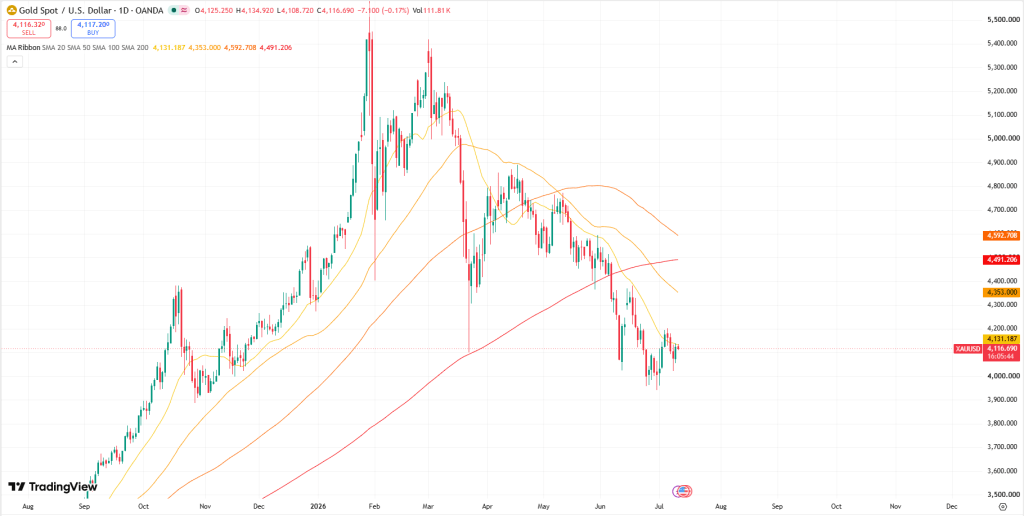

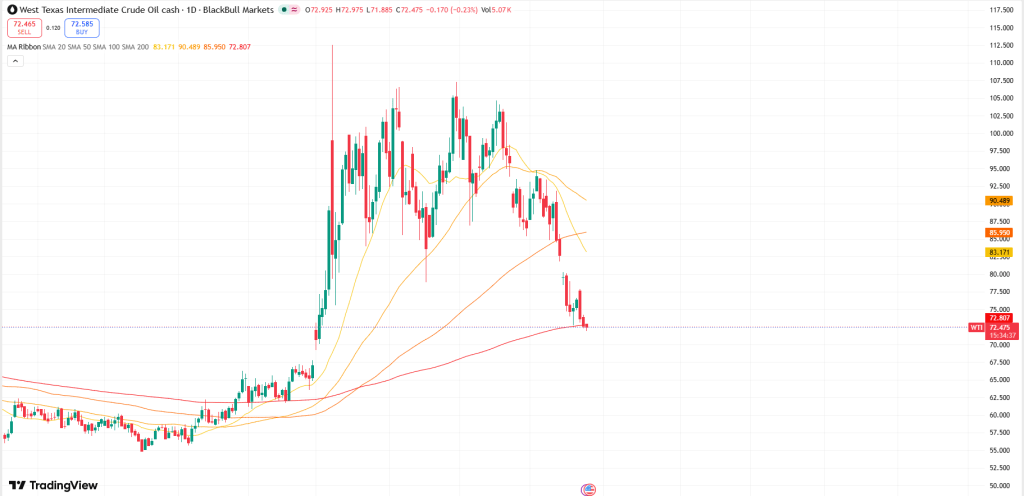
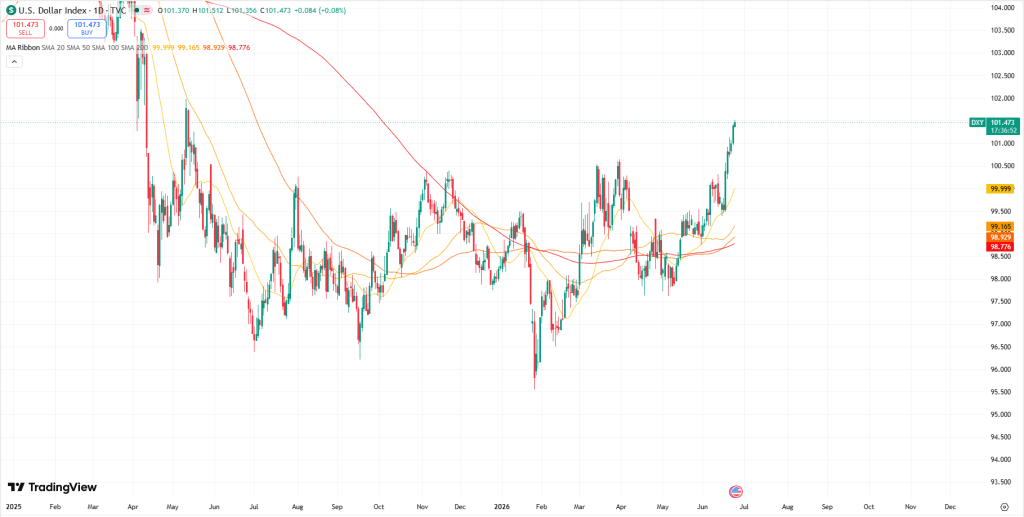


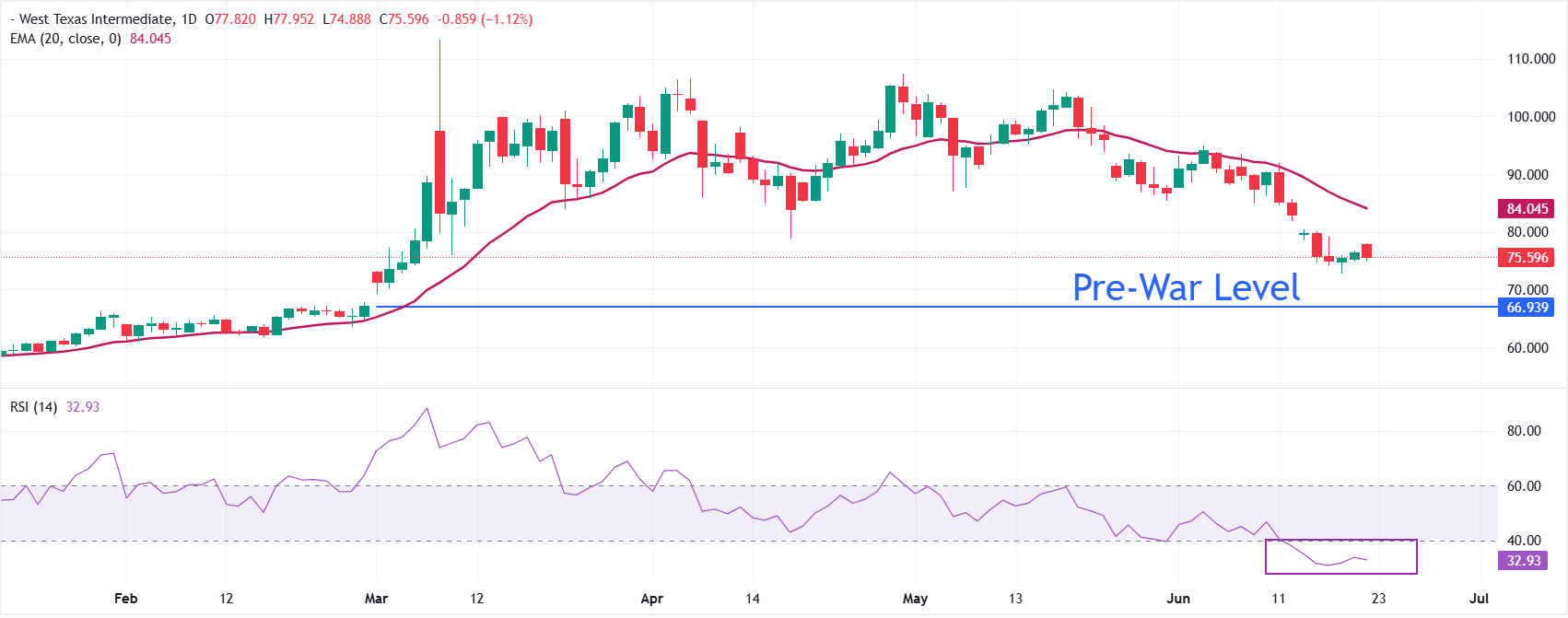
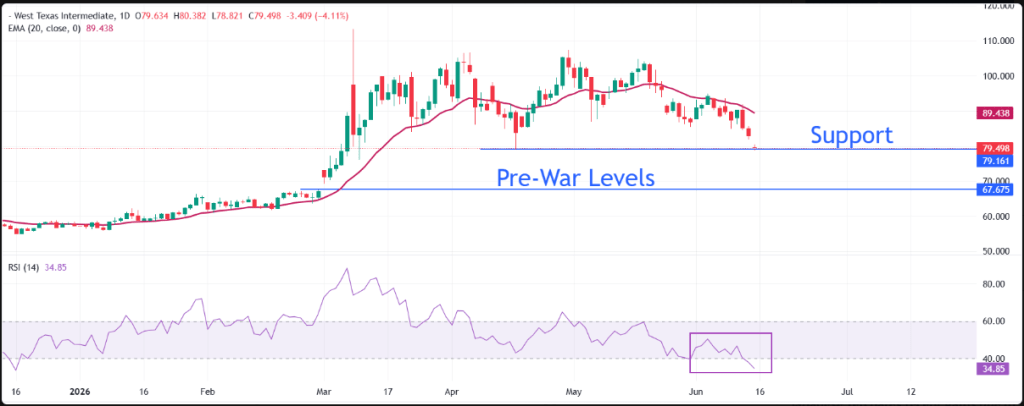

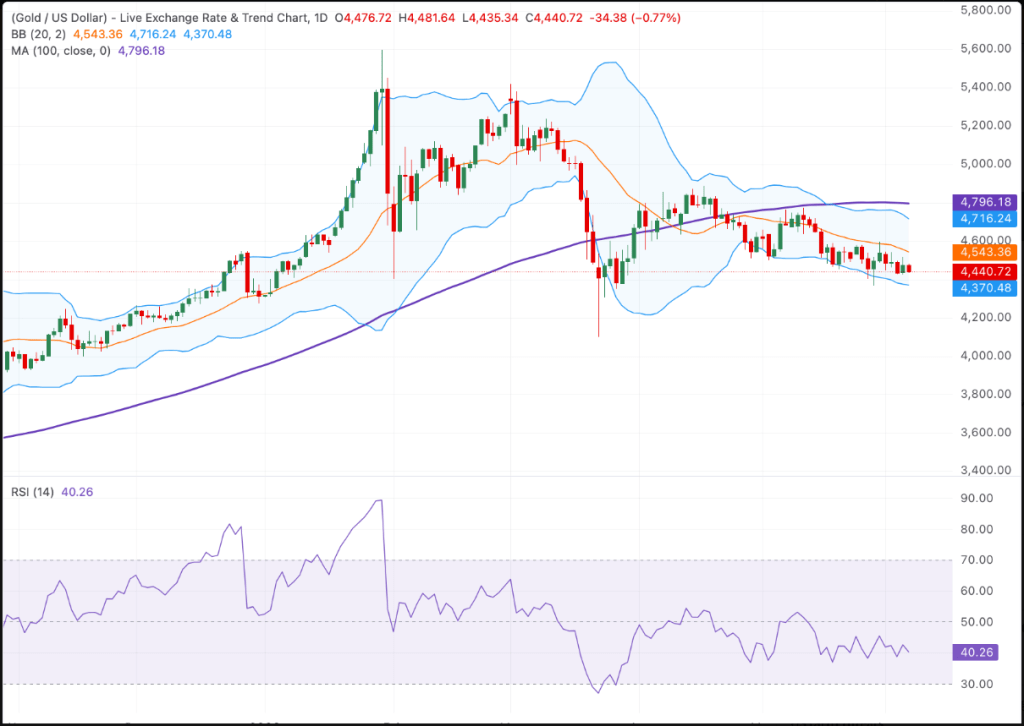

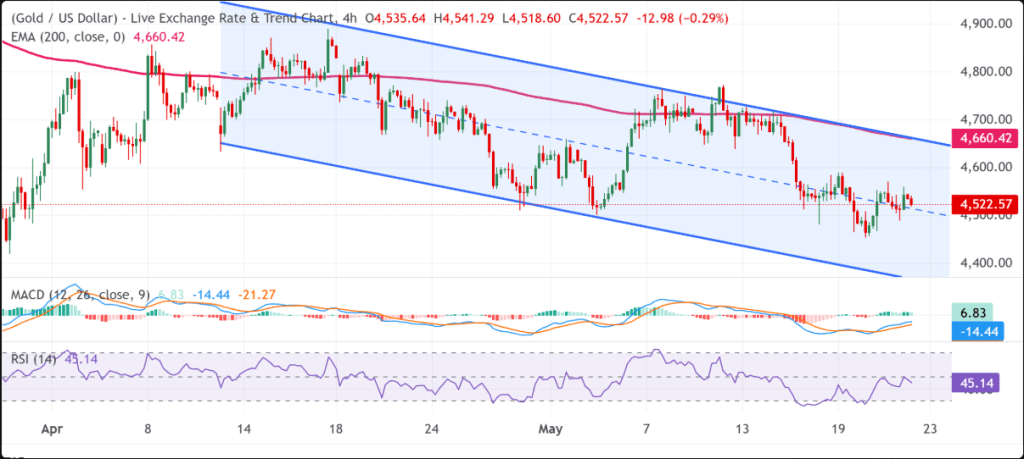



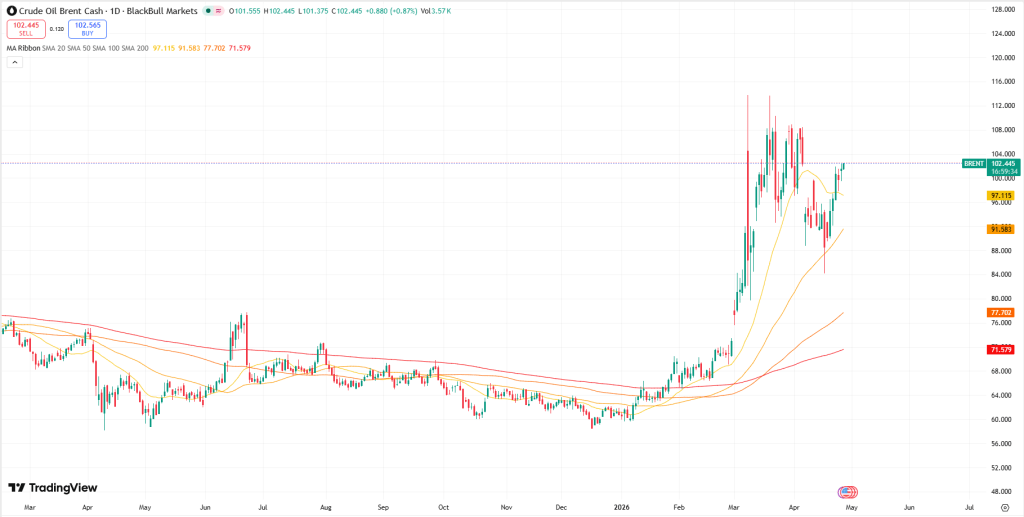


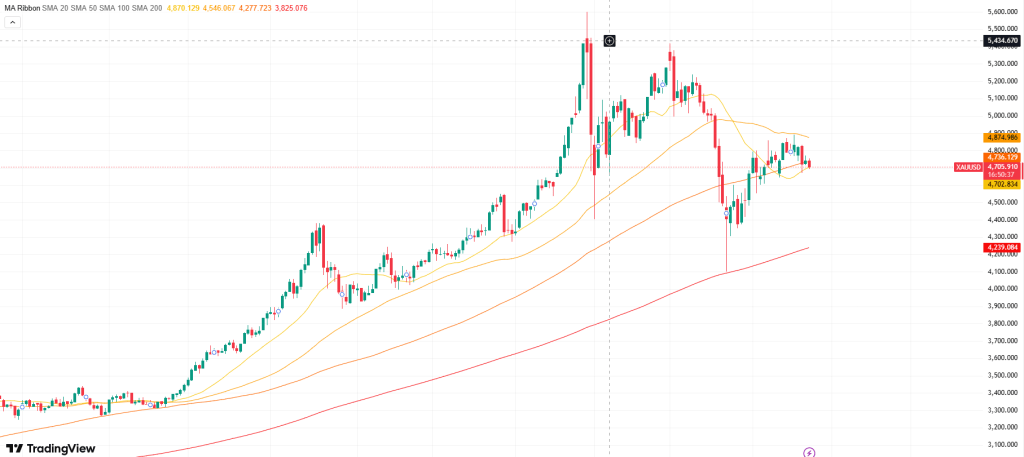
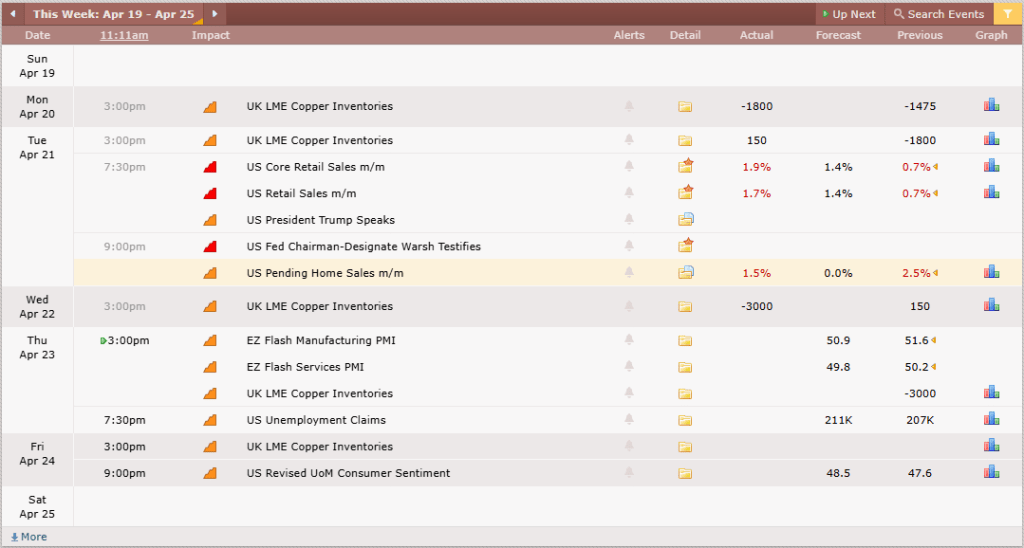

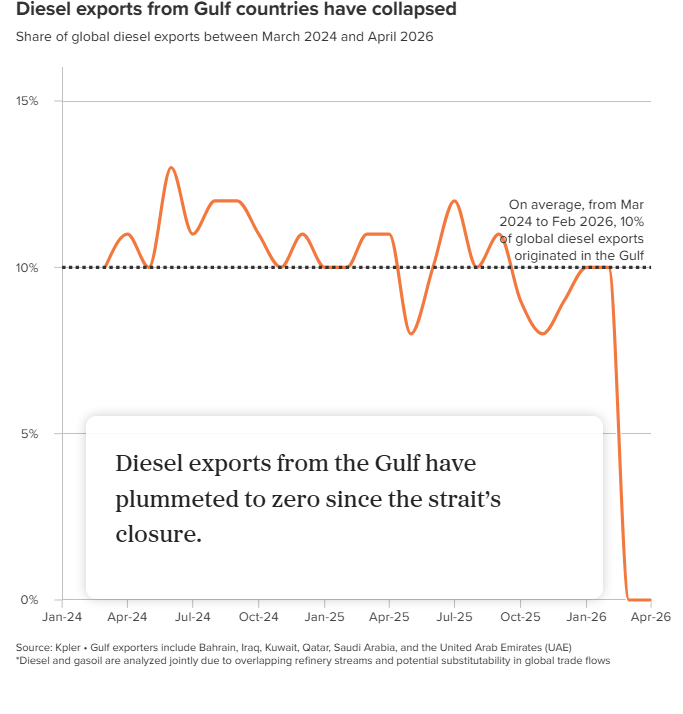




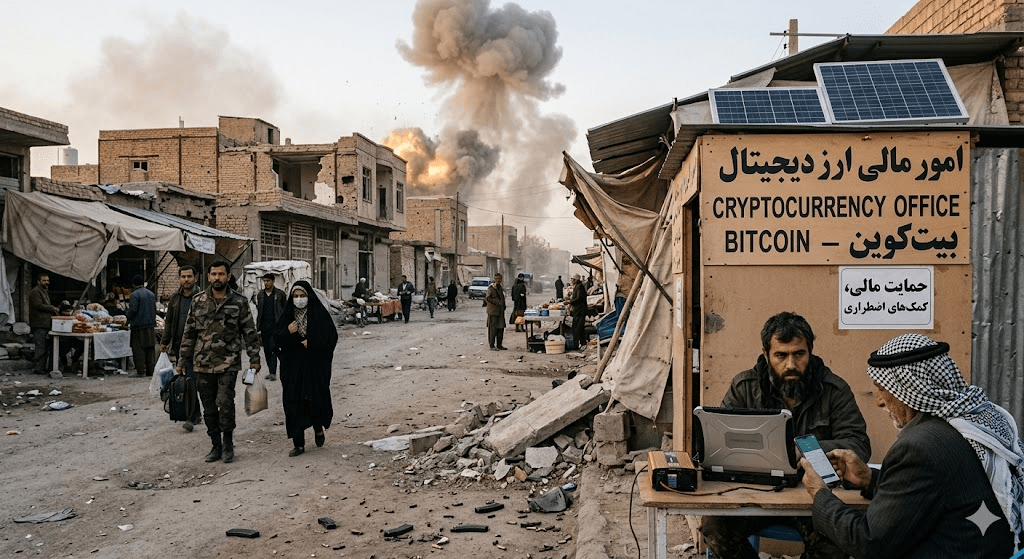



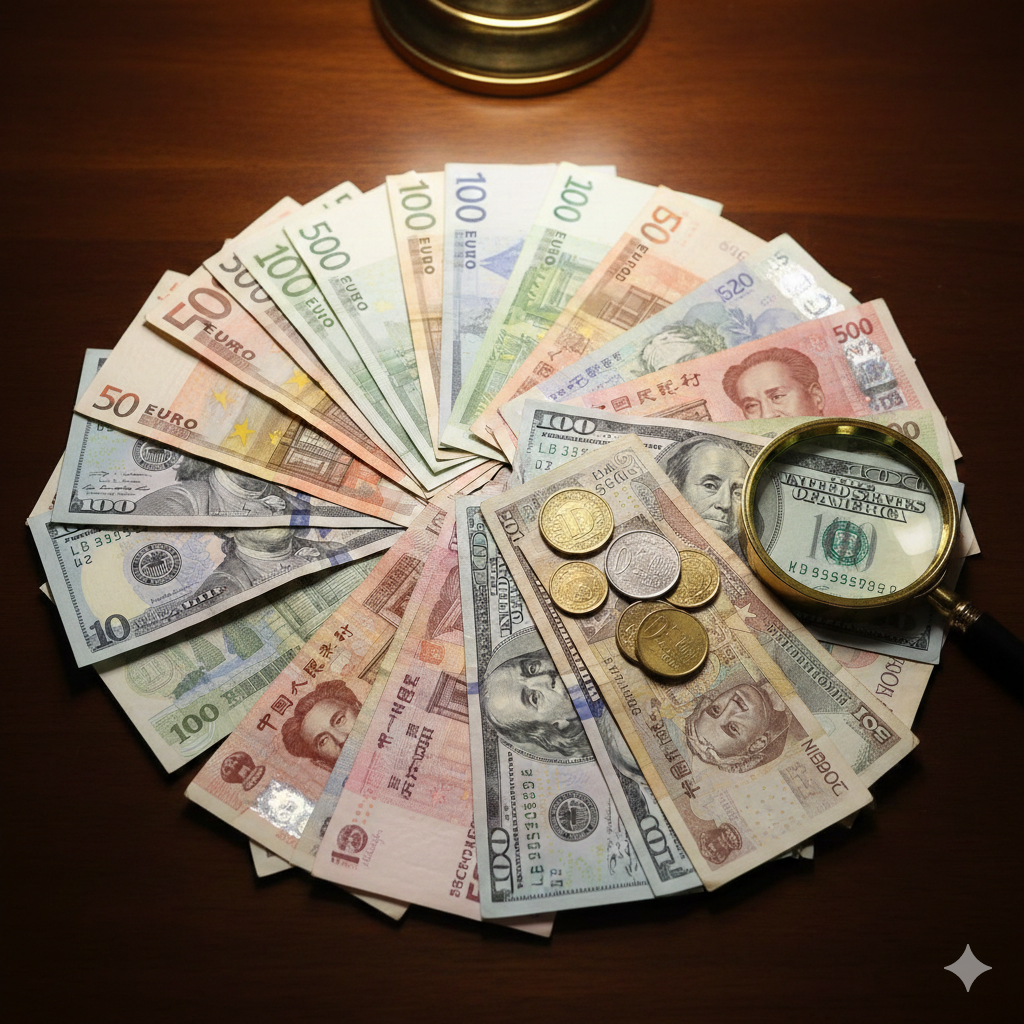





 THE ETERNAL SOVEREIGN