Trump is expected to pressure Japan to support the Iran conflict during a White House meeting.
Donald Trump is expected to use a White House meeting with Japan’s prime minister, Sanae Takaichi, to seek support for the war against Iran, putting Tokyo in a difficult position as it weighs how much assistance it can offer.
Although Trump has criticized allies for their limited backing of the U.S.-Israeli campaign—while also claiming the U.S. does not need help—he is still urging partners to contribute naval forces to clear mines and protect tankers in the Strait of Hormuz, which has been largely disrupted during the conflict.
The visit, originally intended to reinforce long-standing U.S.-Japan ties, has become more complicated. While Takaichi has advocated for a stronger military posture at home, public opposition to the Iran war has so far prevented Japan from committing to operations in the Gulf.
Meanwhile, other U.S. allies, including Germany, Italy, and Spain, have declined to join any mission in the region, frustrating Trump. Takaichi has stated that Japan has not received a formal request but is reviewing what actions might be possible within constitutional limits.
Analysts note the meeting could prove challenging for Takaichi, who had hoped to influence Trump’s approach to Asia policy—particularly regarding China—but may instead have to respond to immediate demands related to the Middle East.
Japan is also preparing for potential U.S. requests to help produce or co-develop missiles to replenish American stockpiles depleted by conflicts in Iran and Ukraine. At the same time, Tokyo’s diplomatic ties with Iran could offer a channel for mediation, though past efforts have failed.
In addition, Takaichi is expected to express Japan’s intention to join the “Golden Dome” missile defense initiative and announce new investments in the U.S., potentially including tens of billions of dollars in sectors such as energy and critical minerals, building on earlier commitments tied to easing trade tensions.
Oil prices climb after Iran launches attacks on energy infrastructure across the Middle East.
Oil prices climbed on Thursday, with Brent crude surging by as much as $5 per barrel after Iran launched attacks on energy infrastructure across the Middle East in response to a strike on the South Pars gas field—marking a significant escalation in its conflict with the United States and Israel. By 0400 GMT, Brent futures had gained $4.66, or 4.3%, to $112.04 a barrel, after earlier peaking at $112.86. Meanwhile, U.S. West Texas Intermediate (WTI) rose 96 cents, or 1%, to $97.28, having previously jumped more than $3. Brent had already advanced 3.8% on Wednesday, while WTI ended nearly unchanged.
WTI has been trading at its widest discount to Brent in over a decade, driven by releases from U.S. strategic reserves and elevated shipping costs, while renewed strikes on Middle Eastern energy assets have lent additional support to Brent. Analysts noted that the intensifying conflict—targeted attacks on oil infrastructure and the loss of Iranian leadership—could lead to prolonged supply disruptions. They also pointed to the U.S. Federal Reserve’s decision to hold interest rates steady, accompanied by a hawkish outlook, as another factor heightening market concerns amid wartime conditions.
Further escalating tensions, QatarEnergy reported significant damage to its Ras Laffan LNG hub following Iranian missile strikes, while Saudi Arabia said it intercepted ballistic missiles and a drone targeting its gas facilities. Iran had issued evacuation warnings ahead of strikes on oil sites in Saudi Arabia, the UAE, and Qatar, retaliating for earlier attacks on its own facilities in South Pars and Asaluyeh.
South Pars, part of the world’s largest natural gas field shared between Iran and Qatar, was hit in an attack attributed to Israel, though U.S. and Qatari involvement was denied by President Donald Trump. He warned that the U.S. would respond if Iran targeted Qatar and said Israel would refrain from further strikes unless provoked.
Market analysts expect oil prices to remain elevated as tensions show no signs of easing and the Strait of Hormuz remains at risk of disruption. Reports also suggest the U.S. is considering deploying additional troops to the region, with options including securing tanker routes through the Strait—potentially involving both naval and air forces, and possibly ground troops if necessary.
When geopolitical tensions tied to oil intensify, most investors focus on outright oil prices. While those prices matter, fewer pay attention to the spread between Brent and WTI—an equally revealing signal. West Texas Intermediate (WTI), priced in Cushing, Oklahoma, serves as the U.S. benchmark and mainly reflects North American supply-demand dynamics.
Brent, by contrast, is the global benchmark derived from North Sea crude and closely mirrors international supply-demand conditions—especially seaborne oil flows through key routes like the Persian Gulf and the Strait of Hormuz. Under normal circumstances, Brent trades at a premium of about $2–$5 over WTI.
Sharp changes in this premium carry important market signals. In the context of the Iran conflict, the Brent–WTI spread offers one of the clearest real-time indicators of how producers, consumers, and traders are interpreting the situation.
A widening spread suggests markets are pricing in a global supply disruption, while a stable or narrowing gap—even with high spot prices—implies expectations that any disruption will be limited and temporary.
Recently, the spread has been highly volatile. It currently stands at around $7, pointing to concerns that the conflict could continue to strain global supply. However, frequent swings in the spread show how quickly sentiment is shifting with each new development.
S&P 500 Trails Most Sectors
Last week, the S&P 500 slipped by less than 0.5%, but it has fallen just over 3% from its Tuesday peak and now sits roughly 5% below recent highs. As illustrated in the charts, most sectors are outperforming the broader market based on both absolute and relative measures. The blue circle in the first chart shows that many sectors are positioned in the top-left quadrant—suggesting they are somewhat overbought relative to the S&P 500, yet slightly oversold on a standalone technical basis.
The second chart compares each sector’s performance versus the S&P 500 over the past five days and the prior 20-day period. Transportation stands out as a clear laggard. The third chart, which breaks down the sector’s top ten holdings, shows that oil-sensitive industries—such as trucking, freight, and airlines—have been hit the hardest. These businesses are also closely tied to overall economic activity.
As a result, elevated oil prices combined with rising concerns about economic slowdown are weighing heavily on transportation stocks. If the conflict drags on, the sector is likely to continue underperforming. Even if valuations become deeply oversold, they may stay depressed until there are clearer signs of stability or resolution.
Oil prices declined during Wednesday’s Asian session, pulling back from recent gains after Iraq and the Kurdistan Regional Government agreed to restart crude exports via Turkey’s Ceyhan terminal.
The agreement helped ease some concerns over supply disruptions stemming from the U.S.-Israel conflict with Iran. However, Brent crude remained above $100 per barrel, as the war entered its third week with little indication of de-escalation.
Markets also stayed cautious ahead of the Federal Reserve’s policy decision later in the day, amid worries that persistent inflation—fueled in part by higher oil prices linked to the Iran conflict—could prompt a more hawkish stance.
By 00:18 ET (04:18 GMT), Brent futures had dropped 2.3% to $101.05 per barrel, while West Texas Intermediate (WTI) crude fell 3.3% to $93.03 per barrel.
WTI faced additional pressure after data from the American Petroleum Institute showed U.S. crude inventories rose by 6.6 million barrels last week, defying expectations of a 0.6 million barrel draw. This data often signals a similar trend in official government figures, due later Wednesday.
On Tuesday, Iraq and Kurdish authorities finalized a deal to resume oil shipments to Turkey’s Ceyhan hub starting Wednesday. The move comes as major oil producers seek alternative export routes beyond the Strait of Hormuz, especially after Iran effectively blocked the critical passage earlier this month.
Iraq had reportedly aimed to export at least 100,000 barrels per day through Ceyhan, after shutting in around 70% of its production due to the conflict. Still, the volumes from Ceyhan are expected to cover only a small portion of the supply gap caused by disruptions in Hormuz.
Oil prices also eased after reports that the United Arab Emirates may support a U.S.-led initiative to secure shipping through the Strait of Hormuz. Iran had largely halted traffic through the strait—which handles roughly 20% of global oil supply—in retaliation for U.S. and Israeli strikes.
The UAE could become the first country to back Washington’s efforts, though most allies have so far declined to participate. Meanwhile, tensions remain high, with Iran escalating attacks on vessels near Hormuz following strikes on a key export facility. Reports also indicated that Iranian security chief Ali Larijani was killed in an Israeli strike, raising the risk of further retaliation.
Despite the pullback, oil prices remain supported by ongoing supply concerns. Brent has surged more than 40% since the conflict began in late February. Analysts at OCBC expect crude prices to stay above $100 per barrel through at least mid-2026, citing the lack of clear prospects for easing tensions.
Oil prices to remain above $100/bbl
Oil prices are expected to stay above $100 per barrel in the near term, as the U.S.-Iran conflict shows little indication of easing, according to analysts at OCBC.
The bank noted that with the conflict now in its third week and no meaningful diplomatic progress, crude flows through the Strait of Hormuz remain heavily restricted, keeping global supply tight.
OCBC has revised its outlook, projecting Brent crude to hover around $100 per barrel until mid-2026—well above its earlier estimate of roughly $70—before gradually declining toward $70 by early 2027 as disruptions ease.
Analysts warned that prolonged shipping disruptions are forcing Gulf producers to cut output, increasing the likelihood that short-term supply issues could turn into more sustained losses.
Tanker activity in the Strait of Hormuz has dropped sharply due to security concerns, effectively disrupting a crucial route responsible for about 20% of global oil consumption.
Although some shipments have cautiously resumed following Iranian inspections and potential stockpile releases from the International Energy Agency, overall volumes remain significantly below normal.
OCBC added that mitigation efforts—such as rerouting through alternative pipelines, tapping strategic reserves, and ongoing Iranian exports—could replace up to 10 million barrels per day. However, this would still leave a notable supply shortfall if disruptions persist.
The bank concluded that oil markets are nearing a “moderately severe” supply shock scenario, with risks tilted toward further price increases if geopolitical tensions continue.
Oil jumps more than 2% as markets assess supply threats from the Iran conflict.
Oil prices rebounded over 2% early Tuesday, recovering part of the previous session’s losses as supply concerns intensified amid major disruptions in the Strait of Hormuz.
Brent crude climbed to around $102.69 a barrel, while WTI rose to about $95.92. The gains follow a sharp selloff in the prior session, when prices dropped after some tankers managed to pass through the key shipping route.
The Strait of Hormuz—responsible for roughly 20% of global oil and LNG trade—has been largely disrupted by the ongoing US-Israel conflict with Iran, now in its third week, heightening fears of supply shortages, rising energy costs, and persistent inflation.
Tensions remain elevated as several US allies declined calls to deploy naval escorts for tankers, while risks of further attacks on shipping continue to threaten stability in the region. Iran has also sought the release of seized Indian tankers as part of efforts to secure safe passage through the Gulf.
The disruption has already forced the UAE to cut oil output by more than half, tightening global supply. In response to rising energy costs, the International Energy Agency is considering additional releases from strategic reserves beyond the 400 million barrels already planned.
Meanwhile, major banks have raised their oil price forecasts, reflecting the risk of prolonged supply disruptions. Scenarios range from a quick resolution that pushes prices back toward $70 to an extended conflict that could drive Brent toward $85 or higher.
Security sources report that drones and rockets were launched at the US embassy in Baghdad.
Several rockets and at least five drones targeted the US embassy in Baghdad early Tuesday, in what Iraqi security sources described as the most severe attack since the US–Israel conflict with Iran began.
Witnesses saw multiple drones heading toward the compound, with air defenses intercepting some, while at least one hit inside the embassy, sparking fire and smoke. Blasts were also reported across the city.
The strike reflects escalating retaliation by Iran-backed militias against US interests in Iraq following the war that started on February 28.
In response, Iraqi forces have increased security across Baghdad, shutting down the fortified Green Zone that houses key government buildings and diplomatic missions.
The US Dollar Index holds onto Monday’s pullback around the 100.00 mark as attention turns to the Fed’s policy decision.
Iran has permitted multiple countries to move their energy tankers through the Strait of Hormuz.
The Fed is widely anticipated to leave interest rates unchanged on Wednesday.
The US Dollar (USD) is holding onto Monday’s corrective move, which was triggered by a sharp pullback in oil prices that helped ease concerns about unanchored consumer inflation.
At the time of writing, the US Dollar Index (DXY), which measures the Greenback against a basket of six major currencies, is edging slightly higher near 99.90.
The index retreated notably from Friday’s more-than-nine-month high of 100.54 as oil prices dropped after Iran permitted several countries to transport oil and Liquefied Petroleum Gas (LPG) shipments through the Strait of Hormuz, potentially reducing worries over energy supply disruptions.
In recent weeks, the USD has rallied strongly, supported by its safe-haven appeal amid escalating tensions involving Iran, the United States, and Israel. Additionally, elevated oil prices have dampened expectations for near-term interest rate cuts by the Federal Reserve (Fed).
Data from the CME FedWatch tool suggests that markets are largely convinced the Fed will keep rates unchanged until at least the September meeting, with the probability of a rate cut at that time standing at around 50%.
Looking ahead, investors will closely watch Wednesday’s Fed policy decision for further guidance. Attention will also be on the FOMC’s Economic Projections report, which will provide updated forecasts for interest rates, inflation, and economic growth.
WTI
WTI prices advance to around $94.20 during early Tuesday trading in Asia.
Rising geopolitical tensions in the Middle East continue to support crude prices.
The IEA is considering releasing additional oil reserves to mitigate the economic fallout from the US–Israel conflict with Iran.
West Texas Intermediate (WTI), the US crude benchmark, is hovering near $94.20 during early Tuesday trading in Asia, supported by ongoing tensions surrounding Iran, with no clear signs of de-escalation. Market participants are also awaiting the American Petroleum Institute (API) report due later in the day.
On Tuesday, the Israeli military reported detecting missiles launched from Iran toward Israeli territory, urging residents in impacted areas to seek shelter immediately. Meanwhile, the United Arab Emirates (UAE) announced a temporary full closure of its airspace as a precautionary step, with its defense ministry confirming responses to incoming missile and drone threats from Iran.
Fears of retaliatory Iranian strikes targeting ships, infrastructure, and key transit ports for oil shipments have raised concerns that the conflict could evolve into a prolonged regional war. Such risks may continue to provide near-term support for WTI prices.
However, on the supply side, the International Energy Agency (IEA) is considering releasing additional oil reserves into the global market to ease upward pressure on prices. The agency indicated a potential release of up to 400 million barrels, which, if coordinated among member countries, could temporarily boost supply and help limit sharp price spikes.
Silver (XAG/USD)
Silver declines as traders adjust positions ahead of Wednesday’s Federal Reserve policy decision.
Higher oil prices, driven by escalating tensions in the Middle East, are fueling inflation concerns and dampening expectations for near-term Fed rate cuts.
At the same time, geopolitical risks involving the United States, Iran, and Israel are helping to cap deeper losses by maintaining demand for safe-haven assets like silver.
Silver (XAG/USD) is trading near $80.50 on Tuesday, down about 0.60% on the day. The metal remains under pressure as fading expectations for near-term US rate cuts—amid rising inflation concerns tied to Middle East tensions—continue to weigh on sentiment.
Markets broadly expect the Federal Reserve to keep its benchmark rate unchanged within the 3.50%–3.75% range at Wednesday’s meeting, according to the CME FedWatch tool. If confirmed, this would mark a second straight pause following the prior easing cycle. Prolonged higher rates tend to pressure non-yielding assets like Silver, as they raise the opportunity cost of holding them.
Escalating geopolitical tensions in the Middle East have driven Oil prices higher, fueling fears of persistent inflation. Rising gasoline costs in the US are adding strain on households and may keep inflation expectations elevated, reinforcing the case for the Fed to maintain restrictive policy for longer.
Geopolitical developments continue to influence the precious metals market. Recent US strikes on Iran’s key export hub on Kharg Island have intensified concerns over global energy supply disruptions. While Washington has indicated the conflict could be resolved within weeks and is exploring an international effort to secure shipping routes through the Strait of Hormuz, uncertainty remains high.
This fragile geopolitical backdrop may help limit further downside in Silver. As a safe-haven asset, it tends to attract demand during periods of heightened risk, which could cushion losses even as higher interest rate expectations dampen overall investor appetite.
Sources: Ghiles Guezout, Lallalit Srijandorn and Sagar Dua
U.S. Strategy I: Roaring 2020s vs. Stagflating 1970s Redux
In last Tuesday’s QuickTakes, reacting to the latest Middle East conflict, we noted that although markets were already due for a pullback because of excessive bullish sentiment, the escalation increased the likelihood of a deeper correction. We suggested the market could fall around 10% from its peak, potentially reaching 15% if Iran’s Islamic Revolutionary Guard Corps (IRGC) succeeded in sustaining a blockade of the Strait of Hormuz using drones and fast boats.
Since then, much of Iran’s conventional naval capability has reportedly been destroyed. However, as long as the IRGC retains drone capabilities, the strategic waterway could remain effectively constrained. Donald Trump has authorized the United States Navy to escort vessels through the Strait, though the operation may take time to deploy and may not fully eliminate the threat of Iranian drone attacks.
Media reports over the weekend underscored those risks. According to the New York Post, an Iranian suicide drone struck a commercial oil tanker in the Strait, setting it ablaze while U.S. naval protection efforts for shipping lanes could still be weeks away.
Limits of Air Power
Military historians have long debated whether air power alone can decisively win wars. Most conclude it rarely achieves lasting victory by itself. While air strikes can destroy infrastructure, supply chains, and concentrated forces, they cannot control territory, conduct searches, or administer local governance. Nor can they fully eliminate dispersed threats such as drones.
Over the weekend, President Trump declined to rule out deploying ground forces, though he dismissed the idea of using Kurdish fighters as proxies for an invasion of Tehran, saying the conflict was already “complicated enough.” He indicated ground operations would only occur if the adversary were sufficiently weakened.
Domestic Economic Backdrop
At home, economic data has also softened. February’s U.S. employment report came in much weaker than expected, while January retail sales disappointed. As a result, the Federal Reserve Bank of Atlanta’s GDPNow model lowered its estimate for Q1 real GDP growth to 2.1% (annualized), down from 3.0%.
This leaves both the U.S. economy and equity markets caught between geopolitical shocks and slowing domestic momentum. The Federal Reserve faces a similar dilemma: if higher oil prices persist, its dual mandate could be squeezed between rising inflation and weakening employment.
Implications for the Economic and Market Outlook
Rapidly Changing Conditions
Given the speed of developments, scenario probabilities are being adjusted. The base case remains the “Roaring 2020s” with a 60% probability. However, the “Meltup” scenario has been cut from 20% to 5%, while the “Meltdown” scenario—now including the risk of 1970s-style stagflation—has been raised from 20% to 35%.
Looking beyond this year to the rest of the decade, the outlook narrows to two primary possibilities:
Roaring 2020s: 85% probability
Stagflating 1970s Redux: 15% probability
Oil Prices and Market Risk
Historically, sharp oil price spikes have often coincided with recessions and bear markets. One recent exception was the 2022 surge following Russia’s invasion of Ukraine, which produced a bear market but not a recession—highlighting the resilience of the U.S. economy.
A similar pattern could play out today. While the economy may absorb higher energy costs, the current oil shock still increases the likelihood of a 10%–15% correction in equities, even if a full bear market ultimately proves avoidable under current conditions.
War Likely to Continue for Several More Weeks
Our relatively optimistic scenario assumes the conflict will persist for a few more weeks, while the U.S. economy and corporate earnings remain resilient, as they have during previous shocks.
One reason for this resilience is the sharp decline in the economy’s energy intensity—measured as total energy consumption per unit of real GDP. In the United States, energy intensity has fallen dramatically over the past several decades, dropping about 70% between 1950 and 2024 and roughly 62% since 1979.
This structural shift means the U.S. economy is far less sensitive to oil-price shocks than in earlier decades, particularly compared with the 1970s oil crisis period when energy costs had a much larger impact on growth and inflation.
The United States economy has gradually shifted from heavy reliance on energy-intensive manufacturing toward a more service-oriented structure, which has helped reduce overall energy consumption relative to economic output.
Additional factors behind the decline in energy intensity include the introduction of Corporate Average Fuel Economy (CAFE) standards and ongoing technological improvements in internal combustion engines, both of which have improved fuel efficiency across the transportation sector.
At the same time, the expansion of the digital economy—including data centers, cloud computing, and artificial intelligence—has been driving stronger electricity demand. Even so, the growing use of natural gas and renewable energy sources in power generation, as well as their increasing adoption in industrial processes that previously relied on oil, should continue to moderate the economy’s direct dependence on crude oil.
Oil production
U.S. oil production, which includes natural gas plant liquids and renewable fuels/oxygenates, has reached a record level of 24 million barrels per day (mbd), significantly exceeding domestic consumption of 21 mbd (Fig. 7 and Fig. 8). As a result, the United States has become a net exporter of roughly 3.0 mbd (Fig. 9). This represents a dramatic shift compared with 2007, when the country was a net importer of approximately 12 mbd.
A potential return of 1970s-style stagflation
A bear market cannot be ruled out if investors begin to expect a repeat of the stagflationary conditions seen in the 1970s. At that time, the global economy was hit by two major oil shocks. In October 1973, Arab members of Organization of the Petroleum Exporting Countries (OPEC) imposed an oil embargo on the United States and other countries that supported Israel during the Yom Kippur War.
Oil prices surged dramatically, rising about fourfold from roughly $3 to nearly $12 per barrel within only a few months. This led to stagflation—an unusual and painful economic condition characterized by slow economic growth, high unemployment, and accelerating inflation (Fig. 10). The crisis resulted in long queues at gasoline stations, fuel rationing, and a heightened awareness of the United States’ dependence on foreign energy supplies.
The second oil crisis occurred after the Iranian Revolution, which significantly disrupted global oil supplies. As a result, oil prices surged, rising to more than twice their previous level. This shock further weakened an already fragile economy and deepened the stagflationary pressures. Together, the two oil crises contributed to two recessions during the 1970s.
According to Polymarket, the probability of a recession this year rose to a three-month high of 34% on Friday, up from 21% on Wednesday, February 25, just before the conflict began (Fig. 11).
U.S. Strategy II: A Direct Confrontation with the IRGC
When the conflict began on Saturday, February 28, the initial assumption was that it would end quickly. However, by the following Tuesday, that view changed, prompting further analysis in that day’s QuickTakes. A key concern is that by eliminating the leadership of the Iranian regime in the opening hour of the war, the United States and Israel effectively unleashed the regime’s most powerful force—the Islamic Revolutionary Guard Corps (IRGC). Often described as a “state within a state,” the IRGC is believed to control 20–40% of Iran’s economy, including large construction companies, telecommunications networks, and oil engineering firms. This financial base allows it to sustain operations even under severe sanctions.
In April 2019, the United States officially designated the IRGC as a Foreign Terrorist Organization—the first time Washington had applied such a label to a branch of another government. Because of their decentralized structure and access to weapons such as suicide drones, the group would be difficult to eliminate through air power alone.
Donald Trump first publicly demanded Iran’s “unconditional surrender” on Friday, March 6. The following day, he clarified that the phrase meant a situation where Iran could no longer continue fighting. On Sunday morning, he also warned that any new Supreme Leader selected by Iran’s Assembly of Experts “would not last long” without his approval, implying a U.S. veto over the succession process following the death of Ali Khamenei.
Without a central leader, Iran lacks a figure capable of formally accepting unconditional surrender. For example, on Saturday, Iranian President Masoud Pezeshkian issued a public apology for Iran’s “fire-at-will” attacks on neighboring countries. Yet only hours later, the IRGC launched another wave of strikes, highlighting a severe breakdown in command and control after Khamenei’s death on February 28. Even without the regime’s top leader, the IRGC’s decentralized design allows regional commanders to operate independently, already carrying out retaliatory drone and missile attacks against U.S. assets and allies in the Gulf.
One objective of the ongoing air campaign is to weaken the IRGC’s ability to suppress domestic opposition. By striking the Basij—the IRGC’s paramilitary force used for internal control—the United States hopes to open the door for a possible uprising inside Iran. However, from the perspective of financial markets, the war will not truly end until commercial ships can move through the Strait of Hormuz without the threat of IRGC attacks. Once that happens, the stock market’s bullish trend could resume.
U.S. Economy: Domestic Impact
Within the United States, economic data from January and February were collected before the war and present a mixed picture. Data from March will likely reveal the first economic effects of the conflict, including rising inflation and a weakening labor market. One immediate sign of inflationary pressure is the sharp increase in gasoline prices, driven by the surge in crude oil prices (Fig. 12).
Food prices may not increase right away, but fertilizer shortages could push them higher in the months ahead. Roughly 25%–33% of the global nitrogen fertilizer trade—particularly urea and anhydrous ammonia—moves through the Strait of Hormuz. On March 2, an Iranian drone attack struck the Ras Laffan Industrial City in Qatar, the world’s largest export hub for liquefied natural gas. Since natural gas is the main feedstock used to produce nitrogen fertilizers, disruptions there could have significant downstream effects. Meanwhile, Saudi Arabia, Oman, and the United Arab Emirates—all among the world’s top ten exporters of urea—are facing logistical and production challenges because of the ongoing air conflict.
If the blockade remains in place into early April, farmers might be forced to shift away from nitrogen-intensive corn-based fertilizer systems toward soybean alternatives or simply reduce fertilizer usage. Lower fertilizer application typically results in reduced crop yields, which could lead to a secondary food price shock toward the end of 2026.
This conflict represents another major test of the resilience of the U.S. economy since the beginning of the decade. It also challenges the so-called “Roaring 2020s” outlook. Despite the new risks, that optimistic scenario remains the base case with a 60% probability. However, the likelihood of a 1970s-style stagflation scenario has been raised to 35%, while the probability of a market melt-up has been reduced to 5% for the rest of 2026.
Recent economic data suggest that the labor market weakened in February and retail sales were soft in January. On the positive side, productivity growth has been particularly strong in recent quarters. If that trend continues, higher productivity could help mitigate some of the stagflationary pressures created by the war.
Employment
The January employment report came in significantly stronger than expected, whereas the February report was much weaker than forecasts. Severe weather conditions and a labor strike negatively affected February’s figures. As a result, nonfarm payrolls declined by 92,000 last month.
In addition, the January payroll figure was slightly revised downward by 4,000 to 126,000, while December’s data was adjusted from a previously reported gain of 48,000 to a decline of 17,000 (Fig. 13). Meanwhile, the unemployment rate increased marginally, rising to 4.4% in February from 4.3% in January.
The positive development is that average hourly earnings increased by 0.4% month over month in February, while the average workweek remained unchanged. Consequently, our Earned Income Proxy, which estimates wages and salaries within personal income, rose by 0.3% in February, reaching a new record high (Fig. 14).
The Federal Reserve is facing a policy dilemma: a softening labor market, which would normally justify cutting the federal funds rate, versus rising energy and fertilizer costs linked to the Iran conflict, which could push inflation higher and argue for keeping rates unchanged or even tightening policy.
This clash of signals complicates the Fed’s next move. Weak employment data suggests the economy may need monetary support, while higher oil and commodity prices risk reigniting inflation, forcing policymakers to remain cautious about easing.
Retail Sales
In January, retail sales declined by 0.2% month over month, while December’s figures, previously reported as showing moderate growth, were revised downward to no change compared with the previous month.
Among sectors, nonstore retailers experienced a 1.9% monthly increase, whereas motor vehicle and parts dealers recorded a 0.9% decline (Fig. 15). Sales at gasoline stations also dropped 2.9%.
One positive sign was a 0.3% month-over-month rise in core retail sales, which excludes several more volatile categories.
The rollout of last year’s One Big Beautiful Bill Act is expected to support consumer spending in the weeks ahead. A “February rebound” in retail activity is likely as record-high tax refunds—about 20% larger on average than last year—begin reaching households’ bank accounts.
Productivity
Labor productivity—defined as output per hour worked—increased at an annualized rate of 2.8% in Q4 2025. This marks the third consecutive quarter in which productivity growth has surpassed the long-term average of 2.1%, a benchmark calculated from data beginning in the late 1940s (Fig. 16).
At the same time, unit labor costs rose by only 1.3% year over year in Q4 2025, which helped contain inflationary pressures in the economy (Fig. 17).
GDPNow
As noted earlier, the newest economic data prompted the Federal Reserve Bank of Atlanta’s GDPNow model to lower its forecast for first-quarter 2026 economic growth from 3.0% to 2.1% (Fig. 18).
Oil prices increased on Monday as the ongoing conflict involving the United States, Israel, and Iran continued to disrupt oil production and transportation across the Middle East, despite a call from Donald Trump for international cooperation to protect the strategic Strait of Hormuz.
Brent crude futures climbed by $2.30, or 2.2%, reaching $105.44 per barrel at 0903 GMT, while U.S. West Texas Intermediate crude rose $1.29, or 1.3%, to $100 per barrel.
Both benchmarks have jumped more than 40% this month, reaching their highest levels since 2022. The surge followed U.S.–Israeli strikes on Iran, which led Tehran to halt shipments through the Strait of Hormuz—an essential route for global energy trade—disrupting roughly one-fifth of the world’s oil and LNG supplies.
On Monday, oil-loading activities were suspended at the UAE’s Fujairah port after a drone strike triggered a fire in the emirate’s petroleum industrial area, according to two sources who spoke to Reuters.
Fujairah, located outside the Strait of Hormuz, serves as an export hub for around 1 million barrels per day of the UAE’s flagship Murban crude oil, equivalent to roughly 1% of global oil demand.
The International Energy Agency warned on Thursday that the conflict in the Middle East is causing the most severe oil supply disruption on record, as major producers including Saudi Arabia, Iraq, and the United Arab Emirates have reduced output since the war began.
According to PVM analyst Tamas Varga, investors appear to understand that if just two weeks of disruption in the Strait of Hormuz have already caused significant damage to production, exports, and refining, a prolonged conflict could have far more serious consequences, particularly as global inventories continue to decline.
Analysts from ING said on Monday that recent U.S. strikes on Kharg Island over the weekend have heightened concerns about oil supply, as the majority of Iran’s crude exports are shipped through the island.
Although the attacks appeared to focus on military installations rather than energy infrastructure, ING noted that they still threaten supply stability. This is because Iranian crude is currently among the few oil flows still passing through the vital Strait of Hormuz.
During the weekend, Donald Trump warned that additional strikes could target Kharg Island—an export hub responsible for roughly 90% of Iran’s oil shipments—after U.S. forces hit military facilities there, prompting retaliatory actions from Tehran.
On Sunday, Trump called on other countries to assist in safeguarding this critical energy corridor and said that Washington was holding discussions with several nations about jointly monitoring and securing the strait.
Trump also stated that the United States remained in communication with Iran, though he expressed skepticism that Tehran was ready to engage in meaningful negotiations to bring the conflict to an end.
Meanwhile, the International Energy Agency announced on Sunday that more than 400 million barrels of strategic oil reserves would soon be released into the market—a record intervention intended to stabilize prices amid disruptions caused by the Middle East conflict.
According to the agency, reserves from countries in Asia and Oceania will be made available immediately, while supplies from Europe and the Americas are expected to enter the market by the end of March.
SEB analyst Meyersson said that as the conflict moves into its third week, the absence of a clear resolution is increasing global market anxiety about the possibility of an uncontrolled escalation.
However, U.S. Energy Secretary Chris Wright said on Sunday that he expected the war to end within the next few weeks, which could allow oil supplies to recover and energy prices to decline.
U.S. President Donald Trump warned that he could authorize strikes on Iran’s oil infrastructure on Kharg Island if Tehran continues attacks on vessels passing through the strategically crucial Strait of Hormuz. The threat added further uncertainty to global markets already facing one of the most significant supply disruptions in history.
Trump accompanied the warning with a social media message claiming that U.S. forces had “completely destroyed” military targets on Kharg Island. The island functions as the main export terminal for roughly 90% of Iran’s crude shipments and is located about 300 miles northwest of the Strait of Hormuz.
However, the president clarified that American strikes had not targeted Kharg’s oil infrastructure. He added that if Iran or any other party attempted to block the safe passage of ships through the Strait of Hormuz, Washington could reconsider that restraint.
Trump also stated that Iran lacked the capability to defend itself against U.S. military action. In a post on Truth Social, he urged Iran’s armed forces and their allies to surrender, warning that continuing the conflict could further devastate the country.
Iran’s military responded on Saturday by warning that any attack on its oil or energy facilities would be met with retaliation against installations belonging to oil companies cooperating with the United States in the region, according to Iranian media reports.
Iran’s semi-official Fars News Agency reported that more than 15 explosions were heard on Kharg Island during the U.S. strikes. Sources said the attacks hit air-defense systems, a naval installation, and airport infrastructure, while leaving oil facilities untouched.
Energy markets were closely monitoring whether the strikes had damaged Kharg Island’s complex network of pipelines, storage tanks, and export terminals. Even minor disruptions could further constrain global oil supply and intensify volatility in energy markets.
Elsewhere in the region, Iran’s Islamic Revolutionary Guard Corps announced that it had carried out additional strikes against Israel in coordination with Lebanon’s Hezbollah, according to Iran’s Tasnim News Agency.
Meanwhile, the Israel Defense Forces said on Friday that its air force had attacked more than 200 targets across western and central Iran within the past 24 hours, including missile launchers, air-defense systems, and weapons manufacturing facilities.
The United States has also suffered losses. The U.S. military confirmed that all six crew members aboard a refueling aircraft that crashed in western Iraq had died.
According to The Wall Street Journal, citing U.S. officials, five U.S. Air Force tanker aircraft stationed at a base in Saudi Arabia were damaged in an Iranian missile strike and were undergoing repairs.
Gulf and Lebanon emerge as key flashpoints
Oil markets have experienced sharp price swings in response to Trump’s shifting comments about the potential duration of the conflict, which began on February 28 when large-scale U.S. and Israeli airstrikes targeted Iran. The fighting quickly expanded into a wider regional confrontation with major implications for global energy and financial markets.
Lebanon has become another focal point of the conflict, with Israeli forces and Hezbollah exchanging strikes in and around Beirut.
In addition to missile and drone attacks against Israel and U.S.-aligned Gulf states, Iran’s Islamic Revolutionary Guard Corps has attempted to disrupt shipping through the Strait of Hormuz, a vital route that carries about 20% of the world’s fossil fuel supplies.
Trump said on Friday that the United States Navy would soon begin escorting oil tankers through the waterway.
Although he previously suggested the war might last only a few weeks, Trump declined to predict a timeline for its end, saying the conflict would continue for as long as necessary.
Despite the fighting, Iran has continued exporting crude oil while several Gulf producers have halted shipments due to concerns about potential Iranian attacks.
Satellite imagery reviewed by TankerTrackers.com showed multiple very large crude carriers loading oil at Kharg Island earlier in the week. Iran exported between 1.1 million and 1.5 million barrels per day from the start of the war through midweek.
Bob McNally, president of Rapidan Energy Group, said Trump’s remarks could push markets to focus on the possibility that the current energy disruption — already the largest on record — might worsen and persist longer than expected.
Some industry analysts doubt Kharg Island’s oil infrastructure will remain untouched. Josh Young, chief investment officer at Bison Interests, remarked that bombing the island without hitting its oil facilities would be pointless.
War spreads across the Middle East
Iran’s new supreme leader, Mojtaba Khamenei, said in his first public remarks that the Strait of Hormuz would remain closed and warned neighboring countries to shut down U.S. military bases on their soil or risk becoming targets themselves.
European governments are now discussing measures to protect their interests. France has been consulting with European, Asian, and Gulf Arab partners on plans to deploy warships to escort commercial tankers through the Strait of Hormuz, according to French officials.
After nearly two weeks of fighting, about 2,000 people have been killed — the majority in Iran, with significant casualties also reported in Lebanon and increasing losses in Gulf states that have rarely been on the front lines of regional conflicts.
Millions of civilians have been displaced. In Lebanon, as Israeli airstrikes continued to hit the outskirts of Beirut, the country’s interior minister said authorities were struggling to accommodate the hundreds of thousands of people seeking refuge in the capital.
WTI declined after Australia’s Energy Minister Chris Bowen announced the release of 762 million liters of fuel from the country’s reserves. However, oil prices could climb again as the Strait of Hormuz remains closed amid intensifying tensions between the U.S., Israel, and Iran. Iran’s new supreme leader Mojtaba Khamenei stated that keeping the strait shut should continue to serve as a “tool to pressure the enemy.”
West Texas Intermediate (WTI) crude traded slightly lower during Asian trading hours on Friday, hovering around $95.20 per barrel after surging more than 9% in the previous session. Prices eased after Australia’s Energy Minister Chris Bowen announced that the country would release up to 762 million liters of fuel from strategic reserves and relax fuel stockholding rules to ease supply disruptions linked to the conflict with Iran.
The Australian government also plans to cut minimum fuel reserve requirements by as much as 20% in an effort to stabilize domestic supply. Nevertheless, oil prices could continue to climb as the Strait of Hormuz remains effectively closed amid escalating tensions between the United States, Israel, and Iran.
Since the war began, U.S. crude prices have jumped more than 40%. The International Energy Agency (IEA) warned that the U.S.–Israeli conflict with Iran could be triggering the largest supply disruption in the history of the global oil market.
Reports indicate that officials from the U.S. Department of Defense and the National Security Council underestimated Iran’s willingness to shut down the Strait of Hormuz in response to U.S. military strikes while planning the operation. The waterway carries around one-fifth of global oil consumption, making it one of the most strategically vital shipping routes in the world. Any interruption to tanker traffic there can rapidly impact global energy markets.
In his first public remarks since assuming power, Iran’s new supreme leader Mojtaba Khamenei said the closure of the Strait of Hormuz should remain a “tool to pressure the enemy.” He also warned that all U.S. military bases in the region should be shut down immediately or risk potential attacks.
The U.S. dollar strengthened on Wednesday as rising oil prices reignited inflation concerns, while an in-line and backward-looking U.S. consumer inflation reading did little to reinforce expectations for Federal Reserve rate cuts.
By 16:03 ET (20:03 GMT), the U.S. Dollar Index—tracking the greenback against a basket of six major currencies—had climbed 0.4% to 99.22. The euro slipped 0.3% to 1.1570, while the British pound was largely unchanged at 1.3416.
Oil prices climb despite record release from strategic reserves
Oil prices rose on Wednesday as the conflict with Iran showed little sign of easing, with a record release of 400 million barrels from emergency reserves by the International Energy Agency (IEA) doing little to calm concerns about rising inflation.
In a note, analysts at ING said the foreign-exchange market remains “strongly driven” by the recent sharp swings in oil prices.
Market attention remains focused on the Strait of Hormuz, the narrow passage south of Iran through which roughly one-fifth of the world’s oil supply passes, much of it headed to Asia. Concerns over potential Iranian attacks have caused a buildup of vessels on both sides of the strait, as shipping companies seek to ensure crew safety and face difficulties securing insurance for voyages.
Brent crude, the global benchmark, is now trading near $90 per barrel after surging to $120 earlier in the week. U.S. gasoline prices have also climbed, raising the risk of renewed inflationary pressure that could prompt the Federal Reserve to adopt a more hawkish monetary policy stance. Higher interest rates may in turn attract foreign capital, providing additional support for the U.S. dollar.
Oil prices have remained highly sensitive to developments in the Middle East. Comments from the U.S. Energy Secretary that the military had escorted a tanker through the Strait of Hormuz sent Brent prices swinging between $81 and $92 per barrel.
President Donald Trump has also threatened to intensify U.S. attacks on Iran following reports that Tehran had deployed naval mines in the Strait of Hormuz. After a CNN report suggested that mines had been placed in the bottleneck—though not yet extensively—Trump warned on Tuesday that Iran would face retaliation “at a level never seen before” if the mines were not removed.
The IEA’s coordinated release announced on Wednesday far exceeds the 182 million barrels made available by member countries after Russia’s invasion of Ukraine in 2022.
ING analysts described the move as a “temporary measure,” arguing that only military de-escalation would be capable of pushing crude prices sustainably lower. They added that the large reserve release could also signal that markets should not expect an immediate ceasefire.
“In our view, these mixed signals could prevent the dollar from falling much further today unless there are encouraging headlines on de-escalation,” the ING analysts said.
U.S. consumer inflation comes in line with forecasts
The February Consumer Price Index (CPI) report drew attention on Wednesday, although the data does not reflect the impact of the Iran conflict or the resulting surge in oil prices, making it more backward-looking than usual.
According to the U.S. Bureau of Labor Statistics, headline CPI rose 0.3% month-on-month and 2.4% year-on-year in February, both in line with market expectations. Core CPI increased 0.2% from the previous month and 2.5% from a year earlier, also matching forecasts.
Despite meeting estimates, the report is likely to receive limited attention as markets focus on developments in the Middle East. Concerns that higher oil prices could trigger renewed inflationary pressure may prompt the Federal Reserve to keep interest rates on hold.
“The good news is that inflation didn’t come in higher than expected in this morning’s CPI report, but the data is backward-looking and reflects a period before the war in Iran began,” said Chris Zaccarelli, chief investment officer at Northlight Asset Management.
“It is widely assumed — and we agree — that the Fed will remain on hold for longer as policymakers wait to see whether inflation expectations begin to rise and become entrenched, or if conditions return to where they were before the military operations in the Middle East,” Zaccarelli added.
President Donald Trump appears to be effectively controlling the pace and direction of the conflict, a point echoed by U.S. Defense Secretary Pete Hegseth. For traders, this concentration of decision-making power is not entirely unfamiliar, as markets have grown accustomed to navigating policy shocks driven by Trump. In theory, when authority is concentrated in a single figure, it could narrow the range of possible outcomes.
In practice, however, the opposite may be happening. During most geopolitical crises, markets assess risks through institutional processes—cabinet deliberations, coalition coordination, and diplomatic negotiations. These structures allow traders to gradually build probability models for how events may unfold. This time, while the decision-making framework appears more centralized, the range of potential outcomes seems broader. When the decision loop runs through a single, highly unpredictable leader, markets struggle to rely on consistent messaging. Instead of clarity, price action begins to reflect personality, tone, and mood.
As a result, global financial markets are being influenced not only by economic fundamentals but also by political rhetoric and timing. Traders find themselves constantly reacting to headlines—whether from press briefings or social media—because a single comment can shift market positioning more quickly than traditional macroeconomic analysis.
This dynamic defined one of the week’s most chaotic trading sessions. Market movements were not driven by earnings revisions, macroeconomic releases, or the typical interaction between bond and equity markets. Instead, crude oil became the central driver of market sentiment, with every headline emerging from the Strait of Hormuz quickly rippling across equities, currencies, and safe-haven assets. When volatility spikes in energy markets, it rarely remains confined to commodities. Oil remains a critical component of the global economic system, meaning fluctuations in its price often transmit shocks across multiple asset classes.
The Asian trading session initially opened with cautious optimism. After Trump suggested the conflict might be approaching some form of resolution, crude prices moved sideways, well below the sharp volatility seen previously. For a short period, it appeared that markets might return to pricing economic fundamentals rather than reacting to geopolitical developments.
That sense of calm proved short-lived. Hegseth later warned that Tuesday could become the most intense day of strikes in the conflict. At that point, markets quickly reassessed the situation, realizing that the earlier calm might have been only a temporary pause before further escalation. As a result, the geopolitical risk premium rapidly returned to oil prices.
For traders, the oil market has effectively become the roulette ball—bouncing unpredictably as new headlines hit the market. The result is a trading environment that feels less like a traditional price discovery process and more like a casino table, with participants watching the wheel spin and trying to anticipate where the next move will land.
Follow the bouncing barrel
Overnight: After Donald Trump delivered a quasi “all-clear” tone the previous day, oil prices moved sideways during overnight trading, remaining well above the sharp lows seen during the earlier selloff.
09:00 ET: Reports that the International Energy Agency was convening a meeting to discuss the possibility of a coordinated Strategic Petroleum Reserve (SPR) release pushed crude prices lower.
12:45 ET: U.S. Energy Secretary Chris Wright posted on social media that the U.S. military had escorted an oil tanker through the Strait of Hormuz, triggering a sharp drop in oil prices.
13:10 ET (approx.): Wright deleted the post shortly afterward. Journalists cited sources denying the escort operation, while Islamic Revolutionary Guard Corps officials also rejected the claim—prompting oil prices to rebound.
13:25 ET:CBS News reported that U.S. intelligence believed Iran may be laying mines in the Strait of Hormuz, sending crude prices sharply higher.
14:00 ET: White House Press Secretary Karoline Leavitt confirmed there had been no tanker escort, which helped extend the upward move in oil.
14:20 ET: The International Energy Agency concluded its meeting without announcing any coordinated SPR release, allowing oil prices to climb further.
By the closing bell, the overall result appeared deceptively calm. West Texas Intermediate crude oil settled around $85 a barrel—technically lower than the previous close but essentially unchanged from levels seen when equities finished trading the day before. Anyone focusing only on the closing price would miss the real story. The session itself demonstrated how modern markets behave when geopolitics drives price action and information arrives in fragments rather than through formal policy announcements.
The options market, however, reveals the deeper dynamic. Volatility in crude rose again, and the skew in pricing has become pronounced. Investors are paying the largest premiums in years for call options on WTI futures relative to puts—an indication that traders remain uneasy about potential upside risks tied to disruptions in the Strait of Hormuz. In effect, the derivatives market is insuring against the possibility that the next headline could remove additional barrels from global supply. In an environment where tanker movements slow and supply routes tighten, the real threat is not yesterday’s price spike but the next one.
That anxiety is grounded in fundamentals. If disruptions in the Gulf expand—or simply persist longer than expected—oil prices would likely rise as more Middle Eastern supply faces shutdown risks and potential force majeure declarations. Even with diversion pipelines and strategic reserves acting as buffers, the scale of possible disruption clashes with a global market that still consumes more than 100 million barrels per day. While daily trading may appear dominated by headlines, the underlying arithmetic of missing supply continues to shape market expectations.
The uncertainty also spilled directly into equity markets. When crude prices fell earlier in the session, stocks briefly rallied as inflation concerns eased and interest-rate-sensitive sectors found support.
However, Asian and European equities remain particularly vulnerable because both regions are major energy importers. Markets have become highly sensitive to Brent crude oil once it moves above the $85 level. That threshold is deeply embedded not only in trader psychology but also within automated trading systems that now dominate market flows. When crude rises above that zone, systematic strategies, energy sensitivity models, and macro-risk algorithms often trigger a reflexive reaction, amplifying the feedback loop between oil and equities. In practical terms, the relationship becomes mechanical: higher oil prices tend to pressure Asian equities, while cooling crude prices allow stocks to stabilize.
Even in U.S. markets, the environment is not ideal for absorbing shocks. According to the Delta One desk at Goldman Sachs, liquidity conditions remain relatively thin. Depth in the S&P 500 order book sits near $4.53 million—around 25% below the 20-day average—while overall market trading volumes are also roughly 25% lower than typical levels. This means markets are attempting to interpret large macroeconomic signals with reduced liquidity, a situation that can amplify price swings whenever oil becomes the trigger.
In effect, the broader financial system spent the session taking cues from the crude market. When oil moves sharply, equity markets quickly react. While this correlation may weaken during calmer periods, it becomes dominant when the Strait of Hormuz turns into the world’s most important venue for price discovery in energy markets.
For traders, the lesson is clear. In stable environments, fundamentals dominate and models guide trading decisions. But during geopolitical crises—particularly those involving Middle Eastern energy supply—unexpected shocks become the primary driver. Information itself becomes the commodity being traded. Headlines, signals, and rumors can move prices as much as actual supply changes. When global risk perception hinges on a small number of political decisions—often shaped by figures such as Donald Trump—markets stop behaving like predictable equations and begin reacting more like mood indicators, capable of changing direction with a single statement or social media post.
Oil prices rebounded on Wednesday as investors questioned whether a planned large-scale release of strategic reserves by the International Energy Agency would be enough to offset potential supply disruptions caused by the U.S.–Israeli conflict with Iran.
Brent crude futures rose 59 cents, or 0.7%, to $88.39 a barrel by 07:27 GMT, while West Texas Intermediate crude oil gained 98 cents, or 1.2%, to $84.43 per barrel.
Both benchmarks had extended losses earlier in Asian trading after plunging more than 11% on Tuesday, despite U.S. crude initially jumping 5% at the market open.
According to a report by The Wall Street Journal, the proposed IEA release would surpass the 182 million barrels collectively released by member countries in 2022 following the Russian invasion of Ukraine.
Analysts at Goldman Sachs said such a stockpile release could offset roughly 12 days of an estimated 15.4 million barrels-per-day disruption in Gulf exports.
Meanwhile, the conflict continued to escalate. The U.S. and Israel launched what both the Pentagon and Iranian sources described as the most intense airstrikes of the war on Tuesday. The United States Central Command also said the U.S. military had destroyed 16 Iranian mine-laying vessels near the Strait of Hormuz, after Donald Trump warned that any mines placed in the waterway must be removed immediately.
Some analysts remained skeptical that the reserve release would significantly ease market tensions. Suvro Sarkar, energy sector team lead at DBS Bank, said such moves were unlikely to solve the crisis, adding that oil prices would largely depend on how long the conflict with Iran continues. Strategic signals, including potential reserve releases, may help temper near-term price spikes, he added.
Leaders of the Group of Seven have also convened to discuss a coordinated emergency stockpile release. Emmanuel Macron is set to host a virtual meeting with other G7 leaders to assess the Middle East conflict’s impact on energy markets and possible responses.
Trump has repeatedly stated that the U.S. is prepared to escort oil tankers through the Strait of Hormuz if necessary. However, sources told Reuters that the United States Navy has so far declined shipping industry requests for escorts, citing high security risks.
Supply concerns remain
Energy infrastructure disruptions have also added to supply worries. Abu Dhabi National Oil Company reportedly shut down its Ruwais refinery after a drone strike caused a fire at the complex.
At the same time, Saudi Arabia, the world’s largest oil exporter, is attempting to increase shipments via the Red Sea. However, current export levels remain far below what would be needed to fully offset the decline in flows through the Strait of Hormuz. The kingdom is relying on the Red Sea port of Yanbu to boost shipments as neighbors such as Iraq, Kuwait, and the UAE have already reduced production.
Energy consultancy Wood Mackenzie estimates the war is currently cutting Gulf oil and refined product supplies by about 15 million barrels per day, a disruption that could potentially push crude prices as high as $150 per barrel.
Analysts at Morgan Stanley noted that even a quick resolution to the conflict could still leave energy markets facing several weeks of disruption.
Meanwhile, signs of strong demand also supported prices. Data from the American Petroleum Institute indicated that U.S. crude, gasoline, and distillate inventories all declined last week.
Gold prices increased during Asian trading on Tuesday but remained within a narrow range as investors looked for clearer signals about a potential de-escalation in the U.S.–Israel conflict with Iran.
The precious metal advanced alongside a broader improvement in market risk sentiment after U.S. President Donald Trump suggested the conflict with Iran could end soon and said Washington was also considering steps to help curb the recent surge in oil prices.
Spot gold climbed 0.8% to $5,175.48 per ounce as of 01:55 ET (05:55 GMT), while gold futures gained 1.6% to $5,184.79 per ounce. Spot prices had edged slightly higher on Monday after experiencing significant volatility throughout the session.
Gold stays within the $5,000–$5,200 range as safe-haven demand remains mixed.
Gold stayed firmly within the $5,000–$5,200 per ounce range set over the past week, as traders weighed a wave of uncertainty surrounding the global economy.
Although the conflict with Iran boosted safe-haven demand for gold, gains were limited by worries that the crisis could fuel inflation, potentially prompting more hawkish policies from major central banks.
Analysts at ANZ also pointed out that gold’s strong rally this year has faced bouts of profit-taking, as investors looked to raise liquidity during a sharp selloff in global equity markets.
Other precious metals moved higher on Tuesday, with spot silver climbing nearly 6% to $89.1915 per ounce, while spot platinum gained 0.7% to $2,201.48 per ounce. In the industrial metals market, LME copper futures rose 1.3% to $13,095.30 a tonne.
Trump signals Iran tensions may ease, boosting oil supply outlook.
Risk sentiment improved on Tuesday and oil prices declined after Donald Trump said several times on Monday that the war with Iran could soon come to an end. Trump also floated potential steps to reduce supply disruptions caused by the conflict, including temporarily easing sanctions on certain oil exporters, particularly Russia.
However, he did not provide a clear timeline for any de-escalation and continued to maintain a tough stance toward Tehran. Trump warned that the Islamic Republic would face severe consequences if it attempted to block the Strait of Hormuz.
“We will strike easily destroyable targets that would make it virtually impossible for Iran to rebuild as a nation again — death, fire and fury will follow,” Trump said.
Iran dismissed Trump’s statements and reiterated that it would continue blocking the Strait of Hormuz until attacks by the United States and Israel against Tehran cease.
The conflict entered its eleventh consecutive day on Tuesday, with tensions across the Middle East showing little sign of easing. A prolonged war is expected to keep supporting gold prices, as safe-haven demand remains strong amid rising inflation risks driven by disruptions in the oil market.
U.S. crude oil futures surged on Friday as the widening U.S.–Israeli conflict with Iran disrupted global oil supply expectations.
Brent crude settled at $92.69 per barrel, rising $7.28 or 8.5%, while West Texas Intermediate (WTI) climbed $9.89, or 12.2%, to close at $90.90 per barrel.
On a weekly basis, WTI jumped 35.6% and Brent gained about 27%, marking their strongest weekly advances since the early stages of the COVID-19 pandemic in spring 2020.
For the second straight day, U.S. crude futures outperformed Brent as refiners around the world rushed to secure alternative oil supplies to offset potential disruptions from the Middle East.
According to UBS analyst Giovanni Staunovo, refiners and trading firms are actively seeking substitute barrels, with the United States — the world’s largest oil producer — emerging as a key supplier.
Janiv Shah, vice president of oil analytics at Rystad Energy, noted that several factors contributed to the wider gains in WTI compared with Brent. Strong refinery activity supported by attractive refining margins, along with favorable arbitrage opportunities for shipments to Europe, helped drive demand for U.S. crude.
Could oil exceed $100?
Qatar’s energy minister warned in an interview with the Financial Times that Gulf energy producers might halt exports within weeks if the conflict escalates further. Such a move, he suggested, could push oil prices as high as $150 per barrel.
John Kilduff, partner at Again Capital, said the situation is increasingly alarming. “The worst-case scenario is unfolding right in front of us,” Kilduff said, adding that forecasts of oil reaching $100 per barrel now appear increasingly realistic.
Oil prices began their sharp rally after the United States and Israel carried out strikes on Iran last Saturday, which prompted Iran to halt tanker traffic through the Strait of Hormuz.
Around 20% of the world’s daily oil supply normally passes through this key shipping route. With the strait effectively closed for seven days, roughly 140 million barrels of crude — equivalent to about 1.4 days of global demand — have been prevented from reaching international markets.
The conflict has expanded across major energy-producing regions in the Middle East, disrupting production and forcing several refineries and liquefied natural gas facilities to shut down.
UBS analyst Giovanni Staunovo said oil prices are likely to continue rising for as long as the strait remains closed. He noted that markets previously believed U.S. President Donald Trump might eventually scale back the conflict to avoid higher oil prices, but the longer the situation persists, the greater the perceived supply risk becomes.
In an interview with Reuters on Thursday, Trump said he was not worried about rising gasoline prices in the United States linked to the conflict, commenting that “if they rise, they rise.”
Earlier on Friday, oil prices briefly dropped by more than 1% after speculation that the U.S. Treasury Department might take steps to counter the surge in energy costs.
On Thursday, the Treasury issued waivers allowing companies to purchase sanctioned Russian oil. The first approvals were granted to Indian refiners, which have since bought millions of barrels of Russian crude.
All major asset classes were still showing positive year-to-date returns as of Friday’s close. However, market conditions can shift dramatically over a single weekend.
The ongoing joint U.S.–Israel military operation against Iran is expected to persist for days, potentially even weeks. While the longer-term market impact remains uncertain, it is reasonable to expect that the prevailing bullish sentiment — already exhibiting signs of exhaustion in certain segments — may become another casualty of escalating tensions in the Middle East.
Through February 27, foreign equities and commodities had emerged as the top performers in 2026, based on ETF benchmarks. Yet assumptions that seemed firmly grounded just a week ago now appear outdated in light of rapidly evolving geopolitical developments.
The central issue now is the degree of vulnerability facing the global economy. In short, the longer the conflict persists, the greater the risk of economic blowback. At present, the likelihood of a swift resolution appears limited, particularly as the war expands across the Middle East, including Iran’s strike on Saudi oil infrastructure.
According to Torbjorn Soltvedt, an analyst at Verisk Maplecroft, the attack on Ras Tanura Refinery represents a meaningful escalation, placing Gulf energy infrastructure directly in Iran’s crosshairs. He noted that a prolonged period of instability is likely, as Iran attempts to inflict economic pressure by targeting tankers, regional energy facilities, trade corridors, and U.S. security partners.
Should the conflict drag on and oil prices remain elevated, the global economic impact could be substantial. In 2025, approximately 31% of all seaborne crude shipments passed through the Strait of Hormuz, according to analytics firm Kpler. Given Iran’s strategic positioning, it retains the capacity to disrupt — if not completely halt — shipping flows through this critical chokepoint.
Norbert Rücker, head of economics at Julius Baer, emphasized that the broader economic consequences hinge largely on the uninterrupted flow of oil and gas through Hormuz. The gravest risk, he suggested, is not necessarily a full closure, but significant damage to key regional energy infrastructure.
Kpler further cautioned that any meaningful shutdown — or even a prolonged de facto closure driven by insurers withdrawing coverage — would likely trigger simultaneous supply shocks across multiple commodity markets.
How long the conflict will endure remains highly uncertain. On Sunday, Donald Trump indicated that the military campaign could last “four weeks or less,” though such timelines in geopolitical conflicts are often fluid.
Energy markets are already reacting. Crude prices are climbing, with the international Brent Crude benchmark trading near $78 per barrel this morning — its highest level in more than a year.
The Trump administration’s stated objective of pursuing regime change in Iran points to the possibility of a protracted conflict. On Sunday, Donald Trump urged “Iranian patriots who yearn for freedom” to seize the moment and reclaim their country — rhetoric that signals ambitions extending beyond limited military strikes.
However, achieving regime change would be extraordinarily difficult. Although Iran’s Supreme Leader, Ali Khamenei, was reportedly killed in Saturday’s airstrikes, the Islamic Revolutionary Guard Corps remains a formidable power center. The Revolutionary Guard — Iran’s dominant military institution with vast economic holdings that help finance its operations — has likely prepared for sustained confrontation following years of tensions and prior strikes by the U.S. and Israel. Airpower alone is unlikely to dismantle what amounts to the regime’s praetorian guard.
According to Jonathan Panikoff, now affiliated with the Atlantic Council, the decisive factor will ultimately be internal dynamics. Once U.S. and Israeli strikes subside, any movement to end the regime would depend on whether rank-and-file security forces stand aside or align with popular unrest. Otherwise, those elements of the regime that retain control of weapons are likely to use force to preserve power.
Regime change in Iran is currently viewed as only moderately probable. Betting markets on Polymarket assign roughly a 42% likelihood to that outcome. The takeaway: expectations for a swift resolution appear limited, with the conflict likely to persist until one side concedes strategic ground.
However, the longer-term outlook may look different. Sanam Vakil, director of the Middle East and North Africa Program at Chatham House, argues that over time the survival of the Islamic Republic in its current form is doubtful. In his assessment, the regime as it exists today may ultimately prove unsustainable.
If that scenario unfolds, the central question shifts to succession: what replaces the current leadership — and whether any transition ushers in greater stability or instead fuels further instability within Iran and across the broader Middle East.
The world’s most critical oil chokepoint has effectively gone offline — and energy markets are adjusting instantly.
Brent crude surged 13% to $82.37 per barrel on Monday morning, marking its largest one-day jump in four years. The rally followed coordinated U.S. and Israeli airstrikes on Iran over the weekend — an operation the Pentagon has labeled Operation Epic Fury. The strikes killed Supreme Leader Ali Khamenei, ending his 36-year rule and plunging the Islamic Republic into its most severe political upheaval since 1979. Tehran responded swiftly, launching attacks on U.S. bases across the region and, more critically for global markets, targeting oil tankers moving through the Strait of Hormuz.
That narrow passageway handles roughly 20% of global oil flows each day. By Monday morning, it was effectively shut. Maersk suspended all vessel transits. Over 200 oil and LNG carriers dropped anchor. Iran’s Islamic Revolutionary Guard Corps reportedly warned ships that no vessels would be permitted to pass. This is no longer rhetoric — it is a tangible supply shock.
Why the Oil Outlook Has Fundamentally Shifted
Oil markets are accustomed to geopolitical tension. They have repeatedly absorbed headlines without lasting disruption. What they cannot easily digest is the sudden loss of one-fifth of global supply with no clear timeline for restoration.
Just days ago, Brent was trading near $73, and the prevailing narrative centered on excess supply. The U.S. Energy Information Administration projected WTI crude would average $53 by year-end. OPEC+ was discussing potential production increases. Market bears appeared firmly in control.
That backdrop has flipped. Brent settled near $79 after briefly touching $82, while WTI climbed from $67 on Friday to $72. Diesel futures — a key barometer of industrial activity — spiked more than 20% intraday. U.S. gasoline futures advanced 9% to their highest level since July 2024. According to GasBuddy analyst Patrick De Haan, retail gasoline prices could rise by 10 to 30 cents per gallon in the near term, with some stations potentially increasing prices by as much as 85 cents.
The market is no longer pricing geopolitical risk. It is pricing physical disruption.
“The magnitude of the retaliation caught the market completely off guard,” said Jorge Leon, head of geopolitical analysis at Rystad Energy. “This is far removed from what investors had been pricing in.”
OPEC+ attempted to ease concerns on Sunday by announcing a relatively small output increase of 206,000 barrels per day for April. However, as Helima Croft of RBC Capital Markets noted, incremental barrels offer limited relief if transport routes remain compromised. “Accessing spare capacity becomes highly constrained when key waterways are effectively shut down,” she wrote.
From a broader market perspective, Dominic Wilson of Goldman Sachs emphasized that equities will be driven less by dramatic headlines and more by the duration of the energy shock. In a client note, he argued that only a prolonged and severe spike in oil prices would materially alter the global growth trajectory.
Meanwhile, analysts at JPMorgan outlined four key variables shaping the outlook: the scale of supply disruption, the length of the outage, the speed at which alternative production can be activated, and the credibility of a diplomatic resolution. On Sunday, Donald Trump suggested U.S. military operations could extend for “four to five weeks” — a timeframe that implies a potentially sustained period of elevated risk for energy markets.
How to Position for the Oil Shock
Energy equities are the clearest near-term beneficiaries, and capital is already rotating aggressively into the space. The Energy Select Sector SPDR Fund (XLE) notched a fresh 52-week high on Monday. Below are five vehicles to consider:
Exxon Mobil (XOM)
Trading near $155, just shy of its all-time high of $156.93, Exxon represents the most diversified large-cap exposure to elevated crude prices. The company produced 4.7 million barrels of oil equivalent per day last quarter, exceeded Q4 expectations with EPS of $1.71, and has earmarked $20 billion in buybacks for 2026.
Wells Fargo recently lifted its price target to $183 from $156. CEO Darren Woods reiterated on the latest earnings call that there is “no near-term peak Permian” for the company. With Permian breakevens around $35 per barrel and production in Guyana scaling, incremental oil price gains translate efficiently into free cash flow expansion.
Chevron (CVX)
Shares briefly reached a new 52-week high of $196.76 before closing near $193. Chevron’s estimated Brent breakeven — inclusive of dividends and capex — sits near $50 per barrel. At current levels around $79 Brent, the company is generating substantial surplus cash.
Bank of America raised its target to $206 from $188. Chevron is also reportedly in exclusive discussions to assume control of Iraq’s West Qurna 2 field from Lukoil, a move that would add meaningful production upside. CEO Mike Wirth recently characterized the company as “bigger, stronger, and more resilient than ever.”
ConocoPhillips (COP)
Up nearly 4% to roughly $118 and marking a new 52-week high, ConocoPhillips offers more direct leverage to crude prices given its pure upstream model.
Goldman Sachs added COP to its U.S. Conviction Buy List, arguing the stock is approaching a material re-rating. The Marathon Oil integration is enhancing scale, while a $2 billion asset divestiture is sharpening its Permian focus. At current oil prices, COP is generating approximately $7 in EPS, implying a sub-17x multiple — reasonable for a commodity cycle inflection.
Occidental Petroleum (OXY)
Trading near $54, Occidental offers higher beta exposure. Its more levered balance sheet amplifies upside in a sustained higher-price environment.
Berkshire Hathaway holds roughly 28% of the company, providing a credibility anchor via Warren Buffett’s long-term endorsement. While the Carbon Engineering acquisition adds energy-transition optionality, the immediate thesis is straightforward: if Brent sustains levels above $80, OXY’s earnings power expands rapidly, making a $70+ valuation plausible under that scenario.
Energy Select Sector SPDR Fund (XLE)
For investors seeking diversified sector exposure without single-name volatility, XLE remains the default allocation. Trading near $93 and at a 52-week high, the ETF is heavily weighted toward Exxon (~22%), Chevron (~17%), and ConocoPhillips (~8%), which together account for nearly half the portfolio.
XLE provides integrated exposure across oil, gas, and energy services in a single vehicle. Should the conflict extend for several weeks — as suggested by Donald Trump — the entire sector could undergo a structural repricing higher.
The Bear Case You Can’t Ignore
History shows that geopolitical shocks often produce violent spikes followed by equally sharp reversals. During the June 2025 “12-day war” between Israel and Iran, crude initially surged but retraced quickly once it became clear that physical supply flows were unaffected.
While this episode involves direct tanker strikes and the functional closure of the Strait of Hormuz, some analysts still see a limited-duration event. Max Layton of Citigroup argues the base case is a leadership shift in Tehran that brings the conflict to an end within one to two weeks.
A similar view comes from Landon Derentz at the Atlantic Council. He notes that regional energy infrastructure remains intact and that global supply capacity has not been structurally damaged. The oversupply dynamics that capped prices before the conflict have not disappeared. If Hormuz reopens quickly, crude could surrender much of its recent gains.
The Inflation Risk
There is also a macro layer that complicates the bullish narrative. Sustained higher oil prices feed directly into transportation, manufacturing, and consumer input costs. That dynamic could constrain the Federal Reserve, forcing policymakers to delay or abandon anticipated rate cuts.
Monday’s Institute for Supply Management manufacturing data showed input costs rising at their fastest pace since 2022. Treasury yields have begun to move higher in response. If oil remains elevated long enough to reignite inflation pressures, the Fed’s stance could shift from easing to holding — a headwind for equities broadly, even if energy stocks outperform on relative terms.
A Structural Repricing of Risk
That said, even a swift diplomatic resolution would not fully reset the clock. Markets were effectively assigning near-zero geopolitical risk premium to oil prior to this weekend. That complacency has been challenged.
Energy equities were already trading at modest multiples relative to free cash flow. Now they have a tangible catalyst. Even if the conflict de-escalates quickly, the perception of risk — and the embedded premium in crude pricing — is unlikely to vanish overnight.
What to Watch
Three catalysts in the next 72 hours. First, Iran’s response — Tehran’s next move over the next 24 to 48 hours will determine whether this is a two-week shock or a multi-month crisis. Any strikes on Saudi or UAE energy infrastructure pushes Brent toward $90 or beyond.
Second, the Strait of Hormuz reopening timeline. If shipping insurance companies begin covering Hormuz transits again this week, oil pulls back. If the effective closure extends past Friday, the supply disruption becomes real and sustained — and $80+ becomes the new floor.
Third, the U.S. Strategic Petroleum Reserve. The IEA said Monday it’s in contact with major producers about potential coordinated reserve releases. Any SPR drawdown announcement would cap oil’s upside temporarily but wouldn’t change the structural supply picture.
The energy sector just went from afterthought to the most important trade in the market. Whether this conflict lasts two weeks or two months, the companies producing oil at $35 to $50 breakevens and generating massive free cash flow at $70 to $80 Brent are going to reward shareholders. The question isn’t whether to own energy — it’s how much.
Over the weekend, the United States and Israel launched coordinated missile and drone strikes on Iran, targeting key military facilities in an attempt to curb Tehran’s nuclear ambitions. The operation reportedly killed Iran’s Supreme Leader, Ayatollah Ali Khamenei, marking a dramatic escalation and sharply increasing regional tensions. Iran responded swiftly with a wide-ranging missile campaign aimed not only at Israel but also at several Gulf states, including Qatar, the United Arab Emirates, and Bahrain. The fallout rippled across the region, prompting multiple Gulf nations to close their airspace and suspend equity trading.
Energy markets were also disrupted. Shipping activity through the Strait of Hormuz—a strategic chokepoint responsible for roughly 20% of global oil flows—slowed dramatically as tanker operators rerouted vessels for security reasons. Meanwhile, Qatar temporarily halted liquefied natural gas production at the world’s largest export terminal following a drone strike. U.S. President Donald Trump indicated that American military operations would persist, suggesting tensions could remain elevated in the near term.
From a market standpoint, energy represents the primary transmission channel of this crisis into global financial assets. Prolonged or severe disruptions to oil and gas supply could push up inflation expectations, dampen business sentiment, and heighten cross-asset volatility. Simply put, the longer and more intense the geopolitical shock, the greater the potential market fallout.
This dynamic was visible when markets reopened Monday. Brent crude briefly climbed to $82 per barrel amid concerns over tighter supply. Sustained price strength would likely reinforce inflation pressures, with knock-on effects for equities and interest rates. However, for oil to remain structurally elevated, investors would likely need confirmation of a more extended—or even complete—closure of the Strait of Hormuz. Such a development would mark a significant escalation beyond current disruptions and warrant a larger risk premium in energy markets. Political factors within Iran, particularly how the Islamic Revolutionary Guard Corps (IRGC) chooses to respond, will be critical. Whether the IRGC de-escalates or intensifies its actions will determine how much of the current market reaction reflects temporary risk pricing versus a genuine physical supply shock.
Oil Rallies After Tanker Flows Stall in the Strait of Hormuz
With developments unfolding quickly, tracking energy prices remains one of the clearest ways to gauge both the intensity and staying power of the geopolitical risk. Oil and natural gas markets typically react swiftly to new headlines, making them a real-time indicator of whether tensions are easing, stabilizing, or escalating further. As a result, close monitoring of these markets will be crucial in assessing how the conflict may shape global financial conditions in the coming days and weeks.
The United States has built up its most significant military footprint in the Middle East since 2003, deploying two aircraft carriers and F-22 stealth fighters. Indirect negotiations in Geneva between US envoys Steve Witkoff and Jared Kushner and Iranian officials concluded Thursday without progress. The Trump administration has cautioned that Iran will face “drastic consequences” if it fails to agree to meaningful nuclear concessions.
Israel has activated bomb shelters and warned Lebanon that its infrastructure could be targeted if Hezbollah becomes involved in any US–Iran confrontation. The US State Department authorized the departure of non-essential personnel and family members from the US Embassy in Israel on February 27, following similar instructions for the embassy in Beirut issued on February 23. Meanwhile, reports suggest the US 5th Fleet in Bahrain has been scaled back to fewer than 100 essential personnel.
China has urged its citizens to leave Iran immediately. South Korea escalated its advisory to a “Level 3” red alert, instructing nationals to depart. Australia has offered voluntary departure to diplomatic dependents in the UAE, Qatar, and Jordan, citing a worsening security environment. Several European countries, including Finland, Sweden, and Serbia, have also recommended that their citizens evacuate Iran.
Commercial carriers such as KLM have begun suspending regional flights. Governments are encouraging citizens to exit while commercial routes remain available, warning that air corridors could close quickly if hostilities erupt.
Does this mean a US–Israel strike on Iran is imminent? Possibly—but diplomatic channels remain active. The State Department confirmed that Secretary of State Marco Rubio will travel to Israel early next week. Meanwhile, reports indicate that Omani Foreign Minister Badr Al Busaidi is set to meet Vice President JD Vance and other US officials in Washington in previously undisclosed talks aimed at preventing escalation.
Oil markets are ending February on firm footing, with prices rising about $1 per barrel during the final trading week as tensions intensify. This week’s indirect talks in Geneva produced no tangible outcome, and Trump’s 10–15 day deadline is fast approaching. At the same time, attention to the upcoming OPEC+ summit has been muted—potentially opening the door for Saudi Arabia to surprise markets with another production increase for April.
The recovery in oil prices, combined with a reshuffling of global equity allocations, has recently delivered a notable lift to US energy ETFs (see chart). However, today’s modest $1.50 rise in crude suggests markets may have already priced in the risk of a swift conflict—or remain unconvinced that one is imminent.
Saudi Arabia could still opt to raise output, but much of that additional supply would need to transit the Strait of Hormuz, a critical chokepoint that Iran has repeatedly threatened to shut down.
Between 2023 and 2025, the 10-year US Treasury yield moved largely in tandem with the price of Brent crude (see chart), reflecting a strong correlation between energy prices and long-term interest rates.
In recent weeks, however, that relationship has diverged. While oil prices have climbed, the 10-year yield has declined. This shift suggests that investors may be rotating into bonds as a safe haven, anticipating that a renewed conflict in the Middle East could trigger broader geopolitical instability and economic uncertainty.
It was notable that the 10-year yield slipped below 4.00% today, even after a stronger-than-expected PPI inflation print.
More broadly, both nominal and real 10-year yields have traded within a relatively narrow range since 2023 (see chart). In our view, that sideways pattern is likely to persist through the remainder of the year.
Bitcoin (BitfinexUSD) is rebounding from its weekend slide, trading above the $67,000 mark as investors process a dramatic shift in Middle Eastern geopolitics.
The bounce comes after intense volatility sparked by coordinated U.S. and Israeli strikes on Iran. President Donald Trump stated that the operation led to the death of Supreme Leader Ayatollah Ali Khamenei. Although Tehran initially rejected the reports, Iranian state media later confirmed his death, triggering sharp reactions across global financial markets.
As highlighted in Saturday’s analysis, Bitcoin has a consistent pattern of sharply dropping on unexpected geopolitical shocks before stabilizing. That pattern appears to be unfolding again. After falling to nearly $63,000 yesterday, the cryptocurrency has gradually attracted renewed capital flows as the initial wave of panic selling eases.
Ethereum and XRP are also participating in the broader recovery. ETH/USD has moved back toward the $2,000 level, while XRP is trading near $1.40, with investors anticipating a key March 1 deadline that could bring greater regulatory clarity in the United States.
Regime change dynamics and shifting sentiment
Khamenei’s death was a decisive and largely unforeseen development. The swift return of buyers into Bitcoin reflects a growing belief among traders that the most severe phase of military escalation may have already passed.
At the same time, optimism is tempered by uncertainty surrounding the power vacuum in Tehran. As Iran’s highest authority for decades, Khamenei’s absence leaves open questions about the country’s leadership transition and broader regional stability.
President Trump’s remarks encouraging Iranians to “reclaim their country” indicate that Washington may be aiming for structural regime change. For crypto investors, the coming days represent a critical period of observation. If Iran manages a controlled leadership transition without broadening the conflict, Bitcoin’s rebound could remain intact. However, a drawn-out internal or regional confrontation could quickly pressure the $67,000 support level once more.
Escalation risks and Bitcoin’s “safe haven” debate
Despite the recovery, the possibility of a wider regional conflict persists. Iran’s Revolutionary Guards have reportedly carried out strikes against neighboring states hosting U.S. forces, and casualties have been reported following retaliatory action involving Israel. This ongoing cycle of retaliation continues to unsettle institutional crypto participants.
The central issue now is whether Bitcoin can genuinely function as a “digital gold” hedge during geopolitical crises — or whether it will keep behaving like a high-beta technology asset that reacts sharply to shifts in global risk sentiment.
The United States and Israel carried out coordinated strikes on Iran on Saturday, killing Supreme Leader Ali Khamenei and triggering a fresh wave of conflict across the Middle East.
The attacks unsettled neighboring Gulf Arab oil producers as concerns mounted over further escalation, particularly after Iran retaliated with missile launches toward Israel.
According to four trading sources, several major oil companies and leading commodity traders temporarily halted crude and fuel shipments through the Strait of Hormuz following the strikes.
Key Reactions from Analysts
Helima Croft, Head of Commodities Research, RBC Capital:
Croft said the long-term impact on oil prices will depend on whether the IRGC retreats under sustained airstrikes or escalates further, potentially increasing the costs of what she described as Washington’s second regime-change effort in just over two months.
She added that regional leaders had cautioned Washington about the spillover risks of renewed confrontation with Iran, warning that oil prices above $100 per barrel would pose a serious threat.
Croft also emphasized that OPEC’s ability to cushion supply shocks is limited. Aside from Saudi Arabia, most OPEC+ members are already producing near capacity, meaning any announced output increase may have little practical effect.
Jorge Leon, SVP and Head of Geopolitical Analysis, Rystad Energy:
Leon noted that while alternative infrastructure exists to bypass the Strait of Hormuz, a prolonged disruption could effectively remove 8–10 million barrels per day from the market—significant in a world consuming roughly 100 million barrels daily.
He suggested countries with strategic petroleum reserves may release supplies if the disruption drags on. Absent quick de-escalation, he expects oil prices to reprice sharply higher at the start of the week.
Eurasia Group energy analysts:
They anticipate oil prices will surge when markets reopen. If fighting continues into Sunday, prices could jump $5–$10 above the current $73 level, especially given Iran’s claim that it has closed the Strait of Hormuz and reports of tanker disruptions.
Barclays energy analysts:
Barclays warned that markets may confront worst-case supply fears on Monday. Brent crude could climb to $100 per barrel as traders assess the risk of major supply interruptions amid intensifying regional instability.
Vishnu Varathan, Head of Macro Research (Asia ex-Japan), Mizuho, Singapore:
Varathan said recurring regional attacks may become the new norm, keeping oil prices elevated as both production and transit routes remain vulnerable. OPEC could face pressure to boost output, though a 10–25% risk premium on oil prices would not be excessive—even without a full blockade of the Strait of Hormuz, which he described as a potential 50% premium event.
Christopher Wong, Strategist, OCBC, Singapore:
Wong expects geopolitical risk premiums to rise as markets open. Safe-haven assets like gold are likely to gap higher, while oil could strengthen on supply concerns. Meanwhile, risk assets and high-beta currencies may experience early volatility, particularly if retaliation or regional spillover intensifies.
Nick Ferres, CIO, Vantage Point Asset Management, Singapore:
Ferres argued that energy remains undervalued and should rally at the start of the week—alongside gold.
Thunderous explosions and massive fireballs from missiles launched by Iran across the Gulf underscored a long-feared reality for regional leaders: Tehran can carry the fight directly to their territory. The attacks are likely to solidify Arab governments’ backing for joint action by the United States and Israel.
Even on the Palm Jumeirah — Dubai’s most exclusive enclave — blasts shook buildings and struck a luxury hotel, sending residents scrambling as missiles and interceptors streaked overhead. The scenes made clear that the conflict had spilled beyond Iran’s borders, just as Tehran had cautioned.
“What has now been demonstrated is that we — not the United States — are directly exposed,” said Ebtesam Al-Ketbi of the Emirates Policy Center. “When Iran attacked, it hit the Gulf first, claiming it was targeting U.S. bases.”
Analysts say Tehran’s strikes are designed to show that no American ally in the region is out of reach and to increase the price of supporting Washington’s campaign. But they warn that any error in judgment could turn calibrated signaling into full-scale war.
Gulf officials argue that by hitting oil-producing neighbors, Iran is widening the battlefield and putting global energy supplies at risk, not merely regional stability. For rapidly expanding economies such as Saudi Arabia, Qatar and the United Arab Emirates — all reliant on open skies, safe sea lanes and steady trade — a broader confrontation would be severely destabilizing.
By casting the confrontation as a campaign for regime change in Iran, President Donald Trump has raised the stakes, increasing the likelihood that Tehran could retaliate more aggressively, observers say.
If Iran were to misjudge and directly attack Gulf Cooperation Council states, the nature of the conflict would shift dramatically. Regional governments would be under intense pressure to respond as lives and strategic assets come under threat.
Some Gulf analysts contend that Iran is undermining its own strategic interests by striking neighboring states. While Tehran insists it is targeting U.S. military installations, Gulf capitals view the attacks as clear violations of sovereignty.
In recent indirect talks with Washington aimed at defusing tensions, Iran signaled willingness to negotiate over its nuclear program but refused to discuss its ballistic missile arsenal or its backing of regional militias. Tehran has suggested that such issues be handled in a regional dialogue excluding the United States — a proposal Gulf states argue would weaken rather than strengthen the existing security framework, given their longstanding reliance on U.S. protection.
From their perspective, Iran’s missile capabilities and network of proxies pose immediate threats. Without external security guarantors, they see little credibility in a regional-only arrangement.
Meanwhile, Trump’s rhetoric has shifted notably. Whereas he previously described potential U.S. strikes as leverage to secure a nuclear agreement, he has more recently framed them in terms that imply regime change. Unlike the large-scale 2003 invasion of Iraq under George W. Bush, which involved a prolonged troop deployment and occupation, the current strategy appears focused on limited air operations designed to achieve swift, visible outcomes while minimizing American casualties and domestic political fallout.
The bet is that a short, decisive campaign would yield political benefits, whereas a drawn-out war — especially one disrupting oil flows or the broader economy — could carry heavy costs.
Should the conflict expand to include U.S. bases, diplomatic missions, energy infrastructure, or the crucial maritime corridor of the Strait of Hormuz, the economic and political repercussions for the United States, the Gulf, and global markets would escalate sharply.
In a post on Truth Social, Donald Trump warned Iran not to carry out any additional retaliatory strikes against the United States or its Middle East allies. He said Tehran had threatened large-scale attacks on neighboring countries seen as aligned with Washington.
The remarks suggest that Iran’s military capabilities remain operational despite the reported killing of its Supreme Leader, Ali Khamenei. The wave of retaliatory strikes indicates that Tehran has not been deterred by his death.
Iran reportedly targeted the United Arab Emirates, striking Dubai International Airport and the Burj Khalifa, the world’s tallest building. It also launched attacks on Bahrain’s capital, as well as Qatar and Kuwait. In response, several Gulf states have warned they may retaliate against Iran.
Qatar has shut down its main airport in Doha, while Dubai International Airport has also been closed following the strikes.
It remains uncertain whether Trump’s threat to respond with significantly greater force will deter further escalation. It is also unclear what he meant by saying, “We will hit them with a force that has never been seen before.”
Impact of the Conflict on Global Trade and the Energy Sector
Earlier today, we noted that the sudden closure of Dubai International Airport caused widespread flight cancellations due to its vital role as a global transit hub. Leading Gulf airlines — Emirates, Qatar Airways, and Etihad Airways — have suspended services indefinitely.
In addition, three major Japanese shipping companies have halted operations in the Gulf following a U.S. naval warning. These include Nippon Yusen (TYO:9101), Mitsui O.S.K. Lines (OTC:MSLOY), and Kawasaki Kisen Kaisha (TYO:9107).
Analysts at RBC Capital Markets say that U.S. strikes on Iran and Tehran’s counterattacks have created a cascading effect across the Gulf. The Strait of Hormuz is now viewed as “effectively closed,” disrupting roughly 20% of global LNG exports and about 90% of Japan’s crude oil imports.
They warn that crude oil prices could spike sharply as tensions intensify and diplomatic efforts remain stalled. Investors are advised to closely track developments in the region and assess their potential implications for oil and LNG markets.
Oil prices fell more than 1% in Asian trading on Monday, taking a breather after last week’s sharp rally, as investors assessed the likelihood of a third round of U.S.-Iran nuclear negotiations and renewed uncertainty around U.S. trade policy.
By 20:50 ET (01:50 GMT), Brent crude for April delivery dropped 1% to $71.03 a barrel, while WTI crude declined 0.9% to $65.75 a barrel.
Both benchmarks had climbed nearly 6% last week amid signs of a potential U.S.-Iran confrontation and an unexpected drawdown in U.S. crude inventories, which supported prices.
Traders watch third round of U.S.- Iran nuclear talks
Iran and the United States are expected to hold a third round of nuclear discussions on Thursday in Geneva, raising hopes that tensions may ease.
Iranian Foreign Minister Abbas Araghchi told CBS’s “Face the Nation” on Sunday that there is a strong possibility of reaching a diplomatic resolution, adding that an agreement is within reach. Markets viewed the remarks as a signal of potential compromise.
Iran is a major producer within OPEC and possesses some of the largest proven oil reserves globally. The country also borders the Strait of Hormuz, a vital chokepoint that handles about one-fifth of the world’s seaborne oil. Any escalation involving Iran could disrupt shipments and drive up freight and insurance costs.
Trump raises global tariffs to 15%
Meanwhile, U.S. President Donald Trump unveiled new global tariffs, initially imposing a 10% duty on imports for 150 days after the U.S. Supreme Court invalidated his previous, broader tariff plan.
The administration increased the rate to 15% on Saturday—the maximum permitted under the applicable law—adding fresh uncertainty to global trade and demand prospects.
Higher tariffs can strain supply chains and prompt retaliatory actions from trade partners. Slower trade activity and weaker industrial production typically weigh on fuel consumption.
Oil prices moved modestly higher in Asian trading on Friday, building on strong gains from the prior two sessions and putting major benchmarks on course for roughly a 6% weekly advance, as rising tensions between the U.S. and Iran heightened concerns about potential supply disruptions in the Middle East.
By 22:41 ET (03:41 GMT), Brent for April delivery climbed 0.2% to $71.81 a barrel, while West Texas Intermediate (WTI) crude rose 0.5% to $66.78 a barrel.
Both contracts were hovering near their highest levels since early August and were set to record weekly gains of more than 6%.
Oil near six-month high on US-Iran tensions
Investor anxiety has intensified after U.S. President Donald Trump warned Tehran that “bad things” could follow if a nuclear agreement is not reached within roughly 10–15 days, raising the possibility of military action.
According to a Wall Street Journal report, Trump is considering a limited strike on Iranian targets to pressure Tehran into accepting a nuclear deal.
Any escalation involving Iran — a key OPEC producer — could jeopardize shipments through the Strait of Hormuz, a vital passageway that handles about one-fifth of global oil trade, thereby increasing the market’s sensitivity to geopolitical risk.
This week’s rally also marked a rebound from earlier losses, when prices slipped at the start of the week on hopes that U.S.-Iran negotiations were making progress. The renewed tough rhetoric has since restored a geopolitical risk premium, pushing crude back toward multi-week highs.
US crude inventories drop sharply – EIA
Data from the U.S. Energy Information Administration on Thursday showed crude stockpiles fell by around 9 million barrels last week, defying expectations for a 1.7 million-barrel increase.
The report also indicated declines in gasoline and distillate inventories, both coming in below forecasts, suggesting solid demand from refiners and consumers.
Markets are now awaiting the release of the U.S. Personal Consumption Expenditures (PCE) Price Index later on Friday — the Federal Reserve’s preferred measure of inflation.
Following recent hawkish Fed minutes that signaled policymakers are in no rush to cut interest rates, the PCE data could offer additional insight into the central bank’s policy trajectory.
WTI prices could stage a rebound as supply concerns intensify amid escalating US-Iran tensions and stalled Ukraine-Russia negotiations.
Talks between Washington and Tehran have yielded little concrete progress, with Iranian officials only اشاره to a broad framework for a potential nuclear agreement, leaving uncertainty over future crude exports.
Meanwhile, peace discussions between Ukraine and Russia held in Geneva concluded without a breakthrough, sustaining geopolitical risks that may continue to underpin oil prices.
West Texas Intermediate (WTI) crude slips slightly on Thursday after plunging 4.9% in the previous session, hovering around $65.00 per barrel during Asian trading. Despite the recent drop, oil prices may find support from potential supply disruptions linked to rising US-Iran tensions and stalled Ukraine-Russia peace efforts.
Negotiations between Washington and Tehran remain unresolved. Iranian officials have pointed to a “general agreement” on the framework of a possible nuclear deal, but key differences persist. US Vice President JD Vance stated that Iran failed to meet Washington’s red lines, while US President Donald Trump reiterated that military action remains an option. Reports suggest that any potential US strike could develop into a prolonged campaign, with Israel advocating for an outcome aimed at regime change in Iran.
Meanwhile, peace talks in Geneva between Ukraine and Russia concluded without tangible progress, according to Reuters. Ukrainian President Volodymyr Zelenskiy accused Moscow of stalling US-backed diplomatic efforts to end the four-year conflict. Trump has urged Kyiv to consider a deal that could involve significant concessions, even as Russian forces continue attacking energy infrastructure and making battlefield advances.
On the trade front, India’s state-run Bharat Petroleum Corporation Limited (BPCL) reportedly made its first-ever purchase of Venezuelan crude, while HPCL Mittal Energy Limited resumed buying cargoes from Venezuela for the first time in two years.
In US inventory data, the American Petroleum Institute (API) reported a 0.609 million-barrel decline in weekly crude stocks, partially offsetting the previous week’s massive 13.4 million-barrel build — the largest increase since January 2023.
Oil prices moved sideways in Asian trading on Monday, as attention centered on renewed diplomatic engagement between the U.S. and Iran, with investors wary of possible supply disruptions in the Middle East.
Trading activity remained subdued due to public holidays in China and the U.S., while weak Japanese growth figures added to worries about slowing demand. Brent crude for April delivery slipped 0.2% to $67.65 per barrel by 21:15 ET (02:15 GMT).
U.S.– Iran nuclear talks to resume
The U.S. and Iran are set to hold a second round of discussions in Switzerland this week regarding Tehran’s nuclear program, following the restart of negotiations earlier in February. However, diplomatic efforts coincided with Washington deploying a second aircraft carrier to the Middle East and signaling readiness for extended military action should talks collapse.
President Donald Trump reiterated warnings that Iran must agree to a deal or risk further military measures. Over the weekend, Iranian officials indicated a willingness to make concessions on their nuclear activities in exchange for relief from tough U.S. sanctions, adding that the next move rests with Washington.
Tensions between the two countries have recently supported oil prices, as traders factored in a higher geopolitical risk premium amid fears of renewed conflict that could disrupt Iranian oil output.
OPEC+ considering renewed output increases
At the same time, some of oil’s geopolitical premium was tempered by a Reuters report suggesting that OPEC+ intends to restart production hikes from April. Higher output would enable member countries to capitalize on recent price gains, though increased supply could weigh on prices over the longer term.
The group is scheduled to meet on March 1.
Oil markets were pressured throughout 2025 by concerns of excess supply in 2026. Although OPEC+ gradually raised production last year, it paused further increases in December due to persistent oversupply worries.
Nonetheless, crude prices climbed to a six-month high in early 2026 amid escalating Middle East tensions, while signs of global economic resilience fueled expectations that demand would stay firm.
Oil prices slipped in Asian trading on Monday as the United States and Iran indicated they would continue negotiations over Tehran’s nuclear program, easing concerns about heightened tensions in the Middle East.
Crude prices were also weighed down by a firmer U.S. dollar ahead of a busy week of key U.S. economic data, extending losses after a roughly 2% decline last week. Investors are additionally awaiting major economic releases from China, the world’s largest oil importer.
Brent crude futures for April dropped 0.7% to $67.57 a barrel by 21:17 ET (02:17 GMT), while West Texas Intermediate futures also fell 0.7% to $63.12 a barrel.
U.S. and Iran agree to press ahead with nuclear negotiations
Washington and Tehran said over the weekend that indirect nuclear negotiations will continue following what both sides described as constructive talks in Oman on Friday.
The statements helped ease fears of an imminent military confrontation in the Middle East, particularly after the United States had earlier deployed several warships to the region.
Concerns over a potential conflict had previously pushed traders to build a higher risk premium into oil prices, with former President Donald Trump also issuing threats of military action against Iran.
However, the likelihood of a full-scale war in the region now appears reduced, even as Tehran indicated it will continue advancing its nuclear enrichment activities.
Markets await key U.S. and China economic data
Attention this week is also on a slate of major economic data from the world’s largest oil-consuming economies.
In the United States, January nonfarm payrolls figures are due on Wednesday, followed by CPI inflation data on Friday. These releases will be closely scrutinized for further signals on the interest-rate outlook, as markets continue to assess the direction of monetary policy under Warsh.
In China, January CPI data is also scheduled for release on Friday, providing fresh insight into conditions in the world’s biggest oil importer.
The data arrives just ahead of China’s week-long Lunar New Year holiday, which is expected to boost fuel demand across the country.
WTI prices slipped but were still on course for roughly 12% monthly gains, underpinned by elevated geopolitical risk premiums.
Iran warned of an unprecedented response following renewed threats from President Trump over nuclear negotiations.
Meanwhile, the Trump administration loosened some sanctions on Venezuela’s oil sector on Thursday to attract U.S. investment.
West Texas Intermediate (WTI) crude edged lower after three consecutive sessions of gains, trading near $64.00 a barrel during Asian hours on Friday. Still, the benchmark remained on track for about a 12% monthly increase, supported by a strengthening geopolitical risk premium.
Geopolitical tensions stayed elevated after Iran warned it would “defend itself and respond like never before” following renewed threats from U.S. President Donald Trump, who urged Tehran to engage in nuclear negotiations. Iranian officials cautioned that any provocation would be met with retaliation.
Tensions escalated further after the European Union designated Iran’s Islamic Revolutionary Guard Corps as a terrorist organization. Concerns were compounded by reports that the United States was bolstering its military presence near Iran, while Tehran announced live-fire military exercises in the strategically vital Strait of Hormuz, heightening worries over regional security.
Markets are closely watching the potential impact of these developments on shipping through the Strait of Hormuz, a critical chokepoint between Iran and the Arabian Peninsula that handles daily flows of crude oil and LNG. According to Dow Jones Newswires, Westpac Strategy Group warned that any regime change in Iran would likely be disorderly, unlike the U.S-backed removal of Venezuela’s Nicolas Maduro or targeted strikes such as those on Fordow.
Separately, the Trump administration eased certain sanctions on Venezuela’s oil sector on Thursday to attract U.S. investment following President Nicolas Maduro’s removal earlier this month. The U.S. Treasury authorized transactions involving Venezuela’s government and state-run PDVSA, allowing U.S. firms to produce, transport, sell, and refine Venezuelan crude.
Earlier this month, oil prices also drew support from supply disruptions in Kazakhstan, freeze-offs in the United States, and tighter U.S. restrictions on Russian oil purchases, helping underpin prices this year despite lingering expectations of global oversupply.
Most Asian currencies weakened on Tuesday, with the Japanese yen falling to a one-year low, as higher oil prices fueled by unrest in Iran pressured the region. Meanwhile, new political and trade developments in the United States dampened investor sentiment.
The U.S. Dollar Index, which tracks the greenback against a basket of major currencies, rose 0.1% after a slight decline in the previous session. Dollar Index futures were also up 0.1% as of 03:36 GMT.
Japan’s currency drops to a one-year low following news of a possible snap election
The yen was the worst-performing currency, as USD/JPY climbed 0.4% to 158.76, its highest level since January 2025. The currency came under pressure after reports suggested that Prime Minister Sanae Takaichi could call a snap election as early as February. Investors speculated that a potential election win would strengthen her mandate for expansionary fiscal policies, further weighing on the yen.
Markets focus on Trump’s tariff threat, unrest in Iran, and higher oil prices
Risk appetite across Asia stayed cautious following U.S. President Donald Trump’s announcement of a 25% tariff on goods from countries “doing business” with Iran, though specifics on timing and coverage remain unclear.
Meanwhile, oil prices rose further amid deadly anti-government protests in Iran, sparking concerns over potential supply disruptions. The unrest has also led to warnings of possible military intervention from Trump, heightening geopolitical risk premiums.
MUFG analysts noted that Asian currencies may have been negatively affected by recent rises in oil prices, driven by events in both Venezuela and Iran.
They added that, aside from China, countries like Turkey, the United Arab Emirates, and to a lesser extent Russia and India, maintain some trade connections with Iran.
In Asia, the South Korean won (USD/KRW) rose 0.4%, marking its seventh consecutive gain. The Indian rupee (USD/INR) increased slightly by 0.1%, while the Singapore dollar (USD/SGD) remained stable. In China, the onshore yuan (USD/CNY) showed little movement, whereas the offshore yuan (USD/CNH) edged up 0.1%. The Australian dollar (AUD/USD) traded mostly flat.
Concerns over Fed independence trigger risk-averse sentiment
The Trump administration has launched a criminal probe into Federal Reserve Chair Jerome Powell regarding his testimony about renovation activities at the central bank’s headquarters, raising concerns about the Fed’s independence.
In response, Powell issued a statement affirming the Fed’s autonomy and assuring that policy decisions will remain based solely on economic data and the central bank’s mandate. Several former Fed chairs and senior officials have publicly expressed their support for Powell.
“It’s a wait-and-see situation as markets attempt to gauge the actual impact of these developments,” noted analysts from ING in a recent report.
Despite a softer U.S. dollar, Asian currencies found it difficult to gain, as investors remained focused on broader U.S. political risks, trade uncertainties, and rising oil prices.
Focus is also shifting to upcoming U.S. economic reports and any indications from the Federal Reserve, as market participants reevaluate interest rate forecasts amid increased political scrutiny of the central bank.
WTI prices rise amid growing supply concerns linked to escalating unrest in Iran.
President Trump has warned Tehran against using force on protesters, while Iran has warned the U.S. and Israel against any intervention.
However, oil price gains may be capped due to anticipated resumption of Venezuelan exports and forecasts of a potential market oversupply.
West Texas Intermediate (WTI) crude extended its gains for a third consecutive session, trading around $59.10 per barrel during Asian hours on Monday. The rise in oil prices is driven by growing supply concerns amid escalating protests in Iran. As OPEC’s fourth-largest producer, exporting nearly 2 million barrels per day, any conflict escalation poses a significant risk to global supply.
The unrest, now in its third week and having reportedly resulted in hundreds of casualties, has prompted Iranian authorities to signal a harsher crackdown. Meanwhile, U.S. President Donald Trump warned Tehran against using force on protesters and suggested possible intervention if the situation worsens, while Iranian officials cautioned against any U.S. or Israeli involvement.
Oil price gains may be restrained by expectations that Venezuelan crude exports could resume following political changes in the country, with the U.S. poised to receive or manage up to 50 million barrels of sanctioned oil under a new arrangement with interim authorities. This potential influx of supply has tempered some of the upside from geopolitical risk.
However, uncertainty remains over the timing and scale of Venezuelan shipments, as shifting U.S. policy and the logistics of restarting exports from dilapidated ports and vessels cloud the outlook for actual flows.
Meanwhile, traders are watching for possible supply disruptions from Russia amid ongoing Ukraine attacks on energy infrastructure and the prospect of tougher U.S. sanctions on Russian energy exports — factors that could add upward pressure on prices if they materially reduce output.
Oil prices remained mostly steady during Asian trading on Monday as investors balanced concerns over potential supply disruptions due to escalating unrest in Iran against the likelihood of more Venezuelan crude returning to the market.
As of 22:23 ET (03:23 GMT), March Brent crude futures rose slightly by 0.1% to $63.39 per barrel, while West Texas Intermediate (WTI) futures also increased by 0.1% to $59.15 per barrel. Both benchmarks had gained over 3% last week amid heightened geopolitical tensions.
Iran’s lethal protests raise fears of oil supply disruption
Markets have been closely monitoring Iran, a major oil producer in the Middle East, where widespread anti-government protests have escalated in recent days. According to rights organizations, over 500 people have died amid the unrest.
Iranian authorities have warned that U.S. military bases in the region would be targeted if Washington intervenes in support of the protesters. This threat has intensified concerns about a wider regional conflict that could disrupt oil shipments passing through the Strait of Hormuz, a critical artery for global energy supplies.
U.S. President Donald Trump adopted a tougher stance on Iran last week, declaring that the U.S. would not remain passive if Iranian forces continue harsh crackdowns on demonstrators.
“Iran, as the fourth-largest OPEC member, produces about 3.2 million barrels per day of crude oil, which represents a significant supply risk for the market,” ING analysts noted in a recent report.
Resumption of Venezuelan oil exports limits upside in oil prices
However, gains were limited by news from Venezuela, where U.S. officials indicated they might ease restrictions on the country’s oil sector. U.S. Treasury Secretary Scott Bessent said additional sanctions could be lifted as early as next week to help facilitate the sale of Venezuelan crude and support oil exports.
President Donald Trump also revealed plans for Venezuela to turn over up to 30 – 50 million barrels of previously sanctioned oil to the United States.
Despite the prospects of renewed output, major oil companies are cautious about re-entering the Venezuelan market without substantial legal and political reforms. ExxonMobil has described the country as “uninvestable” without major changes, and analysts note that firms whose assets were nationalised previously may be reluctant to return without adequate compensation.
Tehran has declared it will attack Israel and U.S. military bases in the region if Washington intervenes militarily to support protesters in Iran.
Speaking before the Iranian Parliament today, Speaker Mohammad Baqer Qalibaf accused the U.S. and Israel of “supporting recent riots and causing unrest” across Iran. He warned that Israel and U.S. military bases in the region would be considered “legitimate targets” if the U.S. launches any attacks against Iran.
According to Reuters, Israeli authorities are currently on high alert due to the possibility of U.S. intervention to back the protest movement in Iran.
The New York Times quoted knowledgeable U.S. officials saying that in recent days, President Donald Trump has received reports on potential military interventions in Iran as he considers acting on his threats to attack the country over accusations of “suppressing protesters.”
While Trump has not made a final decision, officials indicate he is seriously weighing the possibility of launching strikes in response to Iran’s crackdown on demonstrations. Various options have been presented to the president, including attacks on non-military sites in Tehran.
According to sources, U.S. Secretary of State Marco Rubio spoke by phone with Israeli Prime Minister Benjamin Netanyahu on January 10 to discuss the protests in Iran, the situation in Syria, and the peace agreement in Gaza. Earlier that day, Rubio posted on social media expressing U.S. support for “the brave people of Iran.”
When asked about the New York Times report, the White House referred to President Trump’s recent public statements and social media posts.
“Perhaps Iran is closer to freedom than ever before. America is ready to help,” Trump wrote on social media on January 10.
The day before, he warned of “very strong” retaliation if Iran causes protester deaths as in previous incidents. He noted the demonstrators in Iran face “extreme danger” and said the U.S. will closely monitor developments.
“Iran better not start shooting because if they do, we will shoot back,” Trump said, but emphasized this did not mean American troops would directly deploy to Iran.
The protests, which began on December 28, 2025, sparked by small traders upset over the economic situation and the falling rial, have spread in Tehran and other cities in recent days. Iranian officials accuse “terrorist agents” from Israel and the U.S. of inciting the protests and escalating violence, claims denied by the U.S. State Department, which says Tehran is “distracting attention from internal problems.”
International organizations citing local sources report that the Iranian government has blocked nationwide information flow, cut Internet access, and limited international communications, making it difficult to assess the full scope of the protests. Some human rights groups abroad report over 100 protesters have died and more than 2,000 have been arrested since late December 2025.
Iran’s Supreme Leader Ali Khamenei declared that the government will not back down before the protests, claiming that the past two weeks of unrest are caused by agitators aiming to please the U.S. leadership. He mocked Trump’s intervention warnings, urging the U.S. president to focus on domestic issues.
Iranian Judiciary Chief Gholamhossein Mohseni Ejei warned of “severe, maximum, and merciless” punishment for rioters, while the intelligence branch of the Islamic Revolutionary Guard Corps (IRGC) vowed not to allow the protests to continue.
Oil prices advanced during Asian trading on Friday, extending the previous session’s rebound as investors focused on possible supply disruptions in Russia and Iran amid geopolitical risks.
At the same time, fears of an immediate rise in Venezuelan oil output subsided after the U.S. Senate approved a measure requiring congressional authorization for further military action by President Trump.
Analysts said oil production in the country is unlikely to increase sharply in the near term, even with U.S. intervention.
Brent crude futures for March rose 0.7% to $62.44 a barrel, while WTI futures gained 0.7% to $58.03 by 21:04 ET (02:04 GMT). Both benchmarks rebounded to levels seen before last week’s U.S. military action in Venezuela after posting more than 4% gains on Thursday.
Oil prices were supported by positive inflation data from China, the world’s top oil importer, signaling a tentative economic recovery. However, gains were limited as traders remained cautious ahead of key U.S. nonfarm payrolls data that could affect interest rate expectations.
Markets focus on potential supply disruptions in Russia and Iran
Concerns about possible supply disruptions in Russia and the Middle East lent support to oil prices this week.
The conflict between Russia and Ukraine showed little sign of resolution, with ongoing military actions. A drone strike on a tanker headed to Russia in the Black Sea heightened fears of further interruptions to Russian crude supplies.
Compounding these concerns, reports indicated that U.S. President Donald Trump plans to endorse a bipartisan bill imposing even tougher restrictions on countries trading with Russia, aiming to increase pressure on Moscow to seek a ceasefire.
Meanwhile, Iraq’s government approved a move to nationalize operations at the West Qurna 2 oilfield—one of the world’s largest—in an effort to avoid supply disruptions stemming from U.S. sanctions on Russia.
In Iran, escalating nationwide anti-government protests have raised worries about potential impacts on oil production. The government responded with a countrywide internet blackout as demonstrations spread across major cities protesting the Nezam regime.
Market concerns over Venezuelan oil supply ease
Oil prices benefited from easing worries that a U.S. intervention in Venezuela would lead to a significant near-term surge in global crude supply.
Earlier this week, Trump stated that Caracas could deliver up to $3 billion worth of oil to the U.S. and indicated plans for long-term U.S. influence over the country.
However, Congress has advanced legislation that may restrict U.S. military involvement in Venezuela.
Many analysts noted that while U.S. involvement could eventually help boost Venezuelan oil production, persistent political turmoil and deteriorated infrastructure make any near‑term surge in output unlikely.
Oil prices initially plunged after the U.S. detained Venezuelan President Nicolás Maduro and signaled control over the country’s oil industry, but prices had fully recovered by Friday as markets judged immediate changes to supply to be limited.
Still, crude prices were experiencing their steepest annual decline in five years in 2025, weighed down by concerns over a widening supply glut and sluggish demand growth—an outlook echoed by major global institutions forecasting continued oversupply into 2026.

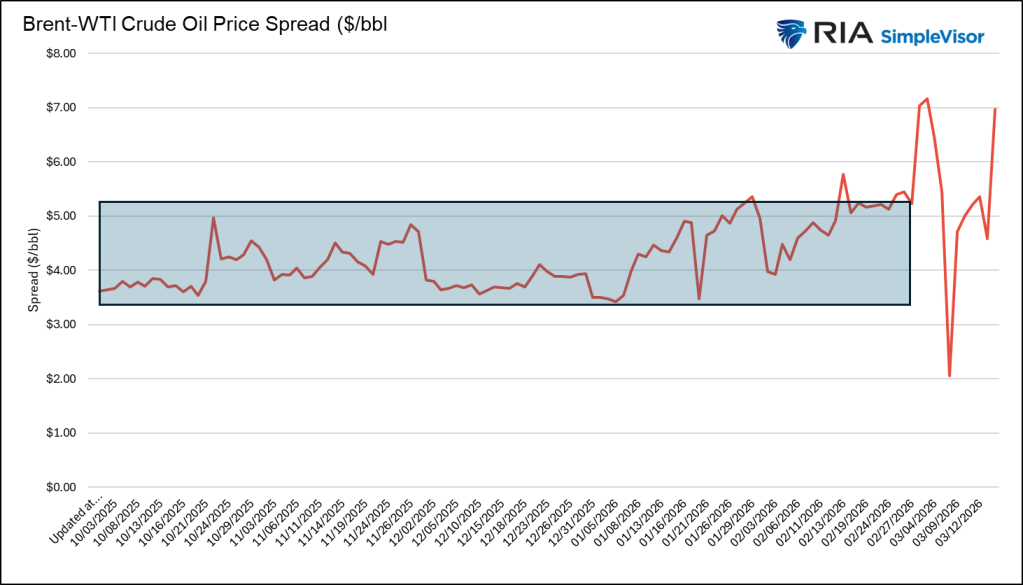
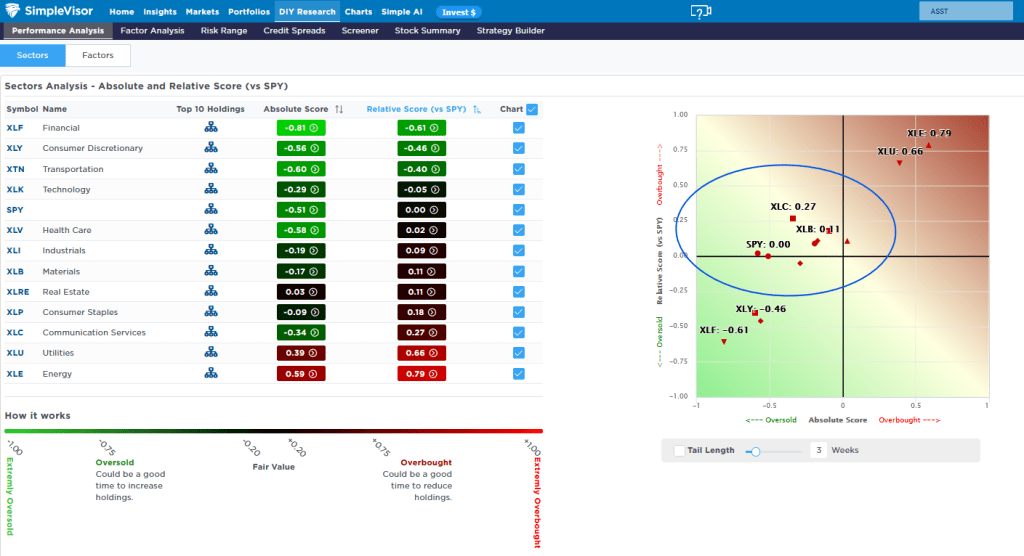
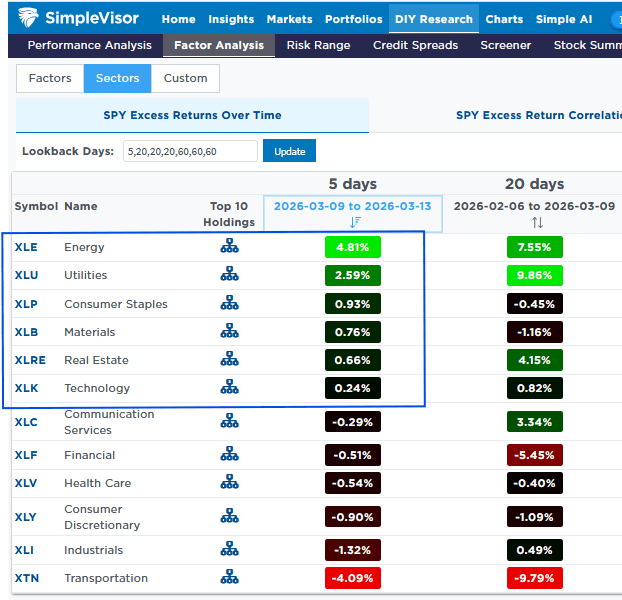
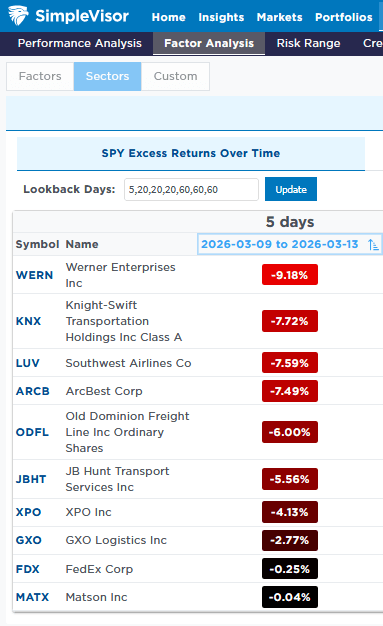
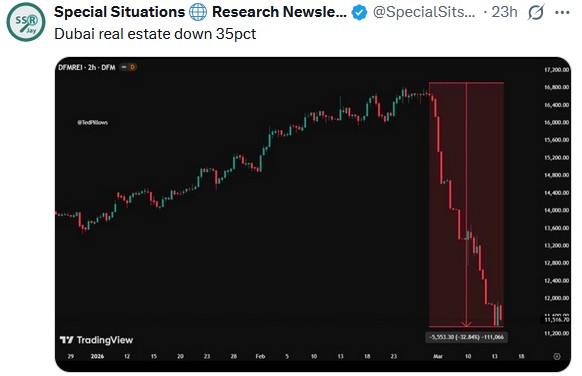
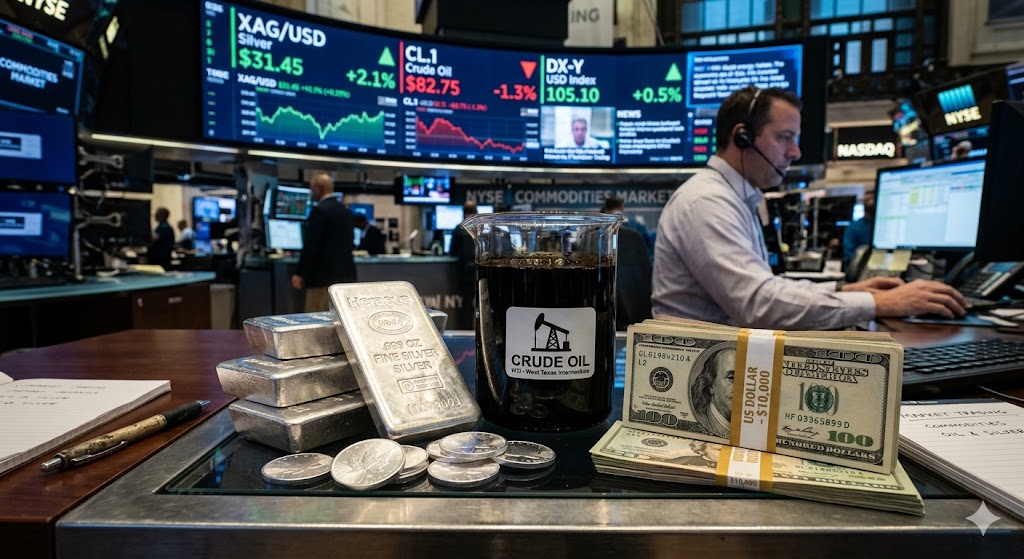
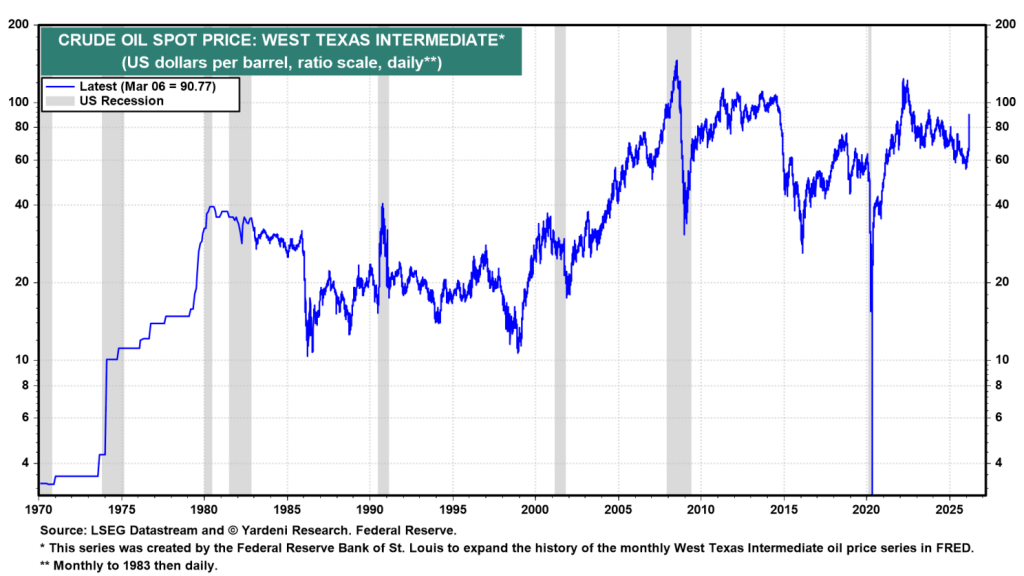
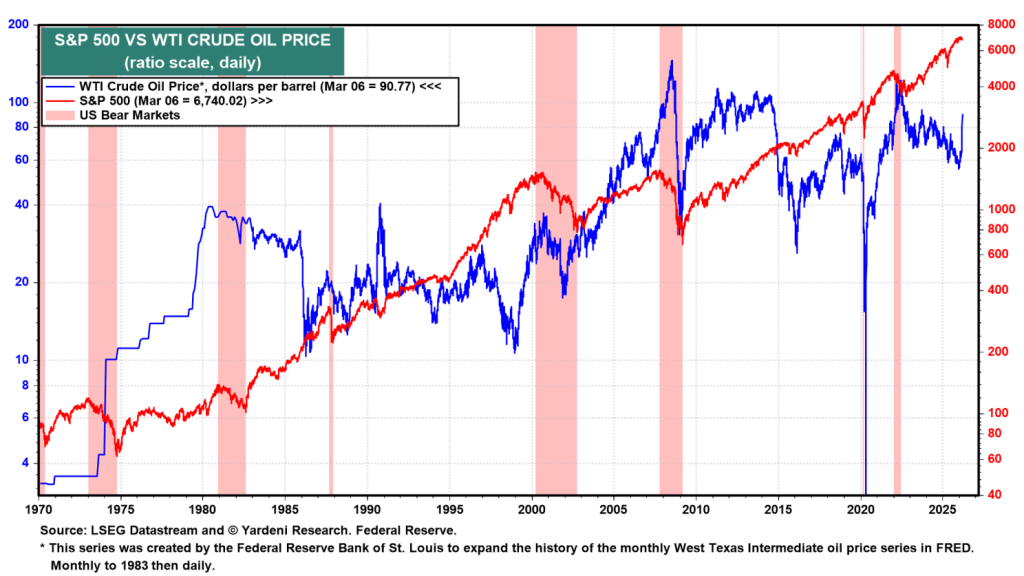
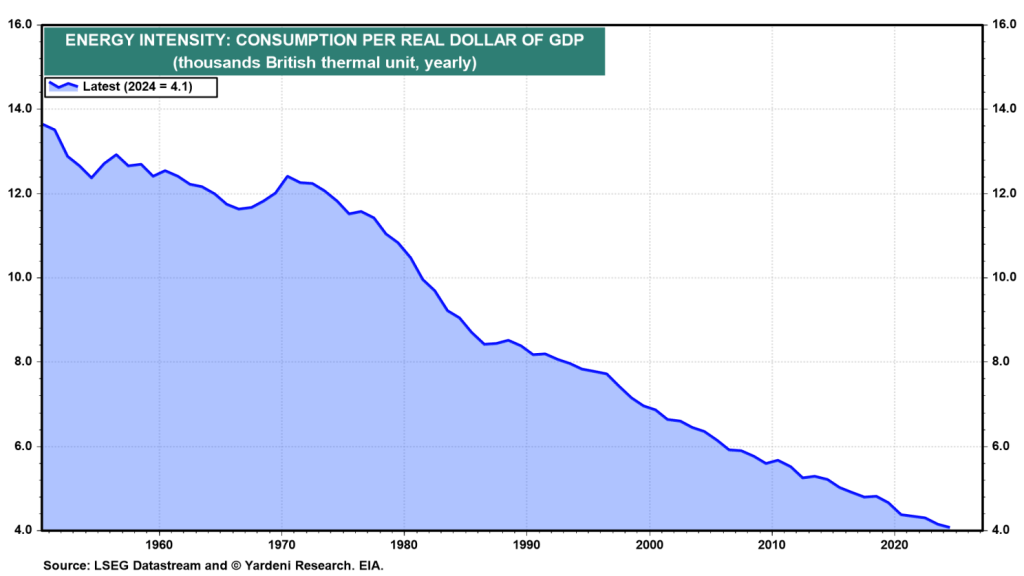
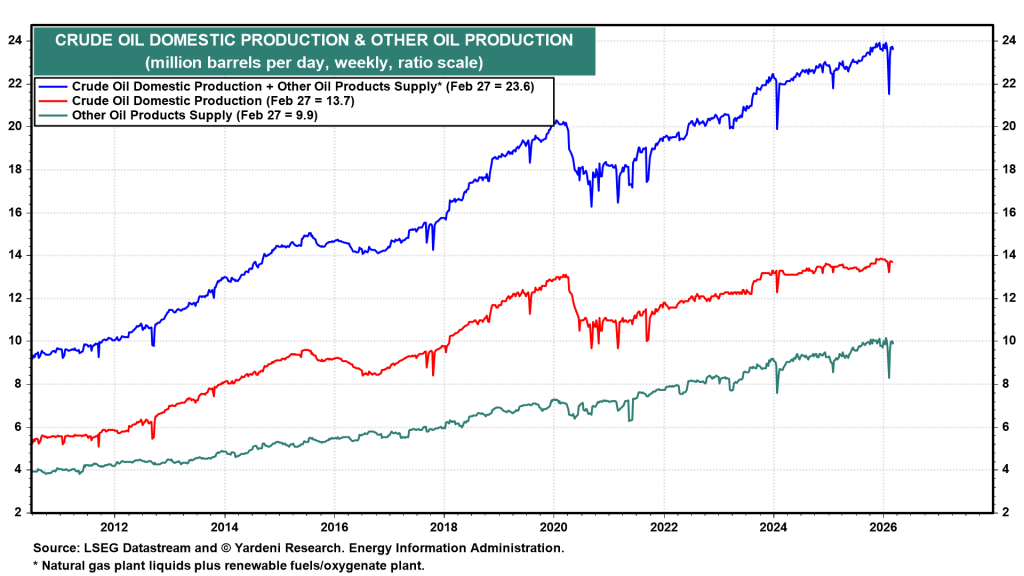
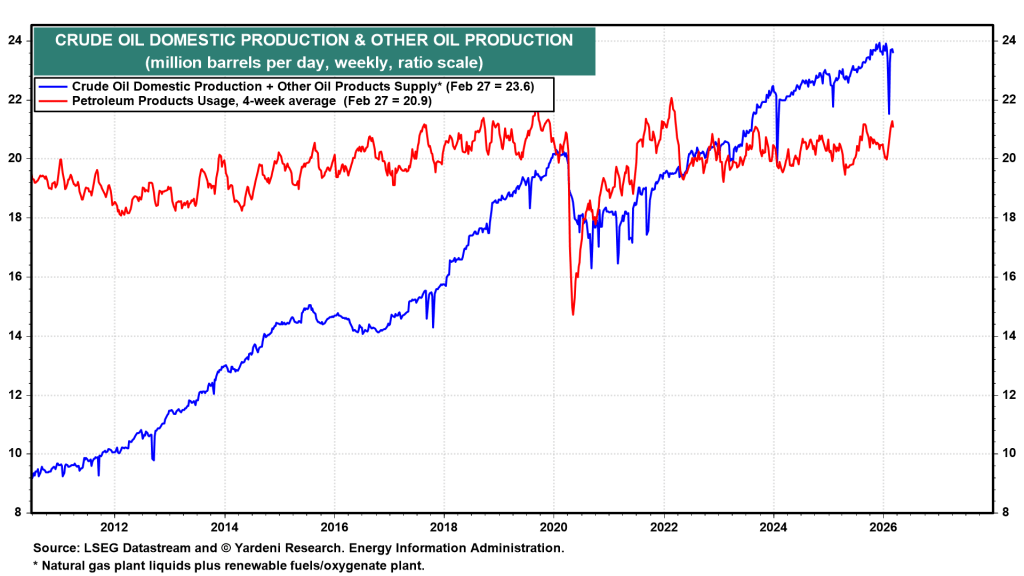
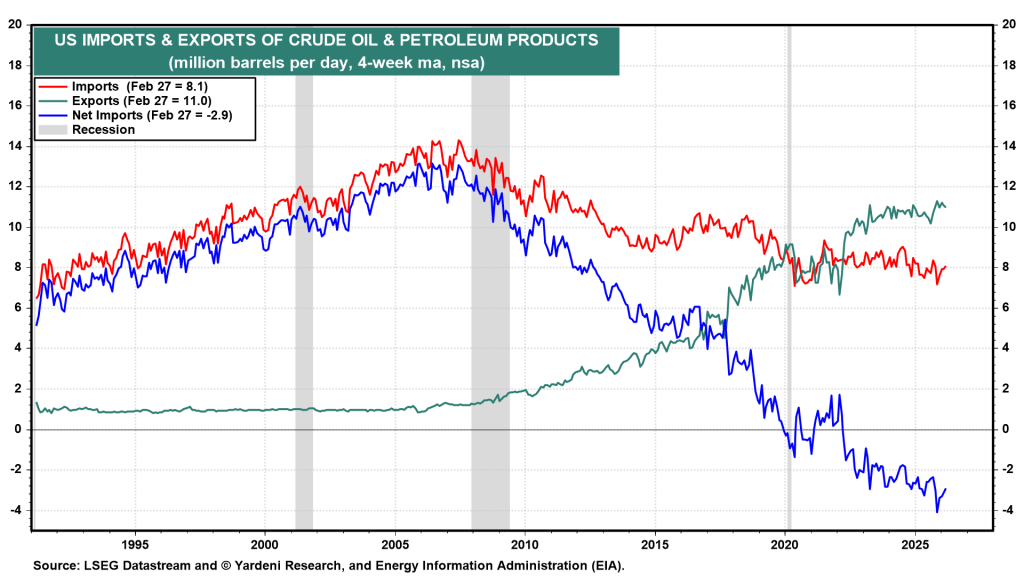
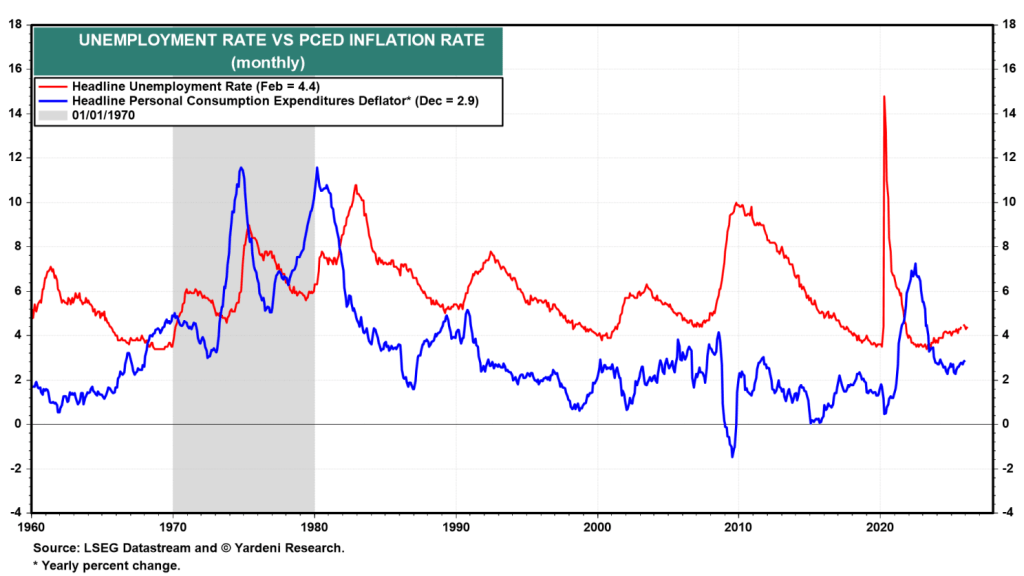
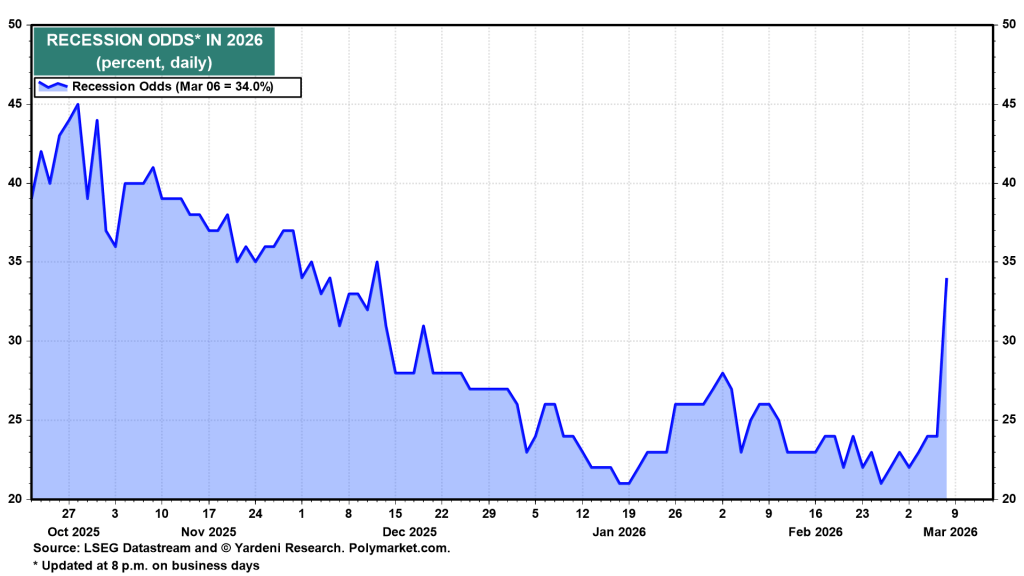
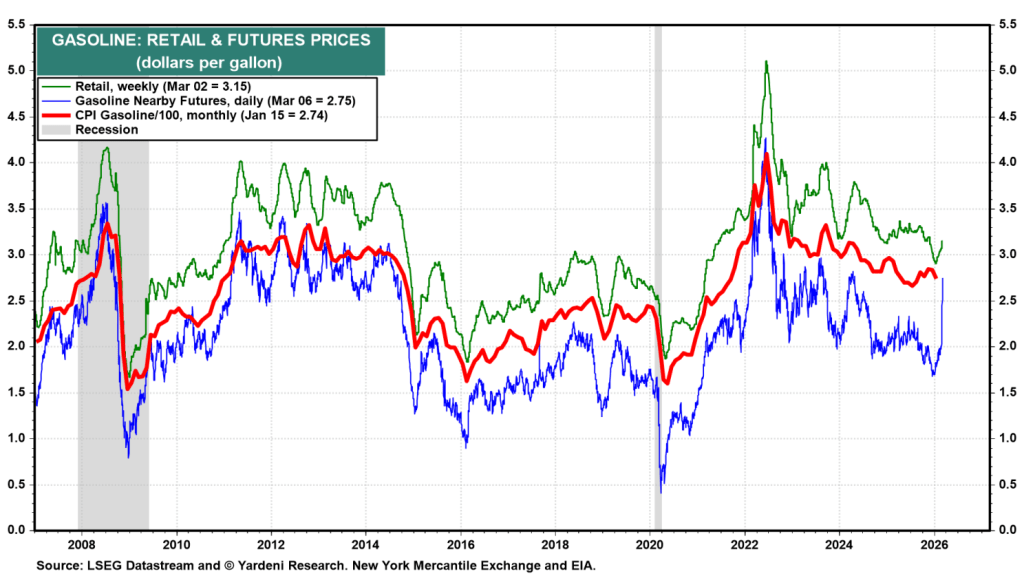
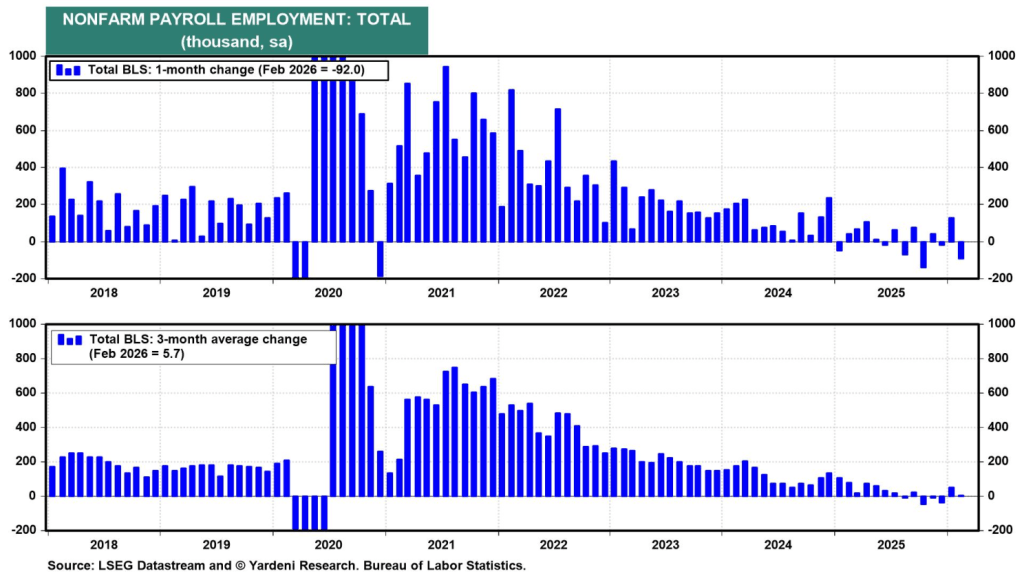
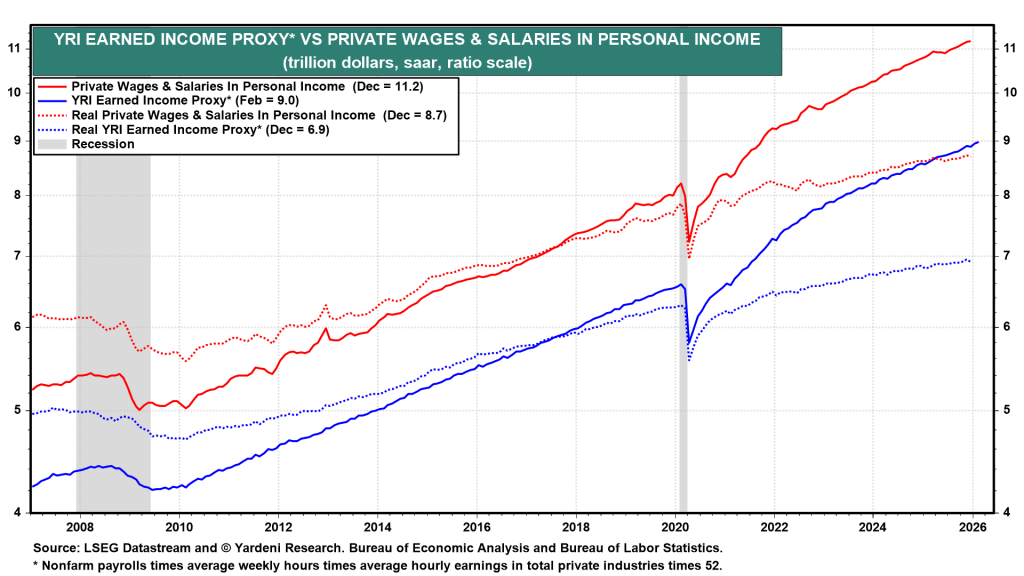
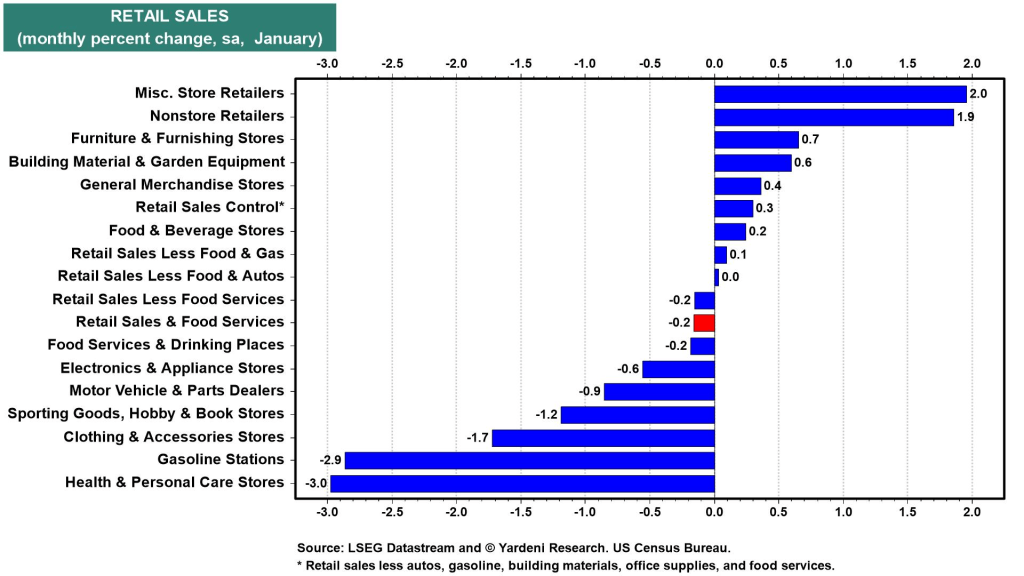
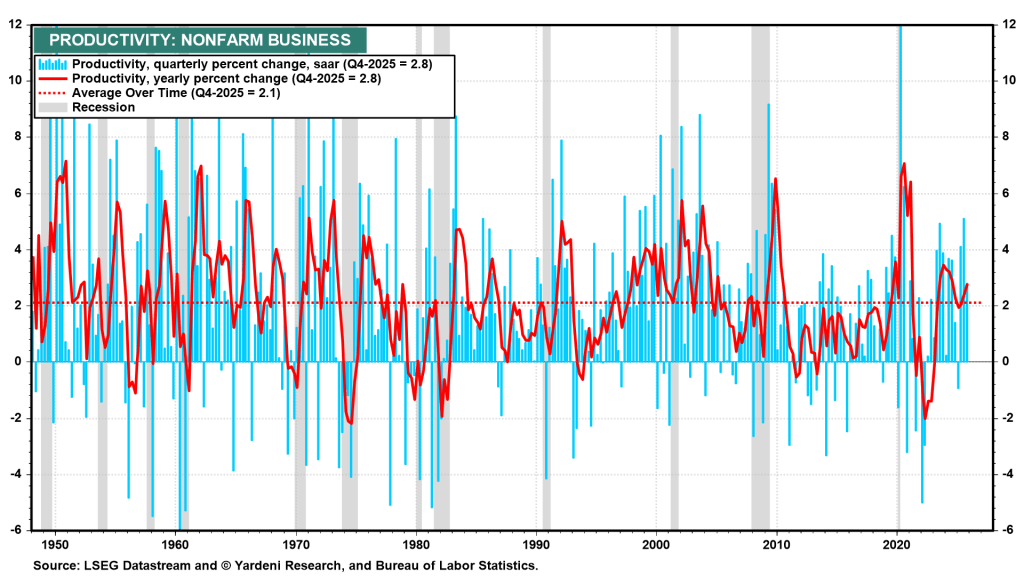
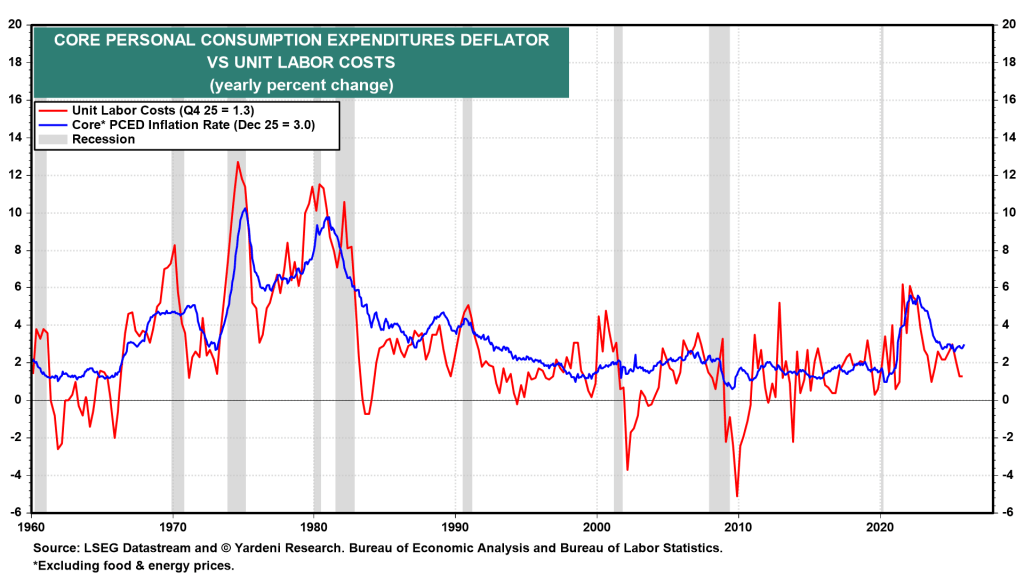
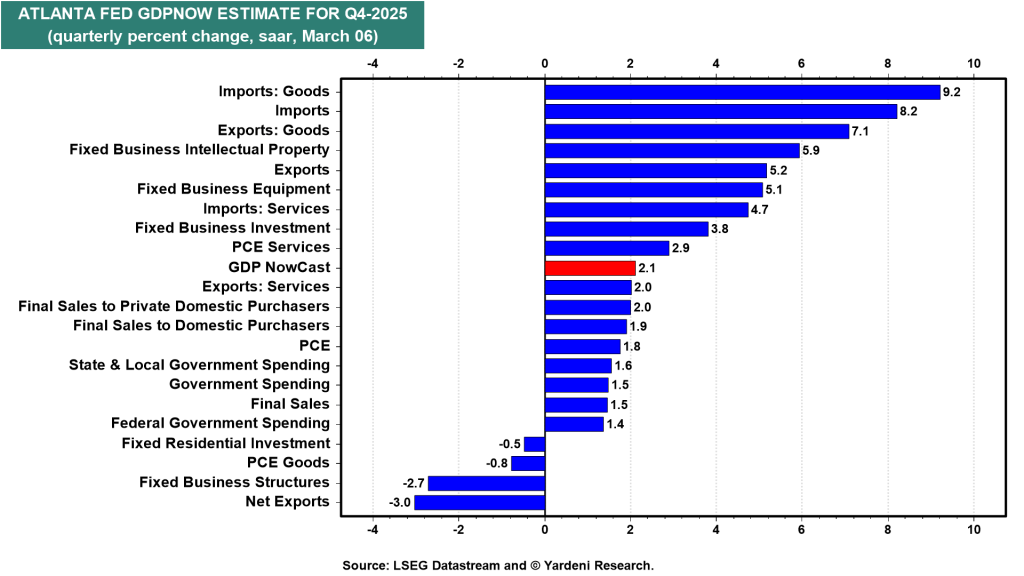
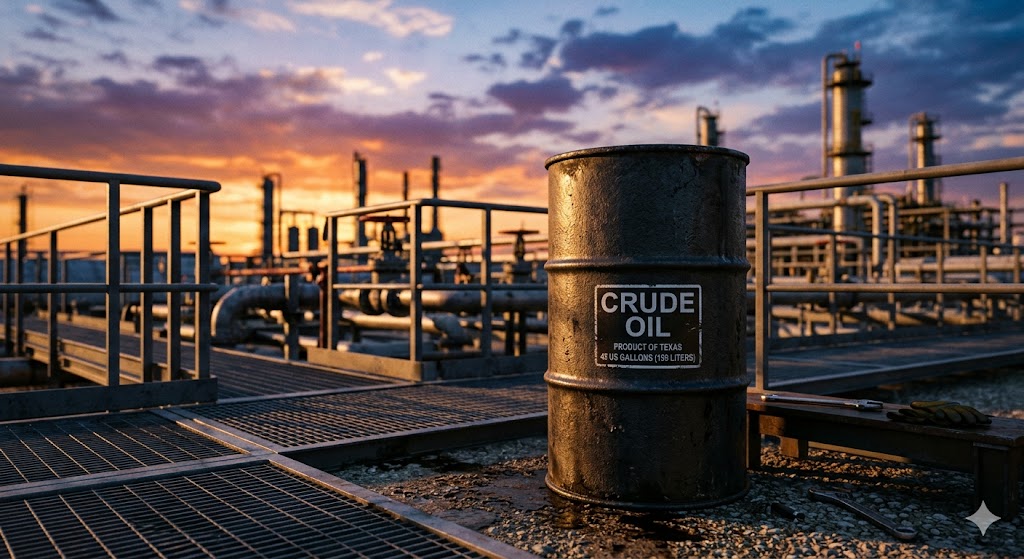
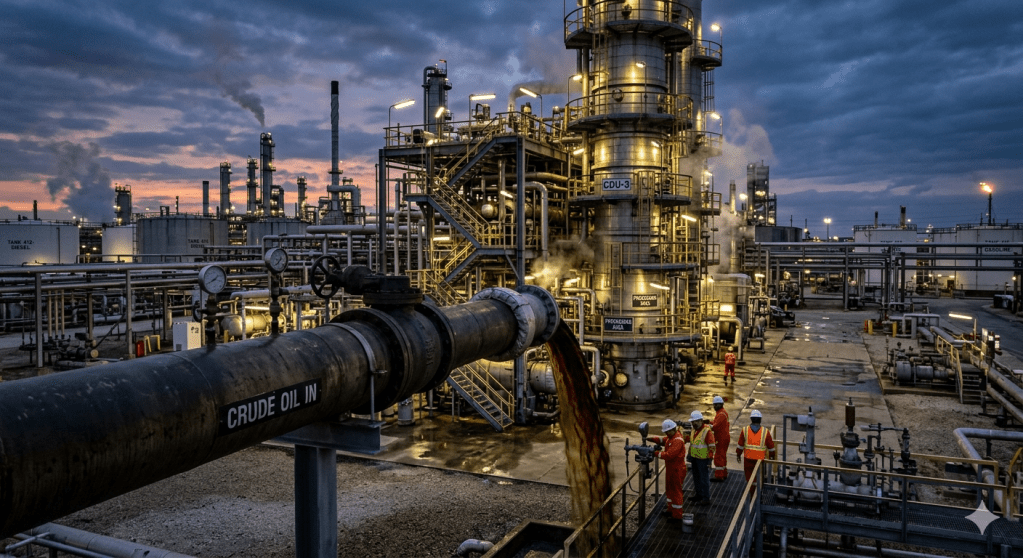
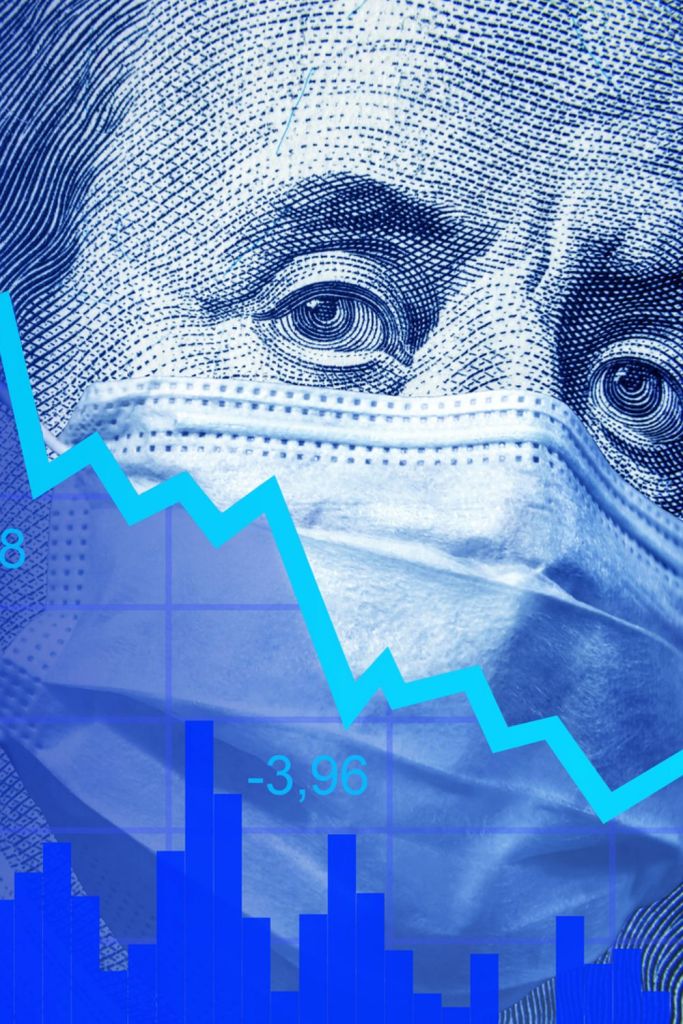
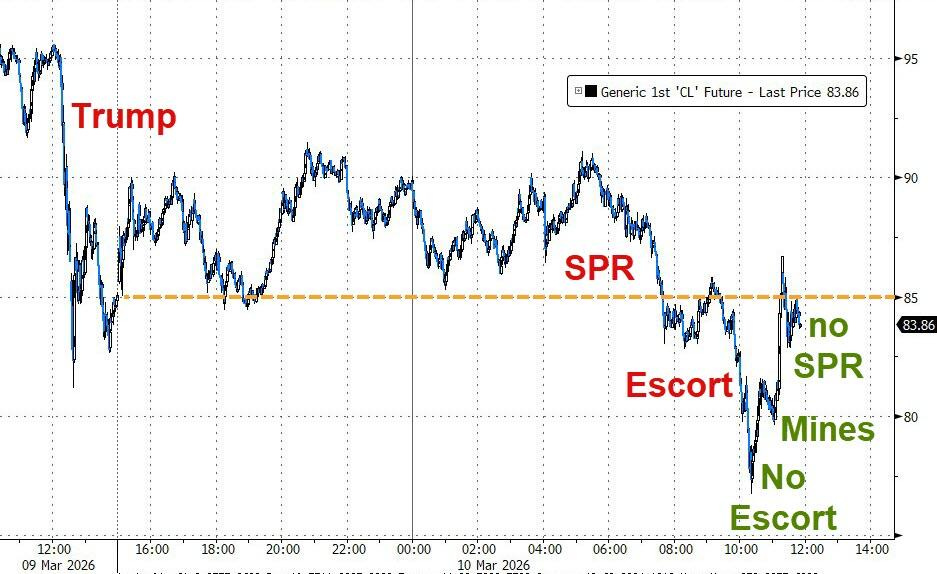

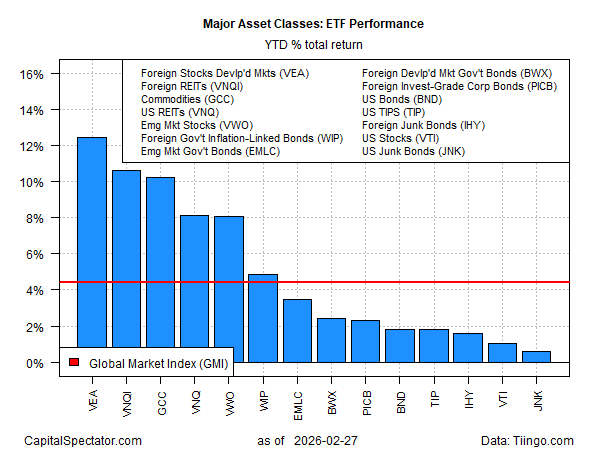
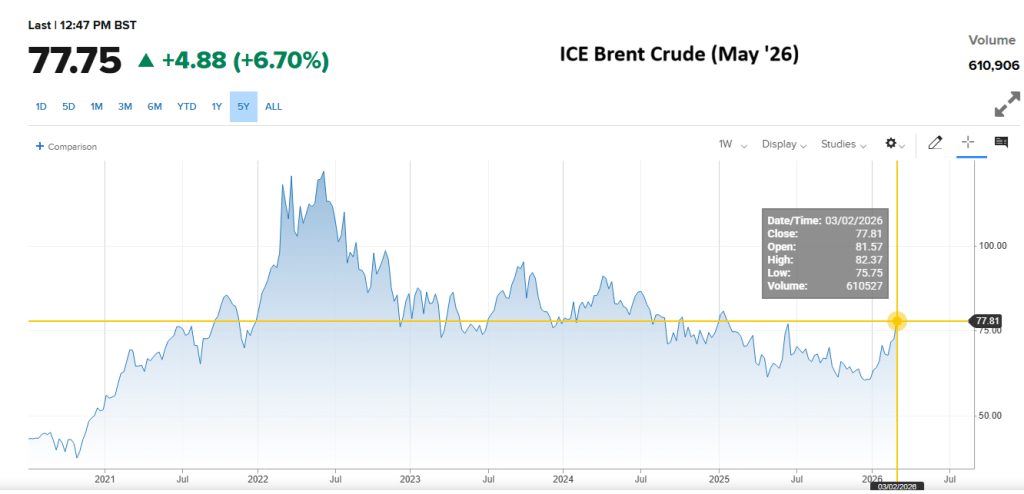
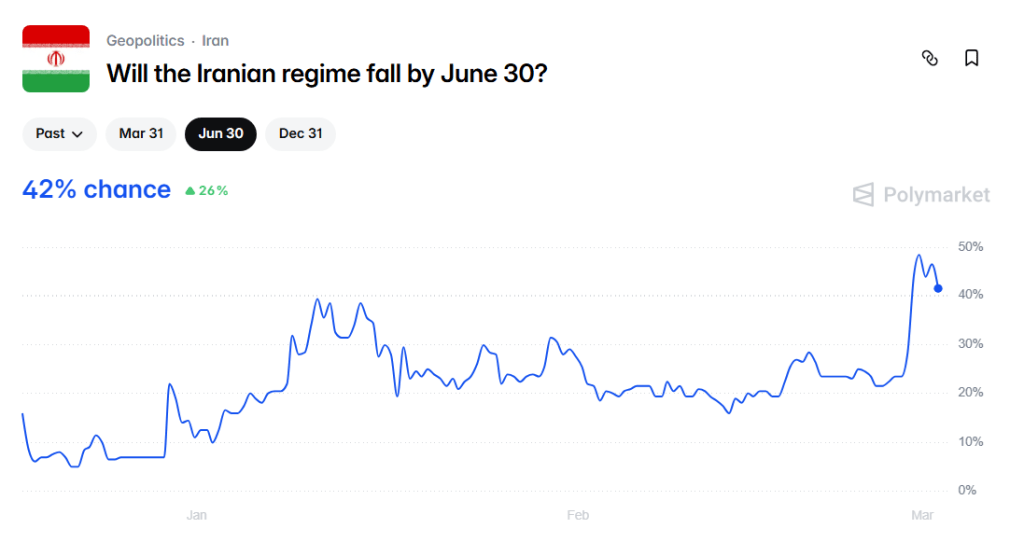
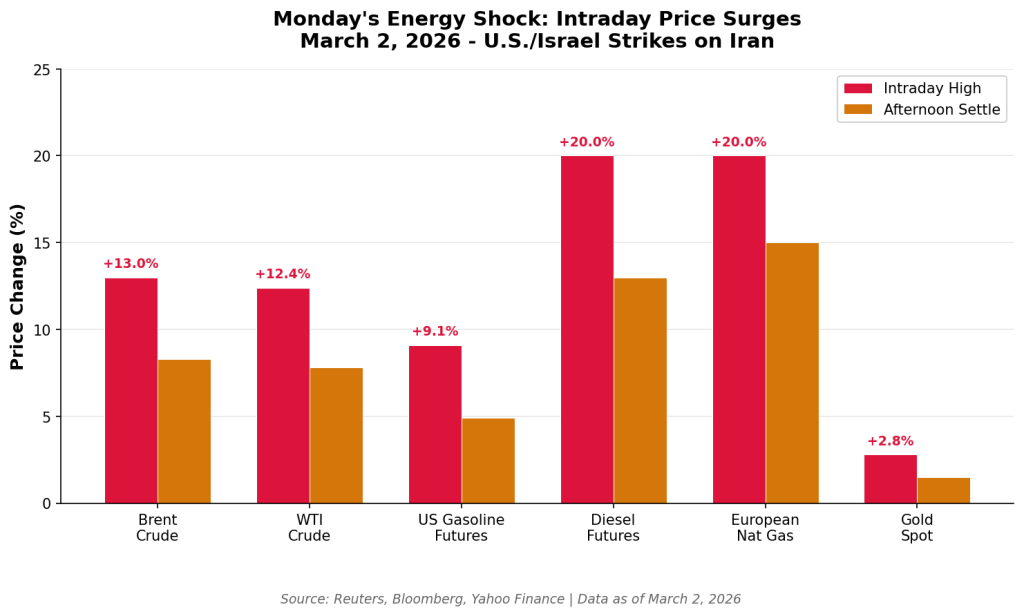
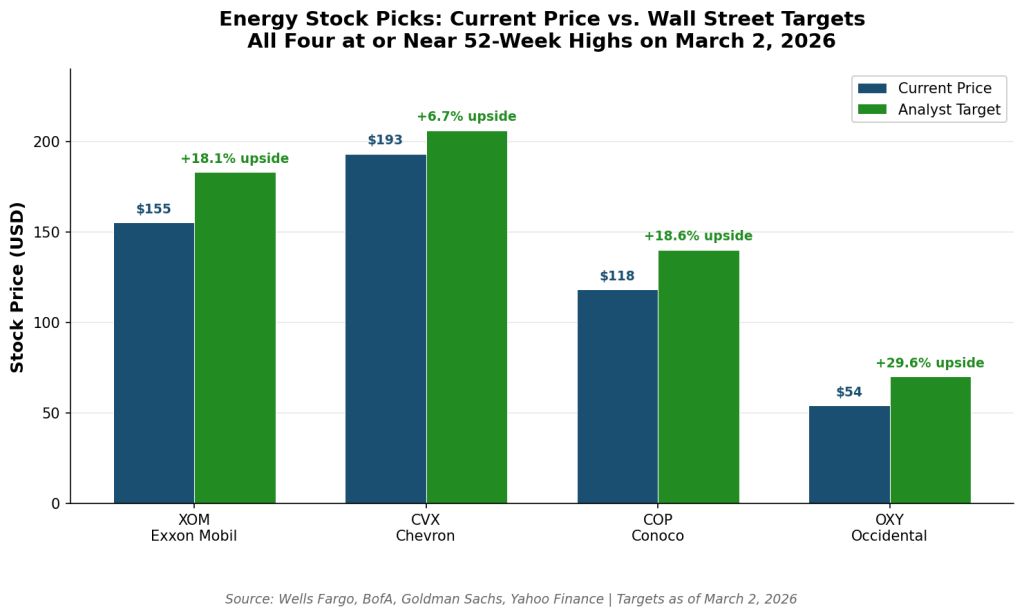
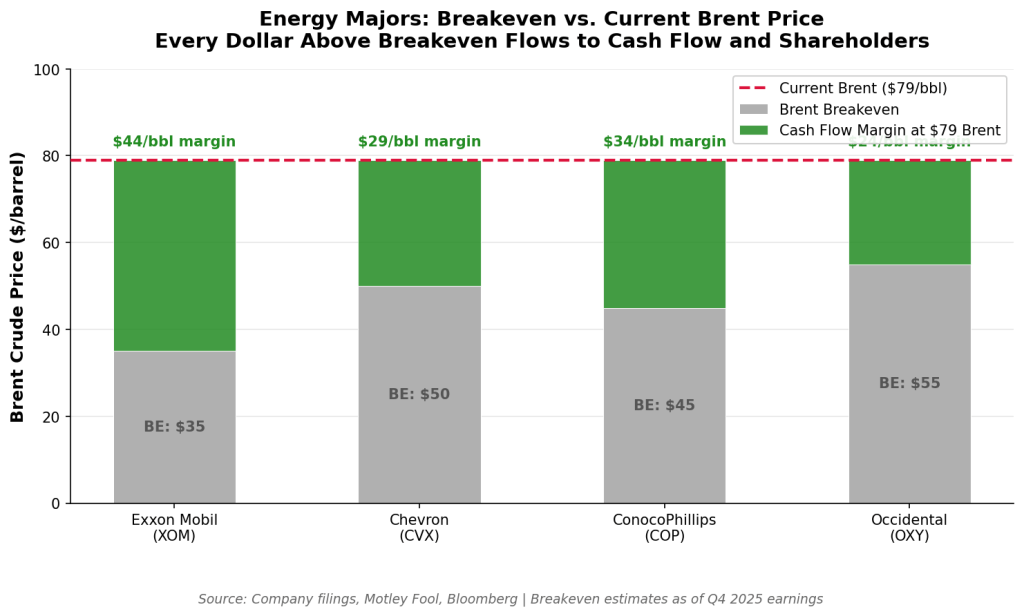
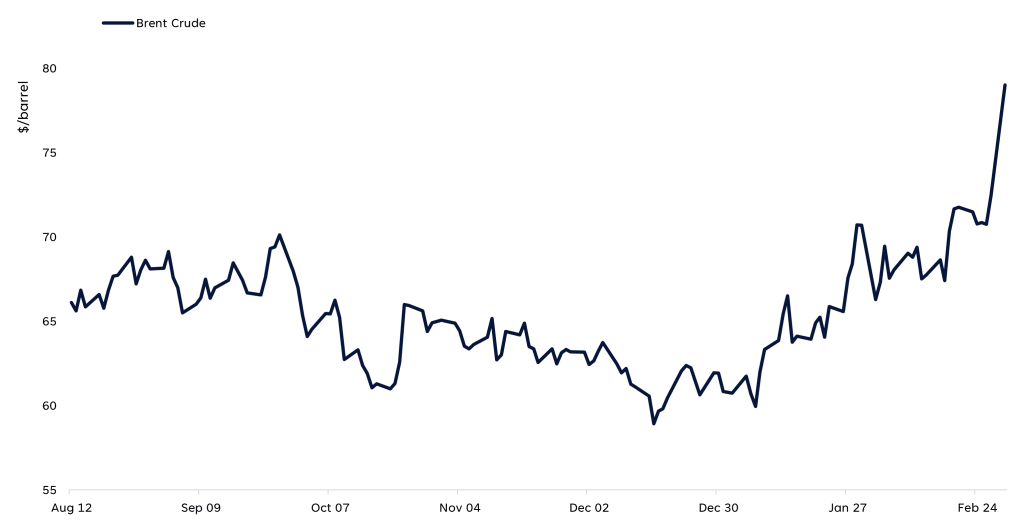
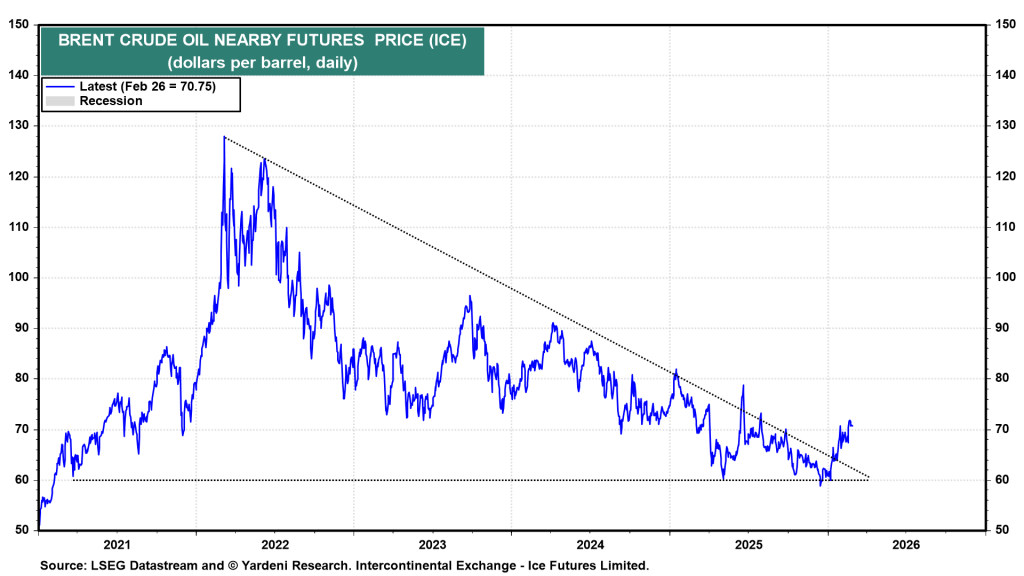
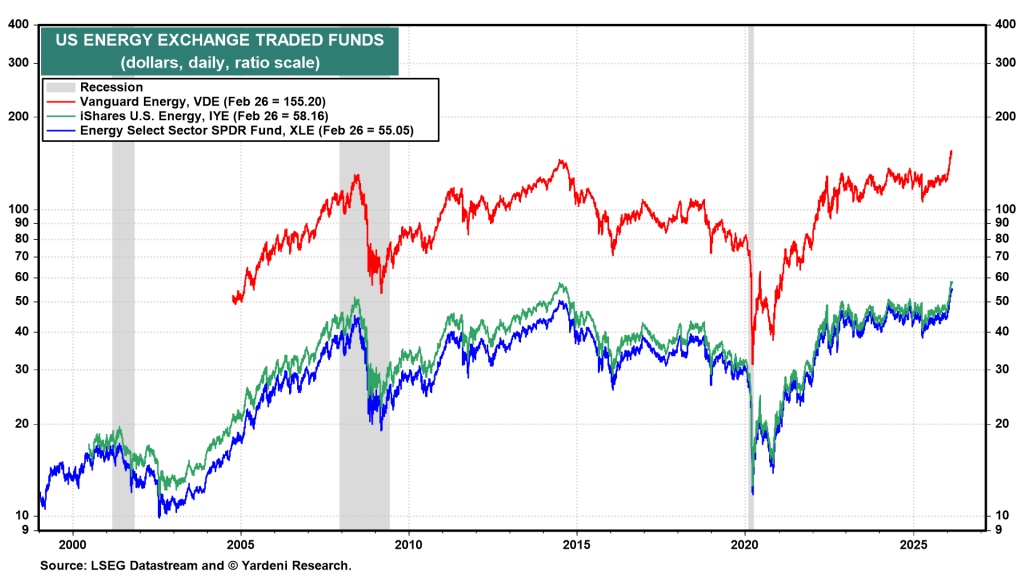
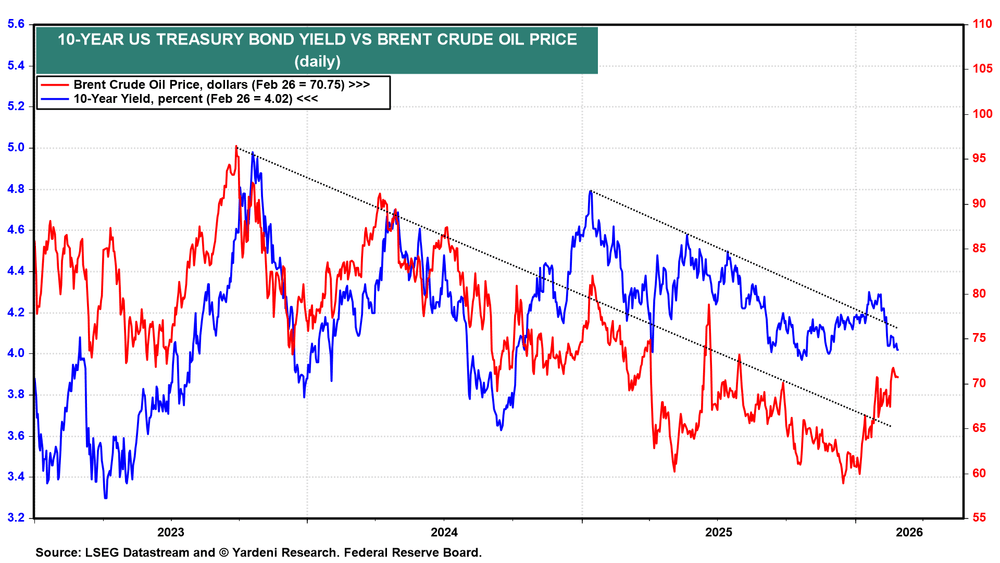
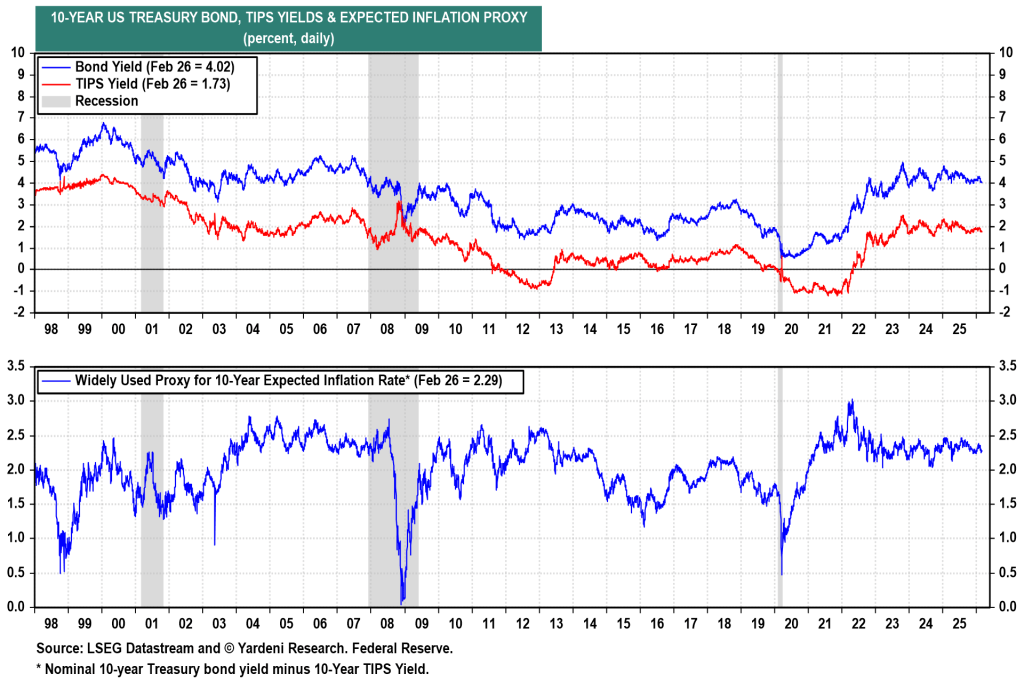

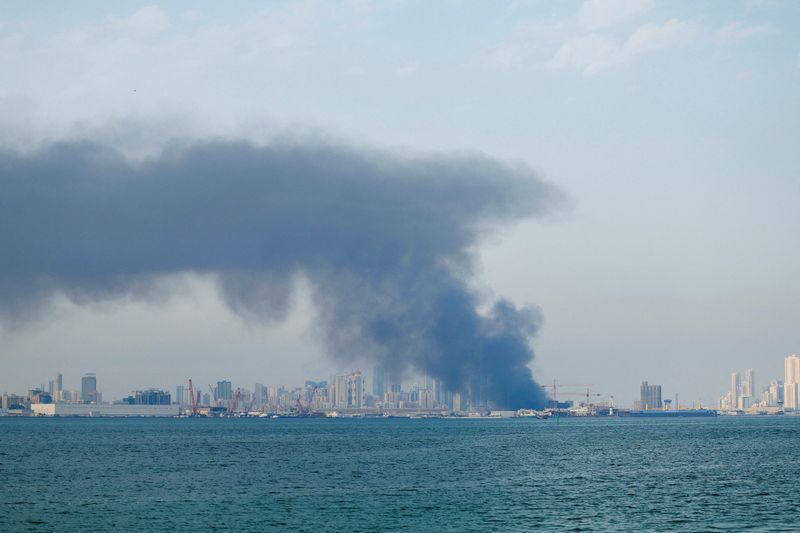


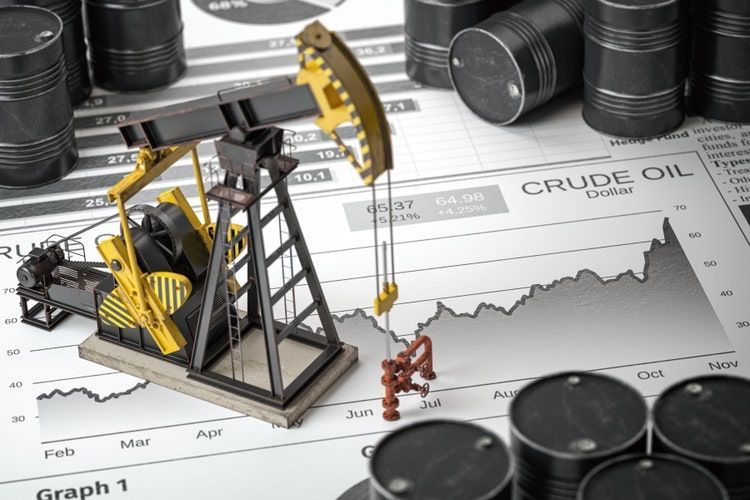

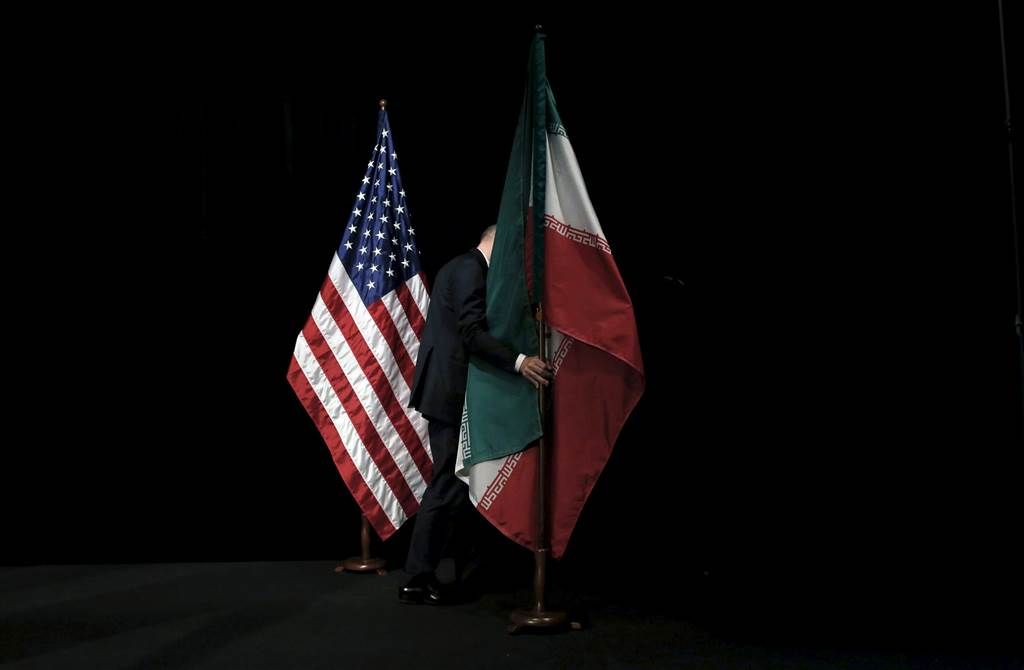
 THE ETERNAL SOVEREIGN