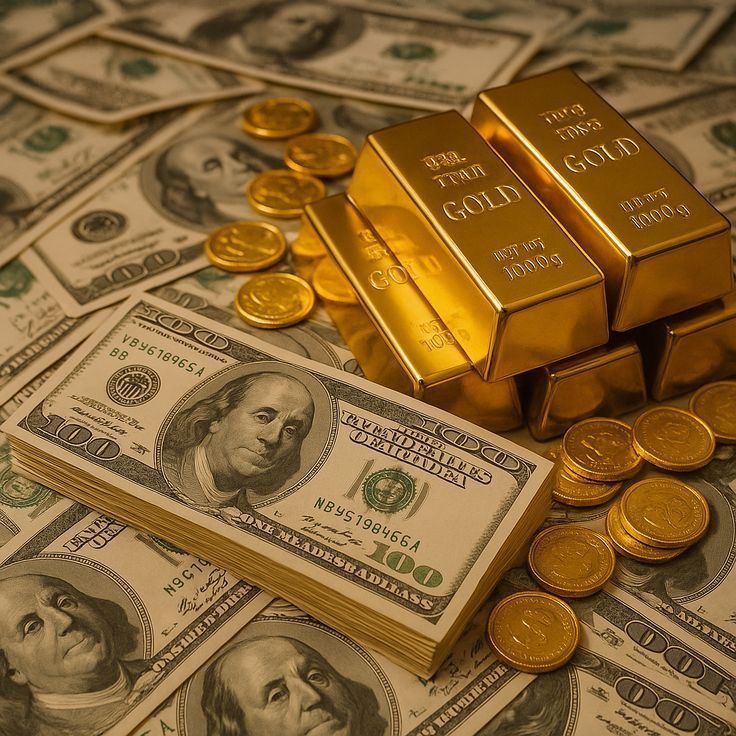
Gold prices rose on Friday and were on track for robust gains in February, supported by safe-haven demand amid mounting geopolitical tensions and economic uncertainty.
As of 16:33 ET (21:33 GMT), spot gold climbed 1.5% to $5,261.81 an ounce, while April gold futures gained 1.7% to $5,280.26/oz. Spot prices were up more than 8% for the month, rebounding sharply from early-February lows near $4,404.12/oz after a brief speculative pullback.
Gold heads for strong February gains
Escalating tensions between the U.S. and Iran were a major catalyst for gold’s recovery, after Washington increased its military presence in the Middle East and warned of possible action if Tehran rejected a nuclear agreement. Although recent talks ended without a deal, both sides agreed to continue negotiations, offering some cautious optimism.
Economic uncertainty in the U.S. also buoyed bullion, particularly after the Supreme Court of the United States struck down most of President Donald Trump’s trade tariffs. Trump subsequently announced new levies under a different legal framework and signaled further measures, keeping markets wary of additional economic disruption.
A broader equity sell-off, partly driven by shifting sentiment around artificial intelligence stocks, further increased gold’s appeal. Joseph Cavatoni of the World Gold Council noted that investors tend to raise gold allocations during periods of equity weakness, pointing to rising physical demand and stronger ETF inflows, particularly in the Americas and Asia. He added that uncertainty around tariffs, inflation, real yields, and overall economic policy continues to exert upward pressure on gold prices.
Bernstein raises long-term gold forecast
Brokerage firm AllianceBernstein significantly upgraded its long-term gold outlook, citing sustained institutional demand and supportive macroeconomic trends. The firm now projects gold reaching $4,800 per ounce in 2026 and climbing to $6,100 by 2030.
Analyst Bob Brackett emphasized that central bank purchases and ETF flows have been the primary drivers of recent demand. While central bank buying may moderate in 2025, it remains well above pre-2022 levels. Surveys indicate that 95% of central banks expect global gold reserves to rise over the next year, with 73% anticipating a reduced share of U.S. dollar holdings over the next five years. ETF flows, meanwhile, are seen as a key swing factor that can amplify price momentum when inflows accelerate.
Copper supported by China demand outlook
Other precious metals also posted strong February gains. Spot silver surged 6.3% to $93.8490/oz, up nearly 11% for the month, while platinum rose 6.2% to $2,379.10/oz, marking a more than 12% monthly increase.
In industrial metals, copper edged higher on Friday and was modestly positive for February, as markets looked for further signals from China, the world’s largest copper importer. COMEX copper futures rose 1% to $6.0663 per pound, up more than 1% this month.
Copper’s relatively subdued performance earlier in February reflected reduced activity during China’s Lunar New Year holiday, when mainland markets were closed for over a week. Analysts at ANZ noted that both Chinese and global copper inventories increased more than expected during the break due to mining and trade disruptions. With Chinese markets now reopened, attention has shifted back to potential demand growth, particularly as the global artificial intelligence buildout accelerates.
Sources: Anuron Mitra
 THE ETERNAL SOVEREIGN
Leave a comment