Goldman Sachs slightly lowered its second-quarter oil price outlook after the U.S.–Iran two-week ceasefire, which includes reopening the Strait of Hormuz, though it maintained its medium-term forecasts and warned that risks still lean to the upside.
Oil prices dropped to the mid-$90s per barrel following the announcement, in line with Goldman’s expectations that energy flows through the Strait would begin recovering quickly and that Persian Gulf exports would gradually return to pre-war levels within about a month.
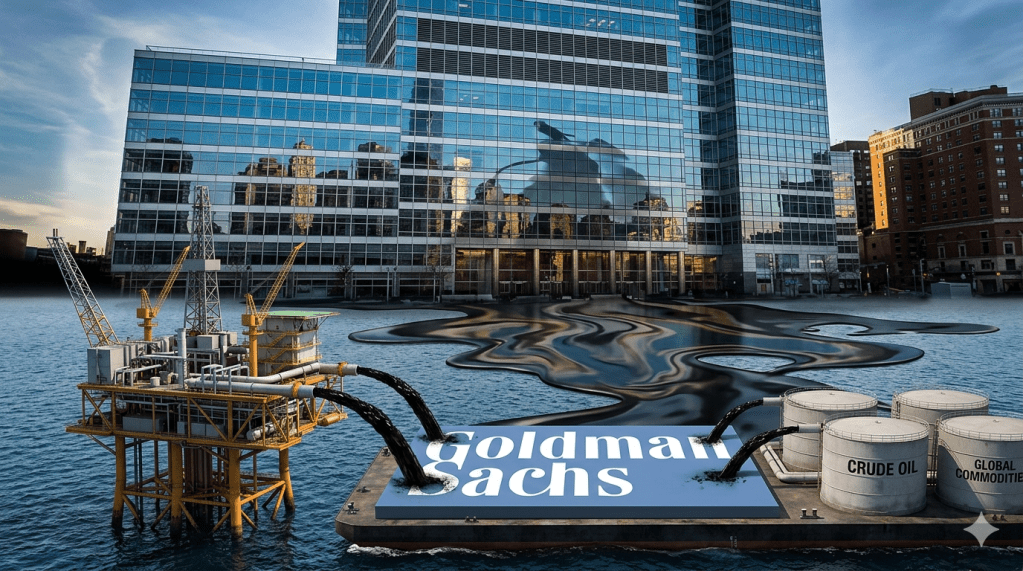
The bank cut its Q2 forecasts for Brent and WTI to $90 and $87 per barrel, respectively, from earlier estimates of $99 and $91, citing a reduced geopolitical risk premium and early signs of improving oil flows. However, it left its second-half projections unchanged, with Brent seen at $82 and $80, and WTI at $77 and $75.
Despite the ceasefire, Goldman cautioned that the situation remains fragile and uncertain, with upside risks to prices driven by the possibility of prolonged disruptions or ongoing production losses. In a downside scenario where the ceasefire breaks down and reopening of the Strait is delayed, Brent could average $100 in Q4. In a more severe case involving sustained supply losses of 2 million barrels per day, prices could rise as high as $115.
On natural gas, European TTF prices fell sharply after the ceasefire. Goldman lowered its Q2 TTF forecast to 50 EUR/MWh from 70, citing weak Chinese LNG demand that has kept European supply relatively strong. Its second-half outlook remained broadly unchanged at 42 EUR/MWh, though risks are still skewed higher. If LNG flows are disrupted further, prices could surge above 75 EUR/MWh due to the need for significant demand destruction.
Sources: Vahid Karaahmetovic
 THE ETERNAL SOVEREIGN
Leave a comment