Key Takeaways
- The peace dividend is real, but the bigger story for oil may be the delayed release of Gulf crude into an Asian market that is already better supplied than it was just a few months ago.
- Falling oil prices provide support for bonds and a select group of equity leaders, but they do not automatically eliminate the inflation risks that have recently pushed the Fed toward a more hawkish stance.
- The 24–48 hour rule after a central-bank surprise remains relevant: betting against the Fed too quickly can be costly, particularly when the US dollar is gaining momentum.
- The more compelling opportunity may emerge after the initial dollar rally fades, when gold and major currencies reveal whether weaker energy prices are starting to undermine the Fed’s inflation narrative.
- As option-related market support fades, investors could face greater volatility just as the peace trade, the oil-overhang trade, and the Fed trade begin pulling markets in different directions.
The Fed’s Hard Edge
Wall Street delivered the kind of rebound that appears straightforward at first glance but becomes far more complex beneath the surface. Equities advanced, bonds recovered, oil prices retreated, and semiconductor stocks surged back toward record highs after the interim US-Iran agreement offered markets their clearest signal yet that the Strait of Hormuz could reopen. An inflation risk that had dominated macro discussions suddenly looked less like an imminent shock and more like a pressure point beginning to ease.
That shift matters. Lower crude prices have given parts of the equity market much-needed breathing room following the Fed’s latest message. They have also offered support to longer-duration assets after policymakers signaled they are prepared to respond forcefully should inflation pressures re-emerge. While cheaper energy does not solve every macro challenge, it removes one of the most visible drivers of inflation expectations.
The market is correctly focusing on oil. Reopening Hormuz does more than restore disrupted supply—it unlocks a significant backlog of Gulf crude destined for Asia. More than 60 million barrels reportedly remain stored on tankers in the region, waiting for transport routes to normalize. Once confidence returns and those cargoes begin moving, Asian buyers may face not only additional supply but a delayed surge of barrels entering a market that has already adapted by securing alternative shipments from West Africa, the Americas, and other exporters.
As a result, the oil market may be transitioning rapidly from a scarcity narrative to an oversupply narrative. The immediate concern was whether crude could leave the Gulf. The next challenge is how quickly delayed cargoes arrive in a market that is already relatively well stocked. This dynamic suggests the decline in oil prices may have further room to run, as the reopening of Hormuz removes both the geopolitical risk premium and exposes the inventory buildup created during the disruption.
That is why developments in the Dubai crude market are attracting attention. The shift of Dubai prompt time spreads into contango is more than a technical detail—it may be an early sign that the last remnants of the geopolitical premium are fading. Contango indicates that immediate barrels are becoming less valuable relative to future supply, suggesting traders are beginning to worry less about securing cargoes and more about finding storage for them. This subtle change in market structure often signals a transition from supply anxiety toward concerns about excess inventory.
For Asian refiners, the market is entering a new phase. The original shock came from the loss of Gulf crude supplies. The next challenge may be the opposite: a surge of delayed Gulf barrels arriving simultaneously into a region that has already secured alternative supplies. For months, oil traders focused on the closure of the gate; now they must assess the growing traffic jam waiting on the other side, particularly around Singapore’s storage and trading hub.
Meanwhile, equity markets have reverted to a familiar script. The Nasdaq is outperforming, semiconductor stocks are leading the advance, and renewed optimism surrounding domestic chip production has added fresh momentum to the broader AI and capital-expenditure story. Retail stocks remain resilient, energy shares have softened alongside crude prices, and investors are once again embracing growth-oriented sectors as concerns over energy-driven inflation begin to fade.
However, the post-Fed recovery remains narrow beneath the surface. While technology and semiconductors have resumed leadership, broader market participation remains limited. Cross-asset signals from currencies, rates, and volatility markets suggest caution rather than a full-fledged risk-on environment. The generals may be charging ahead, but the rest of the market has yet to follow, making the rally appear selective rather than comprehensive.
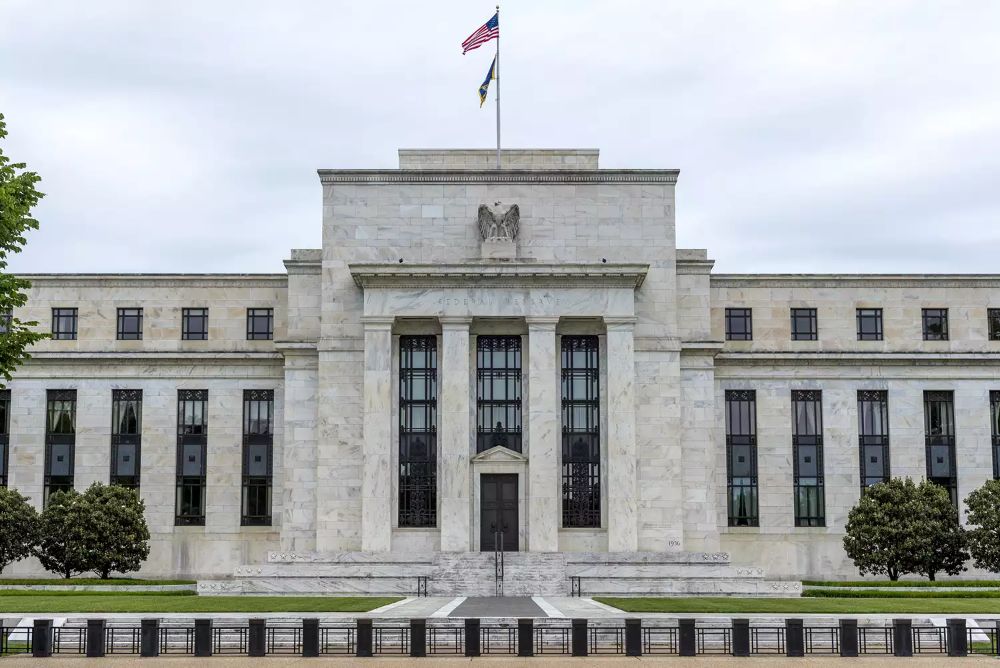
That distinction is important because the Fed did more than leave rates unchanged—it reshaped the market’s expectations. The latest dot plot revealed that nine policymakers now support additional rate hikes this year, strengthening the US dollar and forcing investors to consider a scenario in which the Fed’s next move could be another hike rather than an extended pause. Even if further tightening is not the base case, its inclusion in the discussion changes the complexion of every risk asset rally.
Lower oil prices help ease inflation concerns, but a stronger dollar can still tighten financial conditions. Gold finds itself caught between these opposing forces. While the metal has stabilized above $4,200 as the initial shock from the Fed fades, currency markets continue to favor the dollar. The message remains clear: traders are still responding to the Fed’s tougher stance, and gold remains constrained by expectations of higher real rates and a Dollar Index trading back above the psychologically important 100 level.
For gold investors, the peace dividend and the Fed’s hawkish turn are working against one another. Falling energy prices reduce inflation pressure and should support a less restrictive policy outlook. Yet the Fed’s latest communication suggests policymakers remain concerned enough about inflation to maintain a cautious stance. This tension now sits at the center of the market debate. If Hormuz fully normalizes, Gulf exports recover, and oil prices continue to soften, the Fed’s current inflation concerns may begin to look increasingly outdated. The key question is whether declining energy costs can cool inflation expectations quickly enough to make recent hawkish repricing appear excessive, especially if consumer demand weakens later in the year.
This is the central fault line for markets. Investors are not debating whether lower oil is positive—it clearly is. The debate is whether it merely softens the Fed’s inflation challenge or fundamentally shifts the policy outlook back toward patience.
Another factor entering the equation is June options expiration, which is removing a subtle but important source of market stability. Recent gains have benefited from heavy call-option positioning, a dynamic that suppressed volatility and encouraged frequent intraday reversals. Dealer hedging acted as an invisible cushion beneath the market, but much of that support is now fading just as investors attempt to determine whether cheaper oil can offset a more hawkish Fed.
The S&P 500’s position below 7,500 is particularly important from a positioning perspective. Above major option strike concentrations, dealer hedging tends to dampen volatility by encouraging purchases during declines and sales during rallies. Below 7,500, that stabilizing effect begins to weaken.
With negative gamma extending toward 7,350, dealer hedging can start amplifying market moves instead of smoothing them. In that environment, declines may trigger additional selling from dealers seeking to maintain hedges, potentially accelerating downside momentum. This does not imply a market crash; rather, it suggests a greater sensitivity to directional flows and reduced resilience during periods of selling pressure.
The June expiration itself is not necessarily bearish. The removal of substantial call exposure may simply represent a cooling of speculative enthusiasm without damaging the broader trend. Nevertheless, once that call-heavy structure disappears, equities lose part of the mechanical support that has helped keep volatility subdued. Combined with a hawkish Fed and mixed cross-asset signals, the margin for error becomes increasingly narrow.
In practical terms, traders should expect a market with fewer shock absorbers. The derivatives landscape is becoming less supportive at the same time that the macro backdrop grows more complex. Oil is falling and the Strait of Hormuz is reopening—both constructive developments. Yet the Fed remains focused on inflation risks, and the dollar continues to reflect that reality. The key question is whether the peace dividend can cool inflation quickly enough to soften the Fed’s tougher stance.
For now, equities are voting yes. Technology leadership has returned, bonds have stabilized, and lower oil prices are removing one of the market’s most visible inflation threats. Yet this is not the classic Goldilocks environment. Investors are attempting to balance the benefits of cheaper energy against a central bank that appears increasingly willing to tighten policy if inflation resurges. As Hormuz reopens, one support mechanism is returning to markets while another—options-related protection—is quietly fading away.
From a trading perspective, the timing now becomes critical. The first 24 to 48 hours after a hawkish Fed surprise are rarely the ideal moment to fade the dollar or challenge the central bank’s message. Gold and major currencies have already suffered a significant repricing as investors adjusted to the Fed’s revised outlook. The more interesting question comes afterward: can weaker oil prices gradually undermine the inflation narrative that fueled the dollar’s rally?
Investors should closely monitor whether gold and major currencies can stage a meaningful recovery once the initial hawkish positioning has cleared. A sustained decline in oil prices, a softer Dubai crude structure, and a steady return of Gulf exports to Asia would not automatically force the Fed to change course. However, these developments could make the market’s most aggressive tightening expectations appear less convincing, especially if inflation begins to cool more rapidly than anticipated.
Ultimately, the market is caught between two powerful forces. The peace dividend is supporting equities, bonds, and lower energy prices, while the Fed’s tougher tone continues to bolster the dollar and weigh on gold. The next major move will depend on whether the reopening of Hormuz and the release of trapped Gulf supply can cool inflation quickly enough to reduce pressure for tighter monetary policy.
For now, traders remain suspended between relief and restraint—and that is often where the most compelling opportunities emerge.
 THE ETERNAL SOVEREIGN
Leave a comment