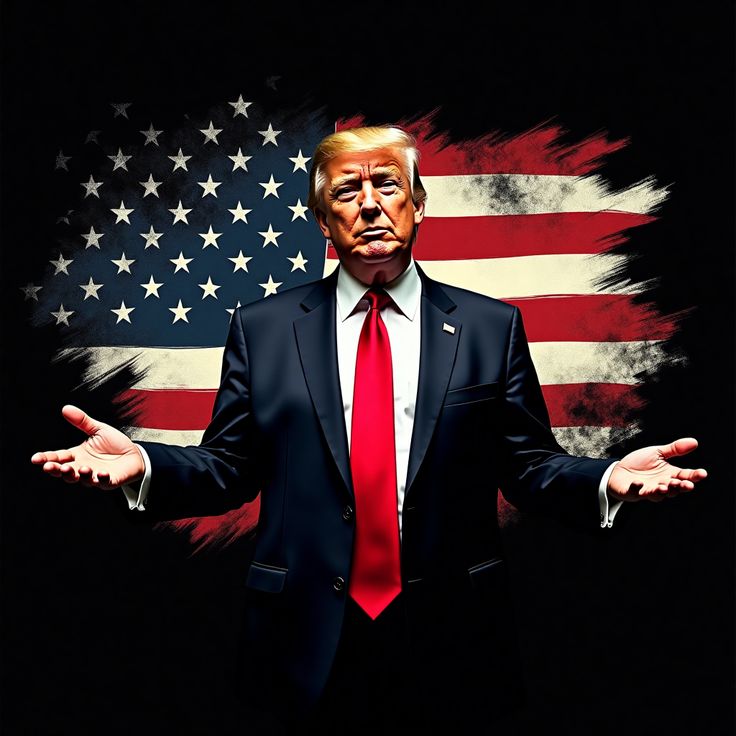
In a post on Truth Social, Donald Trump warned Iran not to carry out any additional retaliatory strikes against the United States or its Middle East allies. He said Tehran had threatened large-scale attacks on neighboring countries seen as aligned with Washington.
The remarks suggest that Iran’s military capabilities remain operational despite the reported killing of its Supreme Leader, Ali Khamenei. The wave of retaliatory strikes indicates that Tehran has not been deterred by his death.
Iran reportedly targeted the United Arab Emirates, striking Dubai International Airport and the Burj Khalifa, the world’s tallest building. It also launched attacks on Bahrain’s capital, as well as Qatar and Kuwait. In response, several Gulf states have warned they may retaliate against Iran.
Qatar has shut down its main airport in Doha, while Dubai International Airport has also been closed following the strikes.
It remains uncertain whether Trump’s threat to respond with significantly greater force will deter further escalation. It is also unclear what he meant by saying, “We will hit them with a force that has never been seen before.”
Impact of the Conflict on Global Trade and the Energy Sector
Earlier today, we noted that the sudden closure of Dubai International Airport caused widespread flight cancellations due to its vital role as a global transit hub. Leading Gulf airlines — Emirates, Qatar Airways, and Etihad Airways — have suspended services indefinitely.
In addition, three major Japanese shipping companies have halted operations in the Gulf following a U.S. naval warning. These include Nippon Yusen (TYO:9101), Mitsui O.S.K. Lines (OTC:MSLOY), and Kawasaki Kisen Kaisha (TYO:9107).
Analysts at RBC Capital Markets say that U.S. strikes on Iran and Tehran’s counterattacks have created a cascading effect across the Gulf. The Strait of Hormuz is now viewed as “effectively closed,” disrupting roughly 20% of global LNG exports and about 90% of Japan’s crude oil imports.
They warn that crude oil prices could spike sharply as tensions intensify and diplomatic efforts remain stalled. Investors are advised to closely track developments in the region and assess their potential implications for oil and LNG markets.
Sources: Simon Mugo
 THE ETERNAL SOVEREIGN
Leave a comment