Asian equities bounced back strongly on Tuesday, led by advances in South Korean and Japanese markets as AI-linked stocks rallied, while investors looked ahead to the Reserve Bank of Australia’s policy announcement later in the session.
The recovery came after a solid overnight close on Wall Street, driven by gains in technology and semiconductor shares. Market participants are also focused on major earnings releases this week, including results from Amazon and Alphabet.
U.S. equity index futures ticked higher during Asian trading hours on Tuesday.
KOSPI surges 5% while Nikkei gains 3% amid tech-led rally
Sentiment toward AI-related equities has been choppy in recent sessions. Earlier optimism over rapid adoption and robust long-term growth prospects was tempered by heavy profit-taking after Microsoft’s earnings underscored substantial capital expenditure needs, prompting concerns about near-term margin pressure.
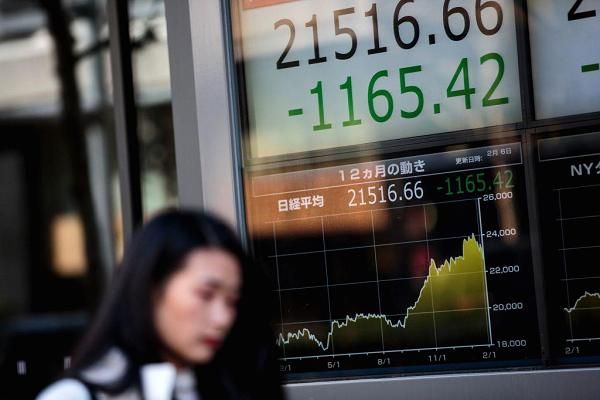
Tuesday’s rally, however, indicated that investors were prepared to overlook short-term challenges, betting that sustained demand for AI infrastructure will continue to underpin chipmakers and technology suppliers.
South Korea’s KOSPI surged close to 5%, with major chipmakers Samsung Electronics and SK Hynix rising between 6.5% and 8%.
Investors rotated back into AI-linked stocks on expectations that long-term demand for advanced memory and processors remains solid.
Japan’s Nikkei 225 advanced more than 3%, supported by broad gains in chipmakers and technology shares, as well as a weaker yen.
Defying the broader regional rally, Hong Kong’s Hang Seng Index fell more than 1%. In mainland China, the CSI 300 edged down 0.4%, while the Shanghai Composite was little changed. By contrast, gains were seen elsewhere in the region, with Australia’s S&P/ASX 200 rising 1.1% and Singapore’s Straits Times Index up nearly 1%.
US, India finalize trade agreement; RBA policy decision awaited
India’s Nifty 50 futures surged more than 1% ahead of the market open after U.S. President Donald Trump announced a trade agreement with India on Monday, cutting tariffs on Indian exports to 18% from 50%.
The deal follows months of negotiations marked by sharply higher punitive tariffs and is widely viewed as a move toward restoring normal trade relations. It reportedly includes India gradually reducing purchases of Russian oil while boosting imports of U.S. energy and other goods.
Regional focus now shifts to Australia, where the Reserve Bank of Australia is set to deliver its interest rate decision later on Tuesday. Markets and economists are pricing in a 25-basis-point increase, which would lift the cash rate to around 3.85%, effectively reversing the RBA’s brief easing phase amid stubborn inflation and a tight labour market.
Sources: Ayushman Ojha
 THE ETERNAL SOVEREIGN
Leave a comment