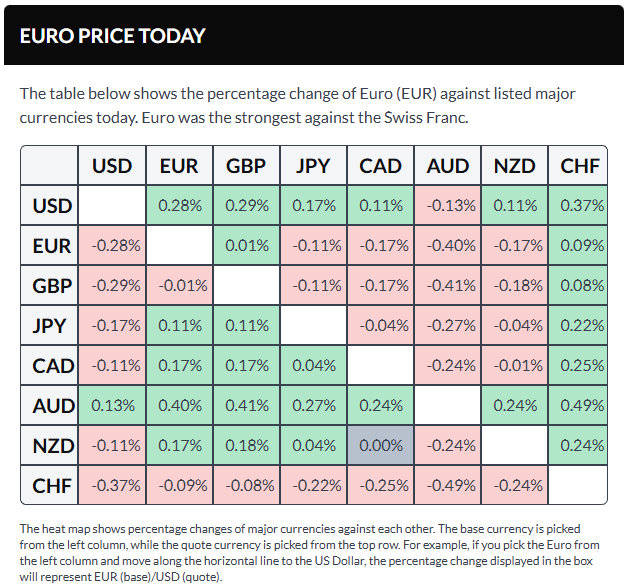
EUR/USD retreats toward 1.1710 after being rejected near 1.1740, giving back recent gains as downward revisions to Eurozone PMIs and softer German inflation renew selling pressure on the euro. With investors now awaiting key US labor market data, expectations for Federal Reserve monetary policy remain a major driver for the euro dollar exchange rate.
EUR/USD trades in a volatile market on Tuesday, hovering around 1.1710 at the time of writing, down 0.15% on the day. The pair has surrendered earlier gains as weaker Eurozone economic data revives concerns over the region’s growth outlook.
Selling pressure on the euro intensified after the downward revision of the Eurozone HCOB Services Purchasing Managers Index (PMI). The index was revised to 52.4 for December, below the preliminary estimate of 52.6 and down from 53.1 in November, signaling a slowdown in services sector activity—one of the main drivers of the European economy.

Meanwhile, German inflation data released on Tuesday point to a clear easing in price pressures. Annual CPI inflation slowed to 1.8% in December from 2.3% in November, while the Harmonized Index of Consumer Prices (HICP) dropped to 2.0% from 2.6%, coming in below market expectations. These readings reinforce expectations of a more subdued inflation environment across the Eurozone, limiting near-term upside for the euro.
On the US front, economic releases have also added to volatility in EUR/USD trading. The Services PMI was revised down to 52.5 in December, its lowest level in eight months, while the Composite PMI slipped to 52.7. According to S&P Global, softer demand, weaker new orders, and slower employment growth signal that the US economy is losing momentum, even as cost pressures remain elevated.
As a result, expectations for US monetary policy remain a key driver of the euro-dollar pair. Fed Governor Stephen Miran said on Tuesday that upcoming data are likely to support further interest rate cuts, arguing that the Federal Reserve could lower rates by more than 100 basis points this year as current policy remains restrictive and continues to weigh on economic growth.
Overall, EUR/USD continues to trade amid mixed macroeconomic signals from both sides of the Atlantic. With no clear near-term catalyst, price action remains uneven, while investors now turn their focus to upcoming US labor market data to better gauge the timing of potential Federal Reserve easing and the short-term direction of the US dollar.
Sources: Fxstreet
 THE ETERNAL SOVEREIGN
Leave a comment