NASDAQ Composite — and technology stocks more broadly — are like a finely tuned sports car. They can easily lap your grandmother’s Oldsmobile — the Dow Jones Industrial Average — but they also require more maintenance and can stall at inconvenient moments.
Since its launch, and particularly since 2015, the NASDAQ has outperformed both the Dow and the S&P 500. Still, it’s very much a hare-and-tortoise story: the speedy rabbit occasionally takes long naps, yet ultimately wins the race — provided investors can tolerate the volatility that comes with tech-heavy exposure.
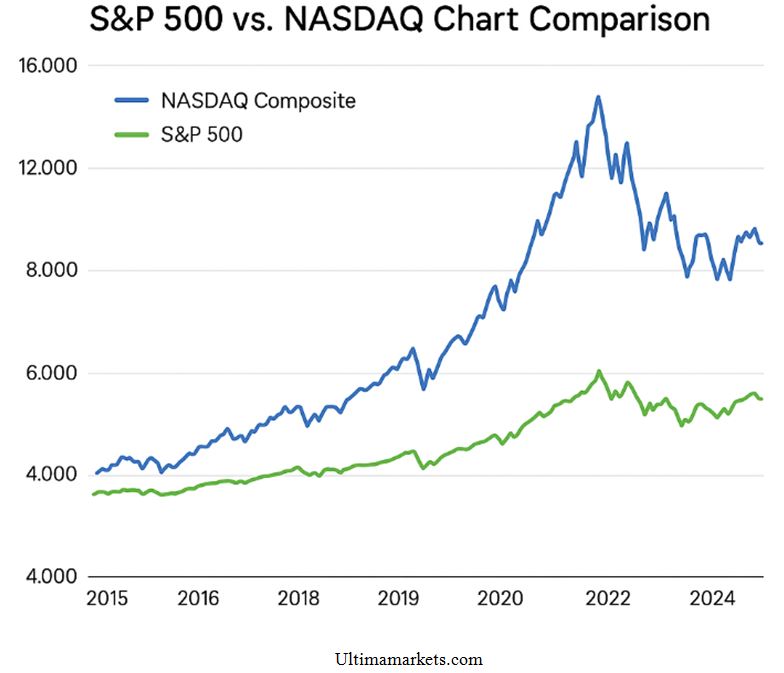
That dynamic is playing out again in the current market rotation. Since November 1, 2025, the Dow has gained 4.34%, while the NASDAQ has slipped 3.54% — a near mirror image. Once again, capital has rotated out of high-flying tech names (the flashy sports car) and into the steadier reliability of the Dow’s blue-chip stalwarts.
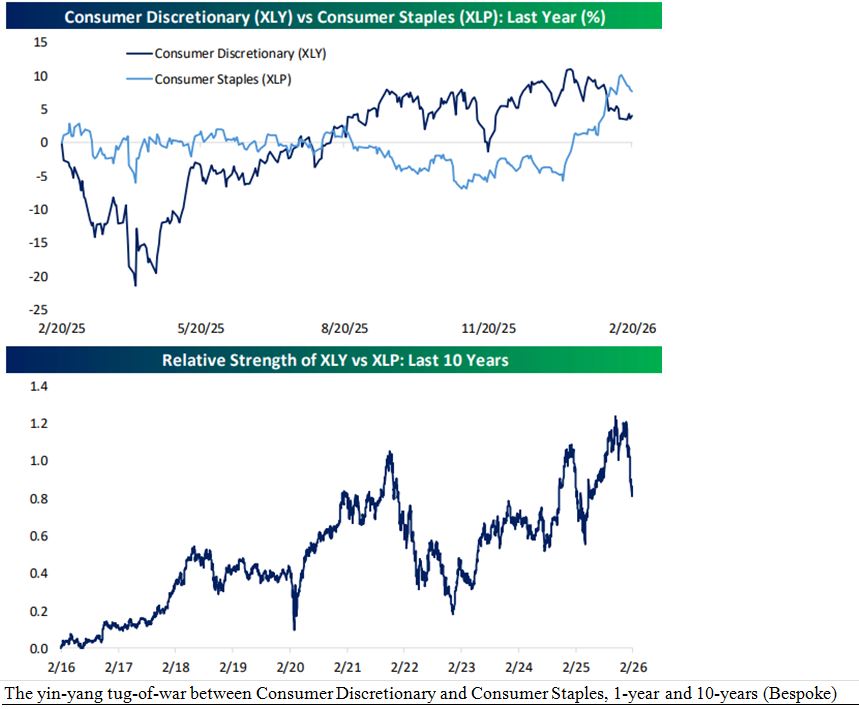
In April, Consumer Discretionary stocks tumbled during a tariff-driven selloff. Although they initially sank, they’ve since rebounded strongly. Betting against the U.S. consumer has historically been a mistake, especially when sentiment temporarily sours.
Over the past year, Consumer Discretionary shares outpaced Consumer Staples, though a recent rotation has narrowed that gap.
Yes, the NASDAQ can test your patience — even break your heart — but history suggests that endurance can pay off.
Consider late 2021. While Federal Reserve officials were still describing inflation as “transitory,” markets began adjusting. On November 19, 2021, the NASDAQ reached an all-time high of 16,057. Over the next 13 months, it plunged 36.4%, closing at 10,213 on December 28, 2022. During that same stretch, the S&P 500 fell about 19%, and the Dow declined just 7.65%.
Investors heavily concentrated in high-growth tech during 2022 likely felt significant pain. Yet those wounds healed quickly. From 2023 through 2025, the NASDAQ surged 122%, compared with a 78% gain for the S&P 500 and a more modest 45% rise for the Dow.
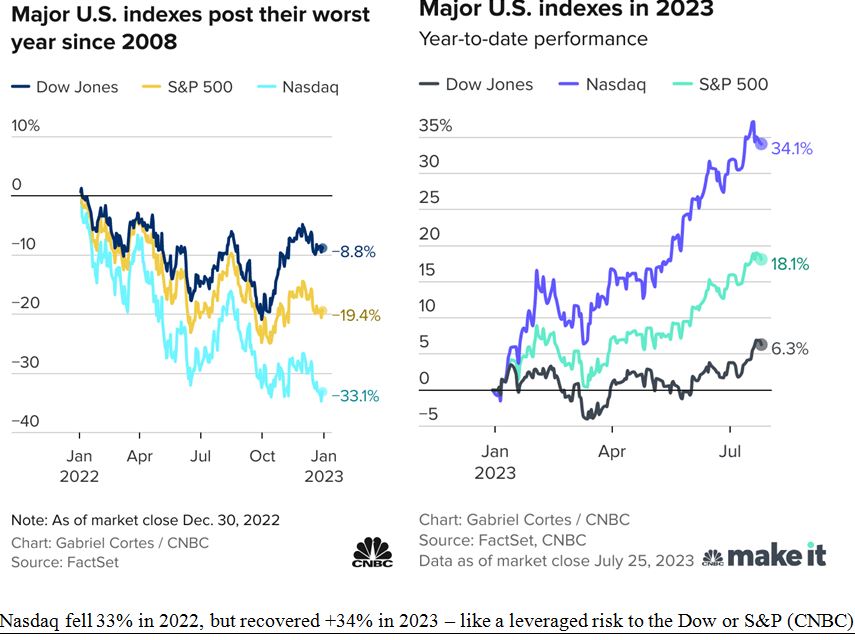
Short-term breakdowns in tech can be dramatic — but historically, they have often laid the groundwork for powerful long-term outperformance.
The Biggest NASDAQ Disaster – The Y2K Crash
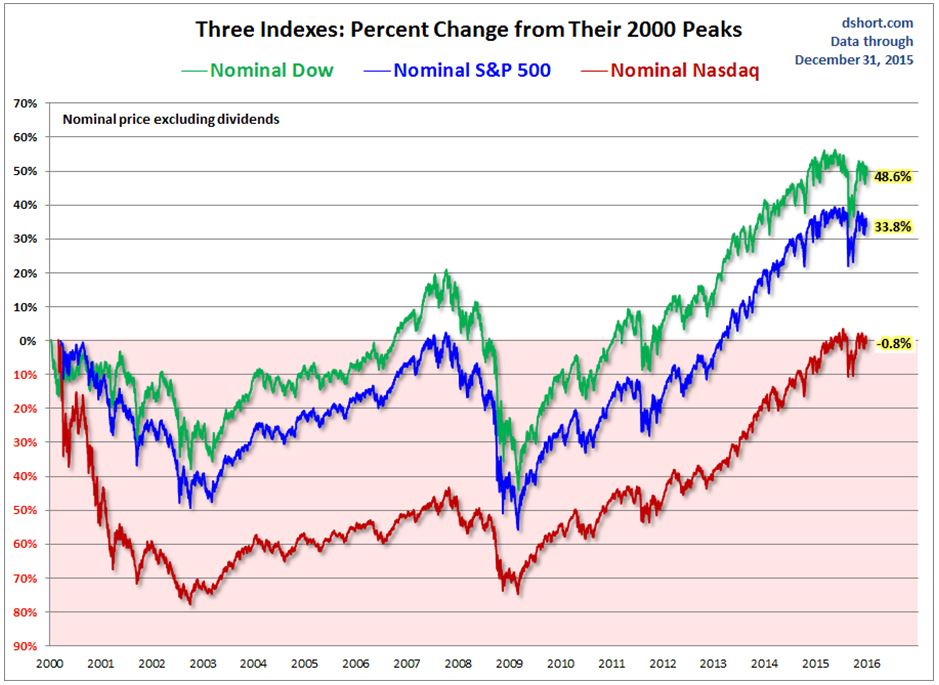
In 1999, the NASDAQ Composite was on a tear, doubling between June 1999 and March 2000, while the Dow Jones Industrial Average seemed half-asleep by comparison. That divergence flipped abruptly in March 2000. The Dow began climbing just as the NASDAQ collapsed, ultimately losing 50% or more in short order.

In February 2000, the NASDAQ experienced a classic “melt-up” even as the Dow drifted lower. By mid-April, the opposite occurred: the NASDAQ suffered its worst week, plunging while the Dow actually advanced. From the start of 1999 through the end of February 2000, the NASDAQ had soared 122%, compared with gains of just 16% for the S&P 500 and 17% for the Dow. Then came the reversal. Between March and May, the blue-chip indexes gained about 4%, while the NASDAQ tumbled 28%. In a single week — April 11–15 — the NASDAQ dropped 25.3%, even as the Dow rose 3.4%.
The aftermath was even more sobering. It took 16 years for the NASDAQ to reclaim its March 2000 peak. Meanwhile, the Dow and S&P 500 briefly reached new highs by 2007 and went on to establish lasting all-time highs by 2012. Over that 16-year span, the Dow climbed 48.6%, the S&P 500 gained 33.8%, and the NASDAQ was still slightly below its prior peak.
Still, comparisons between 2026 and the dot-com era can be misleading. The 1999 boom was driven largely by speculative internet companies with little or no earnings. Today’s technology leaders, by contrast, generate substantial revenues and profits, with strong forward guidance tied to tangible business applications. This is a very different foundation.

Over the long haul — since its launch 55 years ago — the NASDAQ has dramatically outperformed both the Dow and the S&P 500, often by multiples of two to four times. Since 1971, the NASDAQ has surged nearly 260-fold, rising from 89.61 to 23,242 at the start of 2026. Over the same period, the Dow has increased about 57-fold and the S&P 500 roughly 74-fold.
So while volatility can test investors’ patience, history suggests resilience. Not every four-letter ticker deserves a four-letter rebuke.
Sources: Louis Navellier
 THE ETERNAL SOVEREIGN
Leave a comment