When President Donald Trump returned to the White House in January 2025, he reaffirmed tariffs as the core instrument of his economic strategy — a blend of leverage, protectionism, and industrial revival. That strategy is now facing meaningful strain.
The recent ruling by the Supreme Court of the United States that Trump exceeded his authority in imposing sweeping global tariffs without congressional approval represents more than a procedural setback. It challenges the legal scaffolding underpinning a trade agenda that has shaped U.S. economic and foreign policy over the past year.
Markets have taken note — but without panic.
The contrast is notable. A defining pillar of presidential economic policy has been curtailed, yet equity markets remain resilient. Volatility has surfaced intermittently, but capital has not fled risk assets. Understanding this requires separating political drama from financial mechanics.
In theory, tariffs were meant to rebalance trade and accelerate reshoring. In practice, they largely operated as a cost-transfer mechanism. Importers absorbed part of the burden; consumers absorbed another portion through higher goods prices. Manufacturers dependent on global inputs faced margin compression. Retailers recalibrated pricing strategies. Supply chains, already strained in prior years, became more complex.
Economic data reflect this friction. Growth momentum has slowed from last year’s pace. Manufacturing surveys show uneven demand. Trade-sensitive capital expenditure has cooled. Meanwhile, inflation remains sticky — particularly in services — and goods categories exposed to import costs have seen renewed firmness. The anticipated mix of rapid expansion and stable prices has not materialized.
Markets, however, trade forward expectations — earnings trajectories and liquidity conditions — rather than political symbolism.
Large-cap U.S. equities continue to attract global capital, particularly in AI and advanced technology. Investment in semiconductors, cloud infrastructure, and computing capacity remains strong despite macro uncertainty. Earnings concentration in these sectors offsets weakness in more cyclical areas.
Investors see deceleration, not collapse. Corporate balance sheets remain broadly healthy. Employment is moderating but not deteriorating sharply. Financial conditions are tighter than in prior cycles, yet not restrictive enough to signal systemic stress.
Against this backdrop, a potential scaling back of tariffs introduces nuance rather than shock.
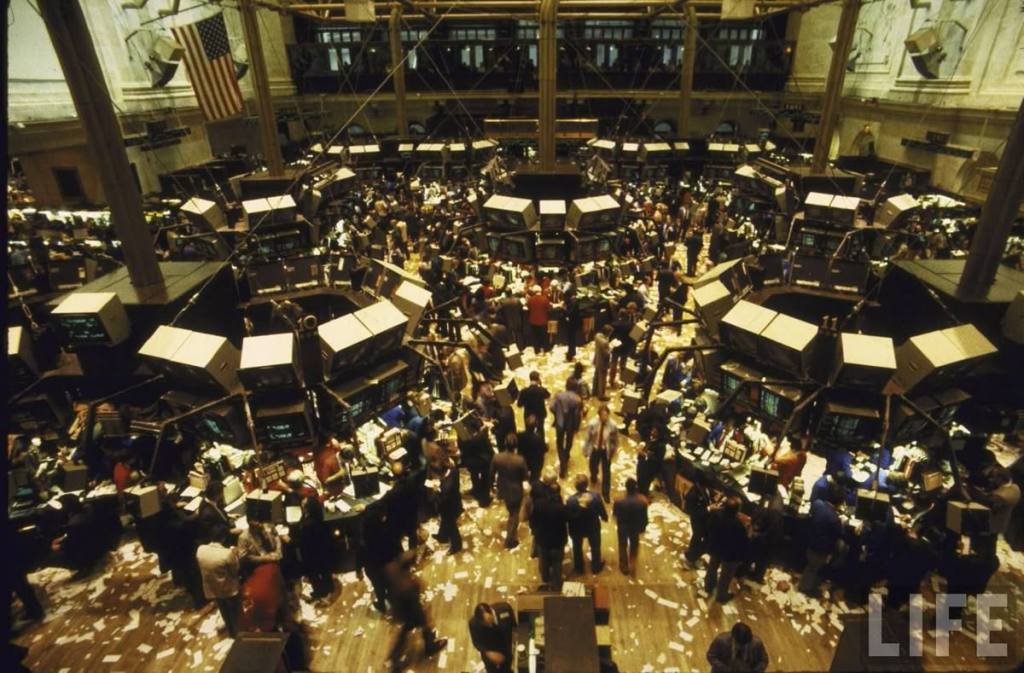
If trade barriers are diluted or subject to firmer congressional oversight, input costs could ease over time. That may gradually relieve goods-based inflation pressures. Supply chain planning could improve. Corporate forecasting may gain clarity — and clarity reduces risk premiums.
Bond markets reflect this balance. Treasury yields have fluctuated as investors weigh persistent inflation against moderating growth. Should tariff-driven price pressures fade, longer-term yields may stabilize. However, fiscal deficits and wage resilience continue to exert upward pressure. The tension remains unresolved.
Currency markets face competing forces. Reduced trade escalation could temper safe-haven demand for the dollar. Yet relative U.S. growth and yield differentials still offer structural support. Conviction remains limited.
Emerging markets are unlikely to move uniformly. Economies closely tied to U.S. demand may feel slower export momentum if domestic growth softens. Commodity exporters could benefit if inflation expectations anchor raw material prices at elevated levels. Capital allocation is becoming more selective.
None of this implies smooth conditions ahead.
Political backlash to the court’s decision could generate renewed volatility. Legislative countermeasures remain possible. Trade partners will recalibrate strategy in response to shifting U.S. authority.
Markets tend to resist escalation but adapt to adjustment.
Trump’s tariff strategy was presented as transformative. The measurable economic payoff has been less decisive. Growth has moderated, inflation has persisted, and structural trade imbalances remain largely intact.
Investors are pragmatic. A policy losing legal footing does not automatically trigger liquidation. If the outcome is reduced uncertainty and steadier price dynamics, equities can continue advancing even as political narratives fragment.
Cautious optimism defines the current tone.
Risk appetite remains conditional. A renewed acceleration in inflation would alter expectations quickly. A material deterioration in employment would challenge confidence. Fiscal expansion without corresponding growth would intensify long-term sustainability concerns.Markets are not celebrating policy unraveling — they are recalibrating probabilities.
The assessment is sober: an economy that is softer but not broken; inflation that is persistent but not runaway; profitability concentrated but durable in structurally advantaged sectors.Trade authority may now face clearer constitutional limits. Structural investment in innovation continues.
Capital ultimately flows toward earnings visibility and long-duration growth themes. Tariffs have dominated headlines. Technology and AI dominate capital expenditure.
Investors are adjusting exposure and preparing for volatility — but not retreating.The tariff agenda is under pressure. Financial markets, for now, are looking past it.
Sources: Nigel Green
 THE ETERNAL SOVEREIGN
Leave a comment