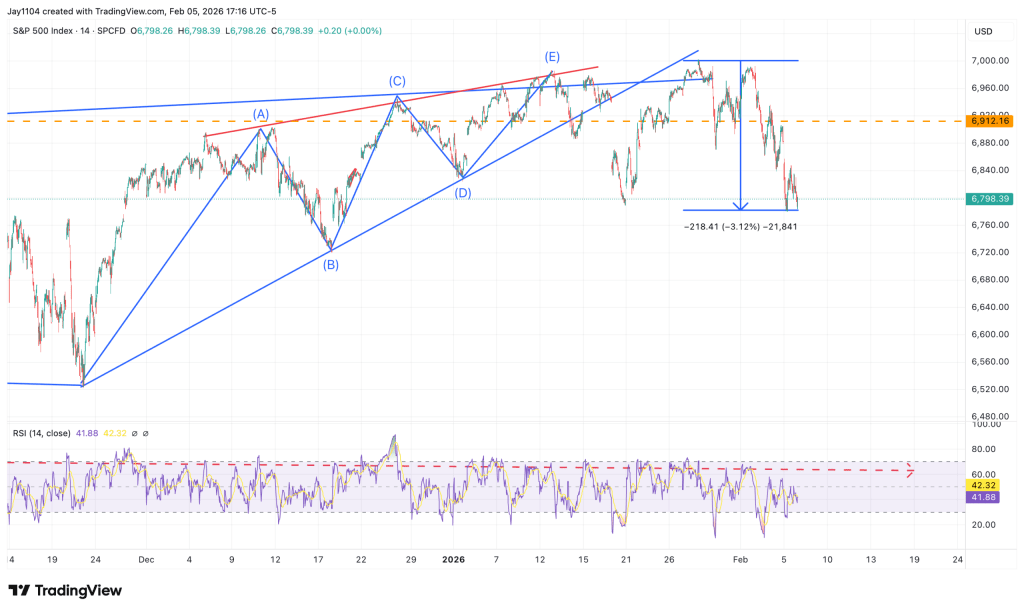
It’s striking that the S&P 500 is only about 2–3% below its all-time high given the turmoil seen across other areas of the market. On Thursday alone, silver and bitcoin fell by roughly 20% and 13%, respectively. For the moment, the index is hovering near the 6,800 level, supported by gamma-related positioning, though that support can shift quickly. A break below 6,800 would likely expose the next support zone around 6,700–6,720.
Based on some of the post-earnings price action late last evening, there is also a meaningful risk that the index opens with a downside gap.
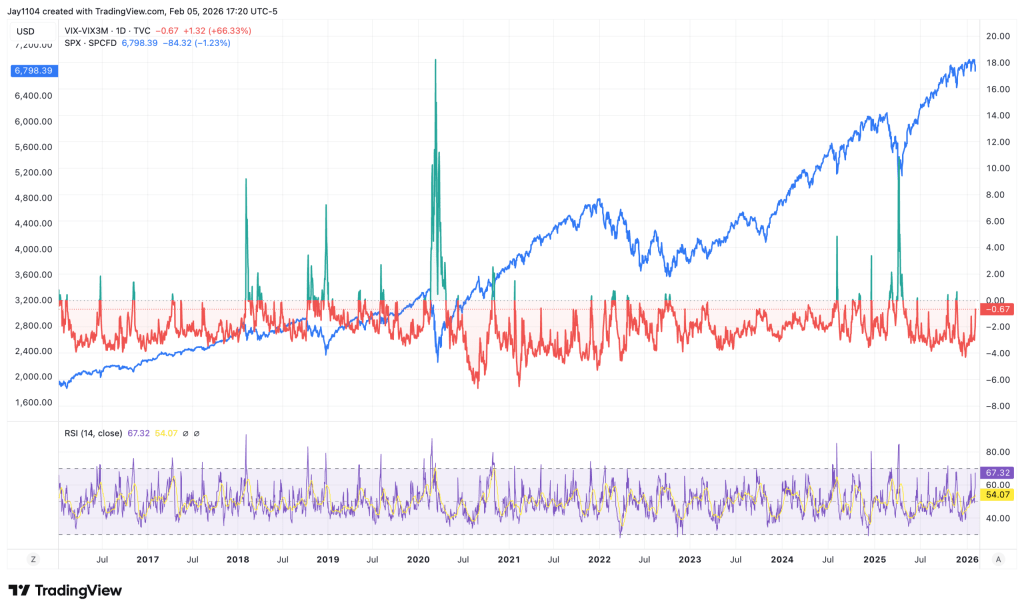
At present, the VIX remains below the three-month VIX index, indicating that the volatility curve has not yet moved into backwardation. This suggests that implied volatility is increasing across maturities, but the market has not yet experienced a full-fledged spike in fear.
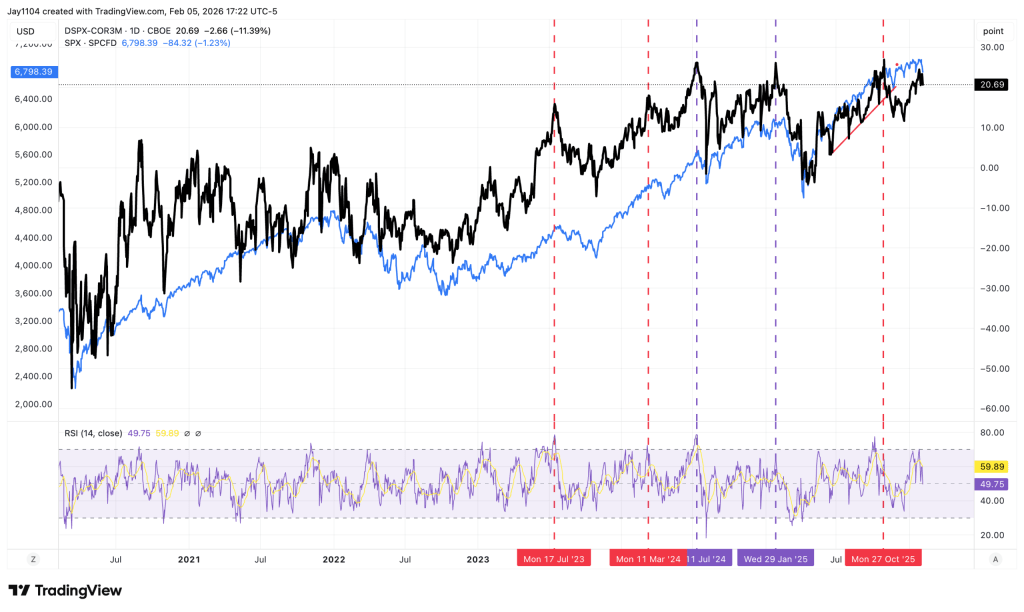
In addition, the dispersion index minus the three-month implied correlation index is still near the top of its range, indicating that the broader unwind has yet to begin.
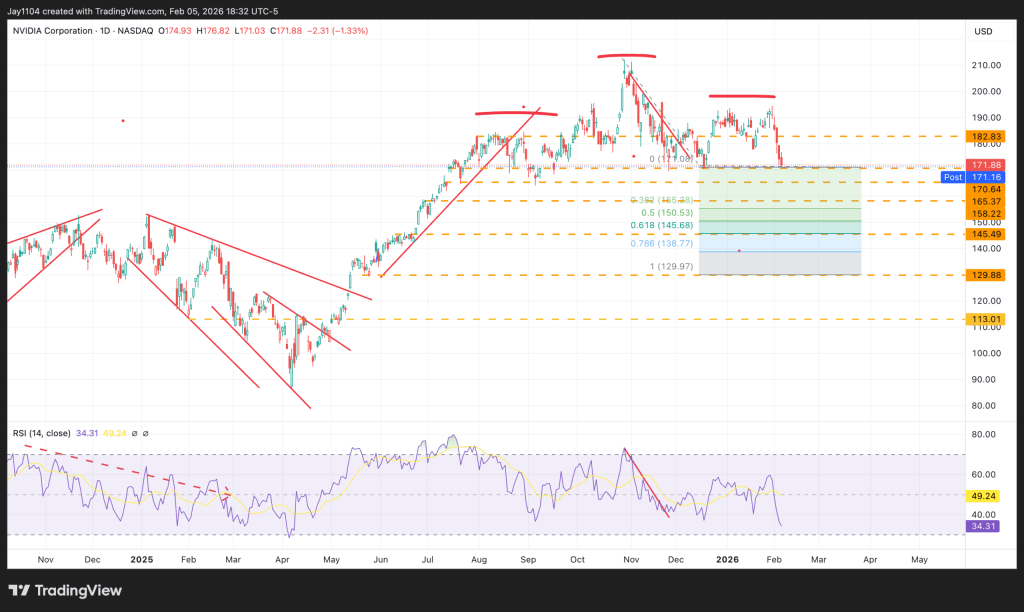
At this stage, NVIDIA (NASDAQ: NVDA) appears to be one of the few pillars supporting the broader market, having held above the $170 level since July. That area represents a key support zone and can reasonably be viewed as the neckline of a potential head-and-shoulders pattern. A decisive break below $170 would likely signal further downside for NVIDIA and could also act as a catalyst for a wider breakdown across the major equity indexes.
Viewed through a second-order lens, the prevailing narrative suggests that AI could disrupt—or even undermine—the traditional SaaS business model. That naturally leads to a third-order question: if the SaaS model falters, who will be left to purchase AI models from the hyperscalers? And if hyperscalers struggle to earn adequate returns, who ultimately continues to drive demand for GPUs from NVIDIA?
Ironically—or perhaps predictably—the software sector topped out before NVIDIA did. With software stocks now turning lower, the key question is whether NVIDIA will eventually follow the same trajectory.
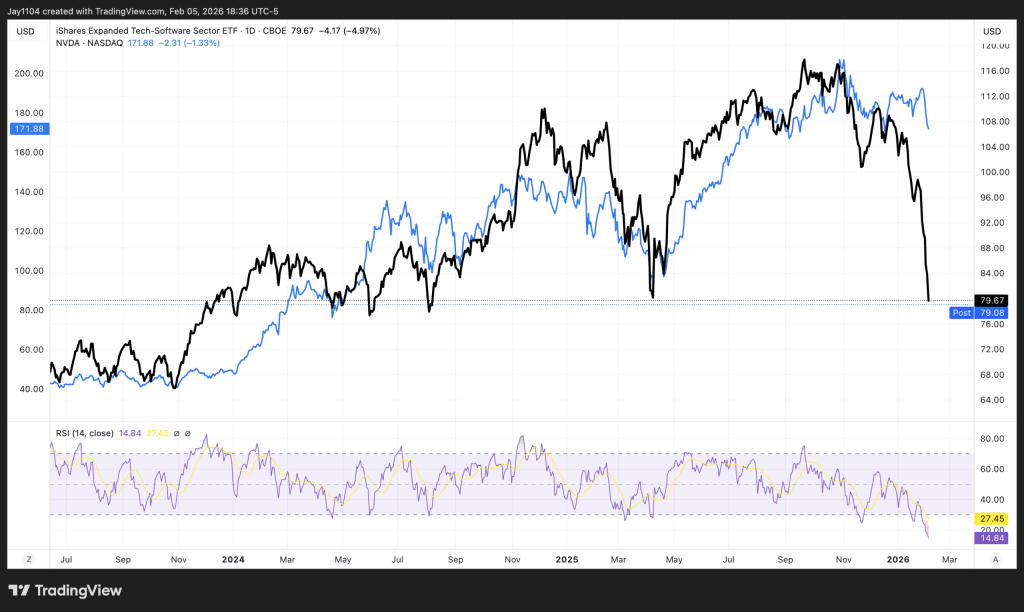
Sources: Michael Kramer
 THE ETERNAL SOVEREIGN
Leave a comment