The U.S. dollar weakened broadly in January, defying its usual seasonal strength — what lies ahead in February?
Key Takeaways From February Forex Seasonality
The U.S. dollar weakened broadly in January, defying its typical seasonal strength. While USD/JPY has historically underperformed in February, the relevance of seasonal averages may be diminished amid anticipated political developments on both sides of the Pacific. Meanwhile, tonight’s RBA meeting could be pivotal in determining whether AUD/USD retreats from three-year highs and aligns with its traditionally weak February seasonality.
The start of a new month provides an opportunity to revisit the seasonal patterns that have shaped the forex market over more than five decades, following the dismantling of the Bretton Woods system in 1971 and the emergence of the modern foreign exchange regime.
As always, these seasonal tendencies reflect historical averages, and individual months or years can deviate from long-term norms. As such, seasonality should be used alongside other forms of analysis when building a robust, long-term trading strategy, as past performance is not necessarily indicative of future results.
Euro Forex Seasonality – EUR/USD Chart
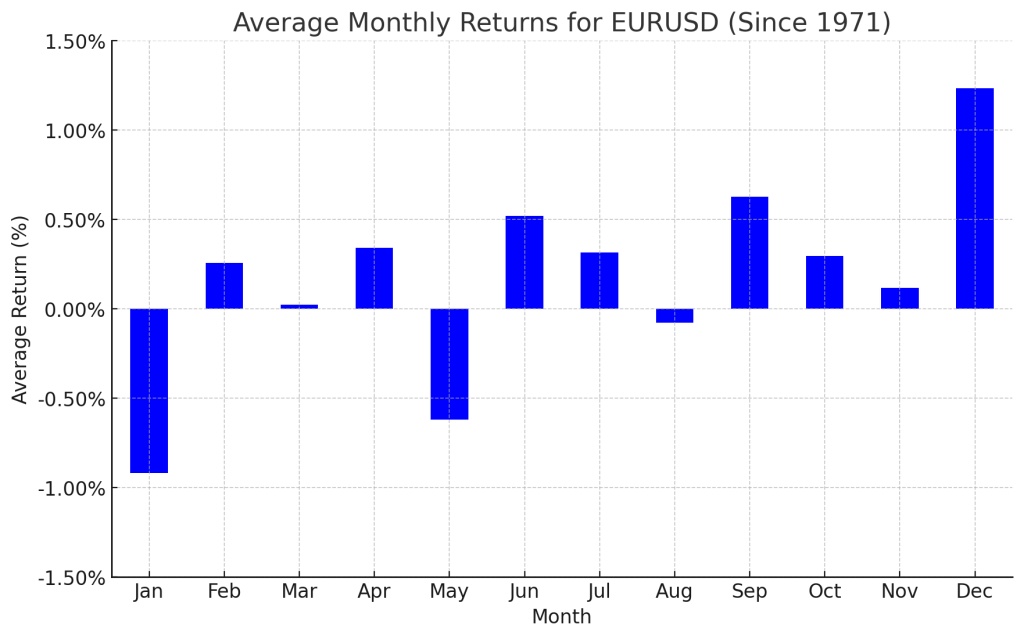
Historically, February has tended to be mildly bullish for EUR/USD, with the world’s most heavily traded currency pair posting an average gain of around 0.3% over the past 50-plus years. In January, EUR/USD defied its typical seasonal pattern, pushing higher to briefly touch a 4.5-year high near 1.21 before retreating to finish the month lower. For a U.S. dollar that has historically underperformed against the euro, the prospect of another government shutdown—potentially delaying key economic releases such as the NFP report—offers an encouraging backdrop.
British Pound Forex Seasonality – GBP/USD Chart
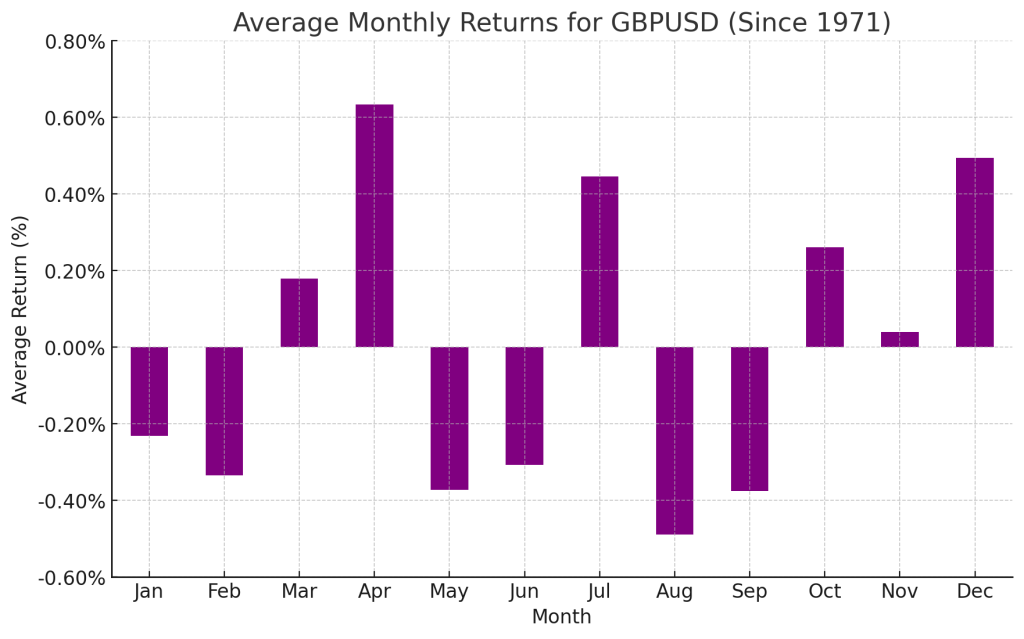
As shown in the chart above, GBP/USD has historically tended to decline in February, posting average returns of roughly -0.3% since 1971. Similar to the euro, sterling has advanced for three consecutive months and briefly surged to multi-year highs in January before retreating to finish back within last year’s trading range. While no changes to interest rates are anticipated, this week’s BOE and ECB meetings remain key event risks for European currencies.
Japanese Yen Forex Seasonality – USD/JPY Chart
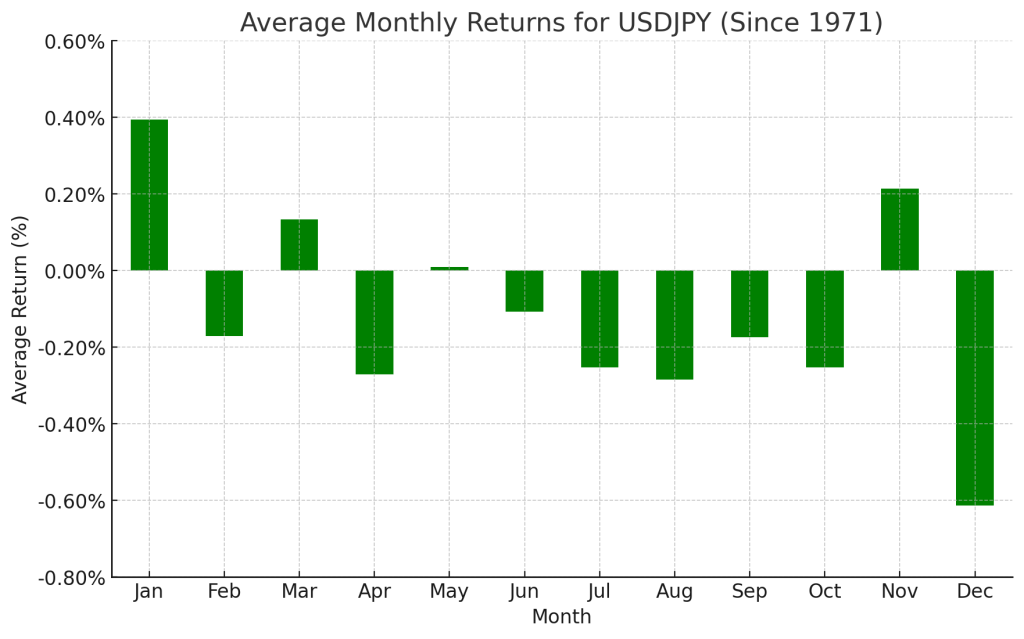
February has historically been a mildly bearish month for USD/JPY, with the pair posting average declines of around 0.2% since the Bretton Woods era. The year began with a volatile but ultimately weaker January for USD/JPY, running counter to its usual seasonal pattern amid broad-based U.S. dollar softness. With idiosyncratic political factors exerting an outsized influence on markets on both sides of the Pacific, traders may want to be cautious about placing too much weight on USD/JPY’s seasonal history at present.
Australian Dollar Forex Seasonality – AUD/USD Chart
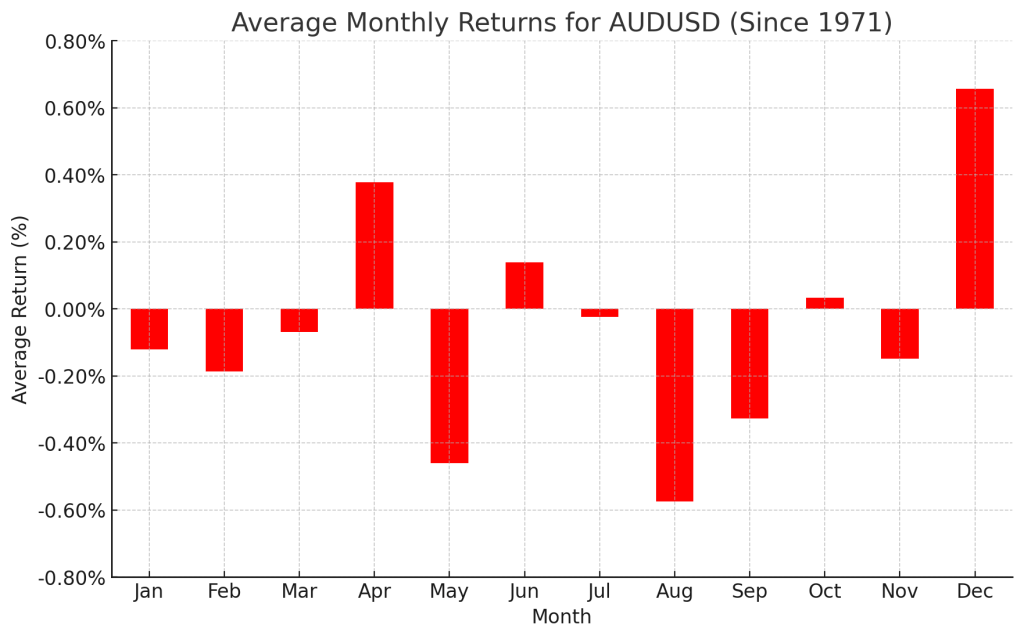
Shifting focus to Australia, AUD/USD has historically posted modest declines in February, averaging losses of around 0.2% since 1971. In January, the Australian dollar rallied sharply, breaking out of a three-year range on the back of strong domestic employment and inflation data. While the RBA is widely expected to deliver a rate hike shortly after publication, the central bank’s forward guidance for the remainder of the year may prove more influential for the currency than the rate decision itself.
Canadian Dollar Forex Seasonality – USD/CAD Chart
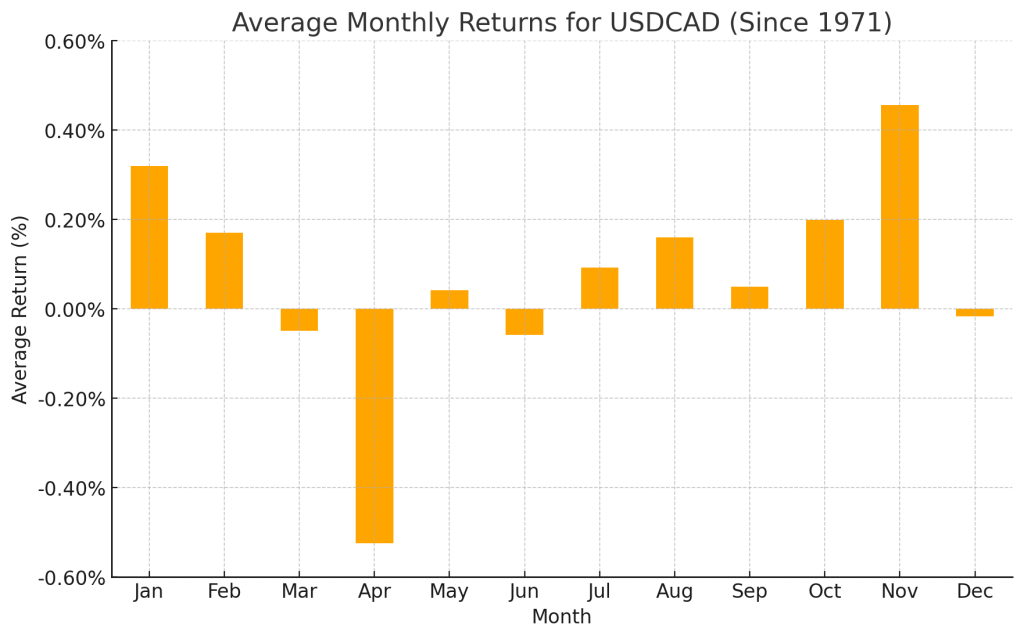
Finally, February has historically been a mildly supportive month for USD/CAD, delivering an average gain of around 0.2%. At the time of writing, the pair is holding above support near its 15-month low in the mid-1.3500s after briefly dipping below that level last month. However, USD/CAD remains below its key medium- and long-term moving averages clustered around the 1.3800 area, marking that zone as a critical hurdle if bulls are to regain control after a difficult three-week stretch.
As always, we close by emphasizing that seasonal patterns are not definitive—even when they appear to be tracking well. This analysis should be paired with a thorough review of current fundamental and technical conditions across the major currency pairs.
Sources: Matthew Weller
 THE ETERNAL SOVEREIGN
Leave a comment