SpaceX, widely regarded as the most sought-after and richly valued private company, is widely expected to list publicly this year in what could become the biggest IPO on record. The Financial Times reports that the company aims to raise up to $50 billion, implying a valuation of roughly $1.5 trillion.
Why Everyone Wants a Slice of SpaceX
Elon Musk founded SpaceX in May 2002, predating his involvement with Tesla (NASDAQ: TSLA). Today, the company effectively dominates the global rocket-launch market, while its satellite internet unit, Starlink, is widely viewed as a major profit engine. Musk has said that SpaceX has generated positive cash flow for many years.
Like many marquee startups, SpaceX opted to stay private as institutional capital continued to flow in. More recently, Musk’s vision of building data centers in orbit has emerged as a key catalyst behind the company’s push toward a public listing.
SpaceX is not alone in pursuing solar-powered space-based data centers. Jeff Bezos’ Blue Origin is developing a competing concept, while Google (GOOG) is working on its own orbital data center initiative, known as Project Suncatcher.
Constructing data centers in space would require hundreds of billions of dollars in investment, with major technical challenges including thermal management, radiation shielding, and ultra-low-latency data transmission back to Earth.
By combining two of today’s most compelling investment themes—artificial intelligence and space—SpaceX has attracted intense investor interest.
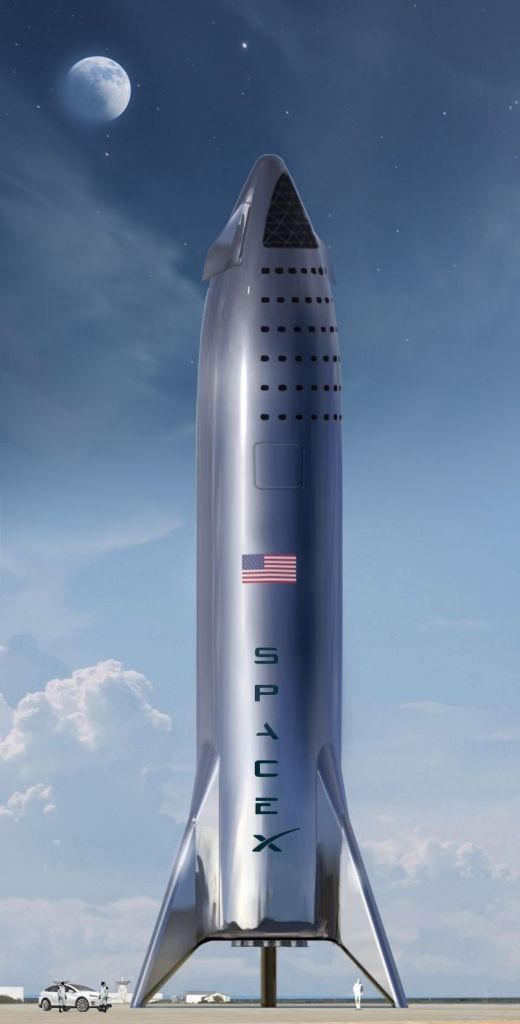
Because SpaceX remains privately held, gaining exposure is difficult for most investors unless they are private equity firms, venture capitalists, or company employees. As a result, retail investors are increasingly seeking indirect exposure by investing in funds that hold SpaceX shares.
Baron Capital–Managed ETFs and Mutual Funds
Billionaire investor Ron Baron has long been a vocal backer of Elon Musk. According to a letter dated July 16, 2024, Baron has been steadily adding SpaceX shares each year since 2017 across his mutual funds and other investment vehicles.
The Baron First Principles ETF (NYSE: RONB) currently allocates roughly 16% of its portfolio to SpaceX. Launched just last month, the fund has already attracted about $124 million in assets.
Meanwhile, SpaceX represents 29% of assets in the Baron Partners Fund (BPTRX) and 19% of net assets in the Baron Focused Growth Fund (BFGFX) as of December 31, 2025. Both funds have delivered substantial outperformance relative to their benchmarks since inception.
Under SEC rules, open-ended funds are generally capped at 15% exposure to illiquid investments, defined as securities that cannot be sold within seven days without materially affecting their price. However, Baron funds no longer classify SpaceX as illiquid, citing the depth and activity of its secondary market, according to Bloomberg.
Entrepreneur Private-Public Crossover ETF (XOVR)
XOVR is the first exchange-traded fund to hold a private company. Although the fund revised its ticker and investment strategy in August 2024, it has continued to focus on entrepreneur-led businesses.
The ETF gained exposure to SpaceX last year through a special-purpose vehicle (SPV), a move that has coincided with a sharp increase in assets. However, as The Wall Street Journal has noted, SPVs can charge performance fees of up to 25%, raising questions about how such costs may affect the value of XOVR’s SpaceX stake.
There is also limited transparency around how the ETF determines the fair value of its SpaceX holdings, a requirement under SEC rules.
Driven by investor demand for indirect access to SpaceX, the fund’s assets have surged to more than $1.6 billion. NVIDIA (NVDA) and Meta Platforms (META) rank among its other largest holdings. Despite the inflows, the ETF has significantly lagged the S&P 500 over the past year.
Sources: Zacks
 THE ETERNAL SOVEREIGN
Leave a comment