A crucial Federal Reserve interest rate decision is set to dominate attention this week, especially after news of a criminal investigation into Chair Jerome Powell heightened concerns about the central bank’s independence. At the same time, several major technology firms are scheduled to release quarterly earnings, with investors watching closely for evidence that heavy investments in artificial intelligence are beginning to pay off. Adding to market uncertainty, President Donald Trump has issued a renewed tariff threat against Canada, keeping geopolitical risks firmly in focus.
Fed decision ahead
This week’s agenda is expected to be led by the Federal Reserve’s interest rate decision on Wednesday, following a two-day policy meeting focused on setting borrowing costs as the U.S. economy remains broadly resilient. While employment—previously a key driver of rate cuts in 2025—appears stable amid subdued hiring and limited layoffs, inflation has held steady but remains above the Fed’s 2% target. Some analysts caution that economic growth is becoming increasingly “K-shaped,” with stronger performance among higher-income households and corporations, while lower-income earners face rising living costs. Against this backdrop, the Fed is widely expected to leave rates unchanged at 3.5%–3.75%, with CME FedWatch indicating that the next rate cut is unlikely before June.
Attention shifts to who could replace Powell
January’s Federal Reserve meeting takes place amid repeated calls from President Trump for swift and aggressive rate cuts to stimulate economic growth, alongside his criticism of officials for resisting such moves. Long-standing concerns over the Fed’s political independence intensified earlier this month after the Justice Department launched a criminal investigation into Chair Jerome Powell. In an unusual public response, Powell condemned the probe, characterizing it as an attempt to pressure monetary policy in line with the White House’s preferences.
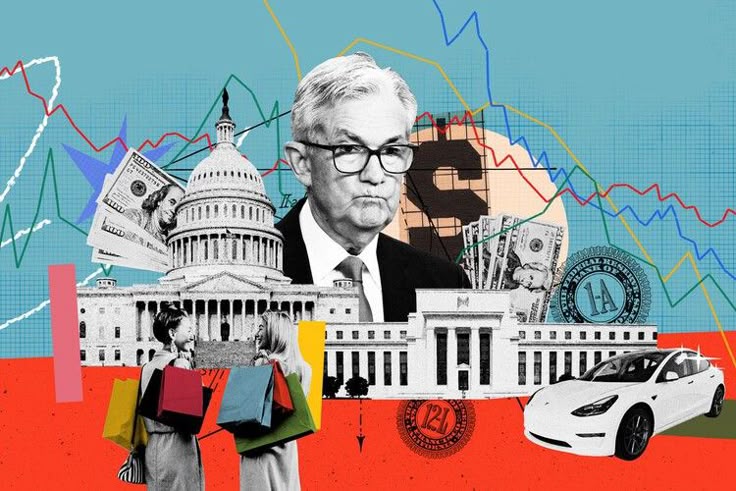
Appointed during Trump’s first term, Powell now has only a few months remaining as Fed chair, and markets are closely watching whether tensions with the administration could influence his decision to remain on the Fed’s rate-setting board after his term ends. Adding to the uncertainty is the question of who will succeed him. Prediction markets currently favor BlackRock executive Rick Rieder as the leading contender, overtaking former Fed Governor Kevin Warsh, while Trump has suggested he has narrowed his choice to a single candidate.
Major tech earnings in the spotlight
The earnings calendar this week will be dominated by results from major technology companies, including Meta Platforms, Microsoft, and Apple. Driven partly by excitement over advanced artificial intelligence applications, these firms have led equity markets in recent years. Their push to secure leadership in the AI race has prompted a sharp rise in capital spending, particularly on data centers and the semiconductors required to support AI workloads. While investors have largely been willing to overlook these heavy investments, expectations for meaningful revenue returns are now rising, with analysts describing 2026 as a “prove-it” year for big tech. This wave of earnings may provide the first clues as to whether those expectations are being fulfilled.
ASML to report
In Europe, attention will turn to ASML, the world’s leading supplier of chipmaking equipment, which is due to report earnings on Wednesday. The Dutch group’s market capitalization crossed the $500 billion mark earlier this month after key customer TSMC announced larger-than-expected capital spending plans to meet surging demand for AI chips. This milestone has cemented ASML’s position as Europe’s most valuable company, with analysts watching closely to see whether the AI boom can further accelerate its growth. However, ASML has so far issued a cautious outlook for the year ahead, with sales projected at best to remain flat, prompting concerns that the pace of new fab construction may be trailing the rapid expansion in AI-driven demand.
New tariff threat from Trump rattles markets
After seemingly backing away from earlier claims that he would impose punitive tariffs on several European countries unless the United States was permitted to buy Greenland, President Trump issued a fresh trade warning over the weekend, saying he would levy a 100% tariff on Canadian imports if Ottawa were to strike a trade agreement with China. In social media posts, Trump cautioned that Prime Minister Mark Carney—who recently visited China for trade discussions and spoke in Davos about the need for smaller economies to push back against coercion by global powers—could put Canada at risk by pursuing closer ties with Beijing.
Trump warned that China would severely damage Canada’s economy and society, stating that all Canadian goods entering the U.S. would face a 100% duty should such a deal be reached. Carney responded that Canada has no plans to seek a free trade agreement with China, stressing that Ottawa remains committed to its obligations under the USMCA and would consult both the U.S. and Mexico before pursuing any new trade arrangements. Analysts at Vital Knowledge noted that while the likelihood of the tariff threat being enacted appears low, Trump’s repeated and abrupt warnings are gradually weighing on investor sentiment.
Sources: Investing
 THE ETERNAL SOVEREIGN
Leave a comment