U.S. President Donald Trump has rejected Iranian proposals for a ceasefire, signaling that Washington intends to continue its “Operation Epic Fury” military campaign until Tehran agrees to tougher conditions, including the complete dismantling of its nuclear program.
With the conflict now entering its third week and the regional death toll approaching 3,750, the White House is reinforcing its “maximum pressure” strategy. At the same time, the effective shutdown of the Strait of Hormuz has helped keep global crude prices hovering close to $100 per barrel.
Hormuz tensions and Washington’s tougher demands
In a Saturday interview with NBC, Trump said Iran appears “ready to negotiate,” but emphasized that its current proposals do not meet U.S. strategic expectations. His refusal to scale back the offensive comes as Washington pushes for a multinational naval task force—including China, France, Japan, South Korea, and the United Kingdom—to reopen the world’s most critical maritime energy route.
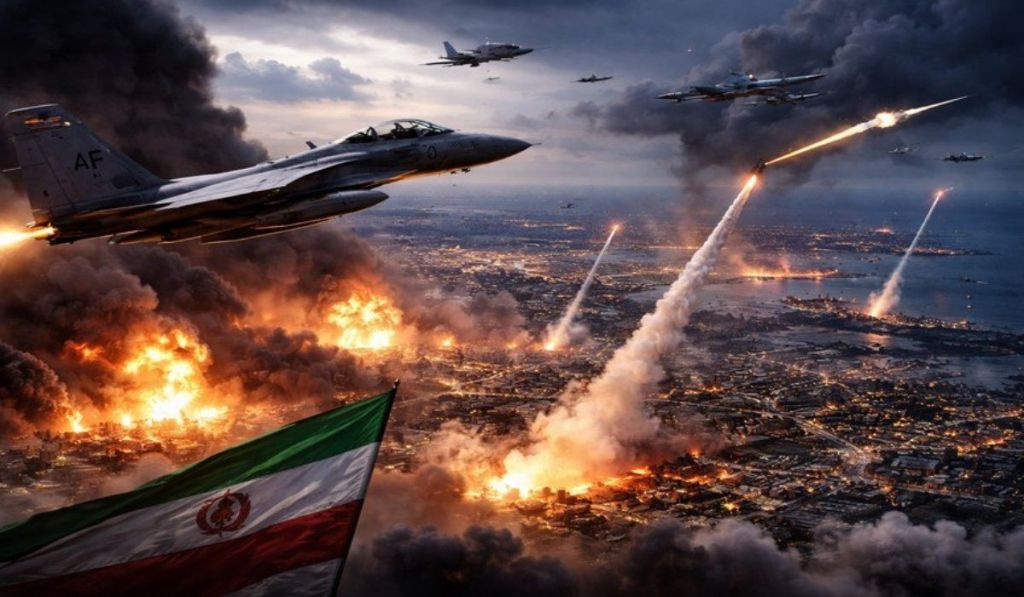
The U.S. demands follow a wave of major strikes on Kharg Island, Iran’s main crude export terminal. Trump said military facilities there had been “obliterated,” though he claimed oil infrastructure was deliberately spared “out of decency.”
However, the president warned that restraint could end if Iran continues using mines and drones against commercial shipping. So far, at least 16 vessels have been targeted, prompting major oil exporters such as Saudi Arabia, Iraq, and Kuwait to scale back crude production.
Regional escalation and Fujairah’s role as a bypass
The conflict broadened overnight as Iran launched retaliatory attacks across the Persian Gulf, striking targets linked to Israel and several Arab energy hubs. The United Arab Emirates said its defenses have intercepted roughly 1,600 drones and 300 missiles since fighting began. Explosions were reported over Dubai as air defense systems engaged incoming threats.
Tensions intensified further after Tehran accused the UAE of allowing strikes on Iranian territory to be launched from its soil. Meanwhile, the port of Fujairah—a key export route that bypasses the Strait of Hormuz—resumed loading operations on Sunday after briefly suspending activity due to a drone-triggered fire.
Analysts view the stability of this alternative route as crucial to preventing a broader collapse in Gulf energy exports. Saudi Arabia also reported intercepting drones near Riyadh, while Qatar has suspended LNG shipments.
With the region’s defensive network under increasing strain, the prolonged confrontation risks turning into a sustained disruption to the global energy supply chain.
Sources: Simon Mugo
 THE ETERNAL SOVEREIGN
Leave a comment