One of the strangest modern myths about capitalism is the belief that markets and the economy should always rise, and that any decline signals failure requiring intervention. In reality, true capitalism depends on periodic crashes and recessions to clear excess debt, leverage, and speculation. Without these corrections, the system cannot function properly.
Arguments that markets must always go up—such as constant sector rotation, the idea that the economy can’t survive downturns, or faith in the Federal Reserve’s ability to permanently prevent declines—ignore how dynamic systems work. Human emotions like greed and fear naturally create cycles of boom and bust, leading to excesses that must eventually be reset.
If downturns are continuously suppressed through stimulus and bailouts, the system becomes fragile and detached from reality. Like forests that need small fires to prevent catastrophic infernos, markets need corrections to clear imbalances. Though crashes feel devastating, they ultimately strengthen the system by allowing it to reset and grow sustainably.
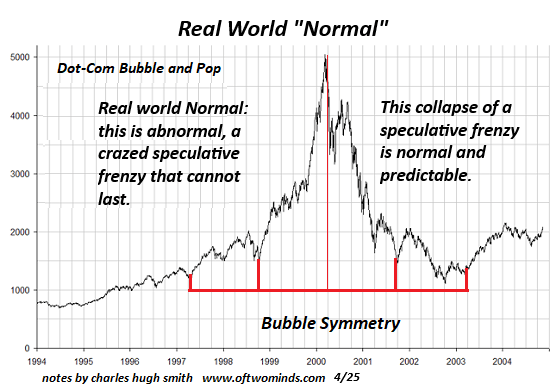
This broken, self-defeating mindset sees the healthy reset as a threat and responds by doubling down on the very policies that weakened the system—just to preserve the illusion that capitalism means markets must always rise.
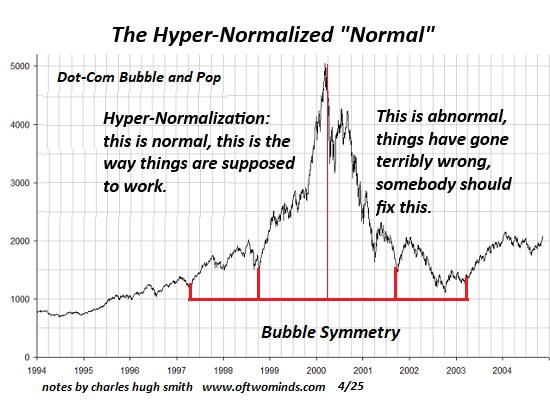
This isn’t capitalism — it’s systemic model collapse paving the way for an unavoidable meltdown.
Sources: Charles Hugh Smith
 THE ETERNAL SOVEREIGN
Leave a comment