Demo trading is a way to practice trading using virtual (fake) money in a simulated market environment that mirrors real market prices—without risking real capital.
What demo trading is used for?
- Learn how a trading platform works (placing orders, stop-loss, take-profit)
- Practice trading strategies in live market conditions
- Understand market behavior before trading with real money
- Test risk management rules
How demo trading works
- You’re given a virtual account balance (e.g., $10,000 or $100,000)
- Trades use real-time market data
- Profits and losses are simulated only—no real money involved
Advantages
- No financial risk
- Ideal for beginners
- Helps reduce costly mistakes
Limitations
- Lacks real emotional pressure
- Slippage and liquidity may not be fully realistic
- Can encourage overtrading if not taken seriously
Demo Trading vs Real Trading
- Demo trading is like a flight simulator for pilots
- Real trading adds emotion, discipline, and psychological stress
Best practice
When you transition to live trading:
- Start with small capital
- Trade exactly as you did in demo
- Focus on risk control, not profits
Global demo trading or trading simulator in the education
This is taught in a very structured and rigorous way at Curtin University, where Thanh Nguyen studied. The program provides a comprehensive understanding of how markets move, and Curtin University’s trading room offers an optimized, real-world environment for practical trading education.
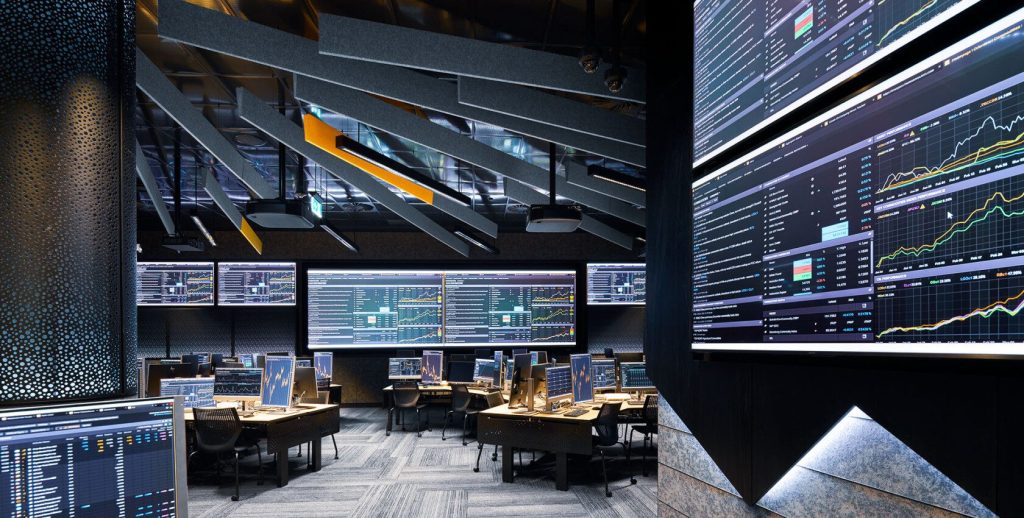
Sources: https://properties.curtin.edu.au/project/trading-room-upgrade/
 THE ETERNAL SOVEREIGN
Leave a comment