Bitcoin declined on Friday, halting a recovery from its midweek lows as investor risk appetite stayed weak. The world’s largest cryptocurrency is now on track for a fifth straight month of significant losses.
The broader crypto market moved largely in line with Bitcoin and is also poised for steep losses in February, as both retail and institutional investors continued to avoid the sector.
By 00:48 ET (05:48 GMT), Bitcoin was down nearly 1% at $67,788.0.
Bitcoin on track for fifth straight monthly decline
Bitcoin was down nearly 14% in February, as the risk-off sentiment in the crypto market showed little sign of easing throughout the month.
Rising geopolitical tensions worldwide, uncertainty surrounding major global economies, and concerns over further disruptions from U.S. trade tariffs kept investors cautious and away from speculative assets like cryptocurrencies.
The digital asset dropped as much as 50% from its October record high earlier this month, though it has since staged a modest recovery from those lows.
Bitcoin has remained in a sustained downtrend since October, with purchases by major corporate holder Strategy doing little to stem the losses.
Strategy has also reportedly slowed its pace of Bitcoin acquisitions in recent months, amid mounting concerns that continued price declines could force the company to sell part of its holdings to service its debt.
MARA Holdings jumps as AI deal eclipses weak Q4 results
Shares of MARA Holdings — previously known as Marathon Digital (NASDAQ: MARA) — surged Thursday evening after the Bitcoin mining company revealed a partnership with Starwood Capital to repurpose several of its mining facilities into artificial intelligence data centers. The stock climbed as much as 17% in after-hours trading.
The announcement helped eclipse a steep $1.7 billion loss in the fourth quarter, driven by an extended slump in Bitcoin prices that severely pressured the firm’s mining profitability. Revenue also came in below expectations.
Amid continued weakness in Bitcoin and growing investor enthusiasm around AI, MARA has recently been shifting strategy, aiming to redeploy its computing infrastructure toward AI data center operations rather than focusing solely on cryptocurrency mining.
Crypto prices today: Altcoin recovery fades, February losses loom
Crypto markets retreated on Friday, giving back much of this week’s brief rebound, with most tokens on track to post steep declines for February.
The world’s second-largest cryptocurrency, Ethereum, slipped 1.2% to $2,038.21 and was heading for a monthly drop of nearly 17%. The token faced additional pressure after co-founder Vitalik Buterin sold more of his holdings, reinforcing cautious sentiment across the market.
XRP fell 2.3% and was poised to lose around 15% in February, while BNB held steady on Friday but remained down close to 20% for the month.
Solana was also nursing losses of roughly 17% in February, whereas Cardano traded largely unchanged. In the meme coin segment, Dogecoin declined 5.4% for the month, while Official Trump tumbled about 20% over the same period.
Bitcoin’s latest decline is unfolding amid mounting macroeconomic headwinds and crypto-specific pressures, fueling fears that the downtrend could deepen, with some analysts eyeing a potential floor near $45,000.
Trump’s 15% Global Tariff Weighs on BTC
On Saturday, February 21, US President Donald Trump unveiled a 15% blanket tariff on imports, jolting global financial markets — cryptocurrencies included. The move followed a decision by the US Supreme Court to overturn his earlier sweeping tariff measures. The revised levy, initially proposed at 10% before being lifted to 15%, officially comes into force today, February 24, 2026.
Activated under Section 122 of the Trade Act of 1974, the new tariff covers the majority of imported goods for an initial 150-day period, with any extension subject to congressional approval. Although intended to narrow trade imbalances, the measure has heightened economic uncertainty, triggering a widespread retreat from risk-sensitive assets.
Within the crypto market, the development has reinforced a risk-off mood, as investors rotate out of volatile positions into safer havens. Bitcoin holders are increasingly realizing losses, with on-chain figures indicating more than $2.3 billion in realized losses over the past week.
Crypto analyst IT Tech described the move as one of the most significant capitulation phases in Bitcoin’s history, comparing it to the 2021 market crash, the 2022 Luna/FTX collapse, and the mid-2024 correction. In a post on X, he noted that the scale of losses ranks among the top three to five worst drawdowns ever recorded, adding that only a few moments in Bitcoin’s history have witnessed such intense capitulation.
The reaction reflects mounting concerns that higher import costs could reignite inflationary pressures, potentially forcing the Federal Reserve to delay rate cuts and keeping financial conditions tighter for longer.
Markets sold off swiftly following the announcement, with Bitcoin sliding intraday to below the $63,000 mark.
Spot Bitcoin ETFs Extend Outflow Streak to Five Weeks
Adding to the tariff-driven volatility, U.S.-listed spot Bitcoin ETFs have now recorded five consecutive weeks of net outflows — the longest stretch of withdrawals since February 2025.
Data from SoSoValue shows that nearly $3.8 billion has exited these funds over the five-week period, including $316 million in redemptions last week alone.
BlackRock’s iShares Bitcoin Trust (IBIT) accounted for the largest share of the withdrawals, losing roughly $2.1 billion during the streak. Fidelity Investments’ Fidelity Wise Origin Bitcoin Fund (FBTC) and several other products also saw notable outflows.
The sharp reversal from the strong inflows seen in late 2024 highlights a cooling in institutional appetite, as portfolio managers trim crypto exposure amid heightened macro uncertainty and broader market turbulence.
The persistent ETF withdrawals are intensifying sell-side pressure on Bitcoin, as fund managers are forced to offload underlying BTC holdings to satisfy investor redemptions.
With total net outflows reaching $4.5 billion so far in 2026, much of the earlier inflow momentum has been erased. Analysts describe the environment as a “risk-off stress test,” where macro headwinds — including tariffs and geopolitical tensions — are discouraging fresh allocations into crypto.
Sentiment indicators reflect the strain. The Crypto Fear & Greed Index has plunged to one of its most extreme fear readings on record, reinforcing the ongoing wave of liquidation. Unless ETF flows stabilize or reverse, downside momentum may continue, particularly if institutional distribution remains dominant.
Bear Pennant Signals $45K Target for Bitcoin
From a technical perspective, Bitcoin’s chart structure remains bearish, with a well-defined bear pennant forming on the daily timeframe.
A bear pennant is a continuation pattern that follows a steep decline (the flagpole), then consolidates within a tightening symmetrical triangle before typically breaking lower.
The BTC/USD pair fell below a major support level at $80,117 — its November 2025 low — and slid to $60,000 on February 6, forming the flagpole. A rebound toward $72,000 followed, before price retreated again to around $63,100.
The pattern confirmed on Monday when Bitcoin broke beneath the pennant’s lower trendline near $67,000. Based on the measured-move technique — projecting the height of the flagpole from the breakout point — the downside target falls in the $45,000–$50,000 range.
A drop toward $45,000 would imply roughly a 28% decline from current levels, underscoring the risk of further capitulation if macro and flow dynamics fail to improve.
The bearish outlook is reinforced by strengthening downside momentum, with the RSI sliding from overbought territory near 70 on January 15 to around 29 currently — signaling growing selling pressure and near-oversold conditions.
Bitcoin continues to trade below key moving averages, keeping the broader technical structure fragile. A decisive break beneath the $60,000 threshold could intensify losses, opening the door toward the $52,450 realized price level — a historically significant support area.
On the other hand, a sustained move above $72,700 would invalidate the bear pennant setup and could shift momentum back in favor of the bulls, paving the way for a broader recovery.
Bitcoin fell again on Tuesday, deepening its recent slide and now trading roughly 50% below its October record high, as uncertainty surrounding U.S. tariff policy dampened risk appetite for digital assets.
The world’s largest cryptocurrency slipped 0.9% to $64,169.6 by 17:35 ET (22:35 GMT), after touching an intraday low of $62,650.1.
Broader crypto markets also remained under pressure, with both institutional and retail investors continuing to reduce exposure. Escalating geopolitical tensions involving Iran, along with an AI-driven selloff on Wall Street, further weighed on sentiment.
Bitcoin down 50% from peak
With Tuesday’s losses, Bitcoin is now trading about half below its early-October all-time high of $126,186.
The cryptocurrency has been in a sustained downturn since that peak, as fresh U.S. regulatory measures and ongoing purchases by major corporate holder Strategy failed to meaningfully support prices.
On Monday, Strategy revealed it had acquired an additional 592 Bitcoin. However, the firm is currently facing significant unrealized losses, as Bitcoin trades below its reported average purchase price of $76,020.
On-chain data from CryptoQuant and Coinglass indicated that large holders—commonly known as “whales”—continued transferring substantial amounts of Bitcoin to exchanges, suggesting further selling pressure.
Meanwhile, major buyers appear scarce. Data from Glassnode showed institutional investors recorded a fifth straight week of net outflows from U.S. spot Bitcoin ETFs as of Monday.
Iliya Kalchev of Nexo Dispatch noted that U.S. spot Bitcoin ETFs saw around $203 million in net outflows on Monday alone. At the same time, derivatives markets still show demand for downside hedging, while long-term holders have not signaled broad capitulation—leaving Bitcoin in what he described as a fragile balance between visible pressure and underlying structural conviction.
He highlighted the $60,000–$72,000 range as the key near-term zone. If ETF flows stabilize and macro volatility subsides, the range could form a base. But if outflows continue, focus may shift toward the realized price area near $55,000 as the next major reference point.
Tariff uncertainty adds pressure
Bitcoin’s latest weakness was largely driven by renewed uncertainty over U.S. trade policy after the Supreme Court struck down much of President Donald Trump’s tariff framework.
In response, Trump announced new universal tariffs of 15% under a different legal authority, though the initial rate implemented at midnight Tuesday was 10%. The president now faces additional legal hurdles in expanding tariffs but has shown little intention of retreating from his trade agenda, even warning that countries seeking to renegotiate trade deals could face higher duties.
Although cryptocurrencies are not directly tied to trade flows, they are highly sensitive to shifts in global risk sentiment. The uncertainty surrounding U.S. tariffs has triggered broader risk aversion across financial markets, spilling over into digital assets.
Altcoins follow Bitcoin lower
Most altcoins tracked Bitcoin’s decline, with the broader market showing little sign of relief from the ongoing downturn.
Ethereum slipped 0.1% to $1,857.78, hovering near early-February lows. XRP and BNB fell 0.2% and 1.9%, respectively, while Cardano declined 1.4%. Solana bucked the trend, rising 0.9%.
Among meme tokens, Dogecoin dropped 1.1%, while TRUMP gained 1.3%.
Bitcoin falls beneath the lower boundary of its consolidation range on Monday, and a decisive close below this level could open the door to a more pronounced correction.
Ethereum drops under $1,900, marking a continuation of its six-week decline.
XRP dips below $1.40, unable to hold support at the lower edge of its trendline channel.
Bitcoin (BTC), Ethereum (ETH), and Ripple (XRP) continue to weaken on Monday after posting modest losses last week. BTC has slipped beneath the $65,000 consolidation floor, while ETH has fallen under $1,900, both marking a sixth consecutive week of declines. Meanwhile, XRP drops below $1.40, failing to hold support at its lower trendline — collectively signaling the risk of a deeper correction across the top three cryptocurrencies.
Bitcoin breaks below consolidation support
Bitcoin had been trading within a sideways range between $65,729 and $71,746 since February 7. On Monday, BTC moved below the lower boundary of this range, changing hands near $64,700.
A confirmed daily close beneath $65,729 would strengthen the bearish case and could open the path toward the next major support around $60,000.
On the daily chart, the RSI stands at 31, hovering close to oversold territory and reflecting strong downside momentum. Meanwhile, the MACD lines are tightening, suggesting growing indecision in the market.
BTC/USDT
However, if BTC manages to reclaim and hold above the $65,729 level, a rebound toward the upper boundary of the range at $71,746 remains possible.
Ethereum extends its correction
Ethereum continued to edge lower last week, prolonging its slide that began in mid-January. As of Monday, ETH is down 4.77%, trading around $1,864.
A daily close beneath the lower consolidation boundary at $1,747 would reinforce the bearish outlook and could drive prices toward the next key support at $1,669.
Similar to Bitcoin, Ethereum’s RSI points to strengthening downside momentum, while the MACD lines are narrowing, reflecting growing uncertainty among market participants.
ETH/USDT
On the flip side, a recovery from current levels could see ETH rebound toward the upper end of its consolidation range near $2,149.
XRP deepens its pullback after breaking below key lower trendline support.
XRP is hovering below $1.40 on Monday after slipping beneath the lower boundary of a falling wedge pattern.
Should the pullback persist, the token may slide further toward the weekly support around $1.30.
Similar to Bitcoin and Ethereum, XRP’s RSI points to building bearish pressure, while the MACD lines are tightening, signaling trader uncertainty.
XRP/USDT
On the other hand, if price manages to reclaim and hold the lower trendline as support, a rebound toward the psychological $1.50 level could follow.
Sui remains under pressure near $0.96 as its technical outlook continues to weaken. The upcoming launch of the Grayscale Sui Staking ETF on Wednesday will give investors exposure to the Sui Network’s native token. However, subdued retail participation — with futures Open Interest hovering just above $500 million — could restrain any meaningful breakout attempt.
Sui (SUI) has extended its decline for a second straight session, trading around $0.95 at the time of writing on Wednesday. The Layer-1 token has dropped more than 16% in February and is down roughly 34% year-to-date, mirroring the broader bearish tone across the crypto market.
Technically, Sui risks prolonging its downtrend amid weak retail engagement. While support at $0.87 remains intact for now, a decisive break below this level could open the door for a pullback toward the $0.79 demand zone.
Grayscale’s Sui Staking ETF begins trading
Grayscale Investments has confirmed the launch of its Sui Staking Exchange-Traded Fund (ETF), set to start trading Wednesday. The fund is listed on NYSE Arca under the ticker GSUI, following the conversion of the former Grayscale Sui Trust. The ETF is expected to hold SUI tokens and incorporate staking.
According to Grayscale, while purchasing shares does not constitute direct ownership of SUI, the product is structured to offer a cost-efficient and accessible way for investors to gain exposure to the token.
The Bank of New York Mellon will act as the trust’s transfer agent and administrator. Coinbase, Inc. will serve as prime broker, while Coinbase Custody Trust Company will function as custodian.
Investors can purchase shares only in creation blocks of 10,000 units or more.
Despite the ETF debut, retail demand for Sui remains muted. Futures Open Interest has slipped to $512 million on Wednesday from $554 million on Sunday, signaling limited appetite for new positions. The stagnation suggests traders remain unconvinced about the token’s ability to sustain a meaningful recovery, opting instead to scale back exposure.
Technical outlook: Sui’s downtrend remains intact
Sui is trading around $0.95, still capped below the declining 50-day Exponential Moving Average (EMA) at $1.28, maintaining a bearish medium-term outlook. The 100-day EMA at $1.58 and the 200-day EMA at $2.02 are also trending lower, continuing to limit recovery attempts.
On the daily chart, the Relative Strength Index (RSI) sits at 36, below the neutral 50 level, signaling persistent weakness. A sustained pickup in buying pressure could help improve momentum. However, if the RSI drifts further into oversold territory, the decline may accelerate toward support near $0.78 — in line with the February 6 low.
A decisive break above descending trendline resistance would create scope for a move toward the 100-day EMA at $1.58. Conversely, failure to extend any rebound would leave the broader downtrend firmly in control.
Meanwhile, the Moving Average Convergence Divergence (MACD) histogram has turned positive and is gradually expanding, showing the MACD line above the signal line near the zero threshold — an early sign of strengthening momentum. The Parabolic SAR, positioned at $0.86 below the current price, also suggests a tentative stabilization attempt.
Bitcoin declined on Monday, deepening its downturn after crypto markets posted four consecutive weeks of heavy losses, as interest-rate uncertainty continued to dampen appetite for riskier assets.
The largest cryptocurrency briefly touched $70,000 over the weekend before retreating. By 00:58 ET (05:58 GMT), Bitcoin was down 2.7% at $68,409.7.
Strategy says liquidation unlikely unless Bitcoin drops to $8,000
Strategy Inc (NASDAQ:MSTR), the biggest corporate holder of Bitcoin, said Sunday it can meet its debt obligations even if Bitcoin tumbles to $8,000. In a social media update, the company stated it could “withstand a drawdown in $BTC price to $8K and still have sufficient assets to fully cover our debt.”
The firm owns 714,644 Bitcoins, financed through a combination of equity issuance and long-term borrowing. Led by prominent Bitcoin advocate Michael Saylor, Strategy has continued accumulating coins in recent weeks despite the broader market slide.
Bitcoin has now erased about half its value since peaking near $126,000 in October, leading declines across speculative assets as traders grew cautious amid U.S. rate uncertainty.
Extended losses had fueled speculation that Strategy might be forced to sell part of its holdings to service debt, though Saylor has repeatedly downplayed such concerns. Earlier this month, the company reported a $12.4 billion loss for the December quarter, compared with a $670.8 million loss a year earlier. Aside from its substantial Bitcoin position, Strategy generates relatively limited operating revenue.
Broader digital assets also moved lower Monday in line with Bitcoin’s sustained slump. Ethereum fell 6.1% to $1,958.63, while XRP dropped 7.7% to $1.4575.
BNB declined about 4%, with Solana and Cardano sliding 5.4% and 6.2%, respectively.
Among meme tokens, Dogecoin tumbled 11.4%, while TRUMP slipped 2.4%.
Crypto sentiment has remained fragile since October, as both retail and institutional inflows slowed sharply. Meanwhile, a surge in gold prices amid speculative enthusiasm in precious metals has drawn attention away from Bitcoin, with investors favoring tangible assets.
Bitcoin hovered around $67,000 during Thursday’s Asian session, showing little movement as investors weighed stronger-than-expected U.S. jobs data that reduced hopes for an imminent Federal Reserve rate cut. The leading cryptocurrency edged up 0.4% to $67,102.8 but remained below the crucial $70,000 threshold, with trading subdued amid thinner liquidity conditions.
After bouncing back from a steep drop toward $60,000 earlier this month, Bitcoin has struggled to rebuild bullish momentum.
Robust U.S. jobs data tempers rate-cut expectations; CPI in focus
Figures released Wednesday showed U.S. nonfarm payrolls rose more than anticipated in January, highlighting ongoing strength in the labor market. The unemployment rate stayed near multi-month lows, and wage growth remained solid—reinforcing expectations that the Fed may keep interest rates elevated for longer.
In response, traders scaled back bets on a near-term rate cut, with market pricing now suggesting lower chances of easing before June. Prolonged higher rates tend to pressure risk-sensitive assets like cryptocurrencies.
Market participants are now looking ahead to weekly jobless claims data due later Thursday for additional insight into labor conditions. Friday’s U.S. Consumer Price Index (CPI) report will also be closely watched for signals on inflation and the Fed’s policy path.
Bitcoin’s continued failure to break above $70,000 underscores cautious sentiment and lingering volatility following its recent decline, keeping prices largely range-bound.
Crypto liquidity provider BlockFills has reportedly paused client withdrawals amid a sharp downturn in digital asset prices, according to multiple media outlets on Wednesday.
The Financial Times and other sources said the suspension, which began last week, aims to safeguard both clients and the company during turbulent market conditions while restoring liquidity on the platform.
Clients are reportedly still able to trade spot and derivatives under certain restrictions.
BlockFills serves over 2,000 institutional clients and processed more than $60 billion in trading volume in 2025, the FT noted. The move echoes similar steps taken by crypto firms during previous market slumps.
Crypto prices today: Altcoins edge higher in sideways trade
Most major altcoins posted modest gains Thursday amid range-bound trading.
Ethereum, the second-largest cryptocurrency, rose 1.1% to $1,972.92, while XRP gained 1.6% to $1.38. Solana traded flat, whereas Cardano and Polygon each climbed 2.5%. Among meme coins, Dogecoin advanced 2.2%.
The total cryptocurrency market capitalization has fallen about 10% over the past week to roughly $2.36 trillion. Paradoxically, this also marks a 10% rebound from Friday’s lows. Despite that uptick, near-term prospects remain uncertain, as the recovery stalled over the weekend and met selling pressure around the $2.4 trillion level. This suggests the move may have been a temporary bounce within a broader decline that has yet to fully run its course.
The sentiment index dropped to 6 over the weekend, matching the lows seen on June 18–19, 2022, and only falling lower once before, on August 22, 2019. By Monday, it had rebounded to 14 in line with market prices, but this remains an extremely depressed level and does not yet support confident buying.
Bitcoin recovered steadily on Friday after an early sharp sell-off, but from Saturday onward it encountered strong resistance around the $71,000 level. Significant supply remains in the market from investors looking to exit on rebounds, suggesting persistent selling pressure. Under these conditions, the possibility of a fresh test of the 200-week moving average in the near term should not be ruled out.
The decline in Bitcoin prices has been accompanied by shrinking liquidity, heightened volatility, weaker risk appetite, and a stronger correlation with equity markets. CryptoQuant suggests BTC could drop to around $54,600, a level at which the market may shift from capitulation toward accumulation.
Amid the broader crypto sell-off, Strategy reported a net loss of $12.6 billion for the fourth quarter, with operating losses totaling $17.4 billion. CEO Fong Le said the company would only face debt-servicing risks in the event of an extreme Bitcoin collapse to about $8,000.
Cardano founder Charles Hoskinson disclosed unrealized losses exceeding $3 billion, while emphasizing that he has no plans to liquidate his holdings even if market conditions deteriorate further.
Bitcoin miners are increasingly shutting down operations as losses mount. Mining profitability has fallen to record lows due to declining crypto prices and higher electricity costs, with JPMorgan estimating the average cost of mining at roughly $87,000 per BTC.
Following the latest adjustment, Bitcoin’s mining difficulty dropped 11.16% to 125.86 trillion, marking the steepest decline since 2021, when China banned cryptocurrency mining.
Despite the prevailing pessimism, JPMorgan remains constructive on Bitcoin’s long-term outlook, forecasting that it could eventually reach $266,000. The bank has also recently lifted its long-term gold price forecast to $8,000–8,500.
Bitcoin hovered above the $70,000 mark on Monday, stabilizing after a sharp rebound late last week from lows near $60,000, as investors reassessed risk appetite following widespread liquidations and shifted focus to key U.S. economic data due later in the week.
The world’s largest cryptocurrency was last up about 1.5% at $70,402.5 by 01:25 ET (06:25 GMT), moving further away from a roughly 16-month low of around $60,187 reached earlier in the week.
On Friday, Bitcoin surged back above $70,000, jumping more than 12% in a single session as rallies in technology stocks and precious metals lifted risk assets more broadly. The rebound was supported by bargain hunting after the steep selloff, alongside signs of stabilisation across global markets.
Bitcoin’s sharp decline last week reflected a broader risk-off environment, driven by a selloff in U.S. technology shares — especially AI-related stocks — and forced liquidations in crypto futures markets, which intensified downward pressure.
Ongoing outflows from Bitcoin spot ETFs and a pullback from leveraged positions were also seen as key contributors to the heightened volatility.
Japan election reinforces the shift in risk sentiment
Japanese Prime Minister Sanae Takaichi’s decisive election victory on Sunday reinforced her mandate to push ahead with fiscal stimulus and tax reductions. The landslide result lifted regional equities and was linked to a renewed appetite for risk across some global markets.
Although the yen initially weakened ahead of the vote, it later steadied alongside equity gains, helping to support broader market sentiment.
Attention is now turning to a series of important U.S. economic releases later this week, including delayed employment data due on Wednesday and the consumer price index report on Friday.
These figures are expected to shape expectations for the Federal Reserve’s policy path, with markets currently factoring in potential rate cuts later in 2026 should inflation cool and labour market momentum slow.
Crypto prices today: altcoins remain subdued after rebounding from recent lows
Most major altcoins moved within narrow ranges on Monday, showing limited follow-through after their recent rebound.
Ethereum, the world’s second-largest cryptocurrency, traded largely unchanged at $2,076.41. XRP, ranked third, edged 1.1% higher to $1.43.
Solana slipped marginally, while Cardano and Polygon were little changed on the day.
In the meme-token space, Dogecoin underperformed, falling about 2%.
Over the past year, market attention has largely centered on bitcoin’s price volatility and shifting investor sentiment. Headlines were dominated by discussions around regulation, adoption, and inflation. Meanwhile, a more subtle but potentially significant risk has been developing in the background: advances in quantum computing. Bitcoin has recently come under pressure as investors begin to factor in these concerns, prompting renewed debate over the cryptocurrency’s long-term security and durability.
Introduction
Rapid progress in quantum computing is raising fresh questions about the future security of blockchain-based systems. Bitcoin’s network depends on cryptographic algorithms to protect transactions and verify ownership, and researchers are increasingly examining whether sufficiently powerful quantum computers could one day compromise these safeguards.
These worries are no longer confined to academic circles. Christopher Wood, Jefferies’ global head of equity strategy, recently removed bitcoin from his model portfolio, citing the risk that breakthroughs in quantum computing could erode the cryptographic foundations underpinning the asset. He cautioned that any successful attack would call into question bitcoin’s credibility as a long-term store of value.
The Quantum Computing Threat
Quantum computing is widely viewed as the next major leap in computational technology. Traditional computers process information using binary bits—either a 0 or a 1. Quantum computers, by contrast, rely on quantum bits, or qubits, which can exist in multiple states simultaneously due to a phenomenon known as superposition. When combined with other quantum effects such as entanglement and interference, this capability allows quantum systems to solve certain classes of problems far more efficiently than classical machines.
Timothy Hollebeek, Industry Standards Strategist at DigiCert, offers a helpful analogy: classical computing is like navigating a maze by testing one route at a time, while a quantum computer can explore all possible paths simultaneously. This parallelism is what makes quantum computers especially powerful for tasks involving complex mathematics, including factoring large numbers and uncovering patterns within massive datasets.
Recent breakthroughs highlight the promise of quantum technology. Google’s quantum processor, Willow, reportedly completed a specialized computation in under five minutes—an exercise that would take classical supercomputers an impractically long time to finish. The chip is estimated to be roughly 13,000 times faster than the world’s most powerful traditional systems for that task. Achievements like this help explain why quantum computing is drawing growing interest across sectors such as healthcare, logistics, and materials research.
Still, despite the enthusiasm, quantum computing remains in its early developmental phase. Current systems face significant technical limitations. Qubits are highly fragile, must operate at temperatures close to absolute zero, and are extremely sensitive to environmental noise, which can introduce errors. Even in tightly controlled settings, sustaining a stable quantum state for more than a short duration remains challenging. For instance, Google’s Willow chip uses 105 qubits, whereas practical, fault-tolerant quantum computers would likely require thousands of reliably connected and stable qubits.
The rapid progress of quantum computing has prompted renewed scrutiny of the long-term security of cryptography-dependent digital systems, including cryptocurrencies. Because bitcoin’s architecture rests on assumptions about the limits of computational power, any transformative advance in computing naturally warrants closer evaluation.
The Real Threats That Could Undermine Bitcoin’s Value
“Quantum computers are not a matter of if, but when,” said Timothy Hollebeek, Industry Standards Strategist at DigiCert—a sentiment that helps explain why quantum advancements are increasingly viewed as a potential long-term risk to bitcoin’s security and valuation.
The most significant risk centers on Shor’s algorithm, a quantum method capable of compromising the elliptic curve digital signature algorithm (ECDSA) that bitcoin relies on to verify ownership of funds. Under today’s classical computing constraints, deriving a private key from a public key is computationally infeasible. However, in a future with sufficiently powerful quantum computers, this assumption may no longer hold. In theory, an attacker could extract a private key from its corresponding public key in a relatively short period, enabling unauthorized transfers of funds.
The quantum risk is not evenly spread across the bitcoin network. Roughly 25% of all bitcoins—more than 5 million BTC—are held in so-called “vulnerable” addresses, including early P2PK addresses and reused P2PKH addresses. This category also encompasses the estimated 1.1 million BTC attributed to Satoshi Nakamoto. These holdings are more exposed because their public keys are already visible on the blockchain, making them potential targets for quantum-enabled attacks. If even a fraction of these coins were moved by a quantum adversary, the resulting supply shock could be severe, shaking confidence in bitcoin’s ownership framework and placing significant downward pressure on prices.
Even newer address formats are not entirely risk-free under extreme assumptions. One commonly cited theoretical vulnerability involves transactions sitting in the mempool—the queue of unconfirmed transactions shared across network nodes. In this scenario, a sufficiently advanced quantum computer could detect a transaction before it is confirmed, derive the corresponding private key in real time, and submit a competing transaction that redirects the funds. Although highly speculative, this example illustrates how execution speed could become as critical as raw computational power.
Beyond outright theft, quantum computing could also erode trust in bitcoin’s neutrality and privacy. Through Grover’s algorithm, quantum-capable miners could gain a disproportionate advantage in proof-of-work mining, increasing the risk of mining centralization. If a single entity accumulated enough influence, it could censor transactions or reorganize blocks, undermining bitcoin’s decentralised ethos.
Another frequently cited risk is the concept of “harvest now, decrypt later,” where encrypted blockchain data is collected today with the expectation that future quantum computers could decrypt it. While this would not alter historical transactions, it could reveal identities behind pseudonymous wallets or expose past activity, weakening perceived privacy guarantees.
These technical risks are increasingly showing up in market behavior. By early 2026, quantum-related concerns had moved beyond abstract theory and begun to affect investor positioning. Bitcoin, for instance, lagged gold by roughly 6.5% year-to-date, while gold advanced about 55% over the same period. As a result, the bitcoin-to-gold ratio fell to around 19 BTC per ounce, signaling a more cautious stance toward bitcoin among investors.
Bitcoin Relative to Gold
How Bitcoin Could Be Compromised—and Why It Remains Resilient
At present, Bitcoin depends on elliptic curve cryptography (ECC)—specifically the secp256k1 curve—to generate public and private keys. Transactions are authenticated using ECDSA signatures, a system that is secure against classical computers but could be vulnerable to sufficiently advanced quantum machines. If that were to happen, both fund ownership and transaction integrity could be at risk.
One practical solution is the adoption of post-quantum cryptography (PQC), which is designed to withstand quantum attacks. Rather than requiring a complete overhaul of the network, PQC could be introduced incrementally, allowing vulnerable cryptographic components to be replaced over time.
Under a PQC framework, security would be reinforced through a three-layer defense. Kyber would protect communications between nodes and wallets, preventing interception or eavesdropping. Dilithium would handle transaction verification and safeguard private keys against quantum-enabled attacks. SPHINCS+ would ensure the integrity of transaction records, effectively giving each transaction a unique, tamper-resistant cryptographic fingerprint.
Bitcoin is not a static system. In January 2026, the first “Bitcoin Quantum” testnets began experimenting with post-quantum cryptography using NIST-standardised algorithms such as ML-DSA (formerly Dilithium). These trials demonstrated that quantum-resistant upgrades can be tested safely before any network-wide rollout. Such technologies strengthen transaction validation, data transmission, and record integrity, helping ensure bitcoin’s durability in a future shaped by quantum computing. Previous upgrades—including SegWit and Taproot—illustrate that bitcoin can evolve without disrupting network operations.
Resilience is not purely technical; it is also economic and social. A visible quantum-related attack would pose an immediate threat to bitcoin’s value, creating strong incentives for miners, developers, exchanges, and large holders to coordinate a rapid response. Historically, the network has shown an ability to converge quickly on practical solutions when facing systemic risks. Moreover, quantum computing is advancing incrementally, giving bitcoin ample time to prepare, test, and deploy defensive measures before the threat becomes acute. In this context, resilience is about managing technological change carefully rather than attempting to stop it outright.
Bitcoin’s robustness is rooted in both its architecture and its incentives. The network has no central authority, physical headquarters, or kill switch. Its ledger is maintained by thousands of independent nodes globally, eliminating single points of failure. A fixed supply cap of 21 million coins guards against monetary inflation, while the proof-of-work mechanism—secured by vast computational resources—makes large-scale attacks prohibitively expensive.
Widespread adoption further reinforces this resilience. By 2024, an estimated 500 million people held bitcoin or other cryptocurrencies, while institutional participation expanded through ETFs, hedge funds, pension funds, and even sovereign entities. As bitcoin becomes increasingly embedded in the global financial system, the economic and political costs of attempting to disrupt it continue to rise. Major stakeholders now have strong incentives to preserve long-term stability rather than undermine it.
Some observers, including Michael Saylor, have argued that a shift to quantum-resistant addresses could materially affect bitcoin’s market dynamics. If the network were to establish a migration deadline, coins held in legacy addresses—whose owners have lost access or passed away—could become permanently inaccessible. This would effectively remove millions of bitcoins from circulation, tightening supply and increasing scarcity. While the timing and market response remain uncertain, such a transition underscores the intricate relationship between technological evolution and bitcoin’s economic framework.
Conclusion
Quantum computing poses challenges that extend well beyond bitcoin, as many digital platforms and internet communications depend on the same public-key cryptographic systems that could eventually be vulnerable to quantum attacks. Nvidia CEO Jensen Huang has suggested that truly practical quantum computers may still be 15 to 30 years away, providing a meaningful window for industries to prepare and adapt.
In the meantime, leading technology firms are already moving to address these risks. Microsoft, for instance, is incorporating post-quantum cryptography (PQC) into its core software libraries and working alongside global standards organizations to develop quantum-resistant protocols for secure communications.
Together, these initiatives indicate that both the broader technology sector and the cryptocurrency ecosystem are actively planning for a post-quantum future, testing and deploying safeguards well ahead of the arrival of commercially viable quantum computers.
Bitcoin plunged on Thursday to its lowest level since mid-October 2024, as thinning liquidity and a broad selloff in global technology stocks renewed pressure on risk assets. The world’s largest cryptocurrency was last down 12.4% at $63,539.4 by 17:28 ET (22:28 GMT).
The token has fallen in seven of the past eight sessions and is now down nearly 50% from its record high of around $126,000 reached in October 2025. Interactive Brokers chief strategist Steve Sosnick said the scale of the decline suggests the crypto market has moved beyond a normal cycle, describing it as a full-blown bear market given drawdowns of 40% to 50% or more.
Tailwinds that once boosted crypto now turning into headwinds
Bitcoin’s sharp selloff has intensified in recent days amid a broader rout in technology stocks, as investors rotate out of high-risk assets. According to Interactive Brokers strategist Steve Sosnick, several of the forces that fueled bitcoin and other cryptocurrencies’ rapid ascent in 2025 have now turned into headwinds.
Strong inflows following the launch of bitcoin ETFs in January 2024, the Trump administration’s supportive stance toward digital assets, and substantial purchases by crypto-focused treasury firms all helped drive prices higher, Sosnick said. He added that crypto also benefited during the rally from minimal margin constraints, as many exchanges and dealers offered extremely high leverage. Unlike stocks and ETFs, which are limited by Regulation T and similar rules, this leverage allowed investors to amplify gains—an effect that is now accelerating losses as prices fall.
After bitcoin surged to a record high above $126,000 on October 6, the broader cryptocurrency market experienced a sharp selloff just four days later. Analysts later described the move as a “flash crash,” attributing it to heavily leveraged dealers being forced to unwind positions amid margin-related losses.
Interactive Brokers strategist Steve Sosnick said that as market momentum shifted, several of the factors that had previously supported cryptocurrencies began to turn into headwinds. He noted that while leverage can significantly amplify gains during rallies, it can also sharply magnify losses during downturns. Sosnick added that progress on anticipated crypto regulation stalled in Congress, while equity-focused investors rotated toward other opportunities as momentum faded. He also pointed out that although exchange-traded funds made it easy for investors to gain crypto exposure, they also enabled swift exits when sentiment turned.
According to Sosnick, what began as a routine correction ultimately snowballed into a full-blown rout, mirroring selloffs seen in other assets that had posted outsized gains, including software stocks and precious metals.
Dwindling liquidity
Reports indicated that market liquidity was particularly thin, magnifying price swings and triggering a wave of forced liquidations as bitcoin fell through closely watched technical levels. The selloff was intensified by aggressive unwinding of leveraged positions—especially in derivatives markets—after bitcoin’s slide below $75,000 activated a series of stop-loss orders. Data from crypto analytics firm CoinGlass showed that nearly $770 million worth of cryptocurrency positions were liquidated over the past 24 hours.
Most major altcoins also moved sharply lower on Thursday. Ethereum, the world’s second-largest cryptocurrency, fell 11.5% to $1,878.11, while XRP, the third-largest token, plunged 21% to $1.19. Solana and Cardano recorded steep losses as well, sliding 11.9% and 11.1%, respectively. Meme coins were also hit hard, with Dogecoin down 12.1% and the $TRUMP token sinking more than 14%.
In our Ethereum (ETHUSD) update from three weeks ago, we noted that ETH had been forming an ascending triangle since 2020—characterized by higher lows and relatively equal highs—signaling that the long-term uptrend remained intact. We also highlighted that a pullback toward the ~$2,200 support area, followed by a breakout, could open the door for a move toward ~$6,190.
Today, Ethereum is trading near that trend line at around $2,150. At the same time, the daily RSI(30) has declined to 32. Historically, aside from the 2018 bear market, this zone has provided attractive low-risk, high-reward opportunities for investors with a long-term horizon or those employing a dollar-cost averaging (DCA) strategy (see Figure 1).
Figure 1: Ethereum’s daily price action since 2015.
More on the RSI is discussed below. In the meantime, what would be the downside risk if the trend line fails to hold, allowing for some short-term whipsaw action? That scenario is illustrated below using the Elliott Wave Principle (EW). Under this framework, ETH’s price action suggests it may be unfolding within a larger, higher-degree fourth wave—labeled as the black Wave 4. See Figure 2.
Figure 2: Ethereum’s monthly price action since 2015.
In this scenario, Ethereum would gravitate toward the lower black dotted trend line, which has acted as key downside support since 2021 and is currently near $1,450. From that level, the second-largest cryptocurrency by market capitalization could still resume its advance, unfolding a (black) fifth wave that ideally targets around $6,200 (4,865 − 1,08? + 1,450). This aligns closely with the breakout objective from our original analysis, where we noted: “If Ethereum drops to ~$2,200 support first and then breaks out, we can expect ~$6,190.”
Lastly, it is worth noting that the monthly RSI(5) has now fallen below 30. Similar to the daily RSI(30), historical data shows that this level has typically provided low-risk, high-reward opportunities for investors with a long-term horizon and/or those employing a dollar-cost averaging (DCA) approach.
Stellar continued its corrective move on Thursday after failing to reclaim a previously broken trendline. Derivatives data points to mounting weakness, with short positions increasing even as open interest declines. The technical picture remains bearish, suggesting sellers retain control and could push the price into a deeper correction.
Stellar (XLM) continued its corrective decline on Thursday, trading below $0.167 at the time of writing after facing rejection at a key resistance level. Derivatives indicators signal growing weakness, with short positions increasing even as open interest declines. From a technical perspective, bearish momentum remains dominant, leaving XLM vulnerable to further downside and potential new lows.
Derivatives data signals downside bias for XLM
CoinGlass data shows XLM’s long-to-short ratio at 0.85 on Thursday, close to its lowest level in a month. A reading below one indicates a bearish skew in market positioning, with a greater share of traders betting on further price declines.
Stellar’s futures open interest fell to $95 million on Thursday, marking its lowest level since November 2024 and continuing a steady decline seen since the start of the year. The reduction in open interest signals diminishing trader participation and reinforces the broader bearish outlook for XLM.
Stellar Price Forecast: XLM deepens correction after slipping below key support
Stellar fell more than 13% last week, closing below the lower boundary of a falling wedge pattern on Saturday. Since then, XLM has repeatedly faced rejection near the broken trendline through Wednesday, extending losses by more than 5%. As of Thursday, the token is trading around $0.169.
If the corrective move continues, XLM could slide further toward its 2025 yearly low at $0.160, recorded on October 10.
Momentum indicators continue to point lower. The daily Relative Strength Index (RSI) stands at 26, signaling oversold conditions and strong bearish pressure. Meanwhile, the Moving Average Convergence Divergence (MACD) has remained in a bearish crossover since mid-January, with expanding red histogram bars below the zero line reinforcing the negative technical bias.
Alternatively, a recovery in XLM could see prices push higher toward the lower boundary of the trendline, near the $0.180 level.
Bitcoin on Tuesday wiped out all of the gains it had made since President Donald Trump’s election victory in early November 2024. Selling pressure continued into Wednesday, briefly dragging the world’s largest cryptocurrency below the $72,000 level.
The digital asset has now plunged roughly 42% from its record high above $126,000 reached last October, firmly placing it in bear-market territory.
Bitcoin surged through 2025 on expectations of a more crypto-friendly regulatory environment under the Trump administration, strong inflows into spot exchange-traded funds, and growing institutional adoption. Since peaking, however, prices have fallen sharply, with losses accelerating in 2026.
Citi Research analyst Alex Saunders said downside sensitivity to equity markets, heightened geopolitical risks, and long-position liquidations have weighed heavily on bitcoin and the broader crypto market.
Saunders also noted a clear slowdown in inflows to U.S. spot bitcoin ETFs since Oct. 10 last year, which he views as a key source of incremental demand. The drop in new money has coincided with increased caution among long-term holders, who have grown more concerned about cyclical weakness in bitcoin.
Nearing critical levels
Bitcoin slid as much as 5% on Wednesday to an intraday low of $71,913.4, marking its weakest level since early November 2024.
Citi Research analyst Alex Saunders said bitcoin is now nearing critical price thresholds. He noted that prices have fallen below Citi’s estimated average U.S. spot ETF entry level of $81,600 and are approaching the roughly $70,000 level that prevailed ahead of the U.S. presidential election.
Saunders pointed to U.S. legislation passed by the House in July 2025—currently stalled in the Senate—as a potential catalyst for renewed investor interest. He said there has been some progress early this year, with the Senate Finance Committee releasing a draft bill intended to be reconciled with the House-approved CLARITY Act, although the proposal has yet to gain broad support and a committee vote has been delayed. The Senate Agriculture Committee has also advanced its own version of the legislation.
According to Saunders, positive developments on the regulatory front could provide a meaningful boost to market sentiment and capital inflows, citing past examples such as stronger ETF demand following the U.S. election and the passage of the GENIUS Act in July 2025.
No signs of structural stress in crypto markets
Analysts say bitcoin’s latest selloff does not signal deeper structural problems, but rather reflects the normal ebb and flow of bull and bear cycles.
“Recent price movements in bitcoin don’t suggest that anything has broken in the crypto market—they simply mirror the current stage of the broader macroeconomic cycle,” said Gil Rosen, co-founder of the Blockchain Builders fund, in comments to Investing.com. He noted that earlier gains had overshot reality, with markets pricing in an unrealistically smooth rally. The subsequent decline, Rosen added, was not driven by crypto-specific factors, but by external pressures including geopolitics, tariffs, and policy uncertainty. As institutional investors now play a larger role, bitcoin increasingly trades like a risk asset, making it more vulnerable when macro conditions deteriorate.
Nicholas Motz, CIO of Soil.co and CEO of ORQO.digital, echoed this view, arguing that the sharp unwinding of precious metals positions late last week triggered a broader risk-off move across asset classes.
“When investors face pressure in traditional safe havens, they often sell their most liquid and profitable holdings—such as bitcoin—to offset losses elsewhere,” Motz said. He characterized the recent decline as a forced deleveraging episode rather than a fundamental change in long-term crypto adoption.
Bitcoin hovered just above 15-month lows on Wednesday after a sharp sell-off drove the world’s largest cryptocurrency down toward the $73,000 level amid a wave of liquidations and heightened risk aversion. The token was last trading 2.8% lower at $76,509.1 as of 01:56 ET (06:56 GMT), having earlier touched $73,004.3—its weakest level since November 2024.
Following the weekend’s slump, Bitcoin fell nearly 12% last week, building on a roughly 10% decline in the prior week. The latest drop marks its lowest point since Donald Trump’s U.S. election victory, wiping out gains that had previously been supported by optimism around potential regulatory easing for the cryptocurrency sector.
Bitcoin sinks to a 15-month low as mass liquidations accelerate
The downturn was accompanied by widespread liquidations of leveraged long positions. According to data from crypto analytics firm CoinGlass, nearly $740 million in bullish bets were erased over the past 24 hours, as falling prices triggered margin calls and forced traders to close positions.
Bitcoin’s latest weakness represents a sharp reversal from the strong rally seen late last year, when prices surged in the wake of Donald Trump’s election victory. At that time, investors poured into cryptocurrencies on expectations that a new U.S. administration would adopt a more supportive regulatory approach to digital assets. Additional tailwinds came from Federal Reserve rate cuts starting in December 2024, which helped fuel demand for higher-risk assets.
Gold and other traditional safe-haven assets rebounded on Wednesday as geopolitical tensions between the United States and Iran intensified.
At the same time, cryptocurrency markets remain under pressure amid uncertainty surrounding U.S. monetary policy following President Trump’s nomination of former Federal Reserve Governor Kevin Warsh as the next Fed chair. Warsh is widely regarded as a policy hawk, raising concerns over tighter liquidity conditions.
Most altcoins remained under pressure on Thursday, posting steeper losses than Bitcoin. Ethereum, the world’s second-largest cryptocurrency, slipped 2.3% to $2,268.92, while XRP, ranked third, edged 1.1% lower to $1.59.
Solana dropped 6%, while Cardano also moved lower and Polygon declined 3.5%. Among meme tokens, Dogecoin was marginally weaker, down 0.2%.
Solana remains below the $100 level on Wednesday after shedding more than 6% in the previous session.
Weakening retail sentiment alongside subdued institutional interest points to a growing bearish bias.
From a technical perspective, rising selling pressure suggests further downside toward the $85 region.
Solana (SOL) remains below the $100 mark at press time on Wednesday, following a decline of more than 6% in the prior session amid broader weakness across the cryptocurrency market. Both institutional and retail interest in Solana continue to fade, even as on-chain metrics recorded a record 150 million daily transactions on Tuesday. From a technical standpoint, strengthening bearish momentum points to the risk of a further slide toward the $85 level.
Solana continues to see robust on-chain user activity, with daily transaction volume reaching a record high on Tuesday. According to Blockworks data, the network processed over 150 million transactions during the day, averaging approximately 1,743 transactions per second.
Despite resilient on-chain activity, institutional inflows have stayed muted over the past three weeks, averaging no more than $9 million per day since January and including three sessions of net outflows. Data from Sosovalue shows that U.S. Solana-focused exchange-traded funds (ETFs) posted inflows of $1.24 million on Tuesday, following a $5.58 million inflow recorded on Monday.
Meanwhile, signals from the derivatives market point to a bearish tilt in Solana sentiment, accompanied by capital outflows. CoinGlass data shows that SOL open interest fell by 1.24% over the past 24 hours to $6.37 billion, suggesting capital exited the market through position closures or reduced leverage.
Liquidation data further highlights the bearish bias, with long liquidations totaling $22.31 million during the period—more than five times the $4.39 million in short liquidations.
In addition, Solana’s OI-weighted funding rate has slipped to -0.0238%, underscoring increasingly negative sentiment as traders holding or initiating short positions are willing to pay a premium to maintain them.
The waning bullish appetite for Solana mirrors the broader market downturn, which has seen total liquidations of around $735 million over the past 24 hours, including approximately $529 million from long positions.
Moreover, the broader cryptocurrency market remains under pressure, with the Fear and Greed Index falling to 14 on Wednesday—pointing to extreme risk-averse sentiment among investors. Without a meaningful improvement in market mood, Solana may face additional downside.
Technical Outlook: Is Solana headed toward $85?
Solana continues to trade below its 50-, 100-, and 200-day Exponential Moving Averages at $127, $139, and $153, respectively, keeping the broader trend firmly under pressure. The shorter-term EMAs remain positioned beneath the longer-term averages, forming a bearish alignment that has capped recent rebound attempts.
A sustained move below the $95 level would leave the S1 Pivot Point at $85 as the next downside target.
Momentum indicators remain decisively negative, with the MACD and signal line both trending lower and extending further into bearish territory on the daily chart. Meanwhile, the Relative Strength Index stands at 28 and is consolidating within oversold territory, a setup that could still allow for additional downside despite stretched conditions.
On the upside, a recovery back above the $100 level could shift focus toward the 50-day EMA near $127 as the initial upside objective.
WisdomTree CEO Jonathan Steinberg said the firm’s push into tokenization is approaching profitability, underscoring a shift in which crypto has evolved from a small-scale experiment into a core pillar of the company’s strategy.
The asset manager has rapidly expanded its digital-asset business, growing tokenized assets under management from roughly $30 million to about $750 million, while extending its offerings across additional blockchains, including Solana.
Steinberg described crypto as a foundation for modernizing financial infrastructure, pointing to initiatives such as tokenized investment products, the WisdomTree Connect platform, and a deliberate focus on compliance-oriented tokenization technology as central to the firm’s long-term growth plans.
New York — WisdomTree’s crypto business has moved beyond the experimental phase and is now central to the firm’s long-term strategy, with profitability coming into view, CEO Jonathan Steinberg said during a fireside chat at the Ondo Summit in New York on Tuesday.
“We want to continue to scale,” Steinberg said, noting that the firm’s digital-asset business expanded from roughly $30 million to about $750 million in assets last year. While WisdomTree does not yet generate profits from its crypto operations, Steinberg said the company is now “within line of sight of taking this to a profitable business.”
The $150 billion asset manager has been investing heavily in blockchain infrastructure, rolling out tokenized investment products and expanding to additional blockchains, including Solana. Steinberg emphasized that the push reflects long-term conviction rather than short-term experimentation. “It’s still early days, but it’s not an experiment now,” he said. “We have conviction, and we believe that eventually everything will move on-chain.”
WisdomTree’s growing commitment to digital assets was also highlighted in its latest earnings presentation, which showed total tokenized assets under management rising to $770 million—an increase of roughly 25 times from 2024 levels.
WisdomTree has emerged as an early and aggressive leader among traditional asset managers in the digital-asset space, rolling out a range of tokenized funds and recently broadening distribution through WisdomTree Connect, a platform that allows these assets to move seamlessly across self-custodied wallets and institutional systems.
The firm has also made a strategic push into blockchain infrastructure, most notably through its acquisition of Securrency, a compliance-focused tokenization company that was later sold to the DTCC. Steinberg said the deal laid the groundwork for “compliance-aware tokens” and programmable finance, forming the backbone of WisdomTree’s long-term, interoperable digital-asset strategy.
For Steinberg, crypto represents far more than a new product line—it signals a transformation of the financial system itself. “This is bigger than asset management; it’s really about financial services,” he said. He noted that many financial institutions are built on layers of legacy infrastructure accumulated over centuries, underscoring the need for modernization.
Bitcoin fell sharply on Tuesday, giving up all gains made since President Donald Trump’s election victory, as selling pressure remained intense following heavy liquidations over the weekend. Ongoing uncertainty surrounding U.S. monetary policy further weighed on sentiment.
The world’s largest cryptocurrency was last down 4.2% at $74,699.9 by 15:12 ET (20:12 GMT), marking its lowest level since early November 2024. Prices touched an intraday low of $73,004.3, leaving Bitcoin down roughly 59% from its record high and firmly entrenched in bear market territory.
Menno Martens, a crypto specialist and product manager at VanEck, said the market is simply entering another familiar phase of the cycle.
“There’s no question that this is a bear market,” Martens told Investing.com, noting that the current downturn differs from previous ones due to growing geopolitical and macroeconomic influences, particularly developments in the United States.
He explained that the path of this cycle does not mirror past bull and bear markets exactly, largely because of these new external factors. However, Martens emphasized that the broader outlook remains unchanged, adding that VanEck continues to maintain a long-term perspective despite the current bearish conditions.
Bitcoin weighed down by heavy liquidations and Trump’s Fed pick
The sharp sell-off in cryptocurrencies over the weekend was fueled by widespread liquidations of leveraged positions, underscoring the heavy speculative buildup that had accumulated during last year’s rally. Data from derivatives tracking firms showed that crypto positions worth several billion dollars were wiped out in a short span, with long trades accounting for most of the forced closures.
Thin market liquidity further amplified volatility, allowing relatively modest price moves to trigger cascading liquidations.
Investor sentiment has also been dampened by broader macroeconomic uncertainty. Markets are weighing the implications of Kevin Warsh’s nomination as the next chair of the U.S. Federal Reserve, prompting a reassessment of the outlook for interest rates.
Warsh is broadly perceived as leaning toward a more hawkish policy stance, stoking concerns that tighter financial conditions could persist for longer.
Separately, the release of January’s closely watched U.S. employment report—originally scheduled for Friday—has been delayed due to a partial government shutdown, according to the Bureau of Labor Statistics.
White House crypto meeting ends without agreement on stablecoin yields
The cryptocurrency industry and major U.S. banks remain divided over how to regulate stablecoin yields following a White House meeting, underscoring ongoing hurdles to advancing long-delayed crypto legislation, according to media reports.
Executives from crypto companies, representatives from large banks, and government officials gathered in Washington to discuss market-structure rules, but made little headway on the key question of whether stablecoin issuers should be permitted to offer yield-like returns.
Banks have warned that yield-bearing stablecoins could accelerate deposit outflows and threaten financial stability, while crypto firms argue that such features are essential for innovation, growth, and maintaining competitiveness.
Crypto prices today: altcoins rebound as Polygon surges 10%
Most altcoins also moved lower on Tuesday.
Ethereum, the world’s second-largest cryptocurrency, fell 4.9% to $2,242.43, while third-ranked XRP declined 3.6% to $1.58.
Solana dropped 4.1%, and Cardano eased 1.8%.
Among meme tokens, Dogecoin slipped 2.1%, while the $TRUMP token fell 1.4%.
Solana extended its sell-off on Monday after posting a decline of more than 15% in the previous week.
Derivatives data continues to reinforce the bearish move, with short positioning increasing and funding rates turning negative.
From a technical standpoint, a decisive close below $100 would likely open the door to a deeper correction.
Solana (SOL) extended its correction on Monday, trading below $100 after shedding more than 15% the previous week. The bearish price action is reinforced by derivatives indicators, which show increasing short positions and negative funding rates. From a technical perspective, a daily close below $100 could pave the way for a deeper correction in SOL.
Derivatives data points to a deeper correction
Derivatives data for Solana continues to support a bearish outlook. Coinglass OI-weighted funding rate data indicates that traders positioning for further downside in SOL now outnumber those expecting a rebound.
The metric turned negative on Saturday and stands at -0.0080% as of Monday, meaning short positions are paying longs—a clear signal of bearish sentiment toward Solana.
Additionally, Coinglass’s long-to-short ratio for SOL stood at 0.97 on Monday. A reading below 1.0 indicates bearish market sentiment, reflecting that a greater number of traders are positioned for further downside in Solana’s price.
Weakening institutional demand
Institutional demand for Solana softened last week. Data from SoSoValue shows that spot Solana ETFs recorded $2.45 million in net outflows, marking the first weekly withdrawals since their launch. If these outflows persist or accelerate, SOL may face additional downside pressure.
Solana Price Outlook: SOL falls below $100
Solana was rejected at weekly resistance near $126.65 on Wednesday and went on to fall more than 15% through Sunday, breaking below the key $100 psychological level. As of Monday, SOL is trading around $99.60.
A daily close below $100 could extend the decline toward the April 7 low at $95.26. A sustained move below that level may open the door to further losses toward the January 23, 2024 low near $79.
On the momentum front, the Relative Strength Index (RSI) on the daily chart is at 25, signaling deeply oversold conditions and strong bearish momentum. Meanwhile, the MACD remains bearish after a crossover on January 19, with expanding red histogram bars below the zero line, reinforcing the negative technical outlook.
Conversely, a recovery could see SOL move back toward the weekly resistance at $126.65.
Months after the October 10 liquidation cascade, crypto market depth has yet to fully recover, while debate continues over Binance’s role as Bitcoin’s sell-off persists.
Key points to know:
Liquidity across major crypto markets remains thin and fragmented following the Oct. 10 crash. Wider bid-ask spreads and weakened order books are being cited as key factors behind Bitcoin’s decline from around $125,000.
Binance has denied allegations that an internal malfunction triggered the crash. However, critics argue that the exchange’s limited transparency has contributed to growing distrust and fueled speculation and conspiracy theories.
Market makers and industry leaders say the episode highlighted deeper structural vulnerabilities in crypto markets, particularly shallow liquidity and heavy dependence on leverage. Many stress that the issue extends beyond any single platform and may justify regulatory-style oversight of market structure.
At first glance, the $19 billion liquidity wipeout on October 10 appeared to be a familiar event: a rapid cascade of liquidations across major crypto exchanges as Bitcoin, the world’s largest cryptocurrency, plunged sharply.
What followed—and the continued lack of transparency surrounding the day’s events—has made the episode far more consequential. The sell-off became the largest single-day liquidation by dollar value in crypto history, leaving traders frustrated and fundamentally reshaping how crypto markets are viewed. At the center of the controversy is one name: Binance.
For many market participants, the world’s largest crypto exchange has become the symbol of the crash, which saw Bitcoin drop by as much as 12.5%, its steepest decline in 14 months. The move triggered widespread forced closures of leveraged positions as margin levels were breached across exchanges.
Whether due to Binance’s sheer size, its dominance in derivatives trading, or the limited clarity around what exactly transpired, the exchange has faced persistent accusations on social media, with many claiming it played a central role in the Oct. 10 event—now widely referred to as “10/10.” Binance continues to deny responsibility, maintaining that the liquidations were not caused by an internal failure. The company did not respond to a request for comment from CoinDesk for this article.
In the absence of a clearly established narrative, it is unsurprising that traders remain unsettled.
In the months since the crash, market liquidity has remained noticeably impaired. Order books have not fully recovered, market depth remains uneven, and bid-ask spreads have widened. Many traders argue that this weakened market structure accelerated Bitcoin’s decline from around $124,800 to $80,000 and further eroded confidence across the market.
Adding to the debate, Ark Invest CEO Cathie Wood has publicly weighed in, attributing Bitcoin’s continued weakness to what she described as a “Binance software glitch.”
Why Binance has re-emerged at the center of the debate
Wood said in a late-January appearance on Fox Business that the alleged glitch triggered approximately $28 billion in deleveraging.
In response, Binance co-founder He Yi pushed back online, emphasizing that Binance does not serve U.S. customers, though the post was later removed.
Rival platforms were quick to capitalize on the moment. Star Xu, founder of competing exchange OXK, said the October 10 event caused “real and lasting damage to the industry.” While he did not name Binance directly, the remarks were widely viewed as an implicit criticism of the exchange’s role in the episode.
At the same time, challengers such as the decentralized exchange Hyperliquid pointed to rising derivatives volumes and improving liquidity depth, positioning themselves as credible alternatives as Binance continues to grapple with reputational pressure.
Binance has reiterated that the October 10 event was not caused by an internal system failure.
Speaking during a Friday ask-me-anything session, co-founder and former CEO Changpeng “CZ” Zhao dismissed claims that Binance triggered the crash as “far-fetched.”
According to the company, the sell-off was driven by broader market forces, including macroeconomic pressures, excessive leverage, thin liquidity, and congestion on the Ethereum network. Binance said its core systems remained fully operational throughout the episode and that it paid approximately $283 million in compensation to affected users.
“A slap in the face”
For some market participants, Binance’s explanation has fallen short—particularly given the sheer scale of the liquidations. The $19 billion figure has taken on disproportionate symbolic significance, with Binance’s compensation payments often viewed less as meaningful restitution and more as a small fraction of the overall damage.
“This is a f***ing joke,” wrote the pseudonymous Bitcoin Realist on X. “You… liquidated $19 billion on 10/10 alone… This is like spitting in our faces.”
That frustration reflects more than outrage over a single bout of volatility. For many traders, October 10 has come to represent a deeper mistrust of crypto market structure itself.
Still, not everyone believes Binance should bear the blame.
“10/10 was very obviously not a ‘software glitch,’” wrote Evgeny Gaevoy, CEO of market maker Wintermute, on X. “It was a flash crash in a highly leveraged market during an illiquid Friday night, driven by macro news.”
He added: “Finding a scapegoat is comfortable, but pinning this on one exchange is intellectually dishonest.”
The underlying argument is straightforward: crypto markets remain heavily dependent on leverage, and liquidity is often conditional rather than continuous. During periods of stress, market makers widen spreads or withdraw altogether. In such thin conditions, liquidation cascades can quickly accelerate.
While Binance was the largest venue where the crash unfolded, it was not necessarily the origin of the shock itself.
A lack of transparency continues to fuel speculation
What remains absent is a formal public review and an authoritative account of what happened. Critics argue that without a thorough, transparent inquiry, speculation is free to grow unchecked.
Salman Banaei, a former regulator at the U.S. Commodity Futures Trading Commission (CFTC), has suggested that the events of October 10 merit regulatory scrutiny, even without any allegation of wrongdoing.
“Whether you love or hate crypto, there should be a regulatory investigation into Oct. 10, 2025,” Banaei wrote, drawing a comparison to the May 6, 2010 stock market flash crash. “One benefit of regulation is that the mere possibility of such investigations acts as a deterrent to manipulation.”
He emphasized that he was not asserting manipulation took place, but rather highlighting a broader structural issue: crypto markets lack the formal post-event reviews that traditional financial markets routinely conduct after systemic disruptions.
Meanwhile, a trader known as Flood suggested that a major exchange had been steadily selling altcoins since 10/10, a claim that has fueled conspiracy theories around excess inventory.
Whether accurate or not, such narratives tend to gain traction when liquidity dries up and market confidence weakens.
The real problem lies in market depth, not a single exchange
October 10 may ultimately be remembered less for the scale of the liquidations and more for what it exposed about crypto market structure.
In bull markets, order books appear deep, leverage accumulates quietly, and liquidity feels plentiful. Bear markets reveal the opposite reality: liquidity evaporates, market makers pull back, volatility becomes concentrated, and the next shock breaks through far faster than expected.
Reflecting on the comparison with the FTX collapse in 2022, Mike Silagadze, CEO of Ether.fi, wrote on X that “this feels far worse than the post-FTX environment. In some ways, fundamentals are stronger than ever, yet price action has virtually no bids.”
Binance has become the most convenient scapegoat—not necessarily because it caused the crash, but because it is the largest and most visible exchange, making it an obvious target.
The more fundamental problem, however, is structural. Crypto market liquidity remains heavily reliant on leverage, conditional market making, and confidence—all of which have steadily eroded over the past four months.
As Eric Crown, a former options trader at NYSE Arca, put it: “I don’t know if Binance deliberately played a role in wrecking the market in October. I’d lean toward the obvious explanation: excessive leverage, insufficient liquidity, and largely ineffective or unwanted altcoin ‘technologies’ created the conditions for a massacre—and that’s exactly what happened.”
Bitcoin fell below $75,000 on Monday, sliding to its lowest level in nearly ten months.
Momentum indicators continue to weaken, pointing to intensifying bearish pressure and reinforcing the deteriorating technical outlook.
From a technical perspective, price action suggests Bitcoin could retest the $70,000 psychological support if selling pressure persists.
Bitcoin (BTC) slipped below the $75,000 level on Monday after posting an almost 11% decline over the previous week, falling to its lowest level in nearly ten months. Market momentum has decisively turned bearish, with technical indicators signaling the potential for further downside toward the $70,000 support zone.
Bitcoin may retest the $70,000 level if the correction extends
Bitcoin extended its sell-off at the start of the week, falling more than 2% on Monday after a decline of over 11% the previous week. At the time of writing, BTC is trading below $75,000, a level not seen since early April.
If Bitcoin maintains its downward trajectory, the correction could deepen toward the next major psychological support at $70,000.
On the daily chart, the Relative Strength Index (RSI) is hovering near 21, signaling strong bearish momentum and deeply oversold conditions. In addition, the MACD produced a bearish crossover on January 20, which remains in place, with expanding red histogram bars below the zero line—further reinforcing the negative technical outlook.
BTC/USDT daily chart
Conversely, a recovery could see Bitcoin push toward the key psychological level at $80,000.
More than $700 million in liquidations over the past 24 hours
Bitcoin slid to levels not seen since early April, triggering a sharp wave of liquidations across the crypto market. More than $700 million in leveraged positions were wiped out over the past 24 hours, according to Coinglass.
Long positions accounted for 77.39% of the liquidations, highlighting the market’s overly bullish positioning. The single largest liquidation occurred on Hyperliquid, where a BTCUSD position worth $15.46 million was forcibly closed. Ethereum (ETH) also experienced significant pressure, with nearly $270 million liquidated in the last 24 hours.
Traders should remain cautious, as continued price weakness could spark further liquidations, particularly among highly leveraged participants.
A large ETH liquidation on Hyperliquid triggered a leverage-driven cascade, sending total crypto liquidations above $2.5 billion in 24 hours.
What to know:
More than $2.5 billion in crypto positions were liquidated over 24 hours, including a single $222.65 million ether position on the Hyperliquid exchange.
Ether led the sell-off, with over $1.15 billion in liquidations as prices dropped by as much as 17%, followed by roughly $788 million in bitcoin and nearly $200 million in Solana.
The liquidation wave was heavily skewed toward long positions and amplified by thin market liquidity, highlighting how leverage can fuel cascading price declines and sudden market reversals.
One trader suffered losses exceeding $220 million on an ether position as a renewed wave of forced liquidations rippled through crypto markets, driving total liquidations over the past 24 hours to nearly $2.6 billion.
The largest individual liquidation took place on decentralized derivatives exchange Hyperliquid, where an ETH-USD position valued at $222.65 million was erased, according to data from CoinGlass.
The sell-off unfolded as ether fell by as much as 17% over the past 24 hours, dragging down bitcoin and other major tokens in a thinly traded market.
In total, 434,945 traders were liquidated during the period, with losses overwhelmingly concentrated in long positions. About $2.42 billion of the $2.58 billion in total liquidations came from bullish bets, while short positions accounted for just $163 million.
Hyperliquid suffered the most severe impact, logging $1.09 billion in liquidations — almost entirely from long positions — representing more than 40% of total losses across exchanges. Bybit followed with $574.8 million, while Binance recorded roughly $258 million in liquidations.
Ether absorbed the bulk of the damage, with more than $1.15 billion in ETH positions wiped out over 24 hours. Bitcoin saw about $788 million in liquidations, and nearly $200 million in Solana positions were erased, according to liquidation heatmap data.
Liquidations happen when leveraged positions are automatically closed after prices move beyond a trader’s margin limits. These forced exits often lock in large losses and can amplify price swings by setting off cascading sell-offs during volatile periods.
Market participants track liquidation data to assess positioning and sentiment. Heavy long liquidations can point to panic-driven bottoms, while large short liquidations may signal the start of a squeeze. Sudden spikes also highlight overcrowded trades and areas where reversals may emerge.
When combined with open interest and funding rate data, liquidation metrics can help identify potential entry and exit points, particularly in overleveraged markets vulnerable to abrupt flushes or sharp rebounds.
Such liquidation-driven moves have become increasingly frequent during low-liquidity conditions, where relatively modest price moves can ripple through derivatives markets and trigger outsized reactions.
The total cryptocurrency market capitalisation dropped by about 5% to $2.82 trillion over the past 24 hours, briefly touching $2.78 trillion twice—its lowest level since April last year. As anticipated, weakness in commodity and equity markets added further pressure to crypto, triggering a sell-off on elevated volumes as traders tightened stop-loss orders after a prolonged period of consolidation. In our worst-case scenario, market cap could fall into the $1.8–2.0 trillion range, corresponding to a 161.8% extension of the initial downside move seen in October–November.
The Crypto Sentiment Index dropped to 16 by Friday, marking its lowest reading in six weeks and a return to extreme fear—a zone the market managed to escape for only two days this week. While such depressed sentiment is often viewed as a buying opportunity, we continue to stress that a more prudent strategy is to wait for a clear exit from extreme fear, helping to reduce the risk of sudden and sharp downside moves.
Bitcoin has fallen 6% over the past 24 hours, briefly dropping to $81K and revisiting the lows seen in late November. The market is now testing the resilience of a support level that previously absorbed heavy selling pressure last year. About $10K lower lies a zone where prior cycle highs from 2021–2022 and the first half of 2024 converge. If that area fails to hold, Bitcoin could slide toward the $52–60K range.
In the near term, however, attention should remain on BTC’s price action around $80K. This level may prove difficult to break decisively and is viewed by many market participants as an attractive buying zone.
More than 22% of Bitcoin’s circulating supply is now underwater. Glassnode identifies a key support level at $83,400; a break below this could open the door to a drop toward the “true average market price” near $80,700. A deeper decline risks pushing long-term holders into losses, potentially accelerating selling pressure.
According to Wintermute Ventures, speculative excess in crypto is likely to fade this year, with digital assets evolving into the core financial and settlement layer of the internet. In this scenario, stablecoins are expected to emerge as the primary medium of exchange in the digital economy.
Santiment reports that Ethereum balances held on exchanges have fallen for a sixth straight month, driven by strong interest in staking. Since July last year, exchange-held ETH has declined by roughly one-third to about 8.15 million tokens.
TRM Labs estimates that illegal cryptocurrency transaction volumes hit a record $158 billion in 2025, up 145% year on year. During the same period, hackers stole $2.87 billion across nearly 150 separate attacks.
Meanwhile, the USD1 stablecoin issued by World Liberty Financial, a company linked to US President Donald Trump, reached a market capitalisation of $5 billion in under a year, making it the world’s fifth-largest stablecoin.
Bitcoin tumbled sharply on Friday, sliding to its lowest level in more than two months as forced liquidations swept through leveraged positions and investors assessed the potential implications of a change in U.S. Federal Reserve leadership.
The world’s largest cryptocurrency was last down 6.4% at $82,620.3 as of 02:15 ET (07:15 GMT). Prices touched an intraday low of $81,201.5, coming close to breaching the April lows had the selloff extended further.
Crypto Markets See $1.7 Billion in Liquidations
Data from CoinGlass showed that roughly $1.68 billion in leveraged positions were liquidated over the past 24 hours amid the selloff, with about 93% of those losses coming from long positions—traders positioned for higher prices.
Approximately 270,000 traders saw their positions forcibly closed, intensifying the decline across Bitcoin and the broader digital asset market.
Liquidations occur when exchanges automatically shut leveraged positions that fail to meet margin requirements as prices move against traders, a dynamic that often amplifies volatility and accelerates downside moves in risk-on markets.
Traders Watch Trump’s Pick for Fed Chair
Friday’s selloff coincided with rising market unease over U.S. monetary policy leadership. President Donald Trump said he would announce his choice to replace Federal Reserve Chair Jerome Powell on Friday morning, fueling speculation that former Fed Governor Kevin Warsh could be nominated for the role. Reports indicate the White House is preparing to put Warsh forward as the next Fed chair.
Warsh is widely viewed as favoring a tighter approach to the Fed’s balance sheet and overall policy stance, a shift that could drain liquidity that has supported risk assets, including cryptocurrencies.
Markets have responded with broader risk-off positioning, a firmer U.S. dollar, and rising yields, while crypto prices have come under renewed pressure. Central bank policy direction plays a crucial role in shaping interest rates, liquidity, and risk-asset valuations—key drivers for high-beta assets such as Bitcoin.
Altcoins Slide as Ether and XRP Fall 7%
Most altcoins also slumped on Friday as liquidation-driven selling rippled through the market.
Ethereum, the world’s second-largest cryptocurrency, fell more than 7% to $2,749.92, while XRP, the third-largest, also dropped 7% to $1.75.
Elsewhere, Solana slid 6.5%, Cardano plunged 8%, and Polygon retreated by more than 5%.
Among meme tokens, Dogecoin declined 6%, while $TRUMP fell 3.5%.
Bitcoin hovered near one-month lows on Monday, extending last week’s sharp losses as investors stayed cautious ahead of the Federal Reserve’s policy meeting and amid heavy liquidations in leveraged crypto markets.
The world’s largest cryptocurrency was last down 0.7% at $88,081 as of 09:36 ET (14:36 GMT).
Bitcoin has fallen more than 6% over the past week, pressured by a broader risk-off mood driven by uncertainty over global monetary policy, volatility in US Treasury yields, and sharp swings in foreign exchange markets.
Crypto markets remain under pressure as heavy liquidations and Federal Reserve caution weigh on sentiment.
Last week’s selloff was intensified by forced liquidations in derivatives markets, where highly leveraged positions were rapidly unwound. Market data shows more than $1 billion in leveraged crypto positions were liquidated, with long Bitcoin trades making up most of the losses, amplifying the downward price move.
Bitcoin had surged earlier this year on hopes of easier US monetary policy and steady inflows into spot ETFs, but sentiment has since turned cautious as investors reassess the interest-rate outlook and cut risk exposure amid volatility in currency and bond markets.
Focus now shifts to the Federal Reserve’s two-day policy meeting ending Wednesday. While rates are expected to remain unchanged, markets will watch Chair Jerome Powell’s comments closely for signals on the timing and extent of potential rate cuts later this year.
Investors are also watching signals on liquidity conditions and the Fed’s balance sheet, both key drivers for crypto markets.
Adding to the uncertainty, traders are awaiting US President Donald Trump’s expected announcement of his nominee for the next Federal Reserve chair, an appointment that could shape future monetary policy, especially if the new leadership is viewed as more dovish or closely aligned with the administration’s economic agenda.
Strategy increases its Bitcoin holdings with a $264 million purchase.
Strategy said it bought 2,932 more Bitcoins for about $264 million between Jan. 20 and Jan. 25, paying an average price of $90,061 per coin, according to a regulatory filing released Monday.
The purchase raises the company’s total Bitcoin holdings to 712,647 tokens, valued at roughly $62.5 billion.
Led by Michael Saylor, the firm has accumulated its Bitcoin position at an average cost of $76,037 per coin, bringing total investment to about $54.2 billion, including related expenses.
Crypto price today: Altcoins remain weak
Most altcoins stayed under pressure on Monday, extending losses amid cautious sentiment. Ethereum slipped 0.4% to $2,916.08, while XRP rose 1.5% to $1.91. Solana fell 1.8%, with Cardano and Polygon largely flat. Among meme tokens, Dogecoin edged up 0.3%, while $TRUMP declined 1%.
Bitcoin declined on Friday, rounding out a weak week as easing tensions between the U.S. and Greenland, along with a major purchase by Strategy, failed to revive demand for cryptocurrencies.
Risk appetite during the Asian session was further constrained by a Bank of Japan meeting and warnings from U.S. President Donald Trump about possible military action against Iran.
Safe-haven assets such as gold and other precious metals surged to record highs amid rising demand for physical stores of value, while Bitcoin largely underperformed compared with bullion. The world’s largest cryptocurrency slipped 0.5% to $89,517.3 by 00:53 ET (05:53 GMT).
Bitcoin on track for 5% weekly drop, ignores positive signals
Although Bitcoin posted modest gains earlier this week after Trump softened his stance on Greenland, the world’s largest cryptocurrency quickly reversed direction, drifting back toward one-month lows.
Bitcoin was on course for a roughly 5% weekly decline, finding little support from Strategy Inc. (NASDAQ:MSTR) despite the company’s disclosure of a $2.1 billion Bitcoin purchase.
In recent months, Strategy has also become a source of concern for the market, as investors questioned the long-term sustainability of its Bitcoin treasury strategy, particularly amid Bitcoin’s continued price underperformance.
Bitcoin and the broader crypto market were further pressured by delays to a long-anticipated crypto regulation bill, after leading U.S. exchange Coinbase Global Inc. (NASDAQ:COIN) opposed the legislation in its current form.
Retail demand for Bitcoin remained subdued, as strong performance in technology stocks—driven by enthusiasm around artificial intelligence—absorbed much of the available investment capital.
The Coinbase Bitcoin Premium Index, which tracks the difference between Bitcoin’s U.S. price on Coinbase and the global average, has shown Bitcoin trading at a near-persistent discount in the U.S. since mid-December, signaling continued weakness in retail interest within the world’s largest crypto market.
Crypto prices today: Altcoins slide, headed for sharp weekly losses
Broader cryptocurrency prices declined alongside Bitcoin and were on track for significantly steeper losses this week.
Ether, the world’s second-largest cryptocurrency, dropped 2.4% to $2,946.35 and was heading for an 11.2% weekly decline. XRP fell 1.5%, while BNB slipped 0.1%, with both tokens set to post weekly losses of around 6% to 8%.
Solana and Cardano each declined 1.5% and were down roughly 10% for the week. Among memecoins, Dogecoin fell 1.3%, while $TRUMP eased 0.9%.
Data from CoinGlass indicate that more than $800 million in leveraged positions were liquidated across the cryptocurrency market over the past 24 hours.
Risk-off sentiment has intensified as European capitals weigh retaliatory tariffs of up to $101 billion against the United States, following tariff threats from President Donald Trump.
Long positions accounted for 90.5% of total liquidations, with the largest single event being a $25.83 million BTCUSD liquidation on Hyperliquid.
The cryptocurrency market saw a sharp pullback on Monday, with total liquidations exceeding $800 million over the past 24 hours. The downturn was driven largely by rising risk-off sentiment, as escalating trade tensions between the European Union and the United States unsettled traders.
Escalating trade tensions dampen demand for risk assets
Cryptocurrency markets started the week under pressure, with Bitcoin (BTC) slipping below the $93,000 mark on Monday, dragging major altcoins—including Ethereum (ETH), Solana (SOL), and Cardano (ADA)—lower in tandem. The sell-off came amid escalating trade tensions between the United States and the European Union.
U.S. President Donald Trump announced plans to impose tariffs on eight European countries that have opposed his proposal for the United States to acquire Greenland. The measures include a 10% levy on goods from Denmark, Sweden, France, Germany, the Netherlands, Finland, the United Kingdom, and Norway, set to take effect on February 1 and remain in place until Washington is permitted to purchase the territory.
In response, the Financial Times reported on Sunday that EU capitals are weighing retaliatory measures, including up to €93 billion ($101 billion) in tariffs on U.S. goods or potential restrictions on American firms’ access to the European market.
The escalating trade dispute has fueled a risk-off mood among investors, weighing heavily on high-risk assets such as cryptocurrencies. This shift in sentiment triggered widespread liquidations across the crypto market, with more than $800 million in leveraged positions wiped out over the past 24 hours, according to CoinGlass data.
Long positions accounted for 90.5% of total liquidations, highlighting the market’s prior bullish positioning. The largest single liquidation was a $25.83 million BTCUSDT position on Hyperliquid.
The Fear and Greed Index slipped to 44 on Monday from a high of 61 on Thursday, signaling a shift away from optimism toward a more cautious market mood.
Ethereum demonstrates strength with solid weekly and monthly gains, even as futures positions cool down.
Gold is projected to hit new highs in 2026, driven by declining interest rates, central bank purchases, and geopolitical uncertainties.
Good morning, Asia! Here’s what’s moving the markets today:
Crypto markets kick off the year in a phase of adjustment rather than decline, with Bitcoin holding steady above $90,000 and Ether showing renewed strength as institutions reset their positions.
As Hong Kong opened its Wednesday trading session, Bitcoin dipped slightly in the short term but stayed within a range after surpassing the key $90,000 mark.
“With stocks, gold, and other precious metals at record highs, we view the situation as a tug-of-war between prices correcting upward to align with these assets and potentially declining over the coming months to follow the 4-year cycle,” said George Mandres, crypto analyst at trading firm XBTO, in a note to CoinDesk. He added that the latter scenario “can quickly become a self-fulfilling prophecy.”
So far, neither upward nor downward pressure has taken control of Bitcoin’s price. Rather than a steep correction, Bitcoin has traded sideways, indicating a phase of digestion rather than distribution. Mandres highlighted the calendar effect as a key factor distinguishing the current situation from late 2025.
“What’s changed now compared to a few weeks ago, aside from Bitcoin surpassing $90K, is that a new year has begun, resetting P&Ls to zero, and investors are looking to allocate capital to attractive risk/reward opportunities,” he explained.
Ethereum presents a slightly different picture. Although ETH has outperformed Bitcoin over weekly and monthly periods, futures data show that positioning has cooled.
Bradley Park, founder of DNTV Research, noted that CME Ethereum futures open interest provides valuable insight beyond spot price movements.
“Increasing open interest has largely reflected institutional activity through DAT-style ETF arbitrage trades, while declining open interest signals unwinding positions,” Park said in a note to CoinDesk.
That unwinding now seems well underway.
“The recent pullback looks less like a structural shift and more like a loss of momentum, with positioning resetting to roughly July 2025 levels,” Park added.
Crucially, this reset has not triggered a sharp spot market sell-off.
A recent Glassnode report echoes this theme across assets. Options markets have de-risked significantly, with contracting open interest and rising volatility expectations. Meanwhile, U.S. spot ETF flows have returned to net inflows, indicating renewed institutional demand but also greater sensitivity to near-term profit-taking.
Overall, these signals suggest consolidation and rotation rather than a widespread risk-off selloff. Bitcoin is balancing conflicting macro factors without losing its trend, while Ethereum appears less crowded and better positioned to benefit if institutional flows pick up again.
Market Movement
BTC: Bitcoin is consolidating above $90,000, trading sideways after a recent rise. The price action reflects balance between macro support and caution from the market cycle, rather than fresh selling pressure.
ETH: Ether is hovering around $3,247, showing slight declines on short-term charts but maintaining strong gains over weekly and monthly periods, demonstrating resilience despite a recent pullback in futures positioning.
Gold: Following a nearly 65% rally in 2025, gold is expected to reach new highs in 2026, driven by falling interest rates, ongoing central bank purchases, and geopolitical uncertainties.
Nikkei 225: Japan’s Nikkei 225 dropped 0.45% on Wednesday as Asia-Pacific markets showed mixed results. Meanwhile, Australia’s ASX 200 gained 0.38% after inflation data came in below expectations.
Dogecoin rose another 2% following a 4% rebound on Sunday, marking its fifth consecutive day of gains.
Shiba Inu paused after surging nearly 12% on Sunday, having broken out of a falling channel formation.
Pepe is approaching its 200-day EMA, with bulls eyeing a breakout after a 77% rally over the past four days.
Meme coins including Dogecoin (DOGE), Shiba Inu (SHIB), and Pepe (PEPE) are leading the broader crypto market rally, fueled by the U.S. cross-border operation to detain Venezuelan President Nicolás Maduro. Dogecoin has extended its advance for a fifth straight session, while SHIB and PEPE are taking a brief pause. Despite this consolidation, the technical outlook for the major meme coins remains bullish.
Venezuela is reportedly shifting from the petrodollar to cryptocurrencies like Tether’s USDT stablecoin to settle crude oil sales, with an estimated value between $10 billion and $15 billion. It’s believed that Maduro converted USDT into Bitcoin (BTC) to prevent his wallet from being frozen.
Along with a $2 billion gold-for-Bitcoin swap conducted between 2018 and 2020 and the seizure of BTC mining assets, Venezuela’s shadow reserve is estimated to hold around 600,000 BTC.
If the US Strategic Bitcoin Reserve seizes or absorbs Venezuela’s BTC holdings, it would effectively reduce Bitcoin’s available supply, potentially triggering a surge in demand. The current market recovery appears to reflect anticipation of this possible supply constraint.
Dogecoin Gains Bullish Momentum Above $0.15
Dogecoin rose 2% on Monday, building on Sunday’s 4% gain. The dog-themed meme coin has surpassed its 50-day Exponential Moving Average (EMA) at $0.14339 and is trading above the key $0.15 level.
This recovery follows a breakout rally from a descending wedge pattern on the daily logarithmic chart. The next target for Dogecoin is the 200-day EMA at $0.18202, which aligns with a resistance zone between $0.18100 and $0.18500.
Momentum indicators show strong buying pressure: the Relative Strength Index (RSI) stands at 65, leaving room before overbought territory, while the Moving Average Convergence Divergence (MACD) continues to climb with green histogram bars, signaling growing bullish momentum.
If DOGE slips below the key support near $0.14399, it could negate the recent breakout and expose the meme coin to further downside pressure, potentially testing the next psychological floor around $0.13 or lower. Technical breakdowns below critical support often increase the risk of deeper corrections, as previous analyses have shown DOGE facing renewed bearish momentum if it fails to hold near support levels.
Shiba Inu Pauses After Four-Day Rally, Holding Above 50-Day EMA
Shiba Inu surged nearly 12% on Sunday, breaking above the resistance trendline formed by the October 13 and November 11 highs. As of Monday, SHIB has pulled back slightly, down over 1%.
If the recovery continues, Shiba Inu could target the 200-day EMA at $0.00001065.
Similar to Dogecoin, daily momentum indicators show strong bullish momentum for SHIB. The RSI stands at 65, approaching the overbought zone, while the MACD has crossed above the zero line with increasing green histogram bars, signaling growing upward momentum.
On the downside, if SHIB falls below the 50-day EMA at $0.00000821, it would invalidate the recent breakout, potentially exposing the coin to a drop toward the October 10 low of $0.00000678.
Pepe Eyes Breakout Above 200-Day EMA
Pepe slipped nearly 2% on Monday after soaring almost 18% on Sunday, pausing its four-day rally that has surged over 77%. This pullback reflects resistance near the 200-day EMA at $0.00000749.
If PEPE breaks above this level, the rally could extend toward the September 25 low at $0.00000886.
The RSI stands at 79, indicating overbought conditions and potentially unsustainable buying pressure. However, the rising MACD suggests continued bullish momentum.
On the downside, a potential reversal in PEPE may test the former resistance, now support zone, around $0.00000650.
The entire crypto market, tracking over 18,000 tokens across centralized and decentralized exchanges, is currently valued at nearly $3 trillion. This represents a 31% decline from the all-time high of $4.37 trillion recorded in early October, just before the recent crypto market crash.
Bitcoin, the largest cryptocurrency by market cap, is hovering around $88,000, accounting for more than half of the total market value at $1.77 trillion. Despite its dominant position, Bitcoin is poised to end the year with a negative annual return.
Since 2012, this marks the fourth year Bitcoin has underperformed, albeit by a significantly smaller margin compared to previous down years. For context, Bitcoin’s annual losses were -50.2% in 2014, -72.1% in 2018, and -62% in 2022. If Bitcoin maintains its current price level near $88,000, its annual underperformance in 2025 would be the “best of the worst” at around -6%.
Compared to Bitcoin, traditional asset classes like stocks and gold/silver have delivered substantially better returns this year on average. This contrast raises important questions about crypto’s position and outlook heading into 2026.
Is the Crypto Market Mature Enough for Significant Exposure?
The core purpose of the blockchain ecosystem is to transform the traditional money system through trustless finance. In simple terms, it leverages advances in cryptography combined with a full software stack to make transacting value as seamless as sending a message on an app.
While online banking and payment processors like PayPal have long provided similar convenience, the blockchain ecosystem offers a fundamental overhaul. Instead of relying on a single intermediary that acts as a bottleneck, automated smart contracts on an immutable ledger—the blockchain—execute all value transfers autonomously.
This decentralized approach eliminates single points of failure, increases transparency, and enhances security, paving the way for a new era of financial innovation.
This newly reinvented financial system—decentralized finance (DeFi)—has shown tremendous promise. Its total value locked (TVL) skyrocketed from $600 million in 2020 to $176 billion by late 2021, marking an astonishing growth of over 29,000%. Such rapid expansion is a clear indicator of a nascent industry emerging.
However, following the FTX collapse in late 2022 and a wave of bankruptcies among overleveraged crypto ventures, DeFi’s TVL has stabilized around $50 billion for the past two years. It was only after President Trump’s second term and the removal of the previously antagonistic SEC Chair Gary Gensler that DeFi began to recover, reaching approximately $168 billion TVL in early October.
Looking at this entire period from 2020 to now, several key conclusions emerge:
Without active institutional and legislative support, blockchain finance risks remaining confined to the enthusiast fringe. Like many cultural phenomena, mass adoption tends to be top-down driven, as exemplified by Elon Musk’s influence on Dogecoin’s surge.
One major hurdle to crypto’s wider adoption is the inflation of new tokens, which fuels recurring boom-and-bust cycles. This token oversupply undermines investor attention, market legitimacy, and overall capital efficiency.
The current ecosystem—where tokens are staked to earn more tokens in a closed-loop, casino-like economy—must give way to real utility derived from external value rather than internal dilution.
Moreover, Web3 crypto usage remains far from user-friendly and secure, with frequent incidents like bridge hacks and wallet incompatibility. According to Chainalysis, over $3.4 billion in crypto funds were stolen in 2025 alone. Ideally, blockchain finance should be so seamless that users are unaware they’re interacting with decentralized technology.
Notably, the market rally following the removal of SEC Chair Gary Gensler signals that blockchain’s underlying value hinges on how well it integrates with the broader, compliance-driven economy. As such, 2026 is shaping up to be a pivotal year for crypto’s maturity and mainstream acceptance.
Bitcoin and Stablecoin-Based Institutional Integration: The 2026 Catalyst
While DeFi protocols sought to establish dominance, new intermediaries such as foundations, early adopters, venture capitalists, and miners quickly asserted control. Despite the promise of decentralization, the ease of creating new tokens generated persistent dilution pressure across the crypto ecosystem.
Bitcoin, however, avoided this recursive dilution trap by imposing a physical energy barrier through its proof-of-work algorithm. This barrier limits token creation ex-nihilo, allowing Bitcoin’s network effect to remain robust. Following the October market crash, Bitcoin’s mining difficulty held steady, even increasing before stabilizing at pre-crash levels as the price hovered around $88,000 towards year-end.
Amid rising inflation fears, geopolitical tensions, and trade conflicts, gold and silver have regained their status as trusted hedges. Nevertheless, Bitcoin’s deterministic scarcity and digital-native nature position it uniquely for the modern economy, contrasting with gold’s pseudoscarcity.
Although many financial institutions underestimated Bitcoin’s 2025 price — with forecasts from Standard Chartered ($200k), VanEck ($180k), JPMorgan ($165k), Bernstein ($200k), and Fundstrat ($250k) — these projections may be delayed signals for 2026. As of early December, JPMorgan analysts suggested Bitcoin could reach $170k in 2026, assuming it begins to trade similarly to gold.
Moreover, recent research from K33 indicates that selling pressure from long-term holders (LTH) is nearing exhaustion. If this holds true, Bitcoin is poised to lead a renewed altcoin market rally in 2026, but with some notable distinctions:
The full implementation of the EU’s Markets in Crypto-Assets (MiCA) regulation will channel the majority of European crypto trading volume into regulated entities, while simultaneously triggering a flight of activity to less restrictive jurisdictions.
Meanwhile, tokenized stocks are poised for wider adoption as the US clears key regulatory hurdles. Notably, SEC Chair Paul Atkins issued a no-action letter to the Depository Trust Company (DTC) to facilitate the rollout of tokenized securities. However, offerings from platforms like Robinhood, Kraken, and Dinari remain heavily geo-restricted.
As the EU seeks to curb USD-based stablecoin flows—evidenced by Kraken’s fiat-only tokenized stock trading—the US stands to gain renewed competitive advantage.
Institutional oversight in the US is becoming increasingly crypto-friendly, likely aiming to solidify USD dominance via stablecoins. For example, the Basel Committee on Banking Supervision (BCBS) is revising its rules on banks’ exposure to cryptocurrencies. Together with more accommodating regulators such as the FDIC and OCC, it is now highly likely that US banks will hold cryptocurrencies in 2026.
Following the passage of the GENIUS Act, stablecoin flows are expected to significantly boost the broader crypto market. On one side, Circle’s upcoming Arc blockchain—backed by Blackrock, Visa, and Amazon—will support institutional stablecoin settlements. On the other, stablecoins are rapidly becoming the primary consumer-facing crypto product.
While MiCA’s vague definition of “decentralization on a spectrum” may hinder true DeFi innovation, it nonetheless accelerates capital formation around compliant crypto primitives.
The Bottom Line
Since 2020, the crypto ecosystem has created transformative wealth but also faced setbacks due to excessive experimentation. The strict regulatory stance under SEC Chair Gary Gensler cooled early enthusiasm, turning much of crypto activity into speculative trading rather than real financial innovation.
Following President Trump’s SEC repeal of SAB 121, crypto entered a new phase of integration under traditional finance (TradFi) rules. Despite macroeconomic and geopolitical headwinds, crypto moves into 2026 on its most stable footing yet.
Unlike prior cycles dominated by retail sentiment, institutional investors — pension funds, insurers, and endowments — are expected to reduce volatility through spot ETFs and altcoin trusts on high-performance chains like Solana and Sui.
The rise of Real World Assets (RWA) will foster a unified liquidity layer, linking tokenized stocks, RWAs, and TradFi blockchain networks with DeFi protocols. In this emerging hybrid finance, stablecoins will be the backbone, enabling DeFi’s transformation into a regulated, compliant capital market.
Bitcoin traded steadily on Tuesday, as a pickup in risk appetite lent support to the world’s largest cryptocurrency early in 2026, though renewed concerns surrounding treasury-focused firms limited further upside.
On Monday, Strategy Inc. (NASDAQ: MSTR), the largest corporate holder of Bitcoin, reported a significantly larger unrealized loss on its digital assets for the fourth quarter, reflecting the decline in the value of its holdings throughout 2025.
The broader crypto market also edged higher alongside Bitcoin, but gains generally lagged those seen in other risk-oriented sectors, particularly technology stocks.
Market sentiment improved as investors looked past the initial shock of a U.S. military action in Venezuela, which resulted in the capture of President Nicolás Maduro. Attention has now turned to Washington’s next steps for the region.
Bitcoin rose 1.3% to $93,576.7 at 00:59 ET (05:59 GMT), though it remained down more than 6% for 2025.
Saylor’s Strategy reports $17.44B unrealized loss in Q4
Michael Saylor’s Strategy announced on Monday night that it recorded a substantial $17.44 billion in unrealized losses for the fourth quarter of 2025, largely due to a decline in the value of Bitcoin, its largest asset.
A directly comparable figure for the fourth quarter of 2024 was unavailable, although the company had reported a net loss of $670.8 million in Q4 2024. Last year, Strategy adopted new accounting rules requiring it to mark its Bitcoin holdings to fair value in its earnings—a change that has led to significant swings in quarterly results.
The company’s shares, which function as a Bitcoin proxy, fell nearly 50% in 2025 as investors grew increasingly skeptical about the long-term viability of its crypto accumulation strategy. A prolonged downturn in Bitcoin prices, along with Strategy’s exclusion from a major U.S. stock index, further weighed on market sentiment.
The steep decline in Strategy’s share price has also raised concerns that the firm could be forced to liquidate part of its Bitcoin holdings to meet future debt and shareholder commitments—an outcome that could trigger substantial selling pressure on Bitcoin itself.
Altcoins climb as XRP leads gains
The broader crypto market traded mostly in positive territory in line with Bitcoin, with XRP outperforming the rest.
XRP jumped 12% amid stronger capital inflows into spot exchange-traded funds, while supplies of the token were also seen shrinking on major exchanges.
The world’s second-largest cryptocurrency, Ether, gained 2% to $3,220.24, while BNB advanced 0.6%.
Solana and Cardano rose by 2.5% and 5.5%, respectively.
In the memecoin space, Dogecoin added 0.4%, while $TRUMP climbed 2.6%.

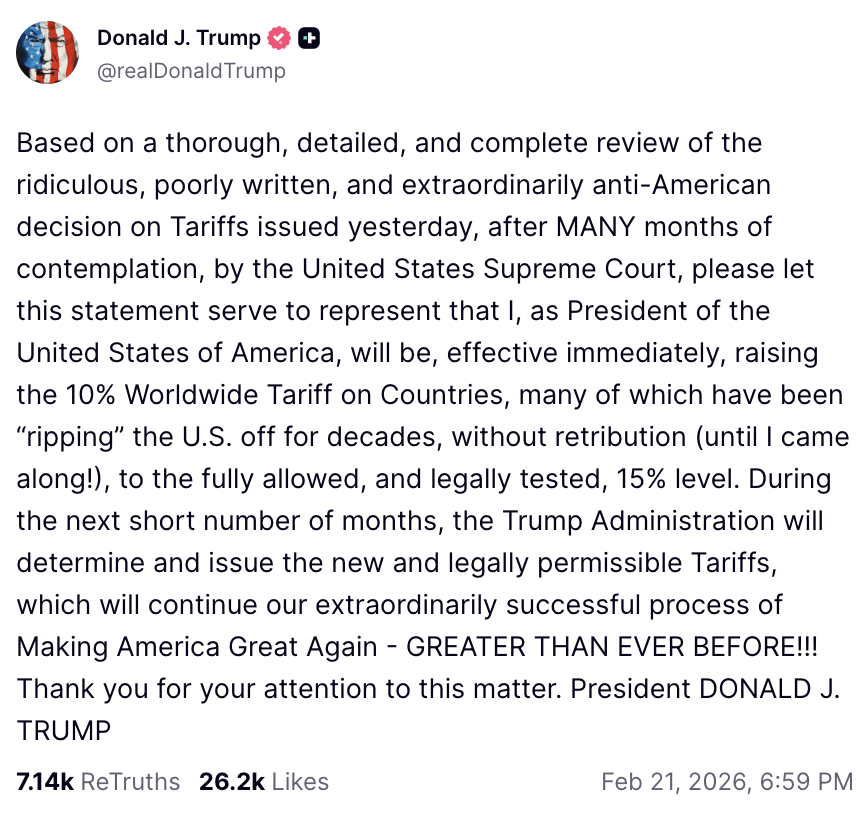
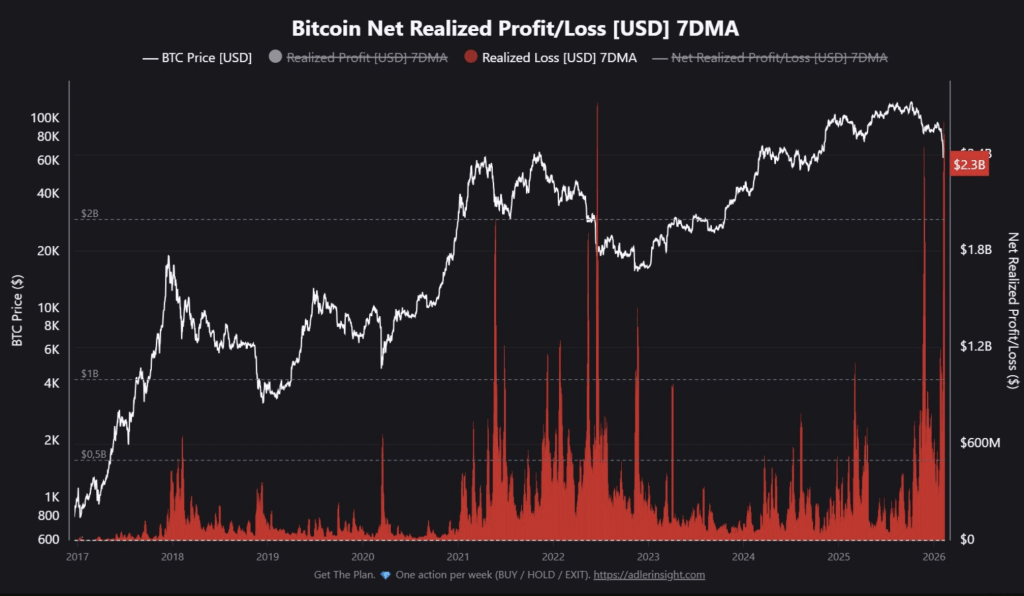
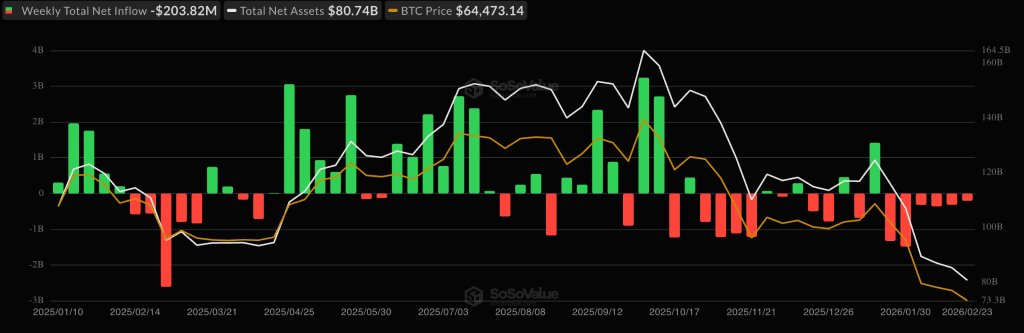
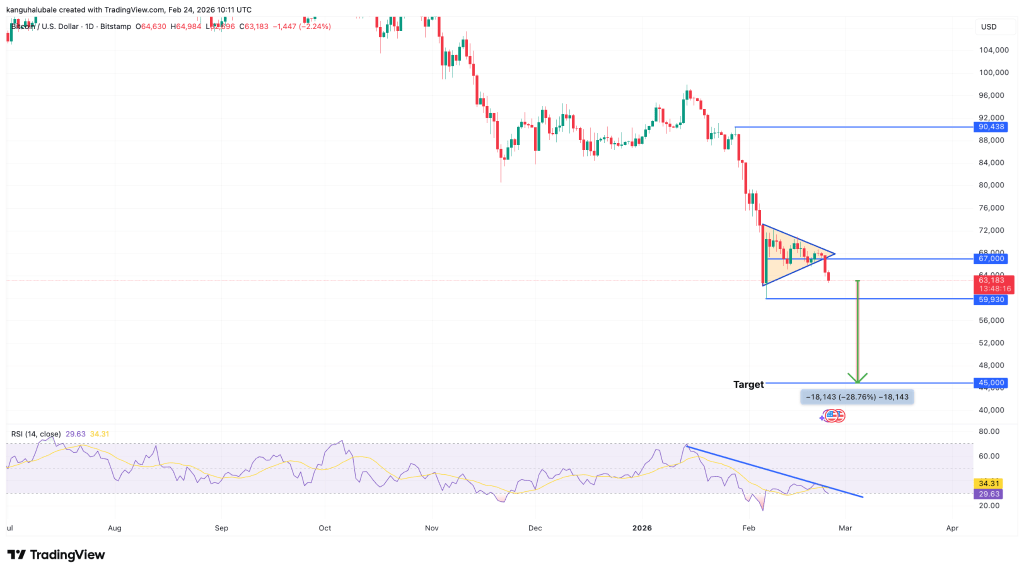

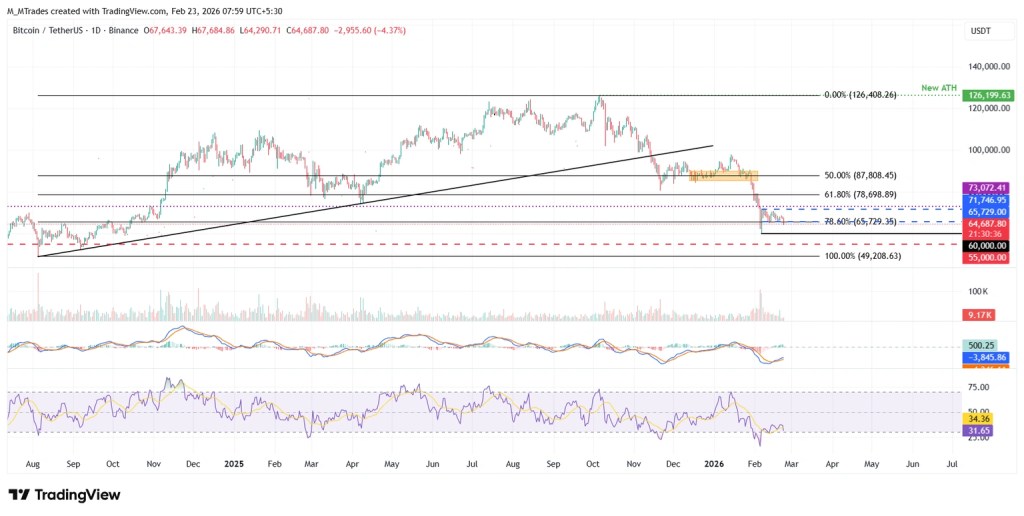
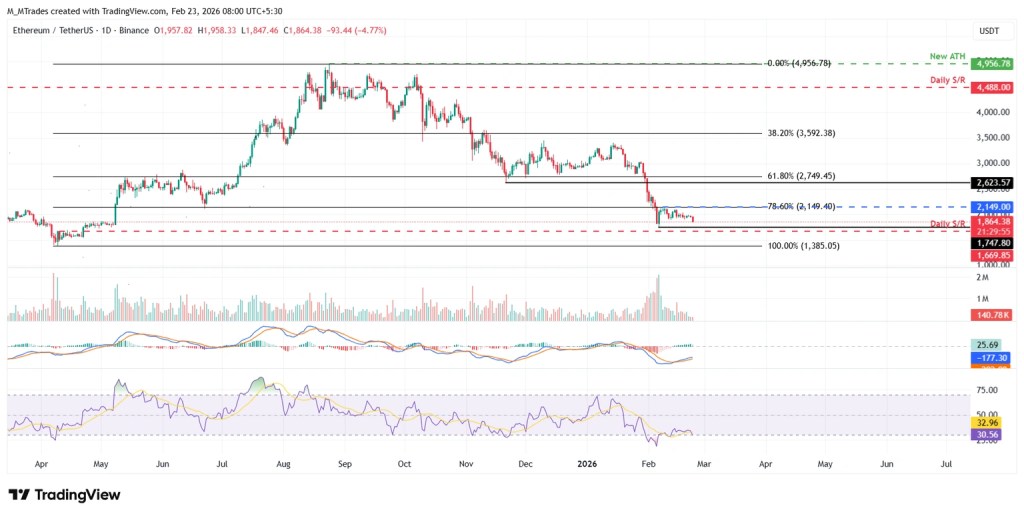
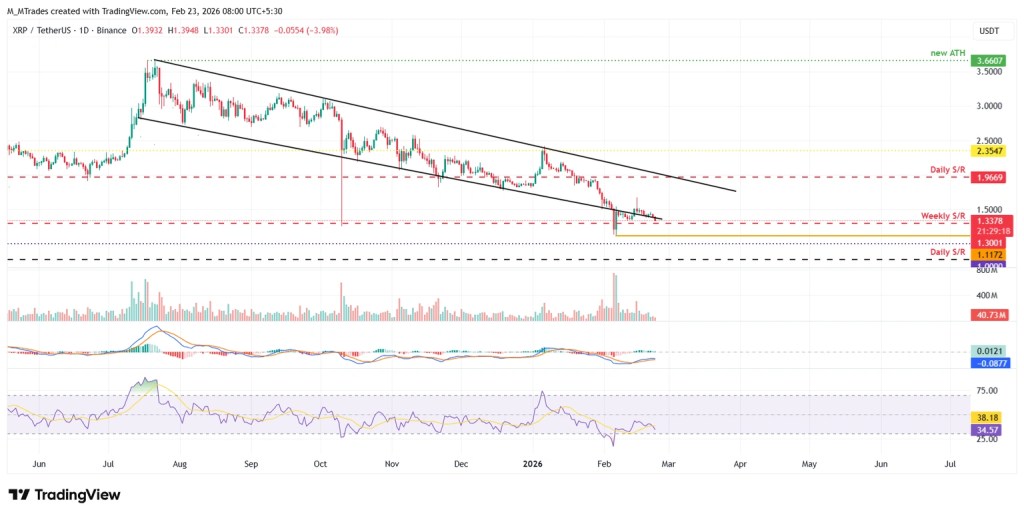

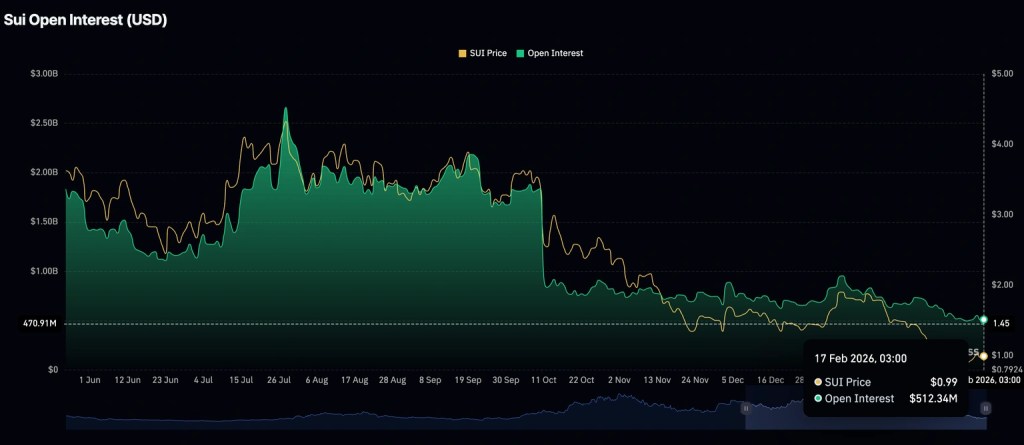
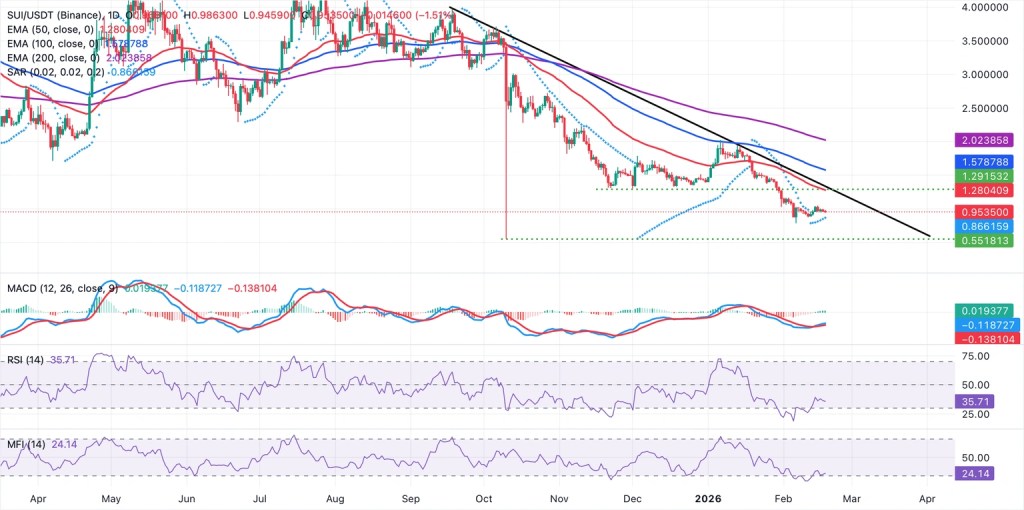


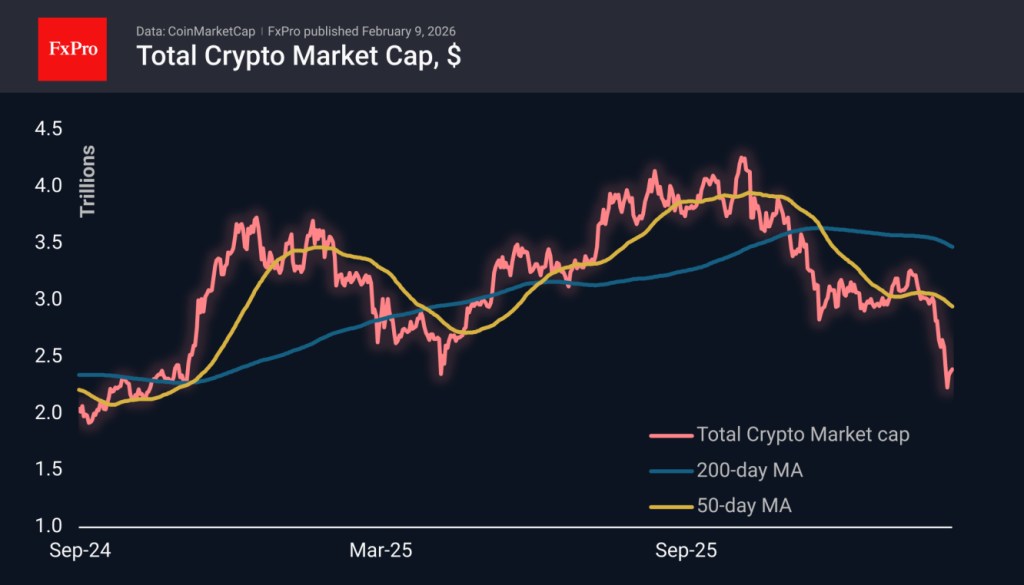
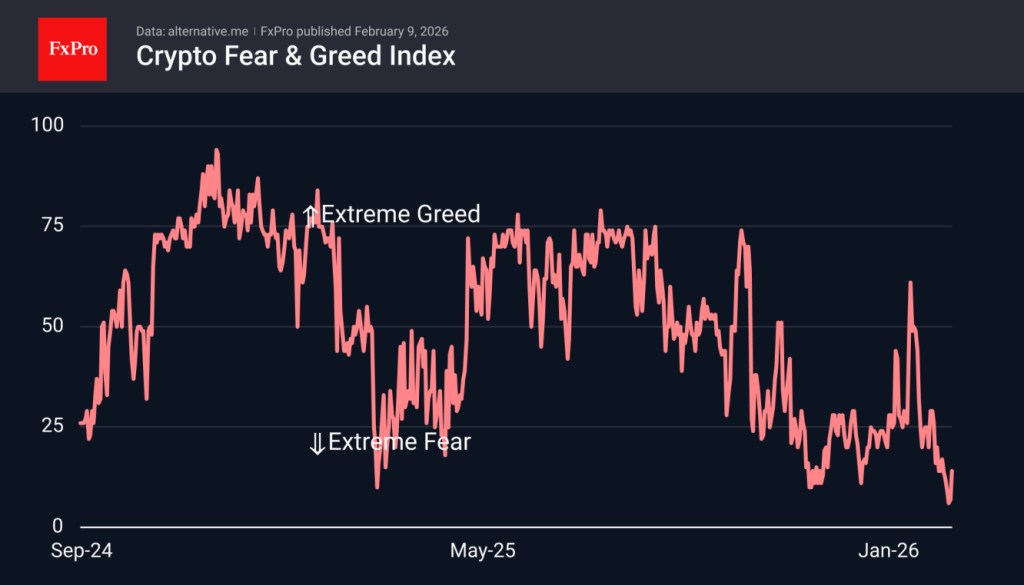
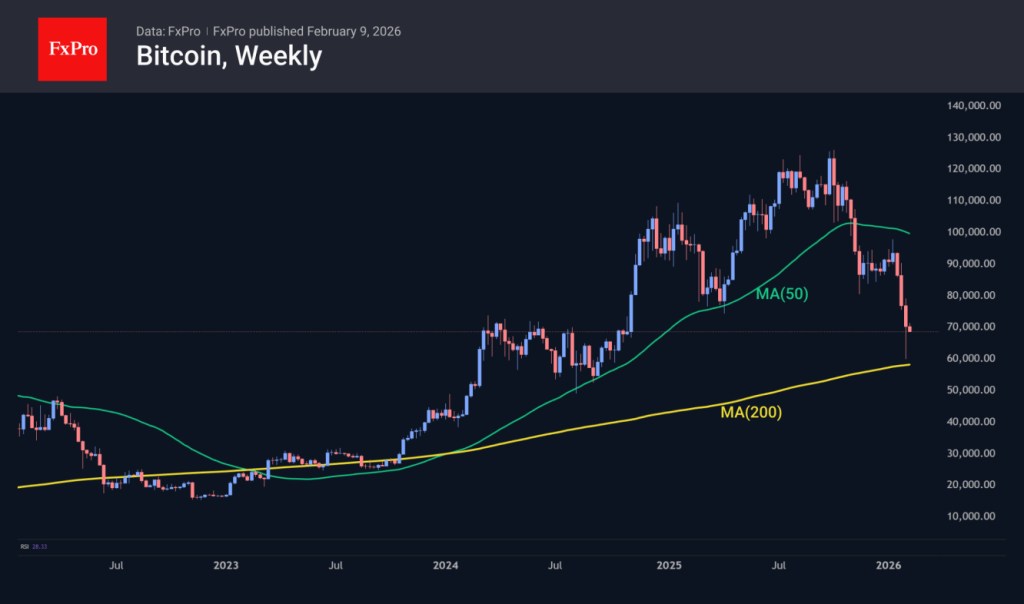



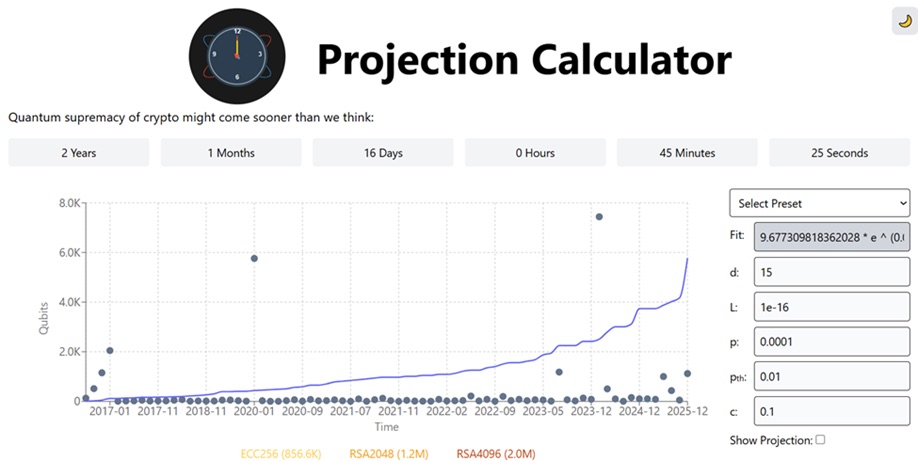
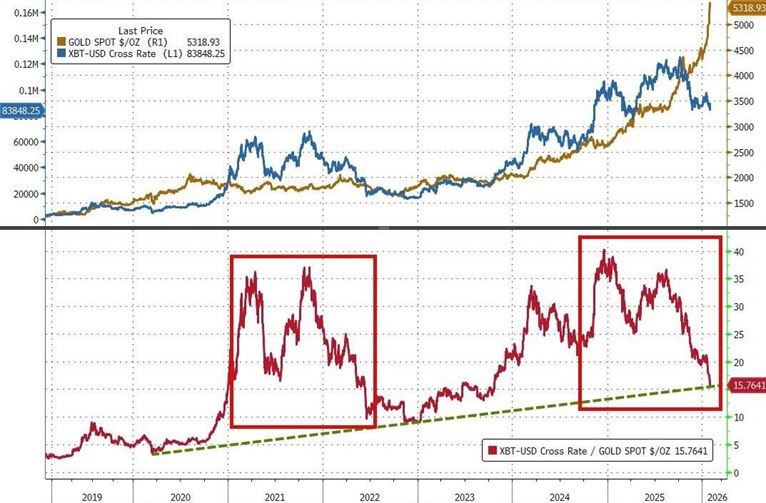
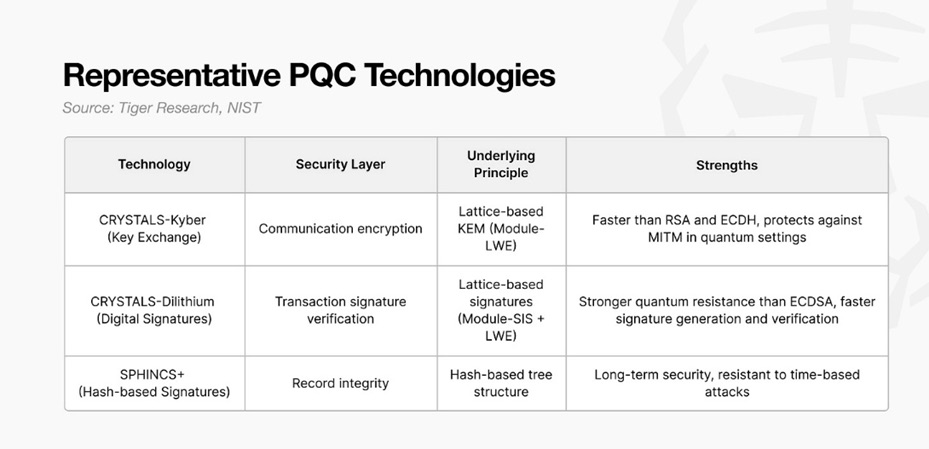
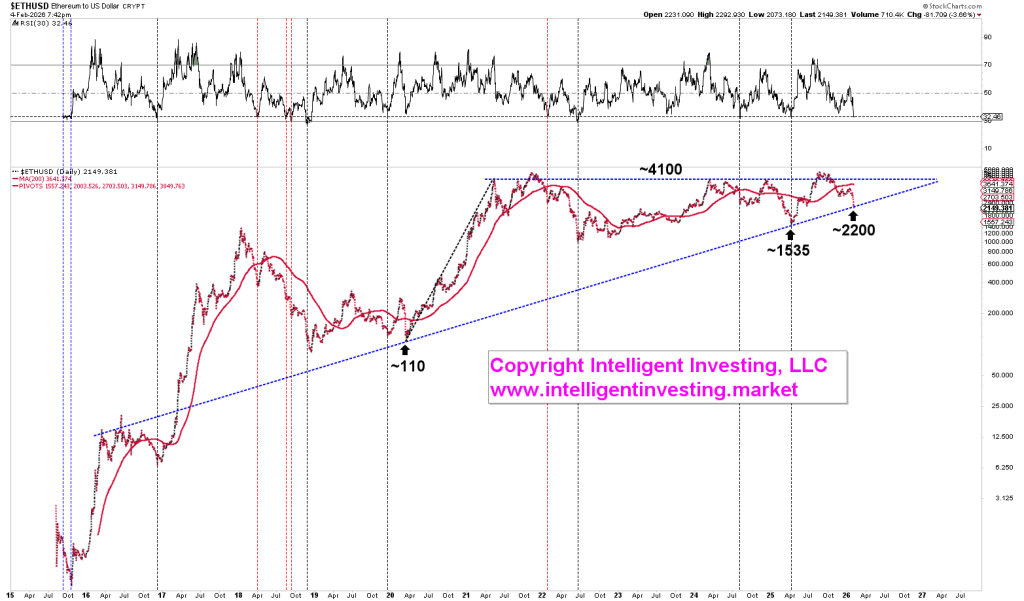
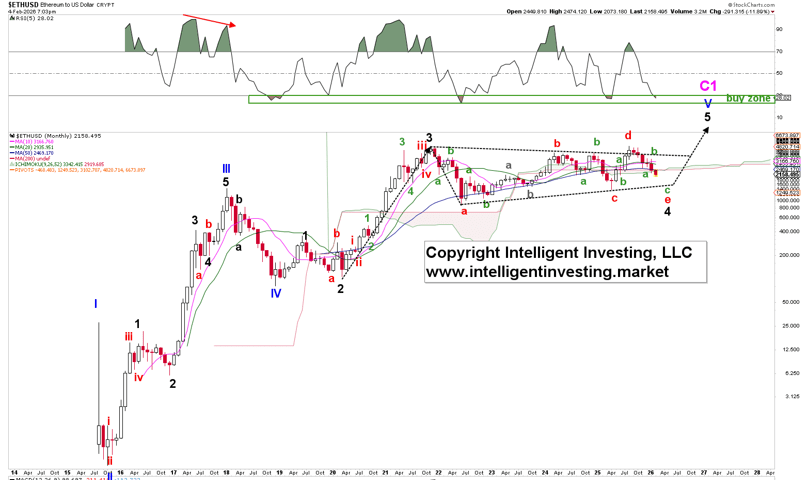
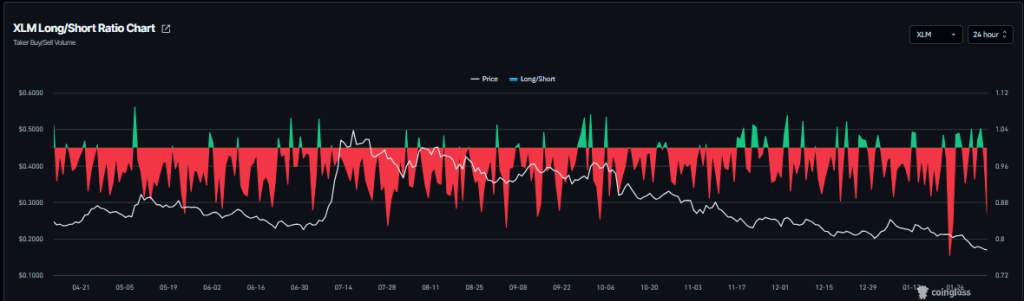
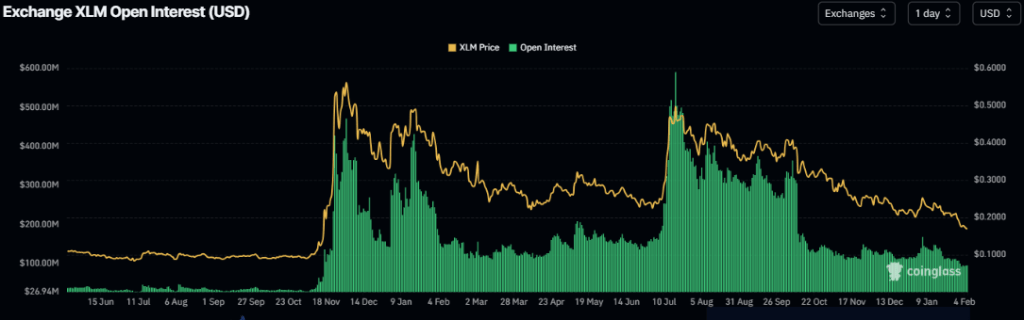
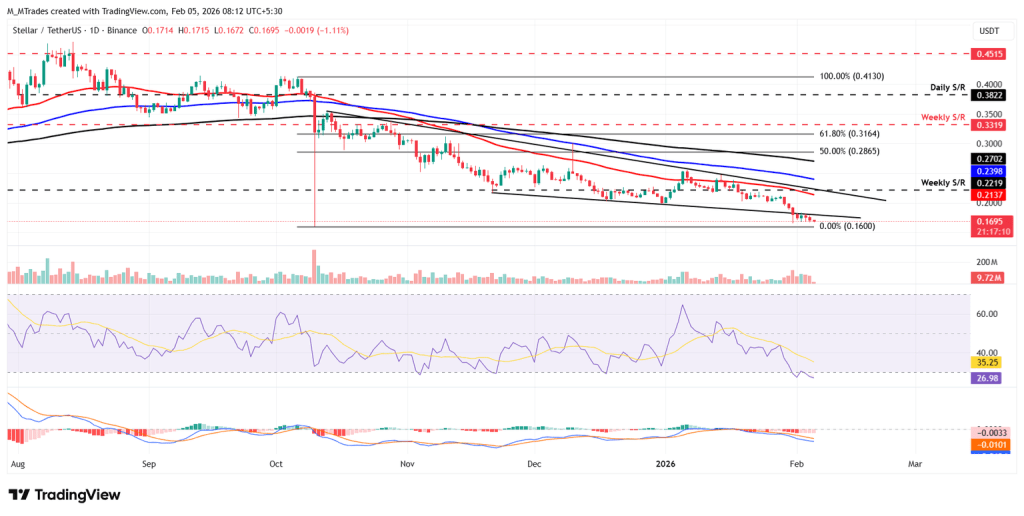


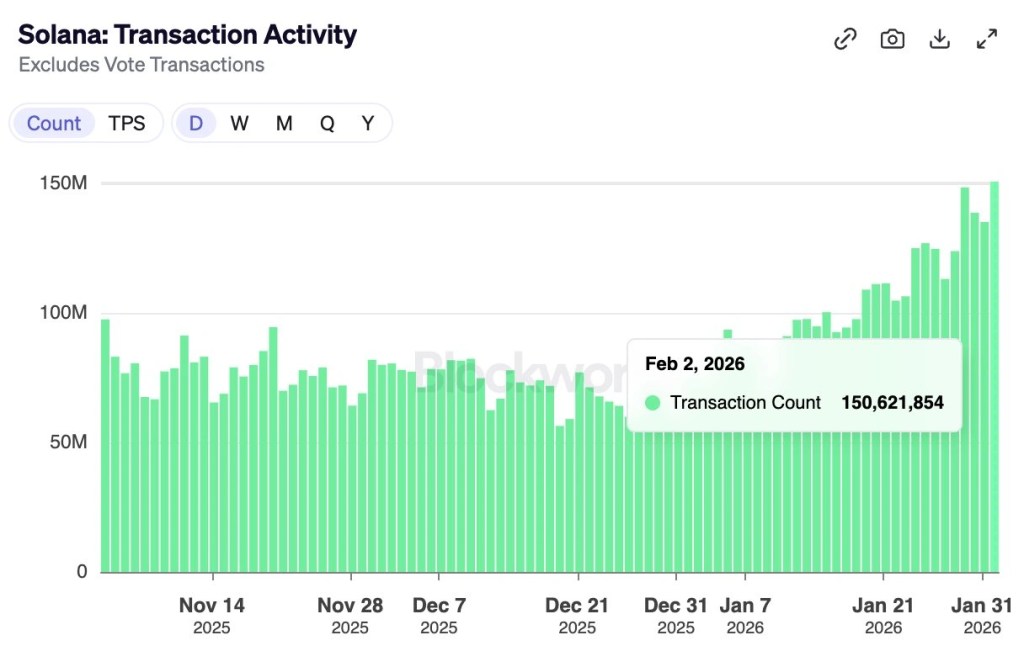
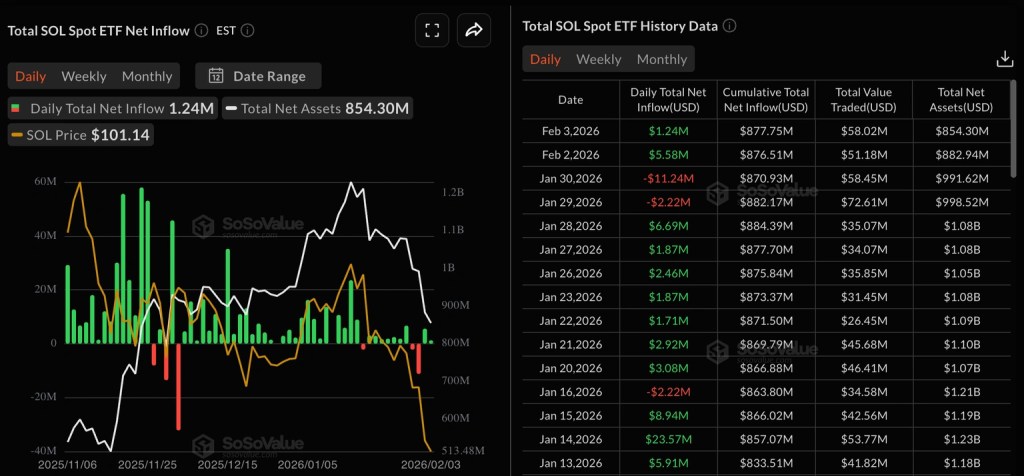
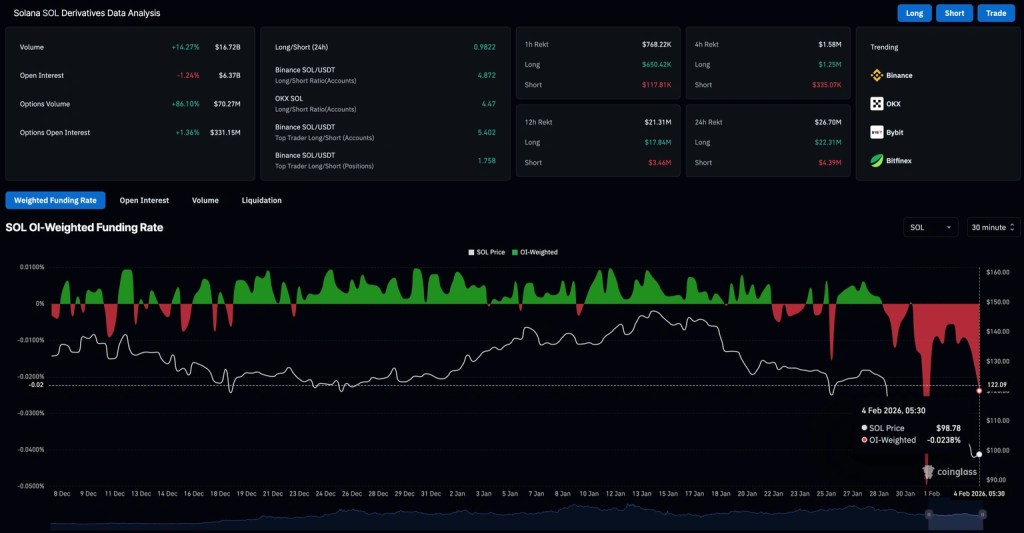
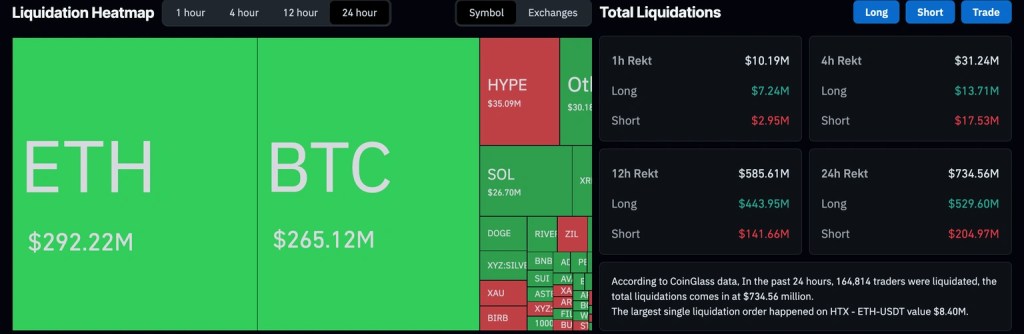
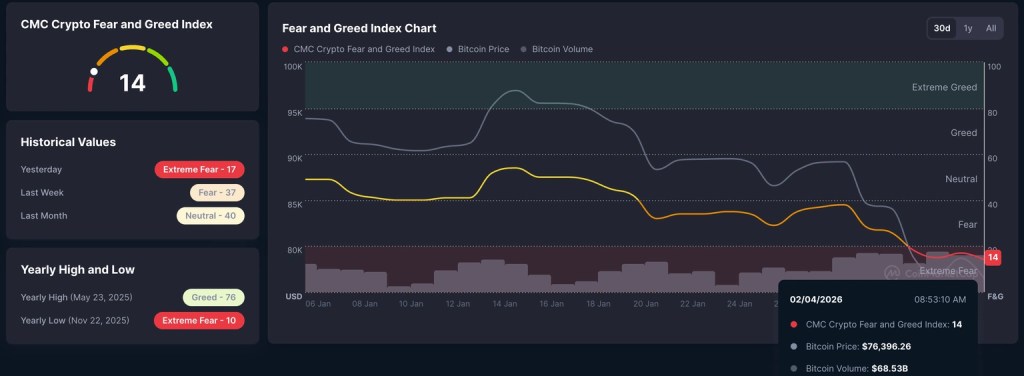
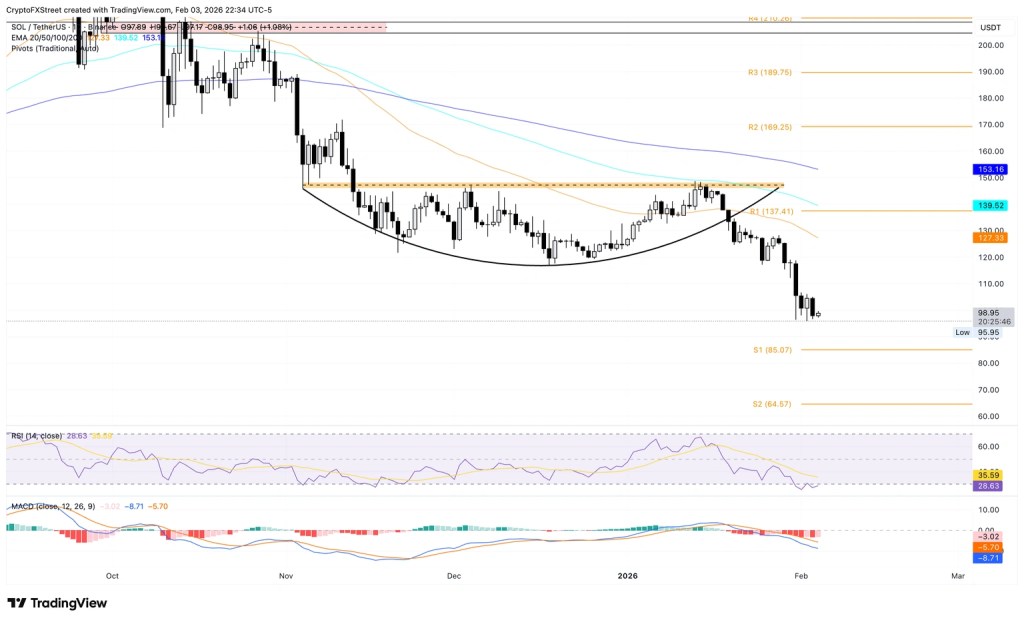

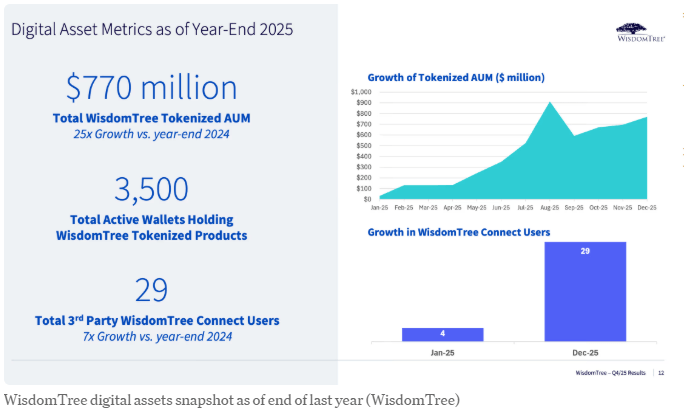


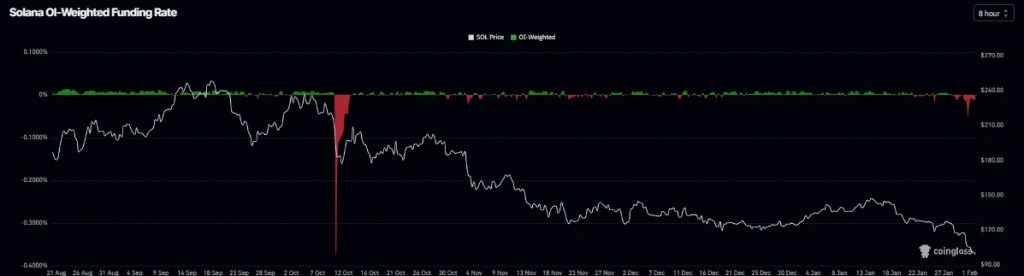
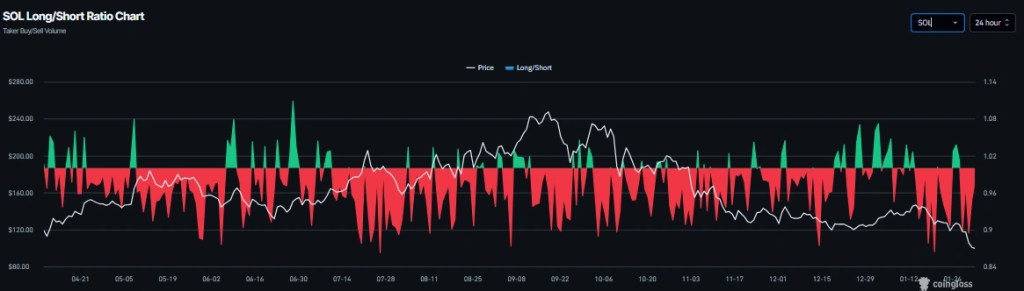
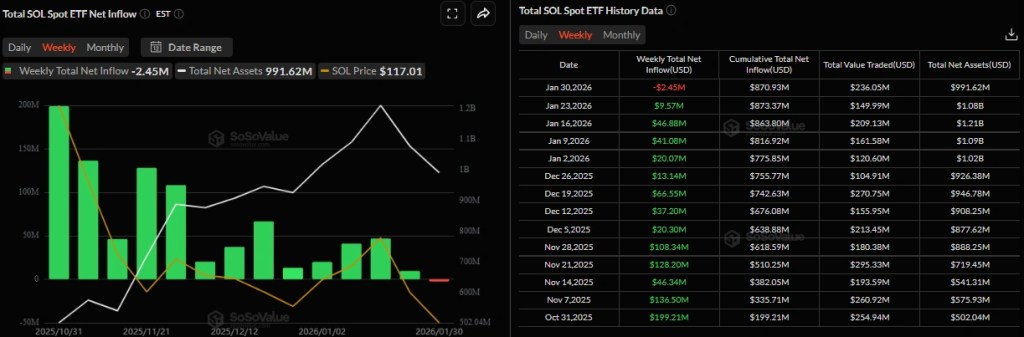
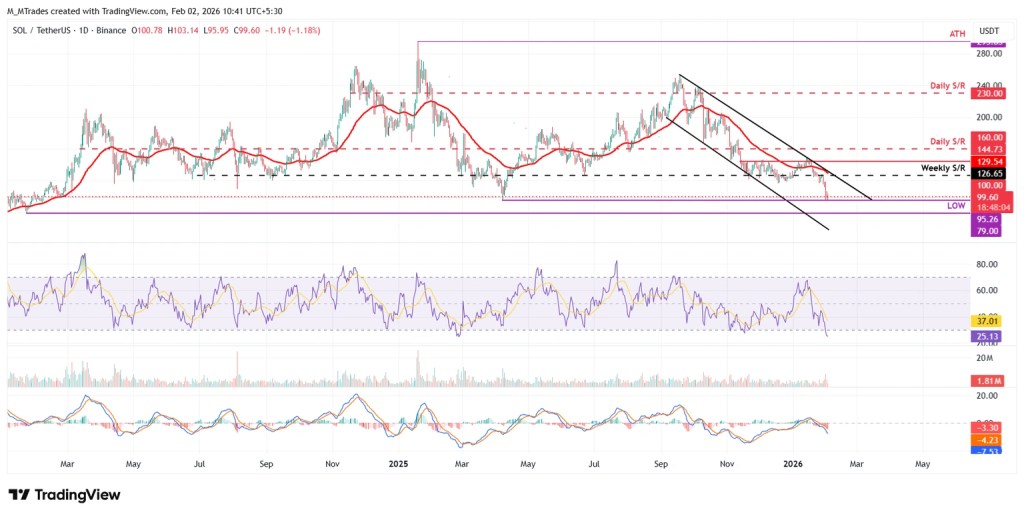

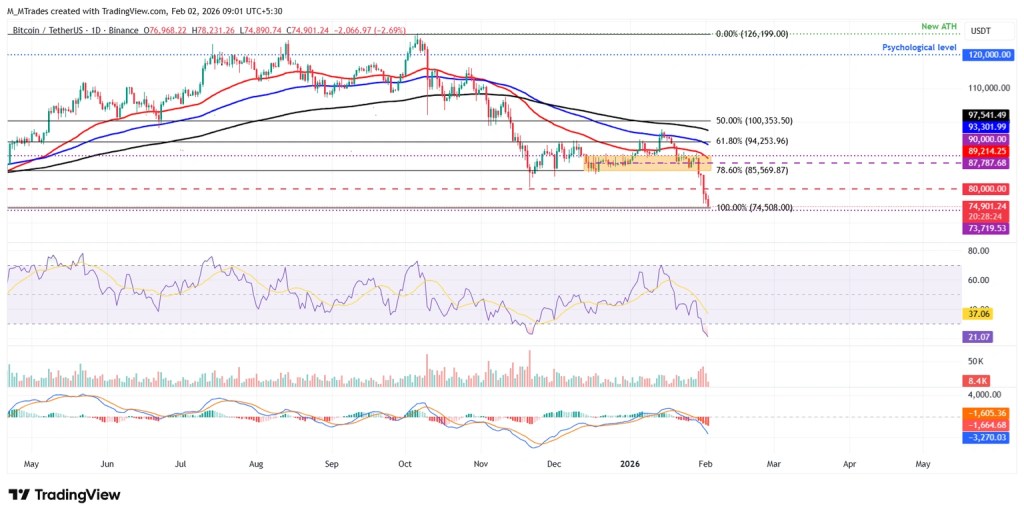
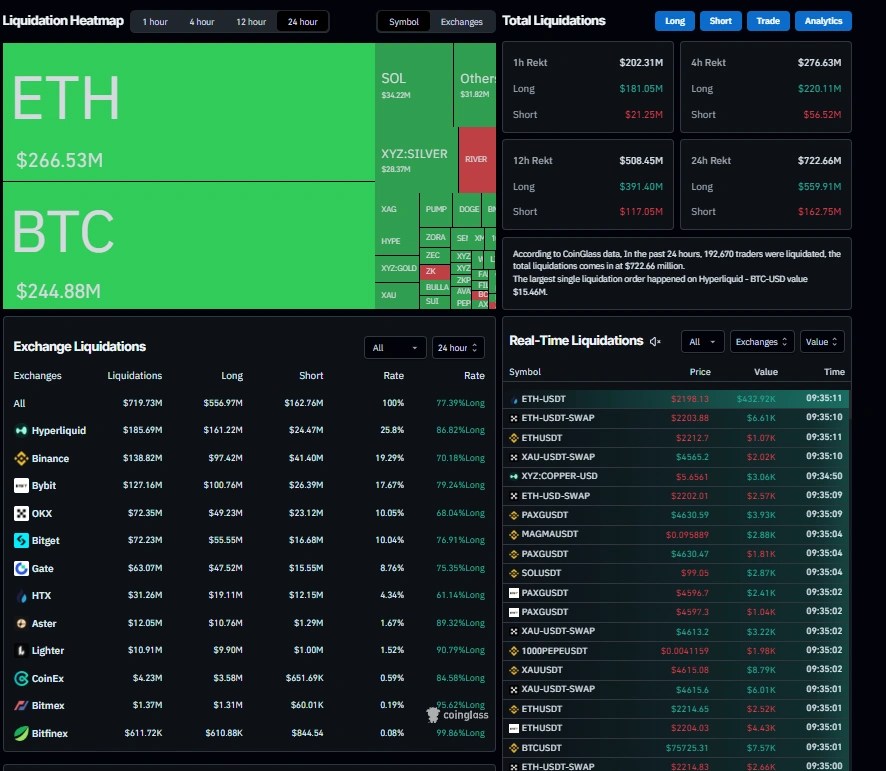
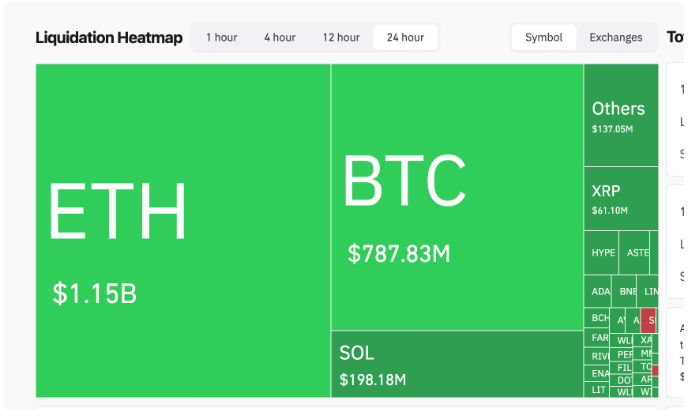
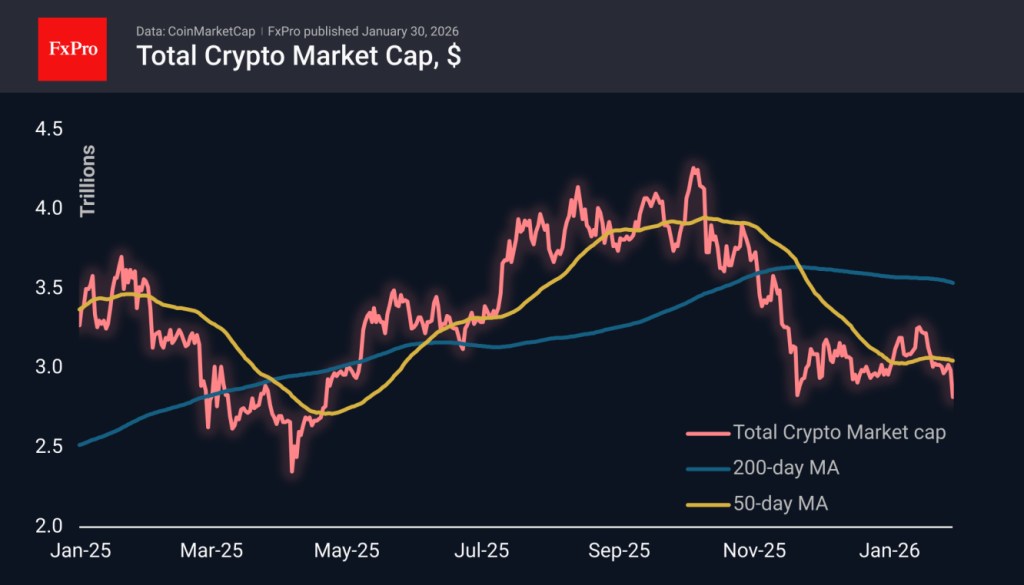
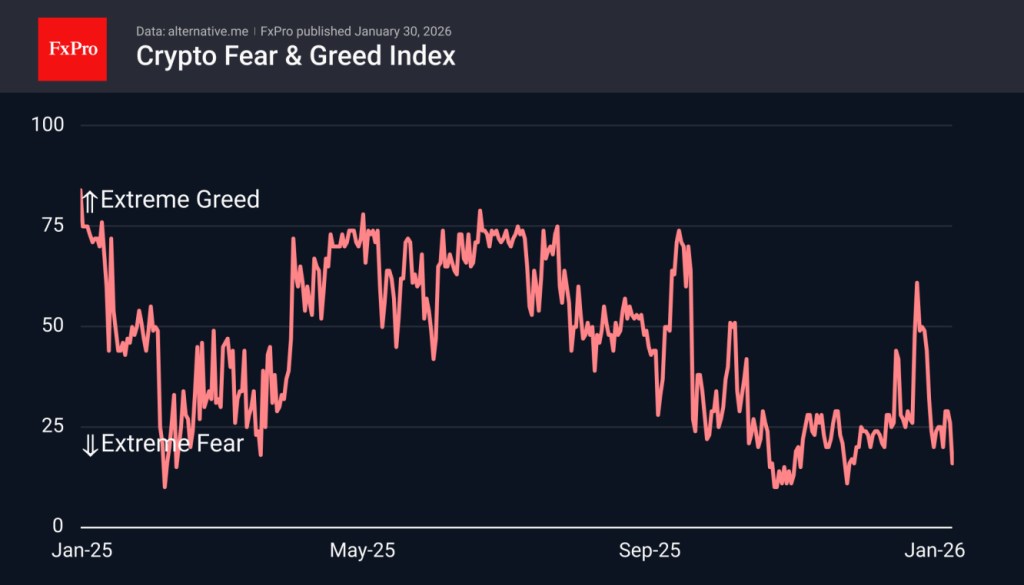
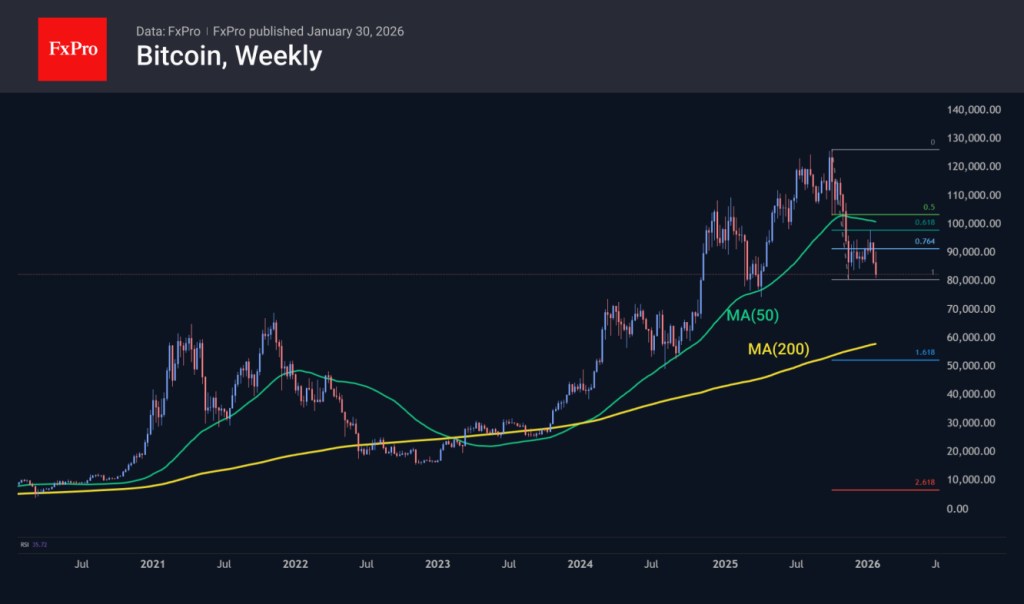



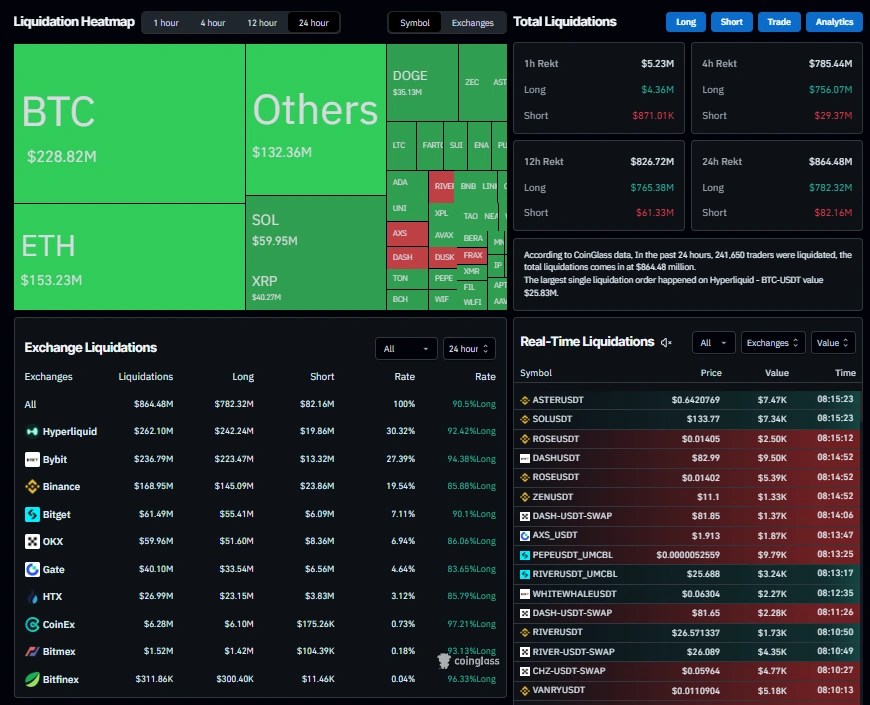
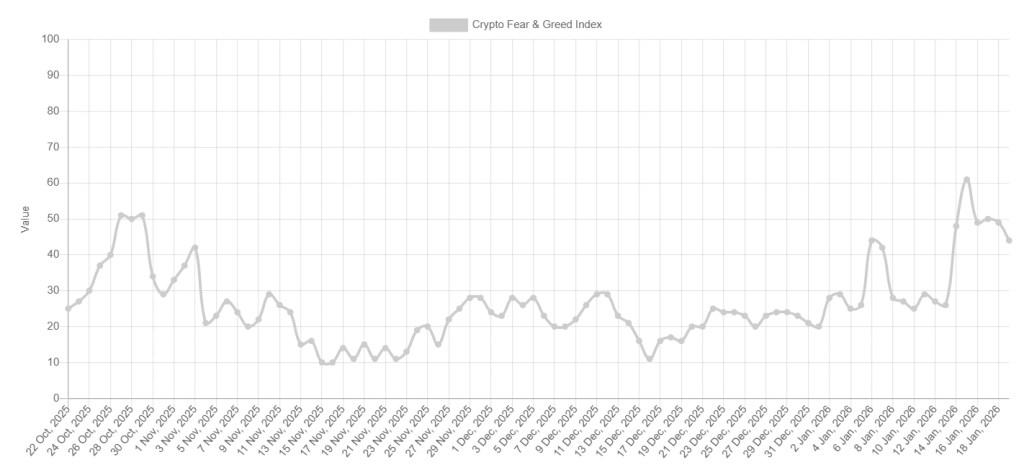


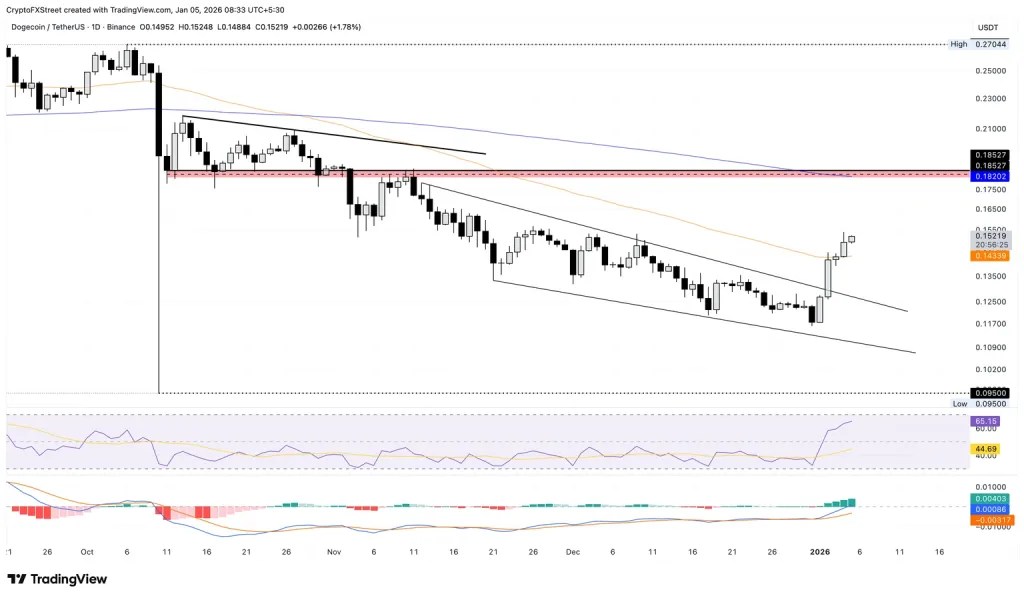
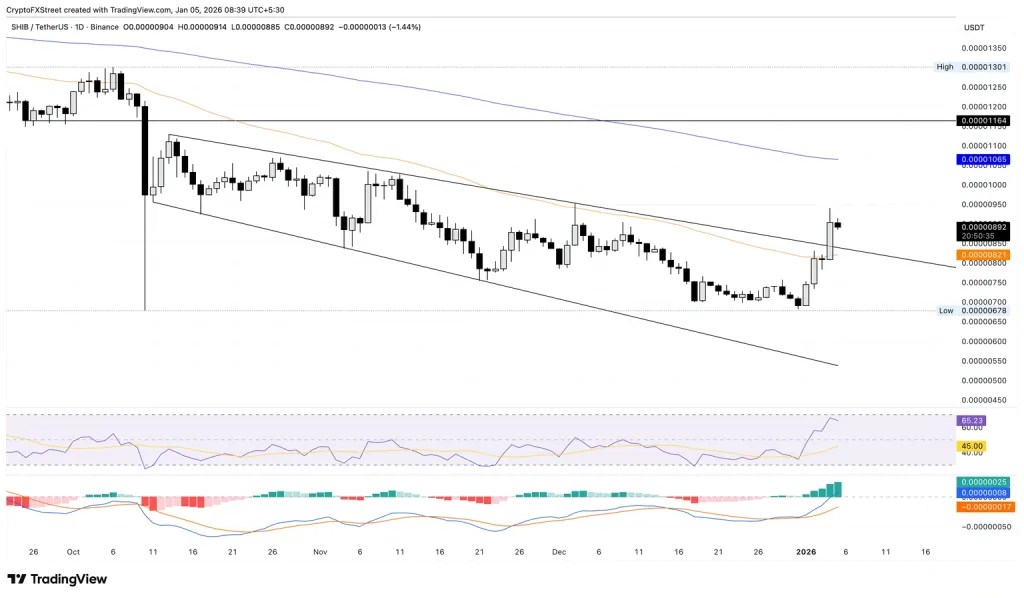
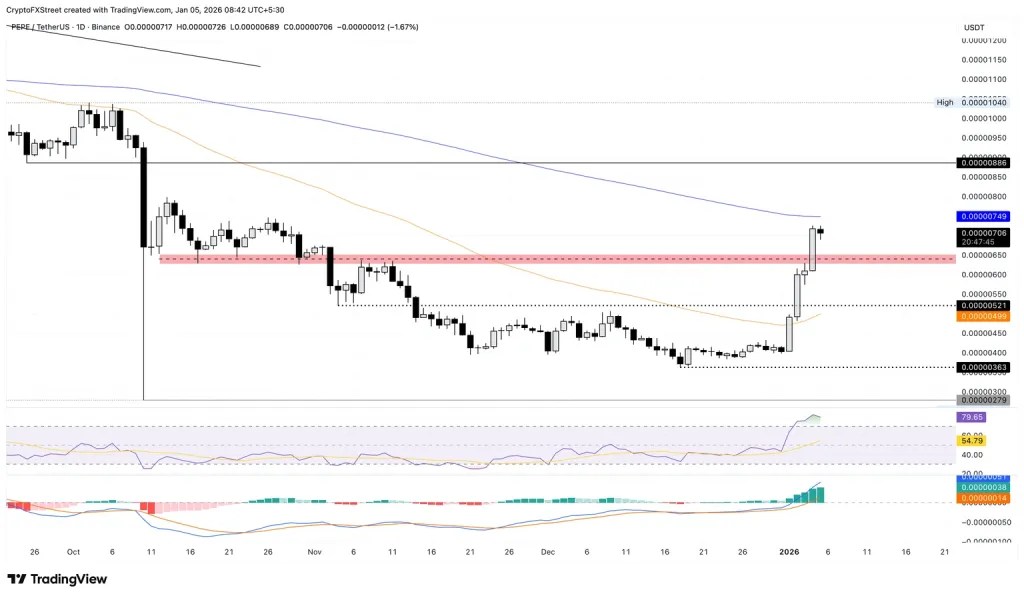


 THE ETERNAL SOVEREIGN