Tag: Australia

  • Asia markets retreat on AI worries; KOSPI slides nearly 4%

    Asian stock markets declined on Thursday, pulling back from record highs reached earlier in the week, as heightened volatility in global technology shares and concerns over AI-driven disruption dampened investor sentiment.

    The retreat followed a sharp overnight selloff in U.S. technology stocks, with the Nasdaq underperforming broader market indexes. Meanwhile, U.S. stock index futures were largely flat during early Asian trading hours on Thursday.

    AI fears drag tech stocks lower

    The decline follows a volatile week for technology and semiconductor stocks, as rising concerns that rapid advances in artificial intelligence could disrupt established business models and squeeze profit margins prompted investors to take profits after a strong rally.
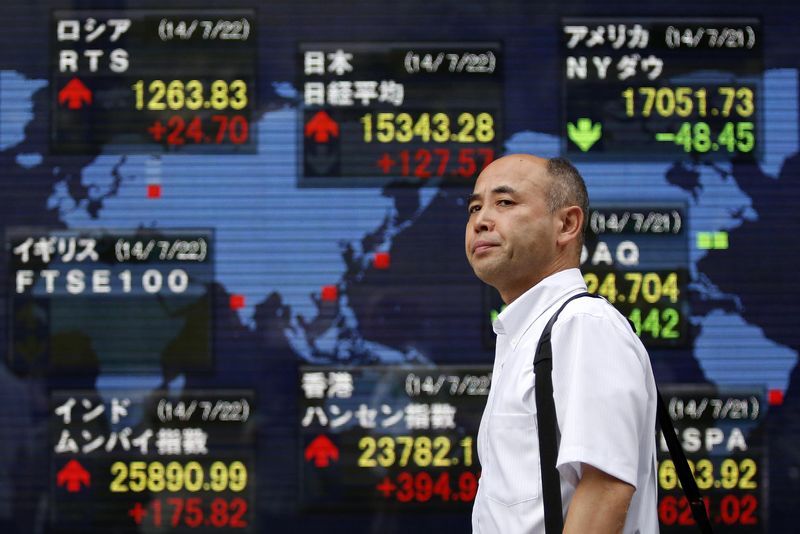
    South Korea’s benchmark KOSPI fell 3.7% after hitting record highs over the previous two sessions. Shares of Samsung Electronics and SK Hynix dropped more than 5% each as investors moved to lock in recent gains.

    In China, the blue-chip CSI 300 index and the Shanghai Composite both slipped nearly 1%. Hong Kong’s Hang Seng Index declined 1.2%, while the Hang Seng TECH Index fell 1.5%.

    Japanese stocks slip, earnings help stem losses

    Japanese equities edged lower on Thursday, with the Nikkei 225 slipping 1% from record highs reached earlier in the week as technology stocks followed overnight losses on Wall Street.

    The decline was cushioned by strong gains in select stocks. Panasonic shares surged after the company reported solid earnings and issued upbeat guidance, while Renesas Electronics jumped following the announcement that it will sell its timing business to U.S.-based SiTime in a deal valued at around $3 billion.

    The broader TOPIX index was largely unchanged, highlighting relative resilience outside the technology sector.

    Elsewhere in the region, Singapore’s Straits Times Index eased 0.4% after closing at a record high in the previous session. Australia’s S&P/ASX 200 also slipped 0.4%, tracking regional weakness as investors digested trade data released earlier in the day.

    Australia’s trade surplus widened less than expected in December, reflecting modest export growth and softer imports, which reinforced concerns over uneven global demand.

    Futures linked to India’s Nifty 50 were slightly lower, down 0.3%.

    Sources: Ayushman Ojha

  • GrainCorp shares plunge nearly 20% after weak earnings outlook

    Shares of Australia’s GrainCorp (ASX: GNC) fell to four-year lows on Monday after the company issued a weaker earnings outlook for fiscal 2026, citing depressed global grain prices and continued pressure on export margins.

    The grain handler forecast underlying EBITDA of A$200 million to A$240 million for FY26, down from A$308 million a year earlier, while underlying net profit after tax is expected to come in between A$20 million and A$50 million, compared with A$87 million in FY25.

    GrainCorp’s Sydney-listed shares dropped as much as 19.3% to A$5.81, their lowest level since November 2021.

    The company said global grain markets remain constrained by cyclical oversupply and subdued pricing, despite a strong winter harvest along Australia’s east coast. Slower grower selling and export margins at multi-year lows are also expected to weigh on earnings this year.

    GrainCorp anticipates grain receivals of 11.0 million to 12.0 million tonnes in FY26, compared with 13.3 million tonnes last year, while exports are forecast at 5.5 million to 6.5 million tonnes.

    The company added that it is stepping up cost-control efforts while continuing to maintain service levels.

    Sources: Investing

  • Australian CPI in November falls faster than expected, but underlying inflation remains stubborn

    Australian CPI inflation slowed more than expected in November as electricity prices eased, though core inflation remained sticky and above the Reserve Bank of Australia’s target band. Data from the Australian Bureau of Statistics released Wednesday showed annual CPI rising 3.4%, below forecasts of 3.6% and down from 3.8% in October.

    The slowdown in inflation was mainly driven by electricity prices rising at a softer pace than in the previous month, while housing, food, and transport costs continued to climb. Core inflation remained persistent, with the trimmed mean CPI at 3.2% in November, easing slightly from 3.3% in October but still above the RBA’s 2%–3% target range. Goods inflation cooled to 3.3% from 3.8%, largely due to slower electricity price growth, while services inflation also eased to 3.6% from 3.9%, mainly reflecting seasonal factors. The ABS said Black Friday had minimal impact on prices. Although headline CPI softened, it remains uncertain whether the decline is enough to shift the RBA’s hawkish outlook, as the central bank paused its rate-cut cycle in late 2025 and signaled rates will stay unchanged amid stubborn inflation.

    ANZ analysts said the November CPI figures suggest the RBA is likely to keep rates unchanged in February, while potentially debating a rate hike later in the year. They added that inflation pressures are expected to ease as 2026 progresses, with the cash rate forecast to remain at 3.60% over their outlook period. Meanwhile, Australian inflation unexpectedly accelerated in late 2025, driven by higher housing and food costs, while the gradual removal of Canberra’s electricity subsidies also pushed prices higher.

    Sources: Investing