The entire crypto market, tracking over 18,000 tokens across centralized and decentralized exchanges, is currently valued at nearly $3 trillion. This represents a 31% decline from the all-time high of $4.37 trillion recorded in early October, just before the recent crypto market crash.
Bitcoin, the largest cryptocurrency by market cap, is hovering around $88,000, accounting for more than half of the total market value at $1.77 trillion. Despite its dominant position, Bitcoin is poised to end the year with a negative annual return.
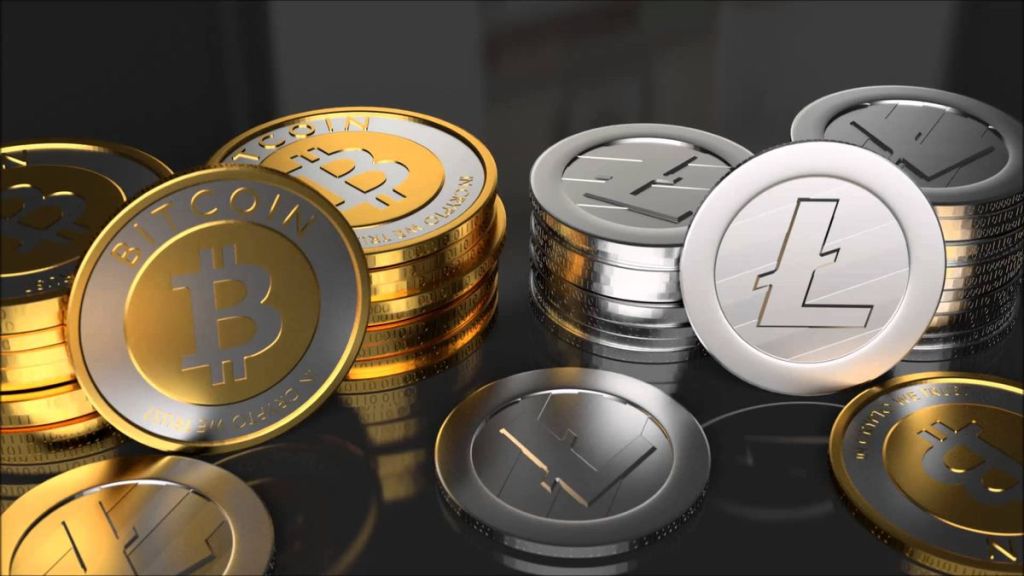
Since 2012, this marks the fourth year Bitcoin has underperformed, albeit by a significantly smaller margin compared to previous down years. For context, Bitcoin’s annual losses were -50.2% in 2014, -72.1% in 2018, and -62% in 2022. If Bitcoin maintains its current price level near $88,000, its annual underperformance in 2025 would be the “best of the worst” at around -6%.
Compared to Bitcoin, traditional asset classes like stocks and gold/silver have delivered substantially better returns this year on average. This contrast raises important questions about crypto’s position and outlook heading into 2026.
Is the Crypto Market Mature Enough for Significant Exposure?
The core purpose of the blockchain ecosystem is to transform the traditional money system through trustless finance. In simple terms, it leverages advances in cryptography combined with a full software stack to make transacting value as seamless as sending a message on an app.
While online banking and payment processors like PayPal have long provided similar convenience, the blockchain ecosystem offers a fundamental overhaul. Instead of relying on a single intermediary that acts as a bottleneck, automated smart contracts on an immutable ledger—the blockchain—execute all value transfers autonomously.
This decentralized approach eliminates single points of failure, increases transparency, and enhances security, paving the way for a new era of financial innovation.
This newly reinvented financial system—decentralized finance (DeFi)—has shown tremendous promise. Its total value locked (TVL) skyrocketed from $600 million in 2020 to $176 billion by late 2021, marking an astonishing growth of over 29,000%. Such rapid expansion is a clear indicator of a nascent industry emerging.
However, following the FTX collapse in late 2022 and a wave of bankruptcies among overleveraged crypto ventures, DeFi’s TVL has stabilized around $50 billion for the past two years. It was only after President Trump’s second term and the removal of the previously antagonistic SEC Chair Gary Gensler that DeFi began to recover, reaching approximately $168 billion TVL in early October.
Looking at this entire period from 2020 to now, several key conclusions emerge:
- Without active institutional and legislative support, blockchain finance risks remaining confined to the enthusiast fringe. Like many cultural phenomena, mass adoption tends to be top-down driven, as exemplified by Elon Musk’s influence on Dogecoin’s surge.
- One major hurdle to crypto’s wider adoption is the inflation of new tokens, which fuels recurring boom-and-bust cycles. This token oversupply undermines investor attention, market legitimacy, and overall capital efficiency.
- The current ecosystem—where tokens are staked to earn more tokens in a closed-loop, casino-like economy—must give way to real utility derived from external value rather than internal dilution.
- Moreover, Web3 crypto usage remains far from user-friendly and secure, with frequent incidents like bridge hacks and wallet incompatibility. According to Chainalysis, over $3.4 billion in crypto funds were stolen in 2025 alone. Ideally, blockchain finance should be so seamless that users are unaware they’re interacting with decentralized technology.
- Notably, the market rally following the removal of SEC Chair Gary Gensler signals that blockchain’s underlying value hinges on how well it integrates with the broader, compliance-driven economy. As such, 2026 is shaping up to be a pivotal year for crypto’s maturity and mainstream acceptance.
Bitcoin and Stablecoin-Based Institutional Integration: The 2026 Catalyst
While DeFi protocols sought to establish dominance, new intermediaries such as foundations, early adopters, venture capitalists, and miners quickly asserted control. Despite the promise of decentralization, the ease of creating new tokens generated persistent dilution pressure across the crypto ecosystem.
Bitcoin, however, avoided this recursive dilution trap by imposing a physical energy barrier through its proof-of-work algorithm. This barrier limits token creation ex-nihilo, allowing Bitcoin’s network effect to remain robust. Following the October market crash, Bitcoin’s mining difficulty held steady, even increasing before stabilizing at pre-crash levels as the price hovered around $88,000 towards year-end.
Amid rising inflation fears, geopolitical tensions, and trade conflicts, gold and silver have regained their status as trusted hedges. Nevertheless, Bitcoin’s deterministic scarcity and digital-native nature position it uniquely for the modern economy, contrasting with gold’s pseudoscarcity.
Although many financial institutions underestimated Bitcoin’s 2025 price — with forecasts from Standard Chartered ($200k), VanEck ($180k), JPMorgan ($165k), Bernstein ($200k), and Fundstrat ($250k) — these projections may be delayed signals for 2026. As of early December, JPMorgan analysts suggested Bitcoin could reach $170k in 2026, assuming it begins to trade similarly to gold.
Moreover, recent research from K33 indicates that selling pressure from long-term holders (LTH) is nearing exhaustion. If this holds true, Bitcoin is poised to lead a renewed altcoin market rally in 2026, but with some notable distinctions:
- The full implementation of the EU’s Markets in Crypto-Assets (MiCA) regulation will channel the majority of European crypto trading volume into regulated entities, while simultaneously triggering a flight of activity to less restrictive jurisdictions.
- Meanwhile, tokenized stocks are poised for wider adoption as the US clears key regulatory hurdles. Notably, SEC Chair Paul Atkins issued a no-action letter to the Depository Trust Company (DTC) to facilitate the rollout of tokenized securities. However, offerings from platforms like Robinhood, Kraken, and Dinari remain heavily geo-restricted.
- As the EU seeks to curb USD-based stablecoin flows—evidenced by Kraken’s fiat-only tokenized stock trading—the US stands to gain renewed competitive advantage.
- Institutional oversight in the US is becoming increasingly crypto-friendly, likely aiming to solidify USD dominance via stablecoins. For example, the Basel Committee on Banking Supervision (BCBS) is revising its rules on banks’ exposure to cryptocurrencies. Together with more accommodating regulators such as the FDIC and OCC, it is now highly likely that US banks will hold cryptocurrencies in 2026.
- Following the passage of the GENIUS Act, stablecoin flows are expected to significantly boost the broader crypto market. On one side, Circle’s upcoming Arc blockchain—backed by Blackrock, Visa, and Amazon—will support institutional stablecoin settlements. On the other, stablecoins are rapidly becoming the primary consumer-facing crypto product.
- While MiCA’s vague definition of “decentralization on a spectrum” may hinder true DeFi innovation, it nonetheless accelerates capital formation around compliant crypto primitives.
The Bottom Line
Since 2020, the crypto ecosystem has created transformative wealth but also faced setbacks due to excessive experimentation. The strict regulatory stance under SEC Chair Gary Gensler cooled early enthusiasm, turning much of crypto activity into speculative trading rather than real financial innovation.
Following President Trump’s SEC repeal of SAB 121, crypto entered a new phase of integration under traditional finance (TradFi) rules. Despite macroeconomic and geopolitical headwinds, crypto moves into 2026 on its most stable footing yet.
Unlike prior cycles dominated by retail sentiment, institutional investors — pension funds, insurers, and endowments — are expected to reduce volatility through spot ETFs and altcoin trusts on high-performance chains like Solana and Sui.
The rise of Real World Assets (RWA) will foster a unified liquidity layer, linking tokenized stocks, RWAs, and TradFi blockchain networks with DeFi protocols. In this emerging hybrid finance, stablecoins will be the backbone, enabling DeFi’s transformation into a regulated, compliant capital market.
Sources: The Tokenist
 THE ETERNAL SOVEREIGN