Tag: tariffs

  • Dollar dips amid Trump tariff turmoil; euro and sterling tick up

    • The U.S. dollar weakened on Monday as investors assessed the implications of the Supreme Court of the United States decision to strike down tariffs introduced by Donald Trump, along with the administration’s subsequent response.
    • Traders were also monitoring renewed nuclear negotiations between Washington and Tehran.
    • As of 14:12 ET (19:12 GMT), the Dollar Index — which measures the greenback against a basket of six major currencies — was down 0.2% at 97.65. The currency had posted a gain of roughly 1% last week, marking its strongest weekly advance in more than four months.

    Dollar pressured by mounting trade uncertainty

    The Supreme Court of the United States ruled on Friday that sweeping tariffs introduced by Donald Trump exceeded his authority. In response, Trump criticized the court and unveiled a blanket 15% levy on imports.

    The new duties are set to remain in place for 150 days, but it remains unclear whether the U.S. government must reimburse importers for tariffs already collected, as the Court did not address that issue.

    The uncertainty could trigger prolonged legal battles and further confusion as Trump explores alternative mechanisms to reinstate broad-based global tariffs on a more permanent footing.
    Thierry Wizman, global FX and rates strategist at Macquarie, said the firm’s bearish U.S. dollar outlook for 2026 was based on the view that tariffs signal U.S. “disengagement” from the rules-based order underpinning free trade. He added that tariff conflicts themselves generate uncertainty centered on the United States — a negative for the dollar.

    “In that sense, while the Supreme Court ruling may have strengthened institutional checks, it also heightens uncertainty, as Trump is likely to revive the tariff war through different — and more legally grounded — channels that have yet to be detailed. We see no reason to revise our broader expectation for a weaker USD in 2026,” Wizman said.

    Beyond trade policy, investors are also watching a U.S. military buildup in the Middle East aimed at pressuring Iran to abandon its nuclear ambitions, with further talks between Washington and Tehran expected later this week.

    Euro advances as confidence in Europe strengthens

    In Europe, EUR/USD rose 0.2% to 1.1799, with the single currency drawing support from trade-driven weakness in the dollar.

    Growing confidence in the region’s economic outlook also underpinned the euro, following data on Friday showing eurozone business activity expanded faster than expected this month, as manufacturing returned to growth for the first time since October.

    Momentum was reinforced on Monday as Germany’s Ifo business climate index climbed to 88.6 from 87.6 the previous month, signaling improving sentiment in Europe’s largest economy.

    Meanwhile, GBP/USD added 0.1% to 1.3497, with sterling firming ahead of key event risks this week — including testimony before the Treasury Committee by Andrew Bailey, governor of the Bank of England, and Thursday’s UK by-election in Gorton and Denton.

    Yen edges higher

    In Asia, USD/JPY fell 0.4% to 154.48, with the Japanese yen supported by its traditional safe-haven appeal as investors remained cautious about the economic impact of higher U.S. tariffs. Trading volumes were thinner due to a public holiday in Japan.

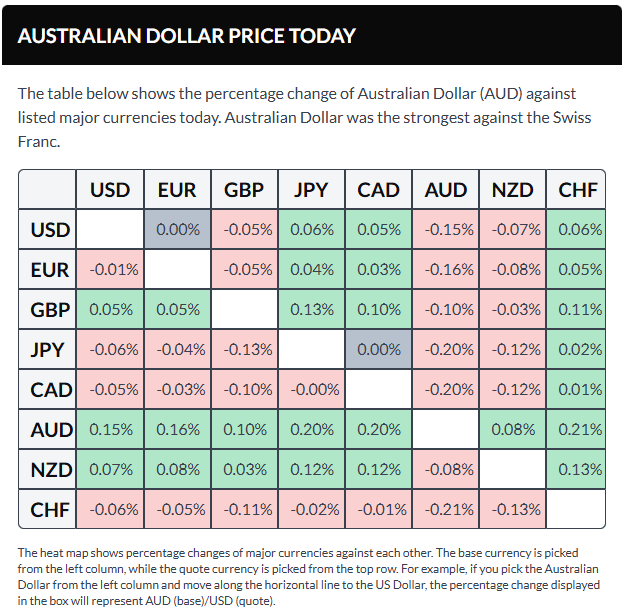
    USD/CNY was little changed at 6.9087, with Chinese markets shut for New Year holidays. Elsewhere, AUD/USD declined 0.3% to 0.7060, while NZD/USD also dropped 0.3% to 0.5961.

    Thierry Wizman of Macquarie said that while the dollar could remain under pressure amid persistent U.S.-driven uncertainty, some currencies — such as the yuan and the euro — may outperform, whereas others, including the Canadian and Mexican pesos, could lag. He added that even in the face of potential credit rating actions, long-term U.S. Treasury yields might rise due to uncertainty over revenue replacement, and equities could come under strain if higher yields lead to valuation compression.

    Sources: Peter Nurse

  • Oil stays near seven-month highs ahead of U.S.–Iran talks, with tariff uncertainty clouding the outlook.

    • Oil prices edged higher during Asian trade on Tuesday, remaining just under the seven-month peaks reached in the prior session, as markets looked ahead to upcoming U.S.–Iran discussions later this week. Ongoing uncertainty surrounding trade tariffs continued to temper investor sentiment.
    • At 22:22 ET (03:22 GMT), Brent crude futures climbed 0.8% to $72.04 per barrel, while U.S. West Texas Intermediate (WTI) crude futures also advanced 0.8% to $66.81 per barrel.
    • Both benchmarks had approached seven-month highs in the previous session before ending slightly lower.

    Market participants are holding back ahead of US – Iran talks scheduled for later this week.

    Markets stayed tense ahead of a third round of nuclear talks between Washington and Tehran set for Thursday in Geneva. Strains have persisted since last week amid indications that the situation could escalate. The U.S. pulled some non-essential embassy staff from Beirut, underscoring concerns that diplomacy might collapse and spark conflict.

    President Donald Trump warned in a social media post on Monday that it would be a “very bad day” for Iran if no agreement is reached.

    “In the event of a deal, we would likely see a significant unwinding of the risk premium currently built into prices — though securing such an agreement is far from straightforward,” analysts at ING noted.

    A failure in negotiations could heighten worries about stricter sanctions enforcement or potential disruptions in the Strait of Hormuz, a crucial corridor for global crude shipments. Fears of a possible military clash contributed to a 6% surge in oil prices last week.

    Tariff tensions under Donald Trump weigh on demand outlook

    Oil markets are also contending with wider macro uncertainty after the Supreme Court of the United States invalidated an earlier round of tariffs introduced under emergency powers.

    Donald Trump has since sought to reinstate duties of up to 15% using alternative legal provisions and cautioned that countries that “play games” in trade negotiations with the U.S. could be hit with steeper tariffs.

    The risk of renewed trade tensions has darkened the global growth and fuel demand outlook, limiting oil’s advance even as geopolitical concerns continue to lend support to prices.

    Sources: Ayushman Ojha

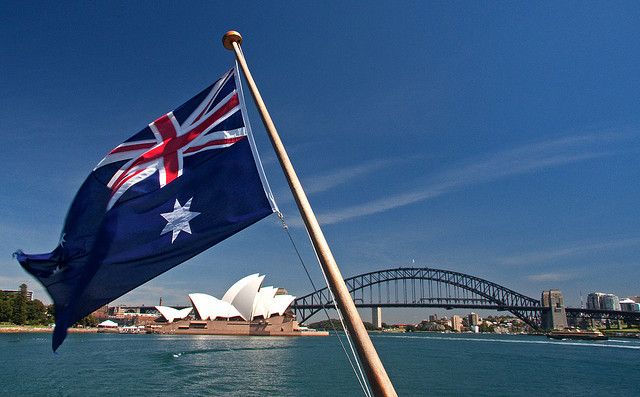
  • Australia signals possible retaliation as Trump’s worldwide tariffs rise to 15%.

    The Australian government has pledged to “consider every possible response” after President Donald Trump raised the standard import tariff to 15%. The abrupt increase came just a day after an initial 10% rate was announced, surprising global markets.

    Trade Minister Don Farrell described the decision as “unjustified” and suggested it could strain relations between the long-standing strategic partners. The move follows a U.S. Supreme Court ruling that invalidated the administration’s earlier targeted tariff system as unlawful.

    In reaction, the President shifted to a universal global tariff. The first 10% duty is scheduled to take effect at 12:01 a.m. EST on February 24, but the implementation date for the additional 5% remains uncertain, leaving exporters with goods already in transit facing heightened uncertainty.

    Economic repercussions and Australia’s reaction

    For Australia, the implications are significant. As a leading exporter of iron ore, LNG, and agricultural commodities, a 15% tariff could erode the competitiveness of Australian products in the U.S. market. Trade Minister Don Farrell confirmed that officials are coordinating closely with Australia’s embassy in Washington to evaluate the potential impact.

    Analysts note that keeping “all options on the table” may involve filing a formal complaint with the World Trade Organization (WTO) or imposing reciprocal, tit-for-tat duties on American imports. Such action would represent an unusual trade clash between AUKUS allies.

    The across-the-board 15% tariff reflects a broad, uniform policy that overlooks customary bilateral arrangements. Should Canberra proceed with countermeasures, it could affect multi-billion-dollar energy and defense agreements that are currently being negotiated.

    Market turbulence and the investor outlook

    Investors are already responding to the uncertainty. The Australian Dollar (AUD) came under immediate pressure as traders assessed the potential blow to the nation’s trade balance, while mining and energy shares adopted a more cautious tone.

    Should the full 15% tariff be implemented without carve-outs, Australian exporters may have to accelerate their shift toward Asian markets, potentially deepening the divide between Western trading partners.

    Attention is now fixed on the February 24 deadline. If the White House does not clarify whether allies will receive exemptions, the risk of a formal trade conflict increases. Analysts caution that much of the added cost could ultimately be passed on to American consumers, heightening concerns about renewed inflation.

    Sources: Investing

  • A rollback of Trump-era tariffs may lower input costs for U.S. energy companies, though it is unlikely to significantly alter overall trade flows.

    The U.S. Supreme Court’s decision on Friday to overturn trade tariffs introduced by President Donald Trump last year could ease financial pressure on certain oil producers and drilling firms, though analysts say it is unlikely to significantly reshape global energy trade flows in the near term.

    By striking down the tariffs, the Supreme Court of the United States may lower the cost of constructing LNG facilities and other major energy projects that depend on foreign-made modules and components. For instance, Venture Global assembles parts of its LNG plants in Italy before shipping them to the U.S. for completion — a process that had become more expensive under the tariff regime. U.S. crude producers and oilfield service firms also faced higher costs for imported equipment and materials, with some absorbing the impact and others attempting to pass it along to customers.

    Cam Hewell, CEO of Premium Oilfield Technologies, said his company had expected to pay $5–6 million in tariff-related taxes in 2026 — a figure that may now decline. He noted that most of the added costs had been absorbed internally, meaning customer pricing would see little change, but improved cash flow could support research, employee compensation, and shareholder returns.

    Kirk Edwards, president of Latigo Petroleum in Texas, added that the ruling could improve budgeting clarity and cost visibility for drilling projects.

    However, the decision does not eliminate the 50% tariffs on steel and aluminum imposed last year, and some executives remain cautious that the administration could pursue alternative measures to maintain similar trade barriers. Trump himself indicated he may introduce a 10% global tariff for 150 days, signaling that policy uncertainty remains.

    Despite the potential cost relief for LNG infrastructure, experts believe global LNG trade patterns are unlikely to shift materially. Ira Joseph of Columbia University’s Center on Global Energy Policy said China has stronger economic incentives to continue redirecting U.S. LNG cargoes to Europe for arbitrage or to import cheaper oil-indexed LNG from the Middle East.

    Alex Munton of Rapidan Energy added that Beijing increasingly views LNG purchases as strategic leverage in its relationship with Washington, making new buying commitments unlikely even if tariff pressures ease. Samantha Santa Maria-Hartke of Vortexa echoed that view, suggesting China — which halted U.S. crude and LNG imports after imposing retaliatory tariffs — is unlikely to reverse course in the near term.

    Sources: Reuters

  • US House defeats bid to block challenges to Trump tariffs.

    The U.S. House of Representatives on Tuesday narrowly defeated a push by Republican leaders to prevent lawmakers from challenging President Donald Trump’s tariffs, voting 217-214. The outcome could allow Democrats to move forward with efforts to overturn the trade measures.

    Three Republicans sided with all 214 Democrats in opposing the proposal, which sought to bar any tariff-related challenges until July 31. The restriction had been folded into a procedural resolution meant to advance debate on three separate, unrelated bills.

    The setback marks a notable blow to House Speaker Mike Johnson, who oversees a razor-thin 218-214 Republican majority, leaving virtually no margin for dissent on party-line votes. With Democrats united in opposition, Johnson can afford to lose no more than one Republican on any given measure.

    In the wake of the vote, Democrats could push for a House vote as soon as Wednesday to end Trump’s reliance on a national security emergency declaration to justify tariffs on Canada and other key U.S. allies. They have also drafted additional resolutions aimed at blocking tariffs on Mexico and several other nations.

    Republicans had enforced procedural rules since March of last year to shield the tariffs from legislative challenges, extending them through January. However, the latest extension lapsed amid internal GOP resistance, as some members raised concerns about the economic burden on American households and businesses reliant on global trade.

    The vote came as Supreme Court Justice Ketanji Brown Jackson signaled that the Court will need additional time to rule on the legality of Trump’s tariff policies.

    Sources: Investing

  • Morning Bid: Markets shrug off tariff threats

    President Donald Trump once again surprised markets by announcing an increase in tariffs on South Korea to 25% from 15%, citing Seoul’s failure to implement a trade agreement reached last July. The move targets sectors such as autos, lumber, and pharmaceuticals, yet South Korean equities ended up surging 2% to fresh record highs. The KOSPI initially slid more than 1%, but the dip quickly attracted buyers seeking exposure to Asia’s strongest-performing equity market of 2025.

    With South Korea’s industry minister set to travel to Washington, investors appear to be betting on a negotiated climbdown, reviving the popular “TACO” trade—Trump Always Chickens Out. Few are surprised that Seoul has been reluctant to commit massive U.S. investments while the risk of abrupt tariff threats remains a defining feature of the administration.

    Tariff uncertainty also boosted demand for precious metals, pushing gold and silver back toward record levels. Gold rose 1% to $5,063 an ounce, while silver jumped 5% to $109 an ounce.

    Asian equities were broadly firmer, supported by optimism that blockbuster earnings from the U.S. “Magnificent Seven,” beginning with Meta, Microsoft and Tesla later this week, will help sustain the global equity rally into 2026. MSCI’s Asia-Pacific index excluding Japan climbed 1% to a new high, while Japan’s Nikkei added 0.7%, even as the yen hovered near a two-month peak—normally a headwind for exporters.

    European equities are poised for a firmer open, with EURO STOXX 50 futures up 0.3%. U.S. futures are also higher, as Nasdaq futures climb nearly 0.6% and S&P 500 futures rise 0.3%. The global economic calendar remains relatively quiet ahead of Wednesday’s Federal Reserve policy decision, at which interest rates are widely expected to be left unchanged. Nevertheless, the meeting is likely to be dominated by the Justice Department’s investigation into Fed Chair Jerome Powell, adding extra scrutiny to his post-meeting press conference. Any indication that Powell may choose to remain on the Fed’s board after his term ends in May—a move permitted under Fed rules—could provoke an unpredictable reaction from President Trump.

    Sources: Reuters

  • Five key market themes to watch in the coming week

    A crucial Federal Reserve interest rate decision is set to dominate attention this week, especially after news of a criminal investigation into Chair Jerome Powell heightened concerns about the central bank’s independence. At the same time, several major technology firms are scheduled to release quarterly earnings, with investors watching closely for evidence that heavy investments in artificial intelligence are beginning to pay off. Adding to market uncertainty, President Donald Trump has issued a renewed tariff threat against Canada, keeping geopolitical risks firmly in focus.

    Fed decision ahead

    This week’s agenda is expected to be led by the Federal Reserve’s interest rate decision on Wednesday, following a two-day policy meeting focused on setting borrowing costs as the U.S. economy remains broadly resilient. While employment—previously a key driver of rate cuts in 2025—appears stable amid subdued hiring and limited layoffs, inflation has held steady but remains above the Fed’s 2% target. Some analysts caution that economic growth is becoming increasingly “K-shaped,” with stronger performance among higher-income households and corporations, while lower-income earners face rising living costs. Against this backdrop, the Fed is widely expected to leave rates unchanged at 3.5%–3.75%, with CME FedWatch indicating that the next rate cut is unlikely before June.

    Attention shifts to who could replace Powell

    January’s Federal Reserve meeting takes place amid repeated calls from President Trump for swift and aggressive rate cuts to stimulate economic growth, alongside his criticism of officials for resisting such moves. Long-standing concerns over the Fed’s political independence intensified earlier this month after the Justice Department launched a criminal investigation into Chair Jerome Powell. In an unusual public response, Powell condemned the probe, characterizing it as an attempt to pressure monetary policy in line with the White House’s preferences.

    Appointed during Trump’s first term, Powell now has only a few months remaining as Fed chair, and markets are closely watching whether tensions with the administration could influence his decision to remain on the Fed’s rate-setting board after his term ends. Adding to the uncertainty is the question of who will succeed him. Prediction markets currently favor BlackRock executive Rick Rieder as the leading contender, overtaking former Fed Governor Kevin Warsh, while Trump has suggested he has narrowed his choice to a single candidate.

    Major tech earnings in the spotlight

    The earnings calendar this week will be dominated by results from major technology companies, including Meta Platforms, Microsoft, and Apple. Driven partly by excitement over advanced artificial intelligence applications, these firms have led equity markets in recent years. Their push to secure leadership in the AI race has prompted a sharp rise in capital spending, particularly on data centers and the semiconductors required to support AI workloads. While investors have largely been willing to overlook these heavy investments, expectations for meaningful revenue returns are now rising, with analysts describing 2026 as a “prove-it” year for big tech. This wave of earnings may provide the first clues as to whether those expectations are being fulfilled.

    ASML to report

    In Europe, attention will turn to ASML, the world’s leading supplier of chipmaking equipment, which is due to report earnings on Wednesday. The Dutch group’s market capitalization crossed the $500 billion mark earlier this month after key customer TSMC announced larger-than-expected capital spending plans to meet surging demand for AI chips. This milestone has cemented ASML’s position as Europe’s most valuable company, with analysts watching closely to see whether the AI boom can further accelerate its growth. However, ASML has so far issued a cautious outlook for the year ahead, with sales projected at best to remain flat, prompting concerns that the pace of new fab construction may be trailing the rapid expansion in AI-driven demand.

    New tariff threat from Trump rattles markets

    After seemingly backing away from earlier claims that he would impose punitive tariffs on several European countries unless the United States was permitted to buy Greenland, President Trump issued a fresh trade warning over the weekend, saying he would levy a 100% tariff on Canadian imports if Ottawa were to strike a trade agreement with China. In social media posts, Trump cautioned that Prime Minister Mark Carney—who recently visited China for trade discussions and spoke in Davos about the need for smaller economies to push back against coercion by global powers—could put Canada at risk by pursuing closer ties with Beijing.

    Trump warned that China would severely damage Canada’s economy and society, stating that all Canadian goods entering the U.S. would face a 100% duty should such a deal be reached. Carney responded that Canada has no plans to seek a free trade agreement with China, stressing that Ottawa remains committed to its obligations under the USMCA and would consult both the U.S. and Mexico before pursuing any new trade arrangements. Analysts at Vital Knowledge noted that while the likelihood of the tariff threat being enacted appears low, Trump’s repeated and abrupt warnings are gradually weighing on investor sentiment.

    Sources: Investing

  • U.S. dollar faces potential fallout from Greenland pressure

    Few analysts had a U.S. invasion of Greenland anywhere near the top of their 2026 market outlooks. President Trump’s surprise weekend tariff move has triggered a classic risk-off reaction, with gold rallying around 2%, equities down 1.0–1.5%, and the dollar coming under modest pressure. This week’s World Economic Forum in Davos is now set to become a focal point for U.S.–European diplomacy, with elevated FX volatility likely.

    USD: Too Early to Embrace the ‘Sell America’ Narrative

    Washington escalated its pursuit of Greenland over the weekend, with the threat of 10% tariffs—potentially rising to 25%—on eight European countries appearing consistent with a broader “maximum pressure” strategy to force a deal. Political commentary in Europe suggests this could mark the end of the EU’s long-standing policy of accommodation toward the U.S., with France emerging as a key advocate for deploying the EU’s Anti-Coercion Instrument, which allows for retaliatory measures spanning tariffs, taxation, and investment restrictions against coercive trade actions.

    The issue, alongside growing concerns about strains within NATO, is set to dominate the policy agenda in a week that might otherwise have focused on Ukraine. President Donald Trump is scheduled to speak at the World Economic Forum in Davos on Wednesday, followed by an EU leaders’ meeting on Thursday. A central question is whether Europe adopts China’s approach from last year—matching U.S. tariffs one-for-one—to ultimately force a de-escalation from Washington.

    Initial market reactions have been cautious but telling: gold has gapped roughly 2% higher, German DAX futures are down around 1.5%, and the U.S. dollar is marginally weaker. While U.S. cash markets are closed for the Martin Luther King Jr. holiday, S&P 500 futures are indicating losses of about 0.8%. Still, it may be premature to revive the “Sell America” narrative. As with last April’s near-50% “Liberation Day” tariff threats, investors appear reluctant to chase what often proves to be aggressive rhetoric that ultimately gives way to diplomatic negotiation.

    Nonetheless, these developments are likely to inject a degree of volatility into what has otherwise been a relatively calm investment environment. On the broader “Sell America” theme, we noted on Friday that there was little concrete evidence of meaningful de-dollarisation last year. Even in a scenario where geopolitical tensions were to escalate materially, it appears unlikely that the dollar would experience a sell-off on the scale of last year’s near-10% decline, particularly given that the buy-side was then unusually under-hedged in U.S. dollar exposure.

    Beyond the Greenland issue, this week may also bring clarity on the future leadership of the Federal Reserve. President Trump could announce his nominee to succeed Jerome Powell as Fed Chair. The dollar rallied on Friday after reports suggested Trump wants Kevin Hassett to remain at the National Economic Council, with Kevin Warsh now viewed as the leading candidate—an outcome that would be modestly supportive for the dollar if confirmed.

    Overall, U.S. economic data are likely to take a back seat to political developments in the coming days. In the near term, the dollar may probe lower levels. For DXY, gap resistance around 99.35 could cap upside, while a corrective move toward the 98.80–98.85 zone remains the mild tactical bias.

    EUR: Unwelcome Developments

    The renewed tensions surrounding Greenland and the prospect of fresh tariffs are particularly negative for European industry. This comes just as industrial confidence had begun to recover, with firms appearing to have adapted to last year’s tariff-related volatility. The latest developments are likely to sharpen the focus among European policymakers on boosting domestic demand and may even add momentum to long-delayed reforms such as the Savings and Investment Union, aimed at strengthening Europe’s capital markets and enhancing their competitiveness relative to the U.S.

    In FX markets, EUR/USD has established support just below 1.1600. Initial intraday resistance is seen near 1.1650, with scope for a move toward the 1.1690–1.1700 area if that level is cleared. Short-dated implied volatility for EUR/USD, both one-week and one-month, has edged higher, reflecting the elevated uncertainty surrounding the week ahead.

    GBP: Poised for Relative Outperformance This Week

    We believe this week’s U.K. data — November employment figures and December CPI — may offer modest support to sterling, potentially extending the short-covering rally that has been underway since late November. While EUR/GBP was initially seen as the more vulnerable cross, with downside risks toward 0.8600, early-week dollar softness could shift the bulk of the move into GBP/USD. A sustained break above the 1.3415–1.3420 zone would open scope for a move toward 1.3450–1.3460.

    That said, sterling historically underperforms during pronounced risk-off phases, and the current environment remains fluid with multiple cross-currents at play.

    Sources: Chris Turner

  • Trump’s Greenland tariff threat, China growth slowdown move markets

    Futures tied to major U.S. stock indexes fell after President Donald Trump raised the prospect of imposing tariffs as part of his push to acquire Greenland. European leaders discussed possible retaliation against the measures, which they described as a form of blackmail. Gold climbed to a fresh record high, while oil prices edged lower as traders assessed Trump’s remarks and the EU’s response. Elsewhere, China’s economic growth slowed in the fourth quarter but still met Beijing’s 2025 target.

    U.S. futures and global stocks decline

    U.S. stock futures pointed lower on Monday as investors weighed President Donald Trump’s threat to impose tariffs on several European countries until the United States is allowed to acquire Greenland.

    By 03:05 ET (08:05 GMT), Dow futures were down 404 points, or 0.8%, S&P 500 futures had fallen 66 points, or 1.0%, and Nasdaq 100 futures were off 336 points, or 1.3%.

    With U.S. cash markets closed for the Martin Luther King Jr. Day holiday, the immediate reaction to Trump’s latest tariff threat will be delayed. Risk-off sentiment has spread globally, dragging equities lower across Europe and Asia.

    ING analysts said Trump’s comments, following last year’s sweeping global tariffs, have pushed trade tensions into “an entirely new dimension,” driven less by economic considerations and more by political motives. They added that while past experience suggests caution in reacting to dramatic announcements, some of Trump’s threats over the past year have ultimately been carried out.

    Focus on Trump’s Greenland tariffs

    European leaders agreed on Sunday to intensify efforts to counter President Donald Trump’s tariff threats, with reports suggesting EU officials are considering strong retaliatory measures if the levies are imposed.

    On Saturday, Trump said he would introduce 10% tariffs on exports from eight European countries—Denmark, Sweden, France, Germany, the Netherlands, Finland, Norway and the United Kingdom—until the United States is able to acquire Greenland. He added that the tariffs would be raised to 25% if the purchase of the semi-autonomous Danish territory does not go ahead. Trump has framed the move as a national security necessity, a claim European governments have rejected, describing it as blackmail.

    Ahead of an emergency EU summit in Brussels on Thursday, member states are expected to debate a range of responses, including a potential €93 billion tariff package on U.S. imports and the possible use of the bloc’s “Anti-Coercion Instrument,” which could restrict U.S. access to investment, banking and services markets. Reuters, citing an EU source, reported that the tariff package currently has broader backing.

    Trump’s latest tariff threat has also cast doubt over the future of a U.S.–EU trade agreement reached last year, with EU officials saying they cannot approve the deal while Washington pursues control of Greenland. ING analysts said that while the outcome of the dispute remains uncertain, it underscores the lack of predictability in global trade and tariff policy.

    Gold reaches record high

    Gold prices climbed to record highs in Asian trade on Monday, nearing $4,700 an ounce, as investors rushed into safe-haven assets following President Trump’s latest tariff threat.

    Spot gold rose 1.6% to $4,667.33 an ounce by 02:26 ET (07:26 GMT), after earlier touching a record $4,690.75. U.S. gold futures also hit a new peak at $4,697.71 an ounce.

    Silver prices surged more than 4% to a fresh all-time high of $94.03 an ounce, supported by safe-haven demand as well as its role as an industrial metal.

    Oil prices edge lower

    Oil prices edged lower, giving back part of last week’s gains as markets weighed the growing risk of a trade dispute linked to Greenland. Brent crude slipped 0.1% to $59.74 a barrel, while U.S. West Texas Intermediate fell 0.1% to $55.95.

    Crude had rallied early last week on concerns that unrest in Iran could threaten oil supplies from the Middle East, a region that accounts for a significant share of global output. Much of that risk premium faded after President Trump ruled out immediate U.S. military action, leading prices to pull back before stabilizing toward the end of the week.

    China’s economy meets 2025 growth target

    China’s economy grew slightly more than expected in the fourth quarter of 2025, data released on Monday showed, as policy stimulus and a pickup in consumption helped the country meet its annual growth target.

    Gross domestic product rose 4.5% year on year in the October–December period, in line with forecasts but down from 4.8% in the previous quarter, marking the slowest pace in three years. On a quarter-on-quarter basis, GDP expanded 1.2%, marginally above expectations of 1.1%.

    The result brought full-year 2025 growth to 5%, meeting Beijing’s target. The government is widely expected to set a similar 5% growth goal again, as it continues to face heightened U.S. trade tensions, weak consumer demand and a prolonged property sector downturn.

    Sources: Investing

  • European shares fall as tariff threats loom; Greenland dispute intensifies

    European stocks dropped sharply on Monday after U.S. President Donald Trump threatened to impose economic sanctions on several countries in the region if they resist his plans to acquire Greenland.

    By 03:05 ET (08:05 GMT), Germany’s DAX was down 1.3%, France’s CAC 40 fell 1.6% and Britain’s FTSE 100 slipped 0.4%.

    Tariff threats dampen market sentiment

    President Donald Trump said over the weekend that he plans to impose tariffs on exports to the United States from eight European countries that have opposed his proposal for the U.S. to acquire Greenland. The countries affected include France, Germany and the United Kingdom, along with several Nordic and northern European nations.

    Trump said an initial 10% tariff would be introduced on Feb. 1, rising to 25% in June if no agreement is reached allowing the United States to take control of Greenland, the semi-autonomous territory of Denmark.

    The European Union has already suspended ratification of a U.S.–EU trade agreement, and media reports indicate the bloc may revive a €93 billion tariff package targeting U.S. goods. Such a move could sharply escalate tensions and increase the risk of a wider transatlantic trade conflict.

    According to IG market analyst Tony Sycamore, the latest dispute has intensified fears of NATO fragmentation and the breakdown of last year’s trade accords with European partners, pushing investors toward risk-off positioning in equities while boosting demand for safe havens such as gold and silver.

    This has put the World Economic Forum, which gets under way later in the session in Davos, squarely in focus as global leaders convene, including a large U.S. delegation led by President Trump.

    Euro zone inflation data due

    Monday’s key economic event is the release of December eurozone inflation data, particularly with U.S. markets closed for the Martin Luther King Jr. holiday. Annual eurozone CPI is expected to come in at 2.0% in December, matching the European Central Bank’s target for the first time since mid-2025, down from 2.1% in November.

    The ECB has left interest rates unchanged since ending its rate-cut cycle in June and signalled last month that it is under no immediate pressure to adjust policy, as inflation concerns have eased and growth surprised on the upside toward the end of 2025. The ECB’s next policy meeting is scheduled for early February.

    Earlier data showed China’s economic growth slowed to a three-year low in the fourth quarter, with GDP expanding 4.5% year on year, compared with 4.8% in the previous quarter.

    U.S. tech giants in focus

    The European corporate earnings calendar is thin, though UK building products group Marshalls reported full-year 2025 adjusted profit before tax in line with market expectations despite ongoing uncertainty in its end markets.

    U.S. technology heavyweights listed in Europe will also be in focus, as they could become targets of retaliatory measures by European authorities if President Trump follows through on tariff threats against European countries until the U.S. is permitted to acquire Greenland.

    Crude slips lower

    Oil prices edged lower on Monday, giving back part of the previous week’s gains as markets weighed the growing risk of a trade dispute linked to Greenland. Brent crude slipped 0.1% to $59.74 a barrel, while U.S. West Texas Intermediate fell 0.1% to $55.95.

    Prices had climbed early last week on concerns that unrest in Iran could threaten oil supplies from the Middle East, a region that represents a large share of global production. However, much of that risk premium faded after President Trump said there would be no immediate U.S. military action, triggering a pullback before prices stabilized later in the week.

    Sources: Investing

  • EUR/USD climbs above 1.1600 as Europe responds to Trump’s tariff threats

    • EUR/USD edges higher toward the 1.1625 area in early European trading on Monday, as the euro finds support from signs that Europe is prepared to respond to U.S. tariff measures.
    • The move follows President Donald Trump’s announcement of a 10% tariff on goods from several European countries, prompting pushback from European leaders.
    • Meanwhile, expectations that the Federal Reserve will keep interest rates unchanged at its January meeting—amid a resilient labor market and still-elevated inflation—have weighed on the U.S. dollar, providing additional support for the pair.

    The EUR/USD pair advances to around 1.1625 in early European trading on Monday, snapping a four-day losing streak. The U.S. dollar comes under modest pressure against the euro after President Donald Trump threatened to escalate tariffs on eight European nations opposing his proposal for the United States to acquire Greenland.

    U.S. markets are closed on Monday in observance of Martin Luther King Jr. Day.

    Over the weekend, Trump announced a 10% tariff on goods from Denmark, Norway, Sweden, France, Germany, the Netherlands, Finland, and the United Kingdom, set to take effect on February 1. He added that the levy would rise to 25% in June unless an agreement is reached allowing the U.S. to purchase Greenland.

    Europe is set to respond after President Donald Trump imposed additional tariffs on key allies, with European leaders expected to convene an emergency meeting in the coming days to consider potential retaliation. Renewed concerns over a trade war and the longer-term implications of Trump’s latest move have weighed on the U.S. dollar, providing support for the EUR/USD pair.

    “While one could argue the tariffs are a threat to Europe, it is actually the dollar that is absorbing most of the impact, as markets appear to be pricing in a higher political risk premium for the U.S. currency,” said Khoon Goh, head of Asia research at ANZ.

    That said, stronger-than-expected U.S. labor market data released last week have delayed expectations for further Federal Reserve rate cuts until June, which could help cap downside pressure on the dollar. According to the CME FedWatch tool, markets are pricing in nearly a 95% probability that the Federal Open Market Committee will leave rates unchanged at its January 27–28, 2026 meeting.

    Sources: Investing

  • No layoffs even as tariff-related cost pressures continue across Federal Reserve districts

    The Federal Reserve’s Beige Book released Wednesday indicated that “tariff-driven cost pressures were widespread across every district.” Out of the 12 Fed districts, only two saw mild price increases, while the remaining 10 experienced more intense price pressure. This suggests the Fed is unlikely to reduce benchmark interest rates at the upcoming FOMC meeting—unless signs of labor market weakness push them to cut rates again to support hiring.

    Meanwhile, a 5.1% increase in existing home sales in December could point to a potential recovery in the housing sector. The median price of homes sold last month was $405,400, a gain of just 0.4% year-over-year, indicating that home price appreciation remains limited.

    The Commerce Department reported that retail sales increased 0.6% in December, surpassing economists’ forecasts of a 0.5% gain. In addition, October’s retail sales were revised to a 0.1% decline, instead of the previously estimated 0.2% rise. Overall, 10 of the 13 retail categories posted higher sales in November, making this a strong performance that should continue to support solid GDP expansion.

    Meanwhile, three missile-capable ships and an aircraft carrier are being deployed to the Middle East in a show of force aimed at pressuring Iran’s government. Crude oil markets are pricing in the possibility that Iran’s oil exports could be removed from global supply, depriving the regime of revenue. This signals that President Trump may take further action beyond sanctions and a 25% tariff on nations that trade with Iran.

    Intense diplomatic efforts have been taking place between Iran and neighboring Arab countries. On Wednesday, President Trump said Iran had halted the killing of anti-government demonstrators and would not carry out death sentences against people accused of seeking to overthrow the regime. His comments suggested the U.S. might be stepping back from launching military strikes. Trump told reporters that the U.S. had received word Iran had “no plans to execute protesters.”He went on to say that new information indicated the deaths had ceased and the executions had been stopped, adding that many believed executions were scheduled for that day.

    Sources: Investing

  • China’s Trade Surplus Expands in December on Strong Export Growth

    China’s trade surplus widened in December, reaching CNY 808.80 billion, up from CNY 792.57 billion the previous month.

    Exports grew 5.2% year-over-year in December, slightly lower than November’s 5.7% increase. Meanwhile, imports rose 4.4% year-over-year, accelerating from the 1.7% growth recorded in November.

    In U.S. dollar terms, China’s trade surplus exceeded expectations, registering $114.10 billion compared to the forecasted $113.60 billion and $111.68 billion in the prior month. Exports increased 6.6% year-over-year, well above the 3.0% forecast and 5.9% last month. Imports also rose strongly by 5.7%, surpassing the anticipated 0.9% growth and previous 1.9% figure.

    Market Reaction to China’s Trade Balance Data

    AUD/USD continued its upward momentum, trading near 0.6692 shortly after the release of China’s trade data. The pair is currently up 0.16% on the day.

    This section was released on Wednesday at 00:52 GMT as a preview ahead of China’s Trade Balance report.

    China’s Trade Balance Overview

    The General Administration of Customs is scheduled to release December trade data on Wednesday at 03:00 GMT. Analysts expect the trade surplus to widen to $113.60 billion, up from $111.68 billion previously. Exports are forecasted to grow 3.0% year-over-year in December, while imports are projected to rise 0.9% over the same period.

    Given China’s significant influence on the global economy, this data release is anticipated to impact the Forex market.

    In what ways can China’s Trade Balance impact the AUD/USD exchange rate?

    AUD/USD is trading with modest gains ahead of China’s Trade Balance release. The pair dipped slightly as the U.S. dollar strengthened, supported by Consumer Price Index (CPI) inflation data that largely met economists’ expectations last month.

    Should the trade data exceed forecasts, it may boost the Australian dollar, with initial resistance seen at the January 12 high of 0.6722. Further upside targets include the January 6 high at 0.6742 and the January 7 peak at 0.6766.

    On the downside, the January 9 low of 0.6663 could provide support for buyers. A deeper decline might push the pair down to the December 4 low of 0.6614, followed by the 100-day exponential moving average near 0.6587.

    Sources: Fxstreet