Tag: stock

  • Top Analyst Calls This Week

    AppLovin Corp.

    What’s going on?
    On Monday, Needham upgraded AppLovin Corp (NASDAQ: APP) to Buy and set a $700 price target.

    TL;DR: Needham turns bullish, lifting its 2026 ecommerce revenue forecast to $1.45B.

    The full picture:
    Needham raised its rating after a deeper dive into AppLovin’s ecommerce business, strengthening its conviction in accelerating revenue growth by 2026—particularly as the stock has pulled back from last month’s highs. The firm views the recent weakness as a market mispricing, arguing that opportunistic advertisers are stepping in despite typical seasonal softness.

    Needham increased its 2026 ecommerce revenue estimate to $1.45B from $1.05B, citing upcoming self-service launches that should expand the advertiser base and drive higher spending. This, in their view, could overpower usual Q1 seasonality and deliver sequential growth.

    Even with the higher forecast, Needham sees further upside in a bull-case scenario—especially if AppLovin’s ecommerce trajectory begins to resemble TikTok’s rapid monetization curve, reinforcing the idea that in markets, replication can be a powerful catalyst for outsized returns.

    American Axle

    What’s going on? On Tuesday, BWS Financial launched coverage of American Axle & Manufacturing with a Buy rating and set a $17 price target.

    TL;DR: AXL is merging with Dowlais, and the shares appear undervalued.

    The bigger picture: American Axle & Manufacturing Holdings Inc. (AXL), which plans to rebrand as Dauch Corp. (NYSE: AXL), is nearing completion of its merger with Dowlais Group plc (DWLAF). According to BWS Financial, the deal will significantly diversify the business—expanding its automaker customer base, strengthening its global footprint, and broadening its product offerings. The combined company is expected to become a major force among auto suppliers, able to capitalize on greater scale, geographic reach, and meaningful operating efficiencies.

    These advantages are projected to drive a sharp increase in free cash flow starting in 2027.

    At the same time, AXL is adjusting its pricing and bidding approach to improve gross margins. While this strategy may weigh on revenue in 2025, it should support stronger cash generation. The analyst believes this near-term revenue softness has pushed the stock into deeply discounted territory.

    Despite trading at valuation levels often associated with distressed companies, AXL remains profitable and continues to generate free cash flow. For investors searching for overlooked value opportunities, BWS Financial sees a compelling disconnect between fundamentals and the current share price.

    Applied Materials

    What happened? On Wednesday, Mizuho raised its rating on Applied Materials (NASDAQ: AMAT) to Outperform and lifted its price target to $370.

    TL;DR: Mizuho expects stronger wafer fab equipment (WFE) growth and rising global capex to power further upside for AMAT.

    The full story: Mizuho upgraded AMAT from Neutral with a $275 target to Outperform at $370, citing a much more favorable industry backdrop. As the world’s second-largest supplier of wafer fab equipment, Applied Materials is seen as a prime beneficiary of a powerful upswing in semiconductor capital spending across the U.S., Taiwan, and Japan.

    The bank points to sharply improving WFE forecasts, with 2026 estimates now projected to jump 13% year over year, followed by another 12% increase in 2027—a dramatic acceleration compared with earlier expectations and a meaningful boost to AMAT’s earnings potential.

    Core growth drivers include foundry and logic, which account for about 65% of revenue, supported by TSMC’s substantially higher capital spending plans for 2026–2028 versus 2023–2025, alongside a more constructive outlook for Intel’s tool purchases in 2026. On the memory side, DRAM—roughly 30% of revenue—stands to benefit from strong demand for high-bandwidth memory.

    Concerns around China have also eased, as about 70% of AMAT’s revenue now comes from outside China, where growth is accelerating. With global WFE momentum building and major customers like TSMC and Intel increasing investment, Mizuho believes the setup strongly favors AMAT and justifies the Outperform call.

    First Solar

    What happened? On Thursday, BMO Capital Markets cut its rating on First Solar (NASDAQ: FSLR) to Market Perform and set a $263 price target.

    TL;DR: BMO turns cautious on FSLR, citing competitive risks from Tesla and concerns that rising capacity could pressure module pricing.

    The full story: BMO downgraded First Solar amid growing uncertainty around Tesla’s expanding solar ambitions. The firm questions how much of Tesla’s excess module capacity—given its proven ability to scale clean-energy platforms such as energy storage systems and inverters—could spill into the broader market rather than being used internally.

    With U.S. utility-scale solar demand running at roughly 45–50 GW per year, First Solar’s 14.1 GW of capacity, alongside T1 Energy’s 2.1 GW (with potential expansion to 5.3 GW), could face intensified competition if Tesla moves toward its stated 100 GW capacity goal. Such a scenario could weigh on long-term module pricing or leave a persistent overhang on FSLR shares.

    BMO notes that the bullish case for First Solar depends heavily on elevated U.S. module average selling prices (ASPs). However, after the stock’s 56% gain over the past 12 months, valuation now implies module pricing of about $0.29 per watt, even as backlog pricing sits closer to $0.30–$0.33 per watt. Earlier analysis suggested prices could climb into the high-$0.30s or low-$0.40s if Section 232 tariffs on polysilicon imports tightened supply—each $0.01 per watt increase potentially adding $23 per share in value.

    That upside, however, may be tempered by a recent presidential order on semiconductors that includes exemptions for data centers, an area where Tesla could focus its solar deployments, potentially easing pressure from polysilicon-related restrictions.

    Taken together—rising industry capacity, uncertain pricing durability, and Tesla’s looming presence—BMO sees limited justification for sustained pricing optimism and adopts a more neutral stance on First Solar.

    Broadcom Inc.

    What happened? On Friday, Wolfe Research upgraded Broadcom (NASDAQ: AVGO) to Outperform and raised its price target to around $370–$400.

    TL;DR: Stronger expectations for TPU-driven AI growth led Wolfe to lift its outlook for Broadcom.

    The full story: Wolfe Research upgraded Broadcom to Outperform, citing accelerating demand tied to the AI buildout—particularly from Google’s Tensor Processing Units (TPUs). Channel checks suggest TPU deployments could reach 7 million units by 2028, and Alphabet’s decision to offer TPUs to external customers is seen as creating a credible alternative to Nvidia’s ecosystem. Wolfe views Broadcom as the primary beneficiary of this shift.

    As a result, the firm raised its long-term forecasts, projecting CY27 revenue of $154.5 billion and EPS of $16, implying a valuation of roughly 21x earnings. Additional upside could come from AI accelerator (XPU) programs at companies like Meta and OpenAI that are not yet fully reflected in estimates.

    Wolfe also revised its AI ASIC revenue outlook higher, estimating $44 billion in CY26 based on 3.3 million TPU shipments, rising sharply to $78.4 billion in CY27 on 5.1 million units. TPUs are expected to account for the bulk of this growth, with other AI projects contributing smaller portions. Networking revenue is forecast to jump 75% to $15.1 billion in CY26, followed by 55% growth in CY27, while non-AI semiconductor and software segments are expected to remain relatively stable.

    From a valuation standpoint, Wolfe argues the stock remains attractive. Its base case of $16 EPS in CY27 suggests room for multiple expansion, while a bullish scenario—with AI revenue doubling again—could push earnings toward $18 per share. Wolfe’s upper-end target reflects a valuation below Broadcom’s three-year average multiple of around 25x since the AI cycle began, reinforcing its positive stance on the stock.

    Sources: Investing

  • Union prolongs negotiations with Marathon, avoiding refinery strike

    The United Steelworkers (USW) said late Saturday that it had agreed to extend negotiations with Marathon Petroleum, temporarily avoiding a strike involving roughly 30,000 workers at U.S. refineries and chemical plants.

    Under the rolling 24-hour extension, the existing labor contract—originally set to expire at 12:01 a.m. ET on Sunday—will remain in force unless either the union issues a 24-hour strike notice or Marathon provides a 24-hour lockout notice.

    Since talks began just over a week ago, the union has turned down at least five proposals from Marathon. The most recent offer, made Saturday, included a 14% wage increase over a four-year contract for refinery and chemical plant employees.

    Marathon is serving as the lead negotiator for 26 U.S. refining and chemical companies, including Exxon Mobil, Chevron, and Valero Energy. The USW represents workers at facilities that together account for about two-thirds of U.S. crude oil refining capacity.

    Earlier Saturday, Marathon spokesperson Jamal Kheiry said the company continued to meet with USW representatives and remained committed to bargaining in good faith toward a mutually acceptable agreement.

    Meanwhile, Mike Smith, chairman of the Steelworkers’ National Oil Bargaining Program, said union members were pushing for fairness and justice, emphasizing that their industry-wide unity demonstrated readiness to fight for a fair contract.

    People familiar with the negotiations said key sticking points include cost-of-living adjustments for the roughly 30,000 union-represented oil workers, healthcare expenses, and rules governing the use of artificial intelligence at refinery and chemical plants.

    The United Steelworkers is also seeking stronger safety standards, though sources said this demand appears unacceptable to Marathon.

    “Marathon believes workers in this industry are already overpaid,” one source said, speaking on condition of anonymity because they were not authorized to comment publicly. “There’s very little movement on economic issues, and aside from AI, they aren’t seriously engaging with the rest of our proposals. Even on AI, the approach hasn’t been constructive.”

    In past contract negotiations, the USW has repeatedly agreed to roll over contracts for several days beyond their expiration through 24-hour extensions.

    The current talks are focused on a national pattern agreement that establishes wages for hourly union workers, healthcare costs, and nationwide standards on safety and other matters.

    Refinery operators typically earn around $50 an hour after completing their probationary period.

    The national framework is paired with site-specific agreements to form individual contracts at each facility.

    On Friday, Marathon and workers reached agreement on local issues at the company’s largest facility, the Galveston Bay Refinery, which has a capacity of 631,000 barrels per day.

    Sources: Reuters

  • Black swan events may surprise, but markets largely shrug them off

    During and in the aftermath of 9/11, Nassim Taleb—a Lebanese-born former options trader and quantitative analyst—published Fooled by Randomness. He later refined and formalized the idea in his 2007 book The Black Swan, drawing on the metaphor of the rare black swan, an anomaly among typically white birds.

    Taleb defined a Black Swan as an event that meets three criteria: first, it is an extreme outlier, often without historical precedent; second, it carries an immediate and profound impact; and third, it becomes explainable only in hindsight, after the event has occurred.

    Forty years ago tomorrow, on the morning of Tuesday, January 28, 1986, tens of millions of Americans watched live as the Space Shuttle Challenger lifted off—only to explode 73 seconds into flight, killing all seven crew members, including the widely admired teacher-astronaut Christa McAuliffe.

    The tragedy met all of Nassim Taleb’s criteria for a Black Swan event. First, it was unprecedented, marking the first fatal in-flight disaster involving a US spacecraft. Second, its impact was immediate: President Ronald Reagan postponed his State of the Union address scheduled for that evening. Third, the cause was only fully understood after the fact, when physicist Richard Feynman explained during televised hearings that the disaster resulted from O-ring failure in unusually cold conditions.

    One response that did not occur—then or in most Black Swan events—was a meaningful stock market selloff. Markets were largely indifferent. The S&P 500 rose on the day of the explosion and continued higher, gaining 2.6% for the week and 16.8% over the remainder of 1986. The Dow Jones Industrial Average also advanced, rising 1.2% on the day, 2.7% for the week, and 22.6% for the year.

    Another Black Swan touched Great Britain exactly fifty years earlier, when global stock markets closed on January 28, 1936, to mark the funeral of King George V. He was succeeded by Edward VIII, whose relationship with an American divorcée triggered a constitutional crisis that lasted much of the year. The turmoil ended with Edward’s abdication in favor of his younger brother, who became King George VI and later passed the crown to his daughter, Elizabeth II—the longest-reigning and arguably most popular British monarch—suggesting the succession ultimately resolved smoothly.

    Despite the political uncertainty, 1936 proved to be a strong year for markets during an otherwise bleak Depression-era decade, with the Dow Jones Industrial Average rising 25%.

    Across the past century, several other major Black Swan events have reshaped history, including the outbreak of World War I following the assassination in Sarajevo on June 28, 1914; Japan’s attack on Pearl Harbor on December 7, 1941; the assassination of President John F. Kennedy on November 22, 1963; and the September 11, 2001 attacks.

    History also shows a striking pattern in which US presidents elected in seven consecutive election years, spaced 20 years apart, died in office: William Henry Harrison (1840), Abraham Lincoln (1860), James Garfield (1880), William McKinley (1900), Warren Harding (1920), Franklin Roosevelt (1940), and John F. Kennedy (1960). One might argue that this grim sequence made the outcome seem almost “predictable.” The streak ended two decades later, when Ronald Reagan survived an assassination attempt in March 1981, with John Hinckley’s bullet narrowly missing his heart.

    Following the survival of Reagan—and Pope John Paul II six weeks later—three major Black Swan events marked the late 1980s. The first was the 1986 Challenger explosion, followed by the 1987 Black Monday market crash, which shocked investors far more than the general public. The decade closed with the fall of the Berlin Wall in 1989, a swan-like event, even though many had anticipated the eventual collapse of Gorbachev’s Soviet Union.

    The stock market shrugs off most Black Swan events

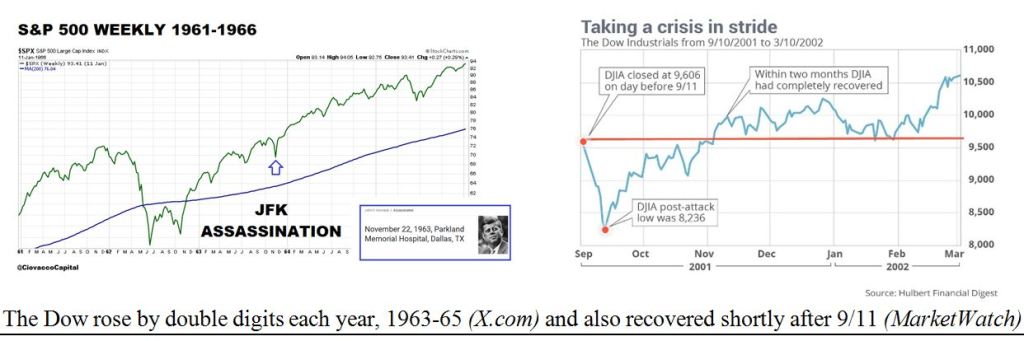
    The stock market posted an unexpected rally in the week and year following President Kennedy’s assassination and rebounded swiftly after the September 11, 2001 attacks. These Black Swan events appeared to have little lasting effect on Wall Street, as traders largely focused on other—primarily financial—developments and trends.

    Markets also tended to rise during many 20th-century wars, most of which began with surprise attacks. The abrupt onset of World Wars I and II, the unexpected outbreak of the Korean War, and the August 1964 Gulf of Tonkin escalation of the Vietnam War all triggered initial sell-offs that were followed by strong market recoveries.

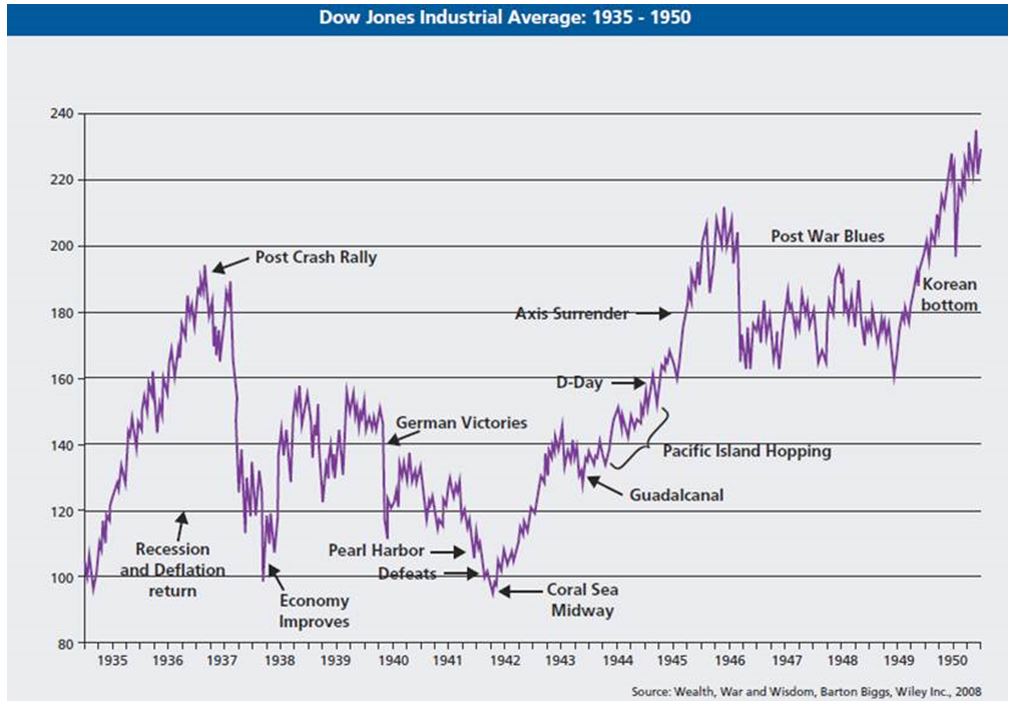
    The accompanying diagram illustrates the market’s detailed reaction after the attack on Pearl Harbor in late 1941 and following the North Korean invasion in June 1950. These two episodes were separated by a period of post-war, largely “Swan-less,” malaise in the late 1940s.

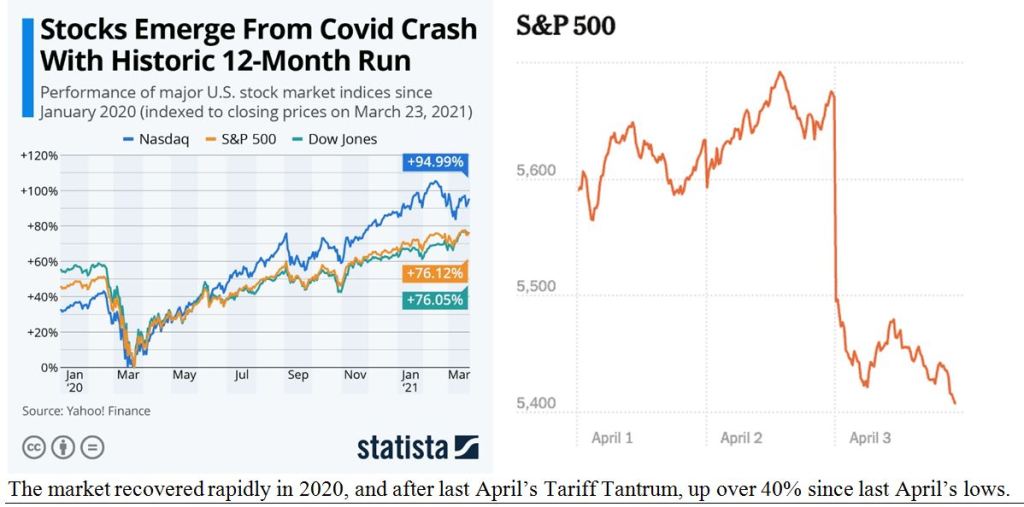
    In the two most recent Black Swan episodes, markets followed a familiar pattern. First, the abrupt escalation of the COVID-19 crisis in March 2020 triggered a stunning 35% market collapse in just 35 days, which was then followed by one of the strongest recoveries on record later that year. Second, markets sold off sharply after President Trump and Interior Secretary Lutnick unveiled sweeping high-tariff measures on “Liberation Day” in April 2025, yet the S&P 500 has since rebounded and is now up roughly 40% from those lows.

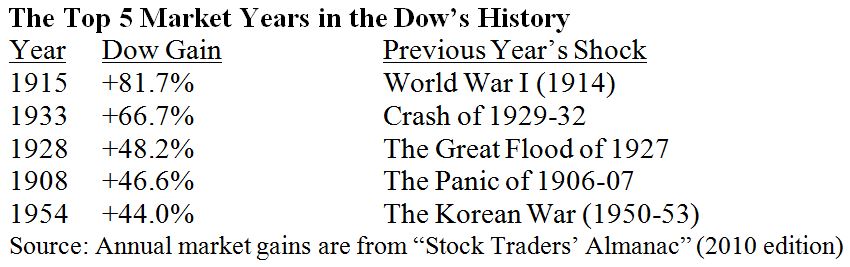
    Most of the Dow’s top five annual gains over its 130-year history followed major Black Swan events.

    By definition, the next Black Swan event is unknowable, but the market’s response may not be. With or without a short-term correction, prices are likely to be higher a year later.

    Sources: Louis Navellier

  • Dow Jones Industrial Average slips amid uncertainty following Warsh’s Fed nomination

    • Major stock indexes slipped slightly as markets weighed President Trump’s pick of Kevin Warsh to replace Fed Chair Jerome Powell in May.
    • Verizon jumped on robust subscriber additions and optimistic guidance for 2026, while American Express declined even after topping revenue expectations.
    • Silver tumbled more than 17% in a sharp reversal from record levels, sparking broad profit-taking across precious metals.
    • Even with Friday’s retreat, the three main benchmarks still delivered solid gains for January, rounding off a strong opening to 2026.

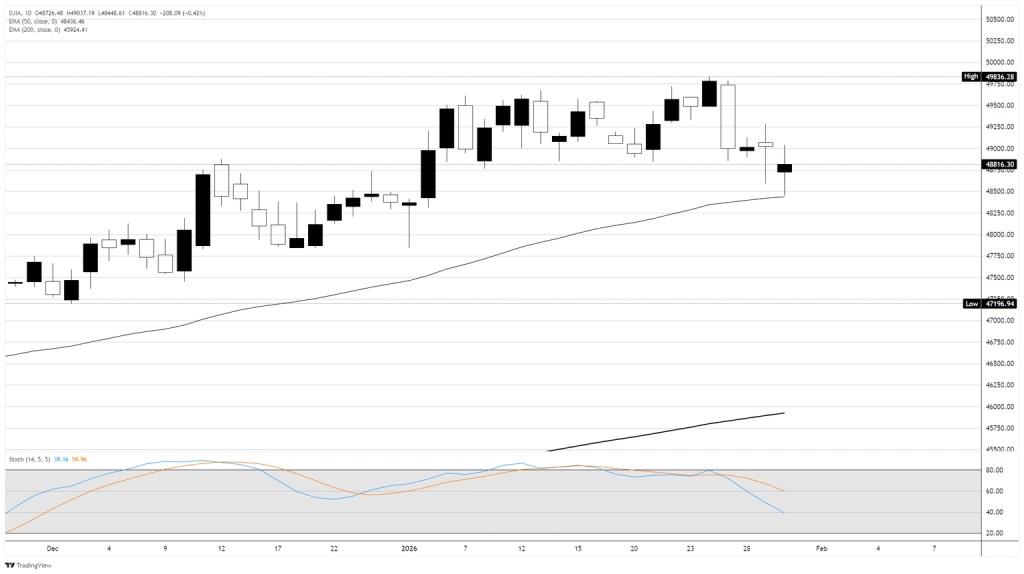
    The Dow Jones Industrial Average fell about 200 points on Friday, down 0.2%, as investors assessed President Donald Trump’s nomination of former Fed Governor Kevin Warsh to replace Jerome Powell as Federal Reserve Chair when his term ends in May. The S&P 500 also slipped 0.2%, while the Nasdaq Composite declined 0.3%.

    Even so, January ended on a strong note overall, with all three major indexes posting solid monthly gains: the Dow climbed 2.1%, the S&P 500 rose 1.8%, and the Nasdaq advanced 1.9%.

    Warsh nomination puts an end to months of Fed leadership speculation

    President Trump announced on Friday morning that Kevin Warsh would be his choice to lead the Federal Reserve, bringing an end to months of uncertainty over who would succeed Jerome Powell. Warsh, 55, served on the Fed’s Board of Governors from 2006 to 2011 and played a prominent advisory role during the 2008 financial crisis.

    Investors generally see Warsh as a relatively hawkish nominee who would favor lower interest rates, though likely with more restraint than some other contenders. His nomination now heads to what could be a difficult Senate confirmation process, as Republican Senator Thom Tillis has warned he will block Fed nominees until a Justice Department investigation into Powell is concluded.

    Verizon jumps after posting record subscriber additions

    Verizon Communications Inc. (VZ) stood out among Dow stocks, jumping 6.6% after reporting its strongest quarterly subscriber growth since 2019. The telecom operator added 616,000 postpaid wireless phone customers in the fourth quarter, well above forecasts of about 417,000.

    The surge was driven by new CEO Dan Schulman’s aggressive promotions, including offers such as four phone lines for $100 a month, which proved popular with holiday shoppers. Investors were further encouraged by Verizon’s 2026 outlook, as the company projected adjusted earnings of $4.90 to $4.95 per share, comfortably exceeding consensus estimates of $4.76.

    Financial shares pull back amid mixed earnings results

    American Express Company (AXP) slid 3.1% after posting fourth-quarter results that broadly met expectations but failed to excite investors. The payments firm reported earnings of $3.53 per share on revenue of $18.98 billion, marking a 10.5% year-over-year increase. However, sentiment was dampened by higher credit loss provisions and rising costs, despite management lifting its 2026 outlook above consensus and announcing a 16% dividend hike.

    Elsewhere in the sector, Visa Inc. (V) fell 2.3% even after beating both revenue and earnings forecasts, while International Business Machines (IBM) declined 1.6%, giving back part of its roughly 5% rally following earnings the previous day.

    Big oil companies top forecasts as production hits record levels

    Chevron Corporation (CVX) edged up 0.5% after delivering quarterly earnings that topped expectations, despite weaker oil prices weighing on the broader energy sector. The company highlighted record output from the Permian Basin and its offshore Guyana assets.

    ExxonMobil Corporation (XOM) also surpassed profit estimates but slipped 0.8% as both oil majors faced pressure from a global supply surplus that has driven crude prices lower. Management at both companies stressed strong cost discipline and resilience, noting they can remain profitable even with oil at $35 a barrel, although full-year profits have fallen from prior peaks.

    Apple slips even after posting a blockbuster iPhone quarter

    Apple Inc. (AAPL) slipped 1.2% on Friday even after delivering fiscal first-quarter results that far exceeded expectations. The company reported revenue of $143.8 billion, a 16% year-over-year increase, fueled by a 23% surge in iPhone sales to $85.27 billion. CEO Tim Cook described demand for the iPhone 17 lineup as “simply staggering,” with Apple setting record revenues across all geographic regions. The company’s installed base climbed to more than 2.5 billion devices, up from 2.35 billion a year earlier.

    Despite the standout performance, some investors chose to lock in profits after Apple’s recent rally. Broader weakness in the technology sector also weighed on the stock, following a sharp 10% drop in Microsoft shares a day earlier after the company issued disappointing cloud guidance.

    Silver tumbles sharply in a dramatic pullback from record highs

    Silver prices plunged as much as 21% on Friday, pulling back sharply from record highs in what analysts described as the metal’s steepest one-day decline in 14 years. After surging to an all-time peak of $122 an ounce on Thursday, heavy profit-taking sparked a broad selloff across precious metals.

    Even with the abrupt correction, silver was still poised to finish the month up more than 30%, underpinned by heightened geopolitical risks, a weaker dollar, and tight physical supply. Trading volumes in the iShares Silver Trust (SLV) spiked as retail investors who had chased the rally rushed to exit positions. Gold also eased, retreating from recent record levels above $5,500 an ounce.

    Dow Jones daily chart

    Sources: Fxstreet

  • Microsoft-led selloff sparks broader market correction

    A sharp pullback in Microsoft (MSFT) has cascaded into a broader market correction. While the company beat earnings expectations on both the top and bottom lines, investors were disappointed by slower cloud performance and higher-than-anticipated capital expenditure plans. Microsoft shares have fallen 11.8% on the day (-12.3% YTD, -4.1% LTM), dragging the broader technology sector lower.

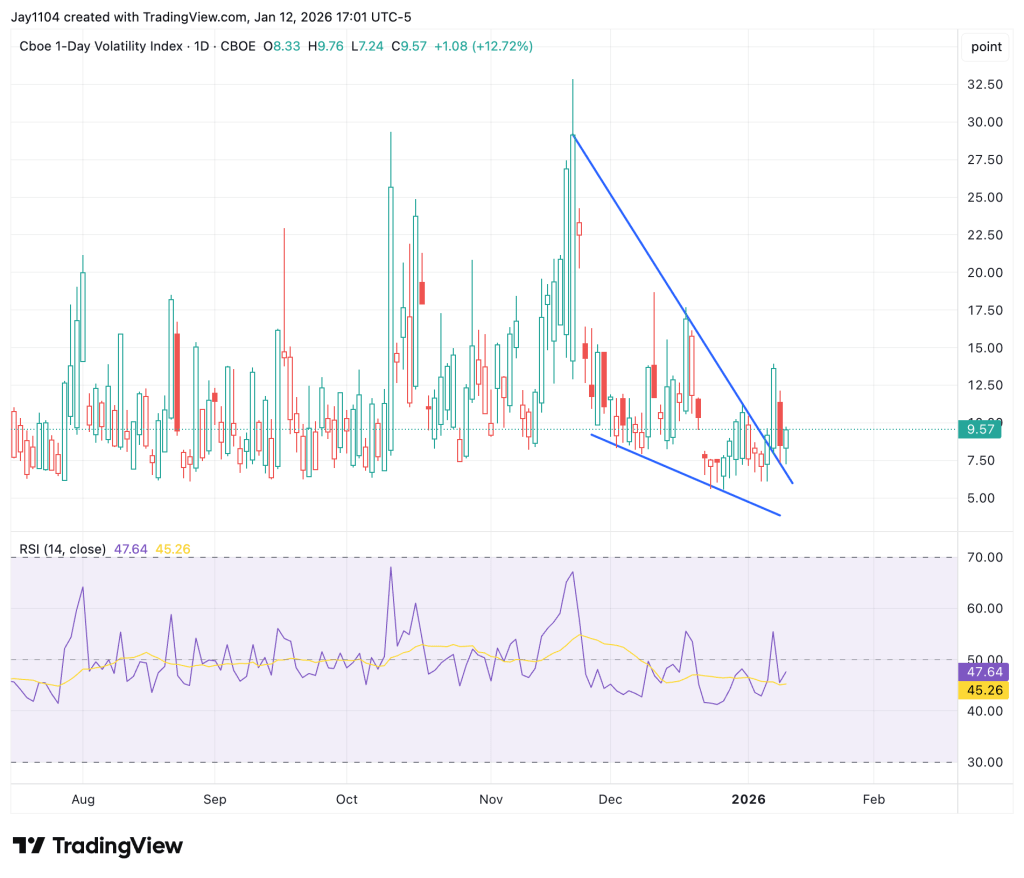
    The NASDAQ slid 2.3%, with semiconductor stocks posting similar losses. The Magnificent Seven index declined 1.6%, pulling the S&P 500 down 1.3%, although the equal-weighted S&P slipped just 0.3%. The Dow Jones Industrial Average fell 0.4%, while the Russell 2000 dropped 1.1% in sympathy. Market volatility picked up, with the VIX jumping to 19.4.

    Adding to the pressure, precious metals sold off, with gold down 2.2% and silver falling 3.5%. By contrast, copper surged 3.4% to a fresh all-time high of $6.58. Crude oil rallied 3.7% to $65.20 per barrel—after briefly touching $66.50—marking a gain of more than 10% over the past week amid rising risks of conflict involving Iran, the highest level since June 2025. Natural gas and gasoline prices also moved higher.

    Risk-off sentiment was further evident in cryptocurrencies, with Bitcoin sliding 5% to below $85,000, its lowest level in a year.

    Bond markets remained relatively calm. The U.S. 2-year yield eased 2 basis points to 3.55%, while the 10-year slipped 1 basis point to 4.23%. International yields, including those in Japan, were largely unchanged, and the U.S. dollar index was flat on the session.

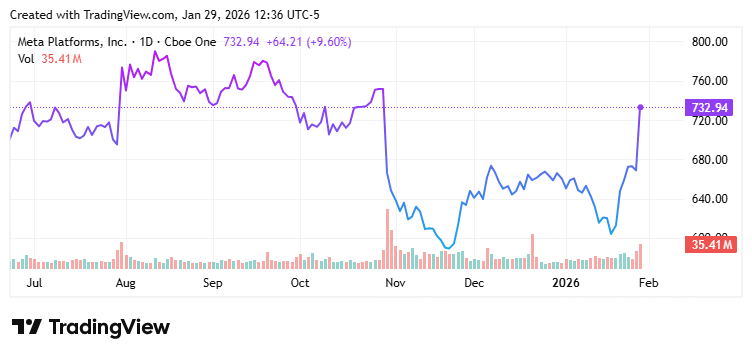
    Overall, the market damage remained concentrated in technology and basic materials. Energy stocks advanced, and communication services outperformed, supported by strength in Meta Platforms (META). Meta shares jumped 7.6% following solid earnings beats and a well-received conference call, lifting the stock to gains of 9% year-to-date and 6.3% over the past 12 months. Meanwhile, consumer staples, utilities, industrials, financials, and real estate sectors all traded in positive territory.

    This selloff increasingly looks like a textbook buying opportunity, with early signs of a rebound already emerging across the major equity indexes. Another factor weighing on sentiment is the renewed risk of a government shutdown, which is especially challenging given the ongoing data blackout following last year’s record-length shutdown.

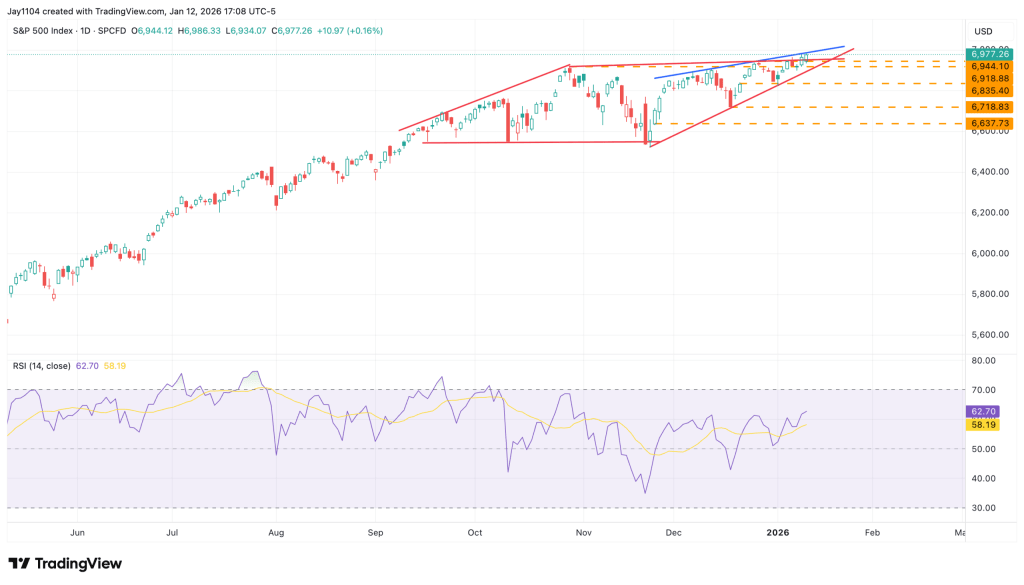
    While the recent swing—from the S&P 500 touching 7,000 just yesterday to bottoming near 6,870 today—represents a level of volatility that has unsettled some investors, the fundamental backdrop of the economy remains solid. Volatility has clearly picked up, but the broader trend continues to point higher.

    Sources: Louis Navellier

  • Meta shares stabilize as growth outlook begins to outweigh CapEx worries

    After spending months in the doldrums, Meta Platforms appears to have reshaped the narrative around its business. The Magnificent Seven stock slumped 11% in October following its third-quarter earnings release, as investors grew increasingly concerned about runaway spending on artificial intelligence.

    That skepticism now looks to be fading after Meta’s fourth-quarter 2025 earnings report, released on Jan. 28. Shares climbed roughly 8% in after-hours trading by 7:00 p.m. ET, prompting investors to rethink the company’s outlook, with growth prospects increasingly overshadowing prior worries about spending.

    Meta delivers strong earnings beat and upbeat guidance

    In the fourth quarter, Meta reported revenue of $59.9 billion, representing growth of about 24% and comfortably exceeding expectations of $58.3 billion, or 21% growth. Adjusted earnings per share (EPS) came in at an impressive $8.88, up nearly 11% year over year and well above the consensus estimate of $8.16.

    The standout highlight, however, was Meta’s guidance for the first quarter of fiscal 2026. At the midpoint, the company forecasts revenue of $55 billion, far surpassing analysts’ expectations of $51.3 billion.

    This outlook implies quarterly revenue growth of roughly 30%, which would mark Meta’s fastest expansion rate since the third quarter of 2021. Such an acceleration is precisely what investors had been hoping for and offers further confirmation that the company’s investments in artificial intelligence are beginning to pay off.

    Among Meta’s underlying performance metrics, growth in ad impressions delivered was particularly notable. The measure, which tracks the number of ads shown across Meta’s platforms, rose 18% during the quarter—its strongest pace in nearly two years. Chief Financial Officer Susan Li attributed this performance to robust user engagement and growth, highlighting that watch time on Instagram Reels increased 30% year over year, signaling a meaningful rise in platform engagement.

    Stronger engagement is an encouraging signal for Meta, indicating that its AI-driven recommendation and ranking algorithms—responsible for determining what content users see and when—are becoming more effective. As these systems improve, users spend more time across Meta’s platforms, enabling the company to serve a greater volume of advertisements.

    Markets shrug off higher-than-expected spending outlook

    Expectations of sharply higher capital spending have been the key drag on Meta’s shares in recent months. Against that backdrop, the company’s latest CapEx guidance came in well above even elevated market expectations.

    Meta now projects capital expenditures of $115 billion to $135 billion in 2026, compared with Wall Street estimates of roughly $110 billion. At the midpoint, this implies a 73% jump from 2025 CapEx of $72.2 billion.

    In addition, Meta guided for total expenses of $162 billion to $169 billion in 2026, materially higher than consensus forecasts of around $150 billion.

    Reading between the lines, however, reveals a crucial detail in Meta’s 2026 outlook. Management stated that “despite the meaningful step up in infrastructure investment, in 2026, we expect to deliver operating income that is above 2025 operating income.”

    Since revenue equals operating income plus total expenses, this guidance allows for an implied revenue estimate. Meta generated $83.3 billion in operating income in 2025, and using the upper end of its 2026 expense guidance at $169 billion implies potential full-year revenue of roughly $252.3 billion.

    That figure would represent about 25.5% growth from Meta’s 2025 revenue of $201 billion—well above the approximately 18.3% growth rate analysts had been projecting for 2026.

    Growth eclipses spending concerns as Meta’s AI strategy gains traction

    Although Meta’s expense guidance initially appeared to be the primary concern for investors, the company ultimately rose above those figures with exceptionally strong growth projections. While critics continue to argue that Meta has yet to produce a best-in-class general-purpose AI model, the company’s financial performance tells a compelling story.

    Meta’s AI strategy is proving effective, driving faster growth in its core business of social media advertising. After a challenging stretch, Meta Platforms appears to have delivered precisely what was needed to restore investor confidence.

    Sources: Marketbeat

  • Wall Street futures edge lower as Microsoft’s decline drags, while Apple tops expectations

    U.S. stock index futures slipped slightly on Thursday evening after Wall Street ended mostly lower, as weaker-than-expected results from Microsoft rekindled doubts over the returns on heavy AI spending, while investors absorbed a wave of other corporate earnings.

    S&P 500 futures dipped 0.3% to 6,975.0 points, Nasdaq 100 futures declined 0.3% to 25,916.75 points, and Dow Jones futures also fell 0.3% to 49,049.0 points by 19:36 ET (00:36 GMT).

    Wall Street dips as Microsoft’s slide weighs; Apple earnings take center stage

    The S&P 500 and NASDAQ Composite closed Thursday’s regular session on a weak note, with technology stocks among the session’s biggest laggards.

    Shares of Microsoft Corporation (NASDAQ:MSFT) plunged 10% after the company’s quarterly earnings highlighted slower cloud revenue growth and record AI-related spending, failing to reassure investors about near-term returns.

    Microsoft’s selloff dragged down broader technology sentiment, with software peers including ServiceNow Inc (NYSE:NOW) and SAP (NYSE:SAP) also posting steep declines following disappointing earnings and outlooks.

    Investors were also focused on Apple Inc.’s (NASDAQ:AAPL) earnings released after the close, which topped expectations as strong iPhone demand and a recovery in Greater China boosted both revenue and profit.

    Apple reported roughly $143.8 billion in revenue and earnings per share well above consensus estimates, sending its shares up nearly 1% in after-hours trading.

    SanDisk jumps on earnings beat; Trump backs spending agreement

    Elsewhere on the earnings front, shares of SanDisk Corporation (NASDAQ:SNDK) jumped 16% in after-hours trading after the storage-chip maker posted a strong profit beat and lifted its outlook, driven by stronger-than-expected demand for data-center and AI-focused memory products.

    By contrast, Visa (NYSE:V) shares edged lower despite surpassing first-quarter earnings and revenue forecasts, as investors focused on weaker-than-expected transaction volumes and ongoing caution surrounding broader consumer spending.

    On the political side, President Donald Trump voiced support for a bipartisan spending agreement crafted by Senate Republicans and Democrats aimed at avoiding an imminent government shutdown, expressing his backing on Truth Social and calling for cooperation.

    The deal would provide funding for most federal agencies while deferring divisive immigration issues for future negotiations.

    Sources: Investing
  • US futures stayed stable with attention focused on the Federal Reserve meeting and earnings reports from megacap firms

    U.S. stock index futures were largely unchanged late Tuesday as investors remained cautious ahead of the Federal Reserve’s interest rate decision and a busy earnings schedule featuring major technology leaders.

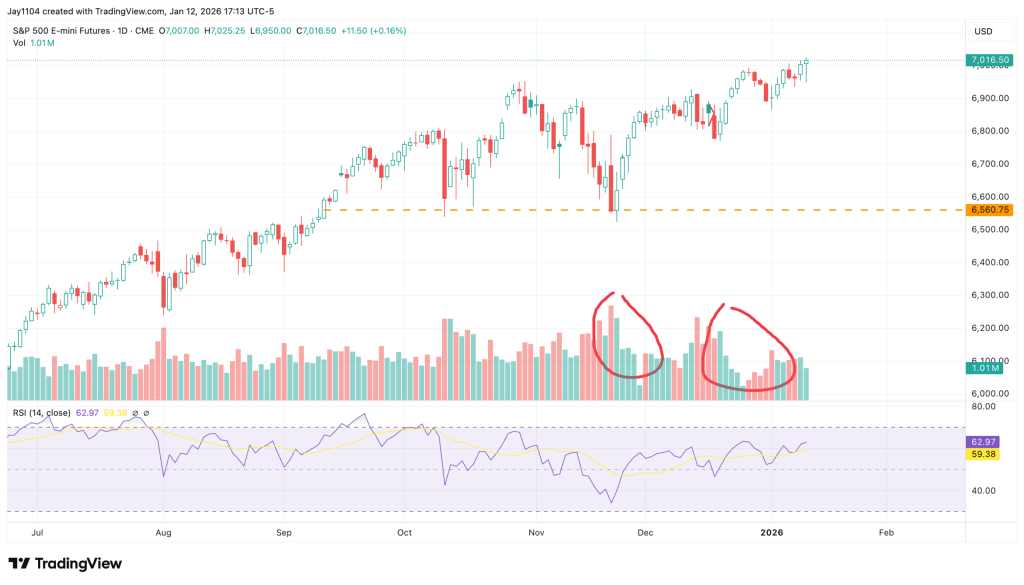
    S&P 500 futures edged up 0.1% to 7,017.50, while Nasdaq 100 futures rose 0.3% to 26,155.75 by 20:10 ET (00:10 GMT). Dow Jones futures were flat at 49,154.0.

    S&P 500 closes at a record as Dow edges lower on Medicare concerns

    During Tuesday’s regular session, the S&P 500 climbed 0.4% to a record closing high, extending its advance as investors rotated back into growth stocks and responded positively to broadly solid earnings results. Gains in technology shares led the move, pushing the benchmark to a fresh peak.

    The Nasdaq Composite jumped 0.9%, driven by strength in megacap stocks.

    Meanwhile, the Dow Jones Industrial Average fell 0.8%, weighed down by steep declines in healthcare and insurance shares. Major health insurers came under pressure after the U.S. government released a Medicare Advantage payment plan that the market perceived as less favorable than anticipated.

    Markets focus on Fed decision and megacap earnings

    Investor focus has shifted squarely to the Federal Reserve, which kicked off its two-day policy meeting on Tuesday. The central bank is widely expected to leave interest rates unchanged when it delivers its decision on Wednesday, with markets pricing in a pause as policymakers assess easing but still-elevated inflation alongside signs of steady economic growth and a resilient labor market.

    Close attention will be paid to Fed Chair Jerome Powell’s remarks for indications on how long rates may remain at current levels and when eventual cuts could begin.

    “The key will be any dissent and the Fed’s communication, particularly around questions of central bank independence,” ING analysts said, adding that the decision will also be overshadowed by President Trump’s upcoming nomination of a new Fed chair.

    Corporate earnings are another major catalyst this week, with four members of the so-called “Magnificent Seven” technology group set to report. Tesla, Meta Platforms and Microsoft are scheduled to post results on Wednesday, followed by Apple on Thursday.

    Given their heavy weighting in major equity indexes, guidance from these companies on artificial intelligence investment, cloud demand and consumer trends is expected to play a key role in shaping near-term market direction.

    Sources: Investing
  • Morning Bid: Markets shrug off tariff threats

    President Donald Trump once again surprised markets by announcing an increase in tariffs on South Korea to 25% from 15%, citing Seoul’s failure to implement a trade agreement reached last July. The move targets sectors such as autos, lumber, and pharmaceuticals, yet South Korean equities ended up surging 2% to fresh record highs. The KOSPI initially slid more than 1%, but the dip quickly attracted buyers seeking exposure to Asia’s strongest-performing equity market of 2025.

    With South Korea’s industry minister set to travel to Washington, investors appear to be betting on a negotiated climbdown, reviving the popular “TACO” trade—Trump Always Chickens Out. Few are surprised that Seoul has been reluctant to commit massive U.S. investments while the risk of abrupt tariff threats remains a defining feature of the administration.

    Tariff uncertainty also boosted demand for precious metals, pushing gold and silver back toward record levels. Gold rose 1% to $5,063 an ounce, while silver jumped 5% to $109 an ounce.

    Asian equities were broadly firmer, supported by optimism that blockbuster earnings from the U.S. “Magnificent Seven,” beginning with Meta, Microsoft and Tesla later this week, will help sustain the global equity rally into 2026. MSCI’s Asia-Pacific index excluding Japan climbed 1% to a new high, while Japan’s Nikkei added 0.7%, even as the yen hovered near a two-month peak—normally a headwind for exporters.

    European equities are poised for a firmer open, with EURO STOXX 50 futures up 0.3%. U.S. futures are also higher, as Nasdaq futures climb nearly 0.6% and S&P 500 futures rise 0.3%. The global economic calendar remains relatively quiet ahead of Wednesday’s Federal Reserve policy decision, at which interest rates are widely expected to be left unchanged. Nevertheless, the meeting is likely to be dominated by the Justice Department’s investigation into Fed Chair Jerome Powell, adding extra scrutiny to his post-meeting press conference. Any indication that Powell may choose to remain on the Fed’s board after his term ends in May—a move permitted under Fed rules—could provoke an unpredictable reaction from President Trump.

    Sources: Reuters

  • Bullish and Bearish Scenarios for US Stocks in 2026

    The year ahead offers a clear divide between bullish and bearish outcomes for investors. Will 2026 deliver another period of above-average returns, or mark a turning point toward disappointment? Optimists contend that the foundations for a sustained rally remain intact. A robust technology cycle, heavy corporate investment, and supportive policy settings all suggest further upside. Pessimists, however, warn that key growth drivers are losing momentum, market leadership has become uncomfortably narrow, and underlying economic stress is increasingly evident.

    After a strong 2025, investors are entering a shifting market environment. Liquidity is still plentiful, but concerns over stretched valuations, labor-market pressure, and consumer resilience are mounting. Much hinges on how long optimism can outweigh economic realities, and whether expected gains from artificial intelligence and capital spending arrive quickly enough to counteract the drag from debt burdens, interest costs, and widening inequality.

    Sentiment remains broadly constructive, though far from unanimous. Equity strategists are split, while bond markets reflect expectations of rate cuts alongside rising recession risk. Fiscal stimulus may postpone a downturn, but it also exacerbates longer-term imbalances. For investors, the central challenge is maintaining objectivity. Both the bullish and bearish narratives are credible, and timing will be decisive. In fact, 2026 could validate elements of both cases, making adaptability the most valuable strategy.

    Below, we examine the bullish and bearish scenarios for 2026 in detail, assessing the macroeconomic and market forces behind each view. By translating these dynamics into practical portfolio considerations, investors can prepare for either outcome. Ultimately, success in 2026 will hinge less on forecasting accuracy and more on disciplined risk management.

    The Bullish Case

    The bullish thesis rests on several core pillars: a fresh surge in technology-led investment, accommodative fiscal policy, improving liquidity conditions, and the ongoing strength of both corporate balance sheets and consumer activity. Together, these forces have propelled markets higher, and proponents argue they will continue to support gains through 2026.

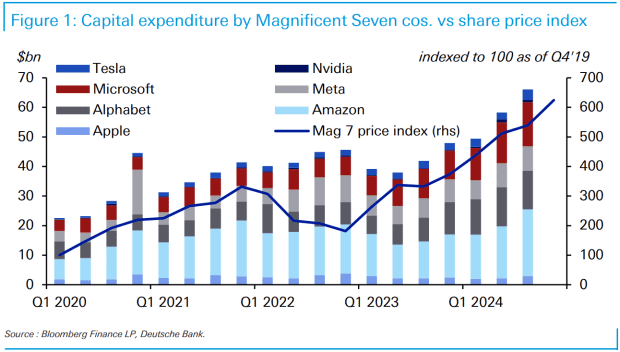
    Central to the bull case is the rise of a potentially transformative technology cycle driven by artificial intelligence and large-scale infrastructure upgrades. Unlike earlier tech booms fueled primarily by optimism, this cycle is already translating into substantial capital spending. The so-called “Magnificent Seven” have collectively pledged over $600 billion toward data centers, semiconductor capacity, and AI-related services. This investment is rippling across software, energy, and industrial supply chains. Should the anticipated productivity improvements materialize, corporate earnings could accelerate, providing fundamental support for elevated valuations.

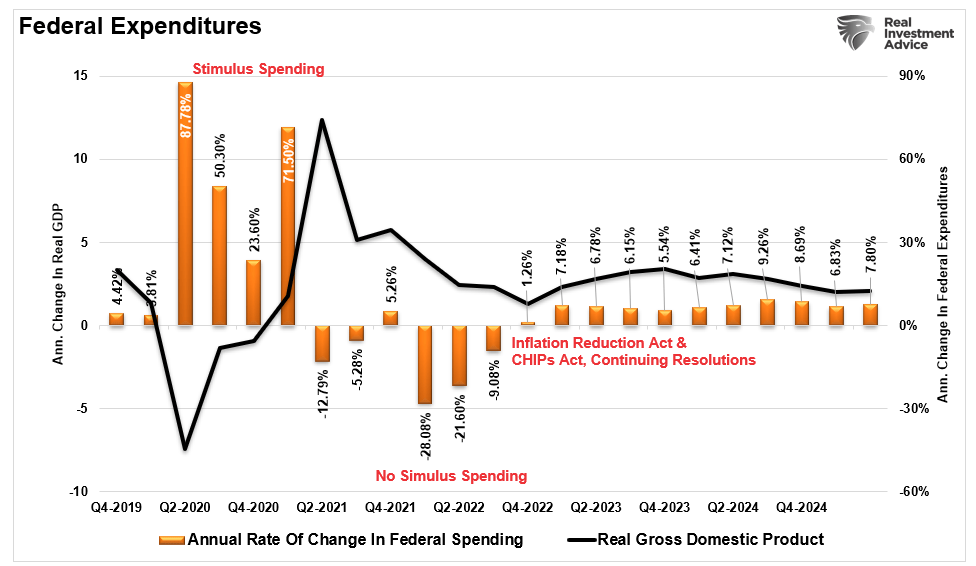
    Fiscal policy is also positioned to support growth. Under a Trump-led administration, proposed tax cuts and direct transfers are expected to bolster both corporate activity and consumer spending. While $2,000 stimulus checks may not appear dramatic on their own, they can meaningfully lift short-term consumption and provide relief to small businesses. When paired with income tax reductions, these initiatives create a favorable backdrop for GDP growth and market sentiment. As recent history shows, following the 2022 market correction and widespread recession concerns, ongoing fiscal support has continued to play a stabilizing role in economic expansion.

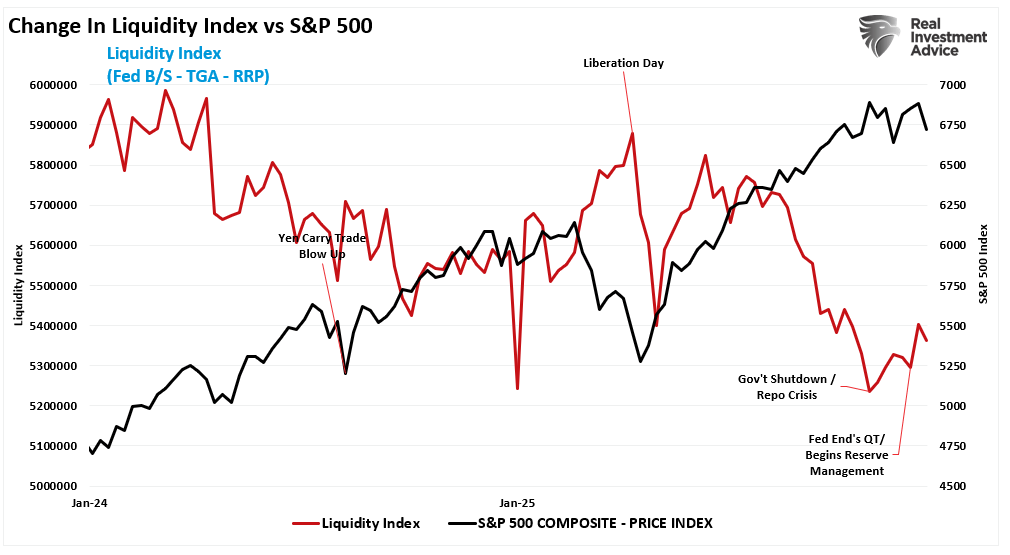
    The monetary environment is also turning more supportive for bulls. Quantitative tightening concluded in December 2025, and the Federal Reserve has since shifted toward what many describe as “QE Lite,” combining rate cuts with monthly purchases of roughly $40 billion in short-term Treasuries. Officially framed as “reserve management,” the objective is to maintain ample liquidity within the financial system. As interest rates decline, credit conditions are likely to loosen, providing a favorable backdrop for risk assets. Rising liquidity has historically supported higher equity valuations, with technology and growth stocks typically benefiting the most from this dynamic.

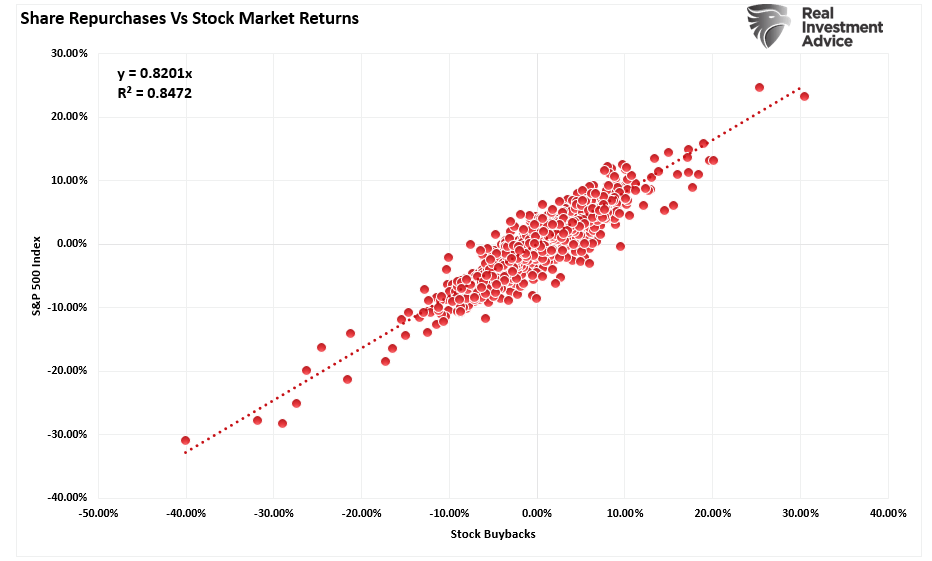
    Corporate actions further reinforce the bullish narrative. Share buyback authorizations are projected to reach a new record of more than $1.2 trillion in 2026. Although often framed as a “capital return strategy”—a characterization that misses the point—buybacks have shown a strong correlation with equity market performance. Notably, since 2000, corporate repurchases have accounted for nearly all net equity demand, underscoring their outsized influence on stock prices.

    Importantly, the notion that buybacks signal management’s confidence in future earnings is misleading. In practice, repurchases are frequently used as a form of financial engineering to boost per-share results and beat Wall Street expectations. This dynamic is likely to intensify in 2026, further supporting reported earnings growth and reinforcing the bullish case.

    Finally, deregulation tied to the so-called “Big Beautiful Bill” is expected to relax capital requirements for banks, enabling them to hold a greater amount of collateral. While this should support the Treasury market, it also expands overall lending capacity. Much of that capacity is likely to flow into leverage for hedge funds and Wall Street trading desks, as looser regulatory constraints encourage greater risk-taking.

    The bullish thesis ultimately rests on a reinforcing feedback loop: innovation spurs capital investment, rising investment lifts earnings, policy measures inject liquidity, and investors respond by increasing risk exposure. As long as each link in this chain remains intact, the upward trend can persist.

    The Bearish Case

    The bearish case starts with a key observation: many of the forces that powered the 2025 rally are now fading or already fully reflected in prices. Elevated valuations, softening economic data, and rising speculative excesses suggest that current market momentum may be masking deeper structural vulnerabilities. With that in mind, it is worth examining several of these risks more closely.

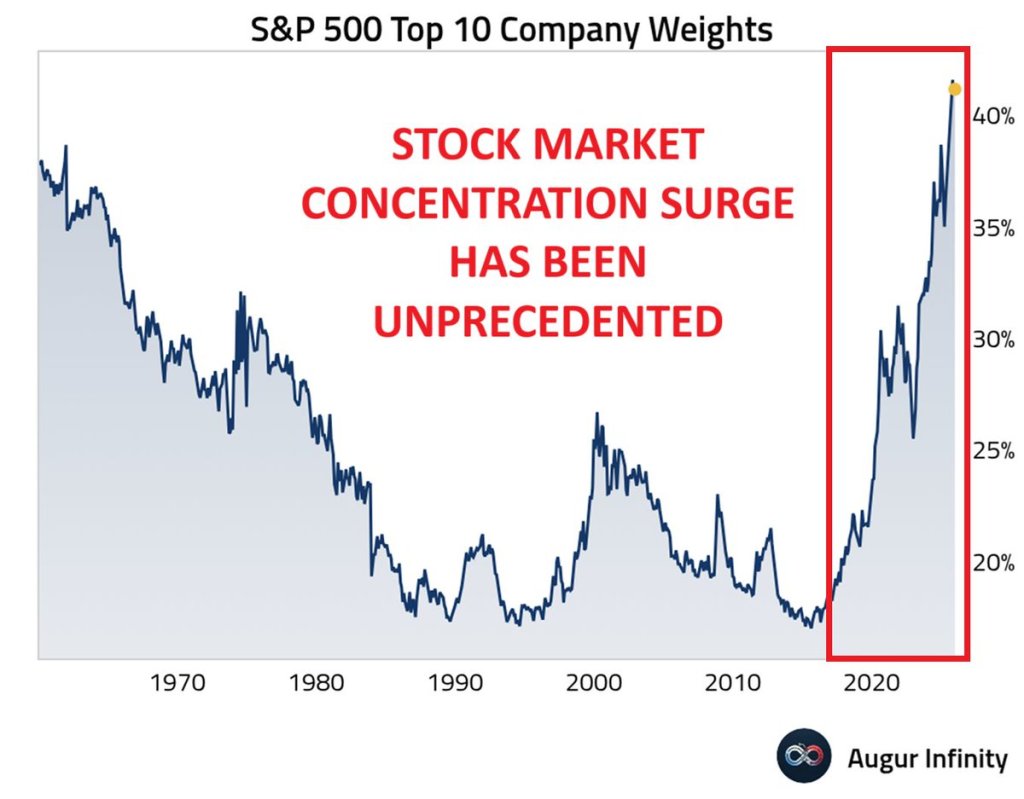
    One of the most visible concerns is market concentration. In 2025, the bulk of equity gains came from just 10 companies on a market-capitalization-weighted basis, a dynamic amplified by the continued shift into passive ETF investing.

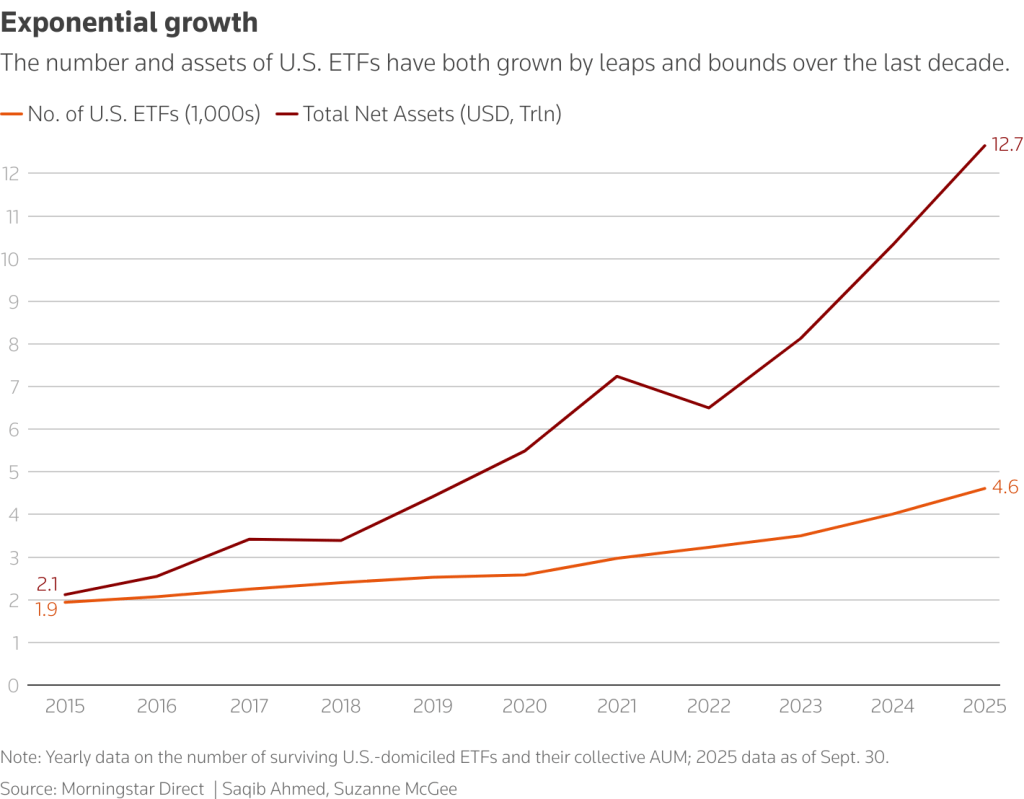
    Passive investing has evolved from a niche approach into the dominant force shaping equity markets. Index funds and ETFs now represent more than half of U.S. equity ownership. Because these vehicles allocate capital according to market capitalization rather than valuation, fundamentals, or business quality, the largest companies attract a disproportionate share of inflows. This has created a powerful feedback loop in which rising prices draw in more capital, and those inflows, in turn, push prices even higher.

    This narrow leadership is inherently fragile. Should investor flows into ETFs reverse, a disproportionate share of selling—roughly 40%—would be concentrated in the same 10 stocks. History shows that when market performance depends on a small handful of names, volatility tends to increase and drawdowns can be sharp.

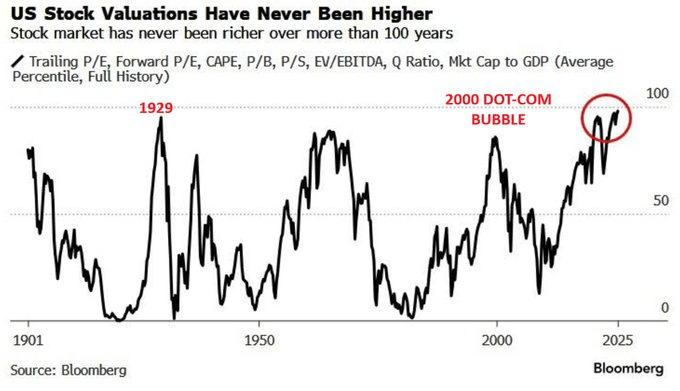
    Valuations present another clear risk. Price-to-earnings multiples on the S&P 500 remain near cycle peaks, leaving little room for error. Growth assumptions are ambitious, and even modest earnings disappointments could trigger a meaningful repricing. While enthusiasm around AI has driven a surge in investment, much of this spending is circular—companies are investing in AI largely to produce and sell AI-related products. That dynamic may prove self-limiting over time, particularly if end demand weakens or costs begin to outstrip returns.

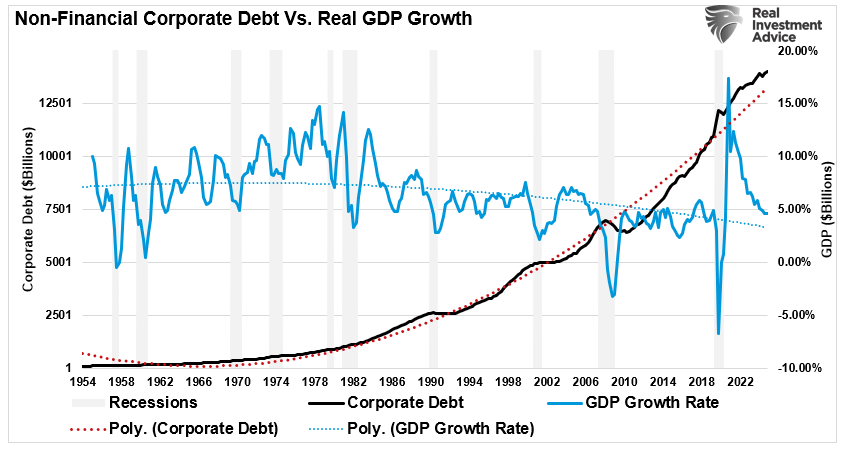
    A significant portion of the current investment cycle is also being financed with debt, as companies borrow to fund capital spending, repurchase shares, and sustain dividend payouts. If interest rates remain high or credit conditions deteriorate, rising debt-servicing costs could quickly erode earnings gains.

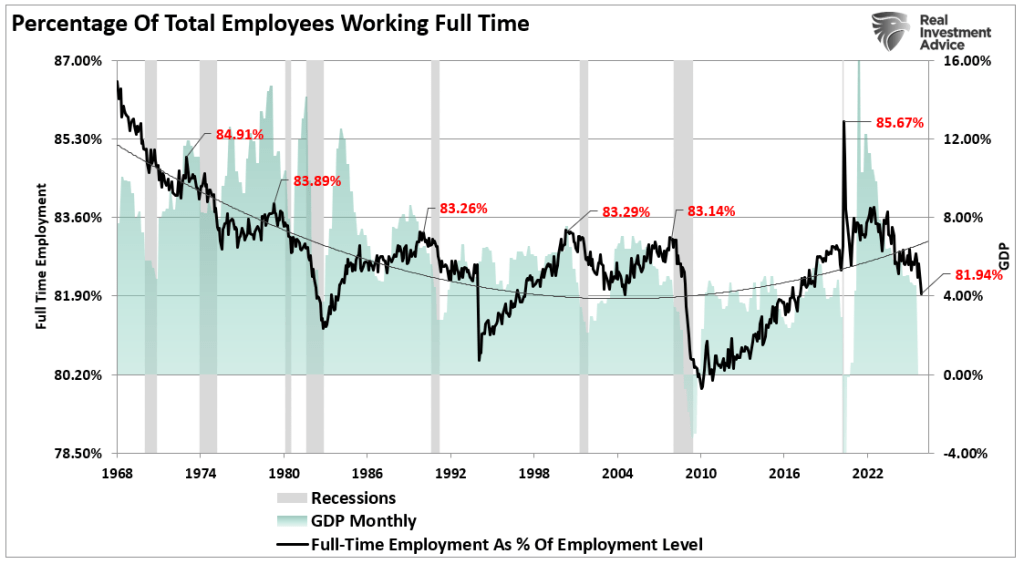
    The broader economic risk is that the reallocation of capital toward technology and automation could sideline large segments of the workforce. While the buildout of data centers may employ thousands during construction, only a fraction of those jobs—perhaps a few hundred—remain once operations begin. Over time, this dynamic could weigh on employment growth, increase the risk of demand destruction, and may already be showing early warning signs.

    This dynamic underpins the concept of a “K-shaped economy.” While high-income households and asset owners continue to prosper, lower-income consumers are facing increasing strain. Consumption patterns are diverging as financially pressured households cut back, leaving the top 20% of earners responsible for nearly half of total consumer spending. Signs of stress are already emerging, with rising auto loan and credit card delinquencies, stagnant real wages for many workers, and persistently high costs for housing and essential goods.

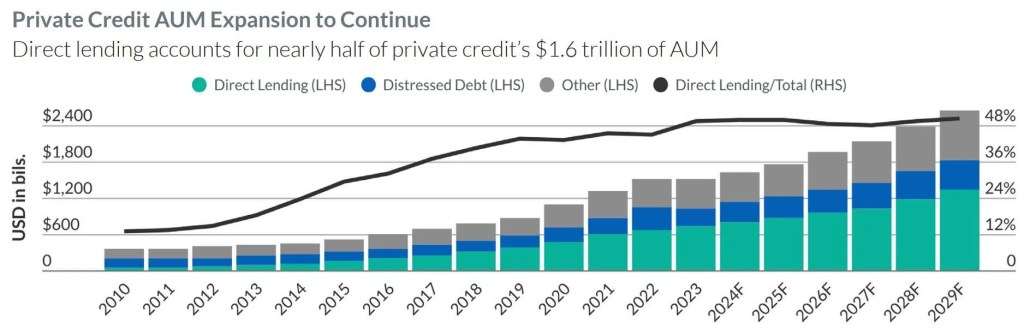
    At the same time, risks within the credit system—particularly in private markets—are growing. Private credit has expanded rapidly in recent years, yet limited transparency makes it difficult to fully assess systemic vulnerabilities. Regulators have begun to pay closer attention, and default rates in middle-market lending are climbing. Should these stresses intensify, the fallout could extend across banks, hedge funds, and pension portfolios.

    The bearish argument is not one of an imminent crash, but of growing fragility. Beneath the headline gains, the market appears increasingly exposed to earnings disappointments, tighter credit conditions, and weakening consumer demand.

    The key takeaway is that 2026 may validate elements of both the bullish and bearish narratives. Preparation, rather than prediction, will be essential.

    Navigating Whatever Comes Our Way

    Investors should treat 2026 as a year in which both the bullish and bearish narratives may ultimately be validated. In the first half, bullish momentum is likely to persist, supported by strong sentiment, ample liquidity, and continued growth in corporate investment. Optimism around AI, fiscal support, and a potential pause in monetary tightening could propel equity indexes higher.

    By the second half, however, underlying vulnerabilities may begin to surface. Elevated valuations increase sensitivity to earnings disappointments, while widening economic inequality could weigh on the outlook for consumer demand and corporate revenues. Should these pressures intensify, market sentiment could shift rapidly.

    Navigating such a divided year will require a tactical approach—participating in early upside while avoiding excessive exposure to risks that may materialize later in the year.

    Early 2026: Participate in Momentum, but Manage Exposure

    • Overweight sectors poised to benefit from capital spending and ample liquidity, including technology, industrials, and energy.
    • Prioritize high-quality growth companies with durable earnings and strong cash-flow generation, rather than momentum-driven narratives.
    • Implement trailing stop-loss strategies to protect gains if market sentiment shifts.
    • Use periods of volatility to add selectively, while scaling back position sizes as valuations become more stretched.
    • Avoid excessive concentration in AI-related stocks, even during strong rallies, as crowding increases dispersion and downside risk.

    Mid-to-Late 2026: Emphasize Defense and Cash-Flow Stability

    • Gradually rotate toward defensive, value-oriented sectors such as healthcare, consumer staples, and utilities.
    • Increase exposure to dividend-paying companies with strong balance sheets and resilient cash flows.
    • Raise cash allocations or shift into short-duration Treasuries to preserve flexibility.
    • Allocate selectively to high-quality credit while reducing exposure to private credit and high-yield debt.
    • Monitor consumer credit conditions, labor-market trends, and bank earnings for early signs of financial stress.

    Throughout the Year: Maintain Discipline and Objectivity

    • Adhere to valuation discipline regardless of shifts in market narratives.
    • Keep portfolios well diversified to withstand both volatility and sector rotation.
    • Let data—not headlines—drive allocation decisions.
    • Rebalance regularly, particularly if strong first-half performance leads to excessive concentration in certain sectors.

    In 2026, tactical flexibility, risk awareness, and discipline are likely to matter more than adopting a purely bullish or bearish stance. It is a year in which both camps could be partially wrong. Markets rarely move in straight lines, but a sound investment process should remain consistent throughout.

    The year ahead is likely to test investors with heightened volatility, as both the bullish and bearish arguments carry real weight. A new technology cycle may generate genuine economic momentum, yet it also introduces risks tied to elevated valuations, debt-fueled growth, and widening inequality. With markets effectively pricing in near-perfection, history suggests outcomes often fall short of expectations.

    Whether 2026 delivers further gains or a sharp correction, performance will hinge on effective risk management. Avoid anchoring to any single narrative. Let data guide decisions, respect your signals, and remain willing to adjust as conditions evolve.

    Ultimately, the objective is not to chase short-term returns, but to endure—and compound—across full market cycles.

    Sources: Real Investment Advice

  • Wall Street futures were mixed as health insurers slipped ahead of the Fed meeting

    U.S. stock index futures showed minimal movement on Monday night, with Dow futures edging lower after a policy proposal from the Trump administration, as investors stayed cautious ahead of an important Federal Reserve decision and major tech earnings.

    S&P 500 futures hovered near flat at 9,982.0, while Nasdaq 100 futures rose 0.2% to 25,898.2 by 19:54 ET (00:54 GMT). Meanwhile, Dow Jones futures slipped 0.3% to 49,409.0.

    Wall Street ended higher, with the Dow up 0.6%, the S&P 500 gaining 0.5%, and the Nasdaq rising 0.4%.

    The Trump administration proposed flat-rate payments for Medicare Advantage.

    Dow futures edged lower after major health insurers slumped in late trading, following a Trump administration proposal to keep Medicare Advantage payment rates nearly flat, below market expectations. Shares of UnitedHealth, Humana, and CVS fell sharply on concerns that weaker reimbursement growth would squeeze margins amid rising medical costs. Separately, President Trump announced a hike in tariffs on South Korean imports to 25%, citing Seoul’s failure to ratify a trade deal.

    Investors await the Fed decision and key megacap earnings.

    Markets are in wait-and-see mode ahead of the Fed meeting, with rates expected to stay unchanged and focus on signals about future cuts. Attention is also on earnings from the “Magnificent Seven,” with results from Microsoft, Meta, Tesla, and Apple likely to shape sentiment, especially around AI investment, demand trends, and margins.

    Sources: Investing
  • Rate-Cut Expectations Waver as Conflicting Macro Signals Emerge

    Wednesday brings the FOMC meeting and Chair Powell’s press conference, and it wouldn’t be surprising if President Trump chose that moment—ideally around 2:30 p.m. ET—to announce his pick for the next Fed chair. Such timing would dominate headlines, catch financial media off guard, and inject maximum uncertainty into markets.

    That said, the Fed is not expected to cut rates at this meeting, which should keep the event relatively uneventful. In the bigger picture, what the Fed does between now and May may prove less important, particularly if a new chair is appointed and moves quickly toward easing.

    Markets appear to be dialing back expectations for aggressive rate cuts. Current pricing suggests the fed funds rate settles near 3.25% by December, with little additional easing beyond that. To meaningfully shift those expectations, the nominee would likely need to be notably dovish—something markets already anticipate, given the widespread assumption that Trump will select a policy-leaning accommodator.

    As a result, the risk of a breakout in the 2-year Treasury yield appears increasingly credible, with initial resistance near 3.62%. Beyond that, a move back toward the 4% level cannot be ruled out. From a technical perspective, the setup supports this view: the 2-year yield has formed multiple bottoms in recent months, and the RSI has begun to turn higher, signaling building upside momentum.

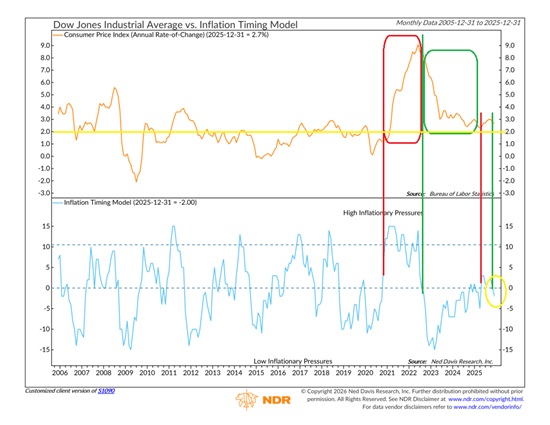
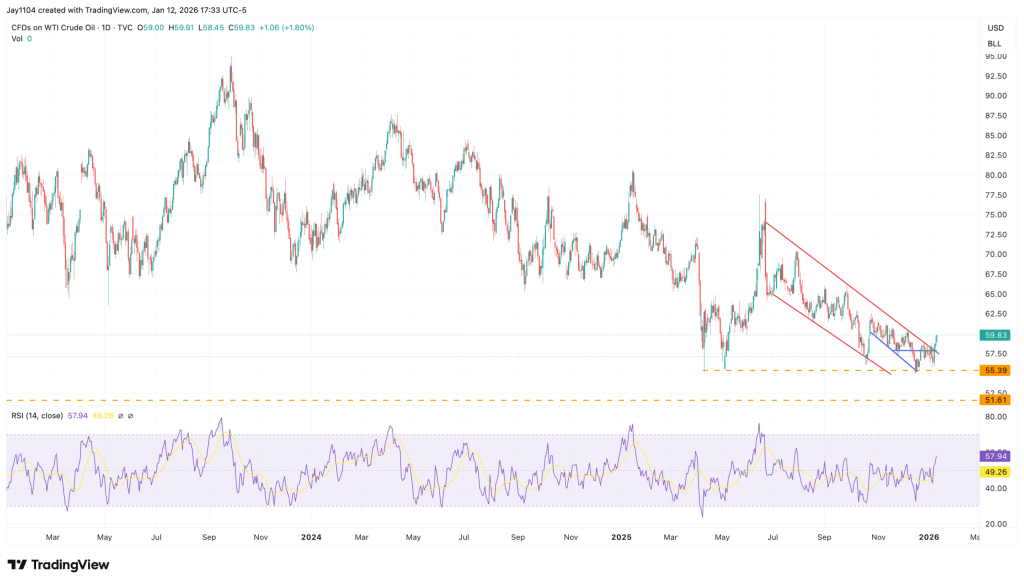
    The direction of the 2-year yield may ultimately be more closely linked to oil prices. With inflation still hovering near 3% and crude having fallen to around $60 from highs in the $120s, the message is clear: a rebound in oil prices could quickly reignite inflation pressures. That dynamic likely explains why the price action in oil and the 2-year yield charts has begun to look strikingly similar.

    The Bank of Japan once again chose to kick the can down the road, leaving rates unchanged and, in my view, offering little in the way of a clear policy roadmap. The yen’s strength on Friday appeared to be driven solely by reports of a possible “rate check” by the New York Fed on behalf of the U.S. Treasury—widely interpreted as a warning signal that currency intervention could be imminent. Perhaps the strategy is to keep markets stable until after the snap election in February. It’s hard to say, but it should be telling to see how markets react once Japan reopens on Monday.

    The Korean won also strengthened notably against the U.S. dollar on Friday. In recent weeks, there has been growing chatter that the KRW had become excessively weak, so it’s likely the currency took the developments around the yen as a warning signal and moved to reprice accordingly.

    The Korean won likely matters more than many investors realize, given the sizable exposure South Korean investors have built up in U.S. equities. That dynamic is probably one of the reasons the KRW has weakened so significantly in the first place—buying U.S. stocks requires selling won for dollars.

    If the KRW begins to strengthen from here, it could start to put pressure on that trade. For investors who are unhedged on the currency side, a stronger won increases the risk of FX-related losses on their U.S. equity holdings, potentially prompting position adjustments.

    Of course, this week also brings major earnings reports from Microsoft, Apple, Tesla, and Meta. From what I can see, all four stocks are currently sitting in positive gamma with positive delta positioning. Implied volatility typically builds into earnings because of the event risk, which sets up a familiar dynamic: unless a company delivers truly blowout results, the reaction can easily turn into a sell-the-news move. Once earnings are released, implied volatility collapses and hedges are unwound as delta decays, potentially putting pressure on the shares.

    Sources: Michael Kramer

  • Asian stocks mixed ahead of Fed decision; Nikkei slides on surging yen

    Asian equities traded mixed on Monday as investors positioned ahead of a pivotal Federal Reserve policy meeting later this week and awaited major technology earnings, while Japanese shares fell sharply as the yen strengthened.

    U.S. stock indexes ended last week lower, and futures linked to Wall Street declined further during Asian trading on Monday.

    Nikkei tumbles as yen surges

    Japan’s Nikkei 225 fell nearly 2%, deepening losses in exporter stocks as the yen strengthened sharply against the U.S. dollar amid speculation that Japanese and U.S. officials could intervene in currency markets to support the battered currency.

    A firmer yen typically weighs on Japanese exporters’ overseas earnings, reinforcing risk-off sentiment in Tokyo. Meanwhile, gold surged to record highs as safe-haven demand intensified, underscoring investor caution ahead of major global policy decisions.

    Elsewhere in Asia, South Korea’s KOSPI slipped nearly 1% after touching an intraday record of 5,023.76 points, while China’s Shanghai Composite was little changed.

    Australia’s S&P/ASX 200 added 0.1%, while Singapore’s Straits Times Index fell 0.4%.

    Indian markets were closed for a public holiday.

    Fed meeting and packed tech earnings slate in focus

    Traders are firmly focused on this week’s Federal Reserve meeting, where officials are broadly expected to keep interest rates unchanged, with markets closely watching for any adjustment in forward guidance on future policy moves as inflation pressures persist. Remarks from Fed Chair Jerome Powell and other policymakers later in the week are likely to influence sentiment across global risk assets.

    Investor attention is also fixed on a packed earnings calendar, featuring quarterly results from most of the so-called “Magnificent Seven” technology heavyweights, including Microsoft Corp (NASDAQ:MSFT), Meta Platforms Inc (NASDAQ:META), Tesla Inc (NASDAQ:TSLA) and Apple Inc (NASDAQ:AAPL), whose results often set the tone for wider markets.

    In Asia, major technology names such as Samsung Electronics (KS:005930) and SK Hynix Inc (KS:000660) are also scheduled to report earnings.

    Caution around AI-related stocks remains, with technology shares underperforming in some sessions amid growing concerns over elevated valuations and rising costs.

    Overall, market participants remain guarded ahead of key policy and earnings catalysts, weighing optimism over artificial-intelligence-driven long-term growth against near-term macroeconomic and currency risks.

    Sources: Investing
  • Five major analyst AI calls: Microsoft upgraded, Arm downgraded; Google raised to Strong Buy

    Jefferies says Microsoft’s recent pullback presents an attractive entry opportunity

    Jefferies analyst Brent Thill wrote this week that the recent pullback in Microsoft Corporation (NASDAQ: MSFT) shares has created an attractive buying opportunity. He highlighted the company’s expanding backlog, deepening AI partnerships, and continued strength in cloud computing as the foundations of a robust multi-year growth outlook among large-cap technology names.

    Thill noted that the stock has declined about 18% since the first fiscal quarter, despite Microsoft disclosing roughly $250 billion in commitments to OpenAI and an additional $30 billion linked to Anthropic. He added that Microsoft’s current valuation—around 23 times calendar-year 2027 earnings—now trades below that of Amazon and Google, even though Microsoft offers what he sees as superior earnings visibility.

    According to Thill, Microsoft’s record level of contractual commitments is the primary catalyst for buying at current prices. He expects second-quarter remaining performance obligations to show the largest sequential increase on record, driven largely by the OpenAI and Anthropic agreements, which he says provide “unprecedented multi-year demand visibility.”

    Azure remains a central source of upside. Thill described Azure demand as constrained by supply rather than demand, noting that Microsoft plans to double its data-center capacity over the next two years. After beating Azure revenue guidance for three straight quarters, he believes that execution on new capacity alone could push results above consensus expectations for both fiscal second-quarter Azure performance and full-year 2026 forecasts.

    The analyst also pointed to accelerating AI monetisation from Copilot and other first-party products. With Azure representing roughly 30% of total revenue, he said sustained outperformance in the cloud business could push overall revenue growth into the high-teens.

    Although Thill acknowledged ongoing capacity constraints and elevated capital expenditures, he believes Microsoft is well positioned to generate meaningful upside to both revenue and earnings through fiscal 2026.

    Analyst upgrades Google to Strong Buy as AI stack accelerates

    Earlier this week, Raymond James upgraded Google parent Alphabet (NASDAQ: GOOGL) to Strong Buy, arguing that the company is entering a phase in which its AI stack is “shifting into high gear,” creating the conditions for meaningful upward revisions to medium-term forecasts.

    Analyst Josh Beck said updated bottom-up analysis across Search and Google Cloud Platform (GCP) led him to raise his 2026 and 2027 estimates, with his 2027 revenue projection now exceeding broader Street expectations. He believes Alphabet is “entering a cycle of strengthening AI stack momentum and upward estimate revisions that could produce one of the highest-quality top-line AI acceleration stories in the public markets.”

    Beck added that in 2026, the AI stack narrative and related forecast upgrades are likely to become the primary performance drivers among mega-cap internet stocks, rather than a simple mean-reversion trade.

    Within Cloud, Beck projects GCP revenue growth of 44% in 2026 and 36% in 2027, ahead of consensus. He attributes this to strong momentum in infrastructure and platform services, underpinned by large-scale TPU and GPU deployments and increasing adoption of the Gemini API and Vertex AI.

    By the end of 2027, Beck estimates that GCP could generate approximately $25 billion in annualised revenue from TPUs, around $20 billion from GPUs, about $10 billion from the Gemini API, and roughly $2.5 billion from Vertex AI.

    In Search, Beck projects revenue growth of 13% in both 2026 and 2027—above broader Street expectations—as softness in core search is offset by the expanding adoption of AI Overviews, AI Mode, and Gemini. He expects AI-driven queries to drive stronger cost-per-click growth as improved context and conversion rates enhance monetisation.

    Stifel starts Micron at Outperform, citing a multi-year memory market upturn

    Brokerage firm Stifel initiated coverage of Micron Technology with an Outperform rating, arguing that the memory industry is entering a multi-year upcycle driven by structural AI demand and persistently tight supply conditions.

    Stifel believes Micron is well positioned to benefit from rising average selling prices and a favorable mix shift toward higher-margin products, as memory increasingly becomes a critical constraint within AI systems. “Access to memory has emerged as a key bottleneck in AI racks and systems, boosting demand for higher-performance, higher-bandwidth memory solutions,” the firm said.

    With supply expected to remain constrained through 2027, Stifel sees an environment supportive of sustained pricing power and margin expansion. Against this backdrop, the firm expects Micron to capture significant ASP growth and expand margins, forecasting non-GAAP EPS growth of more than 275% over the next two years.

    High-bandwidth memory (HBM) is central to Micron’s growth thesis, according to Stifel. As AI models become more complex and require faster access to larger data sets, next-generation chips are incorporating more HBM, increasing memory’s share of overall AI infrastructure spending. As the industry’s number-two player, Micron is expected to see HBM revenue grow 164% in fiscal 2026 and a further 40% in fiscal 2027, with DDR and QLC NAND also benefiting from AI-driven demand.

    Stifel also highlighted several risks, including the potential re-emergence of Samsung as a more formidable HBM competitor, elevated capital spending that could shift value toward equipment suppliers, a possible easing in DRAM supply-demand dynamics, and the risk that chipmakers design their own base logic dies.

    On valuation, Stifel noted that Micron trades at roughly 9.7 times calendar 2026 earnings, modestly below historical averages. “While valuation increasingly reflects significant growth expectations, we believe the shares can continue to perform on the back of a multi-year, AI-driven product cycle characterized by tight supply,” the firm concluded.

    Mizuho says Arm selloff presents a buying opportunity

    Mizuho analyst Vijay Rakesh said investors should take advantage of the recent pullback in Arm Holdings shares to build positions, arguing that market concerns around handset demand have become excessively pessimistic.

    Arm’s stock has declined roughly 30% since November, even as the Philadelphia Semiconductor Index has risen about 10%. Rakesh described the selloff as “overdone,” adding that Mizuho would “be buyers of ARM on the approximately 30% pullback.”

    According to Rakesh, Arm’s growth drivers extend well beyond smartphones. While mobile royalties account for about 50% of revenue, he noted that Arm has historically outpaced handset market growth and is projected to expand at annual rates of 7% to 31% between 2021 and 2027.

    A key catalyst is the ongoing transition to Arm’s v9 architecture, which delivers roughly double the average selling price per core compared with v8, providing a structural uplift to royalty revenue. Rakesh also highlighted rising interest in custom silicon, noting that potential ASIC and CPU ramps in 2027 and 2028 could contribute more than $1 billion in incremental revenue.

    He further pointed to opportunities tied to AI-focused custom chips, including a potential training and inference ASIC associated with OpenAI and SoftBank. That initiative alone, he said, could conservatively generate around $1 billion in revenue during the 2027–2028 period.

    Beyond mobile, Arm is gaining traction in data centers as hyperscalers increasingly adopt its architectures. Rakesh cited platforms such as AWS Graviton, Microsoft Cobalt, Meta’s planned CPU, and Nvidia’s Grace and Vera as evidence of a growing custom silicon customer base and an improving royalty mix.

    Rakesh reiterated Mizuho’s Outperform rating and $190 price target, saying Arm remains “well positioned as the broadest global semiconductor platform.”

    Morgan Stanley grows more positive on European semiconductor stocks

    Morgan Stanley upgraded the European semiconductor sector to Overweight this week, arguing that the group offers an attractive environment for selective stock picking as diversification inflows gather pace, valuation dynamics improve, and semiconductor equipment companies stand to benefit from the next phase of the AI capital expenditure cycle.

    The firm’s strategists noted that European equities are attracting increased diversification inflows while beginning to emerge from a long-standing valuation discount to U.S. markets. Within this context, semiconductors stand out as a sector where strengthening bottom-up fundamentals are increasingly driving top-down performance. Morgan Stanley said its preferred expression of this view remains analyst-led stock selection rather than broad factor exposure.

    “While European equities already appear highly idiosyncratic, we see further scope for stock-level dispersion in Europe to rise toward cycle highs,” the strategists wrote.

    The upgrade is anchored in the semiconductor equipment segment. Morgan Stanley highlighted ASML as the dominant contributor to European Top Picks performance year to date, accounting for more than half of weighted gains. ASML also represents roughly 80% of the MSCI Europe Semiconductors and Semiconductor Equipment index.

    Looking ahead, the bank said risks in the AI investment cycle are shifting away from demand and toward execution and transition. “For 2026, the key risk in the AI capex cycle is execution and transition, not demand,” the strategists wrote, arguing that this dynamic favors European semiconductor equipment exposure—particularly companies tied to extreme ultraviolet lithography.

    Morgan Stanley expects upcoming order intake to confirm higher foundry and memory capital spending through 2027, alongside stronger-than-expected demand from China.

    From a portfolio construction standpoint, the firm said it adjusted its sector model to reflect improving earnings momentum and broader price-target revisions for European semiconductors, while neutralising accrual factors and reducing China exposure. These changes lifted the sector to second place in Morgan Stanley’s internal rankings, just behind banks.

    At the stock level, ASML and ASM International remain Morgan Stanley’s Top Picks, with BE Semiconductor Industries also highlighted as an Overweight-rated beneficiary of the same themes.

    Sources: Investing
  • Could 2026 mark the long-anticipated breakthrough for Tesla’s Semi truck?

    When Tesla introduced the Semi in 2017, it billed the vehicle as a game-changer for the heavy-duty trucking industry. Almost ten years on, however, only a limited fleet is in operation. Repeated production delays and Tesla’s focus on higher-visibility ventures such as passenger cars, AI, and robotics have kept the Semi on the sidelines. Still, 2026 could prove to be the decisive year in determining whether the truck can evolve from a pilot project into a viable commercial offering.

    Worldwide sales of heavy-duty trucks reached roughly 2.8 million units in 2024, including about 400,000 in the U.S. Yet electrification in the Class 8 segment remains minimal, as fleet operators tend to prioritise total cost of ownership over branding or technological novelty.

    Tesla argues that the Semi offers a strong economic proposition, citing a claimed 500-mile range from an approximately 850 kWh battery, ultra-fast charging rates of up to 1.2 MW, and significantly lower energy and maintenance costs compared with diesel alternatives. Elon Musk has repeatedly characterised demand as “ridiculous” and the business case as a “no-brainer” for fleet operators.

    On paper, momentum appears to be building. Filings associated with California’s electric-truck incentive programme indicate that nearly 900 Semis were applied for in 2025—more than any traditional truck manufacturer has historically secured. Early customers, including DHL and RoadOne, report performance exceeding expectations and have signalled intentions to expand their fleets once mass production begins.

    Execution risks, however, remain substantial. Tesla is aiming for annual output of up to 50,000 units from its Nevada facility by the end of 2026, a lofty target given that the entire U.S. day-cab tractor market totals fewer than 100,000 units per year. Additional concerns include battery supply constraints following a significant writedown by a major 4680-cell supplier, while drone footage suggests the Nevada production line is not yet fully installed.

    Bernstein analysts also caution that, based on current assumptions, the Semi’s total cost of ownership may still marginally exceed that of best-in-class diesel trucks.

    For established manufacturers such as Daimler, Volvo, and Paccar, Tesla’s influence is unlikely to be felt immediately. Diesel-powered trucks continue to dominate the market, and the electrification of long-haul freight is expected to progress gradually.

    However, if Tesla succeeds in scaling production in 2026, the Semi could alter industry perceptions, prompting increased investment and putting pressure on margins within one of the sector’s most important profit pools.

    Sources: Investing
  • Weekly Analyst Recommendations

    Monday – U.S. markets were closed for Martin Luther King Jr. Day.

    Ciena Corp

    What happened?
    On Tuesday, Bank of America lowered its rating on Ciena Corp. (NYSE: CIEN) to Neutral and set a price target of $260.

    TL;DR:
    Ciena shares have jumped on strong hyperscaler-driven growth, but BofA turned more cautious due to concerns over potential backlog risks.

    What’s the full story?
    Ciena’s shares have surged to record levels, now trading at roughly 40x forward earnings, about twice its 10-year average, reflecting strong expectations for sustained growth. Demand from hyperscale cloud providers has driven a sharp acceleration in revenue growth—from around 8% to approximately 30% in 1Q26—supported by a $5 billion backlog that provides solid visibility into next year’s revenues.

    Analysts believe the current cycle has durability, fueled by rapid expansion in scale-across deployments, which are projected to rise 11-fold to $808 million by 2026, alongside continued leadership in 800G optical technology. Ciena’s market share has increased from 18% in 2024 to 22% in 9M25, with the company commanding roughly 50% share among major cloud providers, driven by its RLS systems and WaveLogic 6 Nano built on 3nm DSP, offering superior power efficiency versus competitors such as Cisco and Marvell.

    However, risks remain. The company’s history offers a cautionary example: in 2022, backlog coverage fell sharply—from levels that once covered 96% of revenue to a 38% decline, triggering a 12% drop in the stock. With shares now valued at about 45x earnings, assumptions of peak growth leave little room for disappointment if backlog momentum weakens.

    As a result, Bank of America downgraded the stock to Neutral, maintaining a $260 price objective, which implies only around 7% upside, suggesting much of the optimism is already reflected in the valuation.

    Ulta Beauty

    What happened?
    On Wednesday, Raymond James upgraded Ulta Beauty Inc. (NASDAQ: ULTA) to Strong Buy and raised its price target to $790.

    TL;DR:
    Raymond James turns more bullish on ULTA, citing earnings upside from growth initiatives despite competitive and execution risks.

    What’s the full story?
    Raymond James upgraded Ulta to Strong Buy from Outperform, lifting its price objective to $790 and modestly increasing its FY26 EPS forecast to $28.60 from $28.51. The firm sees a combination of strategic initiatives reigniting growth as Ulta enters FY26 following a year of restructuring.

    Beauty demand remains resilient, while the company benefits from operational improvements implemented over the past year, including a refreshed leadership team, enhancements to its loyalty program, stronger digital capabilities, and expanded assortments in Wellness and Marketplace categories. Looking ahead, Raymond James highlights opportunities from deeper data analytics, adoption of agentic AI, and early-stage international expansion—initiatives expected to drive earnings growth without relying on valuation multiple expansion.

    The firm believes Ulta is transitioning from an investment phase toward a period of return realization, with contributions expected across physical stores, e-commerce, and potential international markets. However, risks persist, including intensifying competition in beauty retail, potential softness in U.S. consumer demand, rising cost pressures, and execution risks tied to overseas expansion.

    Overall, Raymond James views Ulta’s balanced exposure to both prestige and value-conscious consumers, its strong loyalty ecosystem, and improving operational leverage as creating an attractive risk-reward profile, supporting the Strong Buy rating.

    Palantir

    What happened?
    On Thursday, PhillipCapital initiated coverage of Palantir Technologies Inc. (NASDAQ: PLTR) with a Buy rating and a $208 price target.

    TL;DR:
    PhillipCapital sees Palantir as a buying opportunity, driven by strong revenue and profit growth, and sets a $208 target.

    What’s the full story?
    PhillipCapital expects Palantir’s FY25 revenue to rise 47% year over year to $4.2 billion, supported by a growing contribution from its commercial segment, which is forecast to expand 51% YoY, outpacing 43% growth in government revenue. The shift reflects accelerating enterprise adoption of AI-driven platforms beyond Palantir’s traditional defense and public-sector base. Net profit is projected to increase by approximately 1.9x, reflecting improving operating leverage.

    The U.S. market, which accounts for roughly 66% of total revenue, is expected to remain the key growth driver. Revenue in the region is forecast to grow 66% YoY, supported by elevated government spending amid geopolitical tensions and a sharp acceleration in commercial contracts—nearly doubling in 3Q25—driven by demand for Palantir’s Artificial Intelligence Platform (AIP) and its ontology-based productivity tools.

    PhillipCapital’s $208 price objective is derived from a discounted cash flow valuation, assuming an 8.3% WACC, 4.2% risk-free rate, and 8% terminal growth rate. While the stock trades at a lofty ~170x forward P/E, the firm argues this remains below prior peak valuation levels, leaving room for a potential re-rating as earnings visibility improves and Palantir’s addressable markets continue to expand.

    Starbucks Co.

    What happened?
    On Friday, William Blair upgraded Starbucks Corporation (NASDAQ: SBUX) to Outperform, without assigning a price target.

    TL;DR:
    William Blair sees an imminent return to positive U.S. comparable sales, prompting an upgrade to Outperform.

    What’s the full story?
    William Blair expects Starbucks to deliver its first positive domestic comparable-sales growth in two years during the December quarter, setting the stage for improved performance into fiscal 2026. While sales momentum is turning, the firm highlights margin recovery as the central investment debate. Americas operating margins are projected to fall to 13.4% in FY25, down from a peak of 20.8%, with an additional $500 million in labor-related cost pressures anticipated in the following year.

    The firm is looking to Starbucks’ January 29 investor day for further clarity, anticipating a multi-year strategy focused on general and administrative cost reductions, productivity initiatives, and sustained comparable-sales growth. Over the longer term, William Blair models approximately 3% global unit growth combined with low-single-digit comparable sales, allowing consolidated margins to gradually approach 2023 levels by 2030.

    Under this framework, Starbucks could generate a 15–20% compound annual growth rate in EPS over the next five years. Despite the stock being up roughly 15% year to date, William Blair sees a potential valuation path toward $140+ per share by 2029, based on a 30x multiple applied to $4.70+ in EPS, implying roughly 10% annual share price appreciation, with upside if comparable sales accelerate faster than expected.

    As a result, William Blair upgraded Starbucks to Outperform, arguing that the recovery in sales is likely to precede and ultimately drive a more meaningful rebound in profitability beginning around 2027.

    Sources: Investing

  • Micron and Nvidia Sit at the Top of AI Stocks

    Micron (MU) is a global leader in advanced memory and storage technologies, playing a critical role in converting data into actionable intelligence. The stock has surged amid the AI-driven rally, as Micron’s products have become an essential component of AI infrastructure, particularly in addressing persistent memory bottlenecks.

    The shares also highlight the effectiveness of the Zacks Rank framework. In August of last year, Micron was upgraded to the highly sought-after Zacks Rank #1 (Strong Buy) following upward revisions to earnings estimates, a shift that has since been accompanied by a strong and sustained rally in the stock price.

    As illustrated above, the Zacks Rank may also have helped mitigate downside risk last March.

    Why Micron Shouldn’t Be Overlooked

    Micron delivered outstanding results in its latest earnings report, surpassing consensus expectations on both revenue and earnings, driven by rapidly accelerating demand tied to AI workloads. Revenue surged more than 55% year-over-year to a record high, while adjusted EPS jumped an impressive 185%.

    The company’s cash-generation profile also strengthened significantly amid the favorable demand backdrop. Operating cash flow reached a record $8.4 billion during the period, sharply exceeding the $5.7 billion generated in the same period last year.

    The positive momentum appears set to continue, with Micron’s Q2 guidance pointing to new records across revenue, margins, earnings, and free cash flow. In short, Micron plays a critical role in enabling the AI boom, as memory capacity remains a key bottleneck in advanced systems. This strategic positioning places the company in a strong overall stance and helps shield it from concerns about being an AI “also-ran” or laggard.

    As illustrated below, Micron’s revenue has surged sharply in recent periods, reinforcing the strength of the current demand environment. The company’s top-line trajectory mirrors that of NVIDIA (NVDA – Research Report), widely regarded as the flagship beneficiary of the broader AI trade.

    Micron vs. NVIDIA

    While many AI-linked companies are likely to come under increased scrutiny in 2026, Micron represents a far more straightforward beneficiary of the broader infrastructure buildout. Memory remains a key bottleneck in AI systems, and MU has been capitalizing meaningfully on this constraint. The company recently announced its exit from the consumer memory segment, further underscoring its strategic focus on maximizing revenue from large-scale enterprise and data-center customers.

    Micron noted that “AI-driven growth in the data center has led to a sharp increase in demand for memory and storage,” adding that the decision to wind down its Crucial consumer business was made to improve supply allocation and support for larger, strategic customers in faster-growing markets.

    Overall, Micron stands out as one of the most compelling AI-related investment opportunities, drawing a clear parallel with NVIDIA. While NVIDIA dominates the GPU side of AI computing, Micron plays an equally critical role by supplying the high-performance memory required for those GPUs to operate efficiently.

    Turning to NVIDIA, the company once again delivered a double beat versus consensus in its latest, record-setting earnings report. Revenue reached $57 billion, up 62% year-over-year, alongside a 67% surge in earnings per share. Data Center revenue climbed to $51.2 billion, representing a robust 66% annual increase and comfortably exceeding consensus expectations of $49.1 billion.

    For investors looking to capitalize on the AI infrastructure buildout, both Micron (MU – Research Report) and NVIDIA (NVDA) stand out as premier choices, with each currently holding the highly sought-after Zacks Rank #1 (Strong Buy).

    Sources: Zack Investment

  • Apple: Price Drop Might Be Excessive as Earnings Near

    Shares of Apple (NASDAQ: AAPL) have come under sustained selling pressure, with the stock now trading around $245—nearly 15% below the record high reached just last month. The decline has been largely one-way, which is notable given Apple’s reputation as one of the market’s most reliable large-cap names. Broader market conditions have also weighed on the stock, as escalating geopolitical tensions have fueled a sharp risk-off move across equities in recent days.

    What makes the current situation particularly striking is how stretched Apple’s technical signals have become. The stock’s relative strength index (RSI) has fallen into deeply oversold territory this month, currently hovering near 18—its lowest level since September 2008. Such an extreme reading suggests that selling may have been excessive and overly rapid, especially with the company’s earnings report scheduled for next week.

    Understanding the Setup as Apple Heads Toward Earnings

    An RSI reading this depressed would draw attention for any stock, especially one like Apple. With the company heading into a closely watched earnings report next week, the setup becomes even more compelling.

    Apple has a well-established history of beating analysts’ expectations on a quarterly basis, and viewed through that lens, the current situation raises an important question. After such an aggressive sell-off, is it possible that the market has already priced in a worst-case outcome?

    Apple’s Fundamentals Still Strengthen the Bullish Case

    From a business perspective, Apple’s recent share price performance appears increasingly out of step with its underlying fundamentals. The company’s consistent ability to exceed earnings expectations is something few of its peers can rival. Gross margins remain solid, and its ecosystem-based model continues to deliver dependable cash flows.

    Apple’s approach to returning capital also offers a meaningful buffer for investors considering an entry. A sizable share repurchase program alongside steady dividend growth means management is a regular buyer of its own stock during periods of weakness. While this doesn’t eliminate the risk of sharp pullbacks, it often helps prevent negative sentiment from persisting for long.

    That said, the concerns driving the sell-off cannot be ignored. iPhone shipment volumes have softened, and the stock’s valuation is near the upper end of its recent range. These factors help explain investor caution, but they fall short of fully justifying the speed and magnitude of the recent decline.

    Analyst Confidence Grows Ahead of Apple’s Earnings

    The case for buying the dip is reinforced by steadfast analyst support for Apple. This week, Evercore added the stock to its tactical outperform list ahead of next week’s earnings, reflecting confidence that the company will deliver results above expectations.

    Recent analyst commentary has focused on the composition of iPhone sales, with higher-end models reportedly making up a greater share of demand. This trend supports both average selling prices and margins. Meanwhile, services revenue is expected to continue providing a stable source of growth, helping to cushion any weakness in hardware volumes.

    Evercore set a new price target of $330 for Apple, implying roughly 35% upside from current levels, and that still isn’t the most optimistic view on the Street. Wedbush released a bullish update last week, assigning a $350 price target and further supporting the argument that the market’s reaction has been excessive. With momentum already deeply washed out, even a modest beat on revenue or earnings could be enough to spark a meaningful shift in sentiment.

    Apple’s Risk/Reward Looks Compelling at Current Prices

    None of this suggests Apple is without risk. Next week’s earnings will carry more weight than usual, and a true disappointment could drive the stock lower—particularly if geopolitical tensions intensify.

    That said, the risk/reward profile is becoming increasingly asymmetric. This is the most oversold Apple has been in nearly two decades, and for a company with its balance sheet strength, margin profile, and history of delivering shareholder returns, it’s difficult to ignore the appeal of buying at these levels.

    Sources: Market Beat

  • Stocks and Crypto Climb, Yet S&P 500 and Bitcoin Still Face Bull Traps

    Markets managed to rebound after Tuesday’s sell-off, but the bounce—despite attracting attention—fell short of fully recouping the earlier losses. More importantly, a significant “bull trap” remains in place for the S&P 500. Technical signals for the index continue to be mixed, with momentum indicators such as stochastics failing to move back into overbought territory—a key condition needed to support a sustained rally.

    Bitcoin faces more significant challenges. Yesterday’s rise alone is far from sufficient to undo what was beginning to resemble the formation of a right-hand base. That said, this still appears to be the early stages of building a new base and could represent an attractive buying opportunity for investors willing to hold through what may be a year-long process, potentially targeting a move toward $125K. For now, technical indicators remain net bearish, and a break below $85K would invalidate any bullish outlook.

    The Nasdaq has mounted a counter-trend bounce following the breakdown, but the symmetrical triangle pattern has already resolved, meaning attention now shifts to identifying new support and resistance levels. There is still a potential bullish scenario if price action evolves into a bullish ascending triangle.

    On the other hand, the Russell 2000 shows the potential to form a bearish “evening star” pattern, though this would require a gap lower today. Setting that possibility aside, the index remains firmly in rally mode and is far from any “bull trap” conditions. Overall, technical indicators are net bullish.

    For today, bulls may want to focus on Bitcoin, while bears should monitor the Russell 2000 for signs that a bearish “evening star” pattern could emerge.

    Sources: Declan Fallon

  • 5 Stocks That Could Profit from Increased US-NATO Tensions Over Tariffs and the Greenland Issue

    Geopolitical tensions are rising as President Trump moves ahead with threats to levy tariffs on eight NATO allies while continuing his push regarding Greenland. Although overall markets have weakened, these frictions may spur higher defense budgets, accelerated resource reshoring, and expanded infrastructure investment. Below, we identify five U.S.-based companies that stand to gain from the intensifying U.S.–NATO standoff.

    As tensions between the U.S. and NATO escalate over fresh tariffs and Greenland’s strategic resource base, defense, mining, and industrial shares appear well positioned for a strong upswing. Against this backdrop, five companies stand out—Lockheed Martin (NYSE:LMT), RTX (NYSE:RTX), Critical Metals (NASDAQ:CRML), Teck Resources (NYSE:TECK), and Caterpillar (NYSE:CAT). Each is set to benefit from increased U.S. defense spending, intensifying competition for Arctic resources, and ongoing efforts to shift supply chains away from Europe and China.

    Lockheed Martin: A Leader in Arctic Defense Capabilities

    Lockheed Martin appears to be among the primary beneficiaries of rising U.S.–NATO tensions, particularly as Greenland’s strategic value elevates the need for enhanced Arctic defense capabilities. The company’s advanced military platforms and surveillance systems are well suited to the region’s demanding operational environment.

    Its F-35 fighter aircraft, along with missile defense and radar solutions such as the “Golden Dome,” play a central role in Arctic security, where Greenland’s geographic position strengthens U.S. monitoring capacity and deterrence against potential Russian and Chinese advances.

    So far in 2026, Lockheed Martin’s shares are up roughly 19% year to date, supported by President Trump’s proposed $1.5 trillion defense budget for 2027, which points to expanded procurement activity. In periods of sustained geopolitical strain, investors typically favor companies with stable revenues and long-term contracts. Against this backdrop, Lockheed’s robust order backlog, strong free cash flow generation, and reliable dividend profile position it as a traditional “geopolitical hedge” stock.

    RTX: Rising Demand Across Aerospace and Missile Systems

    RTX, formerly known as Raytheon, stands out as a key beneficiary due to its broad defense technology portfolio tailored to the demanding requirements of Arctic environments. The company’s missile defense and advanced radar solutions are central to securing and monitoring strategically vital regions such as Greenland.

    In particular, RTX’s Patriot missile defense system is regaining prominence as governments prioritize battle-tested platforms capable of operating in extreme climates while defending against increasingly sophisticated threats.

    RTX shares are up about 7% year to date in 2026, following a strong 60% advance in 2025, with a record backlog of $251 billion underpinning continued momentum.

    Looking ahead through the rest of 2026, RTX remains attractive amid rising orders from the Middle East, its inclusion in leading defense-focused ETFs, and expectations for roughly 20% earnings growth.

    Critical Metals: Unlocking Greenland’s Rare Earth Potential

    Critical Metals controls the Tanbreez project in Greenland, the largest non-Chinese rare earth deposit globally, directly linking the company to U.S. strategic resource objectives. Heightened geopolitical tensions could accelerate Washington’s push to secure access to these materials, which are essential for defense systems, missile technologies, and electric vehicles—reducing reliance on China and enhancing CRML’s strategic importance.

    In addition, the company’s proprietary rare earth processing capabilities and its focus on North American operations position it to benefit from government initiatives aimed at strengthening domestic critical-materials supply chains and expanding strategic mineral stockpiles.

    CRML shares have surged nearly 150% so far in 2026, propelled by strong high-grade drilling results and regulatory approval for its pilot processing plant in Greenland.

    While the stock carries elevated risk, it offers substantial upside potential this year, with the possibility of capturing up to 50% of the Western rare earth supply. Despite ongoing volatility, secured offtake agreements and heightened U.S. national security priorities support the bullish case, with the stock still trading at an estimated 22% discount to net present value.

    Teck Resources: A Global Metals and Mining Leader

    Teck Resources is a leading diversified mining company with significant exposure to steelmaking coal, copper, zinc, and other essential industrial metals. While its operations are not exclusively Arctic-centric, Teck’s asset base firmly places it within the strategic raw materials space that underpins infrastructure development, defense manufacturing, and the global energy transition.

    Should 2026 be marked by robust commodity demand, sustained decarbonization spending, and intensifying geopolitical rivalry, diversified miners such as Teck are well positioned to benefit from favorable pricing dynamics and rising shipment volumes.

    TECK shares are up roughly 5% year to date, notching fresh 52-week highs as copper prices rally and investors rotate into the materials sector.

    Looking ahead, Teck presents a compelling copper-focused opportunity, with its merger with Anglo American set to create a top-five global producer, unlock an estimated $800 million in synergies, and benefit from AI-driven demand growth. Analyst price targets in the $80–90 range are underpinned by structural supply constraints and sustained long-term commodity demand.

    Caterpillar – Infrastructure & Arctic Expansion

    Caterpillar stands out as a key beneficiary through its portfolio of heavy machinery and construction equipment critical to Arctic infrastructure expansion, including military installations, transportation networks, and mining projects.

    Its specialized cold-weather and Arctic-rated equipment gives Caterpillar a distinct advantage in supporting development across Greenland and other high-latitude regions that gain strategic relevance amid heightened geopolitical tensions.

    CAT shares are up roughly 10% year to date in 2026, building on a strong 58% gain in 2025, supported by a record backlog of $39.9 billion.

    Looking ahead, Caterpillar remains a solid hold for 2026, with earnings per share projected to grow about 20.5%, aided by continued spending under the U.S. Infrastructure Act and expanding construction tied to AI-driven data center development.

    Sources: Jesse Cohen

  • Inflation Poses Little Threat to the Stock Market

    Last week, we kicked off a broad review of the key macro forces shaping the stock market, focusing on the health of the economy and earnings expectations. The takeaway was clear: the economy appears to be in solid shape, and consensus forecasts for earnings growth this year are not just positive, but notably strong.

    Admittedly, there has been no shortage of headlines and market volatility since then. It would be reasonable to dive into geopolitical developments, market breadth, or the current state of the AI trade. However, at least for now, none of these factors have altered the market’s primary trend. With that in mind, it makes sense to continue our top-down assessment of the major macro drivers.

    Having already examined the economy and earnings, the remaining areas to address are inflation, Federal Reserve policy and interest rates, and market valuations. Let’s turn to those next.

    What Is Inflation?

    The Federal Reserve defines inflation as a sustained rise in the prices of goods and services over time, reflecting a general increase in the overall price level across the economy. Similarly, Investopedia and standard economics textbooks describe inflation as a gradual erosion of purchasing power, manifested through a broad-based increase in the prices of goods and services over time. The International Monetary Fund frames inflation as the pace at which prices rise over a given period, indicating how much more costly a representative basket of goods and services has become.

    Or, as I was taught in my very first economics class many years ago, inflation can be summed up as “too much money chasing too few goods.”

    In Focus

    There is little doubt that inflation has dominated the attention of the Federal Reserve, policymakers, consumers, and financial markets for several years. Unless one has been completely disconnected from events, it is well known that inflation surged in the aftermath of the COVID crisis, driven by trillions of dollars in government stimulus flowing into household bank accounts and severe disruptions across global supply chains.

    This surge fueled fears that the United States was heading back toward the inflationary turmoil of the 1970s—a period the Fed ultimately subdued, but only at significant cost to the economy. With the Consumer Price Index approaching double-digit territory in early 2022, such concerns were understandable.

    As the pandemic faded and supply chains normalized, inflationary pressures also began to ease. By early 2024, CPI readings had fallen back near pre-pandemic levels, when face coverings were not yet a cultural norm. The key question now is whether the inflation spike has been fully brought under control.

    While corporate pricing strategies and consumer behavior—both central drivers of inflation—are inherently difficult to forecast, it remains possible to analyze the components of the CPI and examine the historical forces that have shaped inflation trends.

    A Framework for Understanding Inflation

    Unsurprisingly, the team at Ned Davis Research Group has already taken this step. In short, there is indeed a model that addresses this—shown below.

    The upper chart shows the Consumer Price Index, which represents the inflation rate, while the lower chart displays NDR’s Inflation Timing Model. Reading the model is fairly intuitive. When the blue line rises above zero, it signals that inflation pressures are likely increasing. Historically, readings above 10 have coincided with periods when inflation was significantly above normal levels.

    The red box highlights the CPI period from late 2020 through early 2022. During that phase, the model effectively flagged the acceleration in inflation and warned that conditions were set to deteriorate. The model also performed well in the opposite direction in the fall of 2022. While widespread concern about inflation persisted, the model correctly indicated that inflation was poised to ease—and it did.

    That downtrend continued until late 2024 or early 2025, when the model briefly suggested inflation was no longer moving in the right direction. However, the signal proved temporary, as the model dropped back below the zero line by the end of 2025. Encouragingly, recent data has validated the model’s current reading, with price pressures generally moderating and the inflation rate falling back below 3%.

    Is 3% Becoming the New Inflation Norm?

    Inflation skeptics are quick to push back against my relatively calm view, pointing out that inflation remains well above the Federal Reserve’s stated 2% target. From that perspective, they argue the Fed is unlikely to turn accommodative anytime soon. While this logic is understandable, it overlooks two important points: first, the Fed operates under a dual mandate, and second, its preferred inflation gauge—core PCE—differs from the inflation measures most often highlighted in the media.

    Crucially, inflation is not the Fed’s sole concern. Maintaining a healthy labor market is equally central to its mission. As a result, the Federal Open Market Committee must carefully balance inflation pressures against broader economic conditions.

    This helps explain why the Fed has been cutting interest rates even as inflation remains above target. The labor market has shown signs of weakening, prompting policymakers to act. Equity bulls have welcomed these moves, mindful of the long-standing adage that it rarely pays to fight the Fed. With rates coming down, investors have largely aligned with the bullish camp.

    That said, it’s important to recognize that the Fed is not engaged in an aggressive stimulus campaign. Chair Jerome Powell and his colleagues are not attempting to jump-start the economy. Instead, they are seeking to bring interest rates back toward a more neutral, “normal” level—one that balances inflation with labor market stability.

    In this context, the prevailing view is that the Fed is willing to tolerate inflation running somewhat above its 2% target while it works to shore up employment conditions. From that standpoint, an inflation rate around 3% may be acceptable—for the time being.

    In Summary

    The encouraging takeaway is that history suggests a modest amount of inflation can actually be beneficial—supporting stock prices, home values, and corporate earnings. From that perspective, inflation does not appear to be a headwind for equities at present. While this may not be a classic “don’t fight the Fed” environment, the central bank is also not acting as an adversary. As a result, my view is that investors can remain on the bullish path—for now.

    Sources: David Moenning

  • U.S. stock futures edge up following a Wall Street sell-off driven by concerns over Greenland-related tariffs

    U.S. stock index futures edged higher on Tuesday evening after Wall Street suffered sharp losses amid rising geopolitical tensions linked to President Donald Trump’s demands regarding Greenland. Netflix was a notable mover in after-hours trading, sliding nearly 5% after the streaming company issued guidance that disappointed the market.

    Futures stabilized following Wall Street’s worst session in three months, as investors grew uneasy over President Trump’s push to acquire Greenland despite resistance from European leaders. S&P 500 futures gained 0.1% to 6,838.0 by 18:27 ET, while Nasdaq 100 and Dow Jones futures also rose 0.1% to 25,152.75 and 48,727.0, respectively.

    Netflix falls after issuing a weaker-than-expected outlook; more earnings reports ahead

    Netflix Inc (NASDAQ: NFLX) fell 4.8% despite reporting December-quarter earnings that topped market expectations, as its first-quarter guidance disappointed investors. The company pointed to weakening viewership for non-branded licensed content, signaling softer demand beyond its flagship in-house programming. Netflix’s outlook for 2026 also came in below expectations.

    The results arrive amid a wave of mixed corporate earnings over the past week, particularly among major U.S. banks. The fourth-quarter earnings season continues in the days ahead, with Johnson & Johnson (NYSE: JNJ), Charles Schwab Corp (NYSE: SCHW), and Prologis Inc (NYSE: PLD) scheduled to report on Wednesday.

    On Thursday, earnings are due from Procter & Gamble (NYSE: PG), GE Aerospace (NYSE: GE), Intel (NASDAQ: INTC), Abbott Laboratories (NYSE: ABT), and Intuitive Surgical (NASDAQ: ISRG). Elsewhere in Tuesday evening trading, United Airlines Holdings Inc (NASDAQ: UAL) jumped 5% after posting strong quarterly earnings and an upbeat outlook.

    Wall Street rattled by Trump–Greenland dispute

    Wall Street’s major indexes slumped sharply on Tuesday — the first trading day after a long weekend — as investors were unnerved by escalating geopolitical tensions tied to President Donald Trump’s aggressive push over Greenland and tariff threats against several European countries. The sell-off marked one of the market’s worst sessions in months, with the S&P 500, Dow Jones, and Nasdaq all posting significant declines amid heightened risk aversion.

    Trump’s plan to pressure European allies with new tariffs in an effort to secure U.S. leverage over Greenland drew strong rejection from European leaders and amplified fears of broader trade conflict, prompting a flight from risk assets.

    On the trading day, the S&P 500 dropped about 2.1%, the Nasdaq Composite slid nearly 2.4%, and the Dow Jones Industrial Average fell roughly 1.8%. Tech and broader market stocks led the weakness, underscoring how geopolitical uncertainty can quickly sour sentiment across sectors.

    Sources: Investing
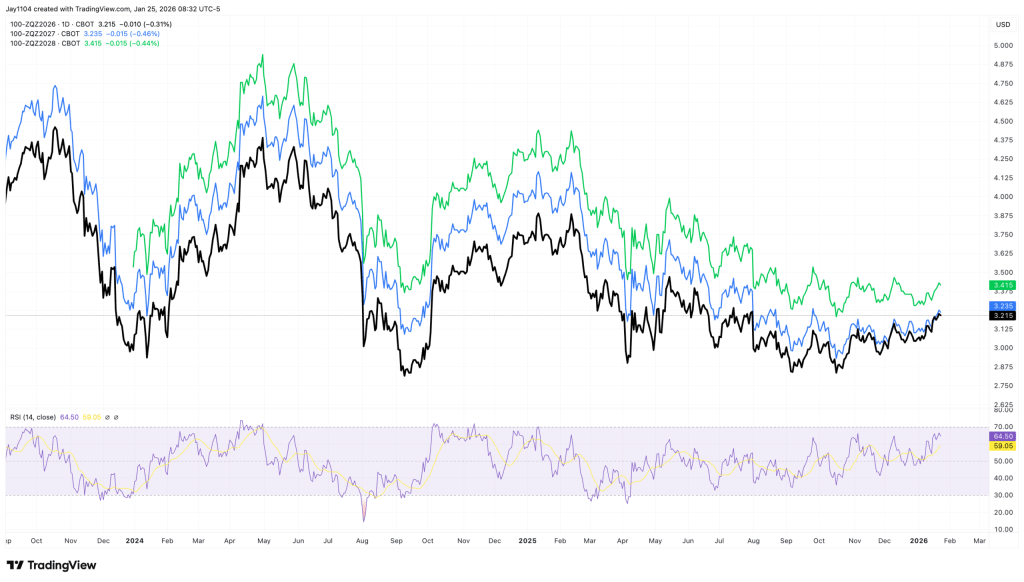
  • Bayer’s stock rose after the U.S. Supreme Court agreed to hear an appeal related to Roundup

    Bayer AG shares rose more than 7% on Monday after the U.S. Supreme Court agreed to hear the German group’s appeal in a pivotal Roundup weedkiller case, fueling optimism that a favorable decision could reduce the company’s long-standing legal burden.

    The U.S. Supreme Court said on Friday it will consider whether federal pesticide regulations override state-level failure-to-warn lawsuits when the Environmental Protection Agency has not mandated cancer warnings for glyphosate-based products.

    The case, known as Durnell, stems from an October 2023 Missouri jury ruling that found Monsanto—acquired by Bayer in 2018—did not adequately warn consumers about alleged cancer risks linked to Roundup, awarding $1.25 million in damages. Other allegations were dismissed, and the jury declined to impose punitive damages. A Missouri appeals court upheld the verdict in 2025.

    Bayer argues that permitting such claims weakens the EPA’s authority, noting the agency has repeatedly determined that glyphosate is unlikely to cause cancer in humans and has approved Roundup labeling without cancer warnings. The U.S. Solicitor General has supported Bayer’s stance, warning that the Missouri decision could allow juries to overrule federal scientific judgments.

    Investors viewed the Supreme Court’s move as a possible inflection point in litigation that has burdened Bayer’s valuation since its $63 billion purchase of Monsanto.

    Sources: Reuters

  • Asian stocks rattled by Trump’s Greenland tariff threats, China GDP provides limited support

    Most Asian equities declined on Monday after U.S. President Donald Trump reignited global trade concerns by slapping tariffs on several major European countries over Greenland.

    Chinese stocks limited their losses after fourth-quarter GDP data came in above expectations, with the economy also meeting Beijing’s 2025 annual growth target of 5%.

    South Korean shares outperformed regional peers, driven by gains in chipmakers after U.S. memory giant Micron Technology said it would acquire a fabrication plant from Taiwan’s Powerchip Semiconductor Manufacturing for $1.8 billion.

    Other regional markets largely followed the slide in Wall Street futures after Trump’s tariff threat, with S&P 500 futures dropping as much as 1% during Asian trading. U.S. markets are closed on Monday for a public holiday.

    Asian stocks slip after Trump’s Greenland tariff move

    Japan’s Nikkei 225 and TOPIX fell 1% and 0.5%, respectively, while Hong Kong’s Hang Seng index declined 0.8%.

    Australia’s ASX 200 slipped 0.4%, Singapore’s Straits Times index lost 0.5%, and futures for India’s Nifty 50 dropped 0.4%.

    Over the weekend, Trump threatened to impose trade tariffs of up to 25% on several European countries, saying the measures would stay in place until an agreement was reached for the United States to acquire Greenland.

    European nations largely rejected Trump’s demands for the Danish territory, with France also reportedly preparing retaliatory economic steps against Washington.

    Trump’s tariff threats compounded already elevated geopolitical tensions worldwide, keeping investors cautious toward risk-sensitive assets. Gold prices surged to a record high on Monday amid strong safe-haven demand.

    Trump has repeatedly pressed for control of Greenland, arguing the territory is vital to U.S. national security. He has also floated the possibility of military action, a threat that appeared more credible following a U.S. incursion in Venezuela earlier this year.

    China stocks steady as 2025 GDP hits official target

    China’s CSI 300 and Shanghai Composite indexes traded within a narrow range on Monday after official data showed quarter-on-quarter GDP growth slightly exceeded expectations in the December period.

    GDP expanded 4.5% year-on-year in the fourth quarter, matching forecasts and bringing full-year 2025 growth to 5%, in line with Beijing’s target.

    The outcome was largely supported by resilient exports, as demand outside the United States remained strong, helping keep the manufacturing sector buoyant.

    Consumer activity was also aided by ongoing stimulus measures, as policymakers worked to reverse a prolonged post-COVID confidence slump.

    However, December data still pointed to uneven recovery, with fixed-asset investment contracting far more than expected and retail sales growth falling short of forecasts.

    South Korean shares jump on chipmaker rally after Micron deal

    South Korea’s KOSPI outperformed regional peers on Monday, climbing more than 1% on the back of gains in semiconductor stocks. SK Hynix and Samsung Electronics, the country’s two largest chipmakers, rose 0.2% and 1.9%, respectively.

    Sentiment toward the memory-chip makers was boosted after rival Micron Technology announced a $1.8 billion investment to acquire a facility from Taiwan’s Powerchip Semiconductor Manufacturing.

    Powerchip shares jumped 10% in Taipei trading following the announcement. Elsewhere in Asia, chip stocks retreated on Monday but remained supported by gains from last week after strong earnings from industry bellwether TSMC.

    Sources: Investing
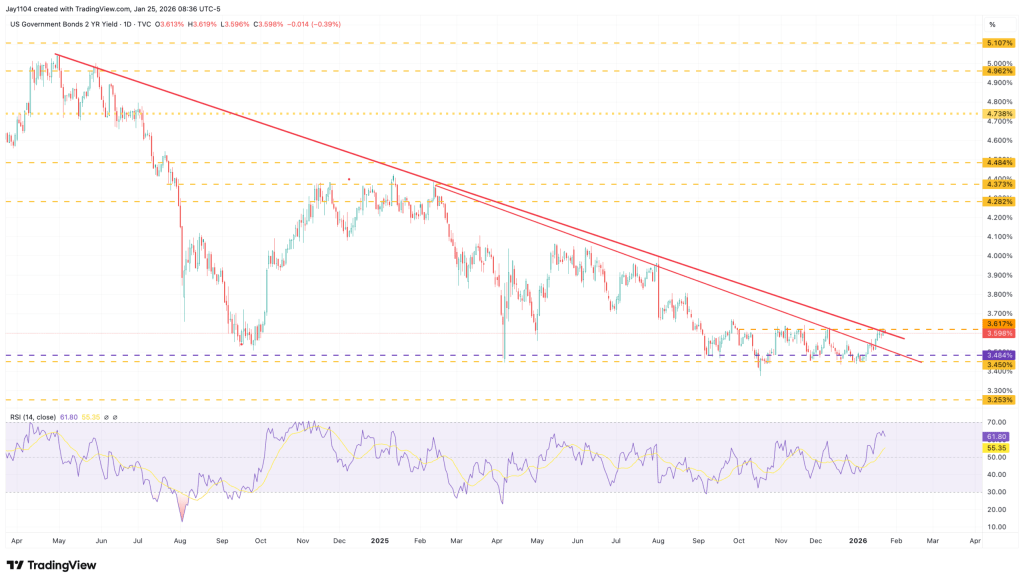
  • Chinese semiconductor stocks climbed following reports that sales of Nvidia’s H200 chips are facing restrictions

    Chinese semiconductor shares climbed on Wednesday after reports said Beijing will restrict purchases of Nvidia’s H200 AI chips to limited, special-use cases. The news largely outweighed an earlier announcement that the U.S. had cleared sales of the H200 to China.

    Shares of Semiconductor Manufacturing International Corp, the country’s largest chipmaker by output, rose nearly 2% in Hong Kong, while Hua Hong Semiconductor gained almost 5%. On the mainland, Cambricon Technologies and Moore Threads Technology—both promoted as domestic alternatives to Nvidia—also advanced.

    According to The Information, Chinese authorities have told local technology firms that H200 purchases will only be approved under exceptional circumstances, such as for university research and development facilities. This development muted the impact of the U.S. Commerce Department’s decision to allow H200 exports to China, a move previously hinted at by President Donald Trump in late December and accompanied by strict conditions.

    Beijing is seen as taking a cautious approach to the approval as it continues to pursue full self-reliance across the artificial intelligence supply chain, with chip manufacturing playing a central role due to the heavy computing demands of AI development and deployment. Although China made progress in chip production in 2025, it is still widely regarded as far from achieving complete technological independence.

    Chinese technology stocks have advanced over the past week, driven by a wave of high-profile IPOs from leading domestic AI companies that boosted confidence in the sector’s growth outlook. The rally extended on Wednesday, with MiniMax Group and Zhipu—listed as Knowledge Atlas— the first of China’s so-called “AI tigers” to go public, climbing 4.4% and 17%, respectively.

    Sources: Investing
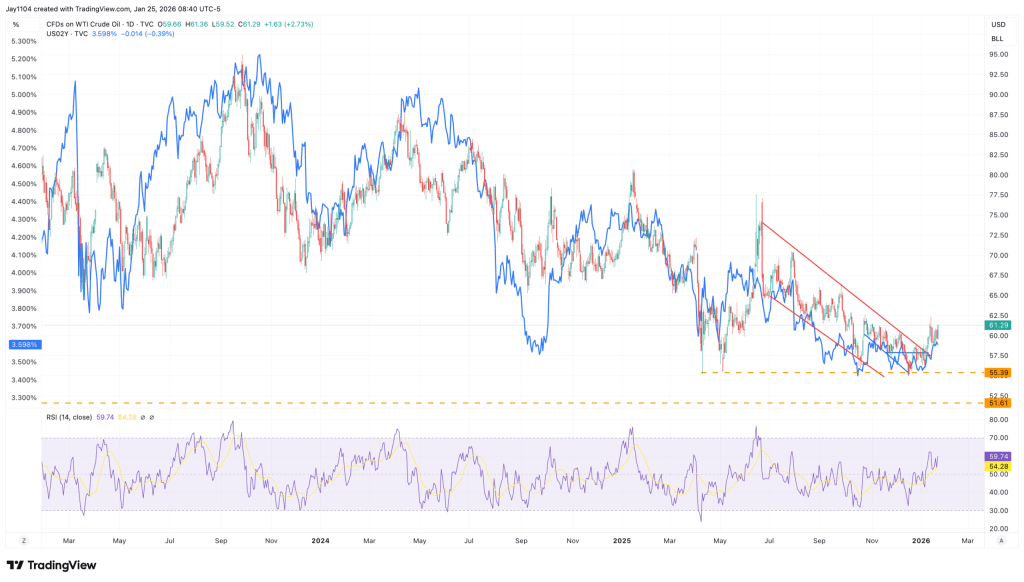
  • S&P 500: Low Trading Volume and Limited Volatility Hinder Expectations for a Market Breakout

    The VIX 1-Day index closed below 10 on Monday, indicating that if a significant price surge follows the CPI report, it is unlikely to be driven initially by increased implied volatility. Instead, any substantial move would need to be supported by actual buying activity rather than a rise in volatility. However, volatility could still spike overnight, setting the stage for the familiar CPI-driven market reaction.

    The S&P 500 appears stable for now, but I don’t believe this is the significant breakout many have anticipated since late October. Currently, the index hasn’t even fully cleared resistance at the trendline by a single bar. We witnessed similar patterns at the beginning of 2022 and 2025.

    The market could keep inching up by 10, 20, or even 30 basis points, but considering the unusually low levels of both realized and implied volatility, along with one-month implied correlation at just 7, the odds aren’t in favor of a strong move. Monday’s trading volume in S&P 500 futures was so thin, it felt like December 22 all over again.

    It seems the authorities have the ability to push the 3-month VIX back down to its July 2024 lows.

    Perhaps those same market forces can drive the 1-month implied correlation down to 2.

    Alternatively, the VXTLT bond market volatility index might decline to levels unseen since 2019.

    The main takeaway is that, in my opinion, the market’s current structure is not set up for a sharp, explosive rally. While it may continue to grind upward, eventually volatility is likely to mean-revert higher, triggering a pullback similar to the one seen from late October into November.

    Interestingly, despite numerous challenges in the oil market over the past four years, XLE has largely avoided a significant breakdown, instead trading mostly sideways throughout this period. If oil prices were to break out decisively and start climbing, it could signal a strong bullish trend for the sector. Currently, XLE is approaching a critical resistance level and merits close attention.

    This could prove significant if oil’s breakout above the downtrend sustains and prices start climbing back into the $60 range. For now, $55 seems to be a support level, and oil remains one of the few commodities yet to make a notable upward move. It’s definitely worth monitoring for potential gains.

    Sources: Mott Capital Management

  • 2026 Forecast: Economic Trends, Corporate Earnings, and the Optimistic Case for Stocks

    With holiday decorations packed away and investment professionals back at their desks, the serious market work for 2026 is officially underway. So far, investor sentiment appears optimistic, as the S&P 500 has posted a 1.76% gain—a promising start to the year.

    Looking ahead, nearly every major Wall Street firm forecasts another strong year for stocks. While leadership within the market may shift, the broad consensus remains that stock prices are poised for healthy gains in 2026.

    You might wonder how this optimism holds up amid concerns about AI bubbles, geopolitical tensions, inflation, and lofty valuations. Having wrestled with this question myself, I believe it’s worthwhile to step back and review the fundamental drivers underpinning the stock market.

    From my experience managing money for over 40 years, I’ve learned that while short-term market movements are nearly impossible to predict, understanding the broader macroeconomic environment helps to get the major market moves “mostly right, most of the time.” Simply put, aligning with the dominant primary market cycle is my foremost objective in this line of work.

    So, without wasting any time, let’s briefly review the key macro drivers: the economy, corporate earnings, inflation, the Fed and interest rates, and, naturally, valuations.

    Since there’s quite a bit to cover—and I doubt many of you want to read a 5,000-word report on a Monday morning—I’ve decided to split this analysis into several parts. Today, we’ll begin with a focus on the economy and corporate earnings.

    Overview of the Economy

    The U.S. economy is generally divided into three main sectors: manufacturing, consumers, and government. Of these, the consumer sector—also known as the services sector—is by far the largest, accounting for roughly 70% of overall economic activity in the United States.

    Because of this, the sluggish manufacturing sector, which has been in a prolonged slowdown, is less of a concern. While an improvement there would be welcome, consumer sentiment remains the primary driver of economic growth today.

    It’s also important to highlight that high-income earners now dominate consumer spending. Reports indicate that the wealthiest individuals account for just over 50%—a record high—of all U.S. consumer expenditures. These affluent consumers are less sensitive to price increases and tend to maintain their spending habits despite inflation.

    Indeed, the labor market has shown signs of weakening, which could eventually affect consumer spending. However, current evidence suggests that job market softness is primarily impacting lower-income consumers at this stage. This situation remains fluid—if job losses accelerate, the services sector would likely feel the impact. But for now, this hasn’t been the case.

    The key takeaway is that despite negative headlines, the economy appears to be performing well. U.S. GDP growth was strong last year, moving from a slight contraction of -0.6% in Q1 to +3.8% in Q2 and +4.3% in Q3.

    More recently, the Atlanta Fed’s GDPNow model—a real-time GDP estimate—registered a robust +5.4% last week.

    From my perspective, anyone claiming the economy is weak or unstable is overlooking the actual data.

    Company Earnings Reports

    Earnings are often described as the lifeblood of the stock market, making it crucial to stay informed about corporate profit trends. To get straight to the point, corporate earnings are very strong—remarkably so.

    For example, Q3 results showed about a 15% increase, significantly surpassing analyst expectations.

    Looking forward, consensus estimates from Wall Street analysts predict that S&P 500 companies will see earnings grow by approximately 17.3% in 2026. Quite impressive.

    Of course, analysts rarely get their projections exactly right. Estimates often start off too optimistic and are revised downward over time. So, it would be unwise to assume that 2026 earnings per share (EPS) will definitively rise by 17% compared to last year.

    The important takeaway is that EPS growth is still expected to be strong this year—significantly above the historical average. (Goldman Sachs recently released a report titled “2026: An Earnings Story.”) My view is that as long as earnings come reasonably close to these expectations, there should be plenty of room for stocks to advance.

    Is There Further Upside Potential?

    The key question is how much further the stock indices can climb. While I’ll address valuations in the coming weeks, it’s clear to everyone that current stock multiples are quite high. This likely explains why Wall Street analysts are forecasting relatively modest gains of around 10% for the year—roughly in line with the S&P’s average annual return since 1980—even with anticipated earnings growth.

    Given the strong economic outlook and expected earnings growth, it’s difficult for me to take a negative stance on the stock market.

    That said, it might be prudent to temper enthusiasm somewhat due to elevated valuations. However, from a broader perspective, I believe the best approach is to stay on the bullish path and trust the market leaders to navigate any near-term challenges.

    What shapes our lives are the questions we ask, refuse to ask, or never think to ask.

    Sam Keen

    Sources: Investing
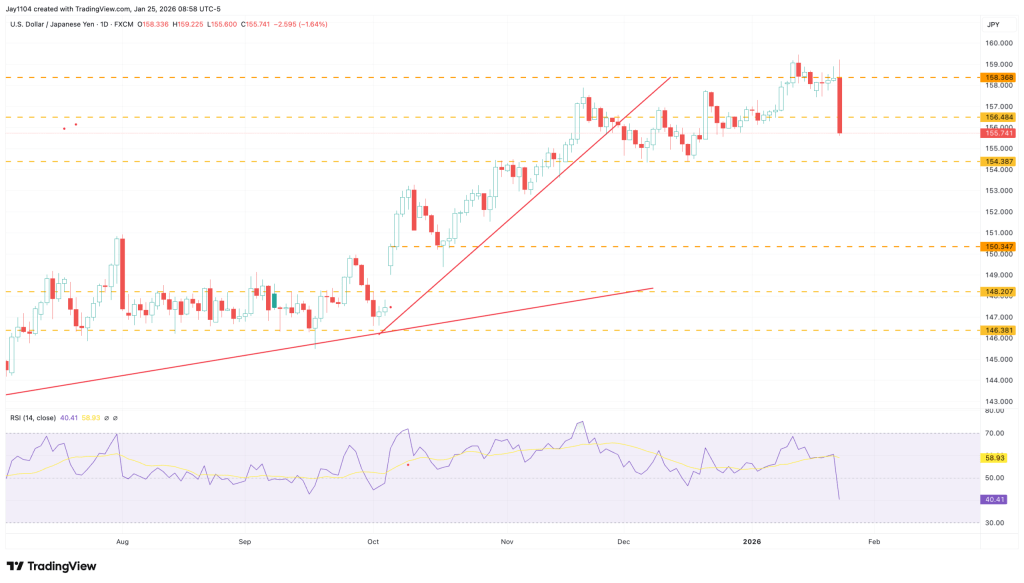
  • Nvidia: Its Potential to Revive the Autonomous Driving Sector in the United States

    The self-driving car industry has experienced a cycle of high hopes, costly setbacks, and ongoing delays. From Tesla’s (NASDAQ:TSLA) frequent missed deadlines to General Motors (NYSE:GM) shutting down its Cruise autonomous division following a pedestrian accident, achieving fully autonomous vehicles has been much tougher than early developers expected.

    However, a fresh wave of innovation driven by artificial intelligence and strategic collaborations is revitalizing this groundbreaking technology.

    At the forefront of this resurgence is Nvidia (NASDAQ:NVDA), the chipmaker whose leadership in AI computing is now expanding into the automotive sector, providing Western car manufacturers with a potential way to rival China’s rapidly progressing autonomous driving advancements.

    The Present State of Autonomous Driving in the U.S.

    The U.S. self-driving industry is currently at a critical juncture, with only a few companies still seriously competing. In 2019, Tesla CEO Elon Musk confidently predicted that a million autonomous vehicles would be on the roads within a year. However, the company only rolled out a limited robotaxi pilot program in late 2025, falling six years behind schedule. A major challenge has been the countless unpredictable scenarios, known as edge cases, that can confuse autonomous systems.

    Traditional automakers have mostly pulled back from the sector. General Motors shut down its Cruise autonomous division following a serious incident where one of its vehicles hit and dragged a pedestrian.

    Similarly, Ford Motor ceased its internal autonomous vehicle projects, choosing to withdraw from the capital-heavy competition. Alphabet’s (NASDAQ:GOOGL) Waymo remains the only company maintaining consistent operations, currently offering Level 4 robotaxi services in several U.S. cities.

    At the same time, China has made significant advances supported by strong government backing and rapid deployment. Chinese automakers now account for about seventy percent of global electric vehicle production, while companies such as BYD, Baidu, and Pony.ai are growing their robotaxi services throughout Asia and the Middle East.

    The Chinese government recently authorized two vehicles with Level 3 autonomous driving capabilities, permitting hands-free driving. This regulatory endorsement, along with better network infrastructure and more affordable costs, has established China as a rising leader in autonomous technology.

    Nvidia’s Self-Driving Platform: Revolutionizing the Industry

    At CES 2026 in Las Vegas, Nvidia introduced its solution to the autonomous driving challenge: the Alpamayo platform. Simply put, Alpamayo is a comprehensive toolkit that enables automakers to develop self-driving systems without starting from zero.

    The platform features reasoning models that help vehicles interpret and respond to their environment, simulation tools for safely testing various scenarios, and datasets for training the AI. It can process data from cameras and radar sensors to make decisions on steering, braking, and acceleration while also providing explanations for its choices.

    What makes Alpamayo especially noteworthy is that Nvidia has made it open-source, allowing any company to use and adapt it freely. This approach contrasts sharply with Tesla’s proprietary model.

    Industry experts liken this to the smartphone battle between Apple’s (NASDAQ:AAPL) closed ecosystem and Android’s open platform. By offering a shared foundation, Nvidia empowers automakers to concentrate on differentiating their products rather than reinventing fundamental technology, potentially speeding up the entire industry’s development.

    The platform is quickly gaining momentum. Mercedes-Benz revealed that its upcoming CLA model will incorporate AI-driven driving features powered by Nvidia’s technology, set to hit U.S. roads later this year. Additionally, a robotaxi partnership involving Lucid Group, Nuro, and Uber plans to leverage Nvidia’s chips and platform.

    Ali Kani, Nvidia’s general manager of the automotive division, expressed optimism that recent fundamental AI improvements have resolved critical issues that once hindered self-driving technology, indicating the industry might be nearing a major breakthrough.

    NVDA Share Forecast and What Investors Should Know

    Nvidia’s stock mirrors its leading position in several AI-driven markets. As of January 2026, NVDA shares are trading around $185 each, with a market cap near $4.5 trillion, ranking it among the world’s most valuable companies.

    The stock has delivered remarkable returns, rising more than 32% in the past year and an impressive 1,297% over five years, significantly outperforming the S&P 500’s 81% gain during the same timeframe.

    Despite its high valuation, key financial indicators remain strong. In Q3 FY26, Nvidia reported revenues of $57 billion and earnings of $31.8 billion, surpassing analyst expectations for earnings per share by four cents.

    The trailing price-to-earnings (P/E) ratio stands at about 46, while the forward P/E is 24, reflecting the market’s high growth expectations. However, a PEG ratio of 0.70 indicates that the stock’s valuation could be reasonable relative to its anticipated earnings growth. Nvidia continues to demonstrate strong profitability, with a profit margin above 53% and a return on equity exceeding 100%.

    Analysts generally hold a positive outlook on Nvidia’s future. The average price target of $252 suggests about a 36% potential increase from current levels, with forecasts ranging from $140 on the low side to $352 at the high end. Most analysts have Buy or Strong Buy ratings, highlighting sustained strong demand for AI infrastructure.

    While Nvidia’s automotive division offers a growing avenue beyond its core data center business, investors should be aware that the stock exhibits high volatility, with a beta of 2.31. The upcoming earnings report on February 25, 2026, is expected to shed more light on the company’s progress.

    Sources: Investing
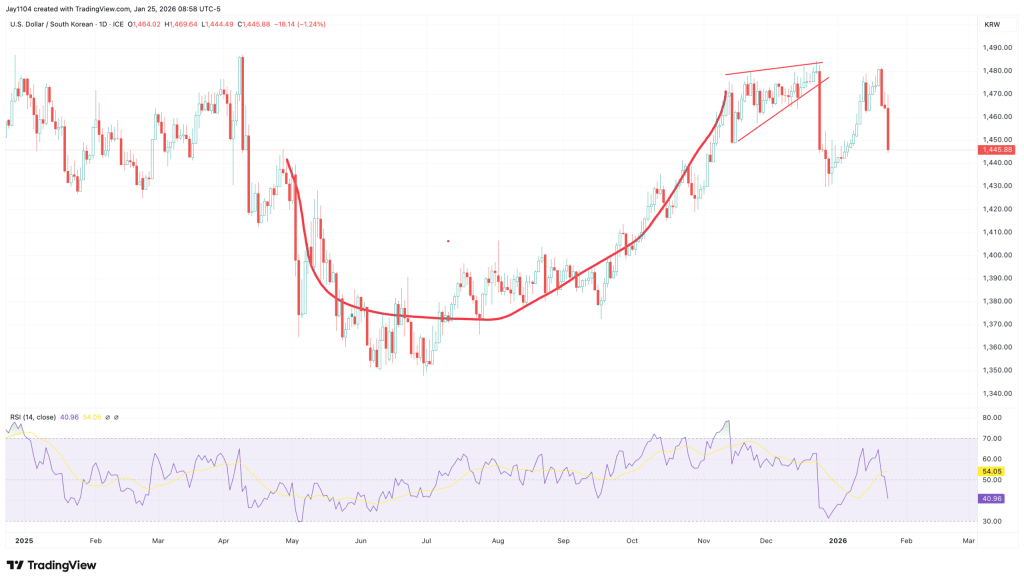
  • S&P 500 Maintains Wave Pattern as Market Eyes Peak in Spring 2026

    In our December report, we combined the Elliott Wave (EW) Principle with average midterm election-year seasonality and the Armstrong Pi-cycle turn dates to analyze the S&P 500 (SPX). We concluded that:

    “… As long as the index remains above the November 21 low of 6720, it can position itself for a subdividing final 5th wave (gray waves W-i, ii, iii, iv, and v), potentially reaching as high as 7490 around April 18-28, 2026.”

    Since then, the SPX has risen nearly 2% and appears to be unfolding as expected. With new price data now available, we have revised our short- to intermediate-term EW count but kept the same ultimate upside target range of approximately 7345-7490. Please refer to Figure 1 below.

    Figure 1: Intermediate Elliott Wave analysis for the SPX.

    Assuming the price stays above the specified warning levels*, with each additional breach raising the probability of the uptrend ending by 20%, we anticipate the index to ideally reach around 7100 for the blue W-iii wave, then decline to roughly 7015 for the blue W-iv wave, followed by a rally to approximately 7160 ± 40 for the orange W-3 wave, and so on. The current pattern depicts a standard impulse wave; however, the green W-5 wave could potentially form an overlapping ending diagonal, leading to an overlapping rally toward the lower boundary of the target zone (around 7345). At this stage, there is no sign that this scenario will unfold. Nevertheless, it’s important to note that once the green W-5 completes—expected around April 18-28—we anticipate a bear market similar to that of 2022 before a larger, multi-year rally to new all-time highs can commence.

    Sources: Investing
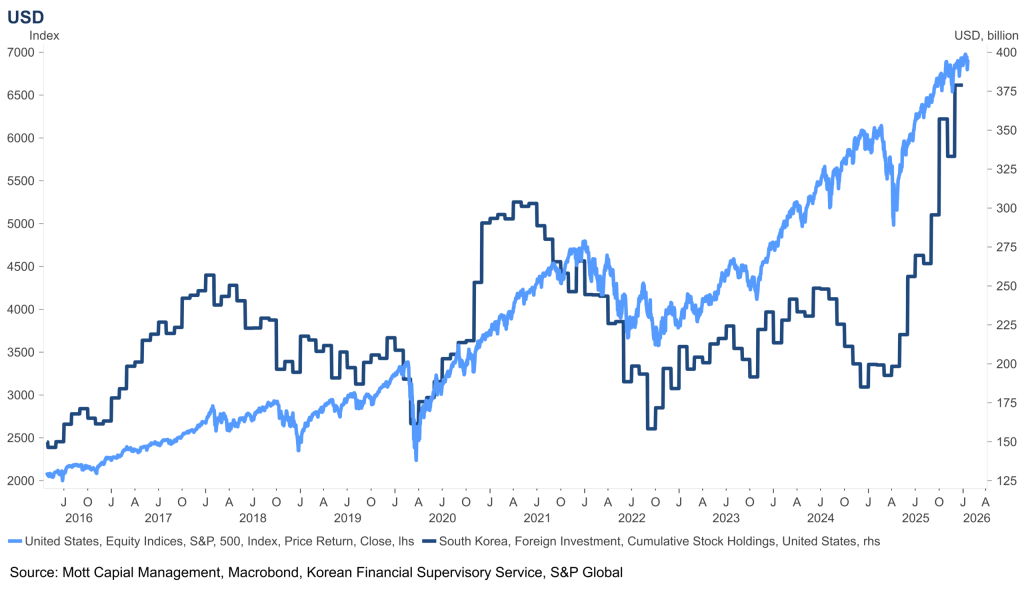
  • Zenas Biopharma (ZBIO) CEO Moulder Invests $1.63 Million in Company Stock

    Zenas BioPharma, Inc. (NASDAQ: ZBIO) disclosed in a Form 4 filing that Chief Executive Officer Leon O. Moulder Jr. acquired 100,000 shares of the company’s common stock across three transactions between January 7 and January 9, 2026. The total value of the purchases was approximately $1.639 million, with share prices ranging from $16.30 to $16.55.

    Moulder bought 50,000 shares on January 7 at a weighted average price of $16.38, through multiple trades executed between $16.21 and $16.53. On January 8, he added 30,000 shares at an average price of $16.30, with individual transactions ranging from $15.82 to $16.60. The final purchase occurred on January 9, when he acquired 20,000 shares at a weighted average of $16.55, with prices between $16.05 and $16.87.

    After these transactions, Moulder directly holds 366,155 shares of ZBIO stock. He also has voting and investment authority over an additional 36,928 shares held in a trust and 1,672,039 shares held indirectly through Tellus BioVentures LLC.

    Separately, Zenas BioPharma recently announced favorable results from its Phase 3 INDIGO study of obexelimab for Immunoglobulin G4-Related Disease (IgG4-RD). The trial showed a 56% decrease in flare risk versus placebo and met all primary and secondary endpoints with statistical significance. However, Morgan Stanley downgraded the stock from Overweight to Equalweight and reduced its price target from $37 to $19, noting that the reported hazard ratio of 0.44 did not fully meet investor expectations.

    In contrast, H.C. Wainwright reiterated its Buy rating and set a $44.00 price target, highlighting the trial’s clinically meaningful outcomes. Jefferies likewise maintained a Buy recommendation but lowered its target from $62.00 to $48.00, citing a higher-than-expected proportion of recurrent patients in the study. Analyst responses have been mixed, underscoring differing views on the trial’s implications. The study enrolled 194 participants and delivered notable reductions in investigator-reported flares as well as in the need for rescue therapy.

    Sources: Investing

  • Japanese Candlesticks

    Japanese Candlesticks are a type of price chart used in financial markets to show how an asset’s price moves over a specific period of time. They are one of the most popular tools in technical analysis because they visually display market psychology—who is in control: buyers or sellers.

    Origin

    Japanese candlesticks were developed in Japan in the 18th century, originally used by rice traders. They were later introduced to Western markets by Steve Nison in the 1990s.

    Why Candlesticks Are Powerful

    • Easy to read and interpret
    • Show market sentiment instantly
    • Help identify trend reversals and continuations
    • Work across all markets and timeframes

    Used in
    📈 Stocks
    💱 Forex
    🪙 Crypto
    🛢️ Commodities


    Common Candlestick Patterns


    Best Practice

    Candlestick patterns are most effective when combined with:

    • Trend analysis
    • Support & resistance
    • Volume
    • Indicators (RSI, MACD, Moving Averages)

    Simple Definition

    Japanese candlesticks are a visual price charting method that shows market psychology through price action.

  • This Week’s Top Buy and Sell Picks: AMD (Buy), Cal‑Maine Foods (Sell)

    • This week’s highlights include the U.S. jobs report, ISM PMI surveys, and the CES Conference.
    • AMD is a recommended buy, driven by expected AI innovations presented in CEO Lisa Su’s CES keynote.
    • Cal-Maine Foods is a sell candidate ahead of a potentially disappointing earnings report and a weak outlook.

    Wall Street’s major indexes closed mostly higher on Friday, the first trading day of 2026, boosted by gains in semiconductor and AI-related stocks. However, all three indexes still recorded slight declines for the week.

    The Dow Jones Industrial Average slipped 0.7%, the S&P 500 dropped 1%, the tech-focused Nasdaq Composite fell 1.5%, and the small-cap Russell 2000 declined 1%.

    The first full trading week of 2026 promises to be busy, with monthly jobs data taking center stage. Economists forecast nonfarm job growth of 54,000 for January, down from 67,000 in December, while the unemployment rate is expected to decrease to 4.5% from 4.6%. Additionally, the ISM manufacturing and services PMIs will be closely monitored by investors.

    On the earnings front, only a few companies are scheduled to report this week, including Constellation Brands, Cal-Maine Foods, Jefferies Financial Group, Albertsons, and Applied Digital.

    Meanwhile, investors in the tech and consumer sectors will be closely watching the CES conference in Las Vegas. Key companies to watch for product launches, strategic updates, and AI developments include Nvidia, AMD, Intel, Qualcomm, Meta Platforms, Samsung, LG, Sony, and Motorola.

    No matter how the market moves, below I highlight one stock expected to gain interest and another that may face further declines. Keep in mind, my outlook is limited to the upcoming week, Monday, January 5 through Friday, January 9.

    Stock to Buy: Advanced Micro Devices

    AMD stands out as a strong buy this week, with the 2026 Consumer Electronics Show (CES) acting as a key catalyst. The highlight will be CEO Dr. Lisa Su’s opening keynote on Monday at 6:30 PM PT (9:30 PM ET).

    Su is expected to present AMD’s vision for AI solutions across cloud, enterprise, edge, and devices, potentially unveiling new advancements in AI chips and related technologies. Historically, AMD shares tend to rally during the week of its major product announcements, often followed by multiple analyst upgrades.

    Analysts remain optimistic, with a consensus Strong Buy rating supported by 40 Buy and 11 Hold recommendations, suggesting a 26.5% upside potential for 2026. TD Cowen recently named AMD among its top AI picks, setting a price target of $290.

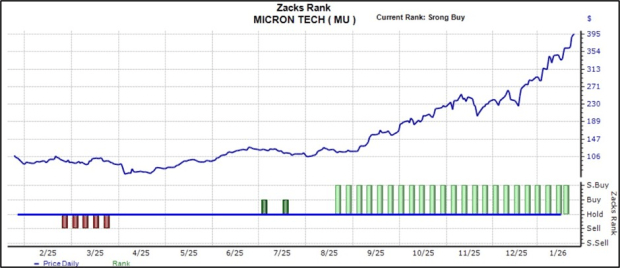
    Fundamentally, AMD’s growth is driven by its AI product portfolio, including the MI300 series accelerators, which are gaining ground against rivals like Nvidia.
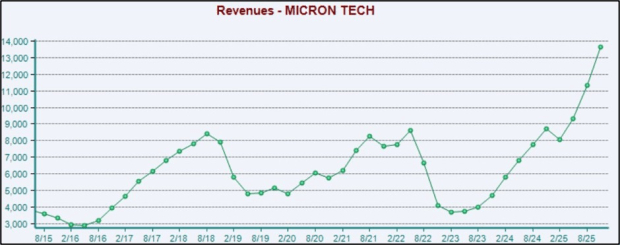
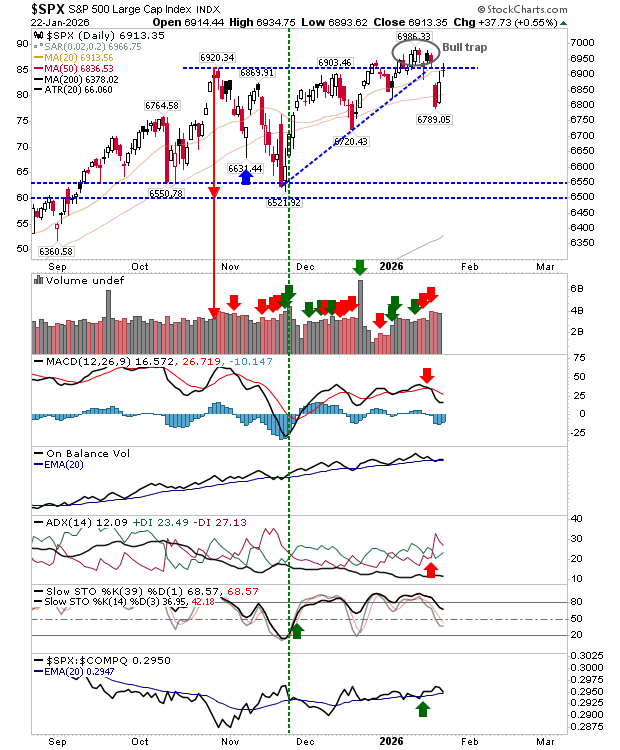
    AMD shares closed Friday at $223.47. From a technical standpoint, the stock has demonstrated resilience, recovering from mid-2025 lows near $150 to its current level, supported by strong trading volume. If the upcoming keynote meets expectations with announcements like new partnerships or product roadmaps, AMD could soon challenge its 52-week high around $270.
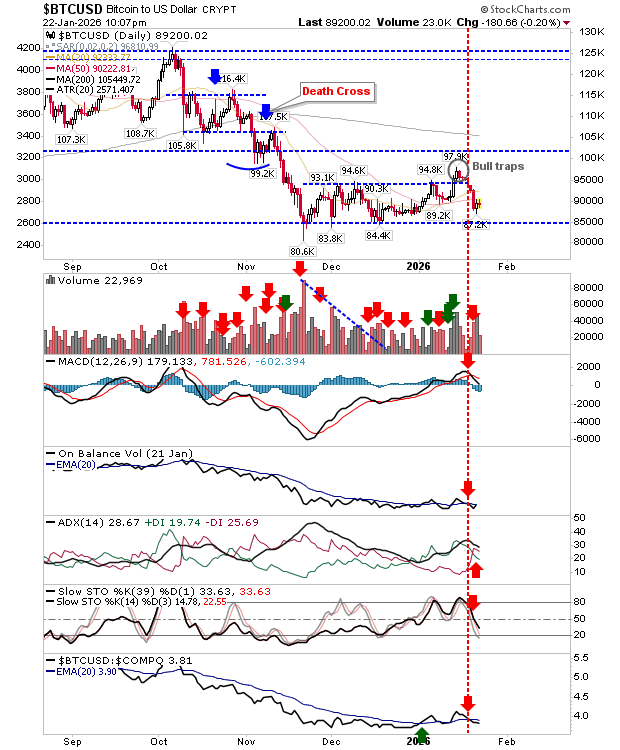
    AMD holds a Financial Health Score of 2.98 (“GOOD”), indicating a solid balance sheet and strong operating momentum driven by excitement around its next-generation AI products.

    Stock to Sell: Cal-Maine Foods

    Cal-Maine Foods starts the week at $78.47, hovering near its 52-week low, as Wall Street anticipates a weak earnings report and a bleak outlook. The company faces headwinds including rising feed costs, supply chain challenges, and variable demand.

    The largest U.S. producer and distributor of shell eggs is set to release its fiscal second-quarter results before the market opens on Wednesday at 6:00 AM ET, followed by a conference call at 9:00 AM ET.

    Cal-Maine is projected to report earnings of $2.08 per share, a sharp 53.5% decline from $4.47 a year ago, driven by higher input costs and fluctuating demand. Revenue is expected to drop 14.7% year-over-year to $814.2 million, amid ongoing egg price volatility and potential disruptions from recent avian flu outbreaks that have affected supply chains.

    Looking forward, the company’s guidance is likely to reflect continued uncertainty around production normalization and cost control, posing further challenges for investor confidence and stock performance.

    Technically, CALM has slipped below key support levels, accompanied by declining volume that indicates weakening investor interest. Its one-year target price of $95.50 offers limited upside, but the risks from a disappointing earnings report outweigh potential gains.

    With the likelihood of underwhelming results and cautious guidance, CALM is a sell this week to avoid volatility driven by these events.

    Whether you’re a beginner investor or an experienced trader, using InvestingPro can help you uncover investment opportunities while managing risks in this challenging market environment.

    Sources: Investing