Investor focus remains firmly on Iran—and rightly so. West Texas Intermediate crude is hovering near $100 per barrel, up sharply from December lows, as tanker traffic through the Strait of Hormuz remains restricted. Iran is selectively allowing shipments—primarily to China and some Asian countries—helping ease oil price pressure slightly.
The key market variable continues to be how long the Strait disruption lasts. While timelines remain uncertain, reopening it will likely be slow and complicated, with limited international support increasing pressure on the U.S. to act.
Despite geopolitical tensions, corporate earnings have remained resilient and continue to support equities. Strong investment in AI is driving robust growth—especially in tech, which accounted for more than half of recent S&P 500 earnings gains—and is expected to play an even larger role ahead. Fiscal stimulus is also boosting capital spending and profits.
Notably, earnings estimates are holding up better than usual, defying the typical early-year downgrades and continuing to trend higher into 2026 and beyond.
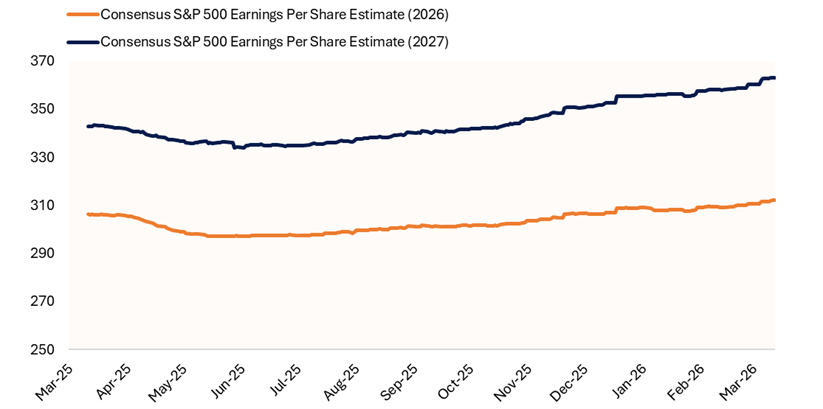
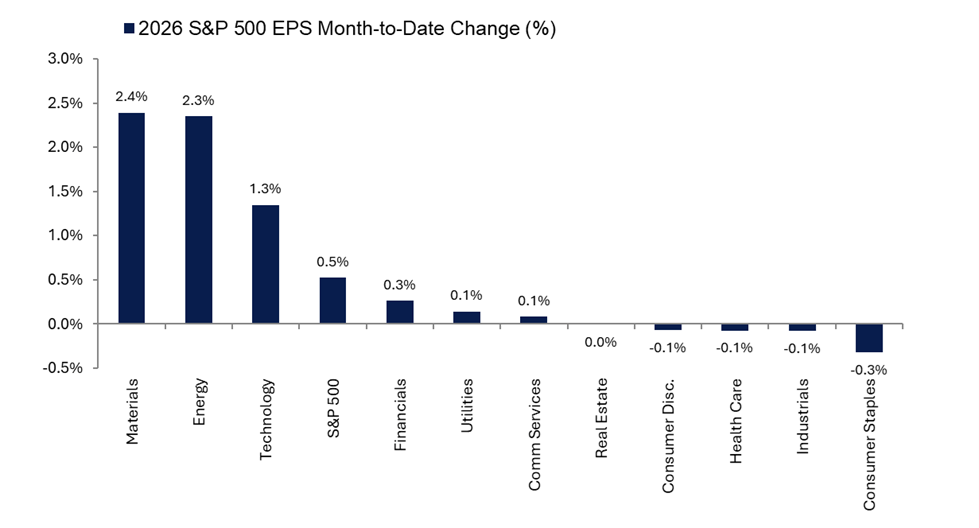
Upward revisions in the energy sector are lifting overall 2026 earnings forecasts, as highlighted in “It’s Not Just Energy Boosting Earnings Estimates.” But the strength isn’t limited to energy—technology and materials are also pulling more than their weight. And this shift has already emerged just two weeks into March.
Bottom line
Earnings momentum remains strong and should stay resilient despite the conflict in Iran. With core U.S. growth drivers intact and energy independence in place, double-digit earnings growth in 2026 still looks achievable—providing solid support for the stock market and helping cushion downside risk until geopolitical tensions ease.
Sources: Jeff Buchbinder
 THE ETERNAL SOVEREIGN