Tag: Oil

  • Crude prices climb as markets weigh U.S. stockpile draw and Venezuelan supply developments

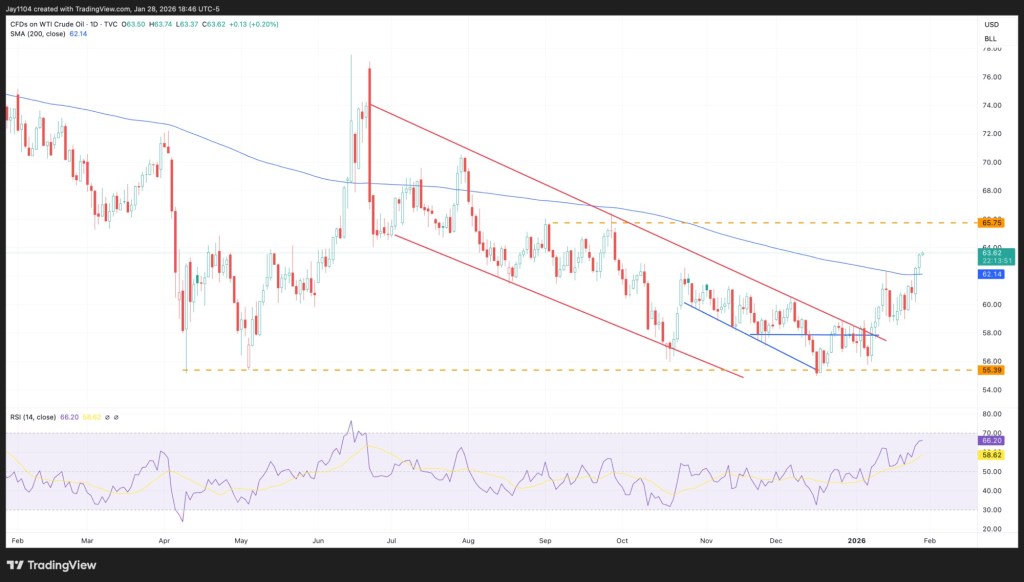
    Oil prices climbed during Asian trading on Thursday, regaining some losses after sharp declines triggered by worries over rising Venezuelan crude supplies.

    Additionally, stronger-than-anticipated weekly declines in U.S. oil inventories supported the price recovery. Ongoing conflict between Russia and Ukraine also contributed to maintaining a risk premium in the market.

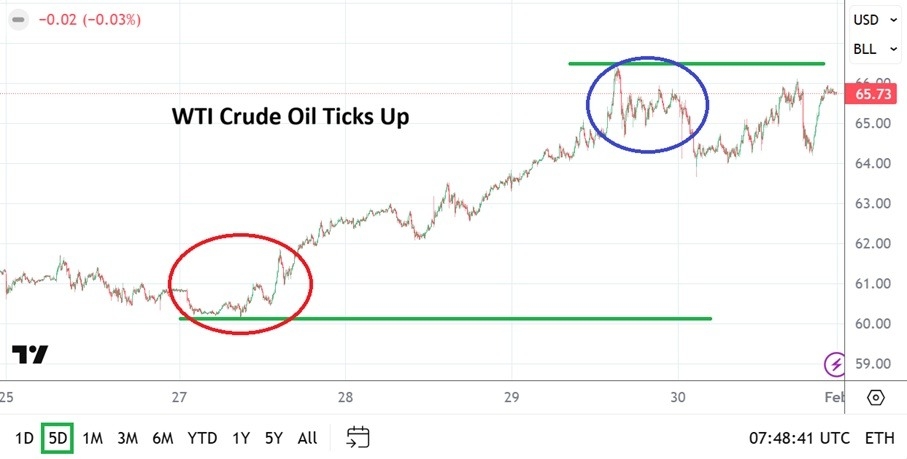
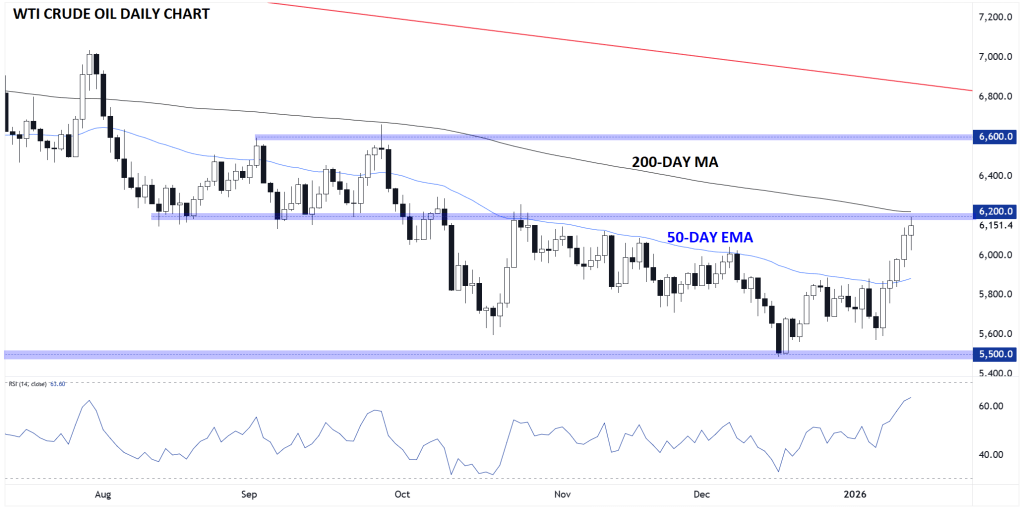
    March Brent crude futures increased by 0.7% to reach $60.38 per barrel, while West Texas Intermediate (WTI) futures also gained 0.7%, settling at $56.28 per barrel as of 20:25 ET (01:25 GMT). Both benchmarks had fallen more than 1% over the previous two sessions.

    Attention turns to US – Venezuela oil agreement after Trump highlights up to $3 billion in planned crude sales.

    Oil markets are closely watching the impact of a new agreement between the U.S. and Venezuela on global oil supplies.

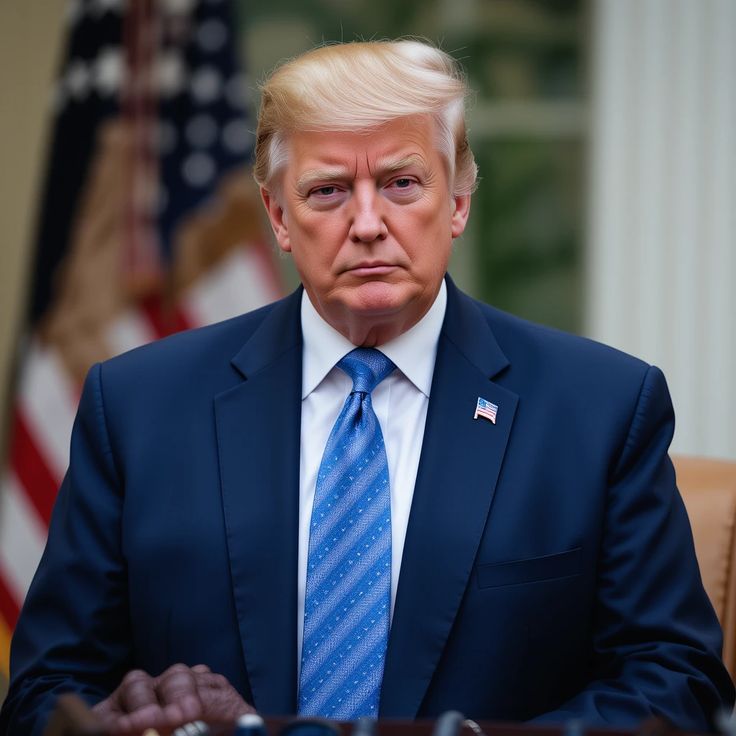
    U.S. President Donald Trump announced on Tuesday that Venezuela will deliver between 30 million and 50 million barrels of oil to the U.S., valued at up to $3 billion, shortly after U.S. forces detained Venezuelan President Nicolás Maduro.

    Trump also appeared to encourage multiple U.S. oil companies to expand production activities in Venezuela, with Chevron Corp (NYSE: CVX) leading these efforts. According to Reuters, Chevron is negotiating to broaden its license to operate in the country.

    Currently, Chevron is the only major U.S. oil company active in Venezuela, benefiting from special government exemptions that shield it from stringent sanctions imposed on the nation.

    Markets are worried that a significant rise in Venezuelan oil output could further swell global supplies, adding to prevailing fears of an oil glut in 2026. Traders are already pricing in ample supply conditions, with expectations that any additional barrels from Venezuela might weigh on crude prices.

    However, analysts caution that any meaningful increase in Venezuelan production is unlikely to happen quickly, given the country’s deep political instability and the extensive investment needed to rebuild its dilapidated oil infrastructure after recent upheavals.

    A Financial Times report also noted that U.S. oil firms are seeking strong legal and financial guarantees from the U.S. government before committing to major investments in Venezuela’s oil sector, reflecting industry hesitancy amid uncertain policy and market conditions.

    U.S. crude stockpiles decline beyond forecasts

    Government data released Wednesday revealed that U.S. oil inventories fell by 3.8 million barrels in the week ending January 2, significantly exceeding expectations of a 1.2 million barrel decline.

    This reduction was almost double the 1.9 million barrel draw reported the previous week, bolstering confidence that demand remains robust in the world’s largest fuel consumer.

    Attention this week centers on several key U.S. economic reports, especially the December nonfarm payrolls data set to be released on Friday, which is expected to influence interest rate forecasts.

    Sources: Investing

  • Crude oil drops 1% as Trump announces Venezuela will send oil supplies to the United States

    Oil prices tumbled in Asian trading on Wednesday after U.S. President Donald Trump said Venezuela would deliver tens of millions of barrels of crude to the United States, a development expected to significantly increase global supply. Prices were already under pressure earlier in the week, as Washington’s takeover of Venezuela fueled expectations of a broad easing of sanctions on the country’s oil sector—potentially releasing tens of millions of barrels back onto the market.

    Despite elevated geopolitical risks adding a modest risk premium, oil prices stayed under pressure as markets grew increasingly concerned about a potential supply glut in 2026. Crude was already on track for its steepest annual decline in five years in 2025. Brent futures for March slid 1% to $60.11 a barrel at 20:13 ET (01:13 GMT), while U.S. benchmark WTI dropped 1.1% to $56.29 a barrel.

    Venezuela to send 30–50 million barrels of crude to the United States, Trump says

    In a post on social media, Trump said Venezuela would transfer between 30 and 50 million barrels of oil to the United States, with Washington planning to sell the crude at prevailing market prices. He added that the proceeds from the sales would be managed by him as U.S. president, stating that the funds would be used to serve the interests of both Venezuela and the United States.

    The announcement follows just days after U.S. forces detained Venezuelan President Nicolas Maduro, when Trump said Washington was taking control of the country and planned to open up its oil sector. Oil prices initially fell after Maduro’s capture, as markets anticipated that a potential easing of U.S. sanctions on Venezuela could unleash large volumes of crude onto global markets. Trump’s actions since then suggest that this outcome is increasingly likely.

    However, analysts cautioned that any reopening of Venezuela’s energy industry could take longer than expected, citing risks of political instability and the constraints of the nation’s aging infrastructure. Data from maritime analytics firm Kpler also indicated that a near-term increase in Venezuelan output is unlikely due to limited domestic storage capacity.

    Russia-Ukraine ceasefire draws attention as U.S. backs security guarantees for Kyiv

    Oil markets were also tracking any fresh developments in talks on a Russia–Ukraine ceasefire after the United States on Tuesday endorsed a largely European-led coalition that pledged to provide security guarantees for Kyiv.

    The U.S. commitment was made at a Paris summit aimed at reassuring Ukraine in the event of a truce with Moscow. Washington also said it was prepared to help monitor and verify any ceasefire should an agreement be reached. However, Russia has so far shown limited willingness to engage in a ceasefire, with fighting between the two sides continuing as the war moves toward its fifth consecutive year.

    Even so, any prospective ceasefire between Russia and Ukraine could ultimately lead to a rollback of U.S. sanctions on Moscow, allowing additional Russian oil to return to the market. Such a development would also reduce the geopolitical risk premium embedded in crude prices.

    Sources: Investing

  • Trump stated that Venezuela would supply the United States with 30–50 million barrels of oil

    U.S. President Donald Trump said on Tuesday night that Venezuela’s interim government would transfer tens of millions of barrels of oil to the United States, with the proceeds from sales to be managed by Washington. In a social media post, Trump said Caracas would hand over between “30 and 50 million barrels of high-quality, sanctioned oil,” which would be sold at market prices. He added that the revenue would be overseen by him as president to ensure it benefits both the Venezuelan and U.S. people, and noted that he had directed Energy Secretary Chris Wright to implement the plan immediately.

    The proposed arrangement could redirect Venezuelan oil exports away from China while helping state-run PDVSA avoid deeper production cuts, following reports that Washington and Caracas were in talks over a supply agreement. The announcement comes days after U.S. forces captured President Nicolas Maduro, heightening political uncertainty in Venezuela. Maduro’s vice president, Delcy Rodriguez, was sworn in as interim leader this week and has signaled her willingness to cooperate with Washington.

    Trump said the United States would oversee Venezuela until a permanent leader is elected and would also assume control of the country’s aging oil sector. Following the announcement, oil prices fell, as a U.S. takeover could bring large volumes of crude to market and boost supply. March Brent futures dropped 2%.

    Source: Investing

  • Can a Trump Presidency Revive Venezuela’s Vast Oil Reserves?

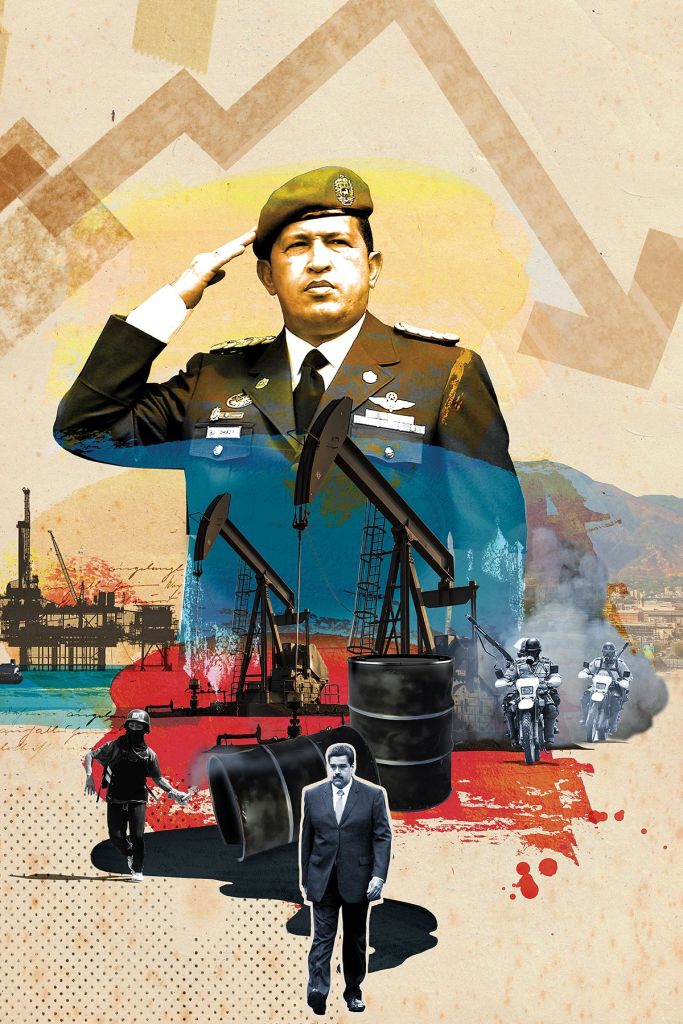
    The removal of Venezuela’s current leadership would likely signal a sharp shift in Washington’s stated objectives—from a focus on counter-narcotics pressure to a far more ambitious agenda: unlocking one of the world’s largest oil reserves and reopening the country to U.S. energy companies.

    “The oil business in Venezuela has been a bust—a total bust—for a long period of time,” U.S. President Donald Trump told reporters on Saturday.

    “We’re going to have our very large United States oil companies—the biggest anywhere in the world—go in, spend billions of dollars, fix the badly broken oil infrastructure, and start making money for the country.”
    The central question for Trump’s administration is whether political change alone would be sufficient to revive an industry hollowed out by decades of mismanagement, corruption, and chronic underinvestment.

    On paper, Venezuela’s oil potential is vast. Government figures put proven reserves at more than 300 billion barrels, the largest in the world, consisting largely of heavy crude prized by refiners along the U.S. Gulf Coast and in parts of Asia.

    Analysts note that this heavy crude complements U.S. shale production, which is typically lighter and less suited to certain refinery configurations. In theory, Venezuela’s reserves could once again play a meaningful role in global energy markets.

    In practice, however, the obstacles are formidable. Venezuela currently produces less than one million barrels per day—a fraction of its output two decades ago. Infrastructure has deteriorated severely, skilled workers have fled the country, and oil fields, pipelines, ports, and refineries would require massive capital investment merely to restore reliable operations.

    Even under optimistic scenarios, years of rebuilding would be required before production could rise meaningfully. Market conditions add another layer of complexity: global oil supplies remain ample, and prices below $60 a barrel reduce the incentive for large-scale, high-risk investment abroad.

    U.S. producers must therefore weigh whether capital is better deployed in stable domestic basins rather than in a country with a long history of expropriation and contract disputes.

    Legal and institutional reform would also be indispensable. Venezuela would need to overhaul laws governing private investment, restructure roughly $160 billion in sovereign and quasi-sovereign debt, and resolve outstanding arbitration claims stemming from past nationalizations.

    Without clear property rights and predictable regulatory frameworks, international oil companies are unlikely to commit billions of dollars, regardless of political change.

    Security and governance challenges remain unresolved as well. Removing a leader does not automatically produce stability, and companies will wait to see whether a transitional government can maintain order, protect assets, and establish credible authority across the country.

    The scale of reconstruction required extends far beyond oil extraction, encompassing financing, currency stabilization, and the rebuilding of core state institutions.

    In that sense, unlocking Venezuela’s oil is ultimately less a question of geology than of politics, economics, and time.

    Sources: Investing

  • OPEC+ Confirms Steady Oil Production Despite Member Disputes

    OPEC+ delegates indicated that the group is expected to keep oil production steady at their upcoming meeting on Sunday, despite ongoing political tensions between key members Saudi Arabia and the UAE, as well as the recent U.S. capture of Venezuela’s president.

    The Sunday meeting involves eight OPEC+ members—Saudi Arabia, Russia, the UAE, Kazakhstan, Kuwait, Iraq, Algeria, and Oman—who together produce about half of the world’s oil supply. This session follows a challenging 2025, during which oil prices plunged over 18%, marking their steepest annual decline since 2020 amid concerns over oversupply.

    From April to December 2025, these eight members raised oil output targets by roughly 2.9 million barrels per day, representing nearly 3% of global oil demand. They agreed in November to pause further output increases for January through March 2026.

    According to three OPEC+ sources, Sunday’s meeting is unlikely to alter this policy.

    OPEC Faces Multiple Crises Amid Market and Political Challenges

    Tensions between Saudi Arabia and the UAE escalated last month over a decade-long conflict in Yemen, when a UAE-aligned group seized territory from the Saudi-backed government. This crisis sparked the biggest rift in decades between the former close allies, exposing years of divergence on key issues.

    Historically, OPEC has managed to navigate serious internal disputes—such as during the Iran–Iraq War—by prioritizing market stability over political conflicts. However, the group now faces multiple challenges. Russian oil exports remain under pressure from U.S. sanctions related to the Ukraine war, while Iran grapples with widespread protests and threats of U.S. intervention.

    These overlapping crises put OPEC’s cohesion and its ability to manage the global oil market to a critical test.

    On Saturday, the United States reportedly captured Venezuelan President Nicolás Maduro. U.S. President Donald Trump announced that Washington would assume control of the country until a transition to a new administration can be arranged, though he did not specify how this process would be carried out.

    Venezuela holds the world’s largest proven oil reserves, surpassing even those of OPEC’s leader, Saudi Arabia. However, its oil production has sharply declined over the years due to chronic mismanagement and international sanctions.

    Analysts caution that a significant increase in crude output is unlikely in the near future, even if U.S. oil majors follow through on the multibillion-dollar investments promised by President Trump.

    Sources: Reuters