Tag: greenland

  • 5 Stocks That Could Profit from Increased US-NATO Tensions Over Tariffs and the Greenland Issue

    Geopolitical tensions are rising as President Trump moves ahead with threats to levy tariffs on eight NATO allies while continuing his push regarding Greenland. Although overall markets have weakened, these frictions may spur higher defense budgets, accelerated resource reshoring, and expanded infrastructure investment. Below, we identify five U.S.-based companies that stand to gain from the intensifying U.S.–NATO standoff.

    As tensions between the U.S. and NATO escalate over fresh tariffs and Greenland’s strategic resource base, defense, mining, and industrial shares appear well positioned for a strong upswing. Against this backdrop, five companies stand out—Lockheed Martin (NYSE:LMT), RTX (NYSE:RTX), Critical Metals (NASDAQ:CRML), Teck Resources (NYSE:TECK), and Caterpillar (NYSE:CAT). Each is set to benefit from increased U.S. defense spending, intensifying competition for Arctic resources, and ongoing efforts to shift supply chains away from Europe and China.

    Lockheed Martin: A Leader in Arctic Defense Capabilities

    Lockheed Martin appears to be among the primary beneficiaries of rising U.S.–NATO tensions, particularly as Greenland’s strategic value elevates the need for enhanced Arctic defense capabilities. The company’s advanced military platforms and surveillance systems are well suited to the region’s demanding operational environment.

    Its F-35 fighter aircraft, along with missile defense and radar solutions such as the “Golden Dome,” play a central role in Arctic security, where Greenland’s geographic position strengthens U.S. monitoring capacity and deterrence against potential Russian and Chinese advances.
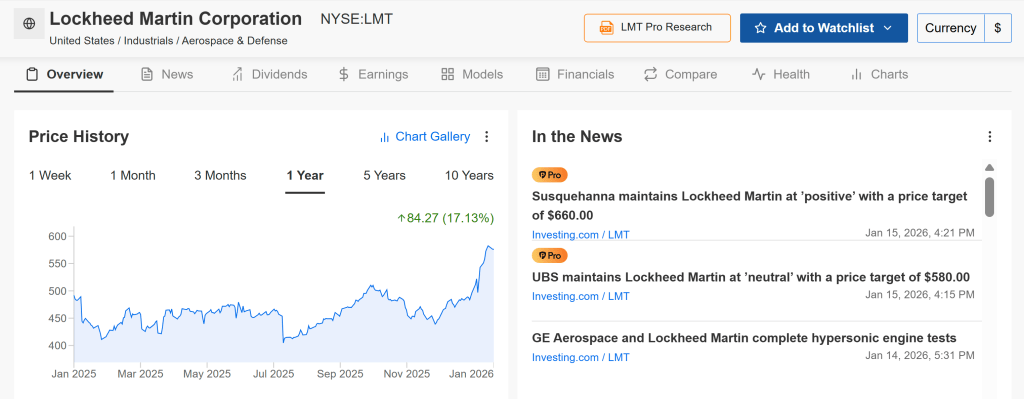
    So far in 2026, Lockheed Martin’s shares are up roughly 19% year to date, supported by President Trump’s proposed $1.5 trillion defense budget for 2027, which points to expanded procurement activity. In periods of sustained geopolitical strain, investors typically favor companies with stable revenues and long-term contracts. Against this backdrop, Lockheed’s robust order backlog, strong free cash flow generation, and reliable dividend profile position it as a traditional “geopolitical hedge” stock.

    RTX: Rising Demand Across Aerospace and Missile Systems

    RTX, formerly known as Raytheon, stands out as a key beneficiary due to its broad defense technology portfolio tailored to the demanding requirements of Arctic environments. The company’s missile defense and advanced radar solutions are central to securing and monitoring strategically vital regions such as Greenland.

    In particular, RTX’s Patriot missile defense system is regaining prominence as governments prioritize battle-tested platforms capable of operating in extreme climates while defending against increasingly sophisticated threats.
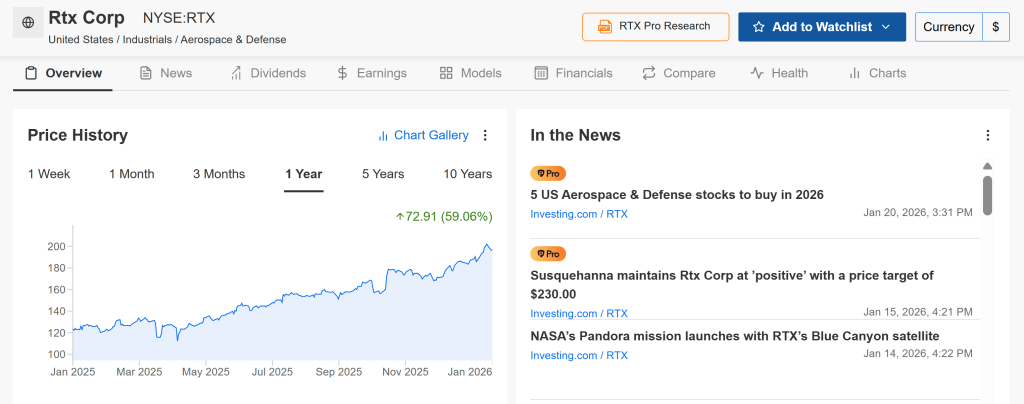
    RTX shares are up about 7% year to date in 2026, following a strong 60% advance in 2025, with a record backlog of $251 billion underpinning continued momentum.

    Looking ahead through the rest of 2026, RTX remains attractive amid rising orders from the Middle East, its inclusion in leading defense-focused ETFs, and expectations for roughly 20% earnings growth.

    Critical Metals: Unlocking Greenland’s Rare Earth Potential

    Critical Metals controls the Tanbreez project in Greenland, the largest non-Chinese rare earth deposit globally, directly linking the company to U.S. strategic resource objectives. Heightened geopolitical tensions could accelerate Washington’s push to secure access to these materials, which are essential for defense systems, missile technologies, and electric vehicles—reducing reliance on China and enhancing CRML’s strategic importance.

    In addition, the company’s proprietary rare earth processing capabilities and its focus on North American operations position it to benefit from government initiatives aimed at strengthening domestic critical-materials supply chains and expanding strategic mineral stockpiles.
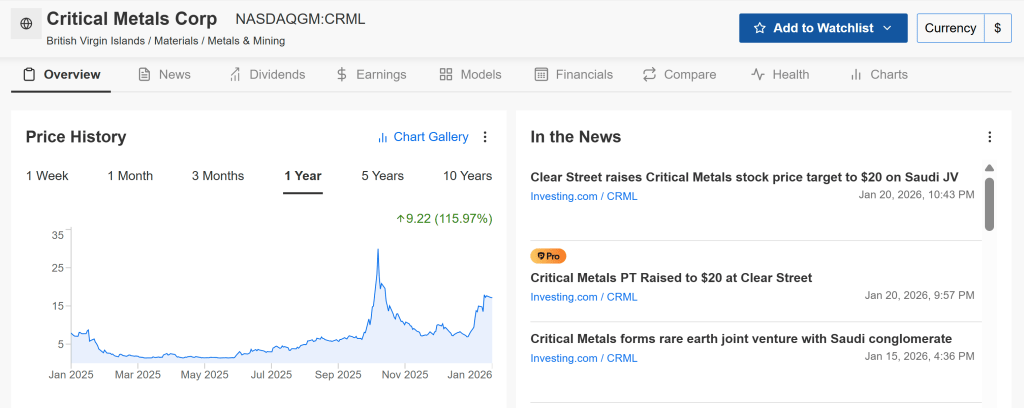
    CRML shares have surged nearly 150% so far in 2026, propelled by strong high-grade drilling results and regulatory approval for its pilot processing plant in Greenland.

    While the stock carries elevated risk, it offers substantial upside potential this year, with the possibility of capturing up to 50% of the Western rare earth supply. Despite ongoing volatility, secured offtake agreements and heightened U.S. national security priorities support the bullish case, with the stock still trading at an estimated 22% discount to net present value.

    Teck Resources: A Global Metals and Mining Leader

    Teck Resources is a leading diversified mining company with significant exposure to steelmaking coal, copper, zinc, and other essential industrial metals. While its operations are not exclusively Arctic-centric, Teck’s asset base firmly places it within the strategic raw materials space that underpins infrastructure development, defense manufacturing, and the global energy transition.

    Should 2026 be marked by robust commodity demand, sustained decarbonization spending, and intensifying geopolitical rivalry, diversified miners such as Teck are well positioned to benefit from favorable pricing dynamics and rising shipment volumes.
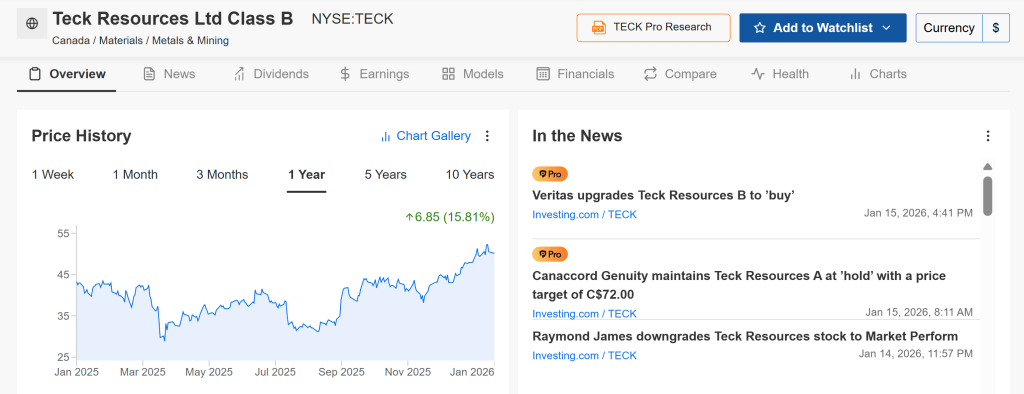
    TECK shares are up roughly 5% year to date, notching fresh 52-week highs as copper prices rally and investors rotate into the materials sector.

    Looking ahead, Teck presents a compelling copper-focused opportunity, with its merger with Anglo American set to create a top-five global producer, unlock an estimated $800 million in synergies, and benefit from AI-driven demand growth. Analyst price targets in the $80–90 range are underpinned by structural supply constraints and sustained long-term commodity demand.

    Caterpillar – Infrastructure & Arctic Expansion

    Caterpillar stands out as a key beneficiary through its portfolio of heavy machinery and construction equipment critical to Arctic infrastructure expansion, including military installations, transportation networks, and mining projects.

    Its specialized cold-weather and Arctic-rated equipment gives Caterpillar a distinct advantage in supporting development across Greenland and other high-latitude regions that gain strategic relevance amid heightened geopolitical tensions.
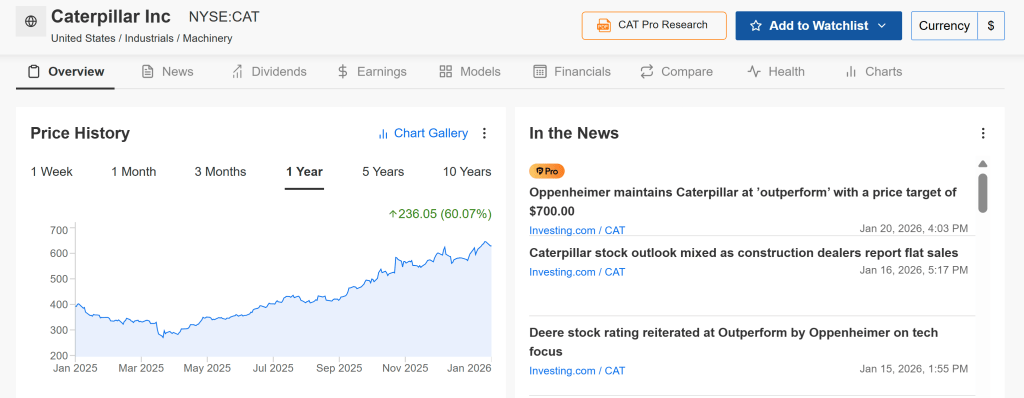
    CAT shares are up roughly 10% year to date in 2026, building on a strong 58% gain in 2025, supported by a record backlog of $39.9 billion.

    Looking ahead, Caterpillar remains a solid hold for 2026, with earnings per share projected to grow about 20.5%, aided by continued spending under the U.S. Infrastructure Act and expanding construction tied to AI-driven data center development.

    Sources: Jesse Cohen
  • Trump’s Greenland Push Signals a New Arctic Power Struggle

    Roughly $700 billion is the price tag now being discussed for a potential acquisition of Greenland, according to recent reports.

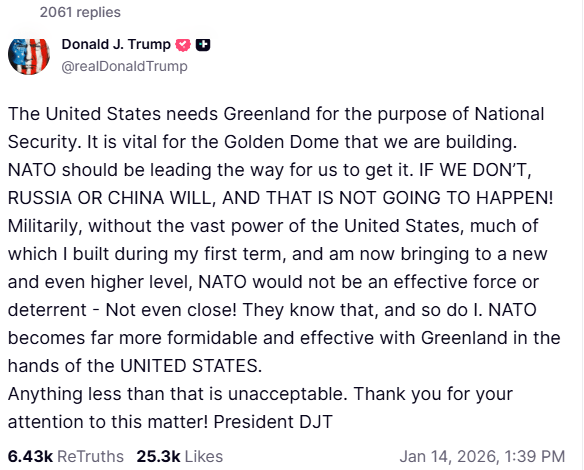
    Skepticism is warranted. A transaction of that magnitude seems highly unlikely, particularly given that it would exceed half of the U.S. Defense Department’s entire 2024 budget. Public sentiment also appears far from supportive, despite President Donald Trump’s assertion that “anything less than full U.S. control of Greenland is unacceptable.”

    Polling suggests little domestic support in the United States for the idea, whether pursued diplomatically or by force. A recent YouGov survey found that just 13% of Americans support compensating Greenland’s residents to join the U.S., while only 8% favor acquiring the island through military means.

    Sentiment in Greenland is similarly resistant, with an overwhelming majority unwilling to leave the Danish realm, and opposition across Europe—particularly in Denmark—remains firm.

    That said, dismissing Greenland’s significance altogether would be a mistake.

    Why Greenland Matters—Even Without a Sale

    Positioned between North America, Europe, and Russia, Greenland hosts the Pituffik Space Base, a critical site where the U.S. Space Force monitors potential threats traversing the Arctic and the North Pole.

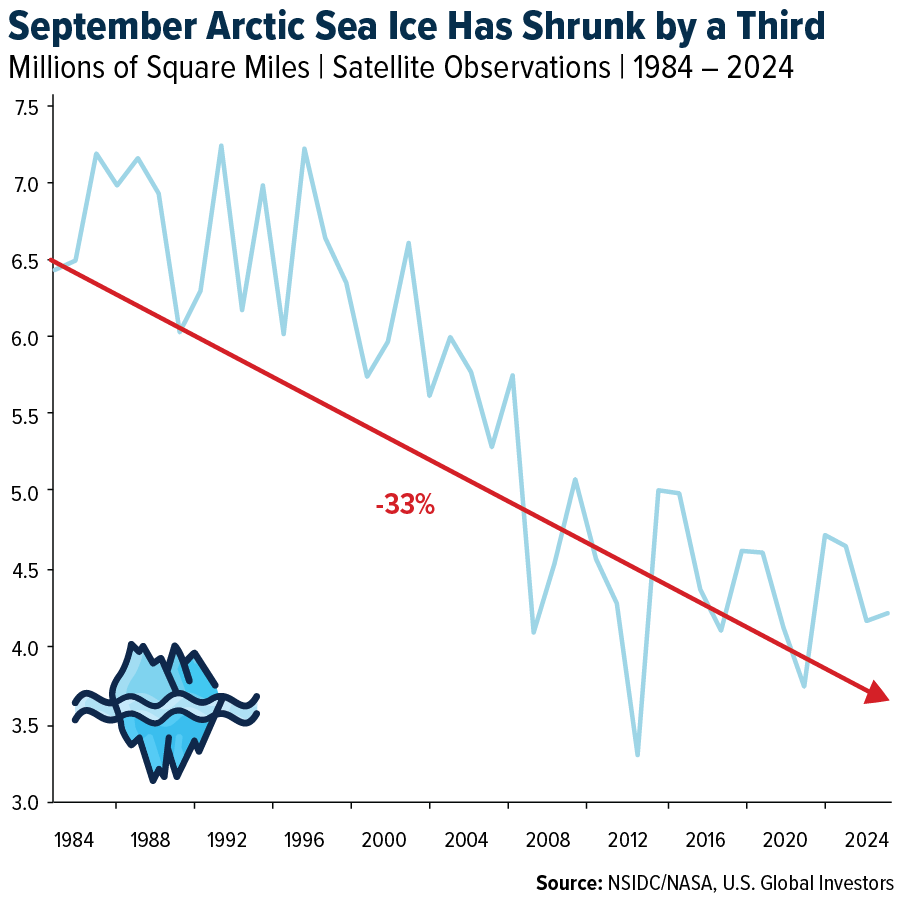
    This role has grown increasingly significant as Arctic ice continues to recede. Satellite data show that summer sea ice has been declining by more than 12% per decade—roughly 33% since 1984—opening new shipping routes and reshaping both military and commercial dynamics. As I noted last year, the Arctic is becoming not only more accessible, but also more investable.

    Denmark clearly recognizes Greenland’s growing importance. The kingdom has pledged more than $4 billion toward Arctic and North Atlantic defense through 2033, coordinating closely with NATO allies. Danish and allied air, naval, and ground forces are increasing their presence on and around the island, with exercises focused on protecting critical infrastructure and conducting fighter operations in Arctic conditions. At the same time, Denmark’s Chief of Army Command, Peter Boysen, has openly discussed the need for a stronger boots-on-the-ground posture.

    The Tough Realities of Developing Greenland

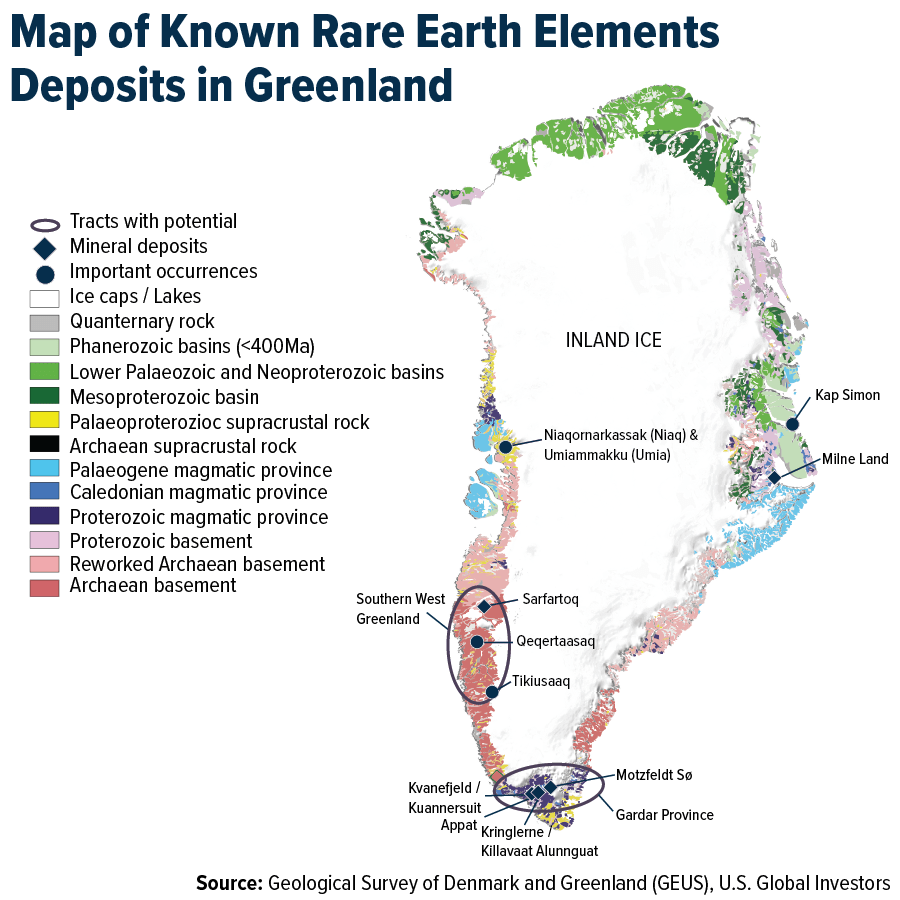
    Greenland’s resource base adds another layer of significance. The island holds substantial deposits of iron ore, copper, zinc, graphite, tungsten, and other minerals.

    Most attention, however, centers on rare earth elements (REEs)—critical materials used in technologies ranging from smartphones and fighter jets to missile guidance systems. According to the Center for Strategic and International Studies (CSIS), Greenland currently ranks eighth worldwide in proven rare earth reserves, with the potential to climb higher as exploration continues.

    From a miner’s perspective, the resource potential looks compelling. In reality, however, development would be slow, complex, and highly capital-intensive.

    Greenland spans an area roughly three times the size of Texas, yet it has fewer than 100 miles of roads—and none connect one town to another. Energy infrastructure is sparse, transportation costs are steep, and many mineral deposits are associated with uranium, which Greenland prohibited from mining in 2021 following strong local opposition.

    In this sense, Greenland is often mischaracterized in much the same way as Venezuela. Both are portrayed as resource-rich prizes ready for rapid exploitation—rare earths in Greenland’s case, oil in Venezuela’s—but the reality is that unlocking these assets would require billions of dollars and many years of sustained investment. Illustrating the challenge, Wood Mackenzie notes that only 25 hydrocarbon exploration wells have ever been drilled in Greenland, none of which have resulted in commercial success. Neither region should be viewed as a quick path to easy riches.

    China’s Efforts to Establish a Presence in Greenland Have Fallen Short

    China is well aware of Greenland’s strategic and resource significance. Over the past decade, Beijing has sought to establish a presence through airport construction proposals, infrastructure investments, scientific research initiatives, and other channels.

    Most of these efforts, however, have been blocked on national security grounds by either Denmark or the United States. In 2016, for example, a Chinese mining firm’s attempt to purchase a former U.S. naval base in Greenland was stopped. Two years later, China’s state-owned China Communications Construction Company (CCCC) pursued a $550 million contract to expand several Greenlandic airports, but then–U.S. Secretary of Defense James Mattis successfully urged Denmark to withdraw the bid.

    So What’s Driving Trump’s Interest in Greenland?

    Having said all that, why does President Trump want Greenland so badly (other than as retribution for not being awarded the Nobel Peace Prize)?

    He insists it’s for national security, but, as I mentioned earlier, the U.S. military already has broad access to the island, as spelled out in the 1951 agreement signed by the U.S. and Denmark.

    Further, Greenland is under the protection of NATO, of which the U.S. is a member. If Russia or China tried to attack it, Article 5 of the treaty would be triggered, activating NATO forces.

    Recent reporting suggests that some of Trump’s wealthiest backers see Greenland not as a military outpost or mining play, but as a blank slate. According to Reuters, influential tech investors—including Peter Thiel and Marc Andreessen—have pitched the idea of turning parts of Greenland into a so-called “freedom city,” offering a low-regulation, quasi-autonomous hub for next-gen technologies.

    Another explanation? Trump’s reaffirmation of the Monroe Doctrine, which the White House has dubbed the “Trump Corollary” or “Donroe” Doctrine. As stated in the president’s December 2 proclamation, the “American people—not foreign nations nor globalist institutions—will always control their own destiny” in the Western Hemisphere. Denmark, notably, sits in the Eastern Hemisphere.

    Japan’s Gold Reserves Reach a New Record High

    To conclude, central banks worldwide continue to accumulate gold as a means of supporting their currencies and reducing reliance on the U.S. dollar.

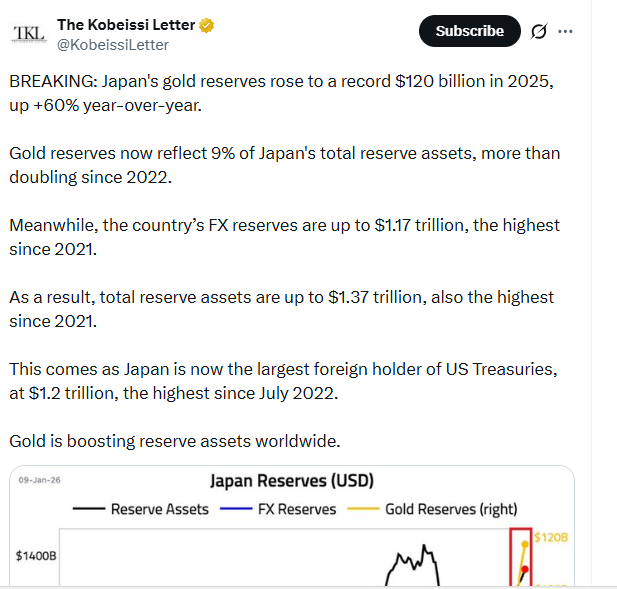
    While emerging markets have driven the bulk of gold purchases over the past decade, several advanced economies have also increased their holdings. According to The Kobeissi Letter, Japan’s gold reserves reached a new record in 2025, rising to approximately $120 billion—an increase of roughly 60% compared with the previous year.

    According to data from the World Gold Council (WGC), Japan now holds the world’s ninth-largest gold reserves, excluding the International Monetary Fund.

    As I’ve noted previously, the actions of major institutions underscore a clear recognition of the value of hard assets like gold. For that reason, I continue to advocate allocating around 10% of a portfolio to gold, divided evenly between physical bullion and high-quality gold mining equities, with positions rebalanced annually.


    All views expressed and information provided are subject to change without prior notice and may not be suitable for all investors. Links provided may direct you to third-party websites; U.S. Global Investors does not endorse and is not responsible for the accuracy or content of these external sources.

    Sources: Frank Holmes

  • Greenland emerges as Trump’s next focus in geopolitics and a potential boon for the oil industry

    TASIILAQ, GREENLAND — For decades, oil executives have eyed the Arctic as a potential source for vast petroleum reserves. U.S. government studies estimate that the region north of the Arctic Circle may contain up to 90 billion barrels of oil and nearly 1,700 trillion cubic feet of natural gas.

    The amount of oil alone could meet global demand for almost three years if all other drilling activities worldwide stopped immediately.

    At the heart of these ambitions lies Greenland, where some of the planet’s most extreme conditions safeguard vast reserves that have attracted prospectors hoping to find another giant oil field like Alaska’s Prudhoe Bay.

    One company, March GL—set to be renamed Greenland Energy Company upon going public this year—is aiming to become a major player in the industry by tapping into billions of barrels of oil located on Jameson Land, a peninsula on Greenland’s eastern coast. This oil has the potential to significantly impact U.S. and European markets by introducing a large new supply, which could help reduce Europe’s reliance on Russian oil, currently constrained by strict sanctions due to the ongoing war in Ukraine.

    In late October, Yahoo Finance joined March GL CEO and experienced oilman Robert Price, along with the company’s lead petroleum engineer, in the town of Tasiilaq on Greenland’s eastern coast. There, March GL’s contractors were preparing to store a range of heavy machinery for the winter season.

    Price had planned to transport the earthmoving equipment by barge to Jameson Land, where the company intends to build a three-mile road from the coast to its inland drilling site for the initial wells. However, rough seas along the island’s eastern coast prevented the tugboat assigned to move the equipment from making the trip. By late autumn, the ice-free window for such a journey was closing too fast to wait for a replacement vessel.

    As a result, March GL’s team will keep much of the machinery in Tasiilaq until spring or summer, when thawing ice will allow movement. This delay underscores the challenging and unpredictable operating conditions in Greenland.

    Since that trip, the challenges around Price’s ambitions in Greenland have only grown more complex.

    After Venezuelan leader Nicolás Maduro was captured and removed from power in early January, President Trump intensified his focus on Greenland. At a Jan. 4 press briefing, Trump said the United States “needs Greenland” to secure its national security interests in the Arctic, drawing strong criticism from both the Greenlandic and Danish governments.

    At a White House meeting with more than a dozen major oil executives, Trump insisted that owning Greenland would be essential for defense, saying that defending leased territory is not the same as defending territory the U.S. owns. He added that the U.S. would take action on Greenland “whether they like it or not.”

    In a Jan. 6 briefing to Congress, Secretary of State Marco Rubio confirmed that the U.S. was actively pursuing the option of purchasing Greenland from Denmark, and Louisiana Governor Jeff Landry—who Trump named as a special envoy to Greenland—said he intends to work toward making the territory part of the United States.

    These moves have heightened diplomatic tensions, with Greenland’s leaders and Denmark pushing back against U.S. efforts and stressing that the island’s future should be decided by its people and legal processes.

    Meanwhile, China and Russia have been expanding their military and maritime activities across the Arctic, putting pressure on the U.S. and Europe to boost their own defense readiness and elevating Greenland’s strategic importance. In January, a subsidiary of Russia’s state nuclear corporation shared a video on Telegram showing an icebreaker navigating the “Northern Sea Route,” which passes near Greenland and offers a significantly faster shipping route between Europe and Asia compared to the Suez Canal.

    If March GL succeeds, Price’s company could establish a significant American energy foothold in the High North at a time when territorial control has become a top priority for the White House. That, however, was not originally part of Price’s plan.

    Sources: Yahoo Finance