Tag: finance

  • This Week’s Top Buy and Sell Picks: AMD (Buy), Cal‑Maine Foods (Sell)

    • This week’s highlights include the U.S. jobs report, ISM PMI surveys, and the CES Conference.
    • AMD is a recommended buy, driven by expected AI innovations presented in CEO Lisa Su’s CES keynote.
    • Cal-Maine Foods is a sell candidate ahead of a potentially disappointing earnings report and a weak outlook.

    Wall Street’s major indexes closed mostly higher on Friday, the first trading day of 2026, boosted by gains in semiconductor and AI-related stocks. However, all three indexes still recorded slight declines for the week.
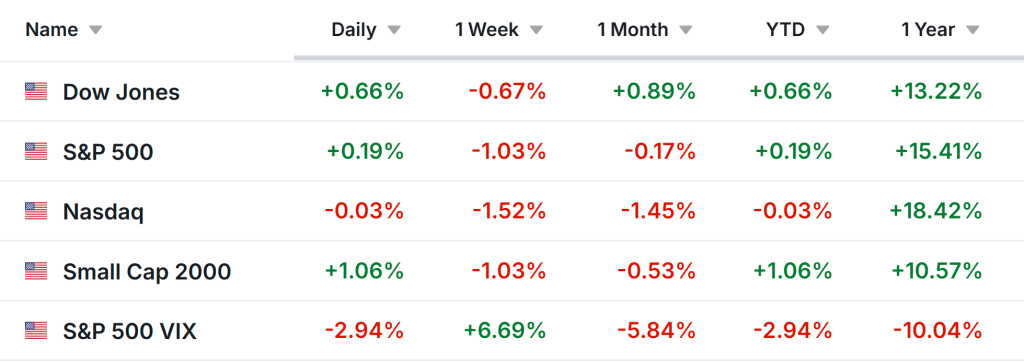
    The Dow Jones Industrial Average slipped 0.7%, the S&P 500 dropped 1%, the tech-focused Nasdaq Composite fell 1.5%, and the small-cap Russell 2000 declined 1%.

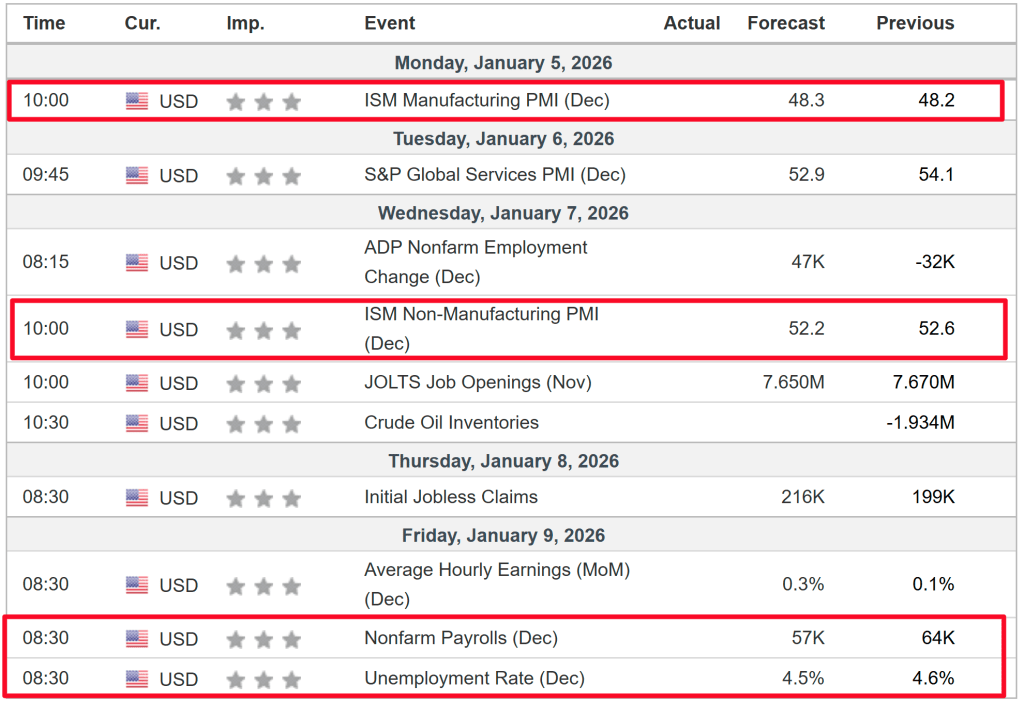
    The first full trading week of 2026 promises to be busy, with monthly jobs data taking center stage. Economists forecast nonfarm job growth of 54,000 for January, down from 67,000 in December, while the unemployment rate is expected to decrease to 4.5% from 4.6%. Additionally, the ISM manufacturing and services PMIs will be closely monitored by investors.
    On the earnings front, only a few companies are scheduled to report this week, including Constellation Brands, Cal-Maine Foods, Jefferies Financial Group, Albertsons, and Applied Digital.

    Meanwhile, investors in the tech and consumer sectors will be closely watching the CES conference in Las Vegas. Key companies to watch for product launches, strategic updates, and AI developments include Nvidia, AMD, Intel, Qualcomm, Meta Platforms, Samsung, LG, Sony, and Motorola.

    No matter how the market moves, below I highlight one stock expected to gain interest and another that may face further declines. Keep in mind, my outlook is limited to the upcoming week, Monday, January 5 through Friday, January 9.

    Stock to Buy: Advanced Micro Devices

    AMD stands out as a strong buy this week, with the 2026 Consumer Electronics Show (CES) acting as a key catalyst. The highlight will be CEO Dr. Lisa Su’s opening keynote on Monday at 6:30 PM PT (9:30 PM ET).

    Su is expected to present AMD’s vision for AI solutions across cloud, enterprise, edge, and devices, potentially unveiling new advancements in AI chips and related technologies. Historically, AMD shares tend to rally during the week of its major product announcements, often followed by multiple analyst upgrades.
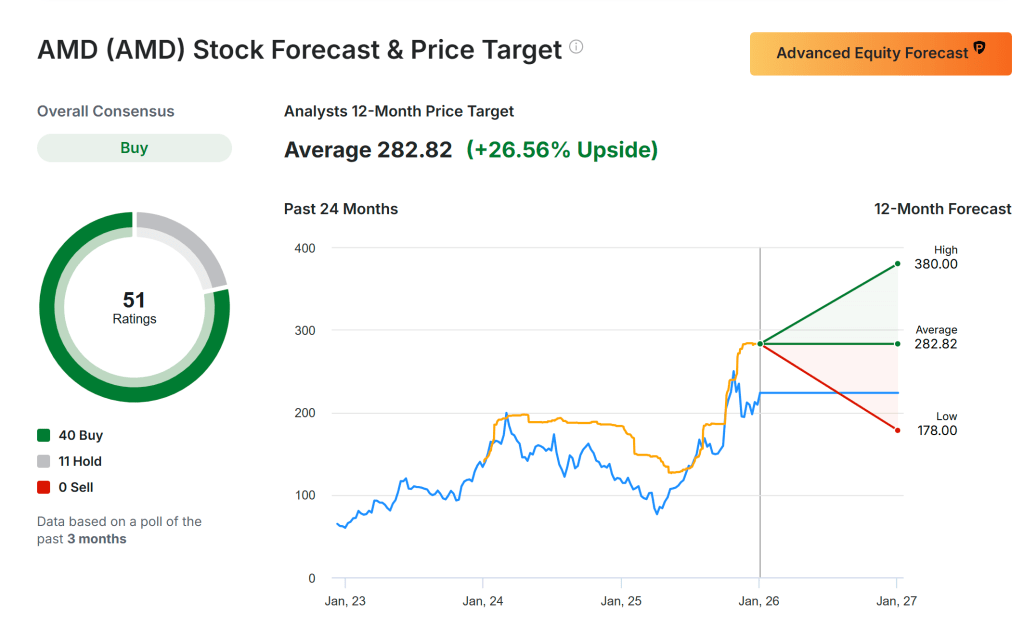
    Analysts remain optimistic, with a consensus Strong Buy rating supported by 40 Buy and 11 Hold recommendations, suggesting a 26.5% upside potential for 2026. TD Cowen recently named AMD among its top AI picks, setting a price target of $290.

    Fundamentally, AMD’s growth is driven by its AI product portfolio, including the MI300 series accelerators, which are gaining ground against rivals like Nvidia.
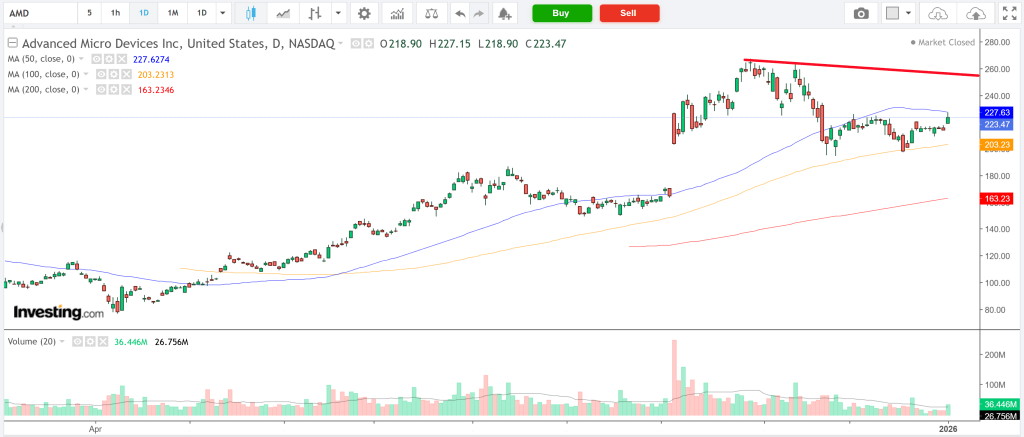
    AMD shares closed Friday at $223.47. From a technical standpoint, the stock has demonstrated resilience, recovering from mid-2025 lows near $150 to its current level, supported by strong trading volume. If the upcoming keynote meets expectations with announcements like new partnerships or product roadmaps, AMD could soon challenge its 52-week high around $270.

    AMD holds a Financial Health Score of 2.98 (“GOOD”), indicating a solid balance sheet and strong operating momentum driven by excitement around its next-generation AI products.

    Stock to Sell: Cal-Maine Foods

    Cal-Maine Foods starts the week at $78.47, hovering near its 52-week low, as Wall Street anticipates a weak earnings report and a bleak outlook. The company faces headwinds including rising feed costs, supply chain challenges, and variable demand.

    The largest U.S. producer and distributor of shell eggs is set to release its fiscal second-quarter results before the market opens on Wednesday at 6:00 AM ET, followed by a conference call at 9:00 AM ET.
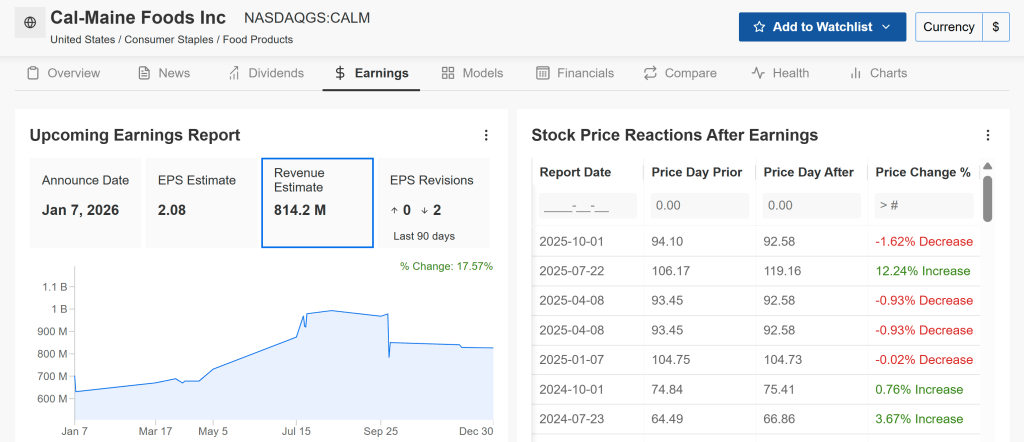
    Cal-Maine is projected to report earnings of $2.08 per share, a sharp 53.5% decline from $4.47 a year ago, driven by higher input costs and fluctuating demand. Revenue is expected to drop 14.7% year-over-year to $814.2 million, amid ongoing egg price volatility and potential disruptions from recent avian flu outbreaks that have affected supply chains.

    Looking forward, the company’s guidance is likely to reflect continued uncertainty around production normalization and cost control, posing further challenges for investor confidence and stock performance.
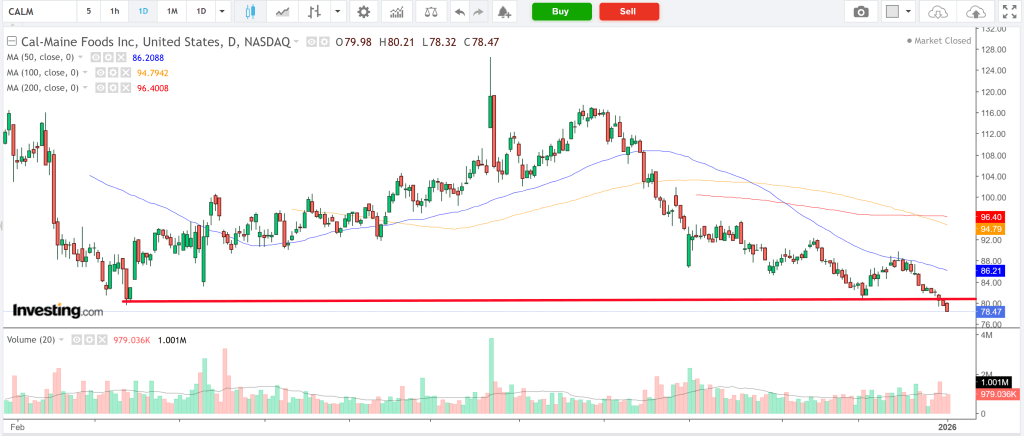
    Technically, CALM has slipped below key support levels, accompanied by declining volume that indicates weakening investor interest. Its one-year target price of $95.50 offers limited upside, but the risks from a disappointing earnings report outweigh potential gains.

    With the likelihood of underwhelming results and cautious guidance, CALM is a sell this week to avoid volatility driven by these events.

    Whether you’re a beginner investor or an experienced trader, using InvestingPro can help you uncover investment opportunities while managing risks in this challenging market environment.

    Sources: Investing
  • 5 Effective Market Volatility Strategies to Protect and Grow Your Long-Term Wealth

    Market volatility often feels personal. One week, your investment portfolio appears stable; the next, it drops, headlines turn alarming, and every conversation sounds like a prediction. This emotional rollercoaster is normal, but panic selling can turn temporary market swings into lasting financial damage.

    For high-net-worth families and business owners, the stakes are even higher. Investments are not for entertainment—they serve real financial goals like retirement income, business transitions, philanthropy, and preserving long-term wealth.

    The good news is, successful investing doesn’t require perfect timing. Instead, it demands a consistent process that withstands diverse market conditions, volatile periods, and unforeseen events. The most effective market volatility strategies emphasize preparation, discipline, and risk management, all geared toward sustainable long-term growth.

    Key Takeaways

    • Market volatility is a normal part of investing; having a rules-based plan helps minimize panic selling and costly mistakes.
    • Effective risk management begins with clear asset allocation, defined investment horizons, and practical guardrails.
    • Portfolio diversification works best when intentional and based on asset class exposure—not simply by increasing the number of holdings.
    • Regular rebalancing reinforces the discipline of “selling high” and helps reduce volatility over time.
    • Maintaining a steady investment psychology keeps investors focused on long-term performance rather than daily market fluctuations.

    What Market Volatility Really Means in the Stock Market

    Market volatility reflects shifting expectations. Stock prices fluctuate, bond yields change, and the market continuously reprices risk as economic conditions evolve. Factors such as inflation risk, interest rate changes, and unexpected news can quickly alter market values.

    Volatility is not limited to equities. When interest rates rise, bond prices typically fall, often surprising investors who expect fixed-income assets to provide stability. In the bond market, price fluctuations are driven by interest rate risk, credit risk, and credit quality—especially in high-yield bonds and certain bond funds.

    Not every market downturn signals a crisis, but each one tests whether your portfolio aligns with your risk tolerance and investment objectives.

    Investment Psychology: Why Many Investors Make Costly Moves

    During volatile periods, investment psychology can undermine sound judgment. Loss aversion makes market declines feel unbearable, while recency bias convinces investors that recent events will dictate future outcomes. Coupled with constant commentary on indices like the Dow Jones and “potential winners,” investors face emotional pressure from all sides.

    Risk-averse investors are particularly vulnerable. When fear peaks, many abandon their original plans and move to cash at inopportune moments. Hesitation to re-enter the market thereafter can significantly harm long-term returns.

    The solution is not bravado but structure. A well-designed, rules-based investment plan reduces the likelihood of reactive decisions during turbulent times.


    Practical Risk Management Strategies for a Diversified Portfolio

    During periods of market turbulence, the objective isn’t to predict headlines but to manage risk effectively and keep your balanced portfolio aligned with your long-term financial goals.

    1. Start With Asset Allocation and Risk Tolerance

    Asset allocation is one of the most important factors driving long-term investment performance. A well-designed allocation reflects both your risk tolerance—the level of risk you are comfortable with—and your risk capacity, which is more practical and considers your time horizon, liquidity needs, and how much additional risk your financial plan can realistically withstand without forcing unwanted changes.

    If a market downturn would compel you to sell assets to cover life expenses, your portfolio’s overall risk might be too high for your situation. This is especially critical for business owners nearing liquidity events or investors approaching retirement, who need to ensure their allocation aligns with their unique financial circumstances.

    2. Build Portfolio Diversification That Holds Up Across Market Conditions

    Portfolio diversification is effective when your assets respond differently under the same market conditions. Simply owning multiple mutual funds tracking similar benchmarks can still expose you to a single dominant risk factor.

    A truly diversified portfolio includes exposure to multiple asset classes, such as:

    • Equities across various sectors
    • International stocks for broader geographic exposure
    • Fixed income securities selected by credit quality and duration
    • Cash or short-term instruments to manage liquidity risk

    This approach reduces overall portfolio volatility by not relying on a single market narrative. It also preserves long-term growth potential by avoiding overconcentration in any one area.

    3. Use Fixed Income Investments With Eyes Open

    Bonds can provide portfolio stability, but selecting the right bonds is crucial. Government and high-quality bonds often behave differently from corporate or high-yield bonds, especially during economic stress. Credit risk and duration significantly impact bond performance.

    Rising interest rates typically cause bond prices to fall, particularly for longer-duration bonds. Bond funds may also experience unexpected market value fluctuations, and selling during market stress can lock in losses. Understanding interest rate risk, credit quality, and bond price sensitivity across economic cycles is essential.

    Fixed income investments play an important role but should be tailored to your time horizon and investment objectives—not based on assumptions or market noise.

    4. Rebalancing With Discipline to Manage Risk

    Rebalancing is a disciplined approach to managing risk and maintaining a balanced portfolio. It helps prevent emotional trading by systematically adjusting your holdings back to your target asset allocation.

    Over time, rebalancing reinforces the “sell high” discipline by trimming assets that have grown disproportionately and adding to those that have lagged behind. While it’s not a guarantee of gains, this method effectively controls risk and reduces portfolio drift during volatile market conditions.

    5. Plan Liquidity to Reduce Forced Selling

    Liquidity risk becomes a critical concern when cash is needed during a market downturn. Having a clear cash plan, maintaining an emergency reserve, and carefully timing large expenses can help minimize the risk of being forced to sell investments at unfavorable prices.

    This strategy is especially vital for investors with irregular cash flows, upcoming tax obligations, or significant business expenses. A well-structured liquidity plan safeguards your long-term investment goals by preventing your portfolio from being tapped as an emergency fund.

    Sources: Investing

  • The Great Crypto Reset: Why Institutional Integration Will Define 2026

    The entire crypto market, tracking over 18,000 tokens across centralized and decentralized exchanges, is currently valued at nearly $3 trillion. This represents a 31% decline from the all-time high of $4.37 trillion recorded in early October, just before the recent crypto market crash.

    Bitcoin, the largest cryptocurrency by market cap, is hovering around $88,000, accounting for more than half of the total market value at $1.77 trillion. Despite its dominant position, Bitcoin is poised to end the year with a negative annual return.

    Since 2012, this marks the fourth year Bitcoin has underperformed, albeit by a significantly smaller margin compared to previous down years. For context, Bitcoin’s annual losses were -50.2% in 2014-72.1% in 2018, and -62% in 2022. If Bitcoin maintains its current price level near $88,000, its annual underperformance in 2025 would be the “best of the worst” at around -6%.

    Compared to Bitcoin, traditional asset classes like stocks and gold/silver have delivered substantially better returns this year on average. This contrast raises important questions about crypto’s position and outlook heading into 2026.

    Is the Crypto Market Mature Enough for Significant Exposure?

    The core purpose of the blockchain ecosystem is to transform the traditional money system through trustless finance. In simple terms, it leverages advances in cryptography combined with a full software stack to make transacting value as seamless as sending a message on an app.

    While online banking and payment processors like PayPal have long provided similar convenience, the blockchain ecosystem offers a fundamental overhaul. Instead of relying on a single intermediary that acts as a bottleneck, automated smart contracts on an immutable ledger—the blockchain—execute all value transfers autonomously.

    This decentralized approach eliminates single points of failure, increases transparency, and enhances security, paving the way for a new era of financial innovation.

    This newly reinvented financial system—decentralized finance (DeFi)—has shown tremendous promise. Its total value locked (TVL) skyrocketed from $600 million in 2020 to $176 billion by late 2021, marking an astonishing growth of over 29,000%. Such rapid expansion is a clear indicator of a nascent industry emerging.

    However, following the FTX collapse in late 2022 and a wave of bankruptcies among overleveraged crypto ventures, DeFi’s TVL has stabilized around $50 billion for the past two years. It was only after President Trump’s second term and the removal of the previously antagonistic SEC Chair Gary Gensler that DeFi began to recover, reaching approximately $168 billion TVL in early October.

    Looking at this entire period from 2020 to now, several key conclusions emerge:

    • Without active institutional and legislative support, blockchain finance risks remaining confined to the enthusiast fringe. Like many cultural phenomena, mass adoption tends to be top-down driven, as exemplified by Elon Musk’s influence on Dogecoin’s surge.
    • One major hurdle to crypto’s wider adoption is the inflation of new tokens, which fuels recurring boom-and-bust cycles. This token oversupply undermines investor attention, market legitimacy, and overall capital efficiency.
    • The current ecosystem—where tokens are staked to earn more tokens in a closed-loop, casino-like economy—must give way to real utility derived from external value rather than internal dilution.
    • Moreover, Web3 crypto usage remains far from user-friendly and secure, with frequent incidents like bridge hacks and wallet incompatibility. According to Chainalysis, over $3.4 billion in crypto funds were stolen in 2025 alone. Ideally, blockchain finance should be so seamless that users are unaware they’re interacting with decentralized technology.
    • Notably, the market rally following the removal of SEC Chair Gary Gensler signals that blockchain’s underlying value hinges on how well it integrates with the broader, compliance-driven economy. As such, 2026 is shaping up to be a pivotal year for crypto’s maturity and mainstream acceptance.

    Bitcoin and Stablecoin-Based Institutional Integration: The 2026 Catalyst

    While DeFi protocols sought to establish dominance, new intermediaries such as foundations, early adopters, venture capitalists, and miners quickly asserted control. Despite the promise of decentralization, the ease of creating new tokens generated persistent dilution pressure across the crypto ecosystem.

    Bitcoin, however, avoided this recursive dilution trap by imposing a physical energy barrier through its proof-of-work algorithm. This barrier limits token creation ex-nihilo, allowing Bitcoin’s network effect to remain robust. Following the October market crash, Bitcoin’s mining difficulty held steady, even increasing before stabilizing at pre-crash levels as the price hovered around $88,000 towards year-end.

    Amid rising inflation fears, geopolitical tensions, and trade conflicts, gold and silver have regained their status as trusted hedges. Nevertheless, Bitcoin’s deterministic scarcity and digital-native nature position it uniquely for the modern economy, contrasting with gold’s pseudoscarcity.

    Although many financial institutions underestimated Bitcoin’s 2025 price — with forecasts from Standard Chartered ($200k), VanEck ($180k), JPMorgan ($165k), Bernstein ($200k), and Fundstrat ($250k) — these projections may be delayed signals for 2026. As of early December, JPMorgan analysts suggested Bitcoin could reach $170k in 2026, assuming it begins to trade similarly to gold.

    Moreover, recent research from K33 indicates that selling pressure from long-term holders (LTH) is nearing exhaustion. If this holds true, Bitcoin is poised to lead a renewed altcoin market rally in 2026, but with some notable distinctions:

    • The full implementation of the EU’s Markets in Crypto-Assets (MiCA) regulation will channel the majority of European crypto trading volume into regulated entities, while simultaneously triggering a flight of activity to less restrictive jurisdictions.
    • Meanwhile, tokenized stocks are poised for wider adoption as the US clears key regulatory hurdles. Notably, SEC Chair Paul Atkins issued a no-action letter to the Depository Trust Company (DTC) to facilitate the rollout of tokenized securities. However, offerings from platforms like Robinhood, Kraken, and Dinari remain heavily geo-restricted.
    • As the EU seeks to curb USD-based stablecoin flows—evidenced by Kraken’s fiat-only tokenized stock trading—the US stands to gain renewed competitive advantage.
    • Institutional oversight in the US is becoming increasingly crypto-friendly, likely aiming to solidify USD dominance via stablecoins. For example, the Basel Committee on Banking Supervision (BCBS) is revising its rules on banks’ exposure to cryptocurrencies. Together with more accommodating regulators such as the FDIC and OCC, it is now highly likely that US banks will hold cryptocurrencies in 2026.
    • Following the passage of the GENIUS Act, stablecoin flows are expected to significantly boost the broader crypto market. On one side, Circle’s upcoming Arc blockchain—backed by Blackrock, Visa, and Amazon—will support institutional stablecoin settlements. On the other, stablecoins are rapidly becoming the primary consumer-facing crypto product.
    • While MiCA’s vague definition of “decentralization on a spectrum” may hinder true DeFi innovation, it nonetheless accelerates capital formation around compliant crypto primitives.

    The Bottom Line

    Since 2020, the crypto ecosystem has created transformative wealth but also faced setbacks due to excessive experimentation. The strict regulatory stance under SEC Chair Gary Gensler cooled early enthusiasm, turning much of crypto activity into speculative trading rather than real financial innovation.

    Following President Trump’s SEC repeal of SAB 121, crypto entered a new phase of integration under traditional finance (TradFi) rules. Despite macroeconomic and geopolitical headwinds, crypto moves into 2026 on its most stable footing yet.

    Unlike prior cycles dominated by retail sentiment, institutional investors — pension funds, insurers, and endowments — are expected to reduce volatility through spot ETFs and altcoin trusts on high-performance chains like Solana and Sui.

    The rise of Real World Assets (RWA) will foster a unified liquidity layer, linking tokenized stocks, RWAs, and TradFi blockchain networks with DeFi protocols. In this emerging hybrid finance, stablecoins will be the backbone, enabling DeFi’s transformation into a regulated, compliant capital market.

    Sources: The Tokenist

  • Tesla Stock Rally in Question Following Four Straight Days of Declines

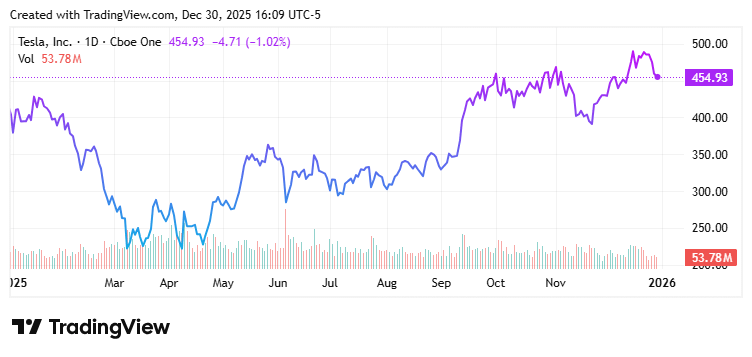
    Shares of auto giant Tesla Inc. closed lower for the fourth consecutive session on December 29, signaling a notable shift in momentum just days after the stock reached a fresh all-time high. Since that peak just before Christmas, Tesla shares have declined nearly 8%, marking a sharp reversal after a hard-fought rally.

    The timing of Tesla’s recent pullback makes it particularly notable. In a market hovering near record highs, Tesla’s sudden loss of momentum just as it enters blue sky territory raises a critical question: is this a healthy pause or an early sign that the rally is losing steam?

    Let’s explore the arguments on both sides.

    A Pullback Was Always Possible Amid Tesla’s Rapid Rally

    Tesla has surged more than 100% since April, with its longer-term uptrend remaining firmly intact. Even after the recent decline, the stock has not broken any major trend structures—it simply looks more pronounced coming off a record high. Many investors had anticipated the rally to accelerate after Tesla finally cleared long-term resistance, rather than pull back.

    From a technical perspective, a pullback of this magnitude is normal and consistent with previous corrections the stock has experienced this year. The latest rally phase was largely one-directional, making profit-taking after major milestones expected.

    Tesla’s shares could fall another 8% and still remain within the rising trend channel that has supported the stock since spring. Viewed this way, the recent selloff represents a period of digestion rather than a breakdown. Healthy uptrends rarely move in straight lines—something Tesla investors are all too familiar with.

    This outlook is further supported by Tradesmith’s Health Indicator, a volatility-based measure of stock price strength. According to this indicator, Tesla (TSLA) stock has remained in the green zone for four consecutive months, signaling a healthy underlying trend despite recent pullbacks.

    A Change in Tone Marks Shift in Market Sentiment Around Tesla Stock

    While a pullback is normal after reaching an all-time high, four consecutive lower closes suggest there is more at play than just short-term profit-taking. The sustained selling pressure indicates that bears have firmly taken control from the bulls, with little defense visible so far.

    The critical question now is whether buyers will quickly re-enter the market. If they do, this pullback may be seen as a buying opportunity for long-term investors. If not, the market could begin to reassess the remaining upside potential ahead of the next major catalyst—January’s earnings report.

    Analyst Support Remains Strong as Tesla Navigates Recent Price Decline

    Despite recent weakness, analyst conviction in Tesla remains firm. Over the past week, both RBC and Canaccord Genuity reaffirmed their Buy ratings on the stock. Canaccord Genuity even raised its price target to $551, implying roughly 20% upside from current levels.

    These positive calls suggest that the recent selloff is a minor pullback within a larger, ongoing uptrend that still has significant room to grow, even if near-term price action appears uncomfortable. While Sell ratings, such as one from UBS Group last week, persist, they remain rare exceptions in an otherwise solid analyst consensus.

    This broader trend of sustained analyst support is particularly important during periods of market uncertainty like the current one.

    Why the Next Few Trading Sessions Are Crucial for Tesla Stock

    Despite the ongoing pullback, it would be a mistake to dismiss the recent price action entirely. Runs of consecutive red days like this are rare for Tesla, especially so soon after hitting new highs. The fact that this is occurring while the broader market remains strong adds an extra layer of concern.

    Tesla’s high valuation intensifies this tension. Trading with a price-to-earnings ratio above 300, the stock leaves little margin for error. Any sign of disappointment in the company’s upcoming earnings report at the end of January could lead to a swift selloff. Confidence, not just momentum, is now a crucial factor.

    This makes the upcoming sessions particularly important. How Tesla performs through the remainder of the holiday week and into early January will provide vital clues about the health of the rally. Stabilization or a quick rebound would suggest the pullback is routine. Continued weakness, however, would encourage bearish sentiment and shift the narrative from consolidation to growing doubt.

    Sources: Investing

  • Bitcoin holds at $93.6K as Strategy reports Q4 loss

    Bitcoin traded steadily on Tuesday, as a pickup in risk appetite lent support to the world’s largest cryptocurrency early in 2026, though renewed concerns surrounding treasury-focused firms limited further upside.

    On Monday, Strategy Inc. (NASDAQ: MSTR), the largest corporate holder of Bitcoin, reported a significantly larger unrealized loss on its digital assets for the fourth quarter, reflecting the decline in the value of its holdings throughout 2025.

    The broader crypto market also edged higher alongside Bitcoin, but gains generally lagged those seen in other risk-oriented sectors, particularly technology stocks.

    Market sentiment improved as investors looked past the initial shock of a U.S. military action in Venezuela, which resulted in the capture of President Nicolás Maduro. Attention has now turned to Washington’s next steps for the region.

    Bitcoin rose 1.3% to $93,576.7 at 00:59 ET (05:59 GMT), though it remained down more than 6% for 2025.

    Saylor’s Strategy reports $17.44B unrealized loss in Q4

    Michael Saylor’s Strategy announced on Monday night that it recorded a substantial $17.44 billion in unrealized losses for the fourth quarter of 2025, largely due to a decline in the value of Bitcoin, its largest asset.

    A directly comparable figure for the fourth quarter of 2024 was unavailable, although the company had reported a net loss of $670.8 million in Q4 2024. Last year, Strategy adopted new accounting rules requiring it to mark its Bitcoin holdings to fair value in its earnings—a change that has led to significant swings in quarterly results.

    The company’s shares, which function as a Bitcoin proxy, fell nearly 50% in 2025 as investors grew increasingly skeptical about the long-term viability of its crypto accumulation strategy. A prolonged downturn in Bitcoin prices, along with Strategy’s exclusion from a major U.S. stock index, further weighed on market sentiment.

    The steep decline in Strategy’s share price has also raised concerns that the firm could be forced to liquidate part of its Bitcoin holdings to meet future debt and shareholder commitments—an outcome that could trigger substantial selling pressure on Bitcoin itself.

    Altcoins climb as XRP leads gains

    The broader crypto market traded mostly in positive territory in line with Bitcoin, with XRP outperforming the rest.

    XRP jumped 12% amid stronger capital inflows into spot exchange-traded funds, while supplies of the token were also seen shrinking on major exchanges.

    The world’s second-largest cryptocurrency, Ether, gained 2% to $3,220.24, while BNB advanced 0.6%.

    Solana and Cardano rose by 2.5% and 5.5%, respectively.

    In the memecoin space, Dogecoin added 0.4%, while $TRUMP climbed 2.6%.

    Sources: Investing