Tag: ETH

  • Ethereum has reached its long-term downtrend line—does this present a buying opportunity?

    In our Ethereum (ETHUSD) update from three weeks ago, we noted that ETH had been forming an ascending triangle since 2020—characterized by higher lows and relatively equal highs—signaling that the long-term uptrend remained intact. We also highlighted that a pullback toward the ~$2,200 support area, followed by a breakout, could open the door for a move toward ~$6,190.

    Today, Ethereum is trading near that trend line at around $2,150. At the same time, the daily RSI(30) has declined to 32. Historically, aside from the 2018 bear market, this zone has provided attractive low-risk, high-reward opportunities for investors with a long-term horizon or those employing a dollar-cost averaging (DCA) strategy (see Figure 1).
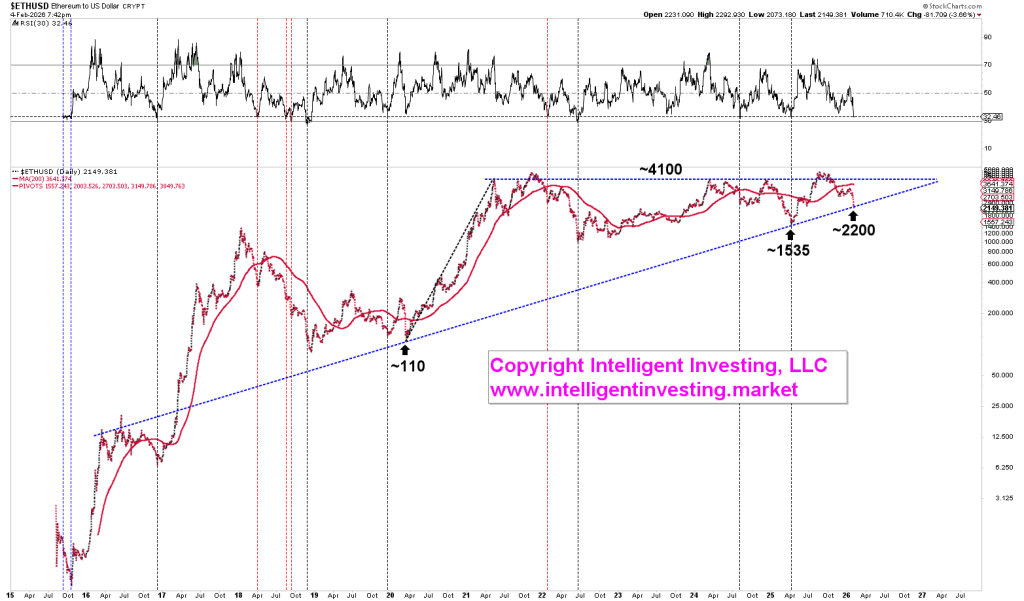
    Figure 1: Ethereum’s daily price action since 2015.

    More on the RSI is discussed below. In the meantime, what would be the downside risk if the trend line fails to hold, allowing for some short-term whipsaw action? That scenario is illustrated below using the Elliott Wave Principle (EW). Under this framework, ETH’s price action suggests it may be unfolding within a larger, higher-degree fourth wave—labeled as the black Wave 4. See Figure 2.
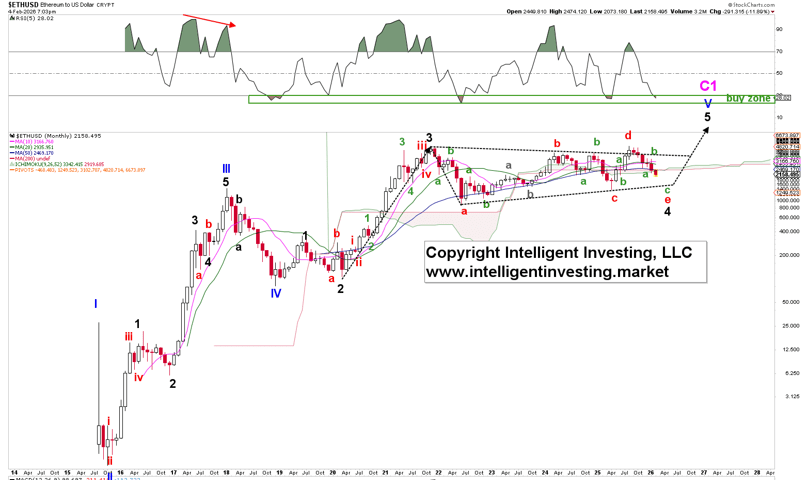
    Figure 2: Ethereum’s monthly price action since 2015.

    In this scenario, Ethereum would gravitate toward the lower black dotted trend line, which has acted as key downside support since 2021 and is currently near $1,450. From that level, the second-largest cryptocurrency by market capitalization could still resume its advance, unfolding a (black) fifth wave that ideally targets around $6,200 (4,865 − 1,08? + 1,450). This aligns closely with the breakout objective from our original analysis, where we noted: “If Ethereum drops to ~$2,200 support first and then breaks out, we can expect ~$6,190.”

    Lastly, it is worth noting that the monthly RSI(5) has now fallen below 30. Similar to the daily RSI(30), historical data shows that this level has typically provided low-risk, high-reward opportunities for investors with a long-term horizon and/or those employing a dollar-cost averaging (DCA) approach.

    Sources: Arnout ter Schure

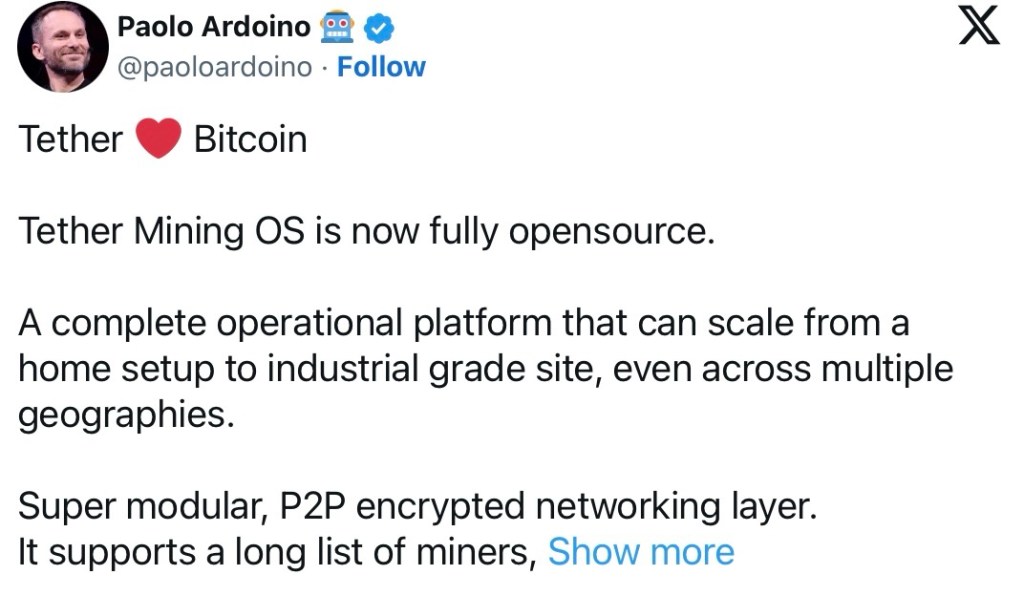
  • Bitcoin miners gain an open-source option with the launch of Tether’s MiningOS

    Stablecoin issuer Tether said its newly launched MiningOS is a modular, self-hosted software stack designed to support mining operations ranging from small home rigs to large, multi-site industrial facilities.

    What to know:

    • Tether has introduced MiningOS, an open-source, modular operating system for Bitcoin mining designed to streamline infrastructure management and lessen reliance on proprietary vendor software.
    • The self-hosted platform uses a peer-to-peer architecture, allowing miners to manage operations without centralized services and scale seamlessly from home rigs to multi-site industrial facilities.
    • Released under the Apache 2.0 license and built on Holepunch peer-to-peer protocols, MiningOS is hardware-agnostic and positions Tether alongside other advocates of open-source mining solutions, including Jack Dorsey’s Block.

    Tether has unveiled an open-source operating system for Bitcoin mining, positioning it as a tool to simplify infrastructure management while cutting dependence on closed, vendor-controlled software. On Monday, the stablecoin issuer announced the launch of MiningOS (MOS), a modular and scalable mining platform built to serve everyone from individual hobbyists to large institutional operators.

    The software aims to eliminate the “black box” nature of many existing mining setups, where hardware and monitoring systems are tightly locked into proprietary ecosystems. According to Tether, MiningOS prioritizes transparency, openness, and collaboration, and is designed with no vendor lock-in.

    MOS operates on a self-hosted architecture and uses an integrated peer-to-peer network to communicate with connected devices, enabling miners to manage operations without centralized services. Operators can tailor settings via a companion interface based on their scale and production needs. Tether CEO Paolo Ardoino described MOS as a “complete operational platform” capable of scaling from a single home rig to industrial-grade mining sites spread across multiple locations.

    Tether first outlined plans for an open-source mining operating system in June last year, saying new miners should be able to compete without relying on costly third-party software and management providers. The launch puts Tether alongside other crypto companies advocating open-source mining infrastructure, including Jack Dorsey’s Block.

    MiningOS is released under the Apache 2.0 license and is built on Holepunch peer-to-peer protocols, a design choice intended to keep the software stack independent of external third-party dependencies.

    Sources: Shaurya Malwa

  • Ether tumbles 10% as heavy selling hits crypto markets

    Ethereum was trading at $2,434.30 as of 12:14 local time (17:14 GMT) on Saturday, according to the Investing.com Index, marking a 10.26% daily decline. This represented its steepest one-day percentage drop since October 10, 2025.

    The selloff reduced Ethereum’s market capitalization to $298.41 billion, accounting for about 11.08% of the total crypto market. At its peak, Ethereum’s market cap had reached $583.89 billion.

    Over the past 24 hours, Ether fluctuated between $2,378.01 and $2,714.59. Weekly performance has also been weak, with Ethereum down 16.31% over the last seven days. Trading volume during the most recent 24-hour period totaled $36.56 billion, representing 25.68% of overall cryptocurrency turnover. Over the past week, prices ranged from $2,378.01 to $3,044.24.

    Despite its recent rebound attempts, Ethereum remains 50.88% below its all-time high of $4,955.90, recorded on August 24, 2025.

    Elsewhere in crypto markets, Bitcoin was last seen at $79,266.0, down 4.65% on the day. Tether USDt was effectively flat at $0.9990.

    Bitcoin’s market capitalization stood at $1.60 trillion, representing 59.35% of the total crypto market, while Tether’s market cap was $185.07 billion, or 6.87% of the overall market value.

    Sources: Investing