Tag: economy

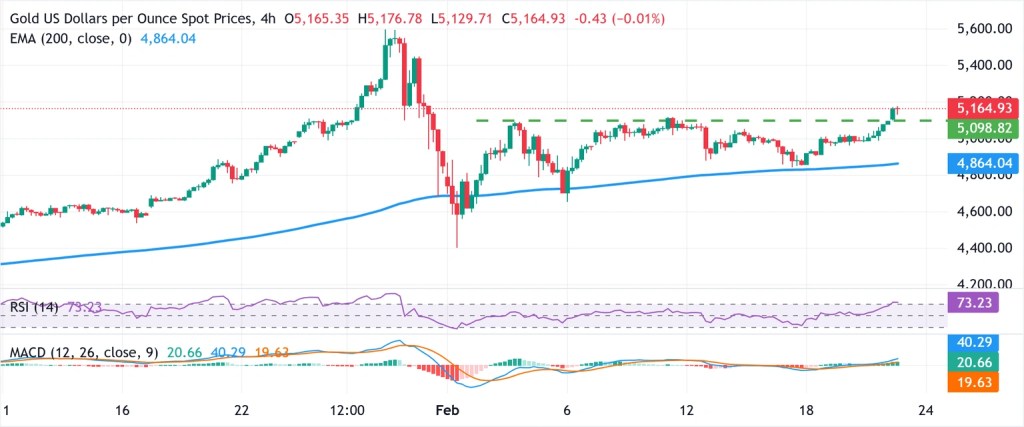
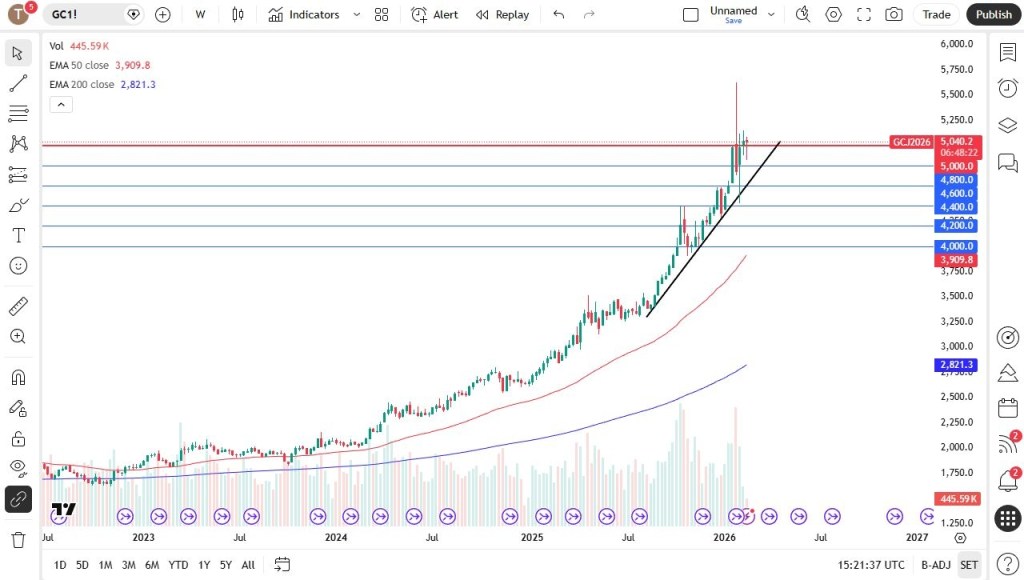
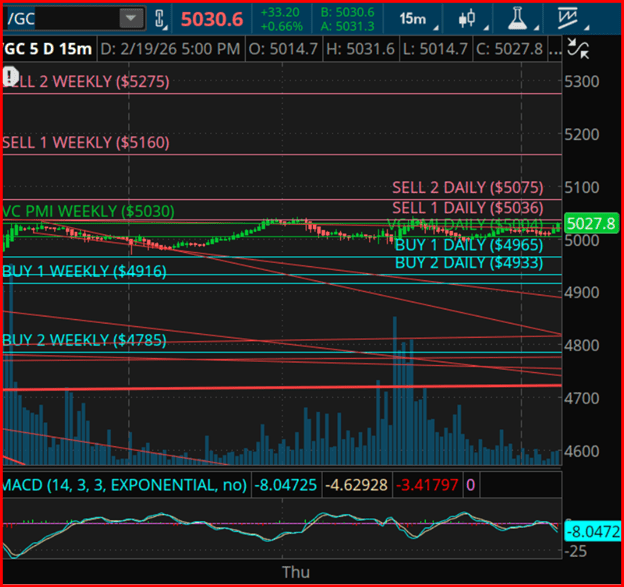
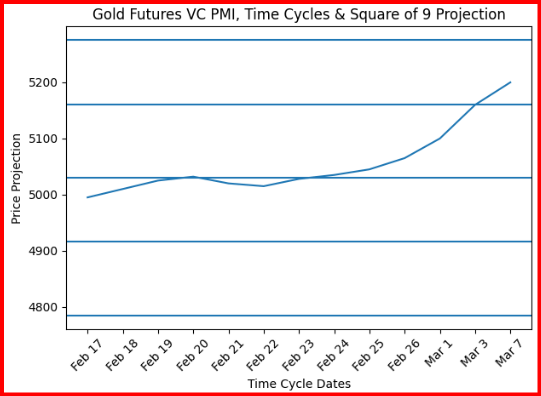
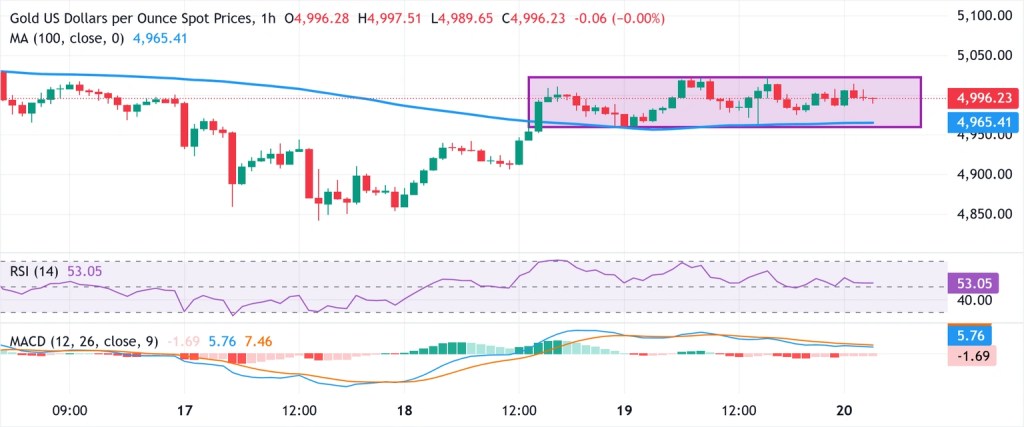
  • Gold: $4,500 Holds as a Base, Opening the Way to $5,000

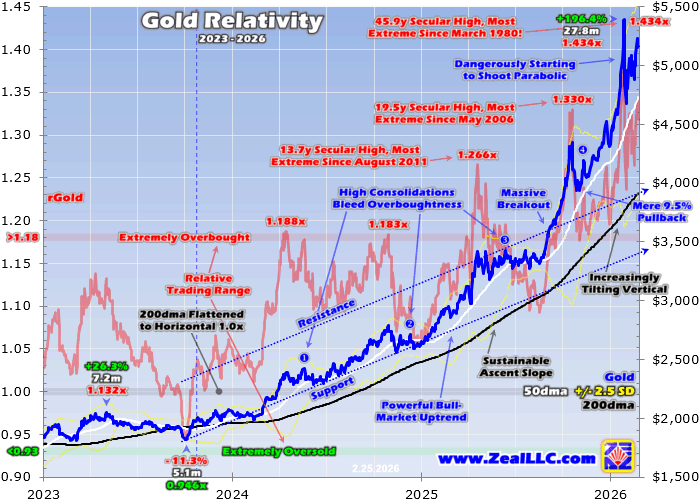
    Expect a wave of higher gold-price forecasts to dominate headlines in the near future, while the metal continues to rebuild positions along the way. Not because strategists have suddenly become bullish, but because the market itself is forcing a reassessment. Price action has led. Positioning is simply following the trend. Conviction, as always, comes last.

    Gold did not merely break through $4,500. It paused, consolidated, and is now poised to resume its advance once the current round of technically driven profit-taking fades. This has never been a momentum-driven rally. Instead, it has unfolded through a steady sequence of advances, orderly consolidations, and renewed accumulation.

    Each pullback has drawn in fresh buyers rather than triggering forced liquidation—an unmistakable feature of a durable trend. Viewed through that lens, $4,800 appears less like an ambitious bank upgrade and more like the next logical level of support. $5,000 is no longer a distant target; it is increasingly taking on a structural character.

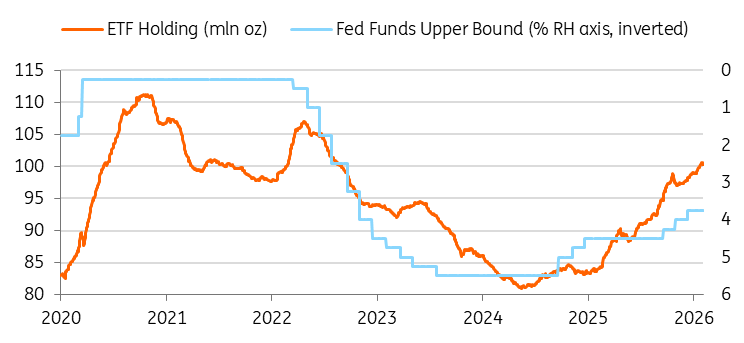
    The primary force behind this move is monetary gravity. As the Federal Reserve progresses further into its easing cycle, the traditional opportunity-cost argument against holding gold continues to weaken. Gold does not require aggressive rate cuts—it only needs persistent uncertainty around real returns. When policy becomes conditional and forward guidance loses clarity, gold becomes a place where capital waits rather than withdraws.

    The White House–backed shift toward more dovish Fed leadership is therefore important, not for political reasons but for its mechanical implications. Questioning central bank independence may be the most underpriced risk in the gold market today, and markets will adjust accordingly. They trade anticipated reaction functions, not individual personalities.

    A clearer shift toward policy accommodation is reshaping expectations about both the depth and duration of easing. That adjustment filters through real yields, term premia, and currency assumptions—and gold tends to react well before these changes are fully reflected in interest-rate markets.

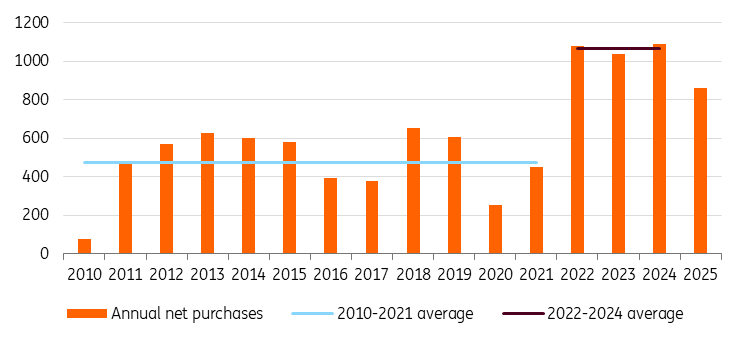
    The second force is structural demand, which is where the rebuilding becomes self-reinforcing. For the first time since the mid-1990s, gold has surpassed U.S. Treasuries as a share of global central-bank reserves. This is not cyclical accumulation; it is balance-sheet reallocation. Reserve managers are reducing concentration risk in a system that feels increasingly politicized and less predictable. Demand of this kind does not fade on pullbacks—it intensifies.

    ETF flows and private capital then follow, adding exposure gradually rather than chasing price surges.

    Geopolitics provides the backdrop rather than the trigger. Venezuela is not the catalyst—it is the reminder. Energy security, trade frictions, and political alignment are no longer episodic shocks; they are enduring conditions. Gold performs well in such an environment because it does not require crisis to justify ownership. It thrives on the steady build-up of uncertainty, encouraging investors to maintain positions and rebuild as volatility subsides.

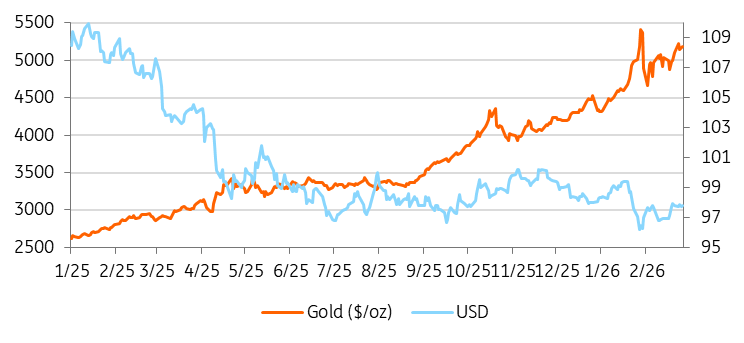
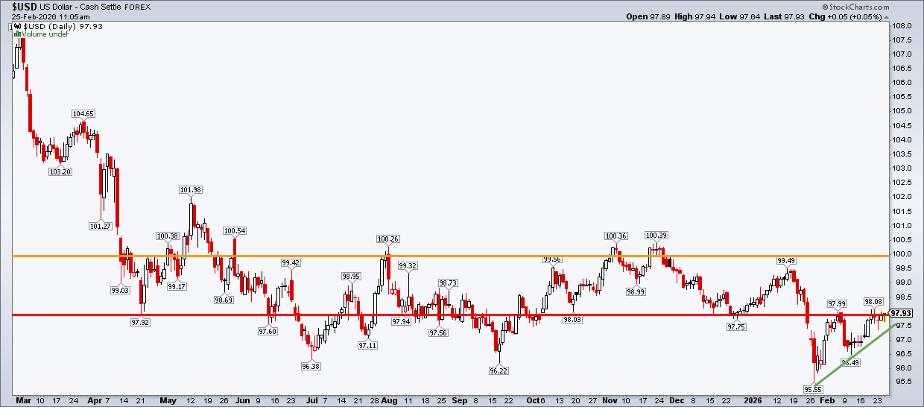
    The U.S. dollar completes the feedback loop. Its near double-digit decline over the past year reflects more than a typical cycle; it points to a subtle reassessment of dollar primacy. Capital is no longer assuming permanence. Gold naturally absorbs that hesitation, functioning less as an inflation hedge and more as balance-sheet insurance. Dollar strength tends to stall gold; dollar weakness reignites it. The cadence itself invites repeated re-entry.

    What lends credibility to this cycle is that gold is not moving in isolation. Silver has already repriced on the back of genuine supply constraints layered onto sustained industrial demand. Copper, now at record levels, is not a product of speculative excess—it reflects the physical market asserting itself. Aluminum and nickel echo the same signal more quietly. Together, they point to a broader shift across metals, with gold at the core.

    In simple terms, gold is likely to keep rebuilding positions throughout the year because the market structure supports it. Rallies are absorbed rather than rejected. Pullbacks are met with demand, not fear. Analysts will continue to raise their targets because price action is already pulling them in that direction.
    $5,000 is not an audacious forecast. It represents the market sketching out a new equilibrium—and repeatedly inviting capital to re-enter, one rebuilt position at a time.

    Sources: Investing

  • Why the US Is Targeting Venezuela and What It Means for Global Markets

    Introduction

    After months of rising tensions, the United States launched a major military operation in Venezuela on 3 January 2026, resulting in the capture of President Nicolás Maduro and his wife, Cilia Flores. U.S. President Donald Trump confirmed the operation, saying Washington would administer Venezuela until a stable transition government could be established. This marks one of the most dramatic U.S. interventions in Latin America in decades, with Maduro removed from power and taken into U.S. custody.

    Maduro, long a focal point of U.S. sanctions and foreign policy pressure, was transported to the United States to face federal charges—such as narco‑terrorism and drug trafficking—filed in the Southern District of New York.

    Venezuela holds the world’s largest proven oil reserves, and the sudden change in leadership carries significant geopolitical and economic implications well beyond its borders.

    Why Did the US Capture Maduro?

    Nicolás Maduro rose through the Venezuelan political system under socialist leader Hugo Chávez and became president in 2013. His time in power was widely criticized domestically and internationally, with opponents accusing him of suppressing dissent, restricting freedoms, and holding elections that lacked credibility.

    Relations with Washington deteriorated sharply, especially under the Trump administration. U.S. officials accused Maduro’s government of involvement in drug trafficking and creating conditions that fueled migration toward the United States. They also branded elements of his regime—including the Cartel of the Suns—as a terrorist organization.

    Tensions escalated in 2025 when the U.S. increased the bounty for Maduro’s arrest to $50 million and expanded military pressure in the region, including strikes on vessels the U.S. claimed were tied to drug smuggling.

    On 3 January 2026, after months of military buildup and diplomatic pressure, U.S. forces launched a major operation in Venezuela—code‑named Operation Absolute Resolve—that resulted in the capture of Maduro and his wife. The U.S. government framed the intervention as a law‑enforcement action tied to longstanding criminal charges against Maduro, including narcoterrorism.

    The United States claims that Venezuelan officials were engaged in government‑backed drug trafficking, asserting links with the so‑called Cartel of the Suns, which Washington has designated as a terrorist organization—a claim Maduro vehemently rejects. He argues that U.S. actions were aimed at forcing regime change and securing control over Venezuela’s vast oil riches.

    Only hours before his detention, Maduro made his final public appearance as president when he hosted China’s special envoy, Qiu Xiaoqi, at the Miraflores Palace to discuss bilateral relations—an event that highlighted Caracas’s reliance on foreign partnerships for political support. Shortly after that meeting, explosions were reported across Caracas.

    The event went beyond a simple arrest; it sent a broader strategic message, particularly to countries like China and Iran, undermining the belief that the U.S. would refrain from acting against governments supported by foreign adversaries.

    Drill, Baby, Drill

    A major strategic factor behind U.S. actions in Venezuela appears to be securing access to its vast energy resources. Venezuela sits on the largest proven oil reserves on the planet, with estimates from Wood Mackenzie suggesting roughly 241 billion barrels of recoverable crude, making it a uniquely significant player in global oil markets.

    Top Countries by Proven Oil Reserves (Billion Barrels)

    However, Venezuela’s track record of oil output underscores just how challenging it has been to tap into its vast reserves. In the late 1990s and early 2000s, the nation was capable of producing close to 3 million barrels per day—a level that made it one of the world’s top crude exporters. But political turmoil, labor strikes, and the restructuring of the oil sector under Hugo Chávez triggered a prolonged decline. The downturn was steepened further by U.S. sanctions starting in 2017, which restricted investment, technology, and exports, driving production down sharply. After bottoming out around 374,000–500,000 bpd during the worst of the crisis, output has only modestly recovered in recent years and remains in the range of approximately 800,000–900,000 bpd.

    Historical Total Venezuelan Supply

    Expectations that Venezuelan oil output could quickly rebound may overstate what’s realistically achievable. History shows that even after major disruptions, rebuilding oil production takes many years and vast investment. For example, Iraq needed almost a decade and well over $200 billion in capital to restore its output after the Iraq War, while Libya still has not returned to its pre‑2011 production levels.

    Venezuela’s challenges are even more severe. Most of its reserves are extra‑heavy crude that demands upgrading and blending with diluents before it can be transported and refined, a costly and technical process. Years of underinvestment, international sanctions, the erosion of PDVSA’s workforce, and the deterioration of infrastructure have compounded these production hurdles. Pipelines, upgraders, and refineries have been left in poor condition, and limited access to modern technology continues to restrict any rapid recovery.

    While PDVSA has claimed that facilities were not physically damaged in recent events—suggesting limited short‑term disruption—oil markets appear capable of absorbing this uncertainty for now. Inventories remain ample, and OPEC+ has signalled that its voluntary cuts of around 1.65 million bpd could be reversed if necessary to balance markets.

    In a scenario where a pro‑U.S. government enables sanctions relief and attracts foreign investment, Venezuelan exports could gradually recover. But bringing production back to around 3 million bpd would take many years and substantial infrastructure upgrades. U.S. leadership has indicated that American oil companies would play a role in operating and developing Venezuela’s oil sector, though analysts note that the heavy crude’s technical challenges and investment risks remain significant.
    Meanwhile, global oil markets are structurally tightening, with world consumption exceeding 101 million bpd driven by demand growth in the U.S., China, and India. Any short‑term impact on supply may show up as a modest increase in geopolitical risk premiums, but over time, the sidelined Venezuelan barrels—currently producing around 800,000–900,000 bpd—could eventually add supply and influence prices if output scales up gradually.

    In addition to oil, Venezuela sits on a wealth of mineral resources. Large deposits of iron ore, bauxite, gold, nickel, copper, zinc and other metallic minerals are concentrated mainly in the southern Guayana Shield region. The country also ranks among Latin America’s largest holders of gold, and geological assessments identify significant iron and bauxite resources alongside reserves of coal, antimony, molybdenum and other base metals.

    Despite this geological potential, commercial mining activity remains very limited. Most non‑oil mineral sectors contribute only a tiny fraction of Venezuela’s economic output, and substantial foreign investment has largely been absent, meaning much of the nation’s mineral wealth has yet to be developed into large‑scale production.

    The Ongoing Economic Battle Between the United States and China

    Competition between modern empires today is no longer about direct confrontation but about control over key inputs. Energy, metals, and critical materials form the foundation of the modern world. When leaders signal a willingness to secure these resources directly, markets should interpret this not as mere rhetoric, but as a concrete resource strategy.

    The rivalry between the United States and China is fundamentally structural rather than ideological. The U.S. is rich in energy but dependent on imported metals and rare earths. China dominates metals processing but imports around 70% of its crude oil. Each side is strong where the other is vulnerable, and both seek to turn this imbalance into strategic advantage.

    Control over energy flows also carries monetary implications. Influence over Venezuelan oil is not only about supply, but also about reinforcing the petrodollar and preventing the rise of the petroyuan.

    There is also a regional dimension to this rivalry. China has steadily increased its presence in Latin America through infrastructure projects and commodity-backed financing. Recent U.S. moves indicate an effort to reassert dominance in the Western Hemisphere, compelling Beijing to compete on less advantageous terms. The Trump administration’s 2025 National Security Strategy elevated the region to a core priority, effectively reviving the logic of the Monroe Doctrine—rebranded as the “Donroe Doctrine.” The aim is to bring strategically important natural resources, especially critical minerals and rare earths, under U.S.-aligned corporate control while building a hemisphere-wide supply chain that reduces dependence on China.

    Across much of South America, governments are edging closer to Washington, leaving Brazil increasingly isolated. This is significant given President Lula’s openly left-leaning stance and his consistent alignment with Russia, China, and Iran. Following Trump’s capture of Maduro, betting markets on Kalshi assign a 90% probability that the presidents of Colombia and Peru will be out of office before 2027. At the same time, President Trump has again stated that Greenland should become part of the United States, reinforcing a broader strategy centered on securing critical assets.

    Which Assets Could Gain from “Nation Building” in Venezuela?

    A political transition in Venezuela would most directly benefit assets tied to sovereign debt restructuring, energy infrastructure, and the oil supply chain.

    Venezuelan bonds are currently priced at roughly 25–35 cents on the dollar, reflecting the impact of sanctions and ongoing legal uncertainty. Under a regime-change scenario, several analysts project potential recoveries in the 30–55 cent range, supported by the prospects of debt restructuring and the easing or removal of sanctions.

    Ashmore continues to rank among the largest institutional holders of Venezuelan sovereign debt. Advisory firms such as Houlihan Lokey—financial adviser to the Venezuela Creditor Committee—and Lazard, a veteran of major sovereign restructurings (including Greece and Ukraine), would likely stand to gain from the sheer scale and complexity of any debt workout. In such processes, advisers typically earn success-based fees and function as the “picks and shovels” of restructuring. Venezuela’s debt structure is widely regarded as one of the most intricate ever assembled.

    Reviving Venezuela’s oil industry would demand swift rehabilitation of aging infrastructure. Technip, which historically designed much of the country’s core oil facilities, is well placed to play a leading role given its proprietary expertise—particularly if emergency repairs are fast-tracked through sole-source or no-bid contracts. Graham Corporation, a supplier of vacuum ejector systems used in heavy-oil upgrading and refining, could also benefit, since Venezuela’s crude requires vacuum distillation to prevent it from solidifying into coke.

    Before exports can meaningfully increase, Venezuela will need to import substantial volumes of diluent (such as naphtha or natural gasoline) to transport its heavy crude through pipelines. Targa Resources, operator of the Galena Park Marine Terminal in Houston—a major LPG and naphtha export hub—would be a natural beneficiary if Venezuela pivots back to U.S. diluent supplies, replacing current inflows from Iran.

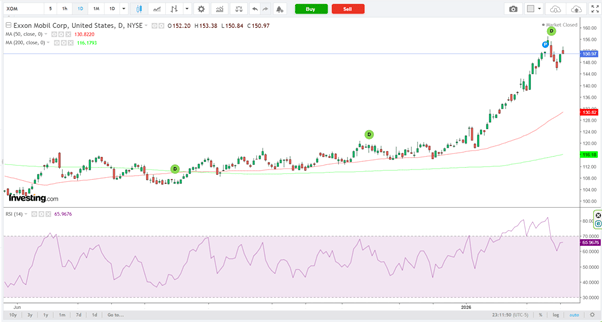
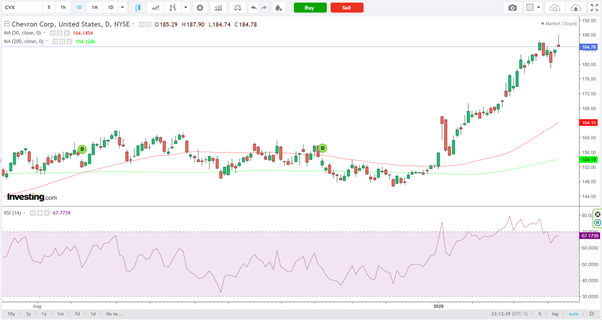
    The clearest corporate beneficiary of regime change and nation-building in Venezuela is Chevron (NYSE: CVX). Unlike other U.S. energy majors that exited the country, Chevron has maintained an on-the-ground presence. It retains the workforce, regulatory approvals (through OFAC), and operational assets—most notably Petroboscan and Petropiar—that position it to scale up production quickly. Exxon Mobil (NYSE: XOM) and ConocoPhillips (NYSE: COP), both of which hold legacy claims and arbitration awards stemming from past expropriations, could also regain market access or pursue compensation under a revised legal and political framework.

    Refiners along the U.S. Gulf Coast—such as Valero Energy (NYSE: VLO), Phillips 66 (NYSE: PSX), and Marathon Petroleum (NYSE: MPC)—were purpose-built to handle heavy, sour crude like that produced in Venezuela. Since the imposition of sanctions, these companies have had to rely on costlier substitute feedstocks. A resumption of Venezuelan supply would reduce input costs and support refining margins, assuming end-product demand remains stable.

    At the sector level, a significant increase in Venezuelan output would likely weigh on oil prices, which would be negative for crude producers but positive for consumer-oriented equities. Lower energy prices are inherently deflationary and could translate into lower bond yields—conditions that are generally supportive of risk assets, all else equal.

    Note: This section is for analytical purposes only and does not constitute investment advice.

    Venezuela: What Comes Next for the Economy and Markets?

    In a characteristically Trump-like approach, President Trump initially stated that the United States would “administer” Venezuela during the transition period. U.S. officials later confirmed that approximately 15,000 troops would remain stationed in the Caribbean, with the option of further intervention if the interim authorities in Caracas failed to comply with Washington’s demands.

    Venezuela’s Supreme Court subsequently named Vice President Delcy Rodríguez as interim president. A close ally of Maduro since 2018, Rodríguez previously oversaw much of the oil-dependent economy and the country’s intelligence structures, placing her firmly within the existing power framework. She signaled a willingness “to cooperate” with the Trump administration, hinting at a potentially dramatic reset in relations between the two long-hostile governments.

    International observers, including the United Nations and the Carter Center, have concluded that Venezuela’s 2024 elections lacked legitimacy and fell short of international standards. Independently verified tally sheets reviewed by analysts indicated that opposition candidate Edmundo González secured around 67% of the vote, compared with roughly 30% for Maduro.

    At the same time, María Corina Machado—Nobel Peace Prize laureate and a leading figure in Venezuela’s opposition—is expected to return to the country later this month and has said the opposition is ready to take power. President Trump, however, has publicly cast doubt on the breadth of her support among the Venezuelan population.

    In this context, three potential scenarios appear likely, as outlined by Gavekal Research:

    • “Soft” Military Rule

    In the near term, the most probable outcome is the continuation of the current power structure under Rodríguez and the armed forces. For this arrangement to endure, it would likely require a pragmatic shift toward U.S. priorities—embracing a more business-friendly approach and loosening ties with traditional partners such as Russia, China, and Iran. Washington may be willing to accept this scenario if it ensures political stability and reliable access to energy supplies.

    • Democratic Transition

    A negotiated move toward civilian governance would hinge largely on how new elections are structured. Allowing participation from the Venezuelan diaspora could significantly reshape the results, whereas restricting voting to residents inside the country would be more likely to benefit factions linked to the existing regime.

    • “Libya Redux” (State Breakdown)

    The most destabilizing scenario would involve the collapse of central authority, triggering internal military conflict and the proliferation of armed groups. Such an outcome would heighten the risk of civil strife, renewed migration pressures, and severe disruptions to oil production and global energy markets.

    Sources: Investing

  • US Dollar: Key Data Once Again Driving the Market

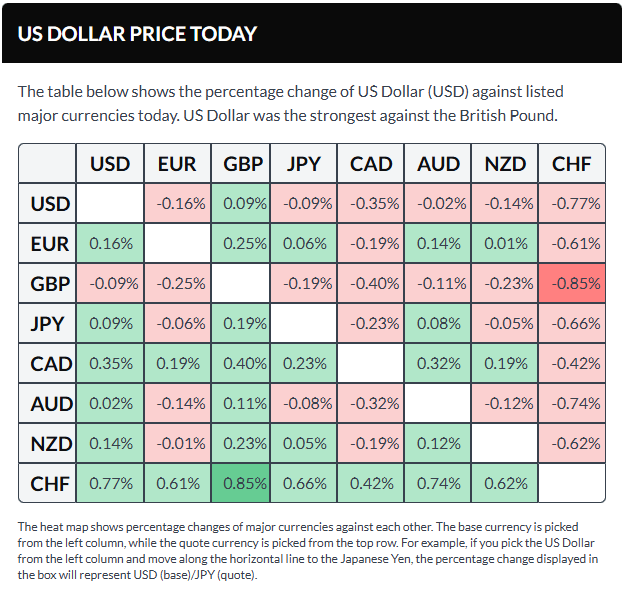
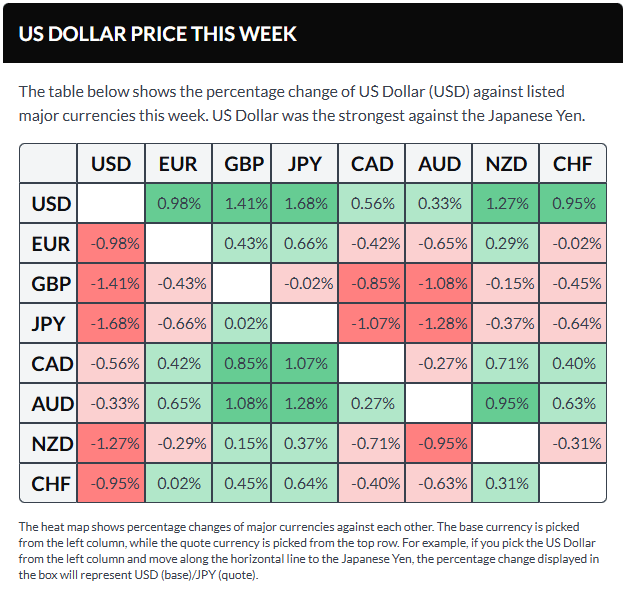
    Markets are increasingly overlooking geopolitical issues—including developments in Venezuela and Greenland—while economic data is set to reclaim its role as the primary market driver in the latter half of the week. Today’s releases of ADP, JOLTS, and ISM services carry downside risks for the US dollar. Expectations of further rate cuts also point to softer FX performance in Central and Eastern Europe.

    USD: Data May Weigh on Momentum

    The impact of the Venezuela shock has largely dissipated. Although oil prices eased yesterday, they remain close to pre-4 January levels, equities continued to advance, and FX markets have shifted focus away from geopolitics. This reflects a post-“Liberation Day” tendency to ignore headlines and adopt a more measured outlook.

    The dollar recovered modestly yesterday, likely supported by seasonal inflows and a slight rise in front-end swap rates rather than geopolitical factors. Unless the US intensifies its stance on Greenland or intervenes again in Venezuela, markets are expected to re-center on macro data in the second half of the week.

    Today’s ISM services index is anticipated to be weak, but price action will likely be driven more by ADP (consensus: 50k) and the JOLTS job openings data. Notably, ADP has undershot expectations in seven of the past ten releases. Given our dovish view on the US labor market, we see upcoming employment data as carrying asymmetric downside risks for the dollar.

    Looking beyond today, our near-term outlook remains neutral to slightly constructive on the greenback.

    EUR: Inflation Risks to the Downside, but ECB Outlook Largely Unchanged

    German inflation undershot consensus yesterday, decelerating to 1.8% YoY (2.0% in EU harmonised terms). As our economist notes here, the disinflation appears broad-based – i.e., beyond the base effect – with prices falling in leisure, clothing, and food.

    That raises the chance of a sub-2.0% print today (consensus is at 2.0%) for the eurozone CPI flash estimate. Expectations are for the core CPI to remain unchanged at 2.4%, though; that is a measure that needs to start trending lower more decisively to revive any dovish dissent within the ECB.

    For now, implications for ECB rate expectations are likely to be limited unless inflation starts undershooting materially and consistently. By extension, the euro may not be taking many cues from the print and will remain almost entirely driven by the US dollar leg.

    Sources: Think.ing

  • The Australian Dollar reaches new 14-month highs, shrugging off easing inflation pressures

    • The Australian Dollar gains ground amid a hawkish outlook on the Reserve Bank of Australia (RBA).
    • Australia’s CPI slowed to 3.4% year-over-year in November, below expectations but still above the RBA’s target range.
    • Traders now turn their attention to Wednesday’s US ISM Services PMI and JOLTs job openings reports for further market cues.

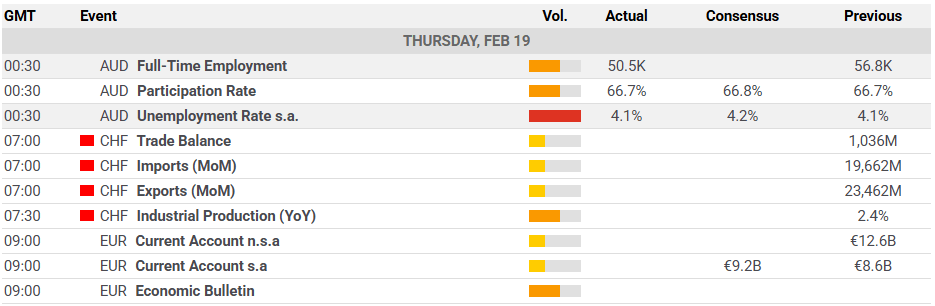
    The Australian Dollar (AUD) extended its winning streak for the fourth consecutive session on Wednesday, gaining against the US Dollar (USD) despite easing inflation figures for November. Traders are now focused on the upcoming full fourth-quarter inflation report due later this month. Analysts caution that a core inflation increase of 0.9% or more could prompt the Reserve Bank of Australia (RBA) to consider further tightening at its February meeting.

    Meanwhile, the Australian Financial Review (AFR) highlighted that the RBA may not be finished with its rate hikes this cycle. A recent poll suggests inflation is likely to remain persistently high over the coming year, supporting expectations for at least two more rate increases.

    The Australian Bureau of Statistics (ABS) reported on Wednesday that Australia’s Consumer Price Index (CPI) rose 3.4% year-over-year (YoY) in November, easing from 3.8% in October. This figure missed market expectations of 3.7% but stayed above the Reserve Bank of Australia’s (RBA) target range of 2–3%. It marked the lowest inflation rate since August, with housing costs rising at their slowest pace in three months.

    Month-on-month (MoM), Australia’s CPI remained flat at 0% in November, matching October’s reading. Meanwhile, the RBA’s Trimmed Mean CPI increased 0.3% MoM and 3.2% YoY. In a separate report, seasonally adjusted building permits surged 15.2% MoM to a near four-year high of 18,406 units in November 2025, bouncing back from a downwardly revised 6.1% decline the previous month. Annual approvals jumped 20.2%, reversing a revised 1.1% drop in October.

    US Dollar declines ahead of ISM Services PMI

    The US Dollar Index (DXY), which tracks the US Dollar’s value against six key currencies, is slightly declining after posting small gains in the previous session, currently hovering near 98.50. Market participants are awaiting US economic releases that may influence Federal Reserve (Fed) policy outlooks. Later today, attention will be on the ISM Services Purchasing Managers’ Index (PMI) and JOLTs job openings data. The upcoming US Nonfarm Payrolls (NFP) report, due Friday, is forecasted to show an increase of 55,000 jobs in December, a decrease from 64,000 in November.

    Fed Governor Stephen Miran stated on Tuesday that the central bank should pursue aggressive interest rate cuts this year to bolster economic growth. Conversely, Minneapolis Fed President Neel Kashkari cautioned that unemployment could unexpectedly rise. Richmond Fed President Tom Barkin, who is not voting on this year’s rate decisions, emphasized that rate changes will need to be carefully calibrated to incoming data, pointing to risks affecting both employment and inflation targets, per Reuters.

    According to CME Group’s FedWatch tool, futures markets assign roughly an 82.8% chance that the Fed will keep rates steady at the January 27–28 meeting.

    On the geopolitical front, the US launched a significant military strike on Venezuela last Saturday. President Donald Trump announced that Venezuelan President Nicolas Maduro and his wife were captured and removed from the country. However, Maduro pleaded not guilty on Monday to US narcotics-terrorism charges, signaling a high-stakes legal confrontation with wide geopolitical consequences, Bloomberg reports.

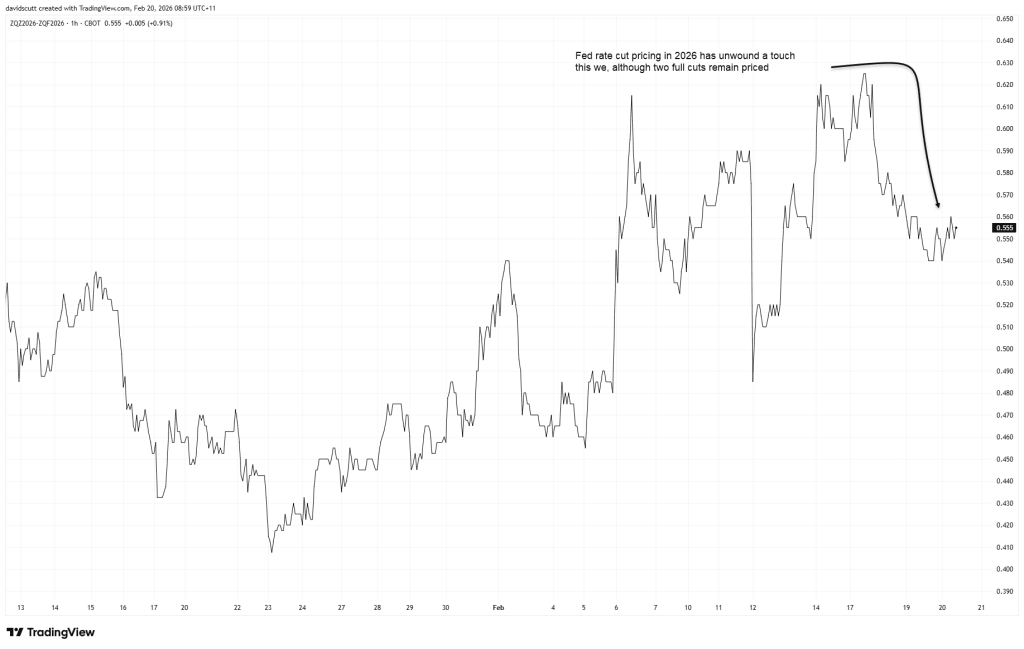
    Traders anticipate two more Fed rate cuts in 2026. Markets also expect Trump to nominate a new Fed chair to succeed Jerome Powell when his term expires in May, potentially steering monetary policy toward lower rates.

    In China, the Services PMI from RatingDog fell slightly to 52.0 in December from 52.1 in November, while Manufacturing PMI rose to 50.1 from 49.9 the previous month. Given China’s close trade ties with Australia, shifts in the Chinese economy may affect the Australian Dollar.

    The Reserve Bank of Australia’s December meeting minutes revealed readiness to tighten monetary policy further if inflation does not ease as expected. Greater attention is now on the Q4 Consumer Price Index report scheduled for January 28, with analysts warning that a stronger-than-anticipated core inflation figure could prompt a rate hike at the RBA’s February 3 meeting.

    The Australian Dollar has reached new 14-month highs, climbing above the 0.6750 level

    On Wednesday, AUD/USD is trading near 0.6750. Technical analysis of the daily chart shows the pair moving upward within an ascending channel, indicating a continued bullish trend. However, the 14-day Relative Strength Index (RSI) at 70 signals that the pair may be overbought.

    Since October 2024, AUD/USD has hit new highs and is now aiming for the upper boundary of the ascending channel around 0.6830.

    Initial support is found at the nine-day Exponential Moving Average (EMA) near 0.6708, followed by the lower boundary of the ascending channel at about 0.6700. A drop below this combined support zone could push the pair down toward the 50-day EMA level at approximately 0.6625.

    AUD/USD: Daily Chart

    Sources: Fxstreet

  • The Japanese Yen remains weak amid ongoing fiscal concerns and uncertainty over the timing of the Bank of Japan’s rate hikes

    • Japanese Yen bulls stay cautious amid fiscal concerns and a generally positive risk environment.
    • Diverging expectations between the Bank of Japan and the Federal Reserve help contain further losses for the lower-yielding yen.
    • Meanwhile, subdued follow-through buying of the US dollar keeps USD/JPY capped ahead of upcoming US economic data.

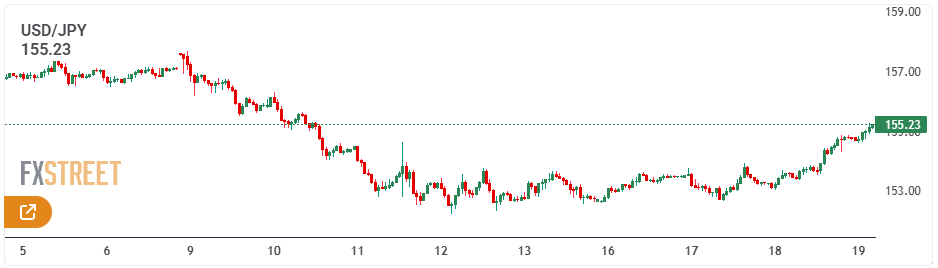
    The Japanese Yen (JPY) remains under pressure against the US dollar during Wednesday’s Asian session, though significant depreciation remains limited. Key factors weighing on the yen include Japan’s fiscal concerns, a broadly risk-on market sentiment, and uncertainty around the timing of the Bank of Japan’s (BoJ) next rate hike.

    Despite this, the BoJ is expected to continue its policy normalization, creating a notable divergence from growing expectations of additional interest rate cuts by the US Federal Reserve (Fed). This divergence helps cap gains in the US dollar and offers some support to the lower-yielding yen. Additionally, speculation about possible intervention by authorities to support the yen calls for caution among those betting on further yen weakness.

    The Japanese Yen struggles to attract buyers as a mix of factors counterbalance expectations for Bank of Japan rate hikes.

    • Japan’s fiscal outlook remains a concern, especially after the cabinet approved Prime Minister Sanae Takaichi’s record ¥122.3 trillion budget. Meanwhile, uncertainty persists over the timing of the next Bank of Japan (BoJ) rate hike, as expectations that energy subsidies, stable rice prices, and low petroleum costs will keep inflation subdued through 2026.
    • BoJ Governor Kazuo Ueda stated on Monday that the central bank will continue raising rates if economic and price trends align with forecasts. He emphasized that adjusting monetary support will help sustain growth, and moderate, synchronized rises in wages and prices leave room for further policy tightening.
    • This outlook pushed yields on Japan’s rate-sensitive two-year and benchmark 10-year government bonds to their highest levels since 1996 and 1999, respectively. The narrowing yield gap between Japan and other major economies has discouraged aggressive bearish bets on the yen, especially amid speculation of possible intervention.
    • The US dollar has struggled to build on gains from the previous day due to dovish Federal Reserve expectations and concerns about the Fed’s independence under President Donald Trump’s administration. Traders are also holding back, awaiting key US economic data for clearer signals on the Fed’s rate cut trajectory.
    • Wednesday’s US economic calendar includes the ADP private-sector employment report, ISM Services PMI, and JOLTS Job Openings. However, attention will largely focus on Friday’s Nonfarm Payrolls (NFP) report, which is expected to be crucial in shaping the next directional move for the dollar ahead of Tuesday’s US consumer inflation data.

    USD/JPY’s mixed technical signals call for caution, with the key 156.15 confluence level serving as a crucial test for bullish momentum.

    The USD/JPY pair’s overnight rally confirmed support at the 156.15 confluence zone, which combines the 100-period Simple Moving Average (SMA) on the 4-hour chart with the lower boundary of a short-term ascending channel. This level is crucial—if decisively broken, it could trigger renewed bearish momentum and open the door to deeper declines.

    The Moving Average Convergence Divergence (MACD) histogram is slightly negative but contracting near the zero line, indicating weakening bearish pressure. Meanwhile, the Relative Strength Index (RSI) stands at 52, showing a neutral stance with a slight bullish bias. The rising SMA favors a buy-on-dips approach, though the subdued MACD suggests limited follow-through at this stage. RSI near the midpoint reinforces a consolidative phase within the channel.

    Initial support remains at the 156.15 confluence, while resistance is positioned at 157.15—the channel’s upper boundary. A close above 157.15 could trigger further upside, whereas failure to break this level would keep USD/JPY range-bound within the rising corridor.

    Sources: Fxstreet

  • EUR/JPY is trading with modest gains above 183.00 as traders await the upcoming Eurozone CPI report

    • EUR/JPY gains positive momentum, breaking a three-day losing streak amid a weaker Japanese yen.
    • Uncertainty over the timing of the next Bank of Japan rate hike, along with positive risk sentiment, weigh on the yen.
    • Meanwhile, hawkish bets on the ECB and a softer US dollar support the euro, providing further upside to the pair.

    During Wednesday’s Asian session, the EUR/JPY pair attracted some buying interest, ending a three-day losing streak amid a generally weaker Japanese yen. However, prices remain close to the two-week low reached on Monday, currently trading around 183.20, up just under 0.10% for the day.

    The yen continues to face pressure due to Japan’s fiscal concerns, a prevailing risk-on sentiment, and uncertainty over the timing of the Bank of Japan’s next rate hike, all of which provide support for EUR/JPY. Meanwhile, the euro benefits from a softer US dollar and hawkish signals from the European Central Bank, which showed no intention of cutting interest rates further.

    Investors widely expect the ECB to maintain a steady 2% deposit rate throughout its eight meetings this year, supported by surprisingly strong economic growth across the Eurozone in 2025. Additionally, inflation in Germany—the region’s largest economy—slowed more than anticipated, dropping from 2.6% to 2% in December. Market attention now turns to the preliminary Eurozone consumer inflation data scheduled for release later today.

    Despite this supportive fundamental backdrop for further gains in the EUR/JPY pair, caution remains warranted. Concerns that government authorities might intervene to curb further yen weakness suggest bullish traders should remain careful. Moreover, expectations that the Bank of Japan will continue its policy normalization path mean it’s wise to wait for solid follow-through buying before confirming that the two-week corrective pullback from the all-time high has ended.

    Sources: Fxstreet

  • EUR/USD Price Forecast: The pair is trading near 1.1700 following a rebound off the 50-day EMA

    • EUR/USD is likely to find immediate support around the 50-day EMA at 1.1684.
    • The 14-day Relative Strength Index (RSI) at 47 indicates neutral momentum with weakening strength.
    • Initial resistance is expected near the nine-day EMA at 1.1724.

    EUR/USD recovers after three consecutive days of losses, trading near 1.1700 during Wednesday’s Asian session. Technical analysis on the daily chart suggests a possible bearish bias, with the 14-day Relative Strength Index (RSI) at 47 indicating neutral but fading momentum.

    The pair remains above the rising 50-day Exponential Moving Average (EMA) but stays below the nine-day EMA, which acts as resistance. While the overall trend stays positive as long as it holds above the medium-term average, failure to break above the short-term EMA could keep the recent pullback in place.

    The EUR/USD pair may retest its immediate support at the 50-day EMA of 1.1684. A close below this level would weaken medium-term momentum and likely push the pair down toward the monthly low of 1.1589, established on December 1.

    On the upside, the pair could aim for the nine-day EMA at 1.1724, followed by the three-month high of 1.1808, reached on December 24. A sustained move above these levels would strengthen short-term momentum and pave the way toward 1.1918, the highest point since June 2021.

    EUR/USD: Daily Chart

    Sources: Fxstreet

  • Asia Morning Briefing: Bitcoin remains stable above $90K as new investments flow back into the crypto market

    Bitcoin prices are supported by new-year fund allocations, while leverage decreases and volatility expectations increase.

    Key points to know:

    • Bitcoin stays steady above $90,000, indicating consolidation instead of increased selling pressure.
    • Ethereum demonstrates strength with solid weekly and monthly gains, even as futures positions cool down.
    • Gold is projected to hit new highs in 2026, driven by declining interest rates, central bank purchases, and geopolitical uncertainties.

    Good morning, Asia! Here’s what’s moving the markets today:

    Crypto markets kick off the year in a phase of adjustment rather than decline, with Bitcoin holding steady above $90,000 and Ether showing renewed strength as institutions reset their positions.

    As Hong Kong opened its Wednesday trading session, Bitcoin dipped slightly in the short term but stayed within a range after surpassing the key $90,000 mark.

    “With stocks, gold, and other precious metals at record highs, we view the situation as a tug-of-war between prices correcting upward to align with these assets and potentially declining over the coming months to follow the 4-year cycle,” said George Mandres, crypto analyst at trading firm XBTO, in a note to CoinDesk. He added that the latter scenario “can quickly become a self-fulfilling prophecy.”

    So far, neither upward nor downward pressure has taken control of Bitcoin’s price. Rather than a steep correction, Bitcoin has traded sideways, indicating a phase of digestion rather than distribution. Mandres highlighted the calendar effect as a key factor distinguishing the current situation from late 2025.

    “What’s changed now compared to a few weeks ago, aside from Bitcoin surpassing $90K, is that a new year has begun, resetting P&Ls to zero, and investors are looking to allocate capital to attractive risk/reward opportunities,” he explained.

    Ethereum presents a slightly different picture. Although ETH has outperformed Bitcoin over weekly and monthly periods, futures data show that positioning has cooled.

    Bradley Park, founder of DNTV Research, noted that CME Ethereum futures open interest provides valuable insight beyond spot price movements.

    “Increasing open interest has largely reflected institutional activity through DAT-style ETF arbitrage trades, while declining open interest signals unwinding positions,” Park said in a note to CoinDesk.

    That unwinding now seems well underway.

    “The recent pullback looks less like a structural shift and more like a loss of momentum, with positioning resetting to roughly July 2025 levels,” Park added.

    Crucially, this reset has not triggered a sharp spot market sell-off.

    A recent Glassnode report echoes this theme across assets. Options markets have de-risked significantly, with contracting open interest and rising volatility expectations. Meanwhile, U.S. spot ETF flows have returned to net inflows, indicating renewed institutional demand but also greater sensitivity to near-term profit-taking.

    Overall, these signals suggest consolidation and rotation rather than a widespread risk-off selloff. Bitcoin is balancing conflicting macro factors without losing its trend, while Ethereum appears less crowded and better positioned to benefit if institutional flows pick up again.

    Market Movement:

    BTC: Bitcoin is consolidating above $90,000, trading sideways after a recent rise. The price action reflects balance between macro support and caution from the market cycle, rather than fresh selling pressure.

    ETH: Ether is hovering around $3,247, showing slight declines on short-term charts but maintaining strong gains over weekly and monthly periods, demonstrating resilience despite a recent pullback in futures positioning.

    Gold: Following a nearly 65% rally in 2025, gold is expected to reach new highs in 2026, driven by falling interest rates, ongoing central bank purchases, and geopolitical uncertainties.

    Nikkei 225: Japan’s Nikkei 225 dropped 0.45% on Wednesday as Asia-Pacific markets showed mixed results. Meanwhile, Australia’s ASX 200 gained 0.38% after inflation data came in below expectations.

  • Nike stock dip attracts insider buying, with Apple CEO among buyers

    After a sharp decline, three insiders stepped in to buy shares of U.S. apparel giant Nike.

    On December 19, 2025, Nike experienced its steepest drop in some time, with shares tumbling 10.5% following the release of its latest earnings report. The results were mixed—highlighted by strong growth in running products but disappointing performance in China. Despite some positives, the market’s reaction indicated a notable decrease in investor confidence regarding Nike’s recovery prospects.

    In this article, we examine the recent insider purchases, including buys from Nike’s CEO Elliott Hill and Apple CEO Tim Cook. Their actions suggest a bullish outlook on the stock, signaling a potential opportunity. But should investors follow their lead or approach Nike stock with caution?

    Nike gains $3.5 million buy-in from independent directors, boosting investor confidence

    Following Nike’s earnings report, the stock fell sharply below $60 per share— a level not seen since May 2025. On December 22, Tim Cook made a notable move, purchasing approximately $2.95 million worth of Nike shares at an average price near $59 each. Cook has been closely involved with Nike for many years.

    He joined Nike’s Board of Directors in 2005 and currently serves as the Lead Independent Director. While independent directors are not company employees nor have other business ties beyond their board roles, they provide crucial oversight by advising management and balancing executive power.

    As Lead Independent Director, Cook plays a key role in holding Nike’s management accountable and assessing their performance to ensure they act in shareholders’ best interests.

    Notably, independent director Robert Swan also bought $500,000 worth of Nike shares on December 22, 2025. The purchases by Cook and Swan demonstrate that Nike’s independent directors remain confident in the company’s future direction.

    Nike insiders Hill, Cook, and Swan signal confidence through recent share buys

    These two purchases become even more significant when viewed alongside a recent insider buy by Nike CEO Elliott Hill. On December 29, 2025, Hill acquired just over $1 million worth of shares at an average price of approximately $61.

    While Hill’s purchase alone is a bullish indicator, the combined activity of these three insiders strengthens the overall positive outlook. It indicates that both Nike’s management and its independent directors share confidence in the stock’s potential recovery.

    Typically, management and independent directors serve as checks and balances to each other, so this consensus is a promising sign. It suggests that Hill’s optimism is supported by those tasked with scrutinizing his strategies. However, there remains the possibility that these insider buys were aimed at bolstering investor sentiment, making it somewhat challenging to gauge their true conviction.

    Following a dip to just above $57 on December 22, 2025, Nike’s shares have surged nearly 13% to around $64.50. The stock climbed more than 4% on two occasions, largely driven by the impact of these insider purchases.

    Limited short-term upside seen by analysts, with strong long-term growth prospects

    Despite the optimism shown by Hill, Cook, and Swan, market consensus remains uncertain. The average price target for Nike stands just below $76, suggesting about an 18% potential gain.

    However, MarketBeat’s data reveals that over 15 analysts lowered their price targets following Nike’s December 18, 2025 earnings report. The revised average target is around $69, indicating a more modest upside of approximately 7%.

    For Nike to succeed moving forward, increasing sales growth while minimizing discounting is critical. Achieving this would boost profit margins and help reverse the recent decline in free cash flow.

    Though progress in this area has been limited so far, Nike’s strong brand recognition offers significant leverage to improve these metrics. Currently, shares trade about 47% above their 10-year low but would need to climb roughly 158% to match their 10-year high.

    While the long-term outlook appears generally positive, the possibility of short-term declines persists as long as investors remain unconvinced by Nike’s progress.

    Sources: MarketBeat

  • Gold stays strong as rising global tensions revive the case for hard money

    Critics of fiat currency have repeatedly tried—and failed—to call a peak in gold and silver. Once again, their arguments were derailed by geopolitical developments in Venezuela and beyond. The repercussions could prove even more supportive for the world’s most powerful form of money: Gold.

    Iran is increasingly becoming a flashpoint of unrest, with protesters chanting “Death to the dictator!” while the U.S. government threatens action against the regime. Meanwhile in Asia, Chinese social media is circulating alleged plans to remove Taiwan’s leadership in a manner similar to what happened to Maduro. At the same time, President Trump’s earlier claim that he could end the war in Ukraine within 24 hours has clearly proven unrealistic. The conclusion is straightforward: geopolitical forces are now providing exceptionally strong support for gold—arguably outweighing, at least for the moment, concerns over government debt.

    Gold appears to have broken higher from its October peak, and the pullback toward my $4,260 “speculator buy zone” is a technically normal correction. Investors who currently hold no gold should not wait around for a major selloff before entering the market. A small starter position is a better way to gain initial exposure to this exceptional asset. From there, larger allocations can be added during deeper pullbacks into strong support levels.

    Because people are forced to purchase nearly everything using their government’s debased fiat currency, their attention in the early phase of a fiat system is directed toward acquiring more fiat rather than accumulating gold.

    Over time, the purchasing power of fiat currency deteriorates rapidly, eventually pushing people to shift their focus toward gold. This is the phase America is expected to enter within the coming years. For those who have already adopted gold as their preferred currency, it will be a rewarding period—while for others, the transition may prove unsettling.

    The platinum chart looks impressive. While platinum isn’t considered money, it remains a valuable metal and a useful means to acquire more gold. My recommendation was to buy platinum when prices are below $1,000 and then sell 30% to 70% of holdings between $1,800 and $2,400, using the proceeds to purchase gold. Personally, I opted to sell 70% and keep the remaining 30% as a long-term investment.

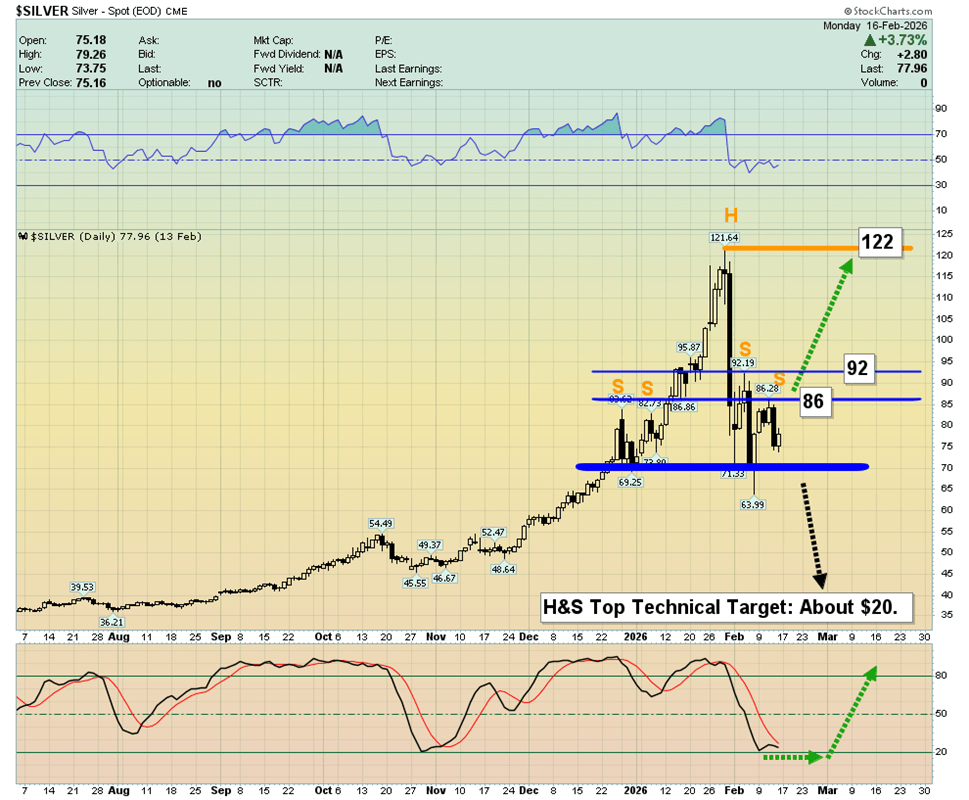
    As for silver, there’s promising news: it might reclaim its role as a form of money. Rumors persist about central banks’ growing interest in this remarkable metal. Additionally, the era of robotics is dawning, with millions of robots set to replace human workers. Most will likely run on electricity generated by solar panels, which require silver for their production. While some manufacturers may switch to copper, a $100 price floor for silver appears inevitable.

    Examining this metal’s impressive price movement relative to gold, and with silver’s potential to regain recognition as money, my advice is to sell no more than 30% of your holdings during the current upward rally, which has brought prices into my targeted zone on the chart. Similar to platinum, gains should be reinvested not into depreciating fiat currencies, but into gold.

    Another important asset for investors focused on gold is uranium. The chart for yellowcake stocks (URNM ETF) is striking, displaying a bullish inverse Head & Shoulders continuation pattern with a notably strong high right shoulder. Additionally, the Stochastics (14,7,7) indicator is signaling a buy at the chart’s lower levels. Simply put, yellowcake stocks present one of the clearest momentum-driven buying opportunities available.

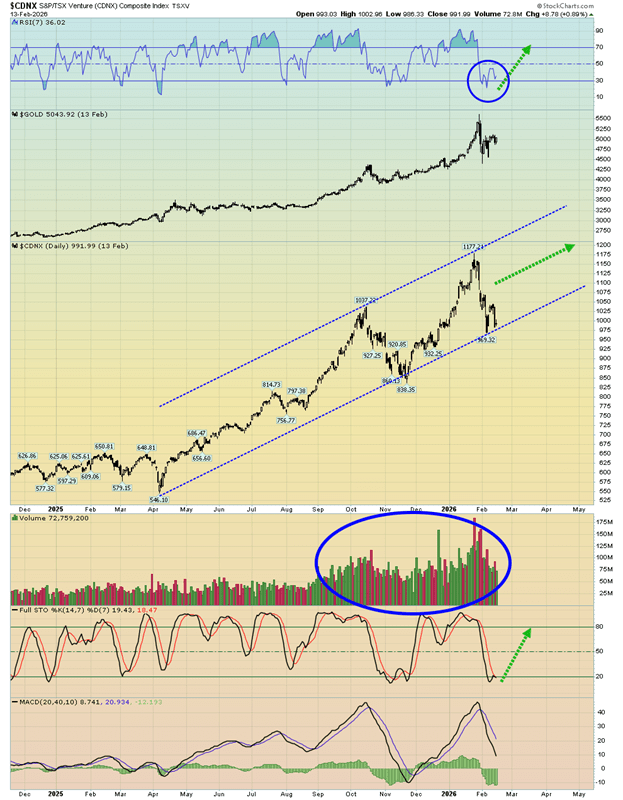
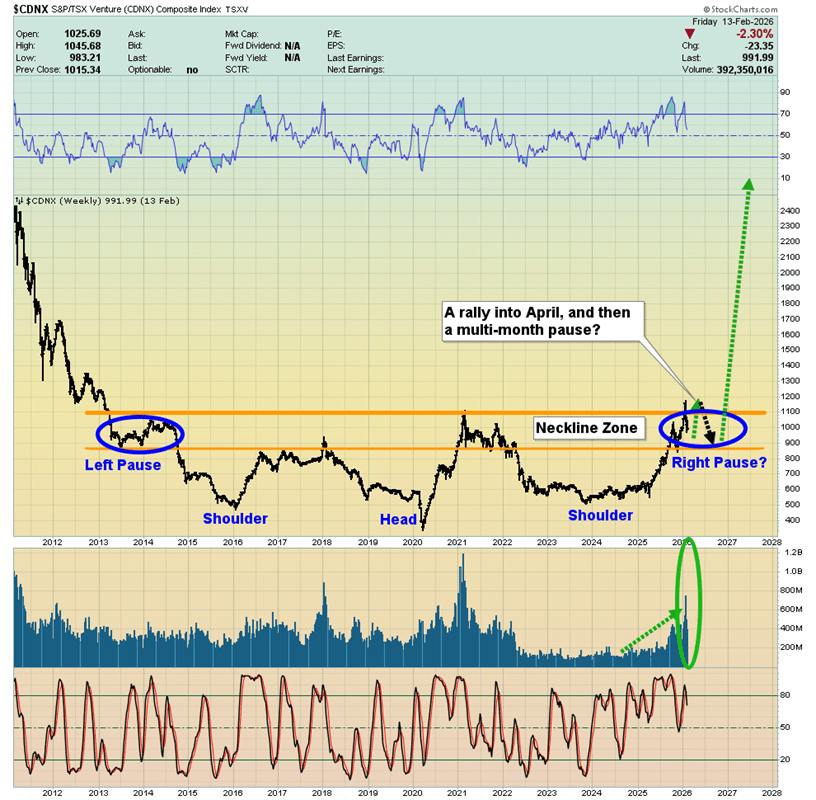
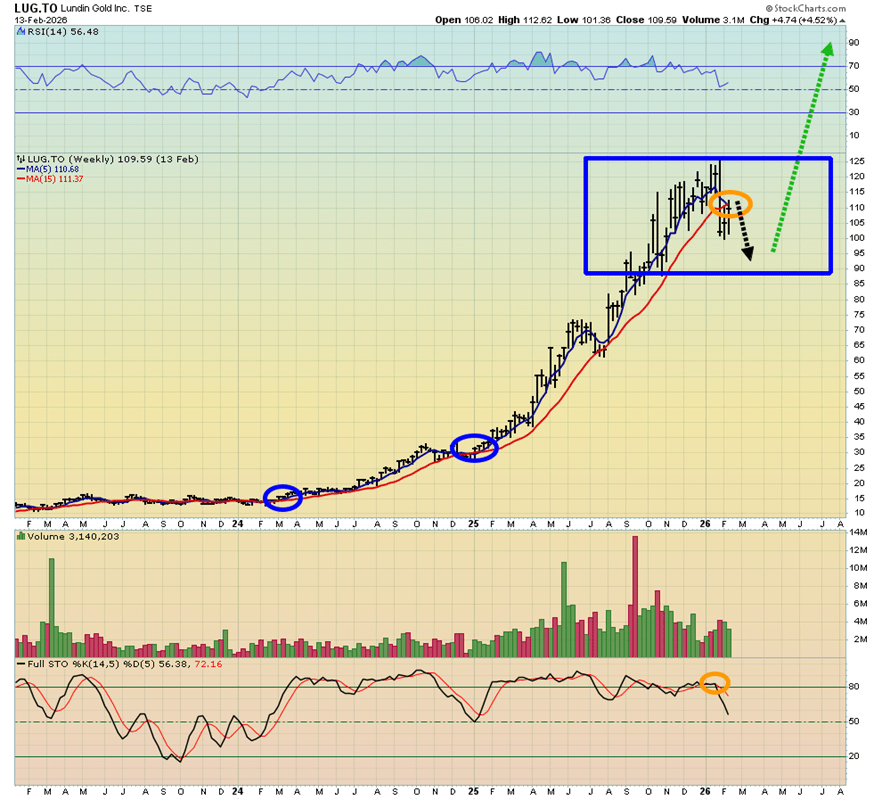
    What about the miners? This could be one of the most bullish charts worldwide. I’ve advised investors in mining stocks to watch the CDNX closely as a key indicator of upside potential for gold and silver miners across the board. The right shoulder appears to form a bull wedge, poised to trigger a powerful breakout for these significantly undervalued miners.

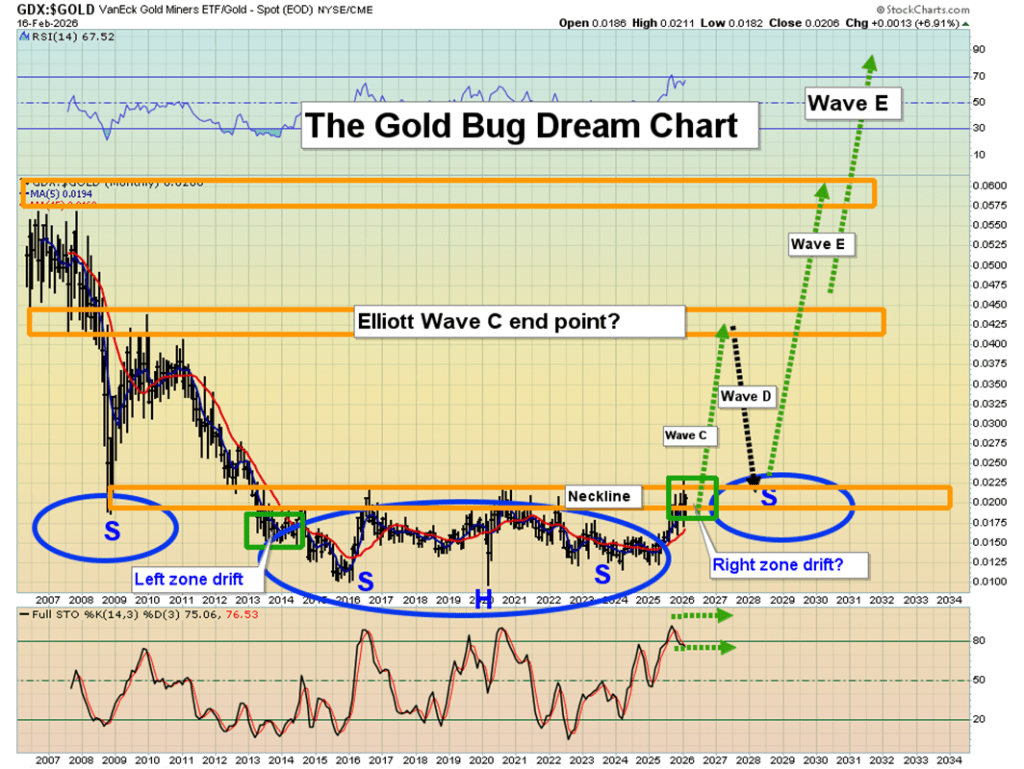
    The “mouthwatering” GDX versus gold chart has caught my attention. I urged investors to look for a Stochastics (14,3,3) flatline signal, which has now appeared. A breakout above the neckline of the large inverse Head & Shoulders pattern seems imminent.

    Put simply, if an investment cannot outperform gold—the ultimate store of value—there’s little reason to buy it; investors might as well hold gold directly. In the case of mining stocks, they seem poised to deliver one of the most significant wealth-building opportunities in market history. The key question remains: are informed investors ready to take advantage?

    Sources: Investing

  • Crude oil drops 1% as Trump announces Venezuela will send oil supplies to the United States

    Oil prices tumbled in Asian trading on Wednesday after U.S. President Donald Trump said Venezuela would deliver tens of millions of barrels of crude to the United States, a development expected to significantly increase global supply. Prices were already under pressure earlier in the week, as Washington’s takeover of Venezuela fueled expectations of a broad easing of sanctions on the country’s oil sector—potentially releasing tens of millions of barrels back onto the market.

    Despite elevated geopolitical risks adding a modest risk premium, oil prices stayed under pressure as markets grew increasingly concerned about a potential supply glut in 2026. Crude was already on track for its steepest annual decline in five years in 2025. Brent futures for March slid 1% to $60.11 a barrel at 20:13 ET (01:13 GMT), while U.S. benchmark WTI dropped 1.1% to $56.29 a barrel.

    Venezuela to send 30–50 million barrels of crude to the United States, Trump says

    In a post on social media, Trump said Venezuela would transfer between 30 and 50 million barrels of oil to the United States, with Washington planning to sell the crude at prevailing market prices. He added that the proceeds from the sales would be managed by him as U.S. president, stating that the funds would be used to serve the interests of both Venezuela and the United States.

    The announcement follows just days after U.S. forces detained Venezuelan President Nicolas Maduro, when Trump said Washington was taking control of the country and planned to open up its oil sector. Oil prices initially fell after Maduro’s capture, as markets anticipated that a potential easing of U.S. sanctions on Venezuela could unleash large volumes of crude onto global markets. Trump’s actions since then suggest that this outcome is increasingly likely.

    However, analysts cautioned that any reopening of Venezuela’s energy industry could take longer than expected, citing risks of political instability and the constraints of the nation’s aging infrastructure. Data from maritime analytics firm Kpler also indicated that a near-term increase in Venezuelan output is unlikely due to limited domestic storage capacity.

    Russia-Ukraine ceasefire draws attention as U.S. backs security guarantees for Kyiv

    Oil markets were also tracking any fresh developments in talks on a Russia–Ukraine ceasefire after the United States on Tuesday endorsed a largely European-led coalition that pledged to provide security guarantees for Kyiv.

    The U.S. commitment was made at a Paris summit aimed at reassuring Ukraine in the event of a truce with Moscow. Washington also said it was prepared to help monitor and verify any ceasefire should an agreement be reached. However, Russia has so far shown limited willingness to engage in a ceasefire, with fighting between the two sides continuing as the war moves toward its fifth consecutive year.

    Even so, any prospective ceasefire between Russia and Ukraine could ultimately lead to a rollback of U.S. sanctions on Moscow, allowing additional Russian oil to return to the market. Such a development would also reduce the geopolitical risk premium embedded in crude prices.

    Sources: Investing

  • Australian CPI in November falls faster than expected, but underlying inflation remains stubborn

    Australian CPI inflation slowed more than expected in November as electricity prices eased, though core inflation remained sticky and above the Reserve Bank of Australia’s target band. Data from the Australian Bureau of Statistics released Wednesday showed annual CPI rising 3.4%, below forecasts of 3.6% and down from 3.8% in October.

    The slowdown in inflation was mainly driven by electricity prices rising at a softer pace than in the previous month, while housing, food, and transport costs continued to climb. Core inflation remained persistent, with the trimmed mean CPI at 3.2% in November, easing slightly from 3.3% in October but still above the RBA’s 2%–3% target range. Goods inflation cooled to 3.3% from 3.8%, largely due to slower electricity price growth, while services inflation also eased to 3.6% from 3.9%, mainly reflecting seasonal factors. The ABS said Black Friday had minimal impact on prices. Although headline CPI softened, it remains uncertain whether the decline is enough to shift the RBA’s hawkish outlook, as the central bank paused its rate-cut cycle in late 2025 and signaled rates will stay unchanged amid stubborn inflation.

    ANZ analysts said the November CPI figures suggest the RBA is likely to keep rates unchanged in February, while potentially debating a rate hike later in the year. They added that inflation pressures are expected to ease as 2026 progresses, with the cash rate forecast to remain at 3.60% over their outlook period. Meanwhile, Australian inflation unexpectedly accelerated in late 2025, driven by higher housing and food costs, while the gradual removal of Canberra’s electricity subsidies also pushed prices higher.

    Sources: Investing

  • Trump stated that Venezuela would supply the United States with 30–50 million barrels of oil

    U.S. President Donald Trump said on Tuesday night that Venezuela’s interim government would transfer tens of millions of barrels of oil to the United States, with the proceeds from sales to be managed by Washington. In a social media post, Trump said Caracas would hand over between “30 and 50 million barrels of high-quality, sanctioned oil,” which would be sold at market prices. He added that the revenue would be overseen by him as president to ensure it benefits both the Venezuelan and U.S. people, and noted that he had directed Energy Secretary Chris Wright to implement the plan immediately.

    The proposed arrangement could redirect Venezuelan oil exports away from China while helping state-run PDVSA avoid deeper production cuts, following reports that Washington and Caracas were in talks over a supply agreement. The announcement comes days after U.S. forces captured President Nicolas Maduro, heightening political uncertainty in Venezuela. Maduro’s vice president, Delcy Rodriguez, was sworn in as interim leader this week and has signaled her willingness to cooperate with Washington.

    Trump said the United States would oversee Venezuela until a permanent leader is elected and would also assume control of the country’s aging oil sector. Following the announcement, oil prices fell, as a U.S. takeover could bring large volumes of crude to market and boost supply. March Brent futures dropped 2%.

    Source: Investing

  • EUR/USD slips as weak Eurozone data pressures the euro, with markets awaiting US jobs figures

    EUR/USD retreats toward 1.1710 after being rejected near 1.1740, giving back recent gains as downward revisions to Eurozone PMIs and softer German inflation renew selling pressure on the euro. With investors now awaiting key US labor market data, expectations for Federal Reserve monetary policy remain a major driver for the euro dollar exchange rate.

    EUR/USD trades in a volatile market on Tuesday, hovering around 1.1710 at the time of writing, down 0.15% on the day. The pair has surrendered earlier gains as weaker Eurozone economic data revives concerns over the region’s growth outlook.

    Selling pressure on the euro intensified after the downward revision of the Eurozone HCOB Services Purchasing Managers Index (PMI). The index was revised to 52.4 for December, below the preliminary estimate of 52.6 and down from 53.1 in November, signaling a slowdown in services sector activity—one of the main drivers of the European economy.

    Meanwhile, German inflation data released on Tuesday point to a clear easing in price pressures. Annual CPI inflation slowed to 1.8% in December from 2.3% in November, while the Harmonized Index of Consumer Prices (HICP) dropped to 2.0% from 2.6%, coming in below market expectations. These readings reinforce expectations of a more subdued inflation environment across the Eurozone, limiting near-term upside for the euro.

    On the US front, economic releases have also added to volatility in EUR/USD trading. The Services PMI was revised down to 52.5 in December, its lowest level in eight months, while the Composite PMI slipped to 52.7. According to S&P Global, softer demand, weaker new orders, and slower employment growth signal that the US economy is losing momentum, even as cost pressures remain elevated.

    As a result, expectations for US monetary policy remain a key driver of the euro-dollar pair. Fed Governor Stephen Miran said on Tuesday that upcoming data are likely to support further interest rate cuts, arguing that the Federal Reserve could lower rates by more than 100 basis points this year as current policy remains restrictive and continues to weigh on economic growth.

    Overall, EUR/USD continues to trade amid mixed macroeconomic signals from both sides of the Atlantic. With no clear near-term catalyst, price action remains uneven, while investors now turn their focus to upcoming US labor market data to better gauge the timing of potential Federal Reserve easing and the short-term direction of the US dollar.

    Sources: Fxstreet

  • Technical Indicators – Part 2

    Stochastic Oscillator

    The Stochastic Oscillator is a popular technical analysis indicator used to measure the momentum of a financial asset — basically, how fast the price is moving compared to its recent range.

    • It compares the closing price of an asset to its price range over a specific period of time.
    • It helps traders identify overbought or oversold conditions in the market.
    • Values range between 0 and 100.

    How it works

    • When the oscillator is above 80, the asset is considered overbought (price might be too high, possible reversal or pullback soon).
    • When it is below 20, the asset is considered oversold (price might be too low, possible upward reversal).
    • It’s often used to spot potential trend reversals or entry/exit points.

    Typical usage

    • Traders watch for crossovers between %K and %D lines for buy/sell signals.
    • Also, look for divergences between price and the oscillator to spot weakening trends.

    Notes

    • %K and %D are the two main lines used to generate signals:
      • %K — The Fast Stochastic Line
      • %D — The Slow Stochastic Line

    Average True Range (ATR)

    Average True Range (ATR) is a technical analysis indicator that measures market volatility.

    • It was introduced by J. Welles Wilder Jr. in his 1978 book New Concepts in Technical Trading Systems.
    • ATR shows how much an asset’s price moves, on average, during a given period.
    • It helps traders understand the degree of price fluctuations or volatility.

    How is ATR calculated

    1. True Range (TR) for each period is the greatest of:
      • Current High − Current Low
      • Absolute value of (Current High − Previous Close)
      • Absolute value of (Current Low − Previous Close)
    2. Then, ATR is the moving average (usually 14 periods) of the True Range values.

    Why use ATR

    • It tells you how much the price typically moves, regardless of direction.
    • Higher ATR = higher volatility (bigger price swings).
    • Lower ATR = lower volatility (smaller price movements).
    • Traders use ATR for:
      • Setting stop-loss orders to avoid getting stopped out by normal volatility.
      • Identifying periods of high or low market volatility.
      • Confirming breakouts or trend strength.

    Volume indicators

    Volume indicators are tools used in technical analysis to measure and analyze the amount of a security (like stocks, forex, crypto) traded during a specific period of time.

    What do Volume Indicators tell you

    • Trading activity strength: They show how strong or weak a price movement is by looking at the number of shares/contracts traded.
    • Confirm trends: High volume during a price rise can confirm a strong uptrend, while low volume might indicate weakness.
    • Spot reversals or breakouts: Sudden spikes or drops in volume often precede or accompany major price changes.

    Common Volume Indicators

    1. On-Balance Volume (OBV):
      It adds volume on up days and subtracts volume on down days to show cumulative buying or selling pressure.
    2. Volume Moving Average:
      Smooths volume data over a period (like 20 days) to identify trends in trading activity.
    3. Volume Rate of Change (VROC):
      Measures the percentage change in volume between two periods to detect unusual volume spikes.
    4. Chaikin Money Flow (CMF):
      Combines price and volume to show buying or selling pressure over a period.

    Important notes

    These indicators are most effective when the market is moving sideways.

  • Technical Indicators – Part 1

    Relative Strength Index (RSI)

    The Relative Strength Index (RSI) is a popular technical indicator used in financial markets to measure the speed and change of price movements. It helps traders identify overbought or oversold conditions in an asset’s price, signaling potential reversals or continuation of trends.

    Key Points about RSI:

    • Range: RSI values range from 0 to 100.
    • Overbought condition: RSI above 70 typically suggests that the asset might be overbought, meaning it may be overvalued and a price pullback or reversal could happen.
    • Oversold condition: RSI below 30 typically indicates the asset might be oversold, meaning it could be undervalued and a price rise might be expected.
    • Calculation period: The standard RSI uses a 14-period timeframe (can be days, hours, minutes, depending on chart).
    • Interpretation:
      • RSI near 50 suggests neutral or balanced momentum.
      • Divergences between RSI and price (e.g., price makes a new high but RSI does not) can indicate weakening momentum and possible trend reversals.

    Moving Average Convergence Divergence (MACD)

    MACD stands for Moving Average Convergence Divergence. It’s a popular technical analysis indicator used in trading to identify trends, momentum, and potential buy or sell signals in financial markets.

    Key components

    • MACD Line = 12 EMA – 26 EMA
    • Signal Line = 9 EMA of MACD Line
    • Histogram = MACD Line – Signal Line (visualizes the difference)

    What traders look for:

    • Crossovers:
      • When the MACD line crosses above the Signal line → potential buy signal (bullish).
      • When the MACD line crosses below the Signal line → potential sell signal (bearish).
    • Divergence:
      • When price moves in one direction but MACD moves in the opposite direction, indicating a possible trend reversal.
    • Overbought/Oversold conditions:
      • Very high or very low MACD values can signal the market might be overbought or oversold.

    Bollinger Bands

    Bollinger Bands are a popular technical analysis tool used in trading to measure market volatility and identify potential overbought or oversold conditions.

    Components

    1. Middle Band: A simple moving average (SMA), usually set to 20 periods.
    2. Upper Band: Middle Band + (usually 2) standard deviations.
    3. Lower Band: Middle Band – (usually 2) standard deviations.

    How it works

    • The bands expand when volatility increases and contract when volatility decreases.
    • Price tends to stay within the upper and lower bands most of the time.
    • When the price touches or crosses the upper band, it might indicate the asset is overbought.
    • When the price touches or crosses the lower band, it might indicate the asset is oversold.

    Uses of Bollinger Bands

    • Volatility measurement: Wider bands = higher volatility; narrower bands = lower volatility.
    • Trend identification: Price movements outside the bands can signal strong trends.
    • Reversal signals: Price bouncing off the bands can indicate possible reversals.

    Important notes

    These indicators are most effective when the market is moving sideways.

  • Moving Averages

    The Moving Average is the average of a selected range of prices, usually closing prices, over a specific number of periods (e.g., days, hours).

    Purpose: To highlight the trend direction by smoothing price data.

    Common Moving Average Periods (in days)

    • Short-term MAs:
      • 5-day, 10-day, 14-day
      • Used for quick, responsive trend signals
      • Useful for day trading or short-term swing trading
    • Medium-term MAs:
      • 20-day, 50-day
      • Often used to identify intermediate trends
      • Popular among swing traders and position traders
    • Long-term MAs:
      • 100-day, 200-day
      • Used to spot long-term trend direction
      • Very common for investors and longer-term traders

    Types of Moving Averages

    How Moving Averages Are Used

    • Trend Identification:
      • When price is above the MA, the trend is usually considered up.
      • When price is below the MA, the trend is usually considered down.
    • Support and Resistance:
      • MAs can act as dynamic support or resistance levels.
    • Crossovers:
      • When a short-term MA crosses above a long-term MA, it can signal a potential buy (bullish crossover).
      • When it crosses below, it may signal a sell (bearish crossover).

    How to Choose the Number of Days?

    • Shorter MA (e.g., 5 or 10 days): More sensitive to price changes but more prone to false signals.
    • Longer MA (e.g., 100 or 200 days): Smoother and better for filtering out noise, but slower to react.
  • Continuation Patterns

    Continuation Patterns are technical chart patterns that signal a temporary pause or consolidation in the market before the price continues in the same direction as the existing trend.

    The trend takes a break — then continues.

    Why Continuation Patterns Matter

    Traders use them to:

    • Identify trend-following entry points
    • Add positions during pullbacks or consolidation
    • Set clear breakout levels
    • Manage risk more effectively

    Common Types of Continuation Patterns

      1️⃣ Flags

      • Short-term consolidation after a strong move
      • Slopes against the main trend
      • Indicates strong momentum continuation

      📌 Bull Flag / Bear Flag


      2️⃣ Pennants

      • Small symmetrical triangle after a sharp move
      • Decreasing volume during consolidation
      • Breakout usually follows the prior trend

      3️⃣ Triangles

      • Ascending Triangle → bullish continuation
      • Descending Triangle → bearish continuation
      • Symmetrical Triangle → continuation or breakout (needs confirmation)

      4️⃣ Rectangles (Trading Range)

      • Price moves between horizontal support and resistance
      • Breakout direction usually follows the previous trend

      5️⃣ Wedges (in some cases)

      Falling wedge → bullish continuation
      (context is very important)

      Rising wedge → bearish continuation


      Key Characteristics

      ✔ Occur mid-trend
      ✔ Volume often declines during consolidation
      ✔ Breakout volume typically expands
      ✔ Best used with trend confirmation tools


      Continuation vs Reversal Patterns

      Best Confirmation Tools

      • Trendlines
      • Support & Resistance
      • Volume
      • Moving Averages
      • Fibonacci levels

      Key Takeaway

      Continuation patterns help traders stay with the trend rather than fight it.
      They work best when aligned with strong trend structure and volume confirmation.

    • Reversal Patterns

      Reversal Patterns are technical chart patterns that signal a potential change in the current market trend — from uptrend to downtrend or from downtrend to uptrend.

      In simple terms, they help traders anticipate where a trend may end and reverse direction.

      • 📈 Uptrend → possible bearish reversal
      • 📉 Downtrend → possible bullish reversal

      Key Characteristics

      • Forms at the end of a trend
      • Shows loss of momentum
      • Often accompanied by:
        • Decreasing volume
        • Divergence (RSI, MACD)
        • Strong support or resistance levels

      🔻 Bearish Reversal Patterns (Uptrend → Downtrend)

      Common examples:

      1. Head and Shoulders
      2. Double Top
      3. Triple Top
      4. Rising Wedge
      5. Bearish Engulfing (candlestick)
      6. Evening Star

      👉 These suggest buyers are losing control.

      🔺 Bullish Reversal Patterns (Downtrend → Uptrend)

      Common examples:

      1. Inverse Head and Shoulders
      2. Double Bottom
      3. Triple Bottom
      4. Falling Wedge
      5. Bullish Engulfing (candlestick)
      6. Morning Star

      👉 These suggest sellers are losing control.


      Confirmation Tools (Very Important)

      Never trade reversal patterns alone. Use confirmation such as:

      • 📊 Break of neckline / structure
      • 🔊 Volume expansion
      • 📉 RSI divergence
      • 📐 Support–Resistance zones
      • ⏱️ Multiple timeframe alignment

      Practical Tip

      “The stronger the prior trend, the more reliable the reversal pattern — once confirmed.”

    • Price Gaps

      Price Gaps are areas on a price chart where no trading occurs between two consecutive periods, causing the price to “jump” up or down instead of moving smoothly.

      A gap appears when the market opens significantly higher or lower than the previous close.

      How Price Gaps Form

      Price gaps usually happen because of:

      • 📰 News or economic announcements
      • 📊 Earnings reports
      • 🌍 Geopolitical events
      • ⏱️ After-hours or weekend trading (stocks & crypto)

      Gap Fill (Important Concept)

      • gap fill happens when price returns to trade within the gap area
      • Common gaps usually fill
      • Breakaway & runaway gaps may not fill immediately

      📌 Rule of thumb:

      The faster a gap fills, the weaker the signal


      How Traders Use Price Gaps

      • 📍 Identify trend direction
      • 🎯 Set entry & exit points
      • 🛑 Place stop-loss levels
      • 📊 Combine with volume, support & resistance, candlestick patterns

      Markets Where Gaps Are Common

      • 📈 Stocks (very common)
      • 💱 Forex (mainly weekend gaps)
      • 🪙 Crypto (less frequent but possible)
    • Fibonacci Extension

      Fibonacci Extension is a technical analysis tool used to forecast potential price targets beyond the current high or low—especially during strong trending markets.

      Common Fibonacci Extension Levels

      The most widely used levels are:

      • 1.272 (127.2%)
      • 1.414 (141.4%)
      • 1.618 (161.8%) ⭐ (Golden Ratio – most important)
      • 2.000 (200%)
      • 2.618 (261.8%)

      These levels often act as:

      • 🎯 Profit targets
      • 📉 Reversal zones
      • 📊 Resistance / Support in trends

      How Traders Use Fibonacci Extension

      🔹 Trend Trading

      • Set take-profit levels during strong trends
      • Ride the trend without guessing tops or bottoms

      🔹 Breakout Trading

      • Estimate price targets after resistance or support breaks

      🔹 Confluence Strategy

      Most powerful when combined with:

      • Support & Resistance
      • Trend lines / Channels
      • Elliott Wave (Wave 3 & Wave 5 targets)
      • Candlestick confirmation

      Key Notes ⚠️

      • Fibonacci Extension does not guarantee price will reach those levels
      • Best used in strong trending markets
      • Always confirm with market structure & volume

      Summary

      Fibonacci Extension helps traders predict where price may go next, not where it came from.

    • Fibonacci Retracement

      Fibonacci Retracement is a technical analysis tool used in financial markets to identify potential support and resistance levels during a price pullback within a trend.

      It is based on Fibonacci ratios, which come from the Fibonacci number sequence.

      Key Fibonacci Retracement Levels

      The most commonly used levels are:

      • 23.6%
      • 38.2%
      • 50% (not a true Fibonacci ratio, but widely used)
      • 61.8%(Golden Ratio)
      • 78.6%

      These levels indicate how much of a previous price move has been retraced.


      How Fibonacci Retracement Works

      1. Identify a clear trend
        • Uptrend → draw from swing low to swing high
        • Downtrend → draw from swing high to swing low
      2. The tool plots horizontal lines at Fibonacci levels
      3. Price often reacts at these levels:
        • Bounce
        • Consolidation
        • Reversal (with confirmation)

      Why Traders Use Fibonacci Retracement

      • To find entry points
      • To identify support & resistance
      • To set stop-loss and take-profit levels
      • To trade pullbacks instead of chasing price

      Important Notes

      • Fibonacci works best when combined with:
        • Trendlines
        • Support & resistance
        • Candlestick patterns
        • RSI / MACD
      • It does not guarantee reversals
      • Confirmation is essential

      Summary

      Fibonacci Retracement helps traders identify where price may pause or reverse during a correction within a trend.

    • Channel Line

      channel line (or price channel) is a technical analysis tool used to show the direction of a market trend and the range where price tends to move.

      How Traders Use Channel Lines

      • Buy near support, sell near resistance
      • Identify trend strength
      • Spot breakouts (price breaks outside the channel)
      • Combine with:
        • Candlestick patterns
        • RSI / MACD
        • Volume

      Key Notes

      ⚠️ Channel lines are dynamic, not fixed
      ⚠️ False breakouts can happen
      ✅ Best used with confirmation tools

    • Support and Resistance

      Support and Resistance are core concepts in technical analysis used to identify key price levels where the market tends to react.

      Support

      Support is a price level where buying interest is strong enough to stop or slow down a price decline.

      At support:

      • Demand > Supply
      • Price often bounces upward
      • Buyers consider the price “cheap” or attractive

      Resistance

      Resistance is a price level where selling pressure is strong enough to stop or slow down a price increase.

      At resistance:

      • Supply > Demand
      • Price often pulls back downward
      • Sellers consider the price “expensive”

      Why Support & Resistance Matter

      They help traders:

      • Identify entry points (buy near support, sell near resistance)
      • Set stop-loss and take-profit levels
      • Understand market psychology
      • Anticipate breakouts or reversals

      Key Characteristics

      • Support and resistance are zones, not exact lines
      • Old support can turn into resistance, and vice versa
      • Stronger when tested multiple times
      • More reliable on higher timeframes
    • Trend Line – Part 2

      Price Behavior at the Trend Line

      Common Mistakes Traders Make

      ❌ Drawing trend lines in sideways markets
      ❌ Using too many trend lines
      ❌ Treating trend lines as price prediction tools
      ❌ Confusing trend line break with structure break


      Trend Line in a Professional Trading Mindset

      A trend line is not an entry tool,
      but a market behavior orientation tool.

    • Trend Line – Part 1

      trend line is a straight line drawn on a chart that connects two or more significant price points (swing highs or swing lows) to show the overall market trend.

      It helps traders:

      • See the trend direction
      • Identify entry and exit points
      • Spot trend continuation or reversal

      In greater detail
      1. Uptrend Line (Bullish Trend)
        • Price tends to bounce upward from the line
        • Drawn by connecting higher lows
        • Acts as support
          • Market is making higher highs & higher lows
      2. Downtrend Line (Bearish Trend)
        • Drawn by connecting lower highs
        • Acts as resistance
        • Price tends to move downward from the line
          • Market is making lower highs & lower lows
      3. Horizontal Trend Line (Sideways Market)
        • Drawn across equal highs or equal lows
        • Represents support or resistance
        • Indicates range-bound (consolidation) market
          • No clear trend

      Why Trend Lines Matter

      • Simple and visual
      • Works in stocks, forex, crypto, commodities
      • Combines well with:
        • Support & resistance
        • Candlestick patterns
        • Indicators (RSI, MA, Volume)

      Key Tip 

      trend line is a guide, not a guarantee. Always wait for confirmation before trading.

    • Market Trend Structure

      Market Trend Structure (often called Market Structure) describes how price moves over time by forming highs and lows. It helps traders understand trend direction, strength, and possible reversals.

      Types of Market Trend Structure

      Why Market Trend Structure Is Important

      ✔ Identifies trend direction
      ✔ Helps with entry & exit timing
      ✔ Improves risk management
      ✔ Works across all markets:

      • Stocks
      • Forex
      • Crypto
      • Commodities

      ✔ Valid on all timeframes


      Some other market trend patterns

      Understanding market trend patterns requires a strong foundation in fundamental knowledge to be truly effective.

    • Japanese Candlesticks

      Japanese Candlesticks are a type of price chart used in financial markets to show how an asset’s price moves over a specific period of time. They are one of the most popular tools in technical analysis because they visually display market psychology—who is in control: buyers or sellers.

      Origin

      Japanese candlesticks were developed in Japan in the 18th century, originally used by rice traders. They were later introduced to Western markets by Steve Nison in the 1990s.

      Why Candlesticks Are Powerful

      • Easy to read and interpret
      • Show market sentiment instantly
      • Help identify trend reversals and continuations
      • Work across all markets and timeframes

      Used in
      📈 Stocks
      💱 Forex
      🪙 Crypto
      🛢️ Commodities


      Common Candlestick Patterns


      Best Practice

      Candlestick patterns are most effective when combined with:

      • Trend analysis
      • Support & resistance
      • Volume
      • Indicators (RSI, MACD, Moving Averages)

      Simple Definition

      Japanese candlesticks are a visual price charting method that shows market psychology through price action.

    • Dow Theory

      Dow Theory is a foundational theory of technical analysis that explains how financial markets move and how to identify the primary trend of the market. It was developed from the writings of Charles H. Dow, co-founder of The Wall Street Journal and creator of the Dow Jones Averages.

      Core Principles of Dow Theory

      1. The Market Discounts Everything

      All available information—economic data, news, earnings, and investor psychology—is already reflected in market prices.


      2. The Market Has Three Types of Trends

      • Primary Trend: Long-term direction (months to years)
      • Secondary Trend: Medium-term corrections within the primary trend
      • Minor Trend: Short-term fluctuations (days to weeks)

      3. Primary Trends Have Three Phases

      • Accumulation Phase: Smart money begins buying quietly
      • Public Participation Phase: Trend becomes obvious; volume increases
      • Distribution Phase: Smart money exits; late investors enter

      4. Indices Must Confirm Each Other

      A trend is confirmed only when related indices move in the same direction
      (e.g., historically: Dow Industrials & Dow Transportation).


      5. Volume Confirms the Trend

      • Volume should increase in the direction of the primary trend
      • Weak volume = weak trend confirmation

      6. Trends Persist Until Clear Reversal Signals

      A trend remains in effect until strong evidence shows it has reversed.


      Why Dow Theory Matters

      • Forms the foundation of modern technical analysis
      • Helps traders identify market trends and trend reversals
      • Works well with tools like trendlines, moving averages, Elliott Wave Theory
    • Elliott Wave Theory

      Elliott Wave Theory is a form of technical analysis that explains market price movements as repeating wave patterns driven by investor psychology—the natural cycle of optimism and pessimism in financial markets.

      It was developed in the 1930s by Ralph Nelson Elliott.

      Core Idea

      Markets move in predictable cycles. These cycles appear as waves that repeat across different timeframes (minutes, hours, days, years).


      Key Rules of Elliott Wave

      These rules must never be violated:

      1. Wave 2 cannot retrace more than 100% of Wave 1
      2. Wave 3 is never the shortest among Waves 1, 3, and 5
      3. Wave 4 cannot overlap the price territory of Wave 1 (in most markets)

      Fractals & Timeframes

      Elliott Waves are fractal:

      • A wave on a daily chart contains smaller waves on an hourly chart
      • The same structure appears on any timeframe

      Common Tools Used with Elliott Wave

      • Fibonacci retracements & extensions
      • Trendlines
      • Momentum indicators (RSI, MACD)
      • Volume analysis

      Where Elliott Wave Theory Is Used

      It is commonly applied in:

      • 📈 Stock markets
      • 💱 Forex
      • 🪙 Crypto
      • 🛢️ Commodities
      • 📉 Futures & CFDs

      Especially popular for swing trading and trend forecasting.


      In Simple Terms

      Elliott Wave Theory says that markets move in waves because people think and act in patterns.

    • Trading Timeframes

      Trading Timeframes are the specific periods of time used to analyze price movements on a trading chart. Each timeframe shows how price behaves within a defined interval, helping traders identify trends, entry points, and exit points.

      The choice of timeframe depends on a trader’s strategy and style, such as scalping, day trading, swing trading, or position trading. Many traders use multi-timeframe analysis to gain a more comprehensive view of market trends and improve decision-making.

    • Financial Charts

      Financial charts are visual tools used to represent price movements, trading volume, and market trends over time. They are a fundamental component of Technical Analysis.

      Markets where financial charts are applied

      • 📈 Stock Market
      • 💱 Forex
      • 🪙 Cryptocurrency
      • 🛢️ Commodities
      • 📉 Derivatives (Futures, Options, CFD)

      Purposes of using financial charts

    • Trading Frameworks

      Trading Styles

      Types of Trading (Based on Strategy & Approach)

    • Trading Volume

      Trading volume is the total amount of an asset that is bought and sold within a specific period of time in the financial market.

      📈Importance of trading volume

      1. Confirming price trends
        • Price rises + volume increases → a strong and reliable uptrend
        • Price rises + volume decreases → a weak trend, possible reversal
      2. Identifying market reversals
        • Sudden spikes in volume may indicate major news or new capital inflows
      3. Assessing liquidity
        • High volume → easy to enter and exit trades, lower spreads
        • Low volume → harder to trade, higher risk


      Short conclusion

      Trading volume reflects the strength of the market and the level of capital participation.
      Price shows where the market is going, while volume shows how strong the move is.

    • Technical Knowledge in Financial Markets

      Technical Knowledge in Financial Markets is the understanding and application of technical analysis tools and methods to analyze price movements and trading activity in order to forecast market trends and make trading decisions.

      It typically includes:

      • Price charts and chart patterns
      • Technical indicators (e.g. moving averages, RSI, MACD)
      • Volume analysis
      • Support and resistance levels
      • Market timing and entry/exit strategies

      Technical Analysis can be applied to

      • Stock Market
      • Forex
      • Cryptocurrency
      • Commodities
      • Derivatives (Futures, CFDs, Options)

      It is especially effective for day trading, swing trading, and scalping.

      In short

      It focuses on price behavior and market data rather than economic news or company fundamentals.

    • Economic Calendar

      An Economic Calendar is a tool used by traders, investors, economists, and analysts to track important scheduled economic events and data releases that can impact financial markets. These events include things like:

      • Economic indicators (e.g., GDP reports, inflation rates, employment data)
      • Central bank announcements (e.g., interest rate decisions, policy statements)
      • Government reports (e.g., trade balances, budget releases)
      • Speeches by key policymakers

      The calendar shows the date and time when these events will be released, often along with the expected figures and previous data for comparison. Market participants use this information to anticipate market volatility, make informed trading decisions, and manage risk.

      In summary

      • It’s a schedule of key economic events.
      • Helps forecast market movements.
      • Used widely in forex, stock, bond, and commodities trading.
    • SWOT Analysis

      SWOT Analysis is a strategic planning tool used to identify and analyze the Strengths, Weaknesses, Opportunities, and Threats related to a business, project, or situation. It helps organizations understand internal and external factors that can impact their success.

      Purpose of SWOT Analysis

      • To help make informed decisions
      • To leverage strengths and opportunities
      • To identify and mitigate weaknesses and threats
      • To develop strategies that align with the internal and external environment

      How to Conduct a SWOT Analysis

      • Gather a team with diverse knowledge about the business
      • Brainstorm and list internal strengths and weaknesses
      • Identify external opportunities and threats through market research
      • Analyze the results to create actionable strategies
    • Legal Factor

      Legal factors refer to the laws and regulations that a business must comply with in the countries or regions it operates. These factors are crucial because they set the legal framework within which businesses must function, and non-compliance can lead to fines, legal actions, or damage to reputation.

      Key Aspects of Legal Factors:

      1. Employment and Labor Laws
        • Regulations on hiring and firing
        • Minimum wage laws
        • Working hours and overtime rules
        • Workplace safety and health standards
        • Anti-discrimination laws
        • Employee rights and benefits
      2. Consumer Protection Laws
        • Product safety standards
        • Truth-in-advertising regulations
        • Privacy and data protection laws (e.g., GDPR)
        • Warranties and refunds policies
        • Fair trading laws
      3. Health and Safety Regulations
        • Occupational safety requirements
        • Environmental health standards
        • Industry-specific safety protocols
        • Mandatory training and certification
      4. Intellectual Property Laws
        • Patents, copyrights, trademarks protection
        • Protection against infringement and piracy
        • Licensing and royalties regulations
      5. Competition and Antitrust Laws
        • Rules to prevent monopolies and promote fair competition
        • Regulations against price fixing, collusion, or abuse of market power
        • Mergers and acquisitions controls
      6. Industry-Specific Regulations
        • Compliance requirements for sectors like finance, healthcare, food, pharmaceuticals, telecommunications, and transportation
        • Licensing and permits
        • Reporting and audit obligations
      7. Taxation Laws
        • Corporate tax obligations
        • VAT and sales tax regulations
        • Tax incentives or penalties
      8. Environmental Laws
        • Compliance with pollution control laws
        • Waste disposal regulations
        • Emission limits and sustainability mandates

      Why Legal Factors Matter

      • They protect businesses and consumers by setting clear rules.
      • They influence business costs through compliance expenses.
      • They affect operational flexibility and strategic choices.
      • They can create barriers to entry or competitive advantages.
      • Non-compliance can lead to legal penaltieslawsuits, and reputational damage.
    • Technological Factor

      The Technological factor involves how technological innovations, developments, and trends impact a business and industry. It covers the adoption of new technologies that can improve products, processes, or create new opportunities.

      Key Elements of Technological Factors
      • Innovation and R&D:
        Level of investment in research and development; pace of innovation in the industry.
      • Automation and Digitalization:
        Use of robotics, AI, data analytics, and digital tools to improve efficiency and reduce costs.
      • Technology Infrastructure:
        Availability and quality of internet, telecommunications, and IT infrastructure.
      • Emerging Technologies:
        Technologies such as blockchain, 5G, IoT, virtual reality, or renewable energy impacting the market.
      • Technology Lifecycle:
        Rate at which technologies become obsolete and replaced by new ones.
      • Intellectual Property:
        Protection of patents, copyrights, and trade secrets influencing competitive advantage.
      • Technology Access and Adoption:
        How quickly customers and competitors adopt new technology.

      Why is the Technological Factor Important?

      • Enables companies to improve products, reduce costs, and streamline operations.
      • Creates new product categories and disrupts existing markets.
      • Determines competitive advantage in fast-changing industries.
      • Helps assess threats from new entrants using advanced tech.
    • Social Factor

      The Social factor refers to the cultural, demographic, and societal aspects that affect consumer needs, behaviors, and market demand. It considers how society’s attitudes, values, and trends influence a business environment.

      Key Elements of Social Factors

      • Urbanization
        Migration trends from rural to urban areas influencing market demand and infrastructure.
      • Demographics
        Age distribution, population growth rate, family size, ethnicity, and population density.
      • Cultural Norms and Values
        Traditions, beliefs, social behaviors, and attitudes towards products or services.
      • Lifestyle Changes
        Shifts in how people live, work, and spend leisure time (e.g., health consciousness, remote work trends).
      • Education Levels
        Affects workforce skills, consumer awareness, and product/service complexity.
      • Social Mobility
        Opportunities for individuals to move within social strata, affecting consumption patterns.
      • Consumer Attitudes
        Toward health, environment, sustainability, brand ethics, and social responsibility.

      Why is the Social Factor Important?

      • Influences product development, marketing strategies, and customer service approaches.
      • Helps anticipate changing consumer needs and tailor offerings.
      • Social trends can create new market opportunities or threaten existing products.
    • Economic Factor

      The Economic factor examines how the overall economy and economic conditions impact businesses. It focuses on factors that influence consumer purchasing power, costs, and demand.

      Key Elements of Economic Factors
      • Economic Growth Rate
        GDP growth or contraction affects demand for products and services.
      • Inflation Rate
        Rising prices can reduce consumers’ spending power and increase costs.
      • Interest Rates
        Affect borrowing costs for businesses and consumers, influencing investment and spending.
      • Unemployment Levels
        High unemployment can reduce demand but may lower labor costs.
      • Exchange Rates
        Affect the cost of imports/exports and competitiveness internationally.
      • Disposable Income
        The amount of money consumers have available after taxes to spend or save.
      • Consumer Confidence
        How optimistic consumers feel about the economy affects their spending habits.
      • Fiscal and Monetary Policies
        Government spending and taxation, central bank policies impact overall economic conditions.

      Why is the Economic Factor Important?

      • Economic conditions directly influence sales volume, pricing strategies, and profitability.
      • Changes in interest or inflation rates affect business financing and consumer behavior.
      • Helps businesses forecast demand and adjust operations accordingly.
    • Political Factor

      The Political factor refers to how government actions, policies, and political stability affect businesses and the broader industry environment. It covers all aspects of the political environment that can influence organizational operations.

      Why is the Political Factor Important?

      • Political decisions can directly affect market conditions, operational costs, and the legal environment.
      • Businesses in unstable political climates may face risks like policy changes, nationalization, or conflict.
      • Understanding political factors helps companies mitigate risks and capitalize on favorable policies.
    • Open Economy

      An Open Economy is an economic system that allows for the free flow of goods, services, capital, and labor across its borders. Unlike a closed economy, which does not engage in international trade or financial exchanges, an open economy interacts with other countries through imports, exports, foreign investments, and currency exchange.

      Key Features of an Open Economy
      • International Trade: It buys and sells goods and services from and to other countries.
      • Capital Mobility: Investors can invest in foreign assets, and foreign investors can invest domestically.
      • Exchange Rate Mechanism: Currency values fluctuate based on trade and investment flows.
      • Foreign Exchange Market: A platform for trading different currencies.
      • Government Policies: May include tariffs, quotas, trade agreements, and capital controls to regulate or promote trade and investment.

      Why Open Economies Matter

      • They allow countries to specialize in producing goods and services where they have a comparative advantage.
      • They promote economic growth through access to larger markets and capital.
      • They can improve efficiency and innovation by exposing domestic firms to international competition.
    • Labour Market

      The Labour Market (or job market) is the place or system where workers (labor supply) and employers (labor demand) interact. It’s where people offer their skills and work in exchange for wages or salaries, and where employers seek to hire employees to fill job positions.

      In short, the labour market is where the exchange of work for pay happens, balancing the needs of workers and employers.

      What is Non-Farm Payroll (NFP)?

      • Non-Farm Payroll represents the total number of paid workers in the U.S. excluding those employed in the farming sector, private households, non-profit organizations, and government employees.
      • It reflects employment levels in all industries except agriculture.

      Why is Non-Farm Payroll Important?

      • It is released monthly by the U.S. Bureau of Labor Statistics (BLS) as part of the Employment Situation report.
      • The NFP data shows how many jobs were added or lost in the economy, giving insight into economic health.
      • It affects financial markets strongly because it signals labor market strength and can influence Federal Reserve monetary policy decisions.

      In short

      • Non-farm payment likely means non-farm payroll, which is the count of workers paid outside the farming sector.
      • It’s a major indicator of employment trends and economic performance.
    • Money Market

      Money Market is a segment of the financial market where short-term funds are borrowed and lent, usually for periods of less than one year. It is mainly used to manage liquidity and meet short-term financing needs, rather than for long-term investment.

      Key characteristics

      • Short maturity: Overnight to under 1 year
      • Low risk & high liquidity
      • Large transaction sizes
      • Lower returns compared to capital markets

      Main participants
      • Central banks
      • Commercial banks
      • Financial institutions
      • Corporations
      • Governments

      Common money market instruments

      • Treasury Bills (T-Bills): Short-term government securities
      • Commercial Paper (CP): Unsecured short-term corporate debt
      • Certificates of Deposit (CDs): Time deposits issued by banks
      • Repurchase Agreements (Repos): Short-term borrowing using securities as collateral
      • Interbank loans: Loans between banks

      Functions of the money market

      In short, the money market keeps the financial system running smoothly by ensuring that cash is available where and when it’s needed.

    • Public Finance

      Public Finance is a branch of economics that studies how governments raise, allocate, and manage financial resources to support public services and achieve economic and social objectives.

      Why Public Finance matters

      Public Finance helps ensure:

      • Efficient allocation of resources
      • Fair income distribution
      • Macroeconomic stability
      • Provision of public goods that the private sector cannot efficiently supply

      In short

      Public Finance explains how governments get money, how they spend it, and how those decisions affect the economy and society.

    • Balance of Payments (BoP)

      Balance of Payments (BoP) is a comprehensive record of all economic transactions between a country and the rest of the world over a specific period (usually a quarter or a year).

      Key Rule of BoP

      In theory, the Balance of Payments always balances

      Any deficit or surplus in one account must be offset by changes in other accounts or reserves.


      Why BoP Matters

      • Influences exchange rates
      • Signals economic strength or vulnerability
      • Guides monetary and fiscal policy
      • Important for foreign investors and international trade decisions

      Example

    • Exchange Rate

      An exchange rate is the price of one country’s currency in terms of another country’s currency. It tells you how much of one currency you need to exchange for another.

      Exchange rate = value of one currency expressed in another currency
      Foreign Exchange rate (Forex)

      Types of exchange rate systems

      1. Floating exchange rate
        • Determined by supply and demand in the market
        • Example: USD, EUR, JPY
      2. Fixed (pegged) exchange rate
        • Currency is pegged to another currency or a basket
        • Central bank intervenes to keep it stable
      3. Managed float
        • Mostly market-driven, but central bank intervenes when needed
        • Vietnam uses this system

      Appreciation vs Depreciation

      • Currency appreciation: Currency becomes stronger
      • Currency depreciation: Currency becomes weaker
    • Interest Rate

      Interest Rate is the cost of borrowing money or the return on saving/investing money, usually expressed as a percentage per year.

      • For borrowers: Interest rate is the price you pay to use someone else’s money (e.g. loans, mortgages).
      • For savers/investors: Interest rate is the income you earn from lending money (e.g. bank deposits, bonds).

      Why Interest Rates Matter

      Interest rates affect almost every part of the economy:

      • Consumers: borrowing, spending, saving decisions
      • Businesses: investment and expansion costs
      • Financial markets: stocks, bonds, currencies
      • Inflation: controlling price stability
      • Economic growth: encouraging or slowing activity

      Simple Example

    • Unemployment Rate

      Unemployment Rate is a key macroeconomic indicator that measures the share of people in the labor force who are able and willing to work but cannot find a job.

      The unemployment rate shows how efficiently an economy is using its labor resources.

      In practice

      • Investors watch unemployment data to anticipate interest rate changes
      • Businesses use it to plan hiring and expansion
      • Educators and policymakers use it to assess workforce readiness
    • Inflation Rate

      Inflation Rate is the percentage change in the general price level of goods and services over a specific period, usually measured year-over-year (YoY) or month-over-month (MoM).

      Key points

      • 📈 Positive inflation: Prices rise → purchasing power falls
      • 📉 Negative inflation (deflation): Prices fall
      • 🎯 Moderate inflation (around 2%) is often considered healthy for economic growth

    • Gross Domestic Product (GDP)

      GDP is the total market value of all final goods and services produced within a country’s borders during a specific period (usually quarterly or annually).

      “Final goods” means products sold to end users (to avoid double counting).

      Types of GDP

      • Nominal GDP – Measured at current prices (affected by inflation)
      • Real GDP – Adjusted for inflation (shows real economic growth)
      • GDP per Capita – GDP ÷ Population (standard of living indicator)

    • Economic Shocks & Policy Responses

      Economic shocks are sudden, unexpected events that disrupt the normal functioning of an economy, causing sharp changes in output, employment, prices, or financial markets. Shocks can be short-term or long-lasting, domestic or global.

      Economic Impact of Shocks

      Economic shocks typically lead to:

      • GDP contraction or overheating
      • Rising unemployment
      • Inflation or deflation pressures
      • Exchange rate instability
      • Increased market volatility and uncertainty

      Real-world Examples

      Key Takeaway

      Economic shocks are unavoidable, but timely, flexible, and well-coordinated policy responses can significantly reduce economic damage and speed up recovery.

    • Aggregate Demand & Supply (AD & AS)

      Aggregate Demand (AD) and Aggregate Supply (AS) are core macroeconomic concepts used to explain overall price levels, output, and economic fluctuations in an economy.

      Aggregate Demand (AD)

      Aggregate Demand is the total demand for all final goods and services in an economy at a given price level and during a specific period.

      Why AD slopes downward:

      • Interest rate effect
      • Wealth effect
      • Exchange rate effect

      Aggregate Supply (AS)

      Aggregate Supply shows the total output firms are willing to produce at different price levels.


      AD–AS Equilibrium

    • Inflation vs Deflation

      Inflation and deflation describe opposite movements in the general price level of goods and services in an economy, and both have significant impacts on economic activity, businesses, and individuals.

      Inflation

      Inflation is a sustained increase in the general price level over time, which reduces the purchasing power of money.

      Key characteristics:

      • Money buys less over time
      • Usually measured by indicators like the Consumer Price Index (CPI)
      • Moderate inflation is considered normal in growing economies

      Effects

      • Higher living costs
      • Borrowers benefit, savers lose purchasing power
      • Can encourage spending and investment if inflation is stable and predictable

      If inflation is 5% per year, an item costing $100 today will cost $105 next year.

      Deflation

      Deflation is a sustained decrease in the general price level, increasing the purchasing power of money.

      Key characteristics

      • Money buys more over time
      • Often associated with economic slowdowns or recessions

      Effects

      • Consumers delay spending, expecting lower prices
      • Business revenues and profits decline
      • Higher real value of debt, harming borrowers
      • Can lead to rising unemployment

      If deflation is −2%, an item costing $100 today will cost $98 next year.

      Which is More Dangerous?

      • Moderate inflation is generally manageable and often preferred by policymakers.
      • Deflation is considered more dangerous because it can create a deflationary spiral—lower prices → lower profits → layoffs → lower demand → even lower prices.
    • Macroeconomics

      Macroeconomics is the branch of economics that studies the overall performance and behavior of an economy as a whole, rather than individual markets or firms.

      It focuses on big-picture economic issues such as growth, inflation, employment, and national income.

      Key objectives of macroeconomics

      1. Economic growth – increasing a country’s output and income
      2. Price stability – controlling inflation
      3. Full employment – reducing unemployment
      4. Economic stability – minimizing business cycles and crises

      Major macroeconomic policies

      1. Fiscal policy

      • Government spending and taxation
      • Used to stimulate or slow down the economy
      • Managed by the government

      2. Monetary policy

      • Control of money supply and interest rates
      • Implemented by the central bank
      • Tools include interest rates, open market operations, reserve requirements

      Key takeaway

      Macroeconomics helps governments, businesses, and investors understand economic trends and make informed decisions.

    • Market Structure

      Market structure describes the organization and characteristics of a market, especially how firms compete, set prices, and produce goods or services.

      It explains how a market works and how much power firms have.

      Market structure and firm behavior

      Market structure affects:

      • Pricing strategies
      • Output decisions
      • Innovation and R&D
      • Efficiency and consumer welfare

      Key takeaway

      Market structure determines competition intensity, pricing power, and economic efficiency.

      Understanding market structure helps businesses, investors, and policymakers make better decisions.

    • Production and Cost

      Production and cost describe how firms transform inputs into goods or services and the expenses incurred in that process. Understanding this relationship helps explain pricing, profitability, efficiency, and business decisions.

      Cost measures

      • Average Cost (AC)AC=TCQAC=QTC​
      • Marginal Cost (MC): cost of producing one more unit:MC=ΔTCΔQMC=ΔQΔTC​

      📌 Marginal cost is crucial for production decisions and pricing.


      Production, cost, and profit

      • Profit = Total Revenue (TR) − Total Cost (TC)
      • Firms maximize profit where:

      MR=MCMR=MC

      (Marginal Revenue equals Marginal Cost)


      Key takeaway

      Efficient production minimizes cost and maximizes profit.
      Understanding cost structures helps firms decide how much to produce, at what price, and at what scale.

    • Economic Activity

      Economic activity refers to all actions involved in the production, distribution, exchange, and consumption of goods and services within an economy.

      It is everything people and businesses do to create, buy, sell, and use economic value.

      Sectors of economic activity

      1. Primary sector – natural resources
        (agriculture, mining, fishing)
      2. Secondary sector – manufacturing and processing
        (factories, construction)
      3. Tertiary sector – services
        (finance, education, healthcare, tourism)
      4. Quaternary sector – knowledge & technology
        (IT, R&D, data, innovation)


      Key takeaway

      Strong economic activity supports growth and investment,
      while weak activity may signal slowdown or recession.

    • Opportunity Cost

      Opportunity cost is the value of the next best alternative you give up when you choose one option over another.

      It is what you lose by not choosing the best alternative option.

      Why opportunity cost matters

      • Helps make better financial and business decisions
      • Forces comparison between available alternatives
      • Highlights hidden costs beyond money
      • Essential in investment, trading, and resource allocation

      Opportunity cost vs Sunk cost

      • Opportunity cost: future value you give up
      • Sunk cost: past cost that cannot be recovered (should not affect decisions)

      Key takeaway

      Every decision has a cost—even if no money is paid.
      The true cost of any choice is the value of the best alternative forgone.

    • Scarcity

      Scarcity is a fundamental concept in economics that refers to the limited availability of resources relative to the unlimited wants and needs of people.

      Key Points

      • Limited Resources: Resources such as land, labor, capital, and raw materials are finite and cannot meet all human desires.
      • Unlimited Wants: Human wants and needs are virtually infinite and constantly evolving.
      • Economic Problem: Scarcity forces individuals, businesses, and governments to make choices about how to allocate resources efficiently.
      • Trade-offs: Because resources are scarce, choosing one option means giving up another (opportunity cost).
      • Basis of Economic Study: Economics exists primarily to address scarcity and understand how societies manage resource allocation.

      Example of Scarity

      Implications of Scarcity

      • Necessitates prioritization and decision-making at all levels of the economy.
      • Drives the study of efficiency and optimization in production and consumption.
      • Leads to the development of markets and prices as mechanisms to allocate scarce resources.
    • Supply and Demand

      Supply and Demand is a fundamental concept in economics that describes how prices and quantities of goods and services are determined in a market.

      Demand

      • Definition: Demand is the quantity of a product or service that consumers are willing and able to buy at different prices over a certain period.
      • Law of Demand: There is an inverse relationship between price and quantity demanded — as price decreases, demand usually increases, and vice versa.
      • Demand Curve: A downward-sloping curve that shows the relationship between price and quantity demanded.

      Supply

      • Definition: Supply is the quantity of a product or service that producers are willing and able to offer for sale at different prices over a certain period.
      • Law of Supply: There is a direct relationship between price and quantity supplied — as price increases, supply usually increases, and vice versa.
      • Supply Curve: An upward-sloping curve showing the relationship between price and quantity supplied.

      Factors Affecting Supply and Demand

      Factors Affecting Demand

      • Consumer income
      • Preferences and tastes
      • Prices of related goods (substitutes and complements)
      • Expectations about future prices
      • Number of buyers

      Factors Affecting Supply

      • Production costs
      • Technology
      • Prices of related goods
      • Expectations about future prices
      • Number of sellers

      Importance of Supply and Demand

      • Helps explain how prices are set in competitive markets
      • Provides insights into how changes in market conditions affect prices and quantities
      • Forms the basis for economic policy and business strategy decisions
    • Economics

      Economics is the social science that studies how individuals, businesses, governments, and societies make choices about allocating scarce resources to satisfy their unlimited wants and needs.

      Purpose of Economics

      • To understand and predict economic behavior.
      • To develop policies that improve economic welfare.
      • To allocate resources efficiently.

      Basic Concepts in Economics

      Main Fields of Economics

      • Microeconomics
        Studies the behavior of individuals, households, and firms and how they make decisions in specific markets.
      • Macroeconomics
        Studies the overall economy, including economic growth, unemployment, inflation, monetary and fiscal policies.

      Types of economies describe how a society organizes production, distribution, and consumption of goods and services—specifically, who makes economic decisions and how resources are allocated.

      Key takeaway

      Most modern economies are mixed economies, combining market efficiency with government regulation to promote stability and social welfare.

    • Contract for Difference (CFD)

      CFD (Contract for Difference) is a derivative financial instrument where two parties (a trader and a broker) agree to exchange the difference in the price of an asset between the time the position is opened and closed.

      • You do NOT own the underlying asset (stock, gold, index, etc.).
      • You are only trading price movements.

      How CFD trading works (step by step)

      Long vs Short (very important)

      🔼 Going Long

      You profit when the price increases.

      Example:

      • Buy at 100
      • Sell at 110
      • Profit = +10

      🔽 Going Short

      You profit when the price decreases.

      Example:

      • Sell at 100
      • Buy back at 90
      • Profit = +10

      ⚠️ This ability to profit in falling markets is a key feature of CFDs.

      Leverage explained in depth

      Leverage allows you to control a large position with a small amount of capital.

      LeverageMargin Required
      1:1010%
      1:502%
      1:1001%
      1:5000.2%

      ⚠️ Risk of leverage

      • 1% price move with 1:100 leverage = 100% gain or loss
      • Losses can exceed expectations if risk is unmanaged

      Costs in CFD trading

      1️⃣ Spread

      • Difference between Bid and Ask
      • Paid when opening a trade

      2️⃣ Commission

      • Some brokers charge commission (usually on stocks)

      3️⃣ Overnight / Swap fee

      • Charged if you hold a position overnight
      • Based on interest rate differentials

      CFD vs owning the asset


      Markets available via CFDs

      CFDs allow access to global markets from one account:

      • Forex – currencies
      • Commodities – gold, oil, silver
      • Indices – Nasdaq, Dow Jones
      • Stocks – global equities
      • Cryptocurrencies – price exposure only


      Are CFDs regulated?

      • CFDs are legal and regulated in many jurisdictions
      • Regulation depends on the broker’s license (FCA, ASIC, CySEC, etc.)
      • Some countries restrict or ban retail CFD trading

      👉 Broker selection is critical.


      Key advantages & disadvantages

      ✅ Advantages

      • Trade rising and falling markets
      • High capital efficiency
      • Access to global markets
      • Fast execution

      ❌ Disadvantages

      • High risk due to leverage
      • No ownership benefits
      • Psychological pressure
      • Broker dependency
    • Pips and Lots

      In trading (especially Forex)pips and lots are basic units used to measure price movement and trade size.

      What is a Pip?

      Pip = Percentage in Point
      It is the smallest standard price movement in a currency pair.

      Standard rules

      • For most currency pairs:
        1 pip = 0.0001
        • Example: EUR/USD moves from 1.1000 → 1.1001 = +1 pip
      • For JPY pairs:
        1 pip = 0.01
        • Example: USD/JPY moves from 145.20 → 145.21 = +1 pip

      Some platforms show pipettes (fractional pips):

      • 1 pip = 10 pipettes

      What is a Lot?

      lot measures the size of your trade (how much currency you are buying or selling).

      Common lot sizes

      Lot TypeUnits of Base Currency
      Standard lot100,000 units
      Mini lot10,000 units
      Micro lot1,000 units
      Nano lot100 units (some brokers)

      Pip Value (Why Lots Matter)

      The pip value depends on the lot size.

      Example (EUR/USD)

      Lot SizePip Value
      1.00 lot≈ $10 per pip
      0.10 lot≈ $1 per pip
      0.01 lot≈ $0.10 per pip

      So:

      • 20 pips profit with 1 lot ≈ $200
      • 20 pips profit with 0.1 lot ≈ $20

      Quick Summary

      • Pip = how far price moves
      • Lot = how big your trade is
      • Pips × Lot size = Profit or Loss
    • Bid & Ask and Spread

      Bid and Ask

      Bid price

      • The Bid is the highest price buyers are willing to pay
      • If you sell immediately, you sell at the bid
      • Think of it as: “What the market will pay me right now”

      Ask price (also called Offer)

      • The Ask is the lowest price sellers are willing to accept
      • If you buy immediately, you buy at the ask
      • Think of it as: “What it costs to buy right now”

      Example

      If EUR/USD shows

      • Bid: 1.1048
      • Ask: 1.1050

      This means

      • You can sell EUR/USD at 1.1048
      • You can buy EUR/USD at 1.1050
      • The difference (0.0002) is the spread

      Why bid is always lower than ask

      • The gap between them is the spread
      • The spread represents:
        • Broker/market maker profit
        • Liquidity conditions
        • Transaction cost for traders

      Key takeaway

      • Buy → Ask
      • Sell → Bid
      • Spread = Ask − Bid
    • Long Position and Short Position

      Long position

      • Long (Buy)
      • Opening a buy position with the expectation that the price will increase.
      • A trader makes a profit when the market price moves up.

      Short position

      • Short (Sell / Short Selling)
      • Opening a sell position with the expectation that the price will decrease.
      • A trader makes a profit when the market price moves down.

      Quick comparison

      Long and short positions apply to the following markets

      • Forex (FX) – currencies
      • Stock market – especially stocks that allow margin trading or short selling
      • Commodities – gold, oil, agricultural products
      • Cryptocurrencies – spot, margin, and derivatives markets
      • Derivatives markets – futures, options, CFDs, swaps

      Key note

      • Long positions are available in almost all markets.
      • Short positions are not always available in spot markets and usually require derivatives or margin trading.
    • Centralized market and Decentralized market

      Centralized Market

      A centralized market is a market in which buying and selling activities take place at a single central location or through a central system. All transactions are processed and supervised by a central authority or platform.

      Key characteristics

      • Operated and regulated by a central authority
      • Transparent and publicly quoted prices
      • High liquidity due to the concentration of buyers and sellers
      • Easier to monitor and regulate

      Examples

      • Stock exchanges: HOSE, NYSE, NASDAQ
      • Commodity exchanges: CME, ICE
      • Centralized cryptocurrency exchanges (CEXs): Binance, Coinbase

      Advantages

      • High price transparency
      • Fast execution and strong liquidity
      • Clear legal and regulatory framework

      Disadvantages

      • Dependence on a central intermediary
      • Systemic risk if the central platform fails or is disrupted

      Decentralized Market

      A decentralized market is a market without a single central authority, where buyers and sellers trade directly with each other through a network or bilateral agreements.

      Key characteristics

      • No central governing body
      • Prices may vary across participants or locations
      • High flexibility
      • Limited centralized control

      Examples

      • The interbank foreign exchange (Forex) market
      • Over-the-counter (OTC) markets
      • Decentralized cryptocurrency exchanges (DEXs): Uniswap, PancakeSwap
      • Traditional agricultural markets

      Advantages

      • Greater flexibility and independence
      • Suitable for customized or private transactions
      • Less vulnerable to a single point of failure

      Disadvantages

      • Lower price transparency
      • Higher counterparty risk
      • Uneven liquidity
    • Investment and Speculation

      The difference between investment and speculation lies mainly in objectives, time horizon, decision-making approach, and risk level. In simple terms:


      Investment

      Allocating capital to an asset with intrinsic value, expecting it to grow sustainably over time and/or generate cash flow.

      Key characteristics

      • Long-term (several years or more)
      • 🔍 Based on fundamental analysis (financials, business model, management quality, industry outlook, etc.)
      • 💰 Focused on stable, sustainable returns
      • ⚖️ Controlled risk
      • 📈 Willing to tolerate short-term volatility

      Examples

      • Buying shares of a strong company and holding for 5–10 years
      • Investing in rental real estate
      • Investing in a Shan Tuyet tea business to build a long-term brand and ecosystem

      Speculation

      Allocating capital to profit from short-term price movements, with little emphasis on intrinsic value.

      Key characteristics

      • Short-term (days, weeks, or a few months)
      • 📊 Heavily reliant on technical analysis, news, and market sentiment
      • 🎯 Aimed at quick profits
      • 🔥 High risk
      • 💥 Significant losses if the market moves against expectations

      Examples

      • Short-term stock trading based on rumors
      • Short-term forex or crypto trading
      • Buying assets simply because “prices are rising fast”

      Quick comparison


      An important point

      It is not the asset itself that determines whether an activity is investment or speculation, but how it is used.

    • Risk Management

      Risk management is the process of identifying, assessing, and controlling threats or risks that could negatively impact an individual, organization, or project. The goal is to minimize the potential losses or harm by planning how to handle uncertainties effectively.

      In finance or trading, for example, risk management involves strategies to limit potential losses—such as setting stop-loss orders, diversifying investments, or controlling position sizes—so that even if the market moves unfavorably, the damage is limited.

      Risk management is crucial for capital preservation and achieving long-term objectives. Even the top global financial institutions prioritize it above all else.

    • Market Sessions & Trading Activity

      Market sessions refer to the specific time periods during which major global financial markets are open. Because financial markets operate across different time zones, trading activity follows a continuous cycle, with varying levels of liquidity and volatility throughout the day.

      Key Takeaway

      Trading activity is not evenly distributed throughout the day.
      Understanding market sessions helps traders choose the right time to trade, manage risk, and optimize performance.

    • Trading Platforms

      trading platform is a software system or application that allows users to buy, sell, and manage financial instruments in financial markets.

      It is the tool traders use to access the market and execute trades.

      What trading platforms allow you to do

      • Place buy and sell orders
      • View real-time prices and charts
      • Perform technical analysis
      • Manage positions, margin, and leverage
      • Set risk controls (stop-loss, take-profit)
      • Track account balance and performance

      Types of trading platforms

      • Desktop platforms – advanced tools for professional traders
        (e.g. MetaTrader, Thinkorswim)
      • Web-based platforms – browser access, no installation
      • Mobile platforms – trading on smartphones and tablets
      • Institutional platforms – used by banks, funds, and prop firms

    • Leverage and Margin

      Leverage is the use of borrowed resources (money or financial instruments) to increase exposure to an investment or activity, aiming to amplify potential returns.

      Leverage = controlling a larger position with a smaller amount of your own capital

      How it works

      When a company or investor uses debt instead of only their own capital:

      • If returns are higher than the cost of debt, leverage amplifies profits
      • If returns are lower than the cost of debt, leverage amplifies losses

      So leverage increases both opportunity and risk.


      Where financial leverage is used

      • Corporate finance (business expansion, acquisitions)
      • Investment & trading (stocks, derivatives, forex, crypto)
      • Real estate (mortgages)
      • Private equity & IPO structuring

      Key takeaway

      Financial leverage magnifies outcomes:
      higher leverage = higher potential return + higher risk.


      Margin is the money you deposit with a broker to open and maintain a leveraged trading position.

      Margin is a security deposit, not a fee, that allows you to trade a larger position than your actual cash.

      How margin works

      • You deposit a small amount of capital (margin)
      • The broker allows you to control a larger position
      • The remaining amount is effectively borrowed from the broker

      Key Margin Terms

      Key takeaway

      Margin enables leverage, but poor margin management is the main cause of trading losses.