Amazon has indicated to publishing executives that it intends to introduce a marketplace allowing publishers to license their content to companies developing artificial intelligence products, according to a Monday report by The Information.
The report said Amazon Web Services shared presentation slides ahead of its conference on Tuesday that referenced a planned content marketplace, citing two sources familiar with discussions with Amazon.
Those slides reportedly place the marketplace alongside AWS’s main AI offerings, such as Bedrock and Quick Suite, positioning it as a tool publishers could use in their operations.
The move comes as publishers and AI firms continue negotiations over how digital content may be used for AI training or for generating responses, with publishers seeking fees tied to the level of content usage.
An Amazon spokesperson said the company had no specific comment on the report, noting its long-standing partnerships with publishers and its ongoing focus on innovation.
The development follows Microsoft’s recent announcement that it is working on a Publisher Content Marketplace, an AI licensing platform that reflects publishers’ usage terms.
Google plans to increase capital expenditures to as much as $185 billion this year, significantly exceeding market expectations of around $120 billion. Robust growth in search advertising and Google Cloud has provided Alphabet with the financial flexibility to pursue this aggressive investment strategy. According to Morgan Stanley analysts, the sharp rise in spending signals that AI is driving higher engagement and improved monetisation across Google’s core businesses, with search revenue climbing 17% and cloud revenue surging 48% in the most recent quarter.
Meta conveyed a similar message after projecting annual capital expenditures of $135 billion, supported by evidence that AI is enhancing advertising effectiveness. However, not all technology giants have been able to convince investors that rising capital spending is justified. Microsoft, for example, saw its shares fall sharply—erasing more than $350 billion in market value—after its cloud performance disappointed, even as its own capital investment ramped up.
Amazon is also under pressure to sustain strong growth at AWS while continuing to expand data-center capacity. In contrast, Alphabet’s sharply rising cloud backlog highlights growing demand for AI infrastructure and tools, lending credibility to its aggressive spending plans.
The trade-off, however, is immediate. Morgan Stanley estimates that Alphabet’s free cash flow per share could decline by 58% in 2026 and by as much as 80% in 2027 as higher capital expenditures flow through the business. In effect, the company is sacrificing near-term cash returns in exchange for longer-term strategic positioning.
Alphabet now stands at a crossroads. Strong advertising and cloud growth point to early benefits from AI investments, but the sheer scale of spending increases execution risk. If the added capacity delivers sustained revenue growth, the strategy will appear well-timed. If growth slows, Alphabet could face a thinner cash buffer and heightened expectations. For now, the company is betting that leading with investment is essential to staying ahead—and the market will be watching closely to see whether returns keep pace.
Stifel downgrades Microsoft to Hold, says it’s “time to pause”
Microsoft (NASDAQ: MSFT) saw a rare Wall Street downgrade this week as Stifel analyst Brad Reback lowered the stock to Hold from Buy, cautioning that expectations for fiscal and calendar 2027 appear overly optimistic. He cited ongoing cloud capacity constraints, rising capital intensity, and intensifying AI competition as key concerns.
Reback cut Stifel’s price target to $392 from $540, saying the stock may need a breather after its strong run. Persistent limitations in Azure capacity remain a major headwind. Given well-known supply issues, along with strong results from Google’s GCP and Gemini platforms and increasing momentum at Anthropic, Reback believes meaningful near-term acceleration at Azure is unlikely.
He also noted that revenue tailwinds from overlapping product cycles that benefited fiscal 2026 should fade, limiting upside in subsequent years. Meanwhile, investment spending is expected to surge. Stifel raised its fiscal 2027 capex estimate to roughly $200 billion, about 40% growth and well above the Street’s $160 billion forecast. As a result, Reback lowered his FY27 gross margin outlook to around 63%, versus a consensus near 67%.
Operationally, Microsoft is entering what Reback described as a new — though still efficient — phase of elevated spending as it builds and monetizes proprietary AI platforms, a shift likely to weigh on operating margin leverage. While Stifel remains positive on Microsoft’s long-term strategic position, Reback said near-term visibility has become less clear, arguing the stock is unlikely to re-rate until capital spending moderates relative to Azure growth or cloud demand reaccelerates meaningfully.
DA Davidson cuts Amazon as AWS cedes cloud leadership
DA Davidson downgraded Amazon (NASDAQ: AMZN) to Neutral from Buy, warning that the company is losing its leadership position in cloud computing and showing early strategic strain in an AI-driven retail landscape. The firm lowered its price target to $175, arguing Amazon is now playing catch-up through increasingly aggressive investment.
Analyst Gil Luria said AWS continues to trail Microsoft Azure and Google Cloud. While AWS posted 24% year-over-year growth, Google Cloud accelerated to 48%, and Azure grew 39% despite capacity constraints. Luria highlighted Amazon’s lack of a frontier AI research lab and the absence of a flagship partnership like Microsoft’s alliance with OpenAI as factors driving customer preference toward rivals.
Falling behind, he warned, is forcing Amazon into heavier spending, pointing to more than $200 billion in projected capex. Luria suggested Amazon may ultimately need to pursue a $50 billion OpenAI investment to remain competitive in frontier AI models. He also raised concerns that Amazon’s retail business could face a structural disadvantage in a chat-centric internet dominated by Gemini and ChatGPT, where merchants embedded directly in leading AI platforms may gain superior traffic and advertising leverage.
Wolfe sees massive long-term upside in Tesla robotaxis, but near-term pressure
Wolfe Research said Tesla’s (NASDAQ: TSLA) robotaxi platform could become a major long-term growth engine, estimating the business could scale to $250 billion in annual revenue by 2035 as autonomous adoption expands. Analyst Emmanuel Rosner described 2026 as a catalyst-heavy year, with investor focus on robotaxi rollout, Optimus production, and the launch of unsupervised full self-driving.
Wolfe’s model assumes 30% autonomous penetration, a 50% market share for Tesla, and pricing of $1 per mile, which could support roughly $2.75 trillion in equity value, or about $900 billion on a discounted basis. Additional upside could come from Optimus and FSD licensing.
Despite the long-term optimism, Rosner remains cautious on near-term fundamentals, sitting below consensus earnings estimates for 2026 and 2027. He expects margin pressure from higher costs, pricing dynamics, and changes in FSD monetization, along with heavy AI-related investment weighing on earnings. Still, strong momentum in Tesla’s energy storage business provides some offset, and Wolfe remains tactically constructive given the steady flow of upcoming catalysts.
Truist tells investors to “buy the dip” in AMD
Truist Securities reiterated a bullish long-term view on AMD (NASDAQ: AMD), urging investors to buy the weakness after the stock fell more than 14% over the past week to its lowest level since October 2025. Analyst William Stein said AMD continues to compound earnings at roughly a 45% CAGR through 2030, while trading at just 11x estimated 2030 EPS.
Although fourth-quarter results benefited from a one-off China-related dynamic, AMD still reaffirmed its outlook for 60% data-center growth and 35% overall sales growth, which management believes could drive more than $20 in EPS by 2030. Stein cited strong customer engagement, accelerating adoption of Instinct MI350 GPUs, and solid demand for fifth-generation EPYC processors as key drivers. Truist raised its 2027 EPS forecast and lifted its price target to $283, arguing long-term fundamentals outweigh short-term noise.
Jefferies warns Palantir valuation still has room to fall
Jefferies said Palantir Technologies (NASDAQ: PLTR) remains vulnerable to further downside despite a steep year-to-date decline of roughly 27%. Analyst Brent Thill emphasized that the call is based on valuation rather than fundamentals, noting that even after compressing from 73x to about 31x forward revenue, Palantir still trades at nearly double the valuation of other large-cap software peers.
While acknowledging improving fundamentals, expanding addressable markets, and strengthening competitive positioning, Thill argued that valuation risk outweighs operational progress. The stock’s premium leaves it highly sensitive to shifts in AI sentiment and broader software sector trends. Jefferies believes cooling enthusiasm could push Palantir toward more sustainable valuation levels, reiterating its Underperform rating and $70 price target, even after strong quarterly results failed to justify the stock’s elevated multiple.
Amazon.com (NASDAQ: AMZN) reported quarterly revenue that topped expectations on Thursday, but markets focused on the company’s 2026 capital expenditure forecast of roughly $200 billion—far above what analysts had anticipated.
Shares ended Friday down 5.55%, though they pared earlier losses as a broad rally on Wall Street boosted risk assets.
The results arrive amid a notable rotation out of technology stocks into other sectors. Investor sentiment has shifted from viewing the tech sector broadly as an AI beneficiary to a more selective approach, with clear winners and losers emerging. Software firms have been singled out as laggards, with weakness spreading to chipmakers and the wider tech space.
Concerns around stretched valuations and aggressive spending plans have also weighed on sentiment. Amazon’s projected $200 billion in 2026 capex significantly exceeded the consensus estimate of $146.11 billion.
Despite those concerns, Morgan Stanley analyst Brian Nowak struck an optimistic tone, noting that AWS is gaining momentum with stronger growth ahead, while Amazon’s retail business continues to improve efficiency. Although the company is ramping up investment across AWS, Retail, and its low-Earth-orbit initiatives, Nowak highlighted Amazon’s solid history of delivering returns on invested capital, keeping the firm bullish on what it views as an underappreciated GenAI leader.
Amazon’s guidance followed closely on the heels of Alphabet (NASDAQ: GOOGL), which also surprised investors earlier in the week with plans to spend as much as $185 billion in capital expenditures in 2026.
On the earnings front, Amazon narrowly missed profit expectations, posting earnings of $1.95 per share—one cent below forecasts—on revenue of $213.39 billion for Q4 2025, representing a 13.6% year-over-year increase. Revenue exceeded the consensus estimate of $211.27 billion.
Emarketer principal analyst Sky Canaves described the results as slightly mixed, citing strong overall revenue growth and a notable acceleration in the cloud business, which had been closely watched by investors.
Looking ahead, Amazon forecast first-quarter 2026 revenue in the range of $173.5 billion to $178.5 billion, compared with analyst expectations of $175.2 billion.
CEO Andy Jassy said the company plans to invest heavily in areas such as AI, custom chips, robotics, and low-Earth-orbit satellites, adding that Amazon expects these investments to generate strong long-term returns on invested capital despite the elevated spending outlook.
An overview of AWS
For Amazon, one of the Magnificent Seven, Amazon Web Services (AWS) sits at the core of its AI strategy and remains its fastest-expanding business. AWS generated $35.58 billion in revenue in Q4, marking a 23.6% year-over-year increase. Beyond cloud services, the unit includes Amazon’s AI development platforms and infrastructure—such as Bedrock—as well as products like Alexa and Polly.
According to Emarketer analyst Canaves, AWS delivered an uncommon performance in Q4 by outpacing the advertising segment’s growth while also improving operating margins. Amazon has also deepened its exposure to AI through a substantial investment in Anthropic, the startup behind the Claude AI models.
Amazon revealed in October that it had added 3.8 gigawatts of cloud computing capacity over the past year—more than any rival provider. CEO Andy Jassy noted during the earnings call that AWS’s power capacity has doubled since 2022 and is expected to double again by 2027.
UBS has argued that the market is not fully accounting for the implications of Amazon’s aggressive capital expenditure plans. The bank raised its combined CapEx forecast for 4Q25–4Q27 to $344 billion from $300 billion, including an increase in AWS investment estimates from $225 billion to $260 billion.
UBS analysts Stephen Ju and Vanessa Fong believe Amazon shares remain undervalued, as neither they nor broader markets are factoring in the possibility that AWS revenue could double by 2028. They estimate this scenario could generate an additional $20 billion in free cash flow that year.
Despite these growth drivers, Amazon’s stock has lagged its Magnificent Seven peers. Shares rose just 5.2% in 2024—the weakest performance among the group—and trailed the S&P 500’s 16.4% gain. Performance in the current year has also been modest, with Amazon up 0.9% year-to-date, compared with the S&P 500’s 0.5% increase.
While AI continues to attract attention, Amazon’s core business is still its e-commerce, retail, and subscription services—primarily housed in its North America segment. This division posted Q4 revenue of $127.08 billion, up 9.9% year over year.
Consumer spending faced increasing pressure last year amid economic challenges. The National Retail Federation projects 2025 holiday sales growth of 4.1%, down from 4.3% in 2024, while consumer confidence has recently dropped to its lowest level since May 2014.
Even so, Amazon’s retail operations showed resilience during the critical holiday season. Canaves noted that profitability in North America improved due to stronger fulfillment efficiency, despite faster delivery rollouts. Meanwhile, Amazon’s AI shopping assistant, Rufus, is gaining adoption and contributing to higher sales among users.
U.S. stock index futures slipped on Thursday evening, extending Wall Street’s losses as the selloff in technology shares showed little sign of abating. Amazon.com led declines after forecasting a sharp increase in capital expenditures for 2026.
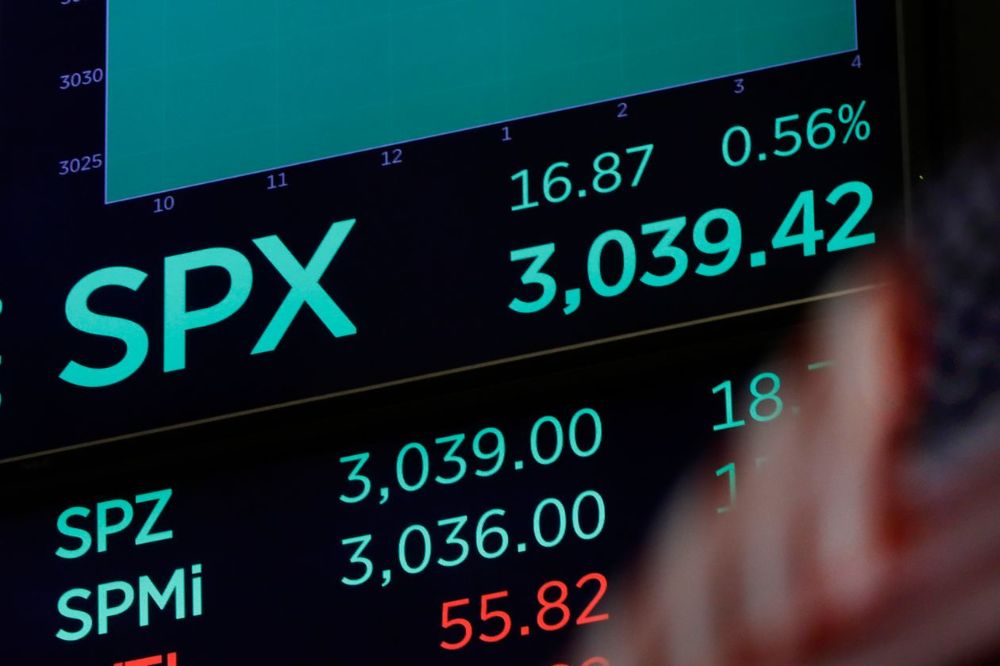
Futures weakened after another steeply negative session on Wall Street, where technology stocks fell amid ongoing concerns over AI-driven disruption within the software sector. Investors were also unsettled by elevated spending across the industry, with Amazon’s outlook echoing similar guidance from other major tech firms. By 18:30 ET (23:30 GMT), S&P 500 Futures were down 0.5% at 6,789.25, Nasdaq 100 Futures slid 0.9% to 24,422.0, and Dow Jones Futures fell 0.3% to 48,857.0.
Amazon plunges 11% after projecting higher-than-expected 2026 capex
Amazon.com Inc (NASDAQ: AMZN) was among the biggest laggards in after-hours trading, plunging 11% following the release of its December-quarter earnings. The company projected capital expenditures of roughly $200 billion in 2026, far exceeding both last year’s spending and analyst estimates of about $146.1 billion.
Quarterly profit came in at $1.95 per share, narrowly missing expectations, while the outlook for the current quarter also fell short as the e-commerce giant factored in rising AI-related costs. Revenue from Amazon Web Services—the core of the company’s artificial intelligence strategy—climbed 24% to $35.6 billion, topping analyst forecasts.
Despite the strong AWS performance, investors were unsettled by the scale of the planned spending, amid growing uncertainty over when heavy AI investments will begin to generate meaningful returns. In sympathy, shares of Microsoft (NASDAQ: MSFT), Alphabet (NASDAQ: GOOGL), and Meta Platforms (NASDAQ: META)—all of which have recently outlined elevated AI spending plans for 2026—fell by as much as 3% in after-hours trade following Amazon’s results.
Wall Street declines again on heavy tech losses, weak employment figures
Wall Street benchmarks extended their decline on Thursday, led lower by the Nasdaq Composite, which fell 1.6%. The S&P 500 dropped 1.3%, while the Dow Jones Industrial Average slid 1.2%. Both the Nasdaq and the S&P fell to their lowest levels since late November and mid-December, respectively.
Technology stocks continued to be the main drag on U.S. equities, as investors grew increasingly concerned about elevated AI-related spending and the potential disruptive effects of artificial intelligence on the software sector. Additional pressure came from disruptions tied to AI’s heavy demand for memory chips. Qualcomm (NASDAQ: QCOM) tumbled 8.5% after warning about the impact of a global memory-chip shortage, while data from Counterpoint Research showed memory-chip prices have surged by as much as 90% quarter-on-quarter so far this quarter.
Broader economic worries also weighed on sentiment. Data from Challenger indicated that U.S. layoffs in January rose to their highest level since the 2009 financial crisis. Weekly jobless claims came in above expectations, while December job openings data also fell short of forecasts, reinforcing concerns about a slowing labor market.
Although signs of labor market weakness have raised expectations for additional Federal Reserve rate cuts, investors remained focused on the outlook for monetary policy under Kevin Warsh, President Donald Trump’s nominee to become the next Fed chair. Warsh has been perceived as a less dovish choice, a view that has also weighed on Wall Street sentiment.



 THE ETERNAL SOVEREIGN