Two defining trends are shaping the investment landscape in 2026: technological innovation is accelerating at an extraordinary pace, while the cost of deploying cutting-edge technologies continues to decline. As a result, breakthroughs that once took years—such as drug development—can now be achieved in a matter of months. Automation is spreading rapidly across industries, fundamentally changing how businesses operate and generate value.
At the same time, the global economy faces growing constraints, including limited power generation, critical raw materials, arable land, and electricity grid capacity. The following investment themes focus on opportunities emerging where technological progress intersects with these structural bottlenecks.
1. Global Robotics & Automation
AI is accelerating the next wave of automation
Robotics and automation remain compelling long-term investment themes, supported by persistent labor shortages, rising wage pressures, and rapid AI innovation. Investors can gain broad exposure through companies involved in industrial automation, logistics, surgical robotics, sensors, and AI-driven software.
Declining AI costs and supportive policies across the US, Europe, and China are speeding up adoption in high-value applications. Meanwhile, manufacturing activity in the US and Europe has returned to expansion territory after several years of contraction, reigniting capital spending that benefits automation providers.
Key risks include geopolitical tensions affecting supply chains, semiconductor shortages, and slower-than-expected commercialization of AI-powered robotics.
2. Space Economy
A rapidly expanding long-term opportunity
The global space economy is expected to reach approximately USD 1.8 trillion over the coming decade, driven by increasing commercial use of satellite technology and emerging concepts such as space-based data centers to support AI infrastructure.
Launch costs continue to fall thanks to reusable rocket technology. For example, refurbishment expenses have declined to roughly USD 10 million, compared with nearly USD 100 million for building new rockets, significantly improving commercial viability.
Risks include reliance on a limited number of major industry players, regulatory challenges, launch failures, and higher-than-anticipated operating costs.
3. Digital Infrastructure
The foundation of the AI revolution
Digital infrastructure has become a critical pillar of the AI economy. Demand for computing capacity continues to surge, while electricity supply and grid limitations are driving a multi-year investment cycle in data centers and supporting infrastructure.
Strong occupancy rates, long-term customer contracts, and significant barriers to entry provide attractive pricing power. Government initiatives promoting domestic AI infrastructure further strengthen the outlook. With US power-grid connection waiting times extending from four to seven years, existing facilities with available power capacity possess a significant competitive advantage.
Potential headwinds include higher interest rates reducing data-center valuations and technological shifts toward edge computing or new computing architectures that lessen demand for traditional hyperscale facilities.
4. Chinese Innovation
Government-backed leadership in future industries
China’s 15th Five-Year Plan allocates roughly USD 2 trillion toward strategic sectors, including semiconductors, artificial intelligence, advanced manufacturing, humanoid robotics, green energy, healthcare, pharmaceuticals, and urban air mobility.
These industries benefit from China’s large domestic market, strong government support, and sustained emphasis on technological innovation.
However, investors should consider risks such as US export restrictions on advanced technology, regulatory uncertainty, overinvestment in state-supported industries, and relatively weak consumer confidence.
5. Agricultural Commodities
Structural supply constraints support the outlook
Agricultural commodities are becoming increasingly attractive as supply challenges intensify. Fertilizer exports through the Strait of Hormuz have been disrupted by geopolitical tensions, while higher natural gas prices have raised production costs and encouraged farmers to reduce fertilizer usage.
These factors threaten crop yields across key agricultural products, including corn, wheat, soybeans, coffee, and cotton. Longer-term issues such as climate change, shrinking farmland, and water scarcity suggest these pressures are structural rather than temporary.
Agricultural commodities can also enhance portfolio diversification by providing inflation protection and maintaining relatively low correlation with traditional equity and bond markets.
6. The New Energy Era
Strategic materials underpin global electrification
The transition toward electrification is expected to reshape global demand for energy and essential raw materials over the coming decades. Electricity consumption by US data centers alone is projected to nearly triple by 2030, increasing from approximately 220 TWh to 600 TWh.
Nuclear power is increasingly viewed as one of the few scalable, low-carbon energy sources capable of supporting this growing demand. Meanwhile, supply constraints in copper and rare earth elements are becoming increasingly important, as both are essential for advanced technologies and clean energy systems.
Governments are treating these materials as strategic national assets through export controls and stockpiling initiatives, creating demand that is less sensitive to short-term price fluctuations.
Key risks include improvements in computing efficiency reducing electricity demand, increased mining output easing supply shortages, and delays to nuclear or grid infrastructure projects due to regulatory and permitting challenges.
7. Biotechnology
Breakthrough innovation meets rising demand from big pharma
Biotechnology is gaining strong momentum as breakthroughs across oncology, genetic disorders, mental health, and obesity treatments continue to translate into commercial success and improving profitability. Artificial intelligence is transforming the industry’s economics by significantly shortening drug discovery timelines, increasing the probability of successful development, and reducing research and development costs.
The sector is also benefiting from a major industry dynamic: large pharmaceutical companies face an estimated USD 300 billion patent cliff between 2025 and 2030, prompting them to actively acquire innovative biotech firms to replenish their product pipelines.
In addition, the policy environment has become more supportive, with reduced pressure on drug pricing and a faster FDA approval process helping bring new therapies to market more efficiently.
Key risks include renewed government efforts to lower drug prices, the reintroduction of tariffs, and regulatory disruptions at the FDA that could delay approvals and weaken revenue visibility.
8. HALO: Investing in Assets AI Cannot Replace
Real-world infrastructure with lasting value
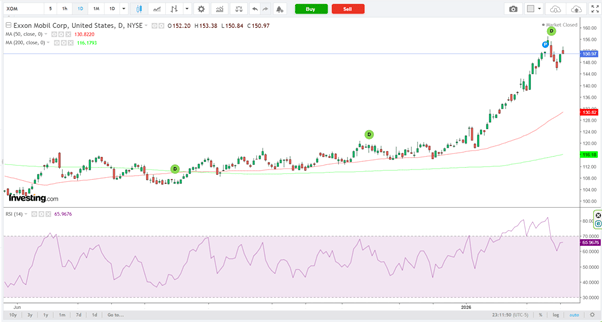
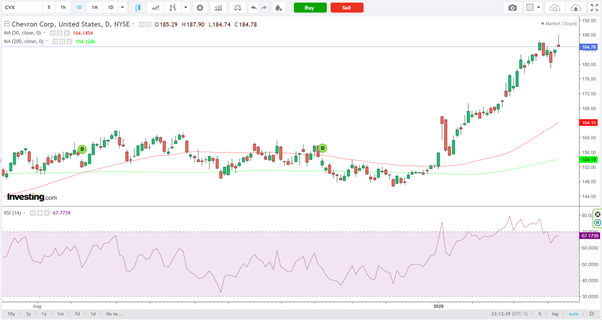
The HALO investment theme focuses on businesses that own physical assets unlikely to be displaced by artificial intelligence. These include companies operating in energy, utilities, transportation, industrial infrastructure, and natural resources.
Their competitive advantage comes from owning essential infrastructure with long useful lives and high replacement costs rather than relying solely on software. While AI can improve operational efficiency, it cannot replicate power grids, pipelines, rail networks, or critical industrial facilities. As a result, these businesses enjoy durable barriers to entry and resilient demand.
Risks include regulatory changes that reduce utility profitability and higher interest rates that may pressure infrastructure valuations.
9. European Mid-Cap Equities
A compelling domestic growth opportunity
European mid-cap stocks are well positioned to benefit from stronger domestic economic conditions, supported by EU fiscal spending, recovering manufacturing activity, and improving credit markets.
Germany’s increased investment in infrastructure and defense provides an additional catalyst, while mid-sized companies typically respond more strongly to economic recoveries than large-cap firms. Their greater reliance on domestic revenue also makes them less vulnerable to US trade tariffs.
Valuations remain attractive, with European mid-caps trading at roughly 15 times forward earnings while offering projected earnings growth of around 15%, compared with approximately 12% for large-cap companies. This provides investors with stronger growth potential without paying a valuation premium.
Primary risks include persistently high energy prices and a stronger euro, both of which could weaken export competitiveness.
10. US Small- & Mid-Cap Dividend Growers
Combining growth with dependable income
US small- and mid-cap companies that consistently increase dividends provide exposure to financially healthy businesses benefiting from expanding domestic economic growth.
Regular dividend increases often reflect strong cash generation, healthy balance sheets, and durable earnings growth. Despite comparable growth prospects, these companies continue to trade at a notable valuation discount relative to large-cap stocks, creating room for multiple expansion.
Key risks include slower economic growth or declining corporate earnings that could weaken cash flow generation and threaten future dividend growth.
12. Short-Duration High Yield Bonds
Generating income while limiting rate risk
Short-duration high-yield bonds focus on below-investment-grade corporate debt with maturities between one and five years. This strategy allows investors to earn attractive income while reducing sensitivity to interest-rate fluctuations.
Current yields remain elevated by historical standards, while default expectations are relatively modest. A significant portion of the market consists of BB-rated bonds, representing the highest-quality segment within high-yield credit, suggesting stronger credit fundamentals than many investors expect.
The shorter maturity profile also reduces exposure to interest-rate volatility. However, investors should still consider risks such as widening credit spreads, rising defaults during economic weakness, and refinancing challenges if financing conditions tighten.
12. Catastrophe Bonds (Cat Bonds)
Diversified income with low market correlation
Catastrophe bonds are insurance-linked securities that transfer the financial risk of major natural disasters from insurers to investors. In return, investors receive floating-rate income consisting of an insurance premium and yield generated from collateral.
Because their performance depends primarily on insured catastrophe events rather than financial market movements, cat bonds typically exhibit very low correlation with stocks and bonds. Their relatively short maturities and active secondary market also make them an attractive and scalable alternative investment.
The long-term investment case is supported by a widening global insurance protection gap, strong demand for risk transfer, and attractive risk-adjusted returns. Losses are generally event-driven and can often be repriced over time rather than resulting in permanent impairment of capital.
The principal risks include multiple catastrophic events occurring within a short period, inaccuracies in catastrophe risk models, reduced market liquidity following major disasters, and lower interest rates diminishing collateral yields.















 THE ETERNAL SOVEREIGN