Price Gaps are areas on a price chart where no trading occurs between two consecutive periods, causing the price to “jump” up or down instead of moving smoothly.
A gap appears when the market opens significantly higher or lower than the previous close.
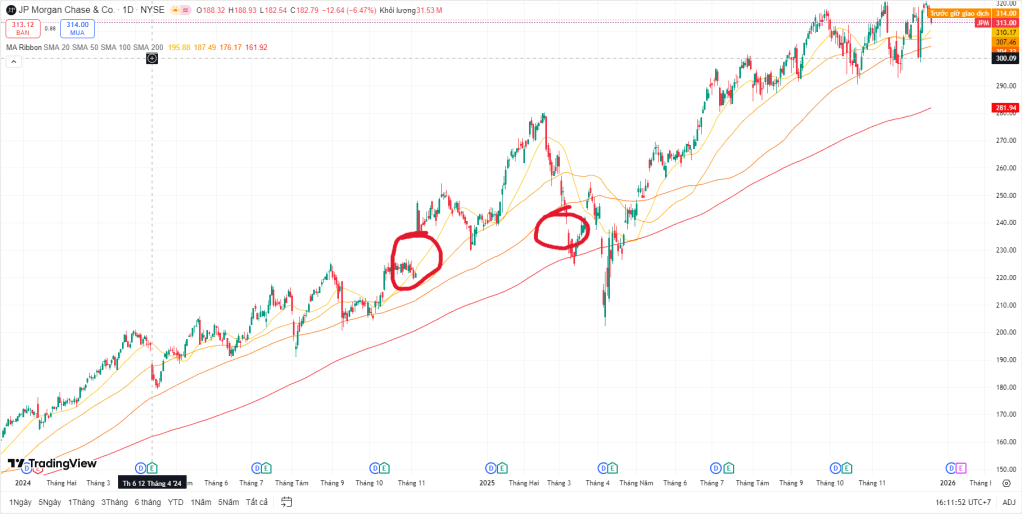
How Price Gaps Form
Price gaps usually happen because of:
- 📰 News or economic announcements
- 📊 Earnings reports
- 🌍 Geopolitical events
- ⏱️ After-hours or weekend trading (stocks & crypto)
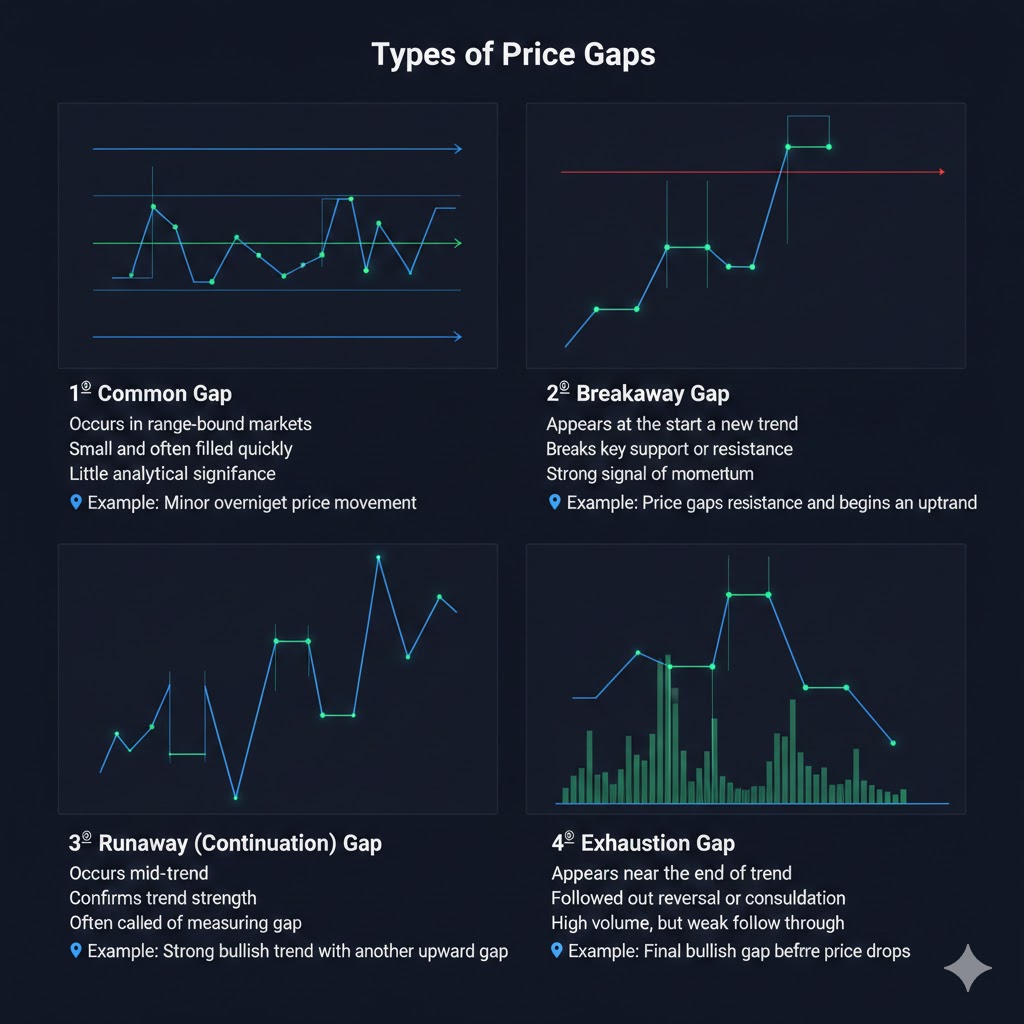
Gap Fill (Important Concept)
- A gap fill happens when price returns to trade within the gap area
- Common gaps usually fill
- Breakaway & runaway gaps may not fill immediately
📌 Rule of thumb:
The faster a gap fills, the weaker the signal
How Traders Use Price Gaps
- 📍 Identify trend direction
- 🎯 Set entry & exit points
- 🛑 Place stop-loss levels
- 📊 Combine with volume, support & resistance, candlestick patterns
Markets Where Gaps Are Common
- 📈 Stocks (very common)
- 💱 Forex (mainly weekend gaps)
- 🪙 Crypto (less frequent but possible)
 THE ETERNAL SOVEREIGN