Portfolio Management is the process of selecting, managing, and monitoring a collection of investments (a portfolio) to achieve specific financial goals while balancing risk and return. Portfolio management involves deciding what to invest in, how much to invest, and when to adjust investments based on an investor’s objectives, risk tolerance, time horizon, and market conditions.

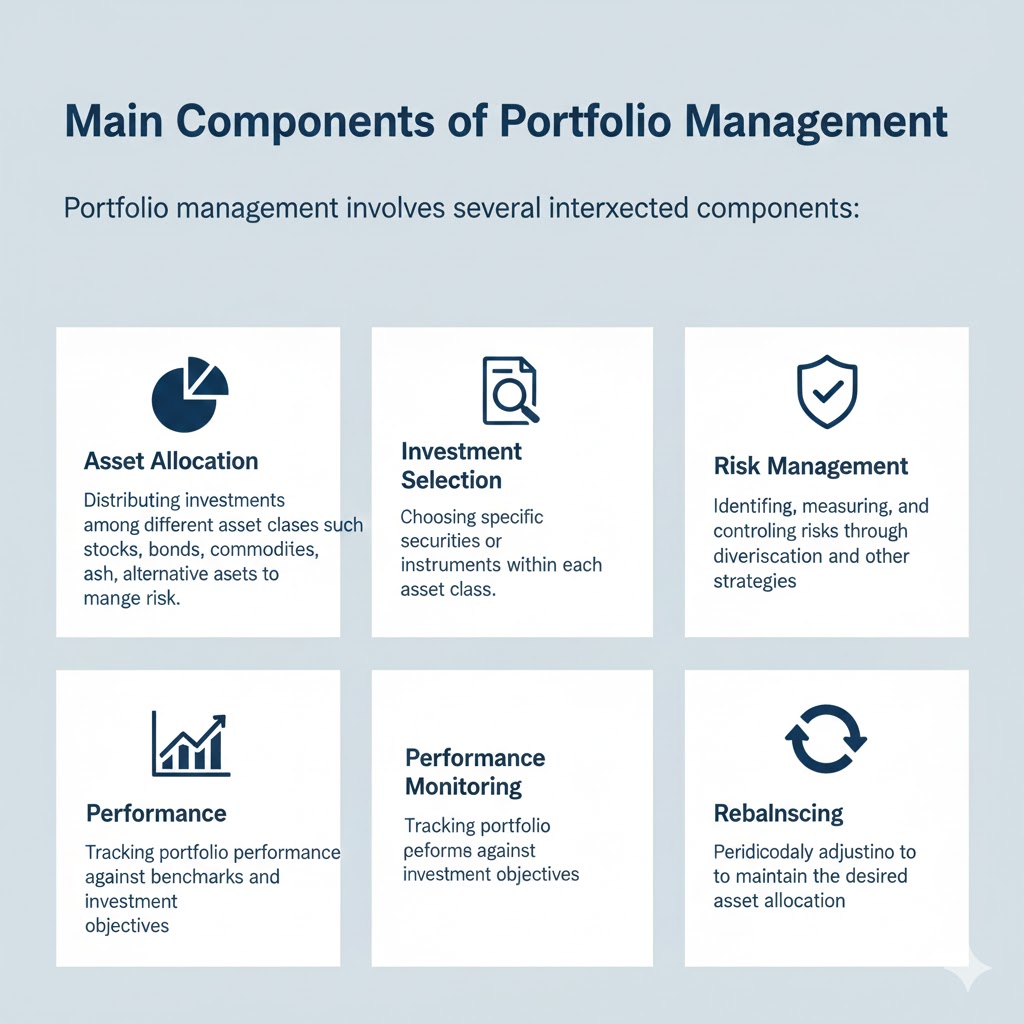
Main Components of Portfolio Management
- Asset Allocation
Distributing investments among different asset classes such as stocks, bonds, commodities, cash, or alternative assets to manage risk. - Investment Selection
Choosing specific securities or instruments within each asset class. - Risk Management
Identifying, measuring, and controlling risks through diversification and other strategies. - Performance Monitoring
Tracking portfolio performance against benchmarks and investment objectives. - Rebalancing
Periodically adjusting the portfolio to maintain the desired asset allocation.
Types of Portfolio Management
- Active Portfolio Management:
Managers actively buy and sell assets to outperform the market. - Passive Portfolio Management:
Focuses on matching market performance, often through index funds. - Discretionary Portfolio Management:
Managers make decisions on behalf of clients. - Non-discretionary Portfolio Management:
Managers provide advice, but final decisions are made by clients.
The main goal of portfolio management is to maximize returns for a given level of risk or minimize risk for a desired level of return.
 THE ETERNAL SOVEREIGN