Costco
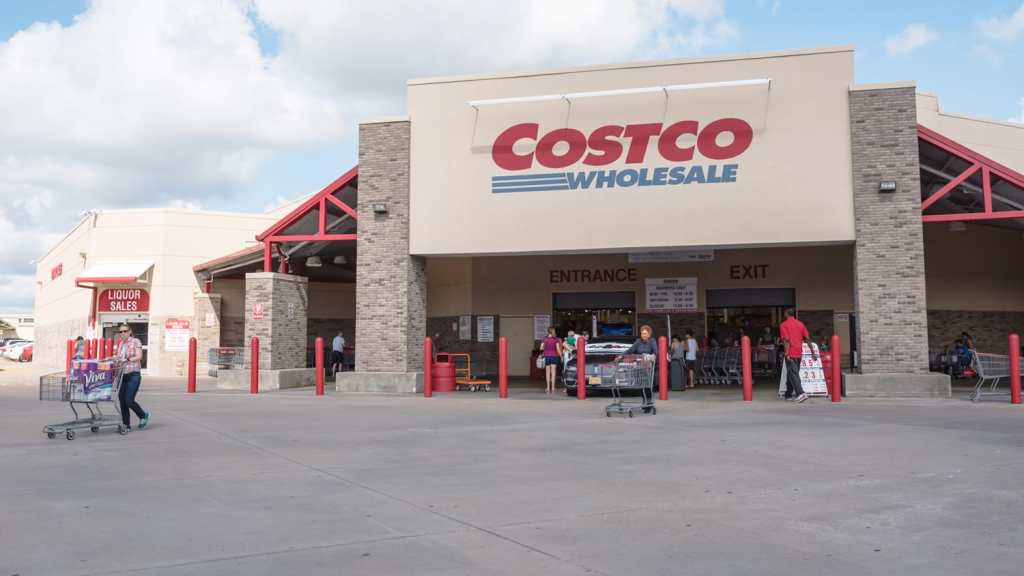
Costco beats 1Q earnings estimates, but warning signs flash red. Renewal rates continue sliding — global down to 89.7%, US/Canada to 92.2% — while paid member growth crawls at a meager +400k quarter-over-quarter despite new club openings. Strip out new stores, and membership appears to be shrinking. Comparable store traffic slows to +3.1% year-over-year, and app downloads have plunged since Black Friday. The warehouse giant’s moat shows cracks.
Meanwhile, competitors are aggressively attacking. Walmart is investing billions into Sam’s Club, accelerating openings to 15 per year after a seven-year pause, with Yelp data showing Sam’s Club locations gaining traction as Costco’s wane. BJ’s Wholesale is expanding rapidly with 14 new clubs planned for FY’25 and capex surging. Combined with shrinking household sizes (down to 2.5 members) and delayed household formations, Costco faces structural challenges masked during the COVID era.
Valuation is stretched: 27x EV/NTM EBITDA — well above the 10-year average — and 43x forward P/E, signaling an overheated stock. Peers like BJ’s trade at roughly half these multiples. Downside risks dominate; analysts slash the price target from $906 to $769.
In today’s market, even the slightest miss could trigger a harsh re-rating.
Crescent Energy
On Tuesday, Evercore resumed coverage on Crescent Energy (NYSE: CRGY) with an Outperform rating and a $13 price target.
TL;DR: Crescent’s acquisition of VTLE propels it into the top ten U.S. independent producers, but shares struggle amid a tough 2025 oil market and heavy debt. A potential pivot to asset sales looms.
The Full Story:
Crescent’s recent VTLE acquisition boosts production to nearly 400 MBoe/d across three diversified basins, significantly expanding its Permian presence and positioning it for further deals. Evercore projects over 2x cash-on-cash returns, backed by VTLE’s current output, which immediately enhances free cash flow and NAV per share.
The company plans to optimize operations by cutting rigs from four to one or two, targeting $90–100 million in synergies through drilling efficiencies, cost reductions, and better marketing—building on proven success in Eagle Ford where wells outperform by 20% and expenses decrease.
However, amid a brutal 2025 oil downturn, CRGY shares have declined sharply year-to-date, weighed down by debt and falling commodity prices amid fierce competition. Notably, private asset markets are pricing assets well above public E&P equities, casting doubt on the traditional acquire-and-exploit strategy.
Evercore anticipates Crescent may shift from buyer to seller, leveraging its experienced team to unlock value through asset divestitures.
Procter & Gamble
Jefferies upgraded Procter & Gamble (NYSE: PG) to Buy on Wednesday with a $179 price target.
TL;DR: A tough 2025 sets the stage for a stronger 2026. Valuation remains cheap despite an improving earnings outlook.
Full Story:
After a challenging 2025, Jefferies expects PG’s earnings momentum to improve in fiscal 2026 and beyond, even though estimates for 2026 and 2027 have been trimmed about 7% since January.
Despite this, PG shares trade at just 20x 2027 earnings—the lowest since 2018, when revenue growth was near zero and well below the 10-year average of 22x.
Jefferies values PG at $179, applying a 24x multiple (one turn above the five-year average) to its $7.47 estimate for 2027 earnings, anticipating accelerating growth.
Investors should note: valuation rarely remains this depressed when fundamentals improve.
PayPal
On Thursday, Morgan Stanley downgraded PayPal Holdings Inc (NASDAQ: PYPL) to Underweight with a $51 price target.
TL;DR: PayPal faces downgrade amid looming AI disruption and slowing growth.

Full Story:
Morgan Stanley’s downgrade highlights four critical challenges eroding PayPal’s position. Branded Checkout is losing market share as management’s slow, clunky fixes fail to stem the tide, exposing PayPal to fierce wallet competition and pricing pressures.
Agentic commerce—AI-driven purchasing agents—is a looming threat. PayPal’s history of failed integrations leaves it behind ChatGPT-powered rivals like Stripe and Adyen. Venmo’s monetization struggles amid P2P competition and an aging user base.
Earnings face downward revisions as operating expenses rise on marketing and remediation efforts, offsetting buybacks. Morgan Stanley forecasts transaction margin growth to plunge from high single digits to just 3.3% by 2027.
Lockheed Martin
On Friday, JPMorgan downgraded Lockheed Martin (NYSE: LMT) to Neutral with a $515 price target.
TL;DR: JPMorgan downgrades Lockheed, citing cash flow concerns and a looming 2027 pension drag threatening growth.
Full Story:
JPMorgan acknowledges Lockheed’s tough 2025 performance but steps back due to cash flow forecasts that lag Street consensus. The real challenge arrives in 2027—a significant pension cash outflow expected to stall free cash flow growth unless working capital improves dramatically.
Consensus expectations of 8% growth appear overly optimistic to JPMorgan. Their $515 target assumes a modest rebound in 2028, based on a 5.5% yield on $30 per share free cash flow, discounted by one year.
Missiles and Fire Control, comprising about 20% of Lockheed’s portfolio, are projected to grow strongly, but other segments face topline pressure and inconsistent execution.
On the bright side, steady F-35 production at 156 jets annually eases some analyst concerns.
Sources: Investing
 THE ETERNAL SOVEREIGN