A Financial Services License is a certification issued by the financial regulatory authority that allows an organization or individual to legally provide financial services such as investment advice, securities brokerage, fund management, insurance, lending, and other related financial services.
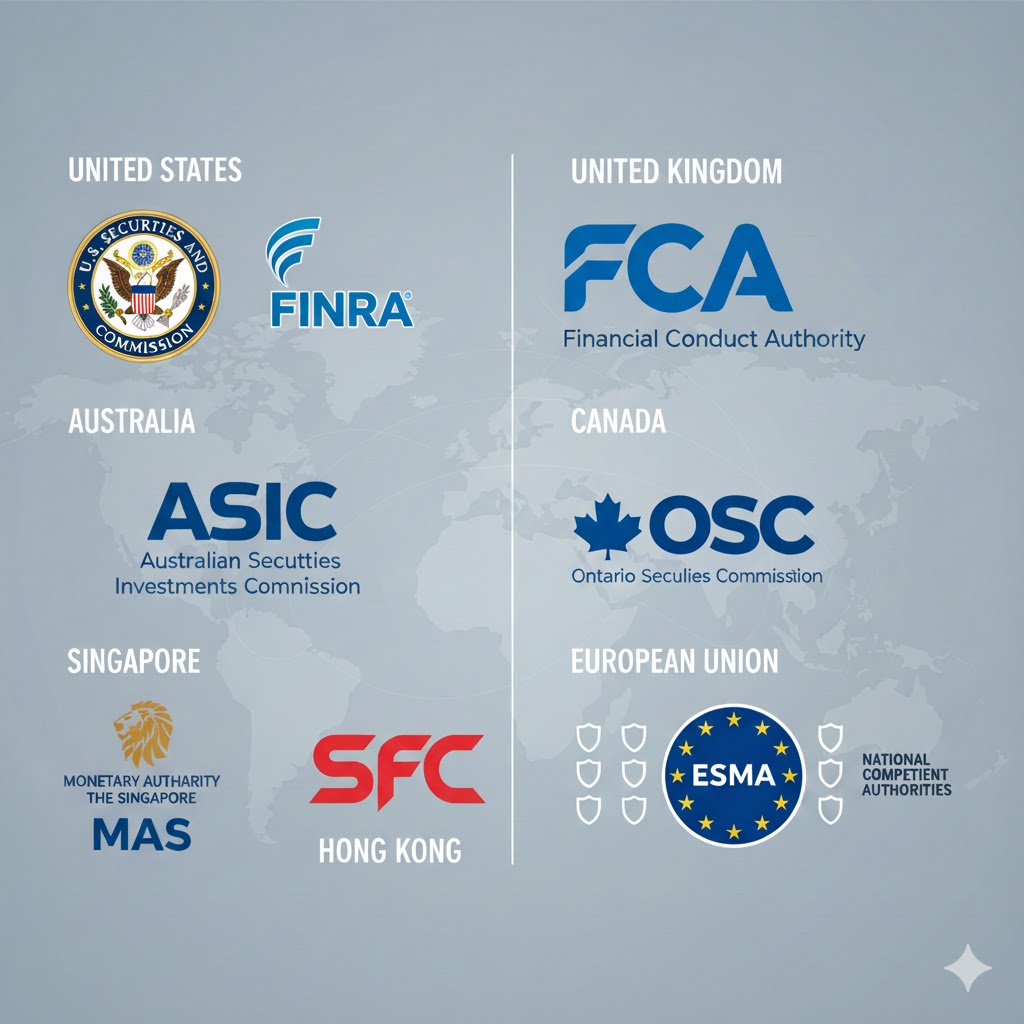
In each country, this license is issued by the corresponding financial regulator, for example:
- United States: Securities and Exchange Commission (SEC) or the Financial Industry Regulatory Authority (FINRA)
- United Kingdom: Financial Conduct Authority (FCA)
- Australia: Australian Securities and Investments Commission (ASIC)
- Canada: Canadian Securities Administrators (CSA) and provincial regulators such as the Ontario Securities Commission (OSC)
- Singapore: Monetary Authority of Singapore (MAS)
- Hong Kong: Securities and Futures Commission (SFC)
- European Union: National competent authorities in each member state, coordinated under the European Securities and Markets Authority (ESMA)
Scope of Activities
The license clearly defines the scope of permitted services, such as investment advice, securities brokerage, fund management, insurance, consumer lending, financial payment services, etc.
Requirements for Licensing
- Complete legal documents (business registration, establishment certificates, etc.)
- Financial capacity and qualified professional personnel as required
- Risk management policies, compliance with laws and anti-money laundering regulations
- Internal procedures, reporting systems, and activity monitoring
Compliance Responsibilities
License holders must strictly comply with regulations, including:
- Undergoing audits and inspections when required
- Periodic reporting of financial activities
- Compliance with risk management and customer protection regulations
Therefore, any enterprise that conducts marketing activities to attract customers without being granted a financial services license is undoubtedly operating as a fraudulent entity.
 THE ETERNAL SOVEREIGN