A CFD (Contract for Difference) is a derivative financial instrument where two parties (a trader and a broker) agree to exchange the difference in the price of an asset between the time the position is opened and closed.
- You do NOT own the underlying asset (stock, gold, index, etc.).
- You are only trading price movements.
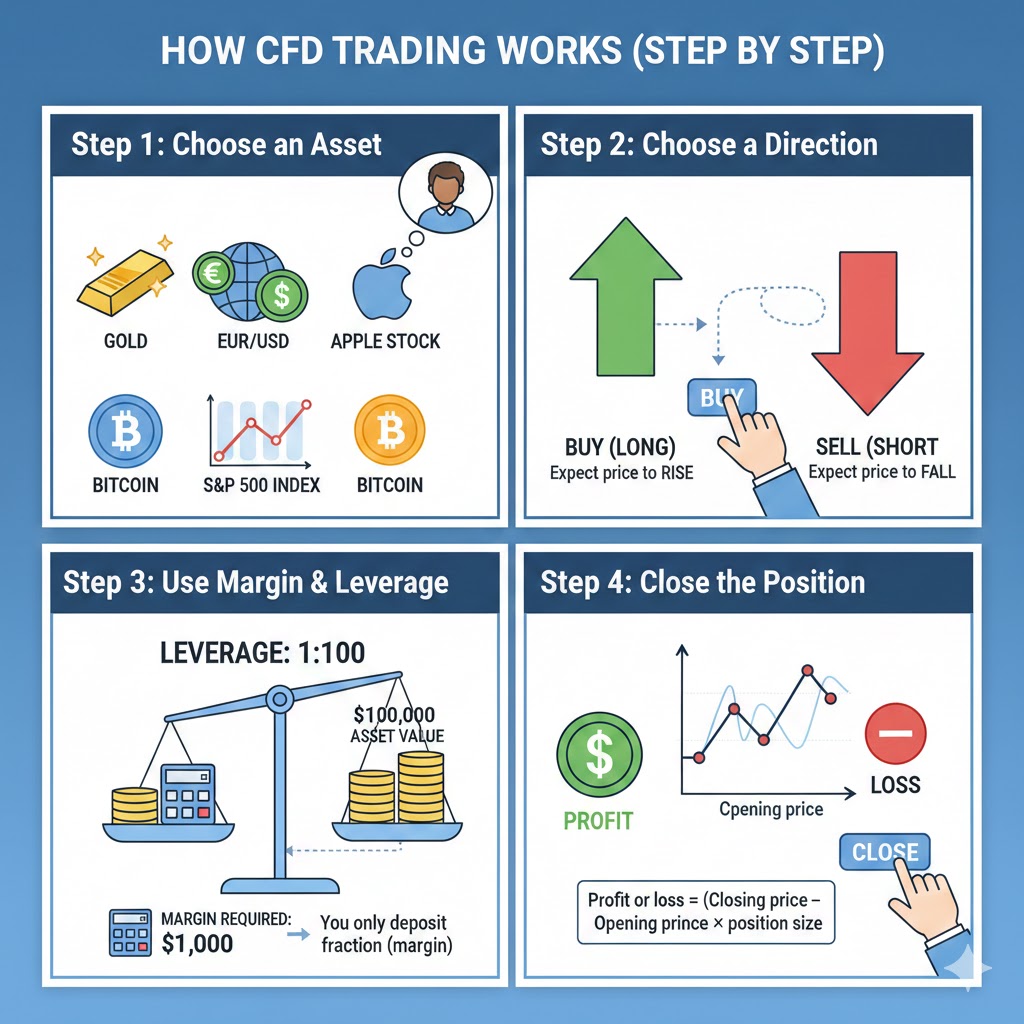
How CFD trading works (step by step)
Long vs Short (very important)
🔼 Going Long
You profit when the price increases.
Example:
- Buy at 100
- Sell at 110
- Profit = +10
🔽 Going Short
You profit when the price decreases.
Example:
- Sell at 100
- Buy back at 90
- Profit = +10
⚠️ This ability to profit in falling markets is a key feature of CFDs.
Leverage explained in depth
Leverage allows you to control a large position with a small amount of capital.
| Leverage | Margin Required |
|---|---|
| 1:10 | 10% |
| 1:50 | 2% |
| 1:100 | 1% |
| 1:500 | 0.2% |
⚠️ Risk of leverage
- A 1% price move with 1:100 leverage = 100% gain or loss
- Losses can exceed expectations if risk is unmanaged
Costs in CFD trading
1️⃣ Spread
- Difference between Bid and Ask
- Paid when opening a trade
2️⃣ Commission
- Some brokers charge commission (usually on stocks)
3️⃣ Overnight / Swap fee
- Charged if you hold a position overnight
- Based on interest rate differentials
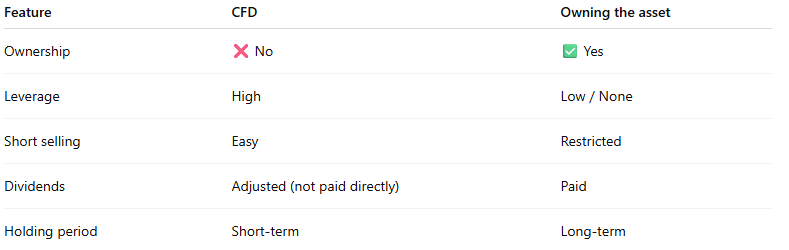
CFD vs owning the asset
Markets available via CFDs
CFDs allow access to global markets from one account:
- Forex – currencies
- Commodities – gold, oil, silver
- Indices – Nasdaq, Dow Jones
- Stocks – global equities
- Cryptocurrencies – price exposure only
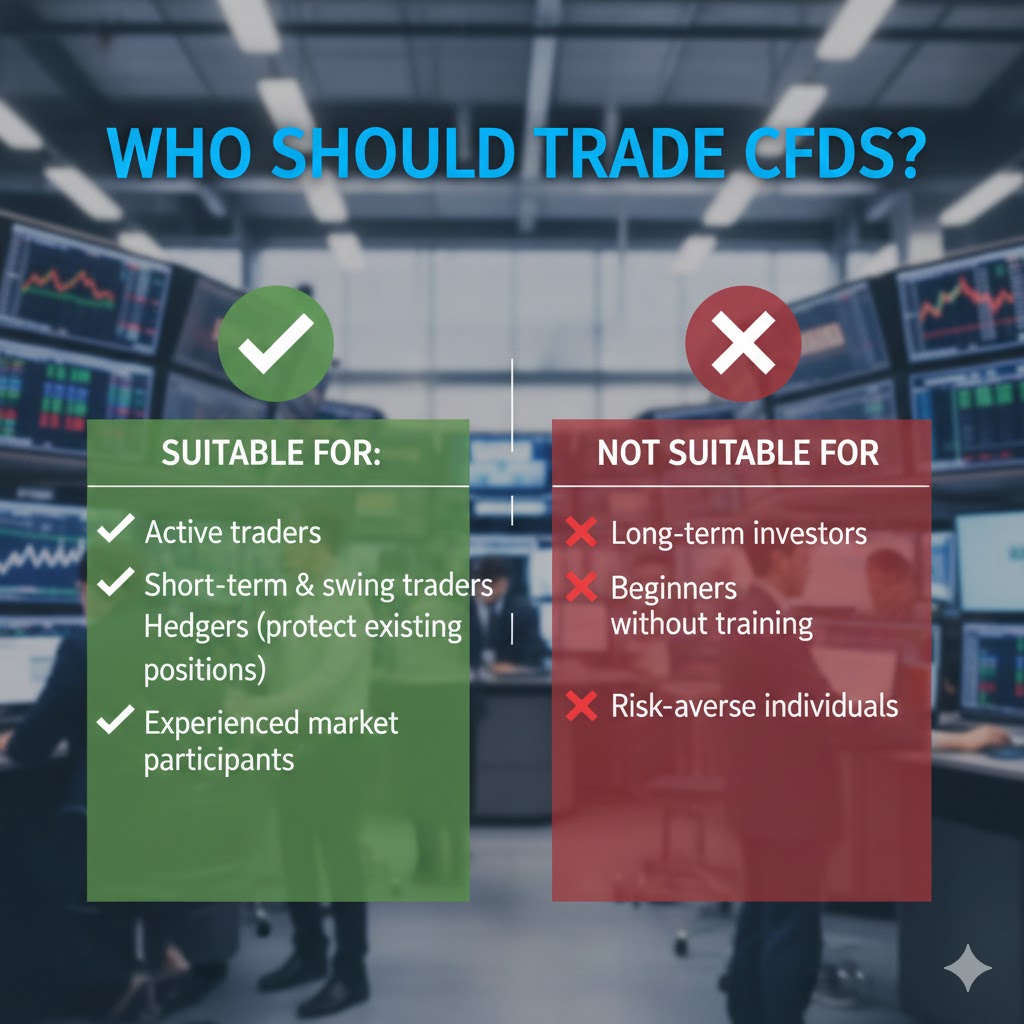
Are CFDs regulated?
- CFDs are legal and regulated in many jurisdictions
- Regulation depends on the broker’s license (FCA, ASIC, CySEC, etc.)
- Some countries restrict or ban retail CFD trading
👉 Broker selection is critical.
Key advantages & disadvantages
✅ Advantages
- Trade rising and falling markets
- High capital efficiency
- Access to global markets
- Fast execution
❌ Disadvantages
- High risk due to leverage
- No ownership benefits
- Psychological pressure
- Broker dependency
 THE ETERNAL SOVEREIGN