Continuation Patterns are technical chart patterns that signal a temporary pause or consolidation in the market before the price continues in the same direction as the existing trend.
The trend takes a break — then continues.
Why Continuation Patterns Matter
Traders use them to:
- Identify trend-following entry points
- Add positions during pullbacks or consolidation
- Set clear breakout levels
- Manage risk more effectively
Common Types of Continuation Patterns
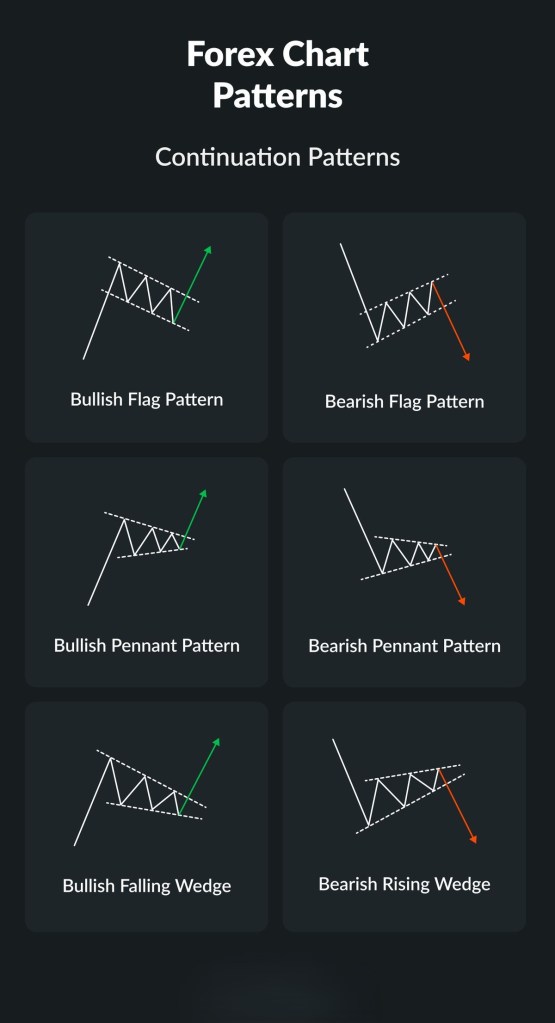
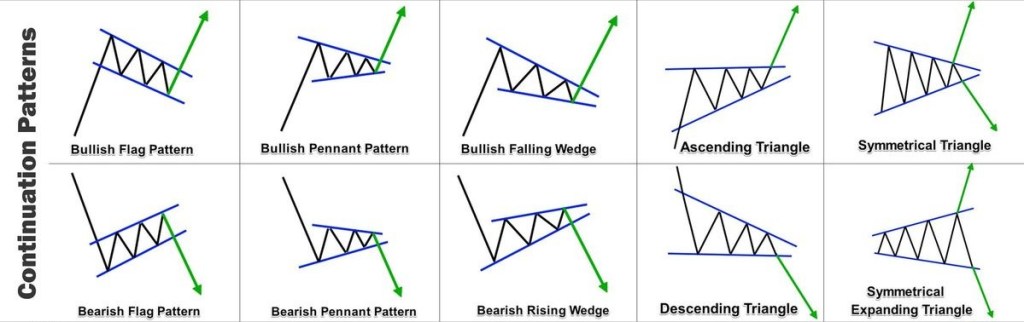
1️⃣ Flags
- Short-term consolidation after a strong move
- Slopes against the main trend
- Indicates strong momentum continuation
📌 Bull Flag / Bear Flag
2️⃣ Pennants
- Small symmetrical triangle after a sharp move
- Decreasing volume during consolidation
- Breakout usually follows the prior trend
3️⃣ Triangles
- Ascending Triangle → bullish continuation
- Descending Triangle → bearish continuation
- Symmetrical Triangle → continuation or breakout (needs confirmation)
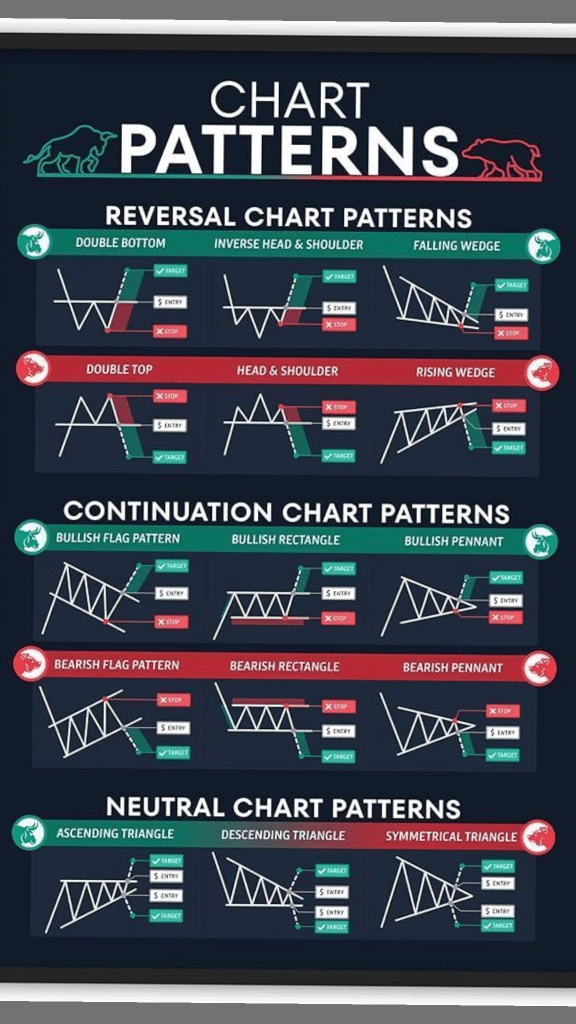
4️⃣ Rectangles (Trading Range)
- Price moves between horizontal support and resistance
- Breakout direction usually follows the previous trend
5️⃣ Wedges (in some cases)
Falling wedge → bullish continuation
(context is very important)
Rising wedge → bearish continuation
Key Characteristics
✔ Occur mid-trend
✔ Volume often declines during consolidation
✔ Breakout volume typically expands
✔ Best used with trend confirmation tools
Continuation vs Reversal Patterns
Best Confirmation Tools
- Trendlines
- Support & Resistance
- Volume
- Moving Averages
- Fibonacci levels
Key Takeaway
Continuation patterns help traders stay with the trend rather than fight it.
They work best when aligned with strong trend structure and volume confirmation.
 THE ETERNAL SOVEREIGN