Category: Technical Knowledge

  • Gold stays strong as rising global tensions revive the case for hard money

    Critics of fiat currency have repeatedly tried—and failed—to call a peak in gold and silver. Once again, their arguments were derailed by geopolitical developments in Venezuela and beyond. The repercussions could prove even more supportive for the world’s most powerful form of money: Gold.

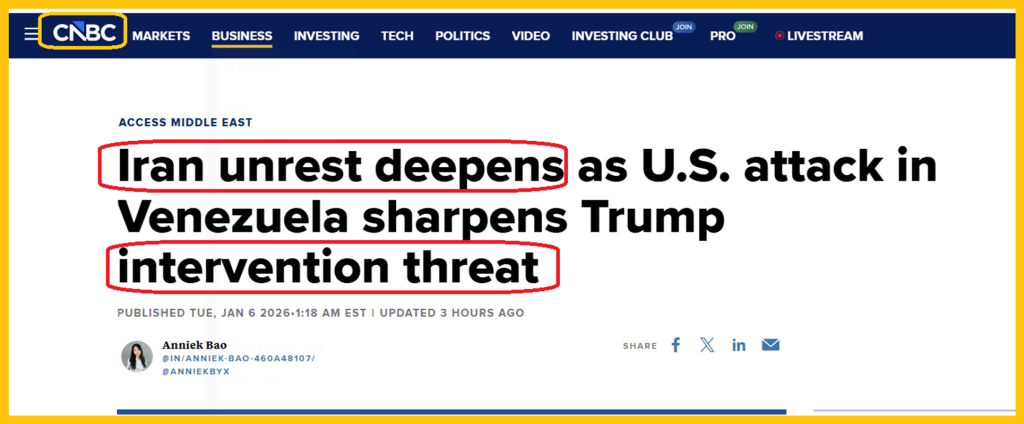
    Iran is increasingly becoming a flashpoint of unrest, with protesters chanting “Death to the dictator!” while the U.S. government threatens action against the regime. Meanwhile in Asia, Chinese social media is circulating alleged plans to remove Taiwan’s leadership in a manner similar to what happened to Maduro. At the same time, President Trump’s earlier claim that he could end the war in Ukraine within 24 hours has clearly proven unrealistic. The conclusion is straightforward: geopolitical forces are now providing exceptionally strong support for gold—arguably outweighing, at least for the moment, concerns over government debt.

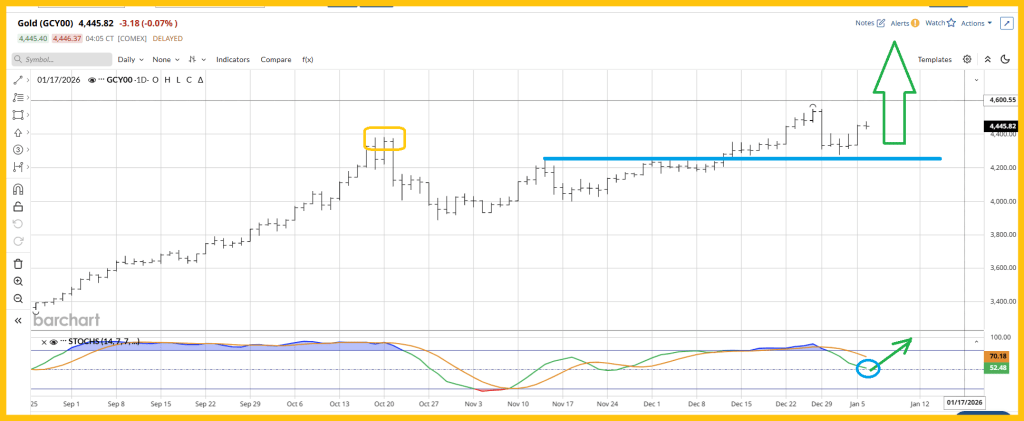
    Gold appears to have broken higher from its October peak, and the pullback toward my $4,260 “speculator buy zone” is a technically normal correction. Investors who currently hold no gold should not wait around for a major selloff before entering the market. A small starter position is a better way to gain initial exposure to this exceptional asset. From there, larger allocations can be added during deeper pullbacks into strong support levels.

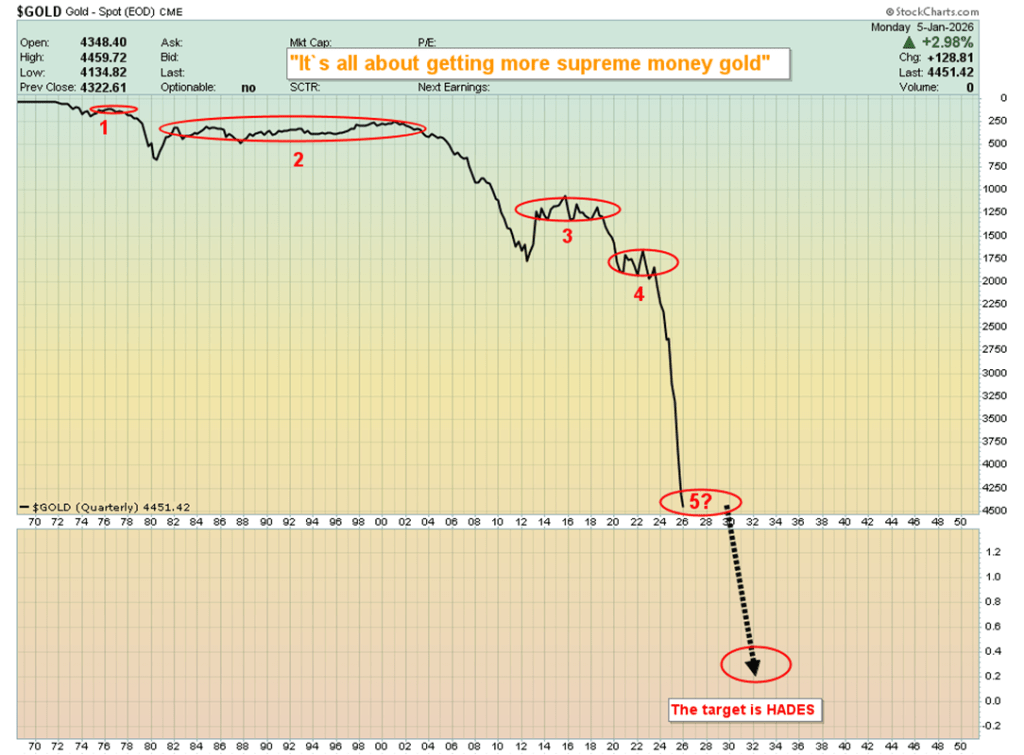
    Because people are forced to purchase nearly everything using their government’s debased fiat currency, their attention in the early phase of a fiat system is directed toward acquiring more fiat rather than accumulating gold.

    Over time, the purchasing power of fiat currency deteriorates rapidly, eventually pushing people to shift their focus toward gold. This is the phase America is expected to enter within the coming years. For those who have already adopted gold as their preferred currency, it will be a rewarding period—while for others, the transition may prove unsettling.

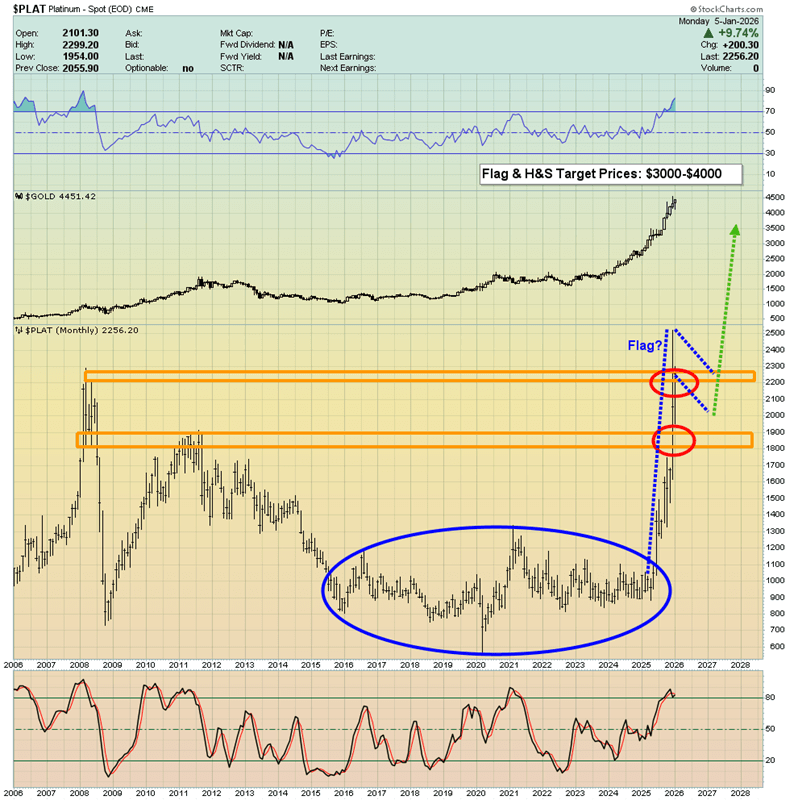
    The platinum chart looks impressive. While platinum isn’t considered money, it remains a valuable metal and a useful means to acquire more gold. My recommendation was to buy platinum when prices are below $1,000 and then sell 30% to 70% of holdings between $1,800 and $2,400, using the proceeds to purchase gold. Personally, I opted to sell 70% and keep the remaining 30% as a long-term investment.

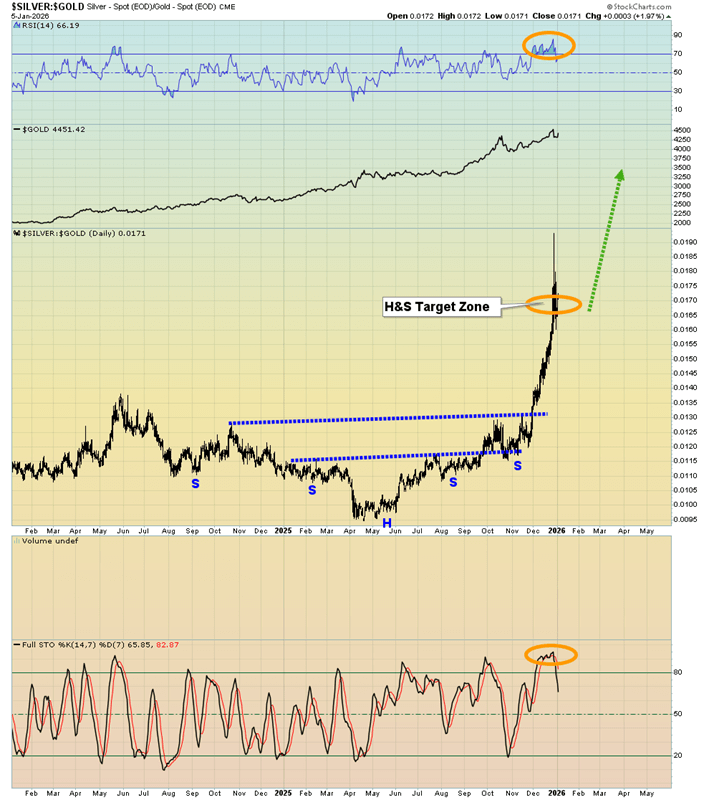
    As for silver, there’s promising news: it might reclaim its role as a form of money. Rumors persist about central banks’ growing interest in this remarkable metal. Additionally, the era of robotics is dawning, with millions of robots set to replace human workers. Most will likely run on electricity generated by solar panels, which require silver for their production. While some manufacturers may switch to copper, a $100 price floor for silver appears inevitable.

    Examining this metal’s impressive price movement relative to gold, and with silver’s potential to regain recognition as money, my advice is to sell no more than 30% of your holdings during the current upward rally, which has brought prices into my targeted zone on the chart. Similar to platinum, gains should be reinvested not into depreciating fiat currencies, but into gold.

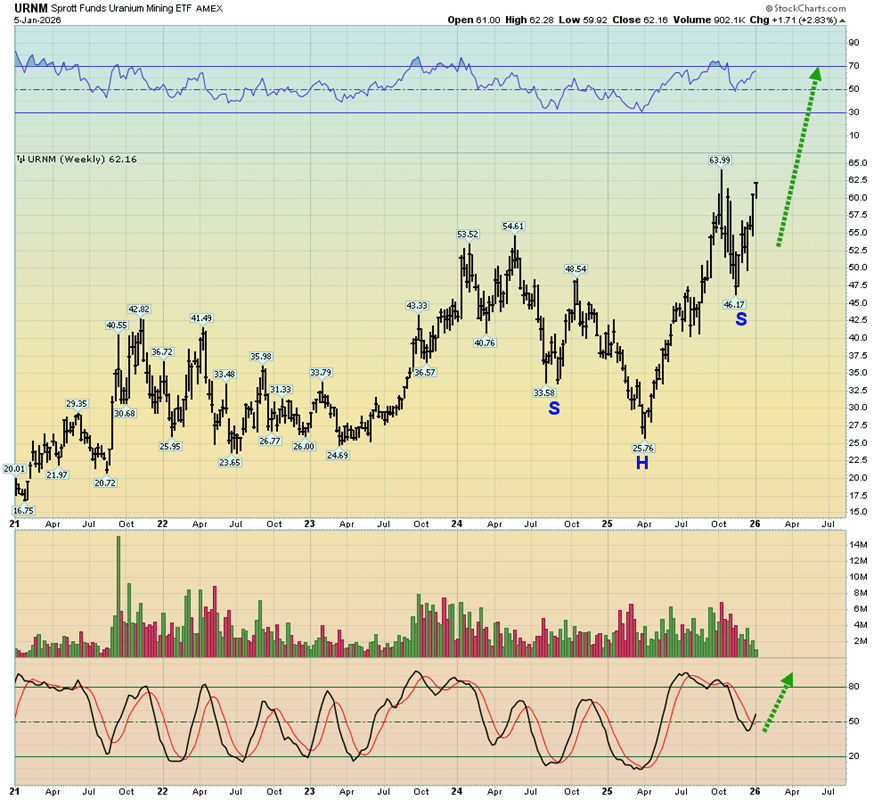
    Another important asset for investors focused on gold is uranium. The chart for yellowcake stocks (URNM ETF) is striking, displaying a bullish inverse Head & Shoulders continuation pattern with a notably strong high right shoulder. Additionally, the Stochastics (14,7,7) indicator is signaling a buy at the chart’s lower levels. Simply put, yellowcake stocks present one of the clearest momentum-driven buying opportunities available.

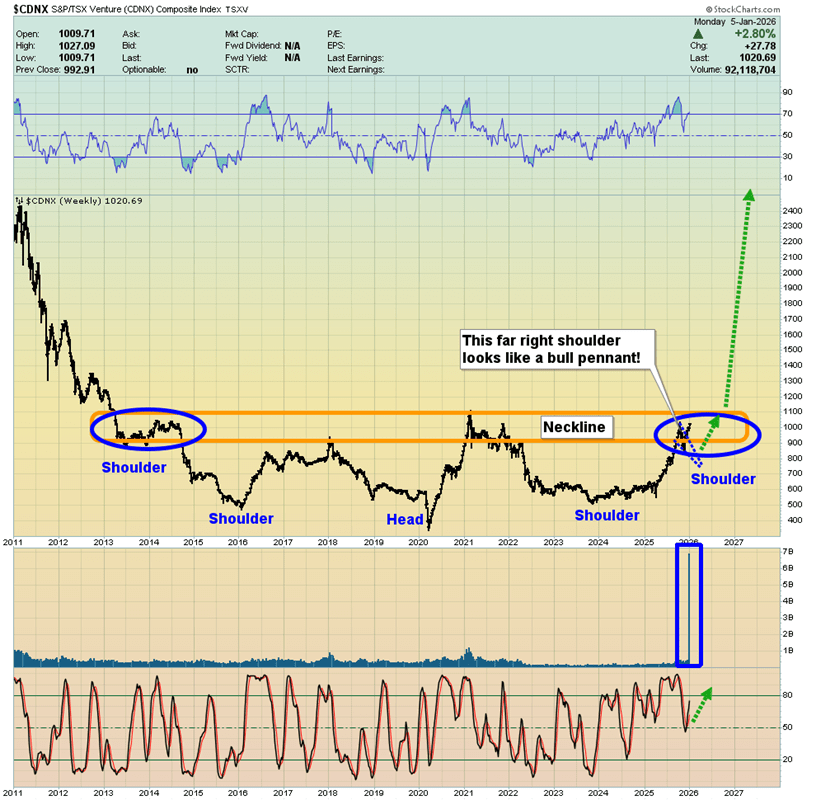
    What about the miners? This could be one of the most bullish charts worldwide. I’ve advised investors in mining stocks to watch the CDNX closely as a key indicator of upside potential for gold and silver miners across the board. The right shoulder appears to form a bull wedge, poised to trigger a powerful breakout for these significantly undervalued miners.

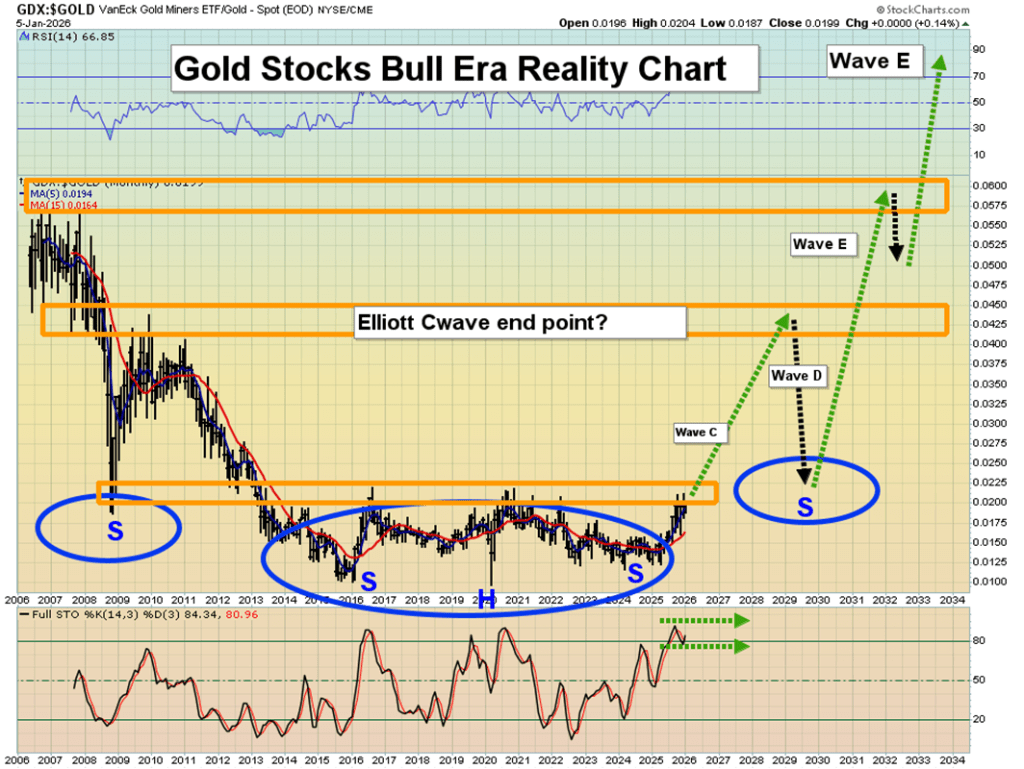
    The “mouthwatering” GDX versus gold chart has caught my attention. I urged investors to look for a Stochastics (14,3,3) flatline signal, which has now appeared. A breakout above the neckline of the large inverse Head & Shoulders pattern seems imminent.

    Put simply, if an investment cannot outperform gold—the ultimate store of value—there’s little reason to buy it; investors might as well hold gold directly. In the case of mining stocks, they seem poised to deliver one of the most significant wealth-building opportunities in market history. The key question remains: are informed investors ready to take advantage?

    Sources: Investing

  • Technical Indicators – Part 2

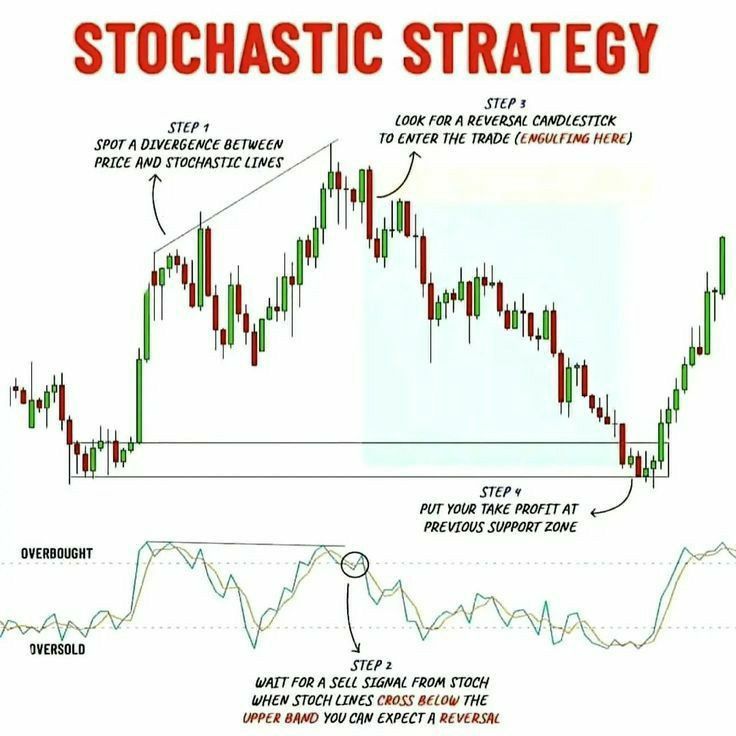
    Stochastic Oscillator

    The Stochastic Oscillator is a popular technical analysis indicator used to measure the momentum of a financial asset — basically, how fast the price is moving compared to its recent range.

    • It compares the closing price of an asset to its price range over a specific period of time.
    • It helps traders identify overbought or oversold conditions in the market.
    • Values range between 0 and 100.

    How it works

    • When the oscillator is above 80, the asset is considered overbought (price might be too high, possible reversal or pullback soon).
    • When it is below 20, the asset is considered oversold (price might be too low, possible upward reversal).
    • It’s often used to spot potential trend reversals or entry/exit points.

    Typical usage

    • Traders watch for crossovers between %K and %D lines for buy/sell signals.
    • Also, look for divergences between price and the oscillator to spot weakening trends.

    Notes

    • %K and %D are the two main lines used to generate signals:
      • %K — The Fast Stochastic Line
      • %D — The Slow Stochastic Line

    Average True Range (ATR)

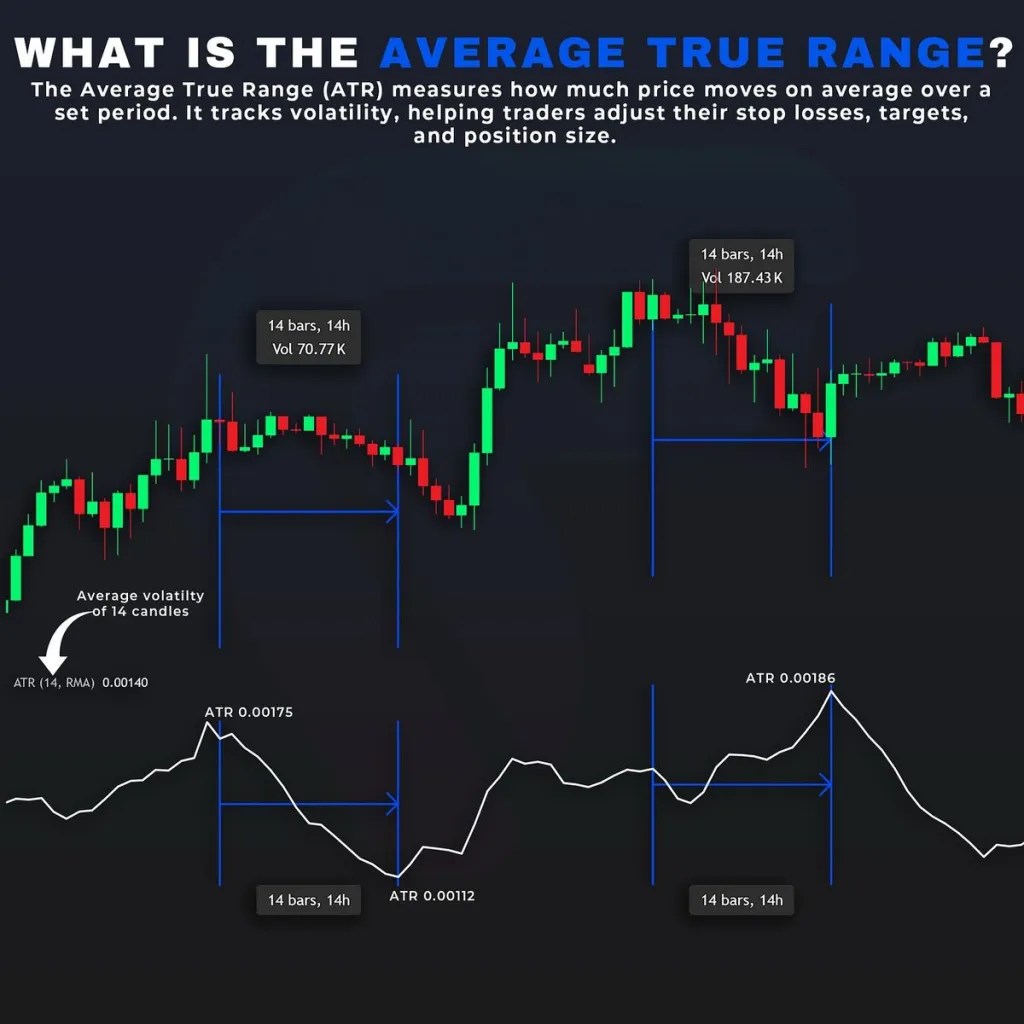
    Average True Range (ATR) is a technical analysis indicator that measures market volatility.

    • It was introduced by J. Welles Wilder Jr. in his 1978 book New Concepts in Technical Trading Systems.
    • ATR shows how much an asset’s price moves, on average, during a given period.
    • It helps traders understand the degree of price fluctuations or volatility.

    How is ATR calculated

    1. True Range (TR) for each period is the greatest of:
      • Current High − Current Low
      • Absolute value of (Current High − Previous Close)
      • Absolute value of (Current Low − Previous Close)
    2. Then, ATR is the moving average (usually 14 periods) of the True Range values.

    Why use ATR

    • It tells you how much the price typically moves, regardless of direction.
    • Higher ATR = higher volatility (bigger price swings).
    • Lower ATR = lower volatility (smaller price movements).
    • Traders use ATR for:
      • Setting stop-loss orders to avoid getting stopped out by normal volatility.
      • Identifying periods of high or low market volatility.
      • Confirming breakouts or trend strength.

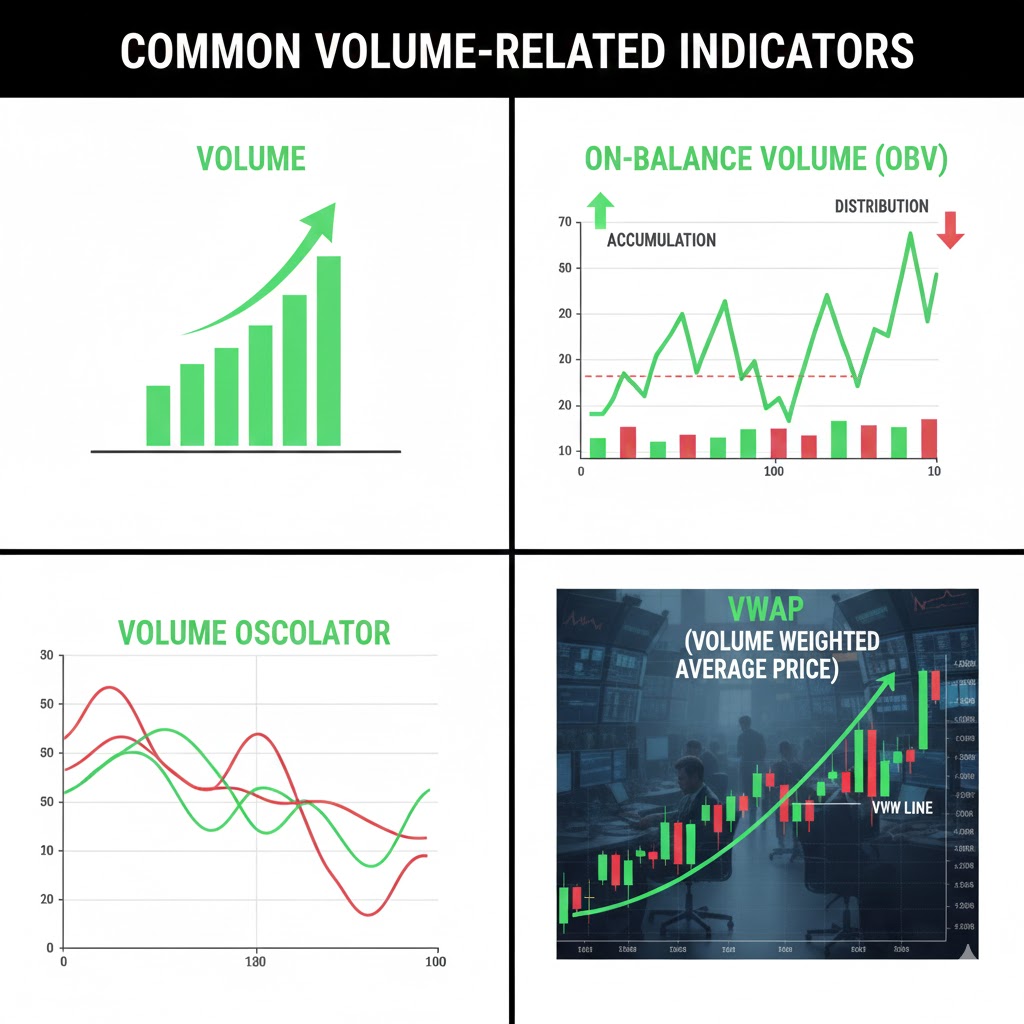
    Volume indicators

    Volume indicators are tools used in technical analysis to measure and analyze the amount of a security (like stocks, forex, crypto) traded during a specific period of time.

    What do Volume Indicators tell you

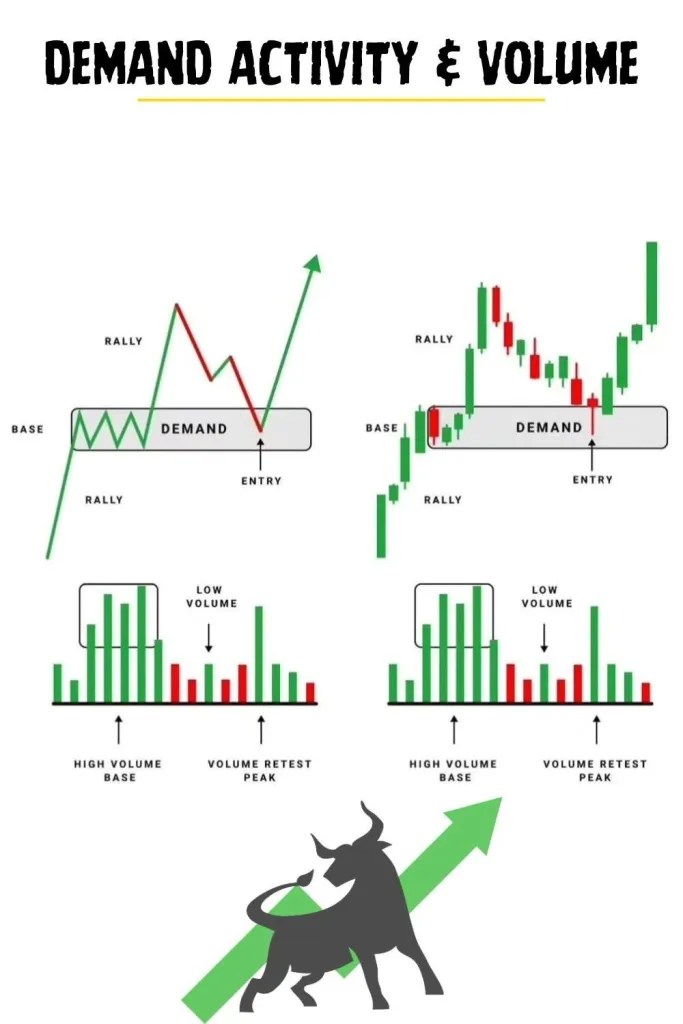
    • Trading activity strength: They show how strong or weak a price movement is by looking at the number of shares/contracts traded.
    • Confirm trends: High volume during a price rise can confirm a strong uptrend, while low volume might indicate weakness.
    • Spot reversals or breakouts: Sudden spikes or drops in volume often precede or accompany major price changes.

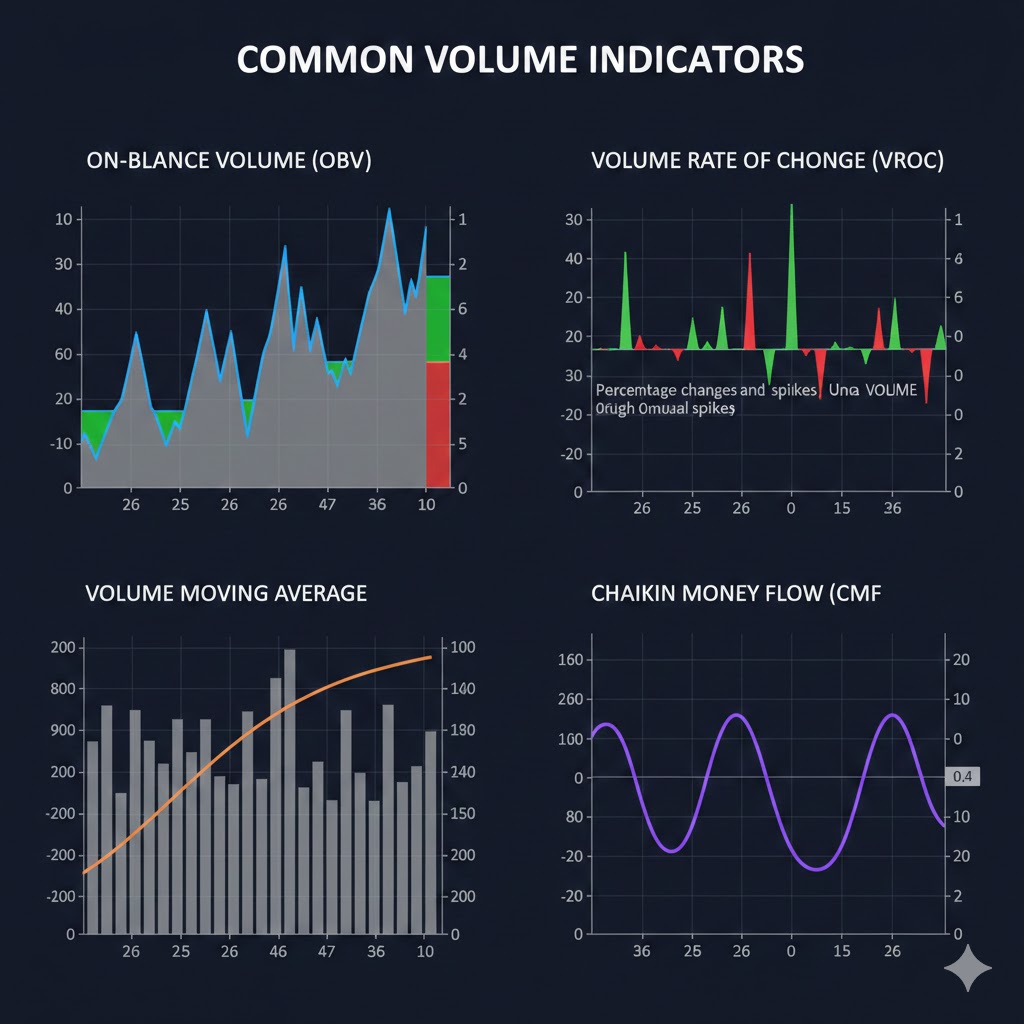
    Common Volume Indicators

    1. On-Balance Volume (OBV):
      It adds volume on up days and subtracts volume on down days to show cumulative buying or selling pressure.
    2. Volume Moving Average:
      Smooths volume data over a period (like 20 days) to identify trends in trading activity.
    3. Volume Rate of Change (VROC):
      Measures the percentage change in volume between two periods to detect unusual volume spikes.
    4. Chaikin Money Flow (CMF):
      Combines price and volume to show buying or selling pressure over a period.

    Important notes

    These indicators are most effective when the market is moving sideways.

  • Technical Indicators – Part 1

    Relative Strength Index (RSI)

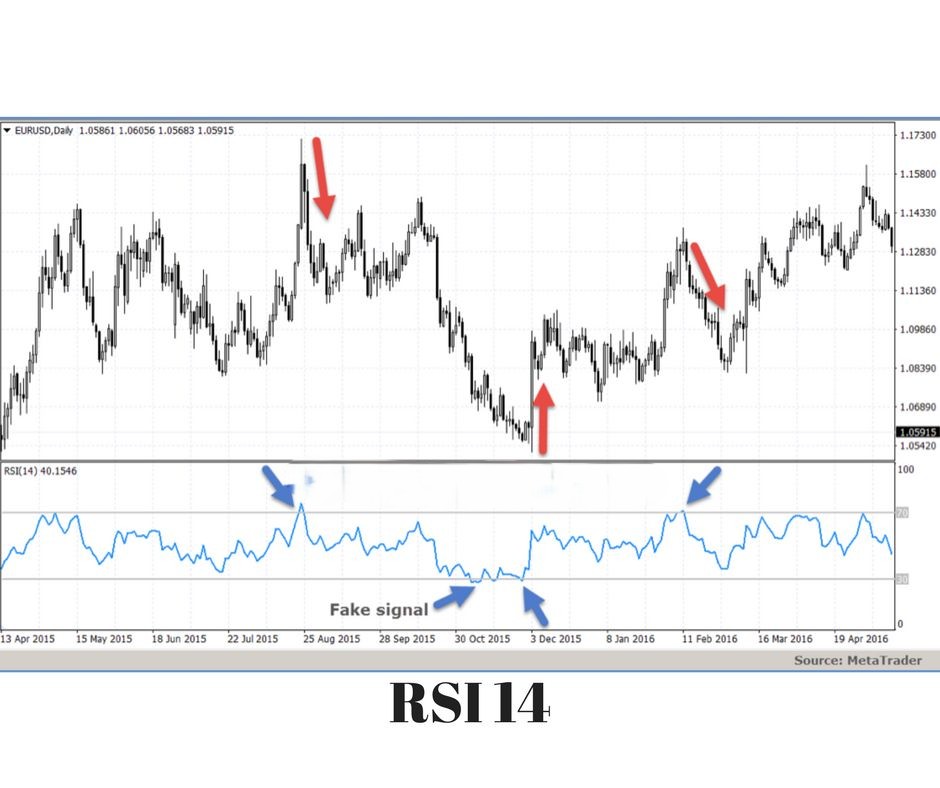
    The Relative Strength Index (RSI) is a popular technical indicator used in financial markets to measure the speed and change of price movements. It helps traders identify overbought or oversold conditions in an asset’s price, signaling potential reversals or continuation of trends.

    Key Points about RSI:

    • Range: RSI values range from 0 to 100.
    • Overbought condition: RSI above 70 typically suggests that the asset might be overbought, meaning it may be overvalued and a price pullback or reversal could happen.
    • Oversold condition: RSI below 30 typically indicates the asset might be oversold, meaning it could be undervalued and a price rise might be expected.
    • Calculation period: The standard RSI uses a 14-period timeframe (can be days, hours, minutes, depending on chart).
    • Interpretation:
      • RSI near 50 suggests neutral or balanced momentum.
      • Divergences between RSI and price (e.g., price makes a new high but RSI does not) can indicate weakening momentum and possible trend reversals.

    Moving Average Convergence Divergence (MACD)

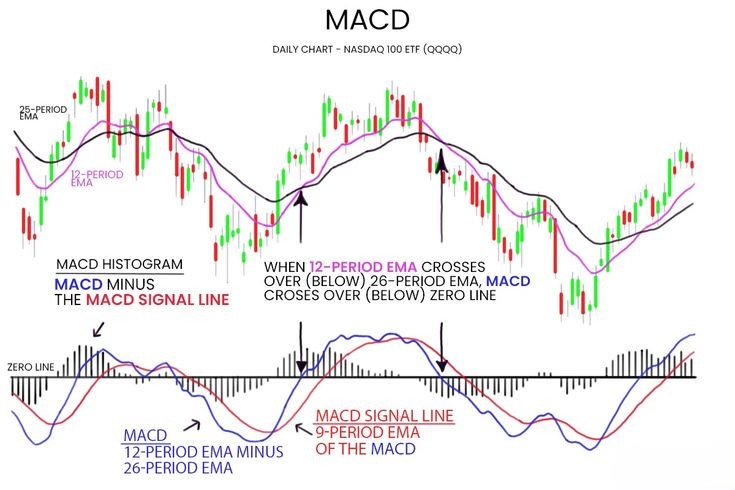
    MACD stands for Moving Average Convergence Divergence. It’s a popular technical analysis indicator used in trading to identify trends, momentum, and potential buy or sell signals in financial markets.

    Key components

    • MACD Line = 12 EMA – 26 EMA
    • Signal Line = 9 EMA of MACD Line
    • Histogram = MACD Line – Signal Line (visualizes the difference)

    What traders look for:

    • Crossovers:
      • When the MACD line crosses above the Signal line → potential buy signal (bullish).
      • When the MACD line crosses below the Signal line → potential sell signal (bearish).
    • Divergence:
      • When price moves in one direction but MACD moves in the opposite direction, indicating a possible trend reversal.
    • Overbought/Oversold conditions:
      • Very high or very low MACD values can signal the market might be overbought or oversold.

    Bollinger Bands

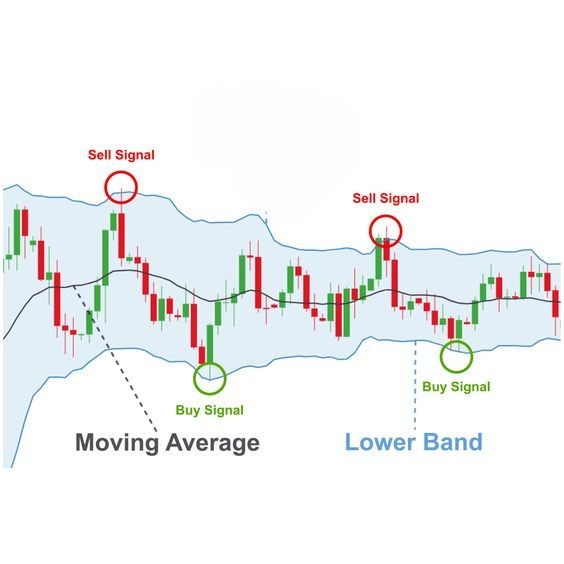
    Bollinger Bands are a popular technical analysis tool used in trading to measure market volatility and identify potential overbought or oversold conditions.

    Components

    1. Middle Band: A simple moving average (SMA), usually set to 20 periods.
    2. Upper Band: Middle Band + (usually 2) standard deviations.
    3. Lower Band: Middle Band – (usually 2) standard deviations.

    How it works

    • The bands expand when volatility increases and contract when volatility decreases.
    • Price tends to stay within the upper and lower bands most of the time.
    • When the price touches or crosses the upper band, it might indicate the asset is overbought.
    • When the price touches or crosses the lower band, it might indicate the asset is oversold.

    Uses of Bollinger Bands

    • Volatility measurement: Wider bands = higher volatility; narrower bands = lower volatility.
    • Trend identification: Price movements outside the bands can signal strong trends.
    • Reversal signals: Price bouncing off the bands can indicate possible reversals.

    Important notes

    These indicators are most effective when the market is moving sideways.

  • Moving Averages

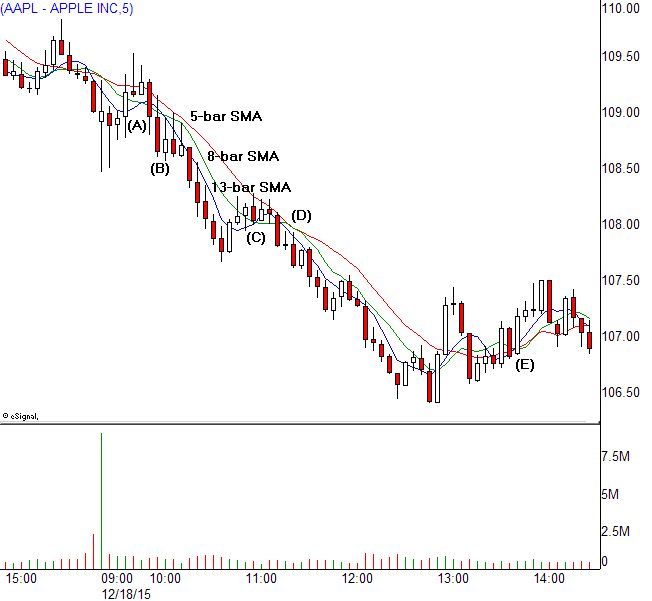
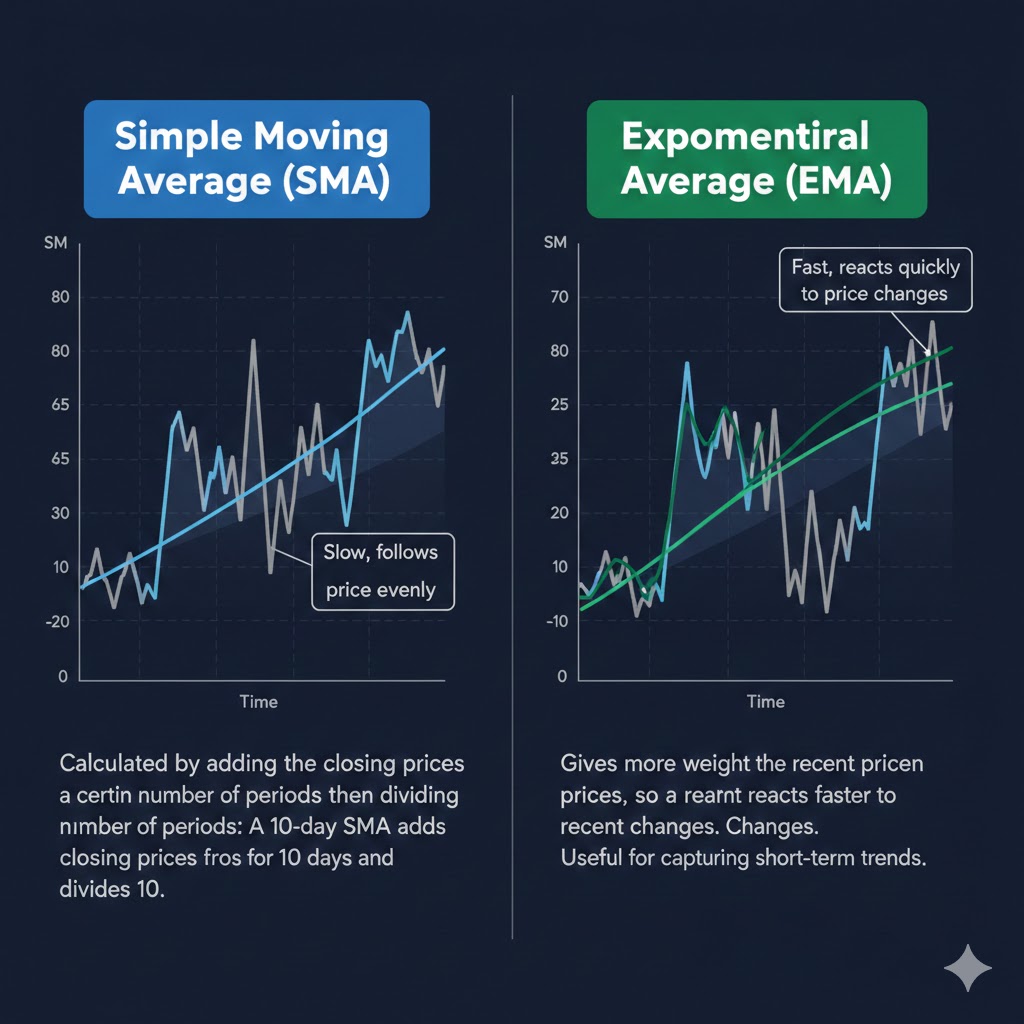
    The Moving Average is the average of a selected range of prices, usually closing prices, over a specific number of periods (e.g., days, hours).

    Purpose: To highlight the trend direction by smoothing price data.

    Common Moving Average Periods (in days)

    • Short-term MAs:
      • 5-day, 10-day, 14-day
      • Used for quick, responsive trend signals
      • Useful for day trading or short-term swing trading
    • Medium-term MAs:
      • 20-day, 50-day
      • Often used to identify intermediate trends
      • Popular among swing traders and position traders
    • Long-term MAs:
      • 100-day, 200-day
      • Used to spot long-term trend direction
      • Very common for investors and longer-term traders

    Types of Moving Averages

    How Moving Averages Are Used

    • Trend Identification:
      • When price is above the MA, the trend is usually considered up.
      • When price is below the MA, the trend is usually considered down.
    • Support and Resistance:
      • MAs can act as dynamic support or resistance levels.
    • Crossovers:
      • When a short-term MA crosses above a long-term MA, it can signal a potential buy (bullish crossover).
      • When it crosses below, it may signal a sell (bearish crossover).

    How to Choose the Number of Days?

    • Shorter MA (e.g., 5 or 10 days): More sensitive to price changes but more prone to false signals.
    • Longer MA (e.g., 100 or 200 days): Smoother and better for filtering out noise, but slower to react.
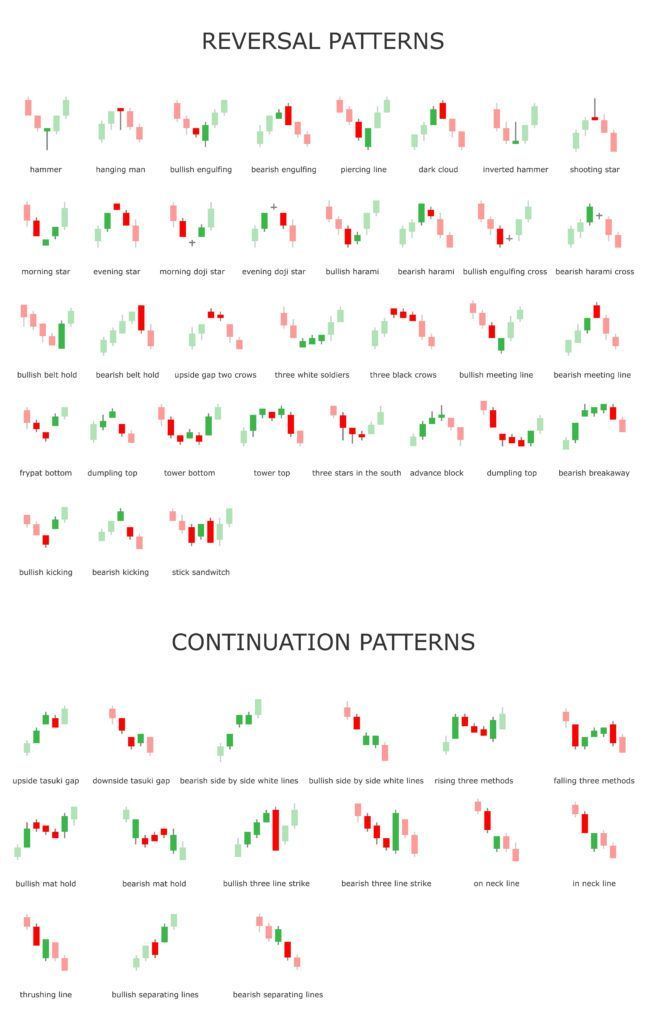
  • Continuation Patterns

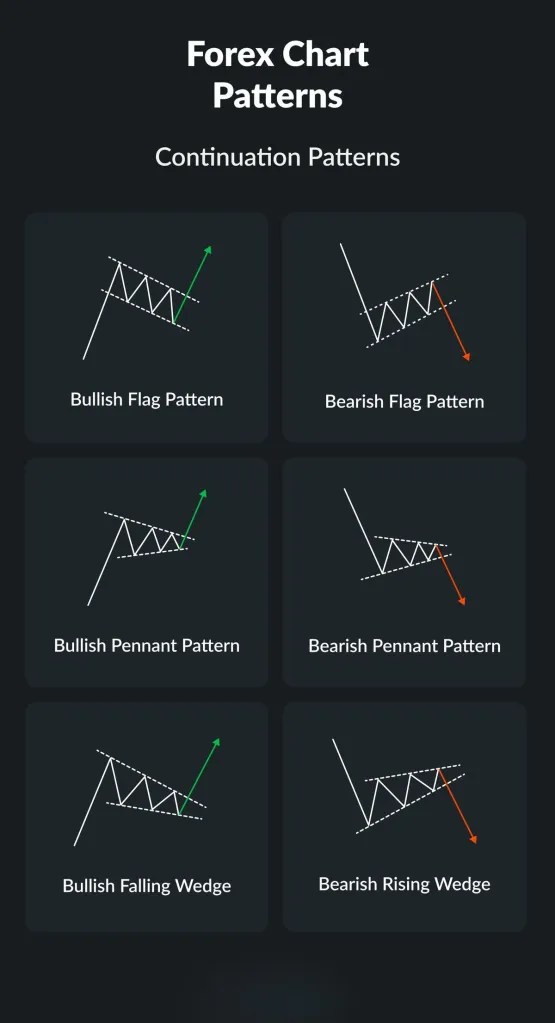
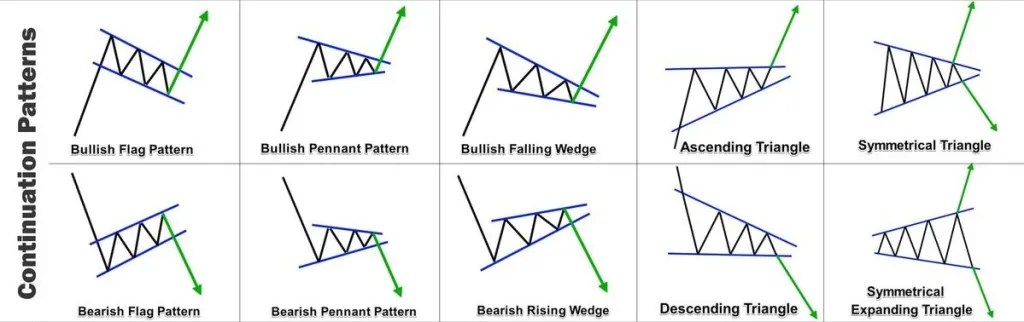
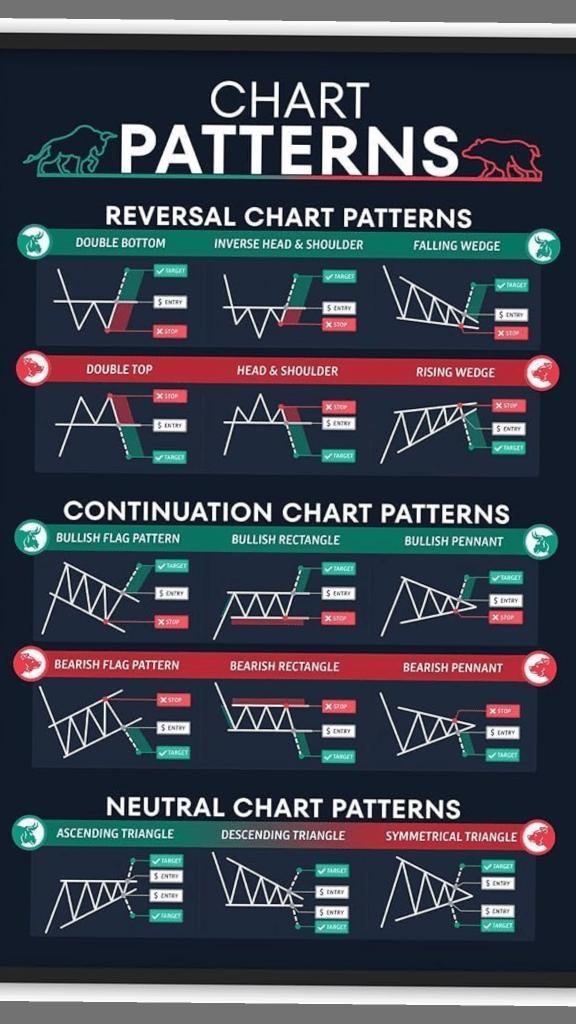
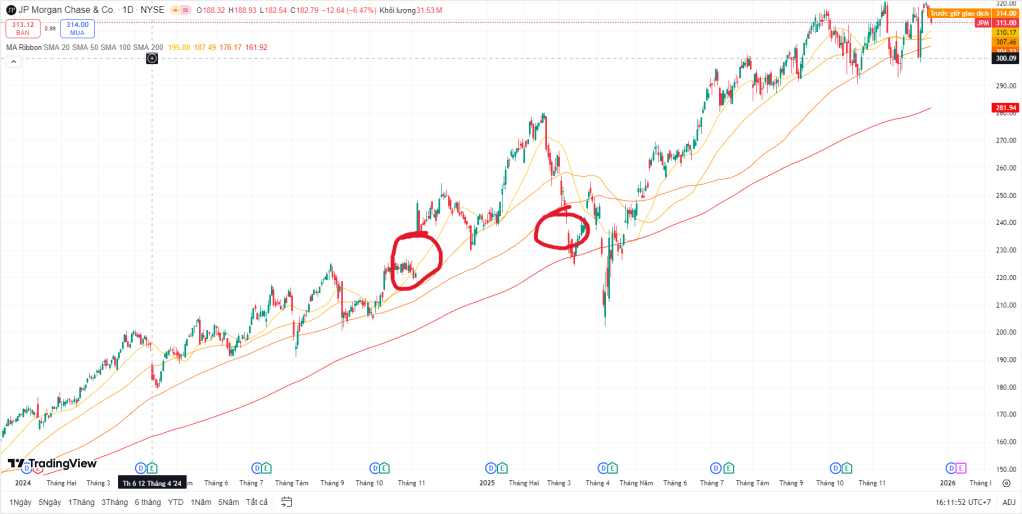
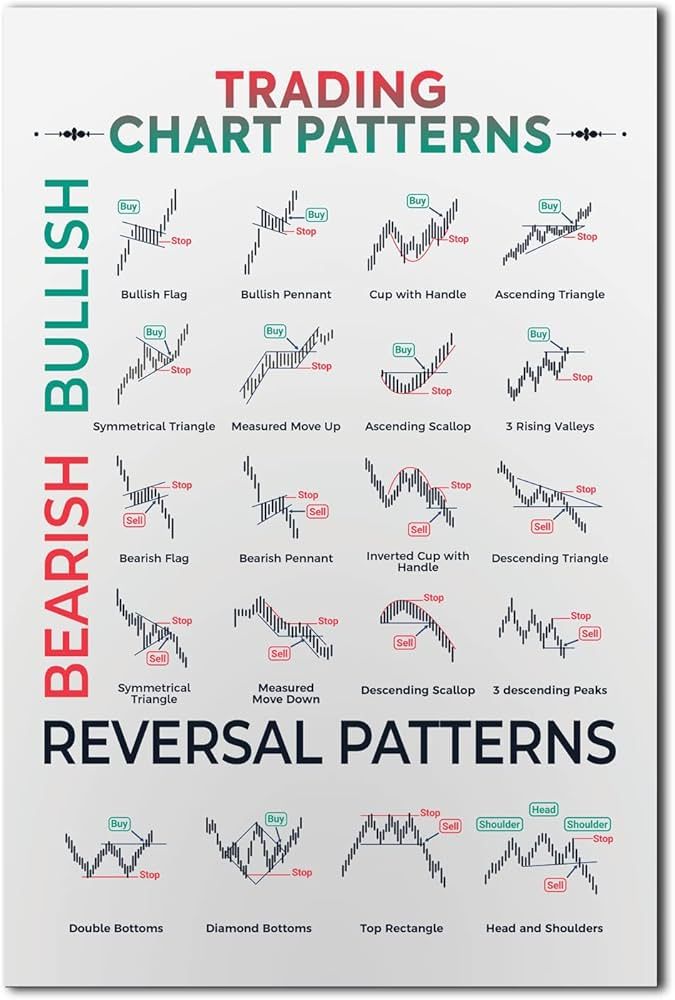
    Continuation Patterns are technical chart patterns that signal a temporary pause or consolidation in the market before the price continues in the same direction as the existing trend.

    The trend takes a break — then continues.

    Why Continuation Patterns Matter

    Traders use them to:

    • Identify trend-following entry points
    • Add positions during pullbacks or consolidation
    • Set clear breakout levels
    • Manage risk more effectively

    Common Types of Continuation Patterns

      1️⃣ Flags

      • Short-term consolidation after a strong move
      • Slopes against the main trend
      • Indicates strong momentum continuation

      📌 Bull Flag / Bear Flag


      2️⃣ Pennants

      • Small symmetrical triangle after a sharp move
      • Decreasing volume during consolidation
      • Breakout usually follows the prior trend

      3️⃣ Triangles

      • Ascending Triangle → bullish continuation
      • Descending Triangle → bearish continuation
      • Symmetrical Triangle → continuation or breakout (needs confirmation)

      4️⃣ Rectangles (Trading Range)

      • Price moves between horizontal support and resistance
      • Breakout direction usually follows the previous trend

      5️⃣ Wedges (in some cases)

      Falling wedge → bullish continuation
      (context is very important)

      Rising wedge → bearish continuation


      Key Characteristics

      ✔ Occur mid-trend
      ✔ Volume often declines during consolidation
      ✔ Breakout volume typically expands
      ✔ Best used with trend confirmation tools


      Continuation vs Reversal Patterns

      Best Confirmation Tools

      • Trendlines
      • Support & Resistance
      • Volume
      • Moving Averages
      • Fibonacci levels

      Key Takeaway

      Continuation patterns help traders stay with the trend rather than fight it.
      They work best when aligned with strong trend structure and volume confirmation.

    • Reversal Patterns

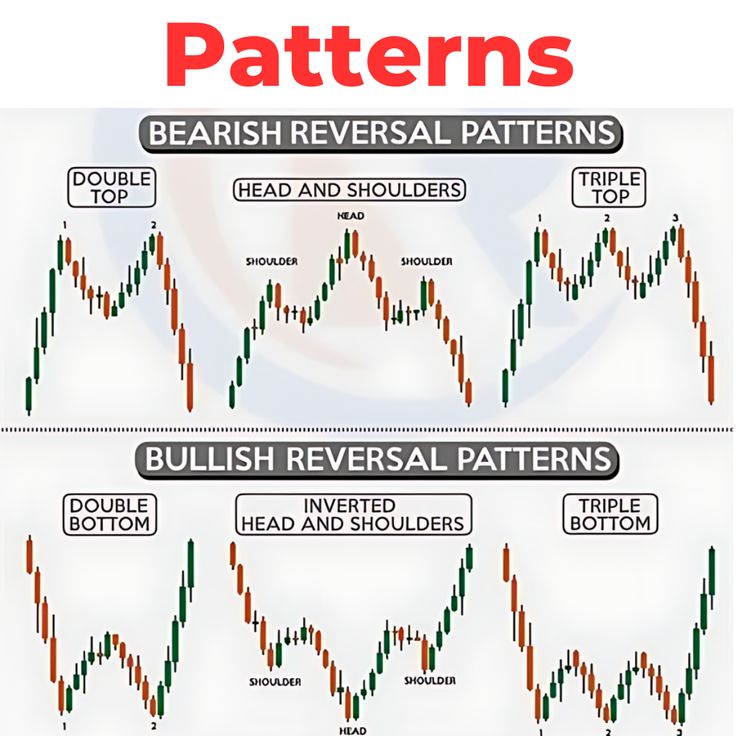
      Reversal Patterns are technical chart patterns that signal a potential change in the current market trend — from uptrend to downtrend or from downtrend to uptrend.

      In simple terms, they help traders anticipate where a trend may end and reverse direction.

      • 📈 Uptrend → possible bearish reversal
      • 📉 Downtrend → possible bullish reversal

      Key Characteristics

      • Forms at the end of a trend
      • Shows loss of momentum
      • Often accompanied by:
        • Decreasing volume
        • Divergence (RSI, MACD)
        • Strong support or resistance levels

      🔻 Bearish Reversal Patterns (Uptrend → Downtrend)

      Common examples:

      1. Head and Shoulders
      2. Double Top
      3. Triple Top
      4. Rising Wedge
      5. Bearish Engulfing (candlestick)
      6. Evening Star

      👉 These suggest buyers are losing control.

      🔺 Bullish Reversal Patterns (Downtrend → Uptrend)

      Common examples:

      1. Inverse Head and Shoulders
      2. Double Bottom
      3. Triple Bottom
      4. Falling Wedge
      5. Bullish Engulfing (candlestick)
      6. Morning Star

      👉 These suggest sellers are losing control.


      Confirmation Tools (Very Important)

      Never trade reversal patterns alone. Use confirmation such as:

      • 📊 Break of neckline / structure
      • 🔊 Volume expansion
      • 📉 RSI divergence
      • 📐 Support–Resistance zones
      • ⏱️ Multiple timeframe alignment

      Practical Tip

      “The stronger the prior trend, the more reliable the reversal pattern — once confirmed.”

    • Price Gaps

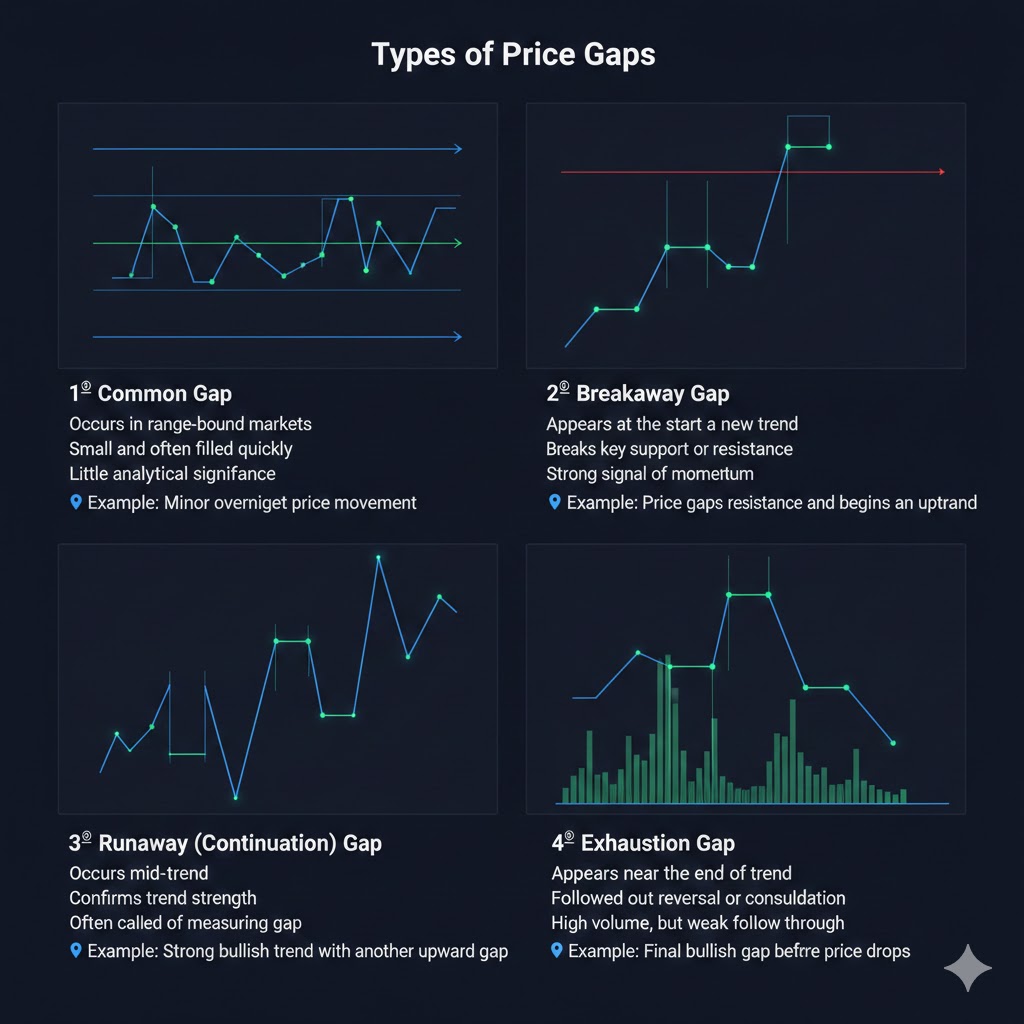
      Price Gaps are areas on a price chart where no trading occurs between two consecutive periods, causing the price to “jump” up or down instead of moving smoothly.

      A gap appears when the market opens significantly higher or lower than the previous close.

      How Price Gaps Form

      Price gaps usually happen because of:

      • 📰 News or economic announcements
      • 📊 Earnings reports
      • 🌍 Geopolitical events
      • ⏱️ After-hours or weekend trading (stocks & crypto)

      Gap Fill (Important Concept)

      • gap fill happens when price returns to trade within the gap area
      • Common gaps usually fill
      • Breakaway & runaway gaps may not fill immediately

      📌 Rule of thumb:

      The faster a gap fills, the weaker the signal


      How Traders Use Price Gaps

      • 📍 Identify trend direction
      • 🎯 Set entry & exit points
      • 🛑 Place stop-loss levels
      • 📊 Combine with volume, support & resistance, candlestick patterns

      Markets Where Gaps Are Common

      • 📈 Stocks (very common)
      • 💱 Forex (mainly weekend gaps)
      • 🪙 Crypto (less frequent but possible)
    • Fibonacci Extension

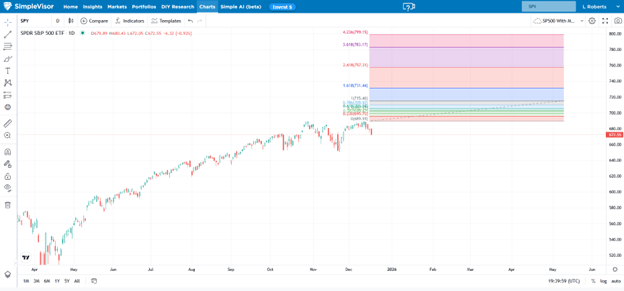
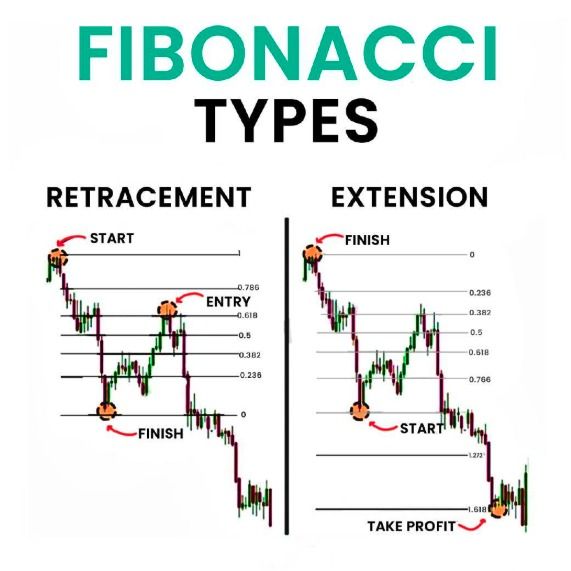
      Fibonacci Extension is a technical analysis tool used to forecast potential price targets beyond the current high or low—especially during strong trending markets.

      Common Fibonacci Extension Levels

      The most widely used levels are:

      • 1.272 (127.2%)
      • 1.414 (141.4%)
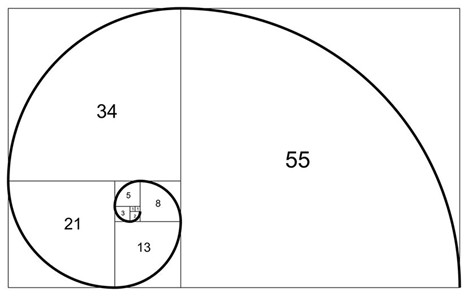
      • 1.618 (161.8%) ⭐ (Golden Ratio – most important)
      • 2.000 (200%)
      • 2.618 (261.8%)

      These levels often act as:

      • 🎯 Profit targets
      • 📉 Reversal zones
      • 📊 Resistance / Support in trends

      How Traders Use Fibonacci Extension

      🔹 Trend Trading

      • Set take-profit levels during strong trends
      • Ride the trend without guessing tops or bottoms

      🔹 Breakout Trading

      • Estimate price targets after resistance or support breaks

      🔹 Confluence Strategy

      Most powerful when combined with:

      • Support & Resistance
      • Trend lines / Channels
      • Elliott Wave (Wave 3 & Wave 5 targets)
      • Candlestick confirmation

      Key Notes ⚠️

      • Fibonacci Extension does not guarantee price will reach those levels
      • Best used in strong trending markets
      • Always confirm with market structure & volume

      Summary

      Fibonacci Extension helps traders predict where price may go next, not where it came from.

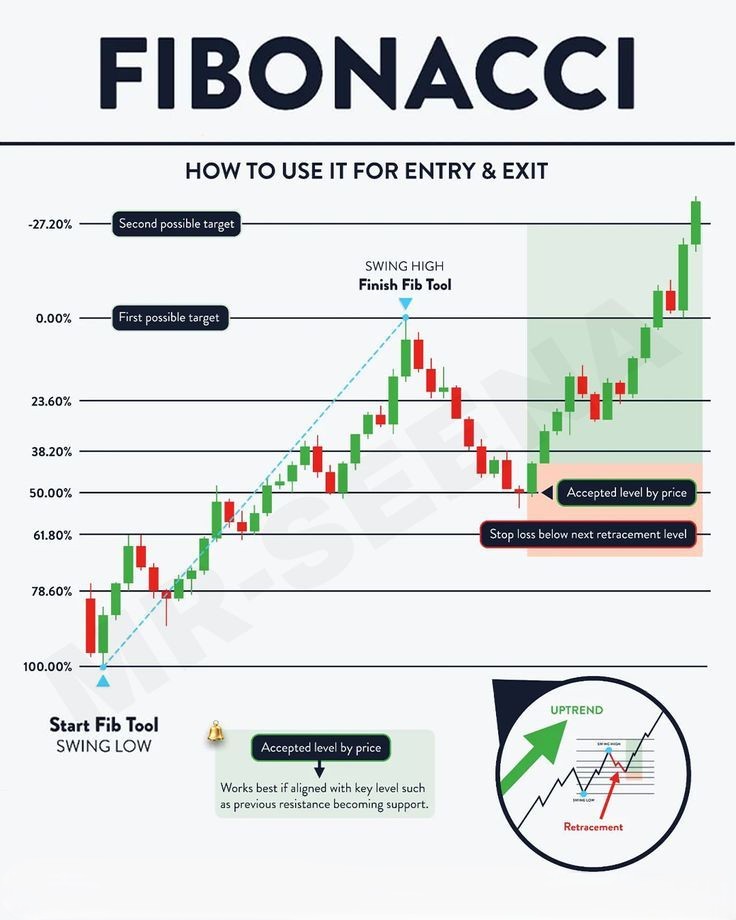
    • Fibonacci Retracement

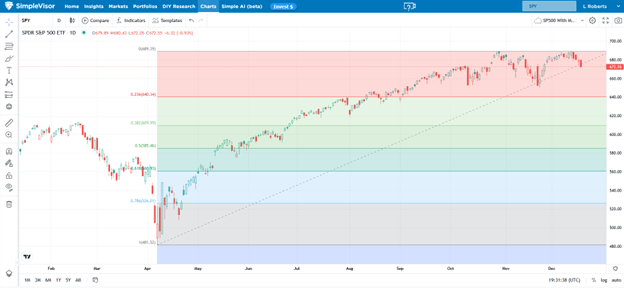
      Fibonacci Retracement is a technical analysis tool used in financial markets to identify potential support and resistance levels during a price pullback within a trend.

      It is based on Fibonacci ratios, which come from the Fibonacci number sequence.

      Key Fibonacci Retracement Levels

      The most commonly used levels are:

      • 23.6%
      • 38.2%
      • 50% (not a true Fibonacci ratio, but widely used)
      • 61.8%(Golden Ratio)
      • 78.6%

      These levels indicate how much of a previous price move has been retraced.


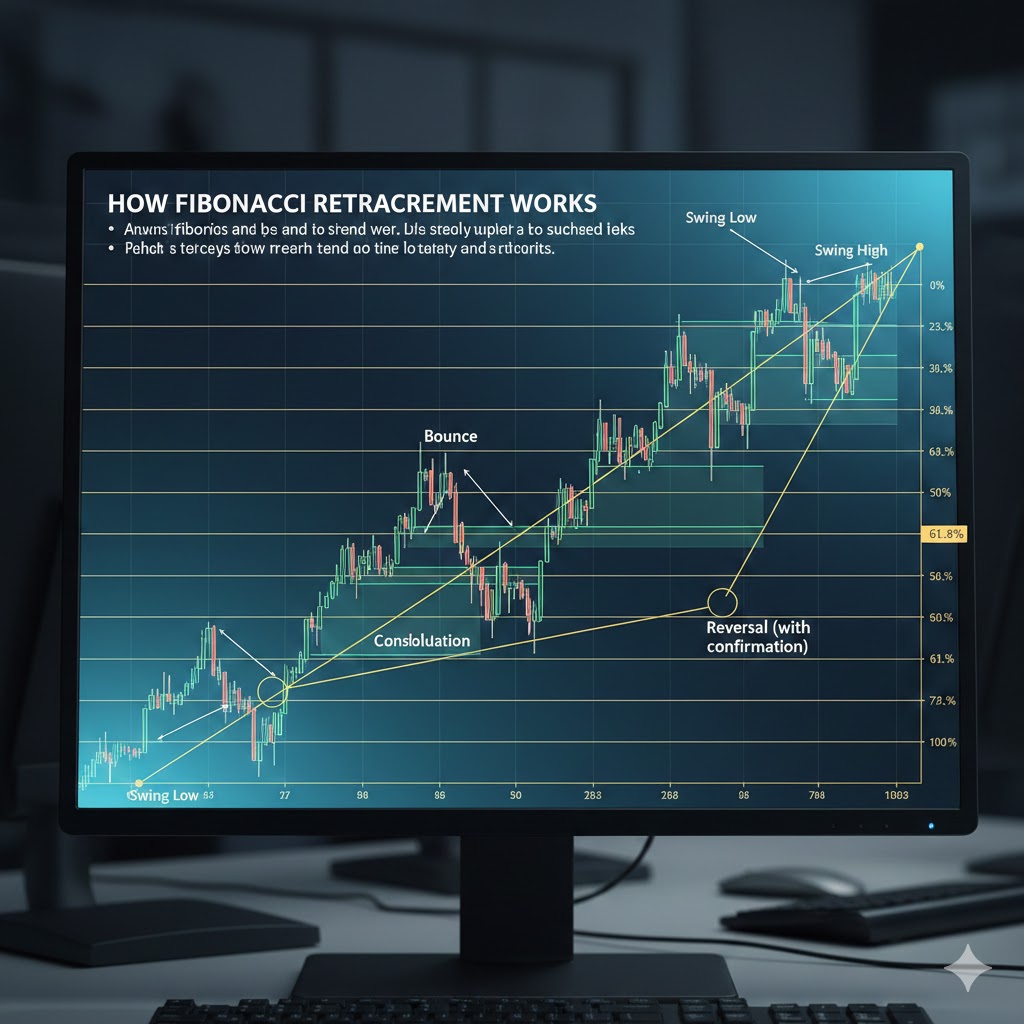
      How Fibonacci Retracement Works

      1. Identify a clear trend
        • Uptrend → draw from swing low to swing high
        • Downtrend → draw from swing high to swing low
      2. The tool plots horizontal lines at Fibonacci levels
      3. Price often reacts at these levels:
        • Bounce
        • Consolidation
        • Reversal (with confirmation)

      Why Traders Use Fibonacci Retracement

      • To find entry points
      • To identify support & resistance
      • To set stop-loss and take-profit levels
      • To trade pullbacks instead of chasing price

      Important Notes

      • Fibonacci works best when combined with:
        • Trendlines
        • Support & resistance
        • Candlestick patterns
        • RSI / MACD
      • It does not guarantee reversals
      • Confirmation is essential

      Summary

      Fibonacci Retracement helps traders identify where price may pause or reverse during a correction within a trend.

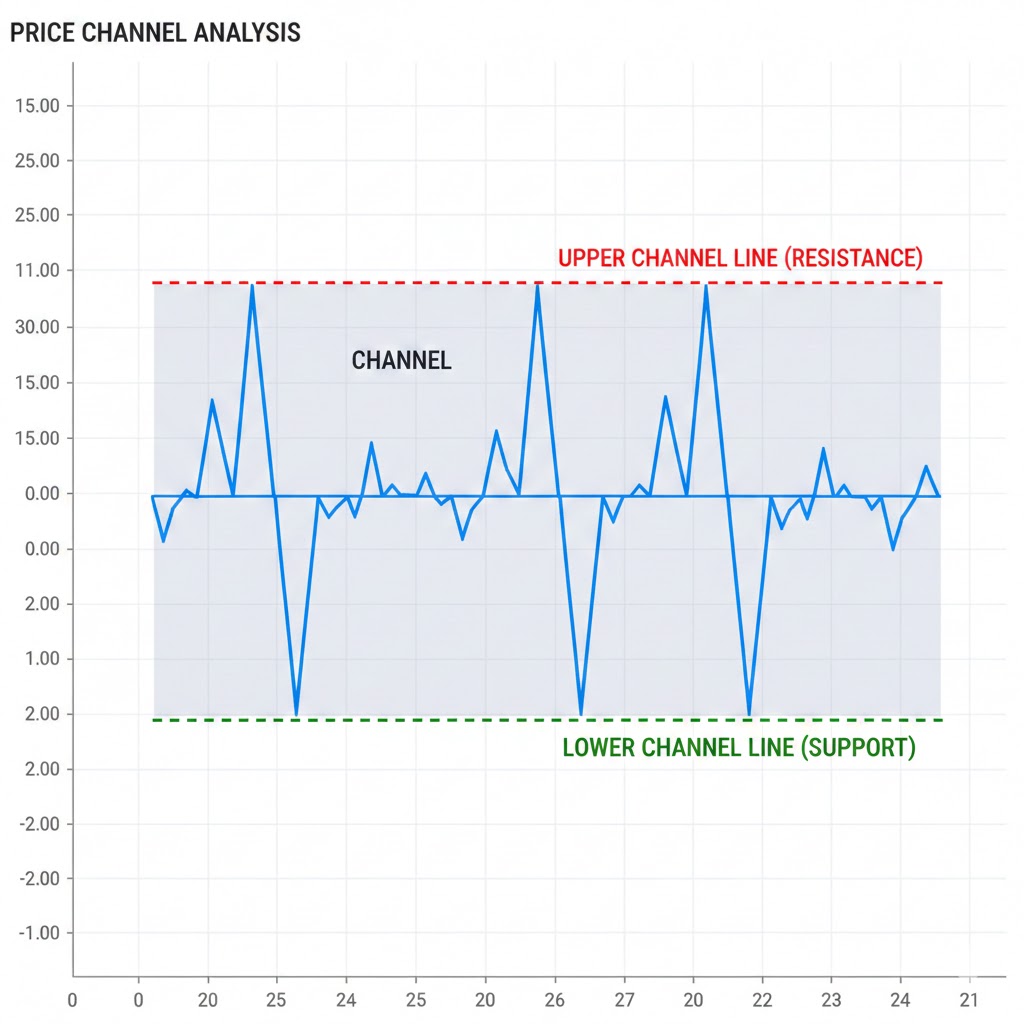
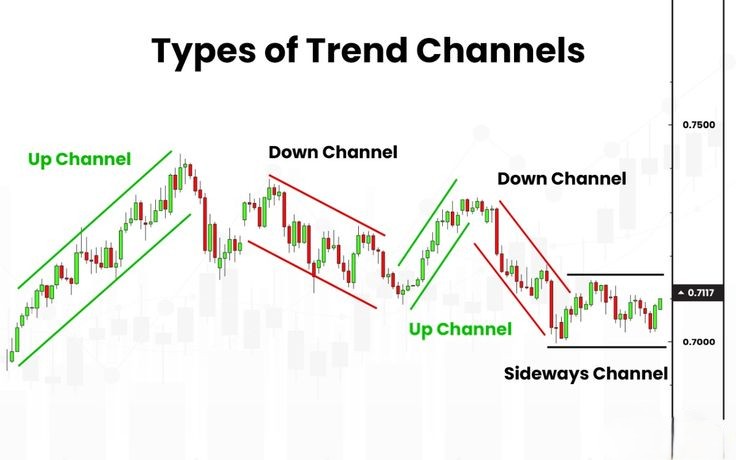
    • Channel Line

      channel line (or price channel) is a technical analysis tool used to show the direction of a market trend and the range where price tends to move.

      How Traders Use Channel Lines

      • Buy near support, sell near resistance
      • Identify trend strength
      • Spot breakouts (price breaks outside the channel)
      • Combine with:
        • Candlestick patterns
        • RSI / MACD
        • Volume

      Key Notes

      ⚠️ Channel lines are dynamic, not fixed
      ⚠️ False breakouts can happen
      ✅ Best used with confirmation tools

    • Support and Resistance

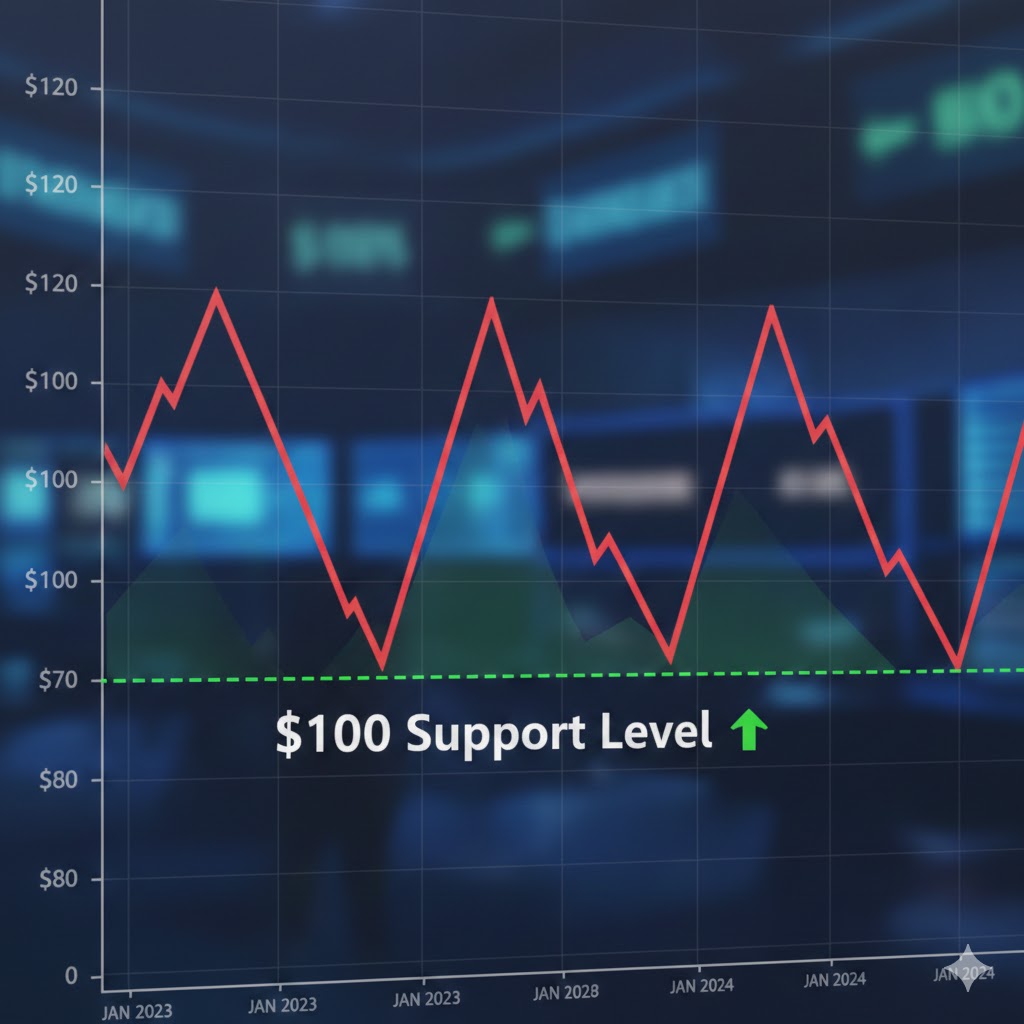
      Support and Resistance are core concepts in technical analysis used to identify key price levels where the market tends to react.

      Support

      Support is a price level where buying interest is strong enough to stop or slow down a price decline.

      At support:

      • Demand > Supply
      • Price often bounces upward
      • Buyers consider the price “cheap” or attractive

      Resistance

      Resistance is a price level where selling pressure is strong enough to stop or slow down a price increase.

      At resistance:

      • Supply > Demand
      • Price often pulls back downward
      • Sellers consider the price “expensive”

      Why Support & Resistance Matter

      They help traders:

      • Identify entry points (buy near support, sell near resistance)
      • Set stop-loss and take-profit levels
      • Understand market psychology
      • Anticipate breakouts or reversals

      Key Characteristics

      • Support and resistance are zones, not exact lines
      • Old support can turn into resistance, and vice versa
      • Stronger when tested multiple times
      • More reliable on higher timeframes
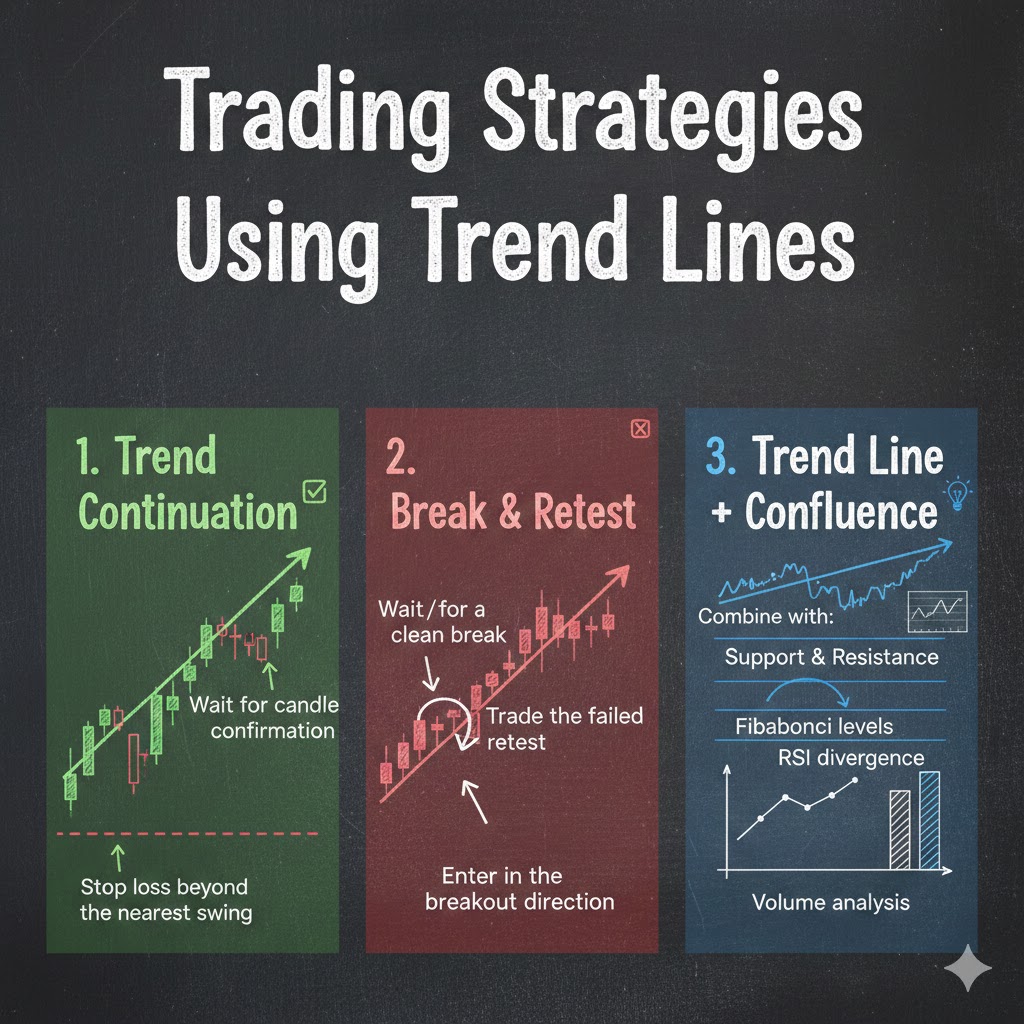
    • Trend Line – Part 2

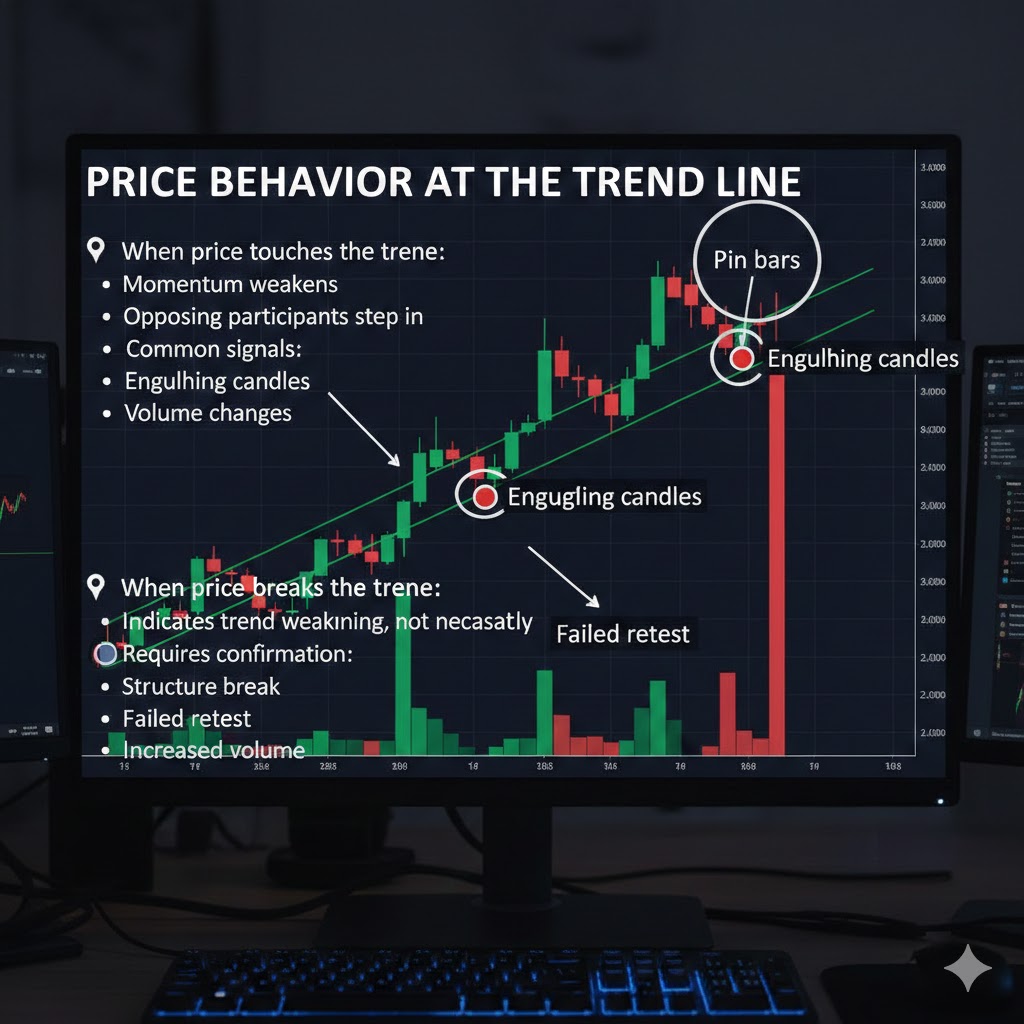
      Price Behavior at the Trend Line

      Common Mistakes Traders Make

      ❌ Drawing trend lines in sideways markets
      ❌ Using too many trend lines
      ❌ Treating trend lines as price prediction tools
      ❌ Confusing trend line break with structure break


      Trend Line in a Professional Trading Mindset

      A trend line is not an entry tool,
      but a market behavior orientation tool.

    • Trend Line – Part 1

      trend line is a straight line drawn on a chart that connects two or more significant price points (swing highs or swing lows) to show the overall market trend.

      It helps traders:

      • See the trend direction
      • Identify entry and exit points
      • Spot trend continuation or reversal

      In greater detail
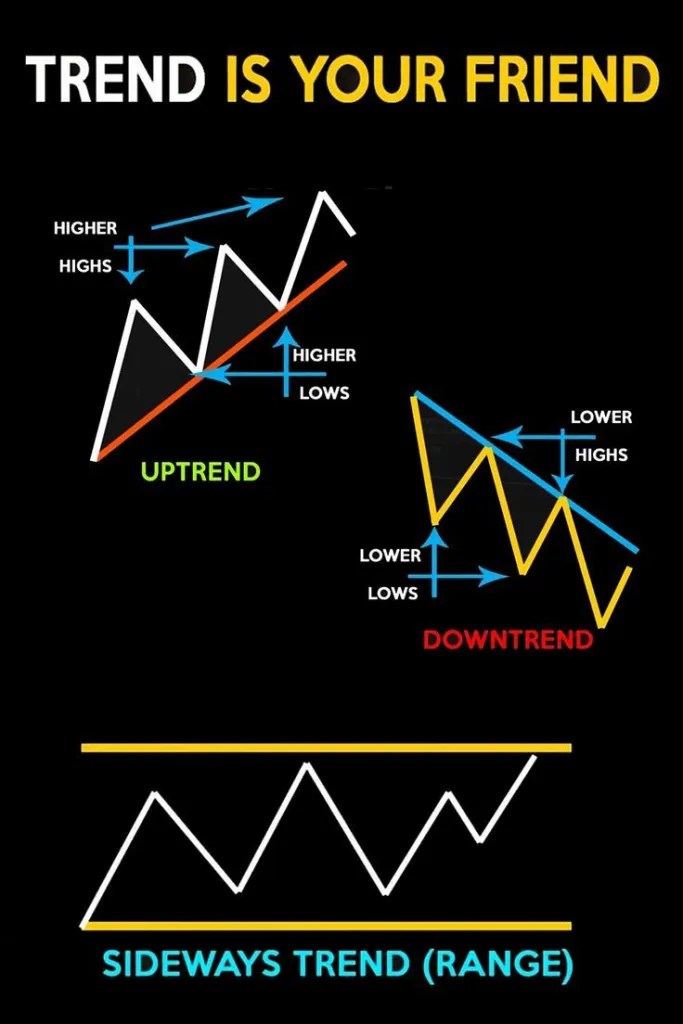
      1. Uptrend Line (Bullish Trend)
        • Price tends to bounce upward from the line
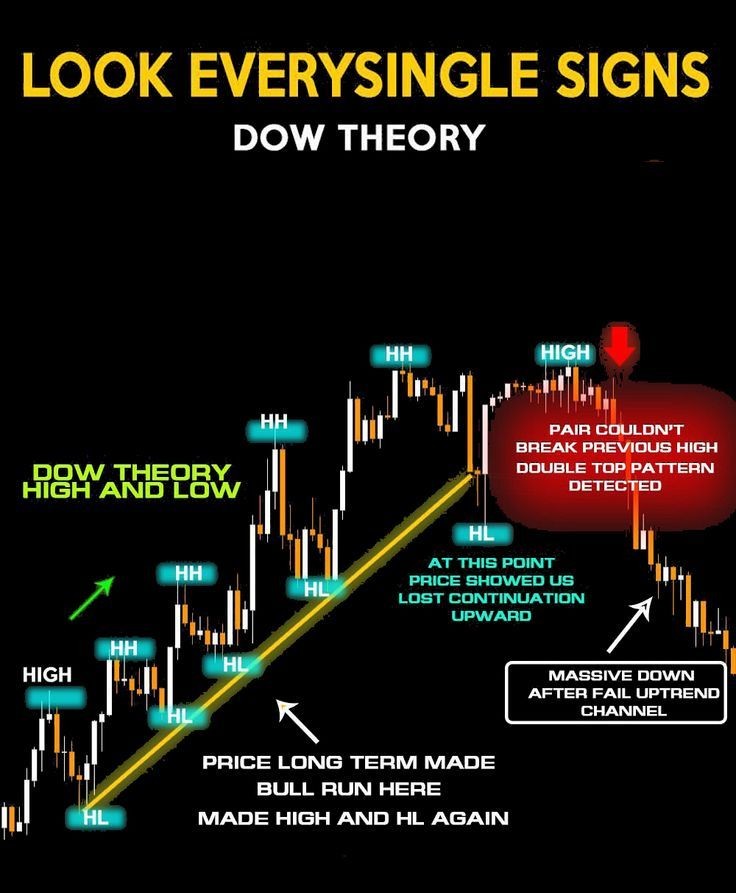
        • Drawn by connecting higher lows
        • Acts as support
          • Market is making higher highs & higher lows
      2. Downtrend Line (Bearish Trend)
        • Drawn by connecting lower highs
        • Acts as resistance
        • Price tends to move downward from the line
          • Market is making lower highs & lower lows
      3. Horizontal Trend Line (Sideways Market)
        • Drawn across equal highs or equal lows
        • Represents support or resistance
        • Indicates range-bound (consolidation) market
          • No clear trend

      Why Trend Lines Matter

      • Simple and visual
      • Works in stocks, forex, crypto, commodities
      • Combines well with:
        • Support & resistance
        • Candlestick patterns
        • Indicators (RSI, MA, Volume)

      Key Tip 

      trend line is a guide, not a guarantee. Always wait for confirmation before trading.

    • Market Trend Structure

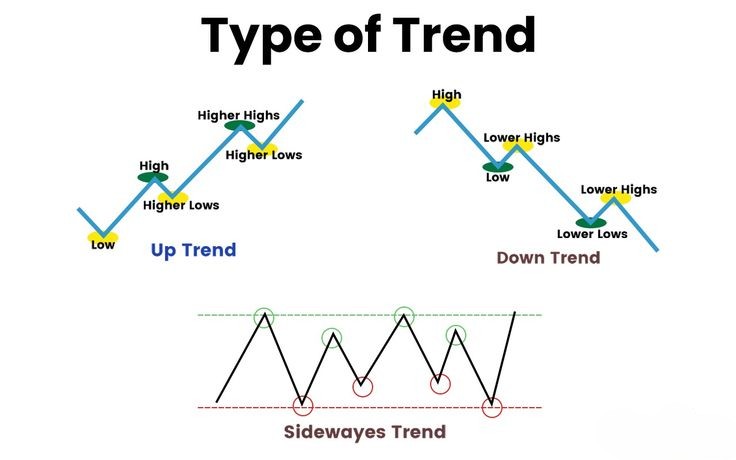
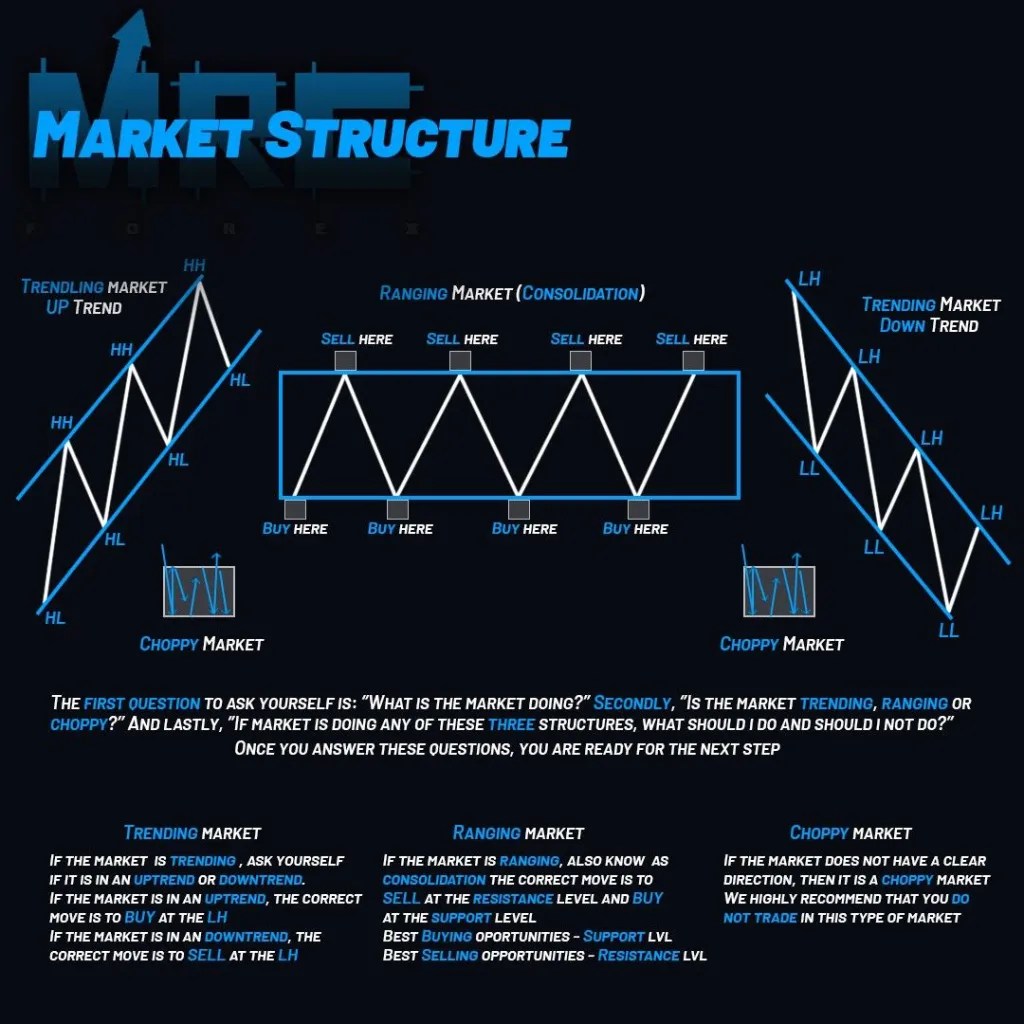
      Market Trend Structure (often called Market Structure) describes how price moves over time by forming highs and lows. It helps traders understand trend direction, strength, and possible reversals.

      Types of Market Trend Structure

      Why Market Trend Structure Is Important

      ✔ Identifies trend direction
      ✔ Helps with entry & exit timing
      ✔ Improves risk management
      ✔ Works across all markets:

      • Stocks
      • Forex
      • Crypto
      • Commodities

      ✔ Valid on all timeframes


      Some other market trend patterns

      Understanding market trend patterns requires a strong foundation in fundamental knowledge to be truly effective.

    • Japanese Candlesticks

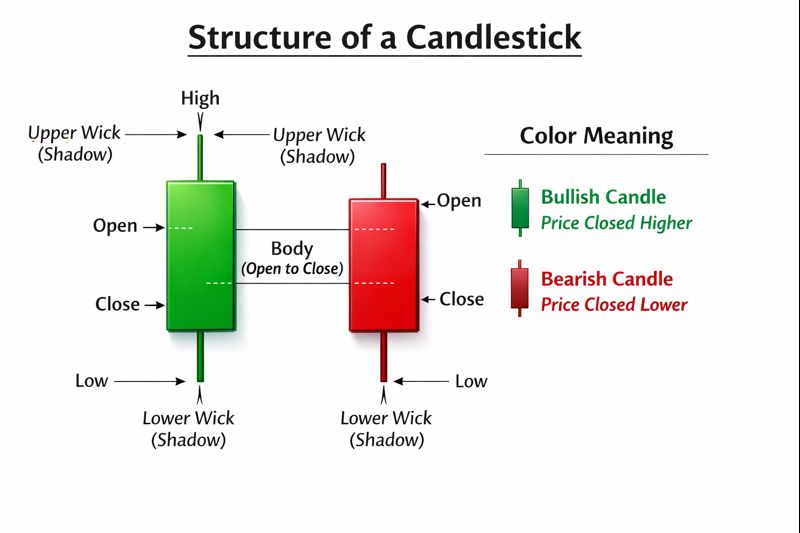
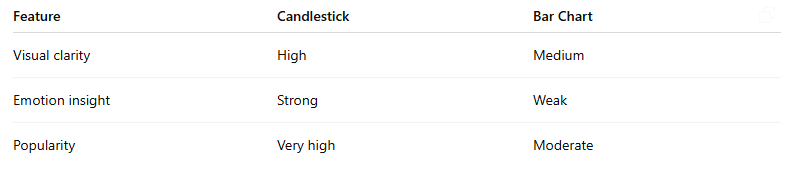
      Japanese Candlesticks are a type of price chart used in financial markets to show how an asset’s price moves over a specific period of time. They are one of the most popular tools in technical analysis because they visually display market psychology—who is in control: buyers or sellers.

      Origin

      Japanese candlesticks were developed in Japan in the 18th century, originally used by rice traders. They were later introduced to Western markets by Steve Nison in the 1990s.

      Why Candlesticks Are Powerful

      • Easy to read and interpret
      • Show market sentiment instantly
      • Help identify trend reversals and continuations
      • Work across all markets and timeframes

      Used in
      📈 Stocks
      💱 Forex
      🪙 Crypto
      🛢️ Commodities


      Common Candlestick Patterns


      Best Practice

      Candlestick patterns are most effective when combined with:

      • Trend analysis
      • Support & resistance
      • Volume
      • Indicators (RSI, MACD, Moving Averages)

      Simple Definition

      Japanese candlesticks are a visual price charting method that shows market psychology through price action.

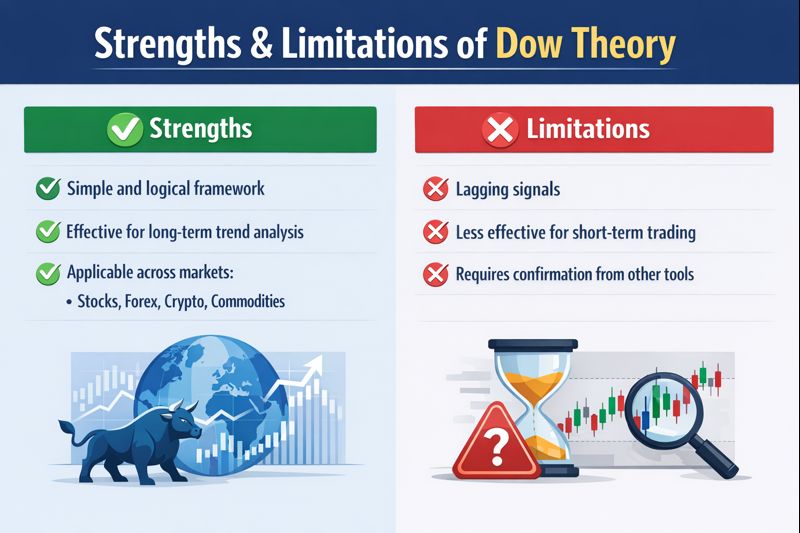
    • Dow Theory

      Dow Theory is a foundational theory of technical analysis that explains how financial markets move and how to identify the primary trend of the market. It was developed from the writings of Charles H. Dow, co-founder of The Wall Street Journal and creator of the Dow Jones Averages.

      Core Principles of Dow Theory

      1. The Market Discounts Everything

      All available information—economic data, news, earnings, and investor psychology—is already reflected in market prices.


      2. The Market Has Three Types of Trends

      • Primary Trend: Long-term direction (months to years)
      • Secondary Trend: Medium-term corrections within the primary trend
      • Minor Trend: Short-term fluctuations (days to weeks)

      3. Primary Trends Have Three Phases

      • Accumulation Phase: Smart money begins buying quietly
      • Public Participation Phase: Trend becomes obvious; volume increases
      • Distribution Phase: Smart money exits; late investors enter

      4. Indices Must Confirm Each Other

      A trend is confirmed only when related indices move in the same direction
      (e.g., historically: Dow Industrials & Dow Transportation).


      5. Volume Confirms the Trend

      • Volume should increase in the direction of the primary trend
      • Weak volume = weak trend confirmation

      6. Trends Persist Until Clear Reversal Signals

      A trend remains in effect until strong evidence shows it has reversed.


      Why Dow Theory Matters

      • Forms the foundation of modern technical analysis
      • Helps traders identify market trends and trend reversals
      • Works well with tools like trendlines, moving averages, Elliott Wave Theory
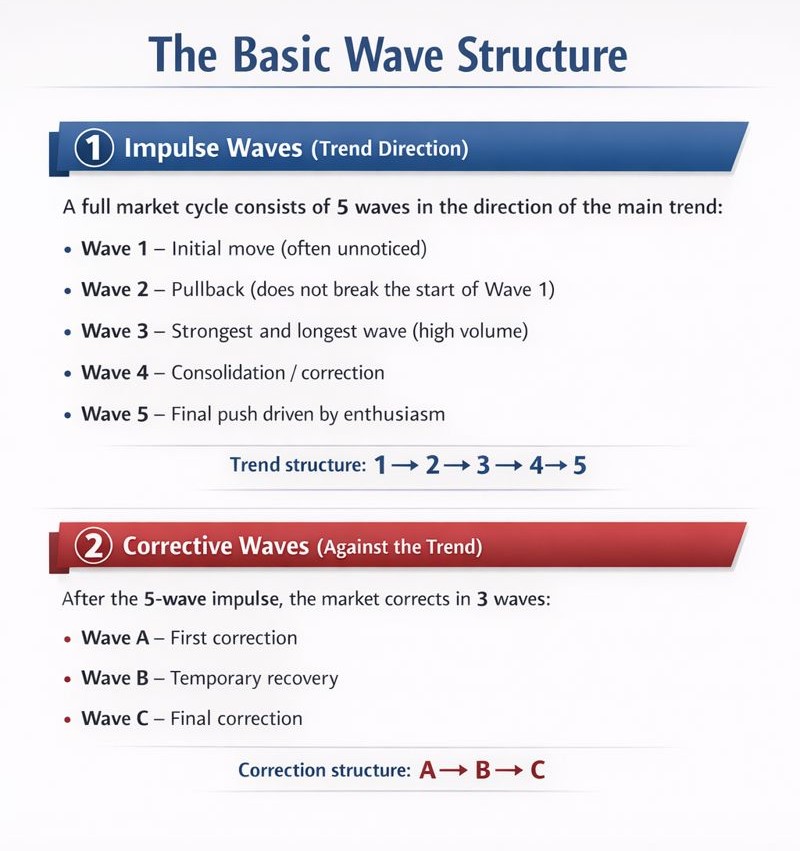
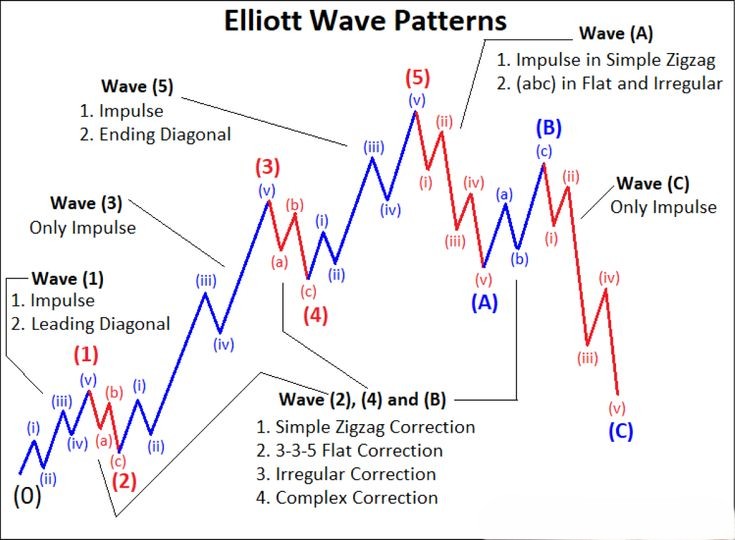
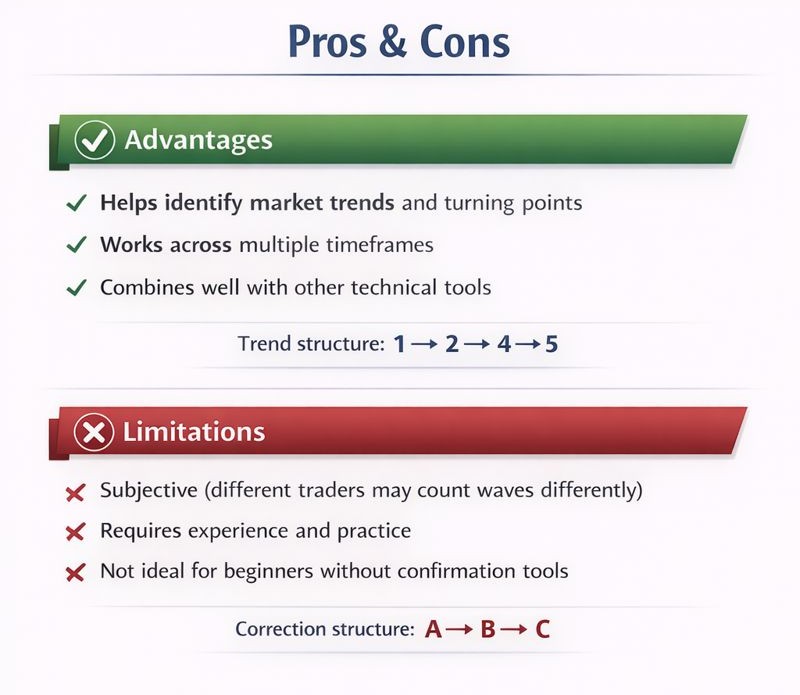
    • Elliott Wave Theory

      Elliott Wave Theory is a form of technical analysis that explains market price movements as repeating wave patterns driven by investor psychology—the natural cycle of optimism and pessimism in financial markets.

      It was developed in the 1930s by Ralph Nelson Elliott.

      Core Idea

      Markets move in predictable cycles. These cycles appear as waves that repeat across different timeframes (minutes, hours, days, years).


      Key Rules of Elliott Wave

      These rules must never be violated:

      1. Wave 2 cannot retrace more than 100% of Wave 1
      2. Wave 3 is never the shortest among Waves 1, 3, and 5
      3. Wave 4 cannot overlap the price territory of Wave 1 (in most markets)

      Fractals & Timeframes

      Elliott Waves are fractal:

      • A wave on a daily chart contains smaller waves on an hourly chart
      • The same structure appears on any timeframe

      Common Tools Used with Elliott Wave

      • Fibonacci retracements & extensions
      • Trendlines
      • Momentum indicators (RSI, MACD)
      • Volume analysis

      Where Elliott Wave Theory Is Used

      It is commonly applied in:

      • 📈 Stock markets
      • 💱 Forex
      • 🪙 Crypto
      • 🛢️ Commodities
      • 📉 Futures & CFDs

      Especially popular for swing trading and trend forecasting.


      In Simple Terms

      Elliott Wave Theory says that markets move in waves because people think and act in patterns.

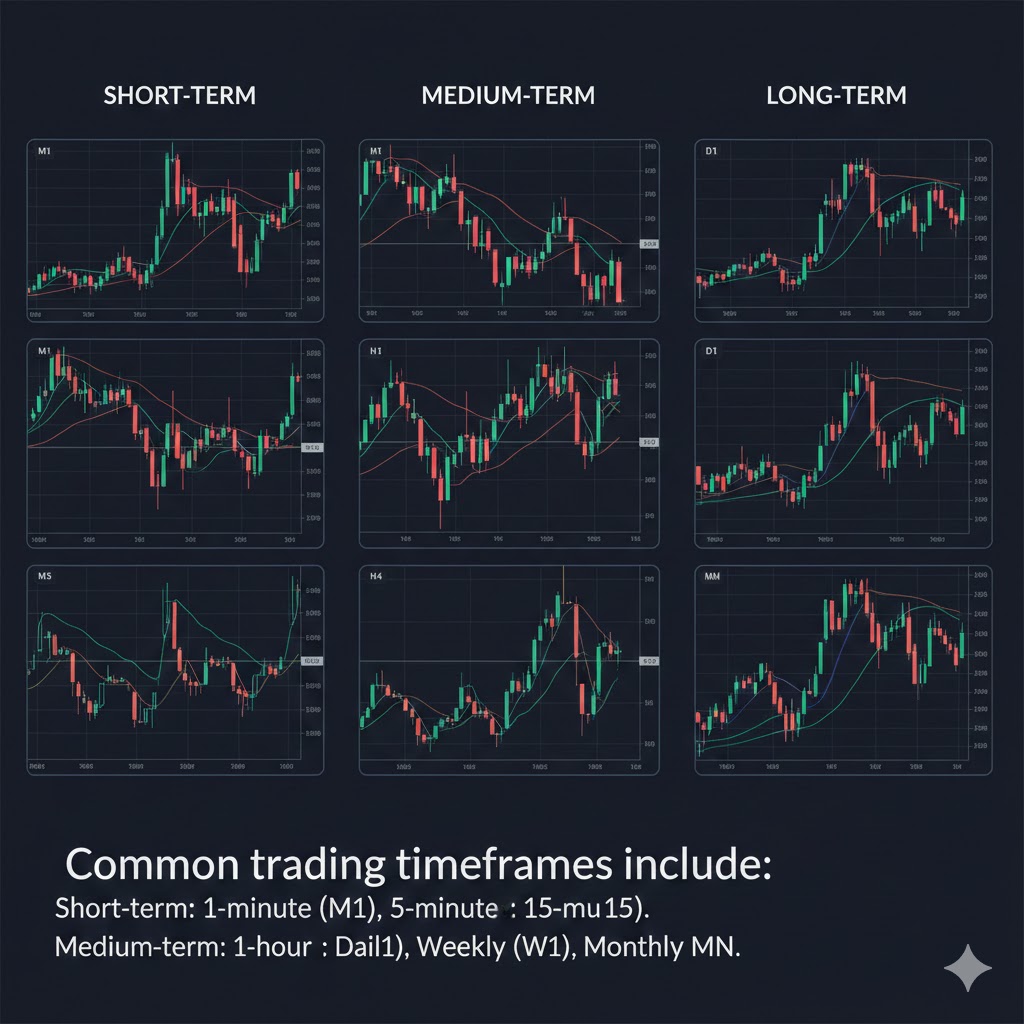
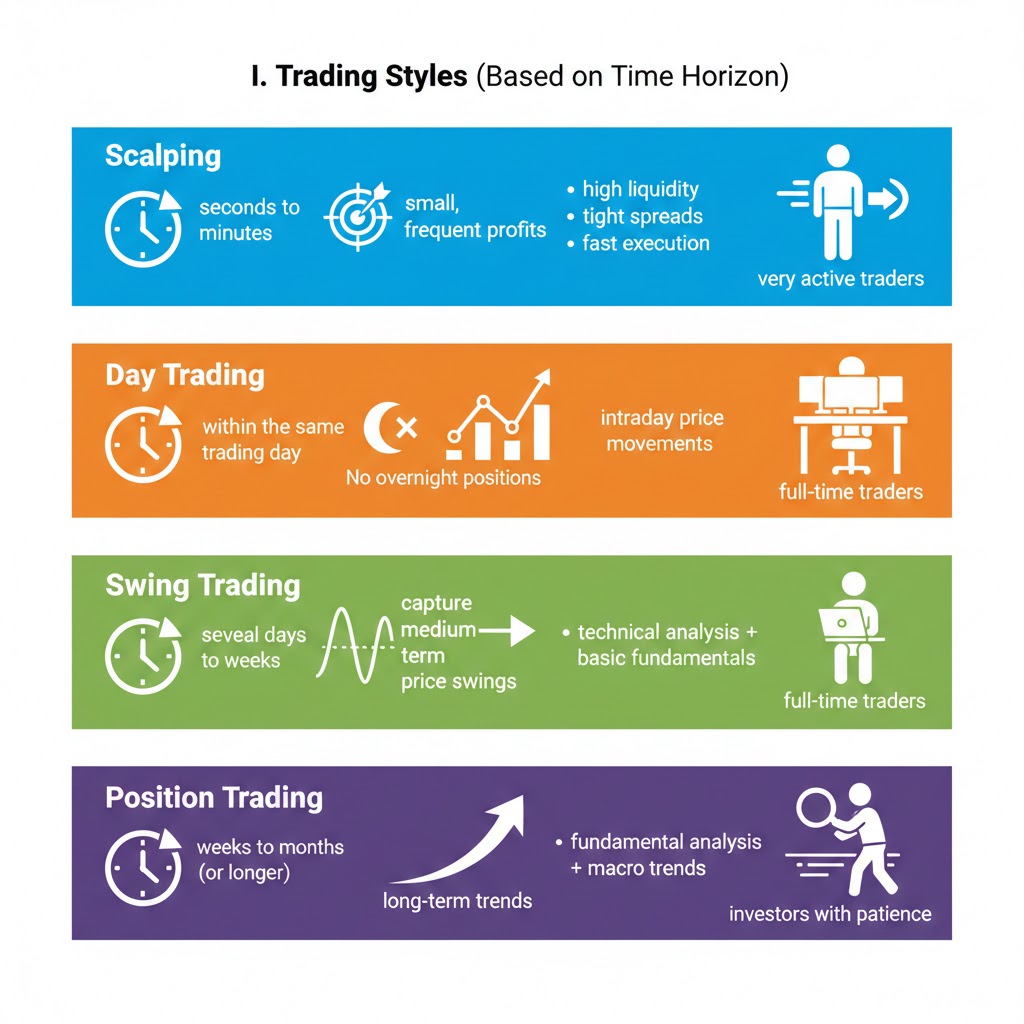
    • Trading Timeframes

      Trading Timeframes are the specific periods of time used to analyze price movements on a trading chart. Each timeframe shows how price behaves within a defined interval, helping traders identify trends, entry points, and exit points.

      The choice of timeframe depends on a trader’s strategy and style, such as scalping, day trading, swing trading, or position trading. Many traders use multi-timeframe analysis to gain a more comprehensive view of market trends and improve decision-making.

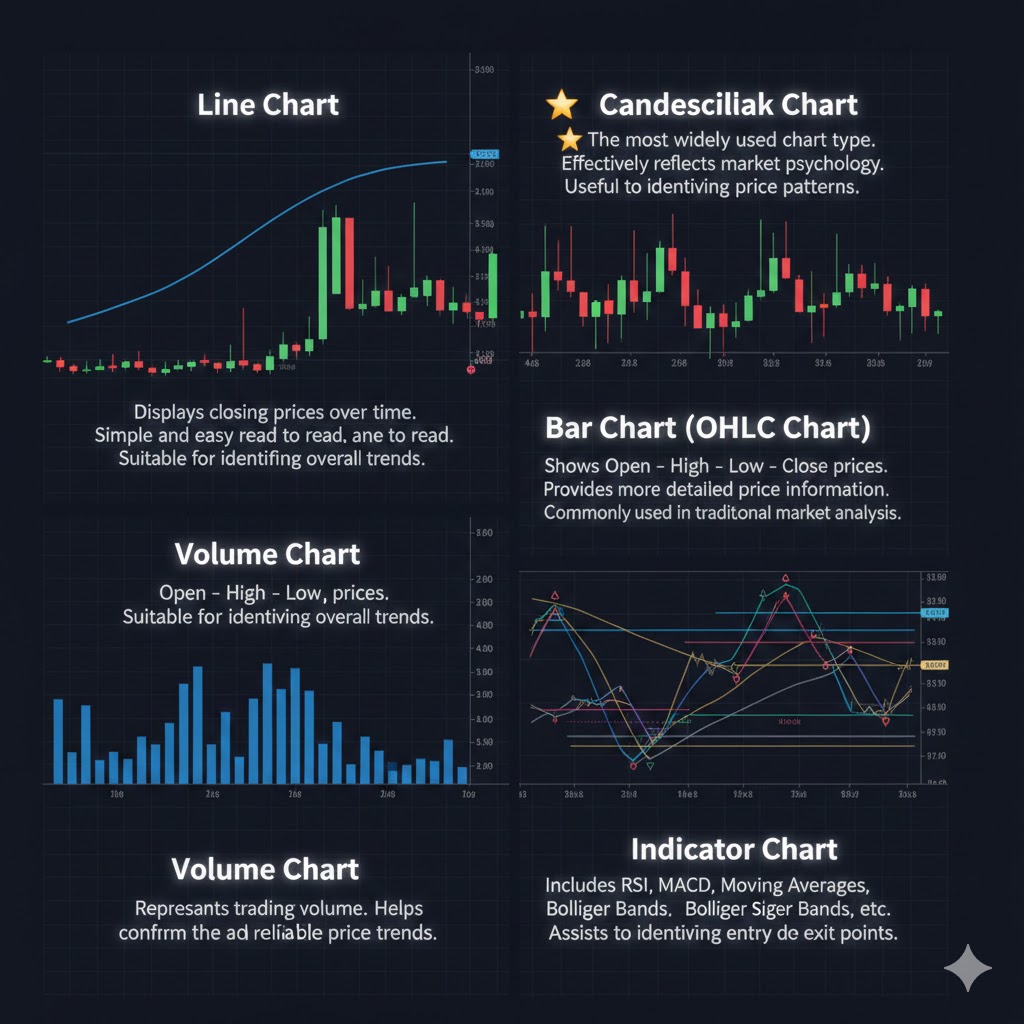
    • Financial Charts

      Financial charts are visual tools used to represent price movements, trading volume, and market trends over time. They are a fundamental component of Technical Analysis.

      Markets where financial charts are applied

      • 📈 Stock Market
      • 💱 Forex
      • 🪙 Cryptocurrency
      • 🛢️ Commodities
      • 📉 Derivatives (Futures, Options, CFD)

      Purposes of using financial charts

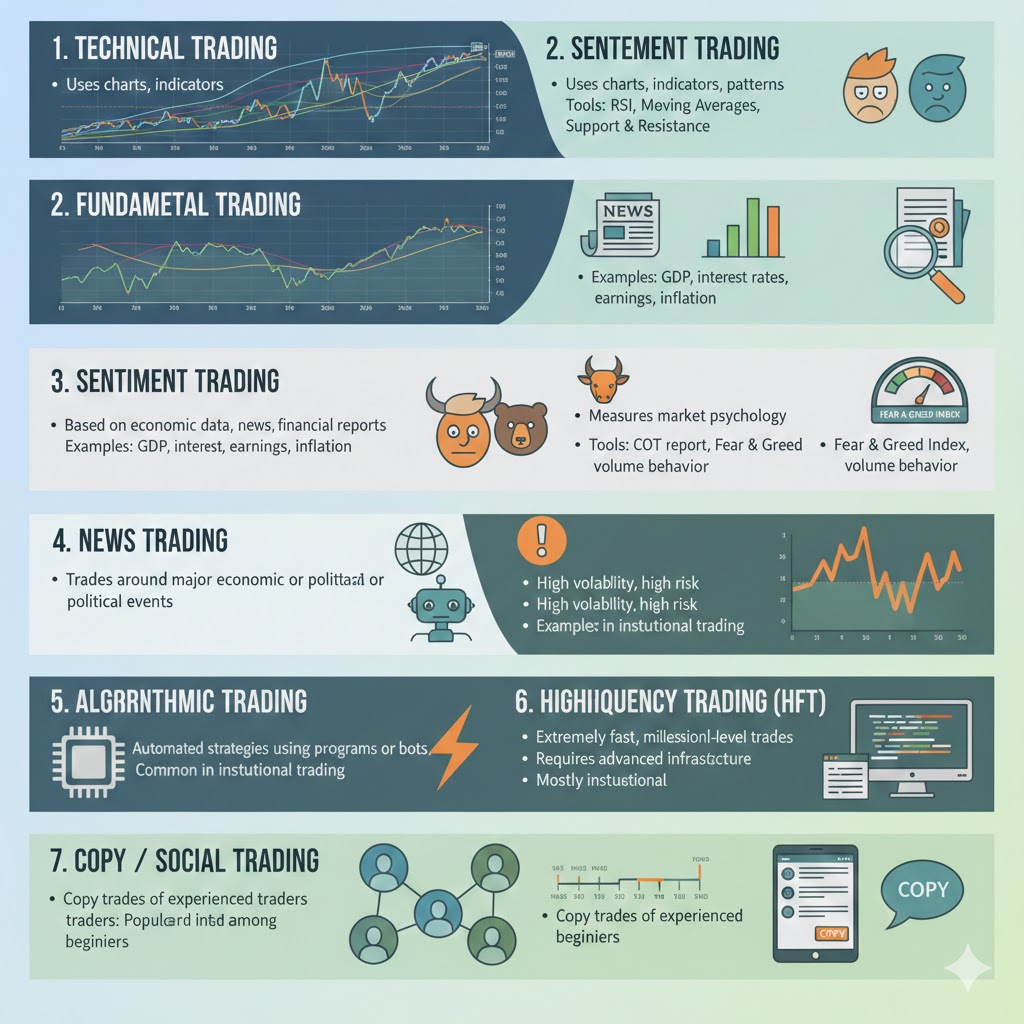
    • Trading Frameworks

      Trading Styles

      Types of Trading (Based on Strategy & Approach)

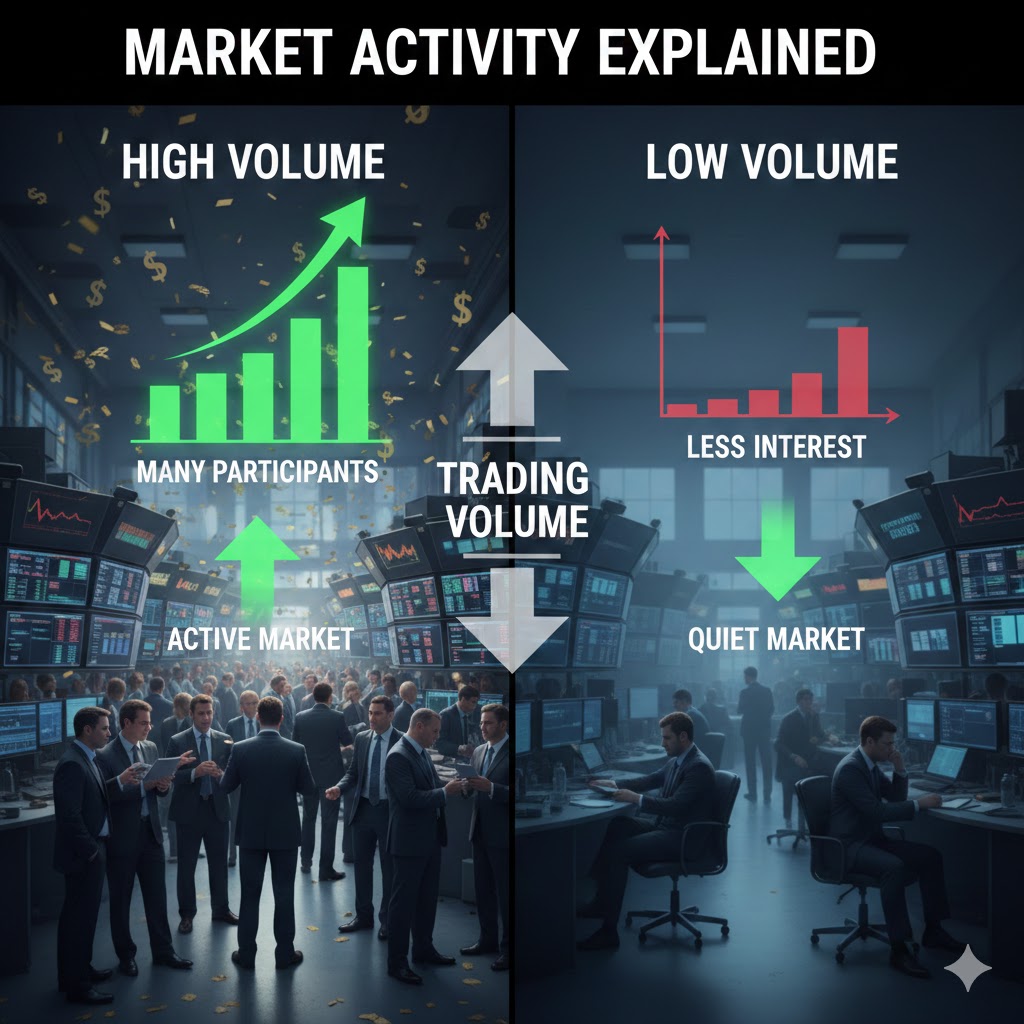
    • Trading Volume

      Trading volume is the total amount of an asset that is bought and sold within a specific period of time in the financial market.

      📈Importance of trading volume

      1. Confirming price trends
        • Price rises + volume increases → a strong and reliable uptrend
        • Price rises + volume decreases → a weak trend, possible reversal
      2. Identifying market reversals
        • Sudden spikes in volume may indicate major news or new capital inflows
      3. Assessing liquidity
        • High volume → easy to enter and exit trades, lower spreads
        • Low volume → harder to trade, higher risk


      Short conclusion

      Trading volume reflects the strength of the market and the level of capital participation.
      Price shows where the market is going, while volume shows how strong the move is.

    • Technical Knowledge in Financial Markets

      Technical Knowledge in Financial Markets is the understanding and application of technical analysis tools and methods to analyze price movements and trading activity in order to forecast market trends and make trading decisions.

      It typically includes:

      • Price charts and chart patterns
      • Technical indicators (e.g. moving averages, RSI, MACD)
      • Volume analysis
      • Support and resistance levels
      • Market timing and entry/exit strategies

      Technical Analysis can be applied to

      • Stock Market
      • Forex
      • Cryptocurrency
      • Commodities
      • Derivatives (Futures, CFDs, Options)

      It is especially effective for day trading, swing trading, and scalping.

      In short

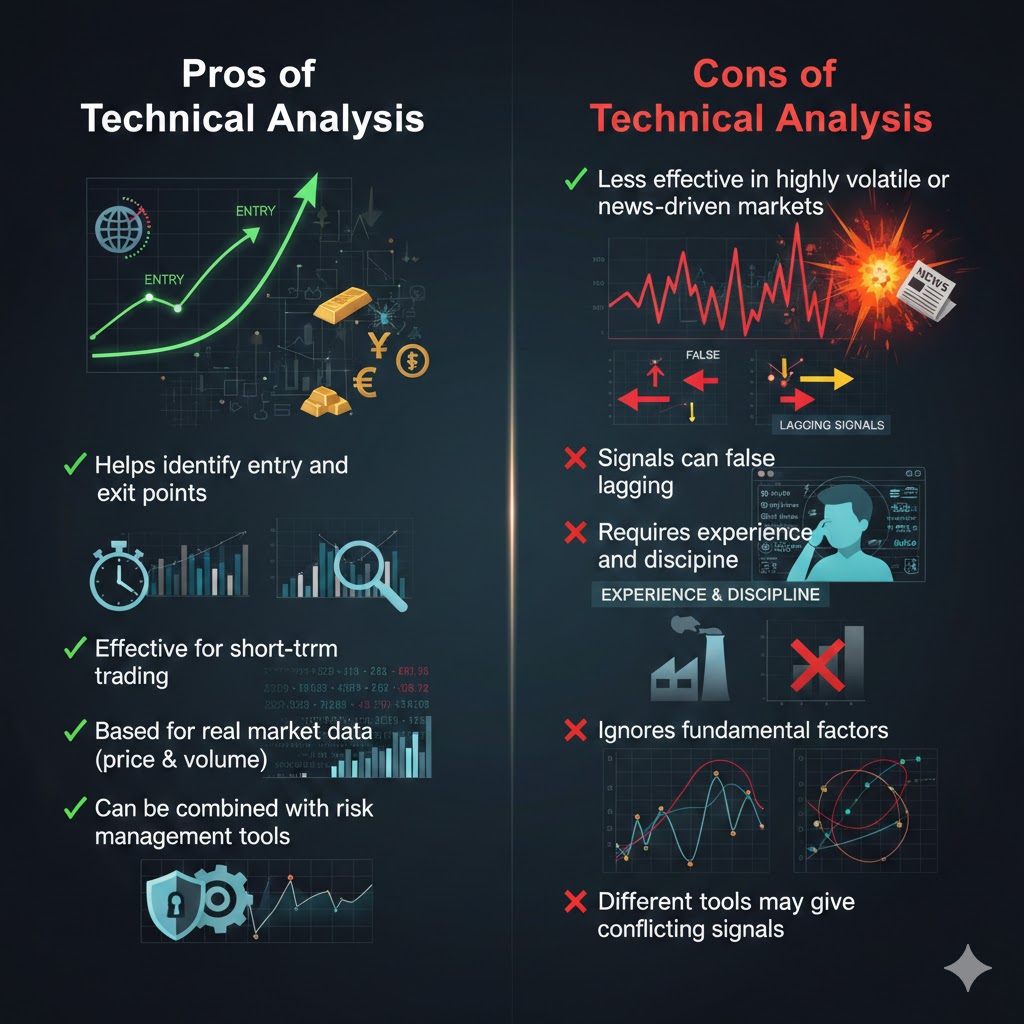
      It focuses on price behavior and market data rather than economic news or company fundamentals.