Category: Education

  • 2026 Investor Resolutions That Could Really Pay Off

    Every January, it’s the same story: gym parking lots are packed like a Taylor Swift concert, salad aisles get wiped clean as if there’s a lettuce shortage, and suddenly half your coworkers are quoting Warren Buffett while buying shares in companies they can barely pronounce. Yep, it’s “New Year’s Resolution Season”—that magical time when we all vow to lose weight, get fit, and save money… until Valentine’s Day rolls around.

    By February, reality hits hard. That treadmill you bought has become a fancy clothes rack, your credit card bill looks like you confused “budgeting” with “shopping spree,” and that grand investing plan? It’s now a Coinbase account loaded with meme coins, a YouTube playlist of gurus, and a browser stuck on Reddit’s WallStreetBets.

    So why do we do this every year? Blame it on history and human nature.

    The tradition started with the Babylonians, who promised their gods to return borrowed tools—not a bad resolution, unless you were the poor soul who lent out a plow in 1900 B.C. and never got it back. Then the Romans made it official with oaths to Janus, the god of beginnings, who had two faces: one looking back at last year’s mess, the other pretending this year would be different. Fun fact: that’s where January gets its name—a month built on denial.

    Back then, resolutions were about crops and keeping your ox alive. Now, it’s about getting washboard abs and beating the S&P 500 by following some “CryptoWolf69” on social media.

    Why the obsession? Because average feels like failure. New Year’s resolutions give your brain a quick hit of motivation, tricking you into thinking momentum equals progress. You say you’ll track spending, invest regularly, and finally master options trading. But three weeks later, you’re impulse-buying crypto at midnight while binge-watching Shark Tank.

    Here’s where it all falls apart. Resolutions don’t fail because you’re weak—they fail because they’re built on hope, caffeine, and Instagram quotes. You make grand plans after a couple of glasses of wine on New Year’s Eve but skip the hard parts—routine, discipline, and pushing through when things get tough. You want the six-pack but not the push-ups; you want the returns but not the risk management.

    And investing is no different.

    You promise yourself you’ll “invest for the long term.” But the moment the market dips 5%, you panic, move everything to cash, and start reading headlines like “Is This the Big One?” while watching YouTube channels declaring the apocalypse is near. Although you say retirement is a priority, you’ve never run the numbers or calculated how much you need to save. You make investment choices based on TikTok trends, then act surprised when your portfolio looks like it was managed by a teenager.

    Most people don’t wreck their portfolios all at once. Instead, they do it gradually by:

    • Developing bad habits
    • Expecting motivation to last forever
    • Mistaking effort for consistency

    By the time they realize things aren’t working, the damage is already done.

    Short-term enthusiasm isn’t a strategy—it’s a mirage.

    If your investment goals revolve around the calendar instead of a disciplined plan, you’re not managing money—you’re chasing a feeling. And like that unused gym membership, this approach leads to frustration. Every. Single. Time.

    So, why do we keep making poor investment decisions?

    Why We Keep Making the Same Mistakes

    Each year, Dalbar Research publishes a report that feels like a nightmare for investors. Different year, same takeaway: we’re often the biggest obstacle to our own financial success.
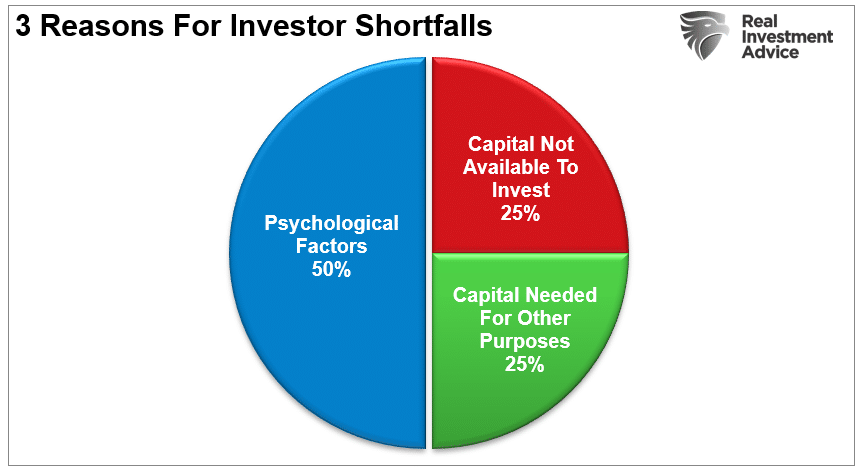
    The issue isn’t just about having enough money—it’s what happens in your mind. Dalbar identified nine common investing habits that can derail your returns faster than you can say “buy the dip.”

    • Loss Aversion – You’re so scared of losing money that you sell right before the market bounces back.
    • Narrow Framing – You fixate on one stock and ignore the rest of your portfolio, slowly watching it unravel.
    • Anchoring – You keep waiting for a stock to “return to even,” as if it owes you.
    • Mental Accounting – You treat your retirement fund and crypto wallet as separate universes, even when both are crashing.
    • Lack of Diversification – Owning five tech stocks doesn’t count as a balanced strategy.
    • Herding – You invest just because everyone else is, and it ends exactly how you’d expect.
    • Regret Aversion – You hesitate to act because you’re still haunted by selling Apple too early in 2012.
    • Media Response – You treat every financial headline like a crisis, even when it’s just noise.
    • Optimism Bias – You believe every investment will bounce back—yes, even the one currently under SEC investigation.

    The biggest culprits are herding and loss aversion. Investors rush in during market highs but panic-sell at every dip. It’s like devouring a whole pizza and then blaming the scale. Yet we keep falling into these traps because markets mess with our minds. When prices climb, we convince ourselves the rally will last forever. When they fall, we believe recovery is impossible. We buy at the top, sell at the bottom, and then wonder why our portfolios never seem to grow.
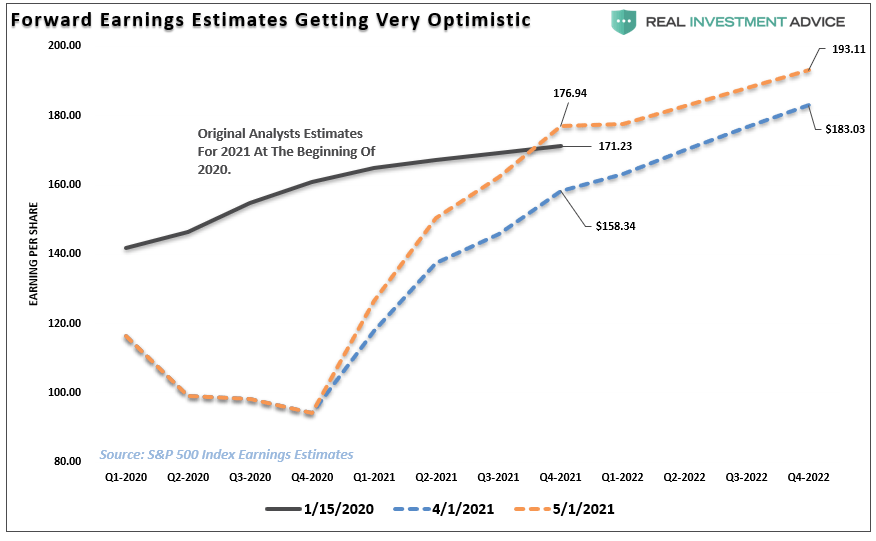
    That’s why you need a different kind of resolution—one grounded in the reality of how investors actually behave, not the fantasy of turning into the next Warren Buffett overnight.

    Key Investor Resolutions to Consider in 2026

    Let’s face it: emotions wreck portfolios. So in 2026, ditch the vague resolutions and focus on clear rules that can outsmart your worst impulses. Here’s a smarter list of resolutions designed for real investors—not fantasy league traders:

    In 2026, I plan to (or at least make an effort to):

    • Stick to what’s working and cut losses quickly. No more waiting for a turnaround that might never come.
      • Respect the trend—fighting it is a quick way to lose money.
    • Be either bullish or bearish, but never greedy. Greed leads to losses.
      • Accept that paying taxes means you made a profit—and that’s a good thing.
    • Buy gradually, use limit orders, and don’t chase prices like it’s a Black Friday sale.
      • Look for real value, not companies in crisis with a slick PR team.
    • Diversify—because trouble always hits somewhere.
      • Set stop-losses, use them, and don’t argue with the results.
    • Do your homework before hitting “buy.”
      • Stay calm during market drops. Take a deep breath, then review your plan.
    • Treat cash as a strategic position, not a failure.
      • Expect market corrections and handle them maturely.
    • Be ready to admit mistakes instead of stubbornly doubling down.
      • Leave hope out of your investment decisions.
    • Stay flexible—stubbornness is not a strategy.
      • Practice patience—good results take time, not hype.
    • Turn off the TV, log off TikTok, and focus on data over influencers.

    I try to stick to this list every year, but, like everyone, I mess up on a few points. That’s okay. The goal isn’t perfection—it’s making fewer mistakes than the year before. Investing success doesn’t come from reading motivational quotes or binge-watching market TikToks at midnight.

    Just like fitness, results don’t come from buying a gym membership—they come from showing up even when it’s tough. Investing works the same way. There are no shortcuts or magic tricks, only basic rules, steady discipline, and the patience to outlast everyone else.

    Want to become a better investor? Then keep your resolutions—even when the market tries to convince you otherwise.

    Sources: Investing

  • Frequently Asked Questions (FAQ) From Entrepreneur

    What could I learn from The Eternal Sovereign?

    We can help you raise funds for your business at the idea stage. You will also learn how to raise capital for an IPO and identify the right market to enter for your business growth. Once successful, you will have the knowledge and advisors to help you expand your wealth through your portfolio.

    What should I do if I want to start a project?

    You need to assess the supply and demand in the market where you plan to operate and develop a clear product or model to test your solution. Additionally, you should evaluate the economic conditions and consumer behavior before launching your product in the market.

    What common challenges do entrepreneurs face?

    Challenges include cash flow management, competition, customer acquisition, and maintaining work-life balance.

    How do I find funding for my startup?

    Funding can come from personal savings, loans, investors, crowdfunding, or grants.

    When should I scale my business?

    Scale when you have a proven product-market fit, stable cash flow, and a clear growth strategy.

    What legal considerations should I be aware of?

    Consider business registration, licenses, taxes, intellectual property, and contracts.

    How important is networking for entrepreneurs?

    Networking is crucial for finding mentors, partners, customers, and investors.

    How do I manage risk in my startup?

    Conduct thorough market research, plan financially, and diversify revenue streams to mitigate risks.

    If I have many other questions, requests, or issues that need to be addressed, what should I do?

    You can contact us anytime to resolve your issues. Our advice and consulting services are free of charge. Please don’t hesitate to reach out.

  • Frequently Asked Questions (FAQ) From Business Owners

    How can we best assist you?

    Our knowledge, news, and analysis can help you forecast the future economy, enabling you to make better business decisions for your growth. We also connect business owners and investors who can support your business development in the future. Through our services, you can become a confident speculator and investor, with access to free advice.

    What is the benefits of knowledge section?

    This section helps you learn and understand various ways to grow your revenue and optimize your profit. Many investors are ready to invest in your business, but you might not be aware of them—and usually, no one offers help without charging a fee and without guaranteeing results.

    What is the benefits of news and analysis?

    1. Stay Informed: Keeps you updated on market events, trends, and economic changes.
    2. Better Decision-Making: Helps you understand market sentiment and potential impacts on assets.
    3. Identify Opportunities: Spot emerging trends or risks early through expert insights.
    4. Diversify Perspectives: Gain different viewpoints to avoid biased decisions.
    5. Improve Timing: News and analysis can guide when to enter or exit positions.

    Why can the economic calendar and financial markets influence your business?

    They can help you understand why your business is performing well or poorly at a given time. They also provide insights on how to raise funds and improve your business performance with potential equity-sharing investors. By keeping track of economic policies and market trends, you can better prepare your business plans for future changes.

    What more can I know?

    One way to build wealth is by including investments and speculation in your own portfolio. With our help, you can earn more than others while taking on much lower risk.

    If I have many other questions, requests, or issues that need to be addressed, what should I do?

    You can contact us anytime to resolve your issues. Our advice and consulting services are free of charge. Please don’t hesitate to reach out.

  • Frequently Asked Questions (FAQ) From Speculators (Traders) and Investors

    Are there any scams in the financial market?

    Yes, scams exist in every market, including traditional ones. This happens because scammers see opportunities to make illegal money by exploiting market demand.

    What scamming cases are common in this market?

    Case 1: Following a signal provider’s instructions to open large positions with a small account, resulting in quick losses.

    Case 2: Leading investors to invest in assets that are not available or do not exist in the market.

    Case 3: Convincing people to deposit funds with a broker or financial institution that lacks a financial services license.

    Case 4: Forging company’s financial documents and records to deceive investors.

    How to avoid scam in this market?

    Suggestion 1: Verify the financial service license of the broker or financial institution.

    Suggestion 2: Verify the educational background of the signal provider.

    Suggestion 3: Verify which company provides the asset and confirm its legal business activities.

    Suggestion 4: Contact to The Eternal Sovereign to support further

    What knowledge is needed to speculate (trade) or invest in the financial market?

    Once you have a foundation, the knowledge you need to focus on is fundamental and technical analysis to trade or invest effectively.

    1. Fundamental knowledge helps you forecast the market’s future direction and protect your funds effectively.
    2. Technical knowledge helps you execute positions more precisely.

    For a complete understanding, please refer to the Knowledge section.

    Does having knowledge mean I can speculate (trade) or invest effectively?

    No, having knowledge without practice makes it difficult to speculate and invest effectively. You will need a team or advisor to help you make informed decisions through market analysis and practical education.

    Therefore, you can see that from small to large financial institutions, they always have teams or advisors to support decision-making.

    What are the benefits of news and analysis (opinions and analysis) in the financial market?

    1. Stay Informed: Keeps you updated on market events, trends, and economic changes.
    2. Better Decision-Making: Helps you understand market sentiment and potential impacts on assets.
    3. Identify Opportunities: Spot emerging trends or risks early through expert insights.
    4. Diversify Perspectives: Gain different viewpoints to avoid biased decisions.
    5. Improve Timing: News and analysis can guide when to enter or exit positions.

    If I have many other questions, requests, or issues that need to be addressed, what should I do?

    You can contact us anytime to resolve your issues. Our advice and consulting services are free of charge. Please don’t hesitate to reach out.

  • 5 Effective Market Volatility Strategies to Protect and Grow Your Long-Term Wealth

    Market volatility often feels personal. One week, your investment portfolio appears stable; the next, it drops, headlines turn alarming, and every conversation sounds like a prediction. This emotional rollercoaster is normal, but panic selling can turn temporary market swings into lasting financial damage.

    For high-net-worth families and business owners, the stakes are even higher. Investments are not for entertainment—they serve real financial goals like retirement income, business transitions, philanthropy, and preserving long-term wealth.

    The good news is, successful investing doesn’t require perfect timing. Instead, it demands a consistent process that withstands diverse market conditions, volatile periods, and unforeseen events. The most effective market volatility strategies emphasize preparation, discipline, and risk management, all geared toward sustainable long-term growth.

    Key Takeaways

    • Market volatility is a normal part of investing; having a rules-based plan helps minimize panic selling and costly mistakes.
    • Effective risk management begins with clear asset allocation, defined investment horizons, and practical guardrails.
    • Portfolio diversification works best when intentional and based on asset class exposure—not simply by increasing the number of holdings.
    • Regular rebalancing reinforces the discipline of “selling high” and helps reduce volatility over time.
    • Maintaining a steady investment psychology keeps investors focused on long-term performance rather than daily market fluctuations.

    What Market Volatility Really Means in the Stock Market

    Market volatility reflects shifting expectations. Stock prices fluctuate, bond yields change, and the market continuously reprices risk as economic conditions evolve. Factors such as inflation risk, interest rate changes, and unexpected news can quickly alter market values.

    Volatility is not limited to equities. When interest rates rise, bond prices typically fall, often surprising investors who expect fixed-income assets to provide stability. In the bond market, price fluctuations are driven by interest rate risk, credit risk, and credit quality—especially in high-yield bonds and certain bond funds.

    Not every market downturn signals a crisis, but each one tests whether your portfolio aligns with your risk tolerance and investment objectives.

    Investment Psychology: Why Many Investors Make Costly Moves

    During volatile periods, investment psychology can undermine sound judgment. Loss aversion makes market declines feel unbearable, while recency bias convinces investors that recent events will dictate future outcomes. Coupled with constant commentary on indices like the Dow Jones and “potential winners,” investors face emotional pressure from all sides.

    Risk-averse investors are particularly vulnerable. When fear peaks, many abandon their original plans and move to cash at inopportune moments. Hesitation to re-enter the market thereafter can significantly harm long-term returns.

    The solution is not bravado but structure. A well-designed, rules-based investment plan reduces the likelihood of reactive decisions during turbulent times.


    Practical Risk Management Strategies for a Diversified Portfolio

    During periods of market turbulence, the objective isn’t to predict headlines but to manage risk effectively and keep your balanced portfolio aligned with your long-term financial goals.

    1. Start With Asset Allocation and Risk Tolerance

    Asset allocation is one of the most important factors driving long-term investment performance. A well-designed allocation reflects both your risk tolerance—the level of risk you are comfortable with—and your risk capacity, which is more practical and considers your time horizon, liquidity needs, and how much additional risk your financial plan can realistically withstand without forcing unwanted changes.

    If a market downturn would compel you to sell assets to cover life expenses, your portfolio’s overall risk might be too high for your situation. This is especially critical for business owners nearing liquidity events or investors approaching retirement, who need to ensure their allocation aligns with their unique financial circumstances.

    2. Build Portfolio Diversification That Holds Up Across Market Conditions

    Portfolio diversification is effective when your assets respond differently under the same market conditions. Simply owning multiple mutual funds tracking similar benchmarks can still expose you to a single dominant risk factor.

    A truly diversified portfolio includes exposure to multiple asset classes, such as:

    • Equities across various sectors
    • International stocks for broader geographic exposure
    • Fixed income securities selected by credit quality and duration
    • Cash or short-term instruments to manage liquidity risk

    This approach reduces overall portfolio volatility by not relying on a single market narrative. It also preserves long-term growth potential by avoiding overconcentration in any one area.

    3. Use Fixed Income Investments With Eyes Open

    Bonds can provide portfolio stability, but selecting the right bonds is crucial. Government and high-quality bonds often behave differently from corporate or high-yield bonds, especially during economic stress. Credit risk and duration significantly impact bond performance.

    Rising interest rates typically cause bond prices to fall, particularly for longer-duration bonds. Bond funds may also experience unexpected market value fluctuations, and selling during market stress can lock in losses. Understanding interest rate risk, credit quality, and bond price sensitivity across economic cycles is essential.

    Fixed income investments play an important role but should be tailored to your time horizon and investment objectives—not based on assumptions or market noise.

    4. Rebalancing With Discipline to Manage Risk

    Rebalancing is a disciplined approach to managing risk and maintaining a balanced portfolio. It helps prevent emotional trading by systematically adjusting your holdings back to your target asset allocation.

    Over time, rebalancing reinforces the “sell high” discipline by trimming assets that have grown disproportionately and adding to those that have lagged behind. While it’s not a guarantee of gains, this method effectively controls risk and reduces portfolio drift during volatile market conditions.

    5. Plan Liquidity to Reduce Forced Selling

    Liquidity risk becomes a critical concern when cash is needed during a market downturn. Having a clear cash plan, maintaining an emergency reserve, and carefully timing large expenses can help minimize the risk of being forced to sell investments at unfavorable prices.

    This strategy is especially vital for investors with irregular cash flows, upcoming tax obligations, or significant business expenses. A well-structured liquidity plan safeguards your long-term investment goals by preventing your portfolio from being tapped as an emergency fund.

    Sources: Investing