A potential agreement between President Donald Trump and Iran is beginning to reshape market expectations, with investors increasingly anticipating a rally in stocks, weaker oil prices, and stronger bond performance if tensions in the Middle East continue to ease.
For months, global markets have been heavily influenced by geopolitical risk. Traders feared disruptions in the Strait of Hormuz, while investors worried that surging crude oil prices would reignite inflation pressures and force central banks to maintain higher interest rates for longer.
That narrative may now be changing.
Trump recently stated that negotiations with Iran are largely complete, with discussions focused on restoring stability in the Gulf region and reopening key shipping routes. Markets quickly responded to the possibility of reduced geopolitical tension.
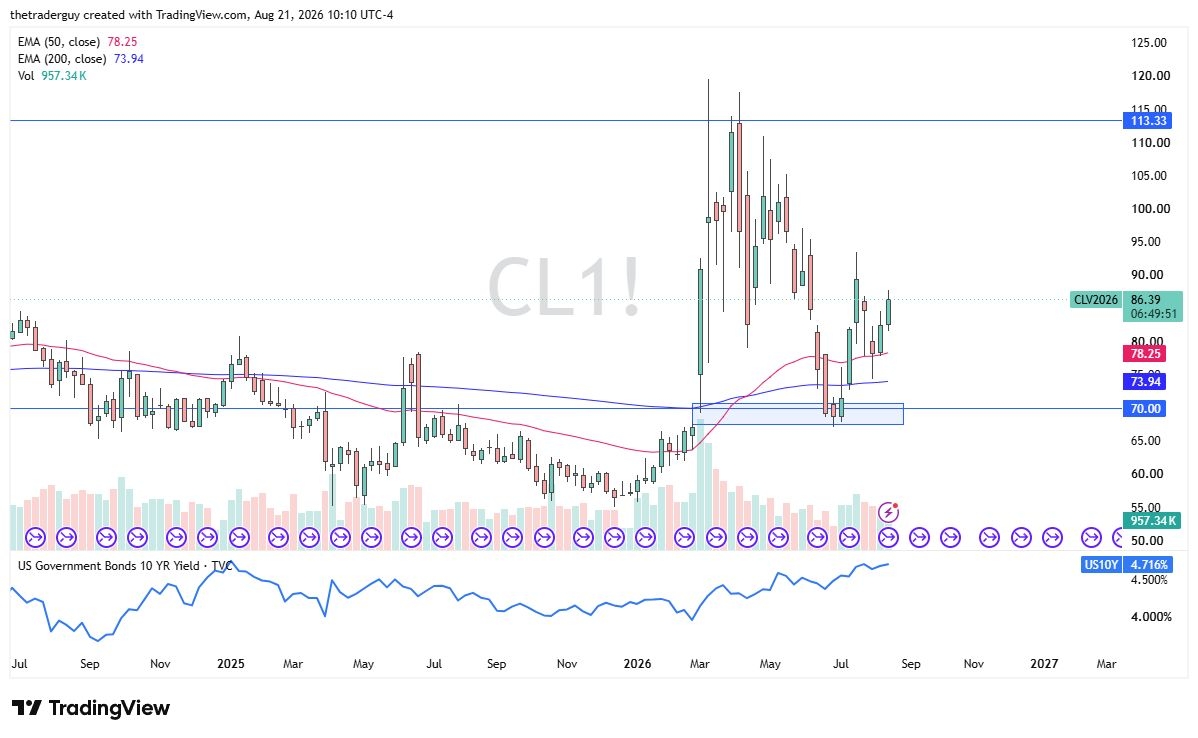
Brent crude prices have already started to decline as optimism surrounding the negotiations grows. Investors recognize that easing tensions could reduce the geopolitical premium embedded in oil markets. If supply concerns diminish and shipping routes normalize, energy prices would likely continue falling. Lower oil prices would, in turn, help cool inflation expectations, reduce pressure on bond yields, and improve conditions for equities.
Markets understand the broader chain reaction.
At the peak of the Iran crisis, investors were preparing for a far more severe scenario in which oil prices could surge above $120 per barrel. Such a move would have intensified global inflation, pressured consumers, hurt corporate profit margins, and complicated the outlook for central banks already navigating slowing economic growth.
A credible diplomatic breakthrough would dramatically improve that outlook.
Bond markets could become one of the biggest beneficiaries. Treasury yields have already begun drifting lower alongside softer oil prices as optimism over negotiations increases.
Lower yields would also provide support for growth-oriented sectors, particularly technology and AI-related stocks, which have struggled amid elevated financing costs and geopolitical uncertainty.
Several sectors stand to gain from falling energy prices and easing interest rates, including airlines, transportation companies, industrial firms, consumer discretionary businesses, and rate-sensitive technology stocks.
Emerging markets could also recover strongly. Many developing economies faced pressure from higher energy import costs and a stronger U.S. dollar during the recent period of instability. Reduced geopolitical stress could help reverse some of those pressures.
At the same time, the U.S. dollar may weaken somewhat as safe-haven demand declines and investor confidence improves.
Still, volatility is unlikely to disappear completely.
Negotiations with Iran have failed before, and political resistance within Washington remains significant. Regional tensions also remain elevated, while critical issues such as sanctions relief, nuclear commitments, and enforcement mechanisms still need to be resolved.
Markets are well aware that geopolitical agreements can unravel quickly.
However, investors trade on probabilities rather than certainty. Right now, markets are increasingly pricing in a scenario where one of the largest geopolitical risks facing the global economy begins to ease instead of escalate.
If Trump ultimately secures a workable agreement with Iran, the impact across global asset classes could be substantial: higher equities, lower oil prices, and stronger bond markets.
After months dominated by fears of energy shocks and renewed inflation pressure, investors may finally be seeing a path toward relief.
US financial markets will remain closed on Monday in observance of Memorial Day, leaving investors with a shortened trading week and a relatively light economic calendar. Attention will center on Thursday’s release of the second estimate for Q1 2026 GDP, alongside April’s core PCE data — the Federal Reserve’s preferred measure of inflation.
Throughout the week, eight Federal Reserve officials are scheduled to speak. With limited new economic data available to shape expectations around the FOMC’s policy direction, investors will closely analyze their remarks for any hawkish signals. Markets are currently pricing in a 62.5% probability of a rate hike by December, up from 50% just one week earlier, though some analysts believe tightening could arrive as soon as July.
Another key uncertainty remains President Donald Trump’s recently announced “likely negotiated” peace agreement. On Saturday, Trump stated that the arrangement would reopen the Strait of Hormuz. Iran’s foreign ministry noted that the proposed framework currently consists of a memorandum of understanding as an initial step, with broader negotiations expected within the next 30 to 60 days. However, substantial differences between the two sides still persist.
Meanwhile, global bond yields retreated from recent highs but continued to trade at elevated levels. The yield on the US 10-year Treasury declined to 4.56% after peaking at 4.69%, while the UK 10-year gilt yield eased to 4.90% from 5.19%.
GDP
Thursday’s second estimate of Q1 2026 GDP is expected to remain close to the preliminary 2.0% growth reading. Meanwhile, the Atlanta Fed’s GDPNow model is already projecting Q2 growth at 4.3%, supported largely by a sharp increase in business equipment investment.
Core PCED
April’s core PCED — the Federal Reserve’s preferred measure of inflation — will also be released on Thursday. The index rose 3.2% year-over-year in March, accelerating from 3.0% in February, while headline inflation reached 3.5%. With both the latest CPI and PPI figures coming in stronger than expected, markets are increasingly concerned about another upside inflation surprise, which could reinforce expectations for an additional Fed rate hike.
Consumer Confidence
The May Consumer Confidence Index, due Tuesday, is expected to edge higher from April’s reading of 92.8. Market attention will mainly center on the survey’s labor market components, which are anticipated to show modest improvement.
Unemployment
Initial jobless claims, scheduled for release on Thursday, previously came in at 209,000, while the four-week moving average stood at 202,500. Continuing claims were reported at 1.782 million, with the corresponding four-week average at 1.778 million. Overall, the data continues to point toward gradual improvement in labor market conditions.
Regional Business Surveys
This week’s regional Federal Reserve manufacturing surveys will include the Dallas Fed survey on Tuesday and the Richmond Fed survey on Wednesday. Both the national ISM Manufacturing PMI and the average readings from the five regional Fed surveys have shown improvement in recent months, signaling that the manufacturing recovery is becoming increasingly broad-based.
The regional prices-paid average has risen again to 54.9, while the Producer Price Index (PPI) for final demand is already increasing at an annual rate of 6.0%, highlighting persistent inflationary pressures across the production pipeline.
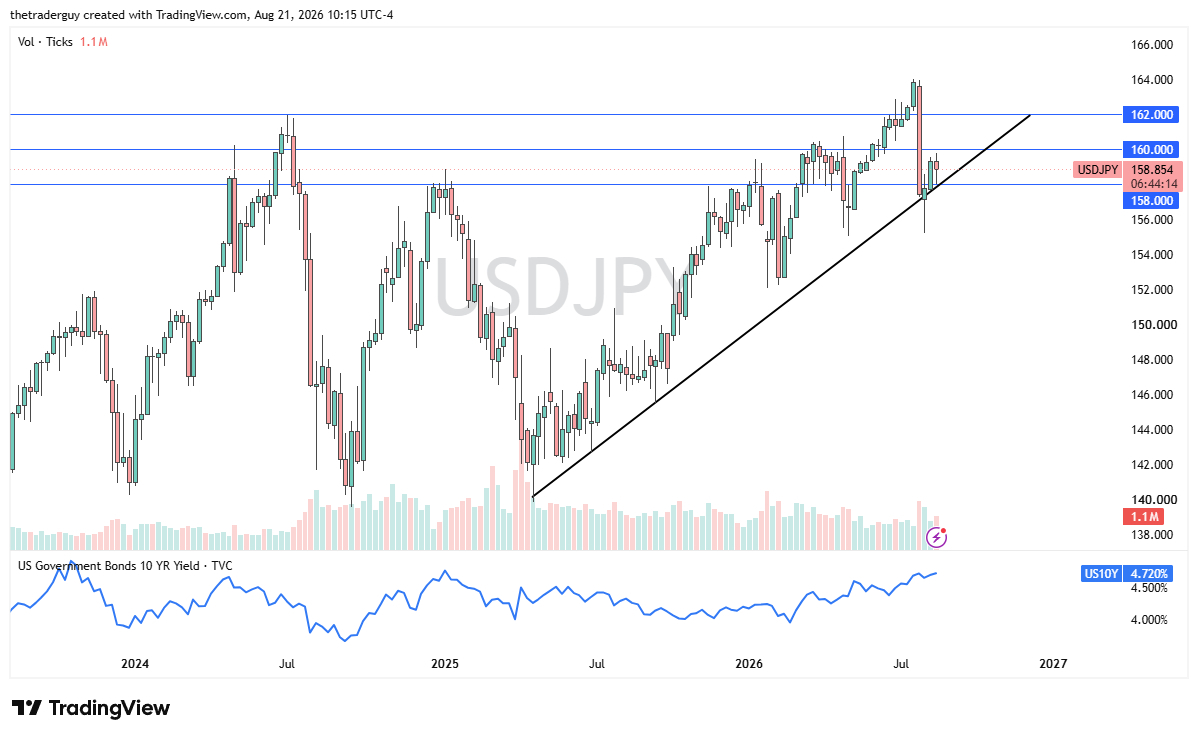
The US Dollar Index (DXY) is trading near the lower end of last week’s range at around 99.00.
Optimism surrounding a potential peace agreement with Iran is reducing demand for the safe-haven Greenback.
However, expectations of further Federal Reserve tightening are helping limit the USD’s downside pressure.
The US Dollar (USD) opened Monday’s session with a bearish gap, slipping from the 99.30 region — the bottom of last week’s trading range — toward 99.00. Although the US Dollar Index (DXY) remains supported above previous highs, improving sentiment over a possible US-Iran peace agreement and the potential reopening of the Strait of Hormuz are weakening demand for the safe-haven Greenback.
Investor confidence improved after US President Donald Trump suggested that a deal with Tehran may be near, encouraging a moderate risk-on mood in markets. However, Trump maintained a cautious stance, saying he had advised negotiators “not to rush into a deal” and warning that the US would continue blocking the Strait of Hormuz until an agreement is finalized.
Earlier in the day, US Secretary of State Marco Rubio stated that a “fairly strong proposal” to reopen Hormuz is currently under discussion, adding that diplomacy would be fully explored before alternative measures are considered.
Market activity is expected to remain subdued on Monday due to the US Memorial Day holiday closure. Investors are now turning their attention to Thursday’s release of the US Personal Consumption Expenditures (PCE) Price Index, a key inflation gauge closely watched by the Federal Reserve.
Recent US economic data has reinforced confidence in the resilience of the American economy. Combined with persistent inflation pressures, this has strengthened expectations that the Federal Reserve may need to keep interest rates elevated for longer. According to the CME FedWatch Tool, markets are now pricing in more than a 50% probability of another Fed rate hike this year, a factor that could continue limiting downside pressure on the US Dollar.
Hyperliquid remained above $60 on Monday after surging 7% a day earlier and reaching a fresh all-time high of $64.48. Institutional appetite for the DEX token continues to strengthen, with inflows climbing to $72 million last week. Ongoing buybacks and resilient retail interest are also helping sustain the rally and support further price discovery.
Hyperliquid (HYPE) reached a new all-time high on Monday, supported by strong buying interest from both institutional and retail investors in the decentralized exchange (DEX) sector. The token’s revenue-based buyback mechanism is also helping sustain momentum as HYPE enters price discovery territory. From a technical perspective, the trend remains bullish, with analysts eyeing a possible move toward $80.
Several positive catalysts continue to support HYPE’s upward momentum.
Despite broader market volatility, Hyperliquid’s growth has been fueled by its evolution into an all-in-one exchange platform that provides access to cryptocurrencies, real-world commodities, and prediction markets.
Recent data also shows that HYPE-related ETFs launched by 21Shares and Bitwise attracted $72.38 million in inflows last week, following $2.52 million the week before. Rising institutional participation often strengthens retail interest and can contribute to higher spot prices.
Data from CoinGlass points to increasing retail participation, as HYPE futures Open Interest (OI) climbed to a record $2.95 billion on Monday. This suggests traders are building larger positions, pushing the total notional value of outstanding contracts to new highs.
Meanwhile, Hyperliquid continues to support token demand through its aggressive buyback model. The platform allocates around 97% to 99% of trading fee revenue toward repurchasing HYPE tokens, which are then stored in its assistance fund. According to Hyperscreener data, approximately 210,000 HYPE tokens were bought back last week alone, effectively reducing circulating supply.
The assistance fund currently holds 44.52 million HYPE tokens, including a cumulative total of 26.81 million tokens acquired through buybacks.
Will Hyperliquid reach $80?
HYPE is currently trading at a new all-time high and remains in a strong bullish trend. The token is holding well above its key Exponential Moving Averages (EMAs), including the 50-day EMA at $45.07, the 100-day EMA at $40.98, and the 200-day EMA at $37.87. It also broke convincingly above the previous swing high of $59.45 after gaining 7% on Sunday, reinforcing bullish momentum.
Technical indicators continue to favor further upside:
The Relative Strength Index (RSI) is around 75 on the daily chart, signaling overbought conditions. While this can increase the chance of short-term pullbacks, it also reflects strong buying pressure.
The Moving Average Convergence Divergence (MACD) indicator remains positive, with the MACD and signal lines continuing higher, suggesting momentum is still firmly bullish in the near term.
Based on Fibonacci extension analysis, the next major resistance zones are:
127.2% extension near $70.04
161.8% extension near $83.51
That places the $80 level within the projected bullish range if momentum and buying activity continue. However, because RSI is already elevated, traders may still see periods of consolidation or profit-taking before another leg higher.
On the downside, the former resistance level at $59.45 has now turned into the nearest support zone and could act as the first layer of defense against selling pressure. Below that, the psychologically important $50.00 level may provide stronger support if the market experiences a deeper correction or extended pullback for Hyperliquid.
NZD/USD has been highly volatile throughout the week, and that remains the key theme. The pair appears to have support around the 0.58 level, while resistance is likely near 0.5950.
Overall, this market is likely to remain very choppy. However, with interest rates easing slightly toward the end of the week, the New Zealand dollar could gain some momentum and stage a rebound. On the other hand, if the pair falls below the 0.58 level, it may trigger an additional 100-point decline.
AUD/USD
AUD/USD has also seen a great deal of volatility, with the pair currently hovering around the 0.7150 level. This zone previously acted as resistance and should now provide support. If the pair breaks above this week’s candlestick high, it could pave the way for a move toward the 0.7275 level.
However, a break below the candlestick low could open the door for a decline toward the 0.70 level. It’s worth noting that the Australian dollar continues to outperform many other currencies against the US dollar. As a result, buying on pullbacks may still be the preferred strategy, although market conditions are likely to stay highly choppy.
Gold
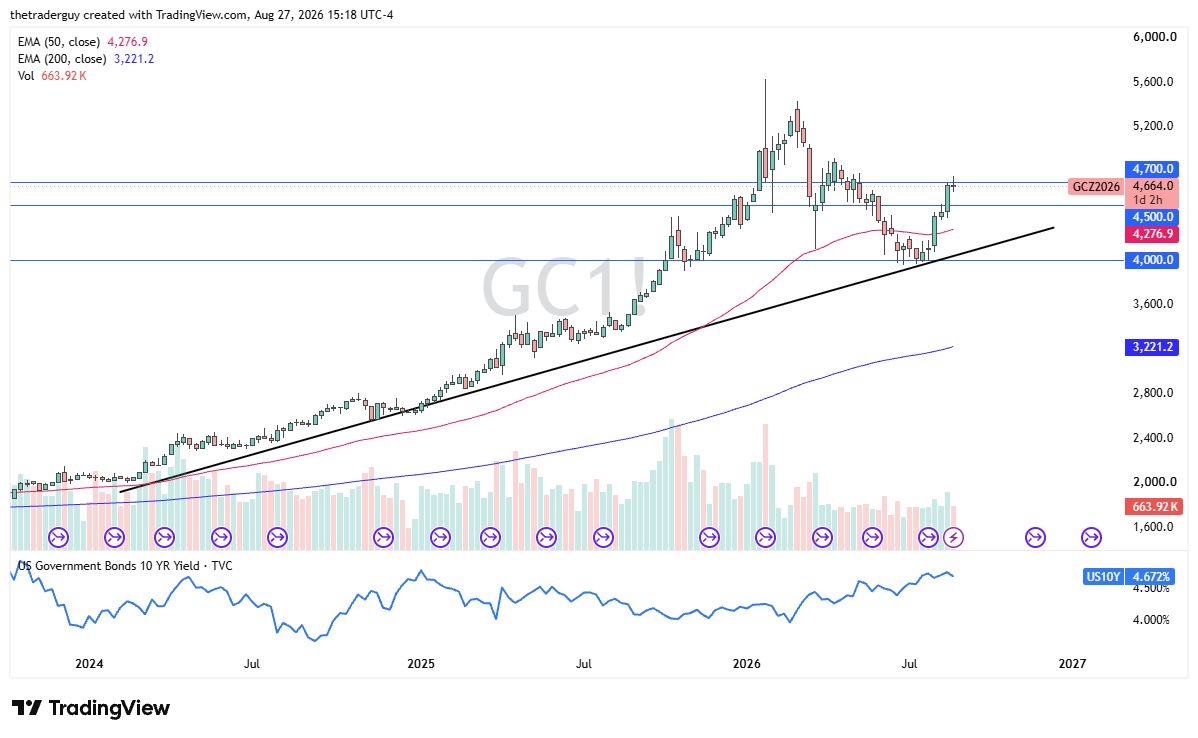
The Gold market was also highly volatile this week. With U.S. interest rates remaining relatively elevated, it has become challenging for gold to maintain upward momentum. Overall, the market is likely to keep a close eye on the $4,600 level, as a breakout above that area could pave the way for a move toward $4,800.
On the downside, if price falls below the weekly candlestick low, it could trigger a decline toward the $4,300 level. Broadly speaking, gold continues to be heavily influenced by interest rate expectations — when U.S. rates rise, gold tends to weaken.
USD/CAD
The US dollar has been climbing against the Canadian dollar throughout the week, and that trend is likely to continue. A push toward the 1.39 level seems possible, although the move may remain uneven and volatile along the way.
USD/CAD is typically a range-bound market, so periods of choppy price action would not be unusual. Traders should keep an eye on US interest rates, as further increases could provide additional strength for the pair. Meanwhile, Canada’s economy continues to show signs of weakness, which currently supports a stronger US dollar in this environment.
Bitcoin
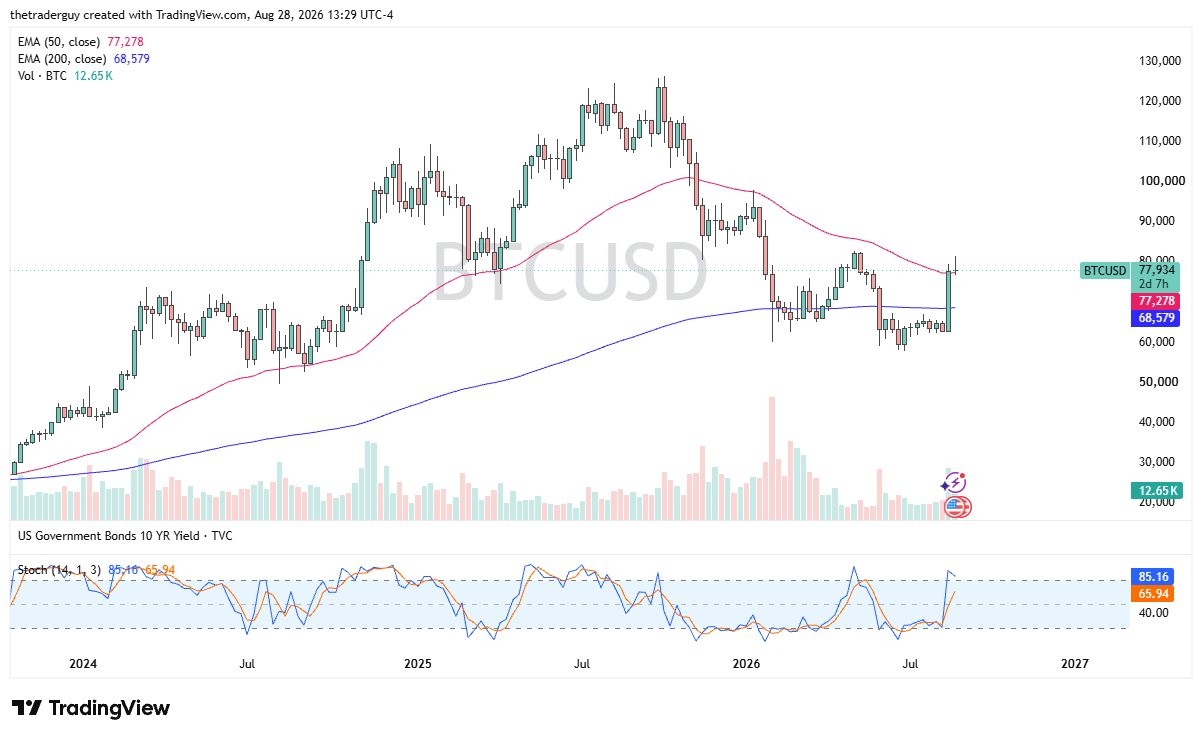
Bitcoin ended the week slightly lower, but strong support still appears to be in place beneath current levels. The broader recovery trend remains intact, and the market could eventually rebound toward the $84,000 region. Despite recent geopolitical tensions and the outbreak of war, Bitcoin has shown notable resilience, which is a positive sign for bulls.
Price action is expected to remain volatile and noisy, so patience may be necessary. Another important factor is the continued inflow of institutional money into Bitcoin ETFs, as sustained investment demand could help support prices over time.
USD/MXN
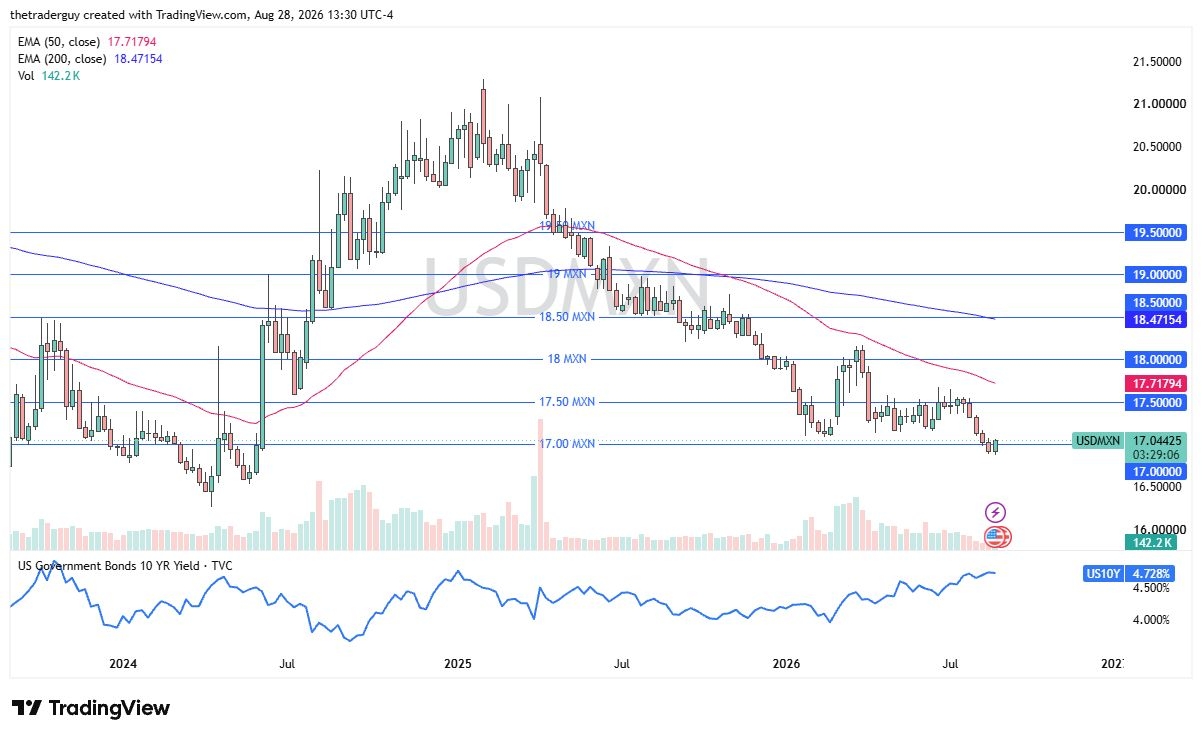
The US dollar moved erratically against the Mexican peso throughout the week, hovering near the 17.33 area. Resistance is seen around 17.50, while the 17.00 level continues to provide support.
This pair is likely to remain highly volatile, with interest rate expectations continuing to influence sentiment. Since Mexico still offers significantly higher interest rates than the United States, traders may continue favoring strategies that involve selling USD/MXN rallies, especially when bearish reversal signals appear on shorter timeframes.
EUR/USD
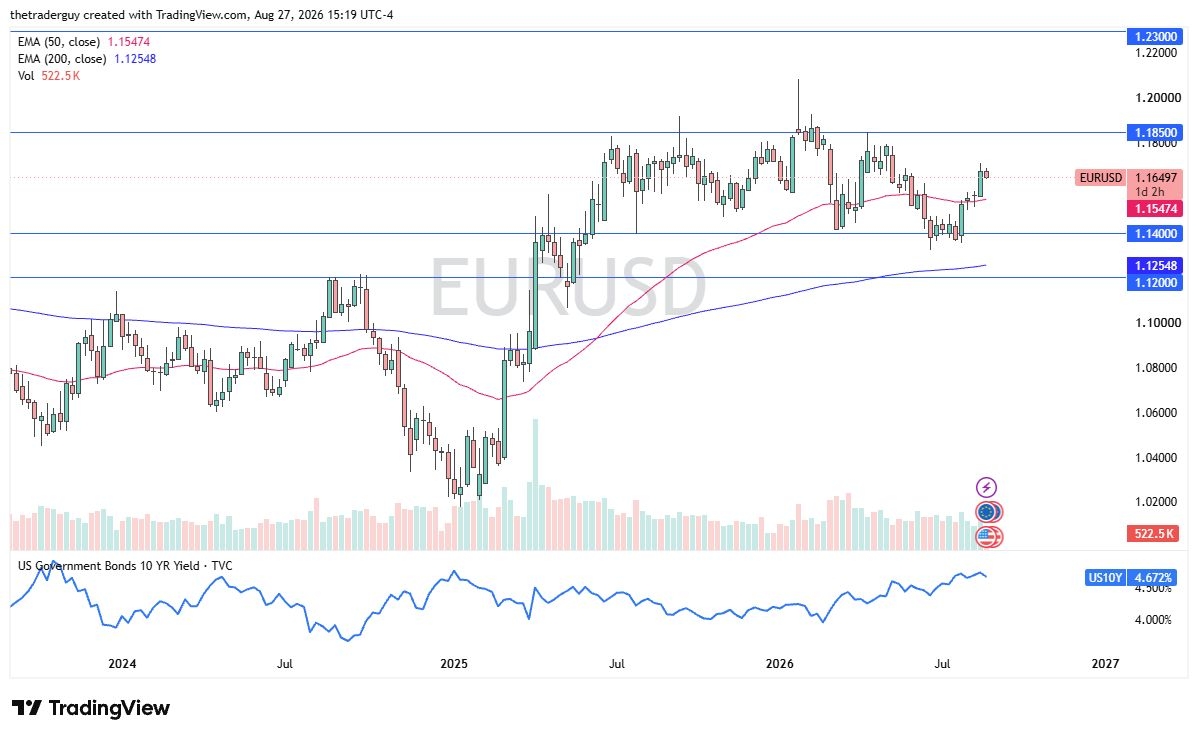
The euro posted modest losses during the week and tested the 50-week EMA, although overall trading conditions remain choppy. Interest rate differentials between Europe and the US continue to dominate market sentiment, while the 1.16 level appears to be acting as a key price magnet.
The pair is drifting closer to the lower boundary of its broader consolidation range, which could open the door for a move toward 1.14. Ongoing concerns surrounding Europe’s energy situation may add downside pressure. On the other hand, if momentum improves, EUR/USD could attempt another rally toward the 1.1750 region.
NASDAQ 100
The Nasdaq 100 continued attracting buyers on pullbacks, reinforcing the market’s strong bullish momentum. Investors increasingly appear focused on the possibility of the index reaching the 30,000 level, especially as enthusiasm surrounding artificial intelligence continues to drive technology stocks higher during earnings season.
For now, buying dips remains the dominant strategy. Rising interest rates could eventually create headwinds for equities, but the Nasdaq 100 has so far shown an ability to overlook many macroeconomic concerns. At the current pace, a move toward 30,000 seems increasingly realistic.
Bitcoin has retreated from $82K to $76K over the past two weeks, not in the form of a sharp capitulation event, but through a gradual and persistent decline. At the same time, both ETF inflows and derivatives leverage have begun to weaken in tandem, prompting a key question: where is capital rotating next? This report tracks the outflows, explores the underlying catalysts, and analyzes the technical outlook for BTC’s next potential move.
Current Market Position
Bitcoin recently fell toward the $76K region, marking an approximate 7.5% decline from the early-May local peak near $82K. The market has now posted five consecutive daily red candles, reinforcing the impression of a slow but steady deterioration in price action rather than panic-driven selling.
Meanwhile, the Fear & Greed Index stood at 40 on May 20, hovering at the threshold between neutral sentiment and fear. While the market has not yet entered extreme fear territory, investor confidence is clearly softening as downside momentum continues to build.
The clearest warning sign this week emerged from ETF flows:
On May 18, U.S. spot Bitcoin ETFs posted $649 million in net outflows, marking the third-largest single-day withdrawal of 2026. Over the May 11–15 trading week, cumulative outflows surpassed $1 billion, representing the largest weekly capital exodus since February.
Meanwhile, spot Ethereum ETFs continued to weaken as well, extending their streak of net outflows to six consecutive trading sessions.
Where Is the Capital Rotating?
The most likely destination is equities. On May 14, the S&P 500 climbed above 7,500 for the first time, while the Dow Jones Industrial Average surpassed the 50,000 mark, fueled largely by strong megacap technology earnings. Roughly 84% of S&P 500 companies exceeded Q1 earnings expectations, reinforcing investor appetite for traditional risk assets.
At the same time, hotter-than-expected U.S. inflation data — with CPI at 3.8% and PPI at 6% — forced markets to reassess the likelihood of near-term Federal Reserve rate cuts. The shift in expectations contributed to broader risk-off positioning across crypto markets.
In derivatives, Bitcoin open interest remains elevated at roughly $56.5 billion. The sharp decline between May 13–14 triggered a wave of long liquidations, with additional leverage flushes continuing through May 18–19. While some excess positioning has already been cleared, persistently high open interest suggests the deleveraging process may not be over yet.
Bitcoin perpetual funding rates have remained negative since early March, marking the longest sustained period of negative funding since 2023. This indicates that short positions have dominated the market for months, with bearish traders consistently paying funding fees to maintain exposure.
At the same time, repeated waves of long liquidations have continued to erode buy-side confidence. When combined with persistent ETF outflows, the picture becomes increasingly clear: both on-chain liquidity and off-chain institutional capital are weakening simultaneously.
That said, not all negative funding should be interpreted as outright bearish speculation. A significant portion likely reflects institutional hedging activity, including hedge fund redemptions, MicroStrategy arbitrage structures, and mining firms hedging exposure while pivoting toward AI infrastructure strategies. Still, the more crowded short positioning becomes, the greater the probability of a sharp and aggressive short-covering unwind once market sentiment reverses.
What Is Driving the Decline?
Bitcoin’s recent weakness is not being caused by a single catalyst, but rather by the convergence of several reinforcing forces acting simultaneously across macro, institutional, and derivatives markets.
ETF outflows remain the dominant driver behind the current decline. More than $1 billion exited spot Bitcoin ETFs during mid-May, including a massive $649 million single-day withdrawal, signaling that institutional de-risking is accelerating. A large portion of ETF holders are now sitting below their average entry prices, increasing the risk of additional redemption pressure if sentiment continues to weaken.
Geopolitical uncertainty is another major overhang. President Donald Trump’s May 18 reversal on potential Iran strike rhetoric has kept binary geopolitical risk elevated, weighing broadly on global risk assets, including cryptocurrencies.
Structural pressure from miners is also intensifying. Bitcoin mining difficulty has declined 10.7% year-to-date following six consecutive negative difficulty adjustments. Publicly listed mining companies collectively sold a record 32,000 BTC during Q1 — exceeding their total sales throughout all of 2025. At the same time, many miners are redirecting capital toward AI infrastructure initiatives, creating additional incentives to liquidate holdings. The estimated production-cost zone for next-generation S21 miners, roughly between $69K and $74K, is increasingly viewed as a critical physical support range. A sustained move below that band would likely trigger further difficulty reductions and eventually relieve some sell-side pressure.
From a cycle perspective, bears still have a strong macro argument. The historical halving-to-cycle-top structure appears intact once again: the April 2024 halving was followed by a peak near $126K in October 2025, roughly 18 months later. However, the current maximum drawdown of approximately 52% remains relatively shallow compared with previous bear-market declines of 77%–87%, leading cycle-focused analysts to argue that the true capitulation phase may not have occurred yet.
On-chain data, however, continues to provide the clearest bullish counterargument. Whale wallets holding more than 1,000 BTC accumulated approximately 270,000 BTC over a 30-day period through late April, marking the largest monthly accumulation since 2013. Meanwhile, exchange reserves have fallen to a seven-year low near 2.2 million BTC, suggesting long-term holders are aggressively absorbing the supply being sold by leveraged traders and weaker hands.
Key Levels to Watch
Rather than assigning fixed probabilities to bullish or bearish outcomes, a more practical framework is to focus on the technical levels that will determine how this correction ultimately resolves.
Looking Higher: The $82K–$85K Resistance Zone
The 200-day moving average is currently positioned around the $82K–$82.5K range. Last week, Bitcoin climbed to roughly $82.4K before facing an immediate rejection, reinforcing the 200 DMA as a key resistance level.
Further strengthening this resistance is an unfilled CME futures gap from early February, which extends between approximately $80K and $85K. Although last week’s rally toward $82K managed to partially close the gap, a full fill would require sustained bullish momentum through an area where the 200 DMA aligns with significant overhead supply.
Bitcoin needs to break back above $84K and maintain support there to validate a meaningful trend reversal. Until that happens, any upward move below that level is likely to be viewed as a sell-the-rally opportunity.
Looking Down: Two Key Support Zones Before a Deeper Breakdown
If current levels fail to hold, the first major area of support comes from the weekly Bollinger Band lower boundary, which is currently near $71K. A move into this zone would imply roughly a 7% drop from current prices and would coincide with the S21 miner shutdown range of $69K–$74K, where mining difficulty adjustments could begin easing sell-side pressure.
Beneath that lies the 200-week moving average (200 WMA), estimated around $63K–$65K, which remains a critical long-term structural support level. A revisit of this area would create a textbook H1 2026 double-bottom formation alongside February’s $59.9K low.
If Bitcoin loses the $71K support region, the next significant floor sits at the 200 WMA between $63K and $65K. Holding that zone would strengthen the double-bottom thesis and could pave the way for the next major upward move. However, a decisive break below it would signal a far more bearish downside scenario.
EUR/USD stays under pressure for a second consecutive session, hovering near 1.1610 during Asian trading hours. The pair weakens as the US Dollar holds firm amid growing expectations of a hawkish Federal Reserve stance. Meanwhile, extended energy supply disruptions caused by the ongoing conflict risk fueling US core inflation and consumer price expectations, potentially encouraging the Fed to maintain higher interest rates for longer.
Technical Analysis
On the five-minute chart, EUR/USD is trading at 1.1621, maintaining a slightly bearish intraday tone as it stays just below the daily opening level of 1.1626. This suggests that upside momentum remains limited while the market continues to absorb earlier selling activity. Meanwhile, the Stochastic RSI has rebounded from oversold conditions into the mid-30 range, indicating that bearish pressure is easing somewhat, although there is still no clear sign of a strong bullish reversal.
To the upside, the first resistance level appears near the daily open at 1.1626. A sustained move above this area would be required to improve the short-term outlook. With no significant nearby support levels visible in the provided data, traders may continue viewing minor pullbacks as vulnerable as long as the pair trades below the daily open. Current momentum indicators point more toward a limited corrective recovery rather than the start of a broader trend reversal.
On the daily chart, EUR/USD is trading around 1.1619 and retains a bearish near-term outlook, as price action remains below the 50-day Exponential Moving Average (EMA) at 1.1683 while hovering just above the 200-day EMA at 1.1618. This setup implies that rallies toward the 1.1680 region could continue to attract selling interest. At the same time, the Stochastic RSI has fallen deeply into oversold territory near 11, signaling that downside momentum may be becoming overstretched in the short term.
On the upside, the 50-day EMA around 1.1683 serves as the key resistance level, and continued trading beneath it would keep bearish pressure intact. On the downside, the 200-day EMA at 1.1618 acts as immediate support. A decisive daily close below this level could trigger another leg lower, whereas maintaining support above it may allow for a corrective rebound within the broader bearish structure.
Fundamental Analysis
A stronger outlook for the US economy is reinforcing expectations for tighter monetary policy and providing additional support for the US Dollar.
Federal Reserve officials remain cautious as they assess the future path of short-term interest rates. Although policymakers are currently keeping the federal funds rate unchanged, they are gradually stepping away from expectations of rate cuts and showing greater willingness to consider further rate hikes should inflation remain persistent.
Meanwhile, the administration of US President Donald Trump announced that Trump will officially swear in Kevin Warsh as Chair of the US Federal Reserve on Friday at the White House. Warsh replaces Jerome Powell, whose term expired Friday but who remained in the role temporarily during the transition period.
On the economic front, data from the US Department of Labor showed that Initial Jobless Claims declined by 3,000 to 209,000 in the second week of May, highlighting continued strength in the labor market. However, Continuing Jobless Claims edged higher to 1.782 million for the week ending May 9, compared with 1.776 million in the prior week.
The Euro weakened against the US Dollar after traders responded to an unexpected contraction in the Eurozone economy. Preliminary S&P Global PMI data released Thursday showed that business activity across the Euro Area contracted in May at the fastest pace since late 2023. The downturn was largely attributed to a conflict-driven rise in living costs, which weighed on services demand and pushed input price inflation to its highest level in three years.
Attention now turns to upcoming German economic releases, including the June GfK Consumer Confidence Survey, first-quarter GDP figures, and the IFO Business Climate Survey.
Private market investments have attracted significantly larger allocations from institutional portfolios and, increasingly, private wealth strategies over the past decade.
The traditional argument is straightforward: investors are compensated with an illiquidity premium for locking capital into assets that cannot be easily traded. In theory, this limitation becomes an advantage, allowing investors to earn higher returns in exchange for reduced liquidity.
However, that explanation may no longer capture the full picture. What if illiquidity and infrequent pricing are not merely drawbacks investors tolerate for additional return, but features they actively prefer? In that case, the appeal of private markets may stem not only from higher expected returns, but also from a smoother, psychologically more comfortable investment experience. Rather than receiving an illiquidity premium, investors may effectively be accepting an illiquidity discount.
Viewed this way, investors may not simply be compensated for illiquidity—they may also be paying, implicitly, for reduced visible volatility.
Private markets do not eliminate risk. The underlying businesses remain exposed to many of the same economic forces that affect comparable public companies. The appearance of smoother returns often reflects stale or infrequent pricing rather than superior management or investment skill. The key difference lies in how and when prices are discovered. Because private asset valuations rely heavily on appraisals and model-based estimates instead of continuous market trading, reported returns tend to look far less volatile than those of publicly traded equities.
This distinction is critical: smoother reported performance does not necessarily imply lower economic risk or genuinely uncorrelated returns.
Investor behaviour also changes when volatility is highly visible. Constant price movements in public markets can encourage overtrading, emotional decision-making, and poorly timed reactions, especially during periods of panic or euphoria. In contrast, infrequent valuation updates can reduce the temptation to respond to short-term noise instead of focusing on long-term fundamentals.
This dynamic may help explain why fees in private markets remain high despite increasing scale and competition. Investors may not simply be paying for access to illiquid assets, but for an investment experience that appears steadier and less volatile over time.
A useful comparison can be made between publicly traded companies such as Microsoft or Google, where prices adjust continuously in response to market sentiment, and private companies such as OpenAI or Anthropic, where valuations are updated far less frequently. The latter may appear to exhibit smoother value creation, even though the underlying risks and business dynamics remain just as complex and fast-moving.
Ultimately, private markets may represent more than simple compensation for illiquidity. They may instead embody a broader trade-off, where investors give up liquidity and price transparency in exchange for a smoother return profile and a more psychologically manageable investment journey through periods of risk and uncertainty.
WTI remains under modest selling pressure for the third consecutive day, albeit without strong bearish momentum.
Uncertainty surrounding a possible US-Iran peace agreement continues to offer support to the black liquid.
Meanwhile, the technical backdrop suggests caution before placing aggressive bullish bets or anticipating a sustained upside move.
West Texas Intermediate (WTI), the US benchmark for Crude Oil, extends its decline for a third straight session and trades around the mid-$96.00s during Friday’s Asian session. Despite the weakness, prices remain above Thursday’s nearly two-week low near the key $95.00 psychological level.
A senior Iranian official stated that no agreement has yet been finalized with the United States, although negotiations have reportedly narrowed existing gaps. Even so, market participants remain doubtful about the prospects of a US-Iran peace deal due to persistent disputes over Tehran’s nuclear ambitions and tensions surrounding the strategic Strait of Hormuz. The ongoing geopolitical uncertainty continues to lend support to Crude Oil prices and limits the scope for aggressive bearish positioning.
From a technical standpoint, the black liquid continues to trade above a significant support zone despite fading momentum, hovering near the 38.2% Fibonacci retracement of the April rally. Additional support comes from the 200-period Simple Moving Average (SMA) around $95.09 and an ascending trend-line near $95.49, both of which continue to reinforce the broader bullish structure.
Nevertheless, bearish signals are gradually strengthening. The Relative Strength Index (RSI) remains close to 36, while the Moving Average Convergence Divergence (MACD) stays in negative territory, indicating increasing downside pressure. As a result, recovery attempts could remain limited unless buyers reclaim the nearby resistance at the 23.6% Fibonacci retracement around $100.42. A sustained move above that level would be required to revive bullish momentum and target recent highs again.
On the downside, initial support is seen near the 38.2% Fibonacci retracement at $96.32, followed by the trend-line support around $95.49 and the 200-period SMA near $95.09. A decisive break below this support cluster could accelerate losses toward the next Fibonacci levels at $93.00 and $89.69, potentially shifting the medium-term outlook firmly in favor of sellers.
Gold comes under renewed selling pressure as geopolitical tensions and hawkish Fed expectations continue to support the US Dollar.
Iran’s uranium enrichment program and control over the Strait of Hormuz remain major obstacles in negotiations.
The technical outlook also favors the bears, reinforcing the likelihood of additional downside pressure.
Gold (XAU/USD) faces renewed selling pressure after Thursday’s volatile price action, although it continues to hold above the key $4,500 psychological level during Friday’s Asian session. The US Dollar (USD) stays near a six-week high reached earlier this week, supported by growing expectations that the Federal Reserve will maintain a hawkish stance. In addition, uncertainty surrounding a possible US-Iran peace agreement boosts demand for the Greenback’s safe-haven appeal, weighing on the precious metal.
Markets have now fully ruled out any Fed rate cuts for the rest of 2026 and are increasingly pricing in at least one rate hike before year-end amid concerns over rising energy costs and persistent inflation. Minutes from the April 28–29 FOMC meeting showed policymakers leaning toward keeping interest rates elevated — or even tightening further — if inflation remains above the Fed’s 2% target. According to the CME Group FedWatch Tool, traders currently see more than a 60% probability of a 25-basis-point rate increase in December. This outlook has fueled a recent rise in US Treasury yields, strengthening the USD and reducing the appeal of non-yielding assets like Gold.
Meanwhile, a senior Iranian official stated that although no agreement has been finalized with the US, differences between both sides have narrowed. However, Iran’s uranium enrichment program and control over the strategically important Strait of Hormuz remain major obstacles in negotiations.
Marco Rubio warned that Iran’s proposal to impose tolls on vessels passing through the Strait could effectively undermine prospects for a peace deal. US President Donald Trump also reiterated that Washington opposes any toll system in the Strait of Hormuz and stated that the US military would move to secure Iran’s highly enriched uranium stockpile. These geopolitical risks continue to support the USD, reinforcing the broader bearish outlook for Gold.
AUD/USD could climb toward the nine-day EMA at 0.7164.
The 14-day RSI, hovering near 48, suggests the recent decline is entering a consolidation phase with no clear dominance from either buyers or sellers.
On the downside, immediate support is seen at the 50-day EMA around 0.7115.
AUD/USD extends its decline after posting modest losses in the previous session, trading near 0.7140 during Friday’s Asian session. Technical analysis on the daily chart shows the pair continuing to trade within a developing descending wedge pattern, pointing to two possible outcomes depending on how price behaves around the formation’s boundaries.
A clear breakout above the wedge’s descending resistance line would indicate renewed bullish momentum and raise the prospect of a trend reversal to the upside. However, as the pattern is still forming, failure to overcome the upper boundary could keep the pair trapped in a period of choppy, downward consolidation until a decisive breakout emerges.
The pair remains supported above the 50-day Exponential Moving Average (EMA) while facing resistance from the nine-day EMA. Combined with the 14-day Relative Strength Index (RSI), which is hovering around the neutral 48 level, the setup reflects a consolidative bias with limited momentum from either buyers or sellers following the recent retreat.
On the upside, AUD/USD could test initial resistance at the nine-day EMA near 0.7164, followed by the upper edge of the descending wedge around 0.7200. A successful breakout above that region may open the door for a move toward 0.7277 — the highest level since June 2022, reached on May 6.
To the downside, immediate support is located at the 50-day EMA around 0.7115, with additional support near the wedge’s lower boundary at 0.7080. A sustained move below this area could intensify bearish pressure and expose the pair to a deeper decline toward the four-month low of 0.6833 recorded on March 30.
WTI pauses after the previous day’s steep decline as traders weigh conflicting signals surrounding a possible US-Iran peace agreement. Trump pointed to progress in negotiations with Iran, though he also warned that military action remains possible if talks fail. Meanwhile, declining US crude inventories driven by solid demand continue to lend support to oil prices.
West Texas Intermediate (WTI), the US crude oil benchmark, stabilized after plunging nearly 5% in the previous session as traders assessed conflicting signals surrounding a possible US-Iran peace agreement. The commodity hovered near $98.30 on Thursday, little changed on the day, with markets closely monitoring developments in the Middle East.
US President Donald Trump said the US was in the “final stages” of negotiations with Iran, raising hopes for easing tensions. US Vice President JD Vance also expressed optimism, noting that Iran appeared willing to reach an agreement. The comments initially pressured crude prices lower overnight, though losses were capped after Trump warned that further military action remained possible if talks collapsed.
Iran responded by condemning Trump’s warning and cautioned that any renewed US or Israeli strikes could significantly intensify the conflict. Investors also remain doubtful that a peace deal can be achieved soon due to deep disagreements over Tehran’s nuclear program and ongoing tensions surrounding the Strait of Hormuz. Iran has reportedly introduced a new “Persian Gulf Strait Authority” aimed at overseeing traffic through the vital shipping route.
These geopolitical concerns continue to support oil prices and help prevent a deeper sell-off. Additional support came from the latest Energy Information Administration data, which showed declines in US crude and gasoline inventories last week amid resilient demand. As a result, traders may wait for stronger follow-through selling before concluding that crude prices have formed a near-term top.
Silver extends its rebound for a second straight session on Thursday as follow-through buying interest remains intact.
The intraday technical picture continues to support bullish momentum and points to the potential for further upside.
However, a decisive break above the key $76.75 confluence resistance is required to confirm the bullish outlook.
Silver (XAG/USD) is extending Wednesday’s rebound from the nearly two-week low around the $73.00 area, advancing for a second consecutive session on Thursday. During Asian trading hours, the precious metal moved back above the mid-$76.00 region, although it still trades below Tuesday’s weekly peak.
From a technical standpoint, XAG/USD is testing a key resistance zone near $76.75, where the 100-hour Simple Moving Average (SMA) aligns with the 23.6% Fibonacci retracement of the recent decline from the monthly high. A sustained break above this confluence area could provide a fresh bullish catalyst and support additional near-term upside momentum.
Short-term indicators suggest bearish pressure is fading rather than strengthening. The Relative Strength Index (RSI) is hovering near 57, while the Moving Average Convergence Divergence (MACD) remains slightly in positive territory. As a result, a decisive move above the $76.75 barrier may open the door toward the 38.2% Fibonacci retracement at $79.21, followed by the 50% retracement level near $81.14.
On the downside, strong support is located around $72.97, which marks both the recent cycle low and a major Fibonacci anchor. Buyers are likely to re-emerge more aggressively in that region if the corrective decline resumes.
The US Dollar Index remained largely steady as investors balanced optimism over US-Iran peace negotiations with rising tensions around the Strait of Hormuz. President Trump stated that talks between Washington and Tehran are entering their final phase, while the latest FOMC Minutes revealed that most Fed officials signaled the possibility of further rate hikes if inflation remains above the 2% target.
The US Dollar Index (DXY), which tracks the Greenback against a basket of six major currencies, traded little changed around 99.10 during Thursday’s Asian session after posting modest losses in the previous session.
The US Dollar remained supported as investors weighed the economic impact of ongoing US-Iran peace negotiations against escalating tensions surrounding the strategically vital Strait of Hormuz shipping route.
According to a Bloomberg report on Wednesday, President Donald Trump said negotiations with Iran are approaching their final stage, while also warning that military action could resume within days if Tehran refuses US demands. Iranian President Masoud Pezeshkian responded by rejecting any notion of surrender, stating on X that attempts to force capitulation through pressure were merely an illusion.
Meanwhile, the minutes from the Federal Open Market Committee’s April meeting revealed a hawkish stance among Federal Reserve officials. Most policymakers indicated that further interest rate hikes could be necessary if inflation remains persistently above the Fed’s 2% target, with concerns growing over inflationary risks linked to the Iran conflict.
The lower panel shows the daily SPY, while the upper panel displays the NYSE McClellan Oscillator. Market bottoms typically form when a “Selling Climax” is followed by a “Sign of Strength.” In McClellan Oscillator terms, a Selling Climax occurs when the indicator falls below -200, while a Sign of Strength is triggered when it rises above +200.
For a market bottom to form, the McClellan Oscillator typically needs to move from -200 or lower to +200 or higher within 30 days or less. In the lower panel, the dotted red lines mark instances when the Oscillator dropped below -200, while the blue dotted lines indicate when it climbed above +200 within the required timeframe.
Heading into the March low, the market experienced a “Selling Climax,” followed by a “Sign of Strength” after the low was established, confirming a market bottom. The current rally may extend into mid-July, with the ongoing consolidation potentially representing the halfway point of the upward move.
We updated this chart from yesterday, and the prior commentary outlined why the current consolidation could represent the halfway point of the ongoing advance.
“Last Thursday, the 5-period RSI climbed to 88.41, while the 14-period RSI reached 78.69. Historically, an RSI (14) reading near 80 and an RSI (5) near 90 — with last Thursday’s readings falling just 1.5 points short of those bullish thresholds — signals strong market momentum rather than a final market top.
Since 2002, the RSI (14) has reached 80 only eight times, roughly once every three years (as highlighted on the chart above). In many of those cases, an RSI (14) near 80 has coincided with the midpoint of a broader upward move.
This week also leads into a three-day holiday weekend, with markets closed Monday for Memorial Day, which could result in lighter trading volume as traders step away early. Pullbacks on lighter volume are typically viewed as constructive for the broader bullish trend. While some near-term weakness is possible this week, momentum indicators continue to point toward higher prices following the holiday.”
The chart above shows the monthly GDX alongside the GDX/GLD ratio in the lower panel. Since January, GDX has been trading within a broad range, with resistance near 118.00 and support around 80.00. Current analysis suggests this consolidation may represent the midpoint of a larger bullish advance. If that view proves correct, GDX could eventually rally toward the 200.00 area.
The key to this outlook lies in the monthly GDX/GLD ratio shown in the lower panel. This ratio has spent the past 13 years moving sideways and now appears poised for a potential breakout. The critical breakout zone sits near 0.20, which is where the ratio is currently trading. Importantly, the ratio has not been retreating from this resistance level, suggesting supply is being absorbed. Once that supply is exhausted, the ratio could begin a sustained move higher.
The next major upside resistance for the ratio is near the 2010 highs around 0.40. Even if gold prices remained unchanged, a move in the ratio toward 0.40 could lift GDX toward the 180 area. However, with gold also expected to advance alongside mining stocks, GDX could ultimately trade substantially higher.
A major upside move in GDX may be developing, although the current consolidation phase could continue for several more weeks before the next leg higher begins.
A 40-year supercycle in commodities, inflation, and interest rates began in 2020 and is likely to extend through 2060.
As legendary commodities strategist Jeff Currie has argued, this cycle is fundamentally driven by a widening imbalance between demand and supply.
While the conflicts in Ukraine and Iran are acting as medium-term catalysts for higher prices, the longer-term trend is being fueled primarily by soaring global government debt and the economic rise of billions of consumers across Asia and Africa.
Some countries are feeling a greater impact than others from the US government’s latest debt-financed conflict with Iran, which has unfolded largely as many analysts feared.
As a result, certain central banks and gold-focused investors in affected regions have been selling gold holdings. Since most global assets and expenses are still denominated in fiat currencies, many households are liquidating “rainy day” gold savings instead of taking on additional debt.
From a broader perspective, advocates of hard assets argue that the global financial system would be more stable if it were centered on gold-backed savings rather than fiat-driven debt expansion.
Over time, the Strait of Hormuz is expected to reopen, potentially under a more permanent toll structure. Ironically, oil prices could climb even further after the conflict ends than they have during the war itself, raising the possibility of crude prices reaching $200 or even $300 per barrel.
Mainstream commentators have gradually shifted away from expecting aggressive rate cuts and renewed waves of quantitative easing, instead acknowledging at least part of the reality of this unfolding supercycle: interest rates may need to move higher.
What many still fail to recognize, however, is that rates could remain elevated for an extended period as policymakers struggle to offset the combined pressures of a long-term commodities boom and governments’ deep reliance on debt financing.
Notice the blue arrows on the left side of the chart: during the previous 40-year supercycle, interest rates experienced four separate periods of decline.
The current cycle is likely to follow a similar pattern: interest rates may trend higher overall, but with intermittent periods of decline along the way. That initial downward phase now appears to be approaching its conclusion.
A closer examination of the US rates chart highlights the move clearly. In late 2023, yields retreated from around 5% to roughly 3.5%, forming what technicians describe as a bullish triangle or pennant pattern.
An upside breakout now appears increasingly likely, potentially paving the way for a fresh advance toward the 6%–7% range.
What about gold? The weekly chart suggests that a sizable flag pattern may be developing, though rather than attempting to forecast the next major move, investors may be better served focusing on important accumulation zones.
From that perspective, the $4,100, $3,900, and $3,500 levels stand out as potential buy areas below the current market price where long-term gold investors could step in aggressively.
Meanwhile, the Stochastics oscillator (14,5,5) points to the possibility of further near-term weakness. The latest buy signal failed to gain traction and was triggered prematurely from above the oversold 20 threshold, indicating that downside pressure may not yet be fully exhausted.
A look at the daily chart shows several highlighted buy zones, both above and below the current market price.
For investors — particularly those involved in mining stocks — one of the most dependable strategies is to accumulate within these support zones during price pullbacks rather than chasing bullish breakouts after prices have already surged.
At present, the $4,500 area can still be viewed as a buy zone, though mainly for more aggressive traders, as the current pullback remains relatively modest.
As stagflation pressures deepen, additional gold selling from central banks in countries facing severe economic strain from the Strait of Hormuz disruption remains possible. That outlook aligns with the ongoing consolidation pattern on the charts and the indecisive behavior currently shown by momentum oscillators.
The long-term chart comparing GDX to gold shows that the market is currently pausing near the neckline of a massive inverse head-and-shoulders formation — a consolidation phase that many gold-stock investors had been warned to expect.
At this stage, patience may be the most important requirement. If the breakout eventually materializes, the rally that follows could be exceptionally powerful — and it may arrive sooner than many anticipate.
In simple terms, there is a crucial distinction between investors selling government bonds because economic growth is strong and selling them because confidence in governments’ ability to repay debt is beginning to erode.
At some point, institutional investors may stop avoiding gold because it offers no yield and instead start accumulating it out of concern that governments worldwide are losing control of their debt burdens. Such a shift could trigger an intense wave of buying in mining stocks as well.
What may lie ahead resembles a more extreme version of the inflationary 1970s environment — though for now, patience remains essential, because in this market, patience could prove golden.
GBP/USD remains subdued below the SMAs near 1.3420 as the UK unemployment rate ticks higher.
The near-term outlook stays bearish, with additional selling pressure likely below 1.3200.
GBP/USD remains under pressure below its 50- and 200-day simple moving averages (SMAs) around 1.3420 as traders weigh weak political sentiment and softer UK economic data. Earlier on Tuesday, the UK unemployment rate rose to 5.0%, while April employment showed a decline of 100,000 jobs.
Technically, near-term momentum continues to favor the downside, with the RSI staying below the neutral 50 threshold and the MACD drifting into negative territory.
If resistance at 1.3420 continues to cap gains, the pair could revisit support near 1.3300. A stronger support region may then emerge around 1.3200–1.3235 before the broader outlook turns decisively bearish, opening the door for a deeper slide toward 1.3090.
On the upside, confirmation of Monday’s bullish engulfing candle through a break above 1.3420 could pave the way for a move toward the 20-day SMA and the 1.3520 area. A sustained rise beyond 1.3600 may also allow the pair to print a fresh short-term high near 1.3700, reviving the broader recovery trend.
Overall, GBP/USD remains vulnerable while trading beneath the 50- and 200-day SMAs near 1.3420. Still, a more pronounced bearish outlook would likely require a decisive breakdown below the 1.3200–1.3225 support zone.
UK annual headline inflation is expected to soften in April even as monthly inflation edges higher.
The upcoming UK CPI report could give the BoE additional room to leave interest rates unchanged in June.
Pressure on the Pound Sterling remains to the downside, while an inflation figure above forecasts may add to the currency’s weakness.
The Office for National Statistics is set to release the UK Consumer Price Index (CPI) data for March at 06:00 GMT.
As inflation remains a key focus for central banks, investors will closely examine April’s CPI figures for clues on the next policy move by the Bank of England. Any significant divergence from market expectations could trigger short-term volatility in the British Pound (GBP).
What to expect from the upcoming UK inflation report
UK annual inflation is projected to ease to 3% in April from 3.3% in March, although monthly CPI growth is expected to accelerate slightly to 0.9% from the previous 0.7% reading.
The reduction in Ofgem’s energy price cap ahead of the Iran conflict appears to have helped limit the impact of higher energy costs, while fading Easter-related price effects have also contributed to moderating inflation pressures.
Core CPI, which excludes volatile items such as energy, food, alcohol, and tobacco, is projected to slow to 2.6% YoY in April — the weakest pace since July 2021 — reinforcing expectations for softer overall inflation.
Alongside the CPI report, the Office for National Statistics will also release April’s Producer Price Index (PPI) data. PPI Input inflation is forecast to cool sharply to 1% from 4.4% in March, while PPI Output inflation is expected to edge up slightly to 1% YoY from 0.9%.
If confirmed, easing inflation pressures could reduce the urgency for the Bank of England to raise interest rates, particularly as UK unemployment continues to rise following Tuesday’s labor market data. However, the relief may prove temporary. Ofgem is scheduled to revise the energy price cap in July, likely leading to higher household energy bills and renewed upward pressure on headline inflation. The BoE currently expects inflation to peak around 4% later this year.
Analysts at TD Securities noted that while the latest inflation figures may offer short-term reassurance, the full impact of higher energy costs is expected to emerge in the third quarter, with potential second-round inflation effects later in the year.
How could the UK CPI report impact GBP/USD?
Inflation remains a central factor in BoE policymaking and therefore has a major influence on the British Pound. Still, Sterling has been weighed down in May by mounting political uncertainty following the Labour Party’s poor performance in local elections, creating additional pressure on the currency.
In this context, a softer-than-expected inflation reading could offer some support to the Pound by giving the BoE more flexibility to monitor domestic conditions and assess the economic fallout from tensions in the Middle East before adjusting interest rates. BoE Deputy Governor Sarah Breeden warned on Monday that political uncertainty is affecting the business climate and cautioned policymakers against acting too aggressively on rates.
On the other hand, a stronger-than-expected inflation print could place the BoE in a more difficult position and potentially deepen bearish sentiment toward the Pound.
From a technical standpoint, Guillermo Alcala believes the British Pound remains under pressure following last week’s decline. He noted that although Monday’s bullish engulfing pattern on the daily chart helped reduce some downside momentum, the near-term outlook for GBP remains bearish. According to Alcalá, buyers still require stronger momentum to reclaim the former support zone near 1.3450 and shift attention toward the mid-May highs around 1.3530–1.3540.
On the downside, he highlighted Monday’s low near 1.3305 as an important support level. A decisive break below that area could pave the way for further losses toward the late-March and early-April highs around 1.3175.
Gold remains under pressure on Wednesday, extending its decline as the US Dollar stays broadly stronger. Ongoing geopolitical tensions and increasing expectations of further Federal Reserve rate hikes continue to support the greenback near a six-week high. Investors are now awaiting the release of the FOMC Minutes for additional insight into the Fed’s future policy direction.
Gold (XAU/USD) extended its losses on Wednesday, falling to its lowest level since March 30 after briefly rising above the $4,500 mark during the Asian session. The precious metal remains under pressure as the US Dollar (USD) stays strong, supported by persistent geopolitical uncertainty, inflation concerns, and expectations of a more hawkish Federal Reserve (Fed).
Investor caution remains elevated amid uncertainty surrounding a potential US-Iran peace agreement. US President Donald Trump stated on Tuesday that the US could launch another strike on Iran if negotiations fail, noting that he had delayed a planned attack following requests from Gulf leaders. At the same time, Vice President JD Vance said both Washington and Tehran had made significant progress in talks and were seeking to avoid renewed military conflict. However, ongoing disagreements over Iran’s nuclear ambitions and the Strait of Hormuz continue to cloud the prospects for a diplomatic resolution. This uncertainty has reinforced the US Dollar’s safe-haven appeal, weighing further on Gold prices.
Additionally, tensions linked to the US-Iran standoff have kept Crude Oil prices close to monthly highs, fueling inflation worries and strengthening expectations for further Fed tightening. According to the CME FedWatch Tool, markets are now pricing in more than a 55% probability of at least one 25-basis-point rate hike in 2026. Philadelphia Fed President Anna Paulson also indicated that additional tightening could be appropriate if economic growth remains strong or inflation risks intensify. Rising US Treasury yields, driven by these expectations, have added further support to the Greenback while pressuring non-yielding assets such as Gold.
Despite the USD’s strength, traders remain cautious ahead of the release of the FOMC Minutes later in the North American session, which could offer fresh guidance on the Fed’s policy outlook. Further developments in the Middle East are also likely to influence market sentiment. Still, the broader fundamental backdrop continues to favor the US Dollar, suggesting that Gold prices may remain vulnerable to additional downside pressure, with any short-term rebounds likely to face renewed selling interest.
Gold Daily Chart
Gold appears set to extend its downward move below the key $4,500 psychological level.
From a technical standpoint, sustained trading beneath the $4,500 mark may serve as a fresh bearish signal and could pave the way for additional losses. Momentum indicators also continue to favor the downside, with the Relative Strength Index (RSI) remaining in the mid-30s and the Moving Average Convergence Divergence (MACD) staying in negative territory.
These signals suggest that bullish momentum is weakening, although Gold still finds support from the longer-term trend line near the 200-day Simple Moving Average (SMA), currently around $4,363.73. A clear break below this support zone could trigger a deeper correction, while maintaining levels above it may help XAU/USD stabilize and preserve its broader bullish trend despite the current weak momentum conditions.
USD/CHF moves higher as the US Dollar finds support after President Trump threatened to renew attacks on Iran.
Meanwhile, the US 30-year Treasury yield eased to 5.181% after reaching a near 19-year peak of 5.200% on Wednesday.
In Switzerland, preliminary data showed the economy expanded 0.5% in the first quarter, marking its strongest quarterly growth in a year and pointing to a recovery in economic activity.
USD/CHF continued to climb for a second straight session, trading near 0.7890 during Wednesday’s Asian session as demand for safe-haven assets boosted the US Dollar. Market sentiment remained cautious after a Bloomberg report indicated that President Donald Trump had threatened to restart attacks on Iran within days in an effort to pressure Tehran into ending the conflict with Israel. The warning followed a temporary pause in military action after Iran reportedly presented a new proposal aimed at de-escalation.
Concerns over rising energy prices linked to the conflict have also fueled fears of stronger inflationary pressures in the United States. Higher oil prices reinforced expectations that the Federal Reserve could keep interest rates elevated for a longer period or potentially tighten policy further if inflation remains persistent.
Meanwhile, US Treasury yields stayed near multi-month highs. The 30-year Treasury yield eased slightly to 5.181% after touching a nearly 19-year high of 5.200% earlier on Wednesday. At the same time, the 10-year yield hovered close to a 16-month peak of 4.687%, while the 2-year yield remained near a 15-month high of 4.139%, both levels reached on Tuesday.
In Switzerland, preliminary data showed the economy expanded by 0.5% quarter-over-quarter in the first quarter of 2026, up from 0.2% growth in the previous quarter. The reading marked the country’s strongest quarterly growth in a year and suggested that the Swiss economy continues to recover steadily. Investors are now awaiting Switzerland’s first-quarter Industrial Production data, scheduled for release on Thursday.
Silver finds it difficult to build on its modest gains during the Asian session near the $79.00 level.
The overall technical picture continues to favor bearish sentiment, supporting the possibility of additional downside.
However, a decisive move below the channel support is required to confirm the bearish outlook.
Silver (XAG/USD) came under renewed selling pressure after a mild uptick during the Asian session toward the $79.00 area, slipping to a fresh intraday low over the past hour. The metal appears to have paused its rebound from the previous session’s one-and-a-half-week low, although it continues to hold relatively firm above the $77.00 level.
From a technical standpoint, the recent break below the 100-period Simple Moving Average (SMA) on the four-hour chart keeps the near-term bias tilted in favor of bears, despite the broader uptrend remaining intact within a rising parallel channel. The lower boundary of the channel around $74.60 serves as key structural support, while the 100-period SMA near $78.02 now acts as immediate resistance against recovery attempts.
Momentum indicators also point to lingering weakness. The Relative Strength Index (RSI) is hovering near 39, while the Moving Average Convergence Divergence (MACD) remains in negative territory, signaling subdued buying momentum and a downside bias within the current range. Still, sellers would likely need a decisive break beneath channel support to strengthen the bearish case.
A confirmed move below the ascending channel floor near $74.60 could undermine the broader bullish structure and trigger a deeper corrective decline. Conversely, a sustained recovery above the 100-period SMA on the four-hour timeframe may pave the way for further upside toward channel resistance around $90.44.
EUR/USD edged lower to around 1.1645 during Tuesday’s early Asian trading session as the US Dollar gained support from ongoing geopolitical uncertainty. President Trump said he had postponed a planned strike on Iran following requests from Gulf nations. Meanwhile, European Central Bank officials signaled that another interest rate hike could be needed to contain persistent inflation expectations.
EUR/USD remains under pressure near 1.1645 during Tuesday’s early Asian session as the Euro weakens against the US Dollar amid ongoing geopolitical uncertainty tied to Iran. Investors are also awaiting remarks later in the day from ECB Chief Economist Philip Lane.
US President Donald Trump stated that he had delayed a planned military strike on Iran following appeals from leaders of Qatar, Saudi Arabia, and the United Arab Emirates, noting that “serious negotiations are now taking place,” according to the BBC.
Still, market caution persists after Trump warned that the US could launch a “full, large-scale attack on Iran” at any time if negotiations fail to produce an acceptable agreement. Concerns over an extended Middle East conflict continue to support safe-haven demand for the US Dollar, weighing on the EUR/USD pair in the short term.
Meanwhile, hawkish rhetoric from European Central Bank officials may help limit losses for the Euro. ECB Governing Council member Yannis Stournaras said over the weekend that a moderate rate hike could help contain inflation without significantly harming economic growth.
A Reuters survey also showed that roughly 85% of economists expect the ECB to raise its deposit rate by 25 basis points to 2.25% in June, compared with just over half holding that view before the April policy meeting.
The US Dollar Index remains supported by growing expectations that the US Federal Reserve will maintain a more hawkish policy stance.
Meanwhile, the benchmark 10-year US Treasury yield briefly surged to 4.659% — its highest level since February 2025 — before pulling back to around 4.591%.
Geopolitical tensions also eased temporarily after President Trump postponed a planned military strike on Iran following requests from Gulf states.
The US Dollar Index (DXY), which tracks the US Dollar (USD) against a basket of six major currencies, edged higher during Tuesday’s Asian session, recovering after posting mild losses in the previous trading day and hovering near the 99.10 mark.
The Greenback found support from growing expectations that the US Federal Reserve (Fed) could maintain a more hawkish monetary policy stance. Overnight, the benchmark 10-year US Treasury yield climbed to 4.659% — its highest level since February 2025 — before easing back to around 4.591%. The spike in yields reflected investor concerns that persistently high energy prices may feed into consumer inflation, potentially forcing the Fed to keep interest rates elevated for longer.
Investors are also paying close attention to developments within the US central bank. According to Reuters, DRW Trading market strategist Lou Brien said recent market volatility has been driven by investors assessing how newly appointed Fed Chair Kevin Warsh will respond to inflationary pressures. Brien noted that markets are looking for reassurance that Warsh will uphold the Fed’s traditional policy mandate and remain independent from political influence coming from the White House.
Despite the Dollar’s strength, improving market sentiment limited safe-haven demand for the currency. Sentiment improved after US President Donald Trump announced a delay to a planned military strike on Iran. Reports indicated that Trump suspended the scheduled Tuesday attack after Persian Gulf allies urged Washington to allow more time for diplomatic negotiations. While the US administration stated it remains ready to act militarily if talks fail, officials have not provided a specific deadline for any potential action.
Rising energy prices, the Fed’s FOMC minutes, and upcoming earnings from NVIDIA could shape market sentiment in the week ahead.
NVIDIA appears set for a potentially volatile and high-impact week as investors await its closely watched earnings report.
Meanwhile, Home Depot is confronting mounting challenges ahead of earnings, with expectations pointing toward a potentially underwhelming report.
U.S. stocks ended sharply lower on Friday, with both the S&P 500 and the Nasdaq Composite retreating from record highs as soaring energy prices fueled inflation concerns and pushed Treasury yields significantly higher.
Despite Friday’s selloff, the major U.S. indexes posted a relatively subdued weekly performance overall. The S&P 500 managed a modest gain of 0.1%, while the Nasdaq Composite and the Dow Jones Industrial Average slipped 0.1% and 0.2%, respectively.
The week ahead is expected to be relatively quiet on the economic data front. Investor attention will likely center on the minutes from the Federal Reserve’s April FOMC meeting, the final meeting chaired by Jerome Powell before the Fed’s leadership transition.
According to the Investing.com Fed Monitor Tool, the probability of the Federal Reserve delivering a 25-basis-point rate hike in December has climbed to nearly 50%, up sharply from roughly 15% just a week earlier.
On the corporate earnings front, results from NVIDIA are expected to be the week’s main highlight as earnings season nears its conclusion. Investors will also get a fresh read on the retail sector, with quarterly reports due from Walmart, Home Depot, Lowe’s, Target, and TJX Companies.
No matter which direction the broader market takes, below I highlight one stock that could attract strong buying interest and another that may face renewed downside pressure. Keep in mind that this outlook covers only the upcoming trading week, from Monday, May 18 through Friday, May 22.
Stock to Buy: NVIDIA
NVIDIA stands out as the top stock to watch this week as investors anticipate a potentially blockbuster earnings report alongside a notable increase in forward guidance. The AI leader is widely expected to deliver a double beat, topping Wall Street forecasts for both revenue and earnings per share, fueled by relentless demand for AI infrastructure.
The company is scheduled to release fiscal first-quarter results after the market closes on Wednesday at 4:30 p.m. ET, followed by a conference call with CEO Jensen Huang at 5:00 p.m. ET. In the options market, traders are pricing in a post-earnings move of roughly ±8% for NVDA shares.
Wall Street expects NVIDIA to post earnings of $1.75 per share, representing a 116% increase from a year earlier. Revenue is forecast to jump 79% to $78.8 billion, driven by sustained strength in AI data center demand.
Analyst sentiment has remained overwhelmingly bullish ahead of the report. According to InvestingPro data, 34 of the past 35 analyst estimate revisions have moved higher, underscoring strong confidence in the company’s ongoing growth trajectory.
CEO Jensen Huang is also expected to emphasize how hyperscalers and enterprise customers continue to accelerate spending on AI infrastructure, reinforcing the belief that the AI expansion cycle is still in its early stages despite the company’s already remarkable growth.
NVDA shares closed near $225 on Friday, retreating slightly after a powerful rally but still appearing well-positioned to advance further on favorable catalysts. Across multiple timeframes — from intraday charts to monthly indicators — technical signals and moving averages continue to point toward a “strong buy” outlook for NVIDIA.
With expectations already elevated yet the company continuing to outperform forecasts, Nvidia maintains strong momentum heading into earnings and may remain attractive for investors seeking exposure to the long-term AI growth trend.
Trade Setup:
Entry: Approximately $225.00
Exit Target: $242.00 (+7.5% potential upside)
Stop-Loss: $213.00 (-5.3% downside risk)
Stock Pick to Avoid: Home Depot
By contrast, HD stands out as a stock to sell. The home improvement giant is set to release its Q1 earnings before Tuesday’s opening bell, and expectations suggest a weak report alongside cautious guidance that could pressure the shares.
Wall Street sentiment has turned increasingly negative ahead of the announcement, with all 22 recent analyst revisions moving lower. Meanwhile, the options market implies a post-earnings move of roughly +/-4.2% in either direction.
Wall Street expects the The Home Depot, Inc. to post earnings of $3.41 per share, down 1.1% from a year earlier, as margins remain under pressure from rising costs and increased promotional activity. Revenue is projected to climb modestly by 4.3% to $41.6 billion.
Consumer spending continues to weaken, especially for large-scale home renovation projects, as stubborn inflation, elevated gasoline prices, and high mortgage rates weigh on discretionary purchases.
Management has already warned of softer core demand, and any reaffirmation of that cautious tone — or even a slight cut to full-year guidance — would reinforce concerns about ongoing cyclical weakness in the housing and DIY markets.
Trading near a 52-week low at around $297.51, HD remains under heavy technical pressure. The shares are trading more than 10% below the 20-day moving average and nearly 30% beneath last year’s peak. While the RSI reading of 32.72 is approaching oversold territory, there are still few signs of capitulation or a meaningful reversal. Broader technical signals — including the Ichimoku Cloud, ADX, and MFI — continue to point to a strong bearish trend.
With the stock already weighed down this year by macroeconomic headwinds, any earnings miss or cautious commentary could trigger additional downside as investors continue rotating away from discretionary retail names exposed to weakening consumer demand.
The Looking Glass View: Why Dow 50,000 May Be a Ceiling, Not a Breakout
I feel like I’m living in Wonderland — one of the few people left without rose-colored glasses. As a bear-market analyst, I’ve spent years studying black swans and identifying the risks bullish investors tend to ignore. Calling the exact top of a market is impossible, but I believe we are getting very close.
To most investors, today’s market action looks like a breakout. To me, it resembles the final surge of a market standing on fragile foundations. The Dow recently approached its record high near 50,000, yet I believe a major rotation is forming beneath the surface — away from overvalued technology stocks and toward metals, commodities, and hard assets.
Why Markets Are Still Holding Up
Before examining the risks, it’s important to understand the forces keeping markets elevated:
Trump Peace Optimism: Investors are betting on a major geopolitical agreement that could reopen the Strait of Hormuz.
The AI Productivity Narrative: Markets believe artificial intelligence will dramatically improve efficiency, offsetting inflationary pressures.
The Warsh Pivot: Investors expect potential Fed Chair Kevin Warsh to reduce short-term rates, easing pressure on banks and supporting liquidity.
Mid-Cycle Earnings Strength: Strong Q1 earnings — especially from Micron and AI infrastructure companies — surprised markets to the upside.
Tax Cuts and Deregulation: Expectations surrounding Trump-era tax policies and deregulation continue to encourage risk-taking and discourage capital flight into cash.
10 Risks to the Global Economy and Investment Portfolios
1.The Nitrogen Crisis and Super El Niño
This may be the most serious threat because it directly impacts food production. With disruptions in the Strait of Hormuz, natural gas supplies used for nitrogen fertilizer are constrained, driving urea prices sharply higher. At the same time, forecasts for a powerful 2026 El Niño point to severe droughts across key agricultural regions including Australia and Southeast Asia.
The result could be significantly lower grain yields and food shortages by 2027. Rising food insecurity historically pushes investors away from speculative growth assets and toward hard assets like gold and silver.
The 30-year Treasury yield acts as financial gravity for global markets. Sustained yields above 5% challenge the valuation models supporting high-growth companies such as Tesla and Nvidia.
When long-term rates stay elevated, future profits become less valuable in present terms, pressuring growth stocks, housing, and speculative sectors.
Potential Winners: US dollar, money markets, short-term Treasuries Potential Losers: Nasdaq 100, real estate, small-cap equities
3. The Helium Supply Shock
Helium is essential for semiconductor manufacturing, MRI machines, and space technologies. Supply disruptions tied to Qatar and damaged infrastructure are tightening global availability.
Without sufficient helium, chip production slows — creating bottlenecks for AI infrastructure and cloud computing expansion.
Potential Winners: Specialty gas producers, helium recycling firms Potential Losers: Semiconductor companies, AI server manufacturers, cloud providers
4. Sovereign Debt Stress and Indian Capital Controls
Emerging markets are under pressure from rising oil prices and a stronger US dollar. Countries with large external debt burdens face mounting refinancing risks.
Meanwhile, Narendra Modi has encouraged Indians to reduce gold purchases and overseas spending to preserve foreign exchange reserves. India’s increased import duties on gold and silver highlight growing concern over currency stability.
The private credit market has expanded rapidly outside traditional banking systems. Many mid-sized companies financed through private credit are struggling under higher interest rates.
As defaults rise, some firms have reportedly restricted investor withdrawals, increasing fears of a hidden credit crisis.
Potential Winners: Distressed debt funds, cash, gold Potential Losers: Regional banks, private equity, business development companies
6. Persistent Real-World Inflation
Inflation remains elevated due to energy and food costs tied to geopolitical tensions. If inflation stays sticky, the Federal Reserve may be unable to aggressively cut rates even during economic weakness.
That creates a difficult environment for both stocks and long-duration bonds.
Office buildings financed during the ultra-low-rate era now face refinancing at significantly higher rates. With office occupancy still weak, many properties may no longer justify their debt levels.
Regional banks exposed to commercial real estate could face major losses if defaults accelerate.
Potential Winners: Data centers, self-storage, foreclosure services Potential Losers: Office REITs, regional banks, construction companies
8. Geopolitical Escalation and Shipping Insurance
Escalating conflict around the Strait of Hormuz has sharply increased shipping insurance costs. In some cases, coverage has become prohibitively expensive or unavailable.
That threatens global trade flows, energy transportation, and supply chains.
Potential Winners: Cybersecurity firms, alternative energy, specialized shippers Potential Losers: Logistics firms, luxury goods, auto manufacturers
9. Corporate Fraud Risk in AI Markets
Super Micro Computer became one of the symbols of the AI boom, but allegations involving export-control violations and smuggling schemes have raised concerns about broader excesses within the sector.
If investor confidence weakens, highly valued AI-related stocks could face sharp repricing.
Potential Winners: Competitors, forensic auditors, short sellers Potential Losers: AI hardware companies, semiconductor stocks, growth indices
10. Oil Above $100 Per Barrel
High oil prices function like a global tax on consumers and businesses. Elevated energy costs increase transportation, manufacturing, and agricultural expenses, while also sustaining inflation.
At the same time, rising production costs for mining can support higher gold and silver prices.
The broader argument is that these risks could undermine highly valued technology stocks while driving capital toward commodities, precious metals, and real assets.
The global economy is already carrying historically high debt levels. If liquidity tightens while inflation and geopolitical instability remain elevated, investors may increasingly prioritize assets perceived as stores of value rather than future-growth narratives.
Under this scenario, gold and silver are viewed not simply as inflation hedges, but as alternatives to a debt-heavy financial system.
Modern portfolios are no longer forced to choose between stability and rapid growth — investors now expect both.
In mid-January, gold climbed above 4,600 USD per ounce while bitcoin slipped below 92,000 USD, remaining volatile yet still resilient on a year-to-date basis. Both assets continue to attract capital. While they are often portrayed as opposing trades, the reality is becoming more complex. Investors are no longer choosing between gold and crypto — they are allocating to both. The key question is no longer which asset will outperform, but why capital is flowing into both simultaneously, and what that says about global markets in 2026.
Why gold is reaching record highs
Gold’s rise beyond 4,600 USD per ounce reflects more than short-term fear. Central bank behavior has undergone a structural shift. For the first time in decades, gold now accounts for a larger share of global reserve allocations than US Treasuries, highlighting changing views on long-term monetary stability among sovereign institutions.
Institutional demand has followed the same trend. Exchange-traded funds experienced renewed inflows throughout 2025, while central banks continued purchasing gold at elevated levels. This is not simply momentum-driven buying — it is strategic positioning. Against a backdrop of geopolitical tension, concerns over fiscal sustainability, and uncertainty surrounding the future path of interest rates, gold is increasingly viewed as both a hedge and a reserve asset free from counterparty risk.
Expectations of lower interest rates have also strengthened gold’s appeal. Falling yields reduce the opportunity cost of holding non-yielding assets, making gold comparatively more attractive. Meanwhile, a weaker US dollar mechanically supports gold demand outside the United States, reinforcing its role as a global store of value rather than merely a defensive asset.
In this environment, gold is no longer seen solely as an inflation hedge. It has evolved into a broader indicator of policy uncertainty and systemic risk — a form of protection against scenarios that traditional fixed-income assets may no longer hedge effectively.
Why crypto continues to attract demand despite volatility
Bitcoin’s volatility has not stopped capital from returning to the market. Although still trading well below its late-2025 peaks, bitcoin remains structurally elevated, reflecting a different form of investor demand. Unlike gold, its appeal lies not in stability, but in responsiveness.
Crypto markets remain closely tied to liquidity conditions and investor risk appetite. Bitcoin does not consistently function as a safe haven. During periods of acute market stress, it can decline alongside equities. However, when liquidity expectations improve or risk sentiment recovers, bitcoin often rebounds more rapidly — and more aggressively — than traditional assets.
This dynamic positions crypto as a performance-oriented asset rather than a defensive hedge. Investors allocate capital to it when they anticipate improving financial conditions, seek exposure to volatility, or pursue asymmetric upside potential. Institutional access has expanded and market infrastructure has matured, but crypto still retains the high-risk, high-reward characteristics that continue to attract investors willing to tolerate significant fluctuations.
The rise of the mixed portfolio strategy
Perhaps the most important development is not gold’s rally or crypto’s resilience individually, but the fact that investors are increasingly holding both simultaneously. This reflects a portfolio strategy designed for a multi-regime market environment.
Gold acts as a stabilizer during periods of uncertainty, while crypto offers convex upside when conditions improve. Holding both is not contradictory — it reflects an acknowledgment that markets in 2026 are no longer driven by a single dominant narrative. Risk can escalate quickly, but liquidity conditions can also improve just as rapidly. Portfolios positioned for only one outcome risk being exposed to the other.
This blended approach suggests investors are managing not only volatility, but also regime uncertainty. They are hedging against systemic risks while remaining positioned for performance opportunities. It represents a more sophisticated style of portfolio construction — one that balances defensive and offensive exposure dynamically rather than statically.
According to Terence Hove, senior market analyst at Exness, execution quality becomes increasingly important when trading assets with vastly different volatility profiles. He notes that cross-asset strategies depend on reliable trading conditions, especially during macro-driven market events, where spreads, execution precision, and slippage control become critical for traders moving between gold and crypto.
This dual-allocation approach also highlights a practical issue that is often overlooked: switching between defensive and performance assets only works efficiently if trading conditions remain stable across both markets. Otherwise, the transition itself becomes an additional cost. In this sense, broker execution quality becomes part of portfolio construction.
For instance, Exness reported that BTCUSD spreads remained at minimum levels 99.98% of the time, while ETHUSD spreads were reduced by 67%. In highly volatile markets, such consistency can help traders adjust exposure without execution risk becoming the dominant variable.
What this says about market psychology
Simultaneous demand for gold and crypto points to a fragmented macro environment. Markets are neither fully risk-on nor fully risk-off. Instead, investors are positioning for multiple possible outcomes at the same time.
Demand for gold reflects concerns over policy credibility, currency stability, and geopolitical tensions. Demand for crypto reflects expectations that liquidity cycles and structural adoption trends can still drive strong performance. These narratives coexist because the current macro backdrop supports both caution and opportunism.
In that sense, markets are not choosing between fear and growth — they are pricing both simultaneously. The combination of strong gold demand and persistent crypto interest suggests investors are building portfolios capable of absorbing shocks while still participating in upside opportunities when conditions improve.
As 2026 progresses, the relationship between gold and crypto will likely remain fluid, shaped by changes in liquidity conditions, policy expectations, and market stress. Investors who understand the distinct role each asset plays — and who operate within trading environments capable of maintaining stability across asset classes — may be better equipped to navigate the volatility ahead.
WTI extends gains for a third consecutive session as escalating tensions with Iran intensify concerns over potential supply disruptions. President Trump’s latest warning to Iran has heightened fears of a deeper conflict in the Middle East, though a stronger US Dollar may limit further upside in the USD-denominated commodity.
West Texas Intermediate (WTI), the US benchmark for Crude Oil, extends its rally for a third straight session and reaches a two-week high during Monday’s Asian trading hours. The commodity is currently trading near $102.30, gaining around 1.35% on the day, with bullish momentum supported by escalating geopolitical tensions.
In a post on Truth Social, US President Donald Trump warned Iran that “the clock is ticking” and cautioned that there “won’t be anything left” unless action is taken soon, emphasizing that “time is of the essence.” Adding to market concerns, The Times of Israel reported on Saturday that Israel and the US are actively preparing for the possibility of renewed coordinated military strikes against Iran. These developments have heightened fears of a broader Middle East conflict, providing further support for Crude Oil prices.
At the same time, negotiations between the US and Iran remain deadlocked due to major disagreements surrounding Tehran’s nuclear program. Ongoing US restrictions on Iranian ports, along with the effective closure of the Strait of Hormuz, continue to keep a geopolitical risk premium embedded in the market. Concerns over potential disruptions to global Oil supply are also reinforcing bullish sentiment and supporting the recent rebound from monthly lows below $87.00.
However, the stronger US Dollar (USD) could limit additional gains in Oil prices, as a firmer Greenback typically weighs on demand for USD-denominated commodities. Amid renewed US-Iran tensions, expectations that the Federal Reserve may raise interest rates in 2026 have pushed the US Dollar Index (DXY) to its highest level since April 7, potentially discouraging traders from aggressively extending bullish positions in Crude Oil.
Gold prices trade slightly lower near $4,535 during Monday’s early Asian session.
US President Donald Trump stated that his patience with Iran was wearing thin.
Meanwhile, the upside potential for the precious metal appears capped as expectations for further Fed rate hikes continue to strengthen.
Gold prices (XAU/USD) slipped to around $4,535 during Monday’s early Asian session, remaining under pressure as rising inflation concerns tied to the Middle East conflict strengthened expectations for higher US interest rates.
US President Donald Trump on Sunday warned Iran to “get moving” or risk facing further consequences. His visit to China ended without any major trade breakthroughs or meaningful progress toward ending the conflict.
According to Edward Meir, an analyst at Marex, China offered little assistance in easing tensions, while rising crude oil prices continued to support the inflation outlook, weighing heavily on precious metals.
Meanwhile, CNBC reported that the US is urging Iran to abandon its nuclear ambitions and reopen the Strait of Hormuz. At the same time, Iran’s Mehr news agency stated that Washington had provided “no tangible concessions” and was instead seeking gains it failed to secure during the conflict, increasing the likelihood of stalled negotiations.
Market participants have now largely ruled out Federal Reserve rate cuts this year, while expectations for additional tightening have increased, according to CME’s FedWatch Tool. Since Gold does not provide interest income, higher interest rate expectations tend to reduce the metal’s appeal despite ongoing geopolitical uncertainty.
The US Dollar strengthened notably against the Japanese Yen during the week, climbing back above the key ¥158 level. The widening interest rate gap remains a primary factor driving the pair higher, as Japan continues to face limitations in tightening monetary policy too aggressively.
In many ways, this market continues to reward traders who hold US Dollars instead of Japanese Yen, largely due to the attractive yield advantage. The broader sentiment remains bullish, though traders should closely monitor the ¥160 region, as it has previously prompted intervention from Japan’s central bank.
EUR/USD
The Euro fell sharply during the week and now appears likely to move toward the lower end of the broader trading range that has been in place for months. A decline toward the 1.14 level would not be surprising, as that area has served as a major support zone since around March.
In the end, persistent high interest rates in the United States continue to support the bullish outlook for the US Dollar, keeping demand for the currency strong. At the same time, markets increasingly appear to be pricing in the risk of energy-driven inflation shocks across the global economy.
Natural Gas
Natural gas prices moved higher during the week, although the $3 level continues to stand out as a significant resistance zone. Selling into excessive bullish momentum still appears attractive, particularly if prices approach the $3 mark again.
I don’t view this as the beginning of a major or long-term move higher. Instead, it seems more like a short-term “fade the rally” setup, especially since this period of the year typically brings softer natural gas demand.
Crude Oil
The light sweet crude oil market posted strong gains during the week, although price action remains extremely volatile. That instability is likely to persist as traders continue reacting to geopolitical headlines and developments coming out of the Middle East.
Ongoing concerns surrounding energy inflation continue to shape market sentiment, with traders increasingly fearing that further economic pressure could lie ahead before conditions improve. Global markets are also beginning to feel the impact of reduced Middle Eastern oil flows, as previously stored supplies on tankers are gradually being depleted. As a result, crude oil is likely to remain a highly volatile and unpredictable market in the near term.
Bitcoin
Bitcoin declined over the course of the week, but the broader bullish pressure remains intact as the market continues to test higher levels. Notably, Bitcoin showed relative strength while many other assets struggled, marking a shift from its behavior in previous periods when it often moved lower alongside broader market weakness.
Despite elevated interest rates, Bitcoin’s resilience has been difficult to ignore. Under normal circumstances, the market could have experienced a much deeper pullback months ago, yet buyers have consistently stepped in to support prices. Sometimes it is more important to focus on what the market is actually doing rather than what it is theoretically supposed to do, and right now Bitcoin still appears to be attracting buyers.
Gold
Gold prices came under heavy selling pressure during the week, and continued increases in interest rates are likely to remain a major headwind for the market. With prices now trading below the $4,600 level, attention is shifting toward the $4,500 area as the next key support zone.
A break below the $4,500 level could pave the way for a deeper decline toward the 50-week EMA. On the upside, short-term rebounds are likely to face resistance near the $4,800 region, and as long as US 10-year Treasury yields remain elevated, gold may continue to encounter selling pressure.
Silver
Silver endured a very difficult week after initially appearing ready for a major breakout higher. However, the $90 level once again acted as strong resistance, effectively halting the rally. Rising interest rates in the United States have continued to weigh heavily on silver prices, which has historically been a negative factor for the metal over the longer term.
Silver is now forming a very bearish-looking weekly candlestick pattern, which could signal additional downside pressure ahead. A decline back toward the $70 level would not be surprising, as that area has previously served as a major support zone. Overall, silver remains an extremely risky and volatile market at the moment.
USD/MXN
The US Dollar strengthened against the Mexican Peso during the week, although the pair remains stuck within the broader consolidation range that has been in place for some time. The 17.50 level continues to act as a major resistance barrier, while the 17.20 area underneath provides important support.
The pair is likely to remain range-bound for now, as the stronger US Dollar is being offset by the attractive interest rate differential offered by the Mexican Peso. While the Dollar has been gaining against many currencies, the yield advantage in Mexico still encourages traders to sell rallies in USD/MXN. As a result, the market may continue moving sideways until broader macroeconomic uncertainties become clearer.
EUR/USD declines further toward 1.1655 as the US Dollar continues to strengthen amid several supportive factors.
Both the US and China maintain that the Strait of Hormuz should remain open.
The Federal Reserve is expected to keep interest rates unchanged this year.
The EUR/USD pair continues its decline for a fourth consecutive session on Friday, slipping 0.15% to around 1.1653 during Asian trading hours. The pair remains under pressure as the US Dollar (USD) strengthens further after encouraging developments from Thursday’s meeting between United States (US) President Donald Trump and Chinese President Xi Jinping.
At the time of writing, the US Dollar Index (DXY), which measures the Greenback against a basket of six major currencies, is up 0.15% near 99.00, marking its highest level in two weeks.
Remarks from both Trump and Xi suggested improving trade relations between the US and China, while both leaders also emphasized the importance of keeping the Strait of Hormuz open.
The US Dollar is also drawing support from growing expectations that the Federal Reserve (Fed) will keep interest rates unchanged throughout this year.
Meanwhile, in the Eurozone, most economists surveyed by Reuters expect the European Central Bank (ECB) to implement an interest rate hike at its June policy meeting.
Technical Analysis
EUR/USD remains under pressure around 1.1653 during the Asian session, with the pair maintaining a bearish short-term outlook as it trades below the 20-day Exponential Moving Average (EMA) at 1.1710. A confirmed breakdown of the Double Top pattern after falling beneath the April 30 low at 1.1655 signals the potential for further downside extension.
Meanwhile, the Relative Strength Index (RSI) near 44 continues to point lower, suggesting bearish momentum remains active and selling pressure has not yet faded.
To the upside, the first resistance level is seen at the 20-day EMA around 1.1710. A move back above this zone could reduce near-term bearish pressure and support a broader recovery toward 1.1800. On the downside, key support levels are located at the April 8 low of 1.1589 and the April 6 low near 1.1505.
The US Dollar Index strengthened after April Retail Sales rose 0.5% month-over-month, surpassing market expectations. Meanwhile, Stephen Miran’s resignation from the Fed Board has paved the way for Kevin Warsh to take over as Federal Reserve Chair. At the same time, President Trump said US-China relations could become “better than ever,” while Chinese President Xi signaled a willingness to help ease tensions surrounding the Iran conflict.
The US Dollar Index (DXY), which tracks the US Dollar (USD) against a basket of six major currencies, extended its rally for a fifth straight session, trading near 99.10 during Friday’s Asian session.
The Greenback strengthened after the release of solid US Retail Sales data, which showed a 0.5% month-over-month increase in April, highlighting the resilience of US consumer spending despite persistently high borrowing costs.
Support for the US Dollar also came from developments within the Federal Reserve, as Stephen Miran’s resignation from the Board of Governors has opened the door for Kevin Warsh to become the next Fed Chair.
At the same time, rising inflationary pressures tied to escalating Middle East tensions have strengthened expectations that the Fed could keep interest rates elevated for longer or potentially raise them further.
Meanwhile, US President Donald Trump said on Thursday that he hopes relations with China will become “stronger and better than ever before,” adding that President Xi had offered support in helping ease tensions surrounding the Iran conflict. The improving diplomatic tone boosted market risk sentiment, which typically limits demand for the US Dollar’s safe-haven appeal.
WTI edged lower after Iranian media reported that 30 vessels had successfully passed through the Strait of Hormuz. Still, crude remains on track for a weekly gain of more than 6% as stalled US-Iran negotiations continue to disrupt traffic through the key shipping route. Meanwhile, the White House noted that President Xi could increase purchases of US oil, potentially helping China reduce its dependence on the Strait of Hormuz.
West Texas Intermediate (WTI) crude remained under pressure on Friday during Asian trading, hovering near $97.60 per barrel after posting modest gains in the previous session. Despite the pullback, WTI is still set for a weekly increase of more than 6%, as diplomatic negotiations aimed at ending the conflict between the United States and Iran continue to stall, leaving the critical Strait of Hormuz effectively shut down.
Oil prices eased slightly after Iranian state media reported that 30 ships had successfully passed through the Hormuz Strait. Nevertheless, investor concerns remain elevated amid ongoing vessel seizures and attacks in the region.
The so-called “dual blockade” of the strategic waterway has become a major obstacle in peace discussions. US President Donald Trump recently described the ceasefire as being on “massive life support” after rejecting Tehran’s latest response to his proposed peace framework.
Meanwhile, a possible change in global energy trade dynamics emerged after a two-hour meeting in Beijing between Presidents Trump and Xi Jinping. According to the White House, Xi signaled interest in increasing Chinese purchases of US crude oil in an effort to diversify energy imports and reduce dependence on the unstable Strait of Hormuz route.
Still, the broader supply outlook remains concerning. The International Energy Agency (IEA) said oil and fuel shipments through the Strait fell by roughly 4 million barrels per day during March and April. The agency also cautioned that even if the conflict is resolved next month, global oil markets may continue facing significant supply shortages through October.
The market mood has shifted dramatically since late March. Back then, soaring oil prices, rising bond yields, and falling equities created a difficult environment for investors. Retail sentiment weakened, and Wall Street analysts faced growing pressure to reconsider their ambitious year-end targets for the S&P 500.
AI Reignites the Rally
Artificial intelligence once again became the market’s driving force. Semiconductor stocks rebounded sharply, with the VanEck Semiconductor ETF gaining more than 60% since its March 30 low. Volatility, as always, proved capable of moving markets in both directions.
Interestingly, the rally has not been led solely by the market’s usual AI giants. While NVIDIA has surpassed its October 2025 highs, some of the strongest gains have come from more traditional chipmakers and memory producers. Micron Technology is approaching a trillion-dollar valuation, while Intel has delivered enormous gains tied to government-backed support. Meanwhile, Asian leaders such as Samsung Electronics and SK Hynix have reinforced the global nature of the AI boom.
Bubble Concerns Return
AI dominates conversations at investor and industry conferences across sectors. Themes such as automation, scalability, and productivity improvements are everywhere, but concerns are growing as well. Investors are increasingly debating workforce reductions, weaker free cash flow in parts of the tech sector, and whether current valuations resemble the speculative excesses of the late 1990s tech bubble.
Portfolio concentration has also become a major concern. With semiconductor stocks accounting for much of the market’s outperformance, generating broad-based alpha has become increasingly difficult.
Leadership Changes Across Corporate America
Beyond macro trends, executive turnover has emerged as another defining theme. Tim Cook recently announced plans to hand leadership of Apple to John Ternus, signaling the beginning of a new era for the company. At Adobe, Shantanu Narayen also indicated plans to step away from the CEO role.
Leadership changes have been especially visible in retail, with major transitions taking place at Walmart, Target, and Lululemon. Even the investment world felt the shift, as Berkshire Hathaway’s annual meeting — often called “Woodstock for Capitalists” — took place without Warren Buffett for the first time.
The Fed Enters a New Chapter
Another major transition is happening at the Federal Reserve. Jerome Powell is set to hand leadership to Kevin Warsh, marking a potentially important turning point for U.S. monetary policy. Markets currently expect the Federal Open Market Committee to remain cautious, with interest-rate cuts largely priced out for now.
This environment has weighed heavily on financial stocks, making Financials the weakest-performing sector in the S&P 500 so far in 2026. As a result, banking conferences may carry a more subdued tone compared with the enthusiasm surrounding technology, industrials, and communication services events.
A Strong Earnings Season
Despite these uncertainties, corporate America has delivered one of its strongest earnings seasons in years. First-quarter profit growth has been impressive, and upward earnings revisions have expanded well beyond the “Magnificent Seven” and leading AI firms. Investors will now closely watch how CEOs and CIOs revise their long-term outlooks as stronger estimates are incorporated into future guidance.
Key Investor Conferences Into Mid-Year
The coming weeks feature a packed calendar of investor conferences spanning technology, healthcare, consumer, financials, industrials, energy, materials, and regional markets. Notable events include:
Apple Worldwide Developers Conference
Morningstar Investment Conference
BloombergNEF Summit Amsterdam
JP Morgan Global Technology, Media, and Communications Conference
Goldman Sachs Utilities & Clean Energy Conference
Together, these events are expected to shape market narratives around AI, monetary policy, executive leadership changes, earnings momentum, and sector rotation through the middle of the year.
Silver surged above $85 this week after two separate single-session rallies of more than 6% — first on May 7 amid optimism surrounding Iran peace developments, and again on May 11 ahead of the anticipated Trump-Xi summit. The compression in the gold-silver ratio to 55.46, while gold itself remained relatively stable, makes the driver of the rally clear: markets were repricing industrial demand rather than reacting to fear. Around 60% of silver consumption comes from industrial use, much of it tied to supply chains dependent on US-China trade. Investors bid silver higher in anticipation that an extension of trade détente between Washington and Beijing would benefit industries with heavy silver demand.
Beneath the headline rally, however, a more important structural shift emerged on April 29 — one that could have greater implications for silver over the coming year than any individual price spike.
In the April 15 report, it was noted that March’s 3.3% CPI reading reinforced the stagflationary conditions this newsletter has been monitoring. April’s CPI, released on May 12, climbed further to 3.8% — the highest since May 2023 — confirming that the previous month’s inflation surge was not an isolated event. The Federal Reserve is now confronting a difficult combination of persistent inflation and a weakening labor market, and the events of April 29 highlighted how sharply divided policymakers have become over the appropriate response.
The Fed’s Deepest Division in 34 Years — and Why It Matters for Silver
On April 29, the Federal Open Market Committee voted 8-4 to keep interest rates unchanged at 3.50%–3.75%. The breakdown of votes was revealing: three governors argued rates should rise further, while one believed rates should already be cut. During what may be his final press conference as Fed Chair, Jerome Powell described policy as being “at the high end of neutral or perhaps mildly restrictive.” The statement reflected uncertainty rather than conviction — a central bank divided not only on policy direction, but on the broader outlook for the economy itself.
That same day, the Senate Banking Committee advanced Kevin Warsh’s nomination to replace Powell in a narrow 13-11 party-line vote, marking the first fully partisan committee vote for a Fed Chair nomination in modern history. Powell also announced he would remain on the Board of Governors after stepping down as Chair, positioning himself as a potential counterbalance to his successor. The combination of a fractured committee, a politicized leadership transition, and an outgoing Chair staying on the Board has little historical precedent.
A Federal Reserve unable to cut rates without risking higher inflation — yet unable to raise them without damaging growth — is effectively trapped. Historically, periods of monetary paralysis combined with political uncertainty at the central bank have often created favorable conditions for silver outperformance. The historical pattern is compelling enough to warrant close attention.
Three Periods of Fed Paralysis — and Three Major Silver Bull Runs
From 1978 through January 1980, the Federal Reserve repeatedly swung between tightening policy to combat inflation and easing to avoid recession, ultimately failing to fully address either problem. During that period, silver surged from $6.08 to $49.45 — a gain of more than 700% that cannot be explained solely by the Hunt Brothers’ speculative activity. Inflation exceeded 11% in 1974 and climbed above 14% by 1980, according to Federal Reserve data. The key dynamic, as documented by Fed historians, was that policymakers could not raise interest rates aggressively enough to contain inflation without severely damaging employment. Each delay further weakened confidence in the US dollar and pushed capital toward hard assets such as silver.
A similar pattern emerged between 2008 and 2011. The Fed maintained near-zero interest rates while inflation expectations increased and real yields fell into negative territory. Silver climbed from roughly $8.50 at the depths of the financial crisis to nearly $50 by April 2011, marking a gain of around 480%. Although the context differed — this time the Fed was attempting to stimulate a post-crisis economy rather than contain inflation — the underlying mechanism remained the same: a central bank unable to respond decisively contributed to dollar weakness and stronger silver prices.
The 2020–2022 period offered another example. Massive fiscal stimulus collided with a Federal Reserve that reacted slowly to accelerating inflation pressures. Silver rallied from approximately $12 in March 2020 to above $29 by August, more than doubling within five months. The Fed’s delayed tightening response allowed what was initially viewed as temporary inflation to become more persistent, while silver reflected both growing monetary instability and rising industrial demand.
Across all three episodes, the decisive factor was not simply the level of interest rates, but the Fed’s inability to commit firmly in either direction. During the stagflationary 1970s alone, silver gained roughly 1,546% over the decade as inflation averaged 7.4% annually and policymakers consistently lagged behind price pressures.
Today’s environment has not yet reached the extremes of 1979, but the structural similarities are increasingly difficult to ignore. Inflation remains elevated at 3.8%, wage growth has softened to 0.2% monthly, the US fiscal deficit has expanded to $2.065 trillion, and the Fed’s institutional independence is now openly being challenged.
The market reaction on May 8 underscored this shift. Despite a jobs report that exceeded expectations by 85%, the US dollar weakened rather than strengthened. Normally, stronger economic data supports a currency by attracting capital inflows. When a currency declines on positive economic news, markets may be signaling concern that the broader monetary framework is deteriorating faster than headline employment data suggests.
What This Could Mean for Silver
Even after climbing to $85, silver remains roughly 30% below its all-time high of $121.67 reached on January 29. While prices have risen sharply, the underlying structural backdrop remains largely intact. Metals Focus and the Silver Institute forecast a sixth consecutive annual silver market deficit of 46.3 million ounces. Meanwhile, COMEX registered inventories stand at 79.88 million ounces, with the coverage ratio holding at 13.4% — below the 15% stress threshold for a seventh straight month. The World Silver Survey 2026 also projects global silver supply to decline 2% in 2026 even as industrial demand remains above 650 million ounces annually.
The outcome of the Trump-Xi summit remains uncertain, and geopolitical tensions involving Iran are unresolved. After a nearly 13% rally in just two weeks, a short-term correction from the $85 level would not be unusual. Markets rarely move in straight lines.
However, the broader Federal Reserve dynamic described above appears less like a temporary trading catalyst and more like a structural shift in the monetary system — one that has historically created highly supportive conditions for silver. The April 29 FOMC split vote and the partisan confirmation battle surrounding Kevin Warsh did not immediately trigger a silver rally. Instead, they may have altered the long-term framework through which future market movements will be interpreted.
We are revisiting this chart due to its relevance to the current market rally. The upper panel displays the five-period Relative Strength Index (RSI), while the lower panel shows the daily chart of the SPDR S&P 500 ETF Trust (SPY). Historically, it has been viewed as a bullish signal when the RSI (5) climbs to +90 following a market low. With the indicator currently at 84.75, momentum remains strong and points to the potential for further gains. The green shaded areas highlight prior lows in the SPY, while the blue lines indicate previous instances when the RSI (5) reached the +90 level.
Over the past three years, and across the market’s last three major bottoms, the RSI (5) reached the +90 level at least twice during each recovery phase. In the current setup, the indicator has only recorded one such reading so far, though another could emerge in the near term. Historically, repeated RSI (5) readings above +90 have signaled that the rally may only be at the midpoint of a broader upward move.
The RSI (14) could climb toward the 80 level during the current advance, potentially paving the way for further upside. The indicator is currently at 76.85. As noted in yesterday’s commentary, the upper panel shows the 14-period RSI dating back to 2002, with blue dotted lines highlighting previous occasions when the RSI (14) reached 80. Historically, an RSI reading of 80 has reflected exceptionally strong market momentum and has never coincided with the final peak of a bull move.
Since 2002, the RSI (14) has touched 80 only eight times — roughly once every three years — making it a relatively rare event. Yesterday’s reading stood at 76.52, just 3.5 points below the 80 threshold. The significance of approaching 80 is that, in past cycles, it has often marked the midpoint rather than the end of a market advance. If the RSI does move up to 80 in the near term, it could provide a basis for projecting higher price targets for the ongoing rally. We will continue monitoring this chart closely going forward.
Yesterday, we highlighted the long-term outlook using the monthly RSI of the HUI/Gold ratio. A monthly RSI reading above 50 typically signals that HUI is in an uptrend, while a reading below 50 points to a downtrend. At present, the monthly RSI remains above 50, indicating that the longer-term trend for HUI — along with related indices such as GDX and XAU — remains bullish.
The chart above focuses on the intermediate-term outlook for GDX, which can weaken temporarily even within a broader long-term uptrend. The second panel from the bottom tracks the daily cumulative advance/decline line, while the panel above it shows the daily cumulative up/down volume, both for GDX. When both indicators trade above their mid Bollinger Bands, the intermediate-term trend is considered positive and is highlighted in green. Conversely, when both fall below their mid Bollinger Bands, the intermediate-term trend is viewed as negative and is shaded in pink.
Although the intermediate-term trend currently leans bearish — or more likely sideways in our view — we continue to focus on the longer-term picture, which remains constructive and bullish.
Gold prices traded sideways during Thursday’s Asian session as investors remained cautious ahead of the Trump–Xi summit in Beijing. US President Donald Trump arrived in China for talks with Xi Jinping, with trade tensions and the Iran conflict expected to dominate discussions. Meanwhile, US producer inflation surged at its fastest yearly pace in four years, lending support to the US Dollar.
Gold prices remained largely unchanged during Thursday’s Asian session as investors stayed cautious ahead of the summit between US President Donald Trump and Chinese President Xi Jinping in Beijing. Market attention is also turning to the upcoming US April Retail Sales data due later in the day.
According to Bloomberg, Trump arrived in Beijing on Wednesday for the first state visit to China by a US president in nine years. The meeting comes as Washington and Beijing attempt to stabilize relations amid ongoing geopolitical tensions linked to the Iran conflict.
The US and China are reportedly exploring a framework that would allow both countries to reduce tariffs on approximately $30 billion worth of goods without compromising national security concerns.
Meanwhile, US producer inflation rose at its fastest annual pace in four years, strengthening expectations that the Federal Reserve will keep interest rates elevated to contain persistent inflation pressures.
Data from the US Bureau of Labor Statistics released on Wednesday showed that the Producer Price Index (PPI) climbed 6.0% year-over-year in April, up from 4.3% in March and above market forecasts of 4.9%. On a monthly basis, PPI increased 1.4% after a 0.7% gain in March, significantly exceeding expectations of 0.5%.
Wholesale inflation reached its highest level since December 2022, largely driven by surging oil prices amid Middle East tensions. The stronger inflation data reinforced expectations that the Federal Reserve will maintain higher interest rates for longer, which could pressure Gold prices. Although Gold is often viewed as a safe-haven asset during geopolitical uncertainty, higher interest rates reduce its appeal because the metal does not offer yield.
Gold Daily Chart
Technical Analysis
On the daily chart, XAU/USD is trading near $4,690 and continues to show a slightly bearish tone while remaining below the 100-day simple moving average (SMA). The metal is hovering just above the Bollinger Band midpoint, indicating short-term support within the current trading range. Meanwhile, the Relative Strength Index (RSI) stands at 49.65, reflecting neutral momentum and signaling consolidation rather than a strong directional move.
To the upside, the first resistance level is located near the 100-day SMA around $4,790. Additional gains could face resistance near the upper Bollinger Band at roughly $4,838 if bullish momentum strengthens further. On the downside, initial support is found around the Bollinger midpoint near $4,680, followed by a stronger support area close to the lower Bollinger Band around $4,518, where any deeper correction may begin to stabilize.
AUD/USD eases to near 0.7250 during Thursday’s Asian trading session.
US producer inflation unexpectedly posted its sharpest increase in four years.
Donald Trump is set to meet with Xi Jinping in China for a closely watched high-level discussion.
The AUD/USD pair declines toward 0.7250 during Thursday’s Asian session as stronger-than-expected US inflation figures lend support to the US Dollar against the Australian Dollar. Investors are also keeping a close eye on the summit between US President Donald Trump and Chinese President Xi Jinping in Beijing, along with the upcoming release of US April Retail Sales data later in the day.
US producer inflation recorded its strongest annual increase in four years in April, reinforcing demand for the Greenback. According to data published by the US Bureau of Labor Statistics on Wednesday, the Producer Price Index (PPI) climbed 6.0% year-over-year, up from 4.3% previously. On a monthly basis, PPI advanced 1.4% in April after rising 0.7% in March, significantly exceeding market expectations of 0.5%.
Market participants are now turning their attention to Thursday’s US Retail Sales report. Economists forecast retail sales growth of 0.5% month-over-month in April, following a 1.7% increase in March. Stronger-than-anticipated data could further strengthen the US Dollar and weigh on the AUD/USD pair.
Meanwhile, Bloomberg reported Wednesday that Trump arrived in Beijing for an official state visit, where he is expected to meet Xi Jinping to discuss trade relations and the conflict involving Iran. The trip marks the first state visit to China by a US president in nearly a decade. Any constructive outcomes from the US-China discussions may support the Australian Dollar, given Australia’s close trade ties with China.
A Bitcoin investor regained access to almost $400,000 worth of BTC after leveraging Claude AI to unlock a wallet that had remained inaccessible since 2015.
The recovery process involved AI-assisted analysis of legacy wallet files and mnemonic information to help identify the correct password.
Blockchain records later confirmed the transfer of the recovered funds, fueling broader conversations about the expanding role of artificial intelligence in cryptocurrency recovery efforts.
A Bitcoin (BTC) holder reportedly regained access to around 5 BTC — valued at nearly $400,000 — after recovering a forgotten wallet password, according to a viral post on X shared Wednesday.
The user, known on X as cprkrn, said the breakthrough came with the help of Claude AI after years of unsuccessful attempts to recover the wallet.
Crypto community reacts to AI-assisted wallet recovery
According to the post, the wallet became inaccessible after the owner changed the password and later forgot the updated credentials. Over the years, he allegedly tested countless password combinations, hired several recovery experts, and searched through old notes in an effort to regain access to the funds.
The turning point came when the user uploaded files from an old college computer into Claude AI. By combining the data with a recovered mnemonic seed phrase, he was ultimately able to decrypt the wallet and recover the Bitcoin.
“Tried ~3.5 trillion passwords + none worked, ended up matching an old seed phrase found in a college notebook with an old wallet file,” he wrote.
The user later publicly disclosed the forgotten password, triggering widespread reactions throughout the crypto community. In a follow-up post, he admitted he “would’ve been too dumb to figure it out” without the AI’s help.
Blockchain activity appears to support the claim. Wallet records linked to the address show BTC deposits dating back to April 2015, along with recent transactions consistent with a recovery and transfer of the funds to a new wallet, according to data from Blockchair.
The story quickly attracted attention from several notable figures in the crypto space, including Nic Carter, Laura Shin, and Jesse Pollak.
Importantly, the recovery depended on AI-assisted analysis of files and credentials already owned by the wallet holder, helping ease concerns about broader threats to Bitcoin wallet security.
The incident highlights an emerging use case for artificial intelligence in crypto recovery efforts. However, it does not suggest that AI can crack Bitcoin’s encryption, as the recovery relied on existing seed phrases and legacy wallet data rather than bypassing cryptographic protections.
The case also contrasts with other high-profile stories involving lost Bitcoin holdings, including the 2025 attempt by James Howells to recover a hard drive containing thousands of BTC from a landfill.
April’s CPI report delivered mixed signals. On Tuesday, the Labor Department reported that the Consumer Price Index (CPI) climbed 0.6% in April and 3.7% over the past year. Core CPI, which excludes food and energy, increased 0.4% for the month and 2.8% annually. Food prices rose 0.5%, while energy costs jumped 5.6%. Although core inflation came in slightly above expectations, Treasury yields remained relatively stable.
Shelter expenses, particularly owners’ equivalent rent, advanced 0.6% after easing in recent months. Analysts attribute much of this increase to disrupted data collection during the federal government shutdown, which may have distorted the figures.
Despite the uncertainty surrounding the report, inflation has continued to cool since the sharp rise seen in March, leading many investors to shift their attention back toward strong corporate earnings. Historically, equities have served as an effective hedge against inflation.
In periods of uncertainty, investors are often best served by focusing on fundamentally strong companies. Following an impressive earnings season, attention is now turning to upcoming results from NVIDIA and Micron Technology. Their performance could help drive first-quarter earnings growth for the S&P 500 above 20%. With demand continuing to rise for data centers and AI-related infrastructure, forecasts for the next quarter are becoming even more optimistic.
President Donald Trump is also set to begin a high-profile trip to China on Thursday, accompanied by senior officials including Treasury Secretary Scott Bessent and major business leaders such as Jensen Huang, Tim Cook, Elon Musk, and executives from ExxonMobil. The visit is widely viewed as an effort to strengthen commercial ties and reinforce U.S. economic influence amid shifting global power dynamics.
Many investors have compared today’s AI expansion to the dotcom boom of the late 1990s, when the infrastructure powering the internet was rapidly developed. The comparison makes sense given the enormous amount of capital now being invested to commercialize transformative, potentially world-changing technology. It also feels familiar because technology stocks fueled one of the strongest market rallies in history more than 25 years ago, and similar optimism is now surrounding AI, with investors aggressively raising valuations for companies expected to benefit from the trend.
The Strengths and Weaknesses of the Comparison
Although we don’t view the analogy as perfect — for several reasons discussed below — it is still useful to compare the trajectory of the tech-heavy Nasdaq-100 during the rise of AI with its performance during the early internet era, marked by the launch of Netscape, the first mainstream web browser.
As shown in the chart titled “Based on the Dotcom Era Comparison, the AI Bull Market Seems Fairly Reserved,” the recent climb in the Nasdaq-100 has been far more gradual than the explosive surge seen over a comparable four-year stretch in the late 1990s. From this perspective, the current AI-driven bull market — now approaching four years in duration — could still have significant upside ahead. Since the release of OpenAI’s ChatGPT, the Nasdaq-100 has gained more than 140%, whereas the index soared over 1,090% from Netscape’s debut to the peak of the dotcom bubble in March 2000.
We’re not suggesting history will repeat itself or that the Nasdaq-100 is destined to surge another 900% before collapsing. The broader point is that the market’s current trajectory may be more rational than many assume, and the present environment could resemble 1997 more than the euphoric conditions of late 1999 or early 2000.
Why This Cycle May Be Different
We recognize that “this time is different” can be dangerous language in investing. Still, every historical cycle has unique characteristics. While the AI boom shares some similarities with the dotcom era from a market perspective, the differences may be even more important.
Stronger market leaders.
Today’s dominant AI companies are largely financing the AI buildout through internal cash flow rather than speculative fundraising. Their business models are broader and more durable than the website-centric companies of the dotcom era, while their balance sheets are significantly healthier than those of the fiber-optic equipment firms that led the late 1990s rally. Certain AI niches may display speculative behavior, but those are not the primary drivers of the public markets.
More grounded valuations.
At the peak of the dotcom bubble in March 2000, the technology sector traded at roughly 58 times forward earnings estimates, versus about 25 times today. Back then, investors often focused on “clicks” and “eyeballs” instead of financial fundamentals. In contrast, today’s AI leaders are generally being valued based on revenue growth, earnings potential, and cash flow generation.
More mature IPOs.
Technology IPOs today tend to be larger, supported by established business models and meaningful revenue streams. Even companies that are not yet profitable often have a clearer and more believable path toward profitability than many internet startups did during the dotcom boom.
AI adoption is still in its early stages.
The current phase is centered on building AI infrastructure, while mass AI adoption has only just begun. During the late 1990s, speculative enthusiasm shifted heavily toward consumer internet companies that ultimately struggled to monetize their user bases, even after the infrastructure was built. Today, the eventual winners of the AI adoption phase remain uncertain. However, the financial strength of the infrastructure providers creates a stronger foundation for future AI-driven businesses to emerge.
Summary
There are undeniable parallels between the current AI-driven bull market and the dotcom boom of the late 1990s. Technology stocks are again leading the market, valuations are elevated, speculative pockets exist, and the underlying technological advances could reshape everyday life.
At the same time, there are key differences in the quality of market leadership, valuation discipline, the scale of speculation, and the stage of the technology cycle. Those distinctions suggest the current environment may be more sustainable than the final stages of the dotcom bubble.
Overall, the view remains constructive: this bull market may still have further room to run, with the technology sector continuing to lead. Industrials are also expected to benefit as AI infrastructure expands and adoption accelerates.
In the currency markets, Tuesdays have historically tended to favor government-issued fiat currencies over gold — though not consistently — and today happens to be Tuesday.
Fiat currencies may experience periods of strength — even lasting for years — but in the long run, they have consistently underperformed gold.
The weekly chart of gold versus fiat currencies continues to display a flag-like consolidation pattern, one that still appears to favor the bullish side.
The projected breakout target from this formation is estimated to be in the $8,000–$9,000 range.
Analysts across the gold market are debating both the origin of the flag pattern and the catalyst that could ignite the next major rally. The prevailing narrative from mainstream media and bank analysts has been that escalating US military involvement in Iran has pushed oil prices higher, increasing expectations that the Federal Reserve could raise interest rates. Because gold yields no interest while fiat currencies do, this dynamic has temporarily supported fiat over gold.
Some observers also argue that further downside pressure has come from the central banks of Iran and Russia, which may be selling gold reserves to offset declining fiat revenues and the financial strain caused by ongoing conflict.
Meanwhile, the Indian government has introduced additional taxes on bullion bank imports, encouraged citizens to reduce gold purchases, and is reportedly considering another increase in import duties.
Although the Federal Reserve has implemented some quantitative easing this year, the scale has been relatively limited.
It is worth noting that during 2010–2011, the Fed’s balance sheet expanded only modestly, yet gold prices surged sharply. In contrast, throughout 2024–2025, the Fed’s balance sheet actually contracted, but gold still dramatically outperformed fiat currencies. Why?
Commercial “QE” in the form of bank lending continues at an aggressive pace and far exceeds government-led quantitative easing. The expansion of private credit and money supply remains one of the key forces driving fiat currencies into a long-term decline against gold.
In the end, gold is an exceptionally complex form of money influenced by many different factors. Asian import duties, seasonal festivals, geopolitical conflicts, interest rates, and bank credit growth all play a role in determining gold’s fiat price.
A strong argument can be made that gold is not consistently predictable. Many analysts spend enormous effort trying to forecast movements that, in reality, may be inherently difficult — if not impossible — to predict accurately.
That uncertainty itself is one of the main reasons why millions of experienced gold investors across Asia and the West concentrate less on short-term forecasting and more on accumulating what they view as the “ultimate form of money” whenever prices weaken.
Maintaining focus on the broader macro picture is increasingly important as investors navigate persistent inflation, tariffs, the 2021–2025 geopolitical conflict cycle, elevated stock market valuations, debt ceiling concerns, and the ongoing shift in global economic power.
Although gold’s short-term direction is often unpredictable, key buying and selling zones can still be identified for both investors and traders. No one can know with certainty whether gold will reach a particular level, but if those zones are tested, market participants in the precious metals space are expected to accumulate aggressively. Historically, such phases have often led to dramatic outperformance by gold mining stocks relative to bullion itself.
I’m frequently asked, “When will mining stocks outperform gold?” My response is simple: “Whenever they enter a major buy zone. That’s where the strongest outperformance begins.”
Expecting long-term dominance from high-flying Nasdaq growth stocks over the Dow isn’t always realistic. However, when those stocks are purchased during pullbacks that bring the broader market into major support areas, they can generate remarkable gains within just a month or two — returns that the overall market might otherwise take years to produce.
The same principle applies to precious metals miners, often to an even greater degree. As a general rule, gold, silver, and copper mining stocks can deliver unleveraged fiat gains of 20% or more within one to two months after being bought at the right zones.
This year, the VanEck Gold Miners ETF has already experienced two strong periods of outperformance relative to gold bullion, and a third wave — potentially underway now — could produce even larger gains for gold-stock traders and investors.
Silver mining stock investors have also enjoyed exceptional gains this year, with the two major buy zones delivering rallies of 20% or more.
The rapid expansion of AI infrastructure and robotics is transforming copper into what some investors now call the “new oil.” The old slogan, “Drill, Baby, Drill!” may eventually evolve into, “Drill, Bonehead, Drill” — unless the drilling is for copper.
For copper stock investors, the key buy zones closely mirror those seen in gold and silver mining shares. The gold $4,400 support zone and the Dow 45,000 support zone were highlighted as attractive accumulation areas for miners before prices moved into those levels.
Historically, mining-stock ETFs and individual mining companies tend to stabilize around major support zones in both gold and the Dow. From those areas, they have often launched into powerful rallies.
The bottom line is straightforward: gold remains, in the eyes of many investors, the world’s premier form of money, while gold, silver, and copper mining stocks can become exceptional vehicles for outperformance — provided they are accumulated with patience, discipline, and careful timing.
The BTC/USD pair has delivered several strong and technically reliable price swings in recent years, creating attractive trading opportunities for both investors and short-term traders.
As a result, market participants continue watching Bitcoin closely, anticipating another significant move ahead. However, Bitcoin’s recent climb to a fresh multi-month high lacked the strength and momentum seen in equities and other risk-sensitive assets during the same period. Combined with fading bullish momentum, this has raised questions about whether Bitcoin may be losing some of its long-standing market appeal, either temporarily or for a longer period.
One key reason traders are paying close attention now is that Bitcoin appears to be approaching a critical technical turning point. A closer examination of the chart shows bulls and bears are currently in near equilibrium. When price action compresses into a tightening consolidation phase like this, it often precedes a breakout that can trigger a stronger directional move, either continuing the existing trend or reversing it.
Additional factors adding to Bitcoin’s importance at the moment include:
Uncertain price action in the US Dollar, suggesting Bitcoin’s own dynamics may drive the next move;
Today’s US CPI inflation report, which could surprise markets and spark volatility.
The clearest sign that Bitcoin may be nearing a decisive move is the formation of a narrowing triangle pattern on the chart. The converging trend lines connecting recent highs and lows indicate increasing indecision and the possibility of a breakout in either direction.
That said, the pattern is not perfectly symmetrical, which slightly weakens its reliability. The ascending support trend line is noticeably steeper than the descending resistance line, making the setup less balanced than a classic triangle formation.
Another technical aspect worth noting is that, despite some softness in the broader long-term uptrend, Bitcoin still maintains a meaningful bullish structure after recently reaching fresh multi-month highs. This could strengthen the argument for an upside breakout, particularly if the price manages to break above the recent swing highs and establish itself beyond the $82,500 level.
AUD/USD Technical Analysis
One of the clearest signs that AUD/USD may be approaching a pivotal move is the formation of a tightening triangle pattern on the chart. The converging trend lines connecting recent highs and lows highlight growing market indecision and suggest that a breakout in either direction could soon emerge.
While the pair has remained confined within this narrowing structure for several sessions, the setup is not a perfectly symmetrical triangle. The ascending support line is steeper than the descending resistance line, making the formation slightly uneven and therefore somewhat less reliable as a classic consolidation signal.
Another technical factor worth monitoring is the broader trend structure. Although the longer-term bullish momentum remains relatively modest, AUD/USD has still managed to post fresh multi-month highs recently. This underlying strength may increase the probability of an upside breakout, particularly if buyers succeed in pushing the pair above nearby swing highs and sustaining momentum beyond key resistance levels.
At the same time, traders should remain cautious ahead of major macroeconomic catalysts, especially US inflation data and broader US Dollar movements, as these could determine whether the pair breaks higher or reverses lower from the current consolidation zone.
Watch Closely for US CPI Inflation Data
The primary risk for USD-related currency pairs today is the release of the US Consumer Price Index (CPI) data, widely regarded as one of the most influential monthly indicators in the Forex market.
This inflation report has the potential to trigger sharp volatility, particularly if the figures differ significantly from market expectations. Current forecasts suggest annual inflation could rise from 3.3% to 3.7%. Any meaningful deviation from that estimate is likely to have a direct impact on the US Dollar’s direction.
For instance, if inflation prints at 3.9% or higher, traders may anticipate a more hawkish Federal Reserve stance, which could strengthen the US Dollar and push this currency pair sharply lower. On the other hand, a softer reading of 3.5% or below could weaken the Dollar and fuel a strong upside move in the pair.
During major economic releases like this, market sentiment can shift rapidly, often overpowering existing technical setups and making chart patterns temporarily less reliable.
Could the Triangle Pattern Lose Its Importance?
Today’s analysis is largely based on the expectation that a breakout from the current triangle formation could trigger a decisive — or at least tradable — move in Bitcoin. However, there are several reasons why this pattern may ultimately prove less significant than expected.
First, the broader market trend still leans bullish. For traders who prefer to follow the prevailing trend, or at least avoid trading aggressively against it, a downside break from the triangle could turn into a false breakout that quickly reverses higher.
In addition, the triangle itself is not an especially convincing formation. As noted earlier, the structure lacks the balance and symmetry typically associated with stronger consolidation patterns, which reduces confidence in its predictive value.
There are also major macroeconomic and geopolitical risks that could easily overpower technical signals. Today’s US CPI inflation data has the potential to create sharp volatility across financial markets, while any unexpected developments involving tensions between the United States and Iran could rapidly shift investor sentiment.
In situations like these, strong fundamental catalysts can drive price action straight through technical levels and chart patterns, making formations such as the current triangle temporarily irrelevant.
Outlook on BTC/USD
The key focus for Bitcoin today is likely to be the direction of the eventual breakout from the tightening triangle formation. The first trend line tested could become the market’s main decision point for the session.
If price reacts positively from the ascending support trend line with a strong bullish rebound, it may present an attractive long opportunity — particularly if the nearby support level around $80,558 is also firmly defended. Such a move would suggest buyers are still in control despite recent consolidation.
On the other hand, a rejection from the upper resistance trend line could create a favorable short setup, especially if the psychologically important $82,000 level is rejected at the same time. That combination would reinforce the possibility that bullish momentum is fading near resistance.
As price action remains compressed within the triangle, traders will likely watch closely for confirmation signals before committing to a directional move.
Today’s BTC/USD Trading Signals
Risk per trade: 0.50%
Trade validity: Positions should be opened before 5:00 PM Tokyo time on Wednesday.
Long Trade Setups
Consider long positions after a bullish price action reversal on the H1 chart following a test of the following support levels:
$80,558
$79,440
$77,858
For risk management:
Place the stop loss $100 below the most recent swing low.
Once the trade gains $100 in profit, move the stop loss to breakeven.
Secure partial profits by closing 50% of the position after the first $100 gain, while allowing the remaining portion to continue running.
Short Trade Setup
Consider short positions after a bearish rejection or reversal signal on the H1 timeframe following a test of:
$81,343
Trade management guidelines:
Set the stop loss $100 above the latest swing high.
Move the stop loss to breakeven once the trade reaches $100 profit.
Take profit on half the position after a $100 favorable move and leave the rest open for a larger potential move.
Identifying Price Action Reversals
Common reversal confirmations on the hourly chart include:
Pin bars
Doji candles
Outside candles
Engulfing candles with a stronger close
These candlestick formations can help traders confirm whether support or resistance levels are being respected before entering a position.
Key Events to Watch
There are no major Bitcoin-specific events scheduled today. However, broader market volatility could increase due to important US economic developments, including:
US CPI inflation data release at 1:30 PM London time
Later remarks and developments involving the Federal Reserve Chair
These events could significantly influence US Dollar strength and indirectly impact Bitcoin price action.
Silver gains support from its critical use in solar panels, electronics, and automotive manufacturing.
However, the precious metal could face pressure as escalating geopolitical tensions and possible disruptions in the Strait of Hormuz push oil prices and inflation higher.
Meanwhile, stronger-than-expected US inflation data has reinforced expectations that the Federal Reserve may keep interest rates elevated for longer to contain persistent inflationary pressures.
Silver prices (XAG/USD) extended their rally for a sixth consecutive session, trading near $86.80 per troy ounce during Wednesday’s Asian session. Growing industrial demand continues to support the metal, as Silver remains widely used in the manufacturing of solar panels, electronics, and automotive components.
Despite the strong upward momentum, geopolitical tensions could pose a major challenge to Silver’s advance. Concerns over a prolonged closure of the Strait of Hormuz may keep oil prices elevated, intensifying inflation pressures worldwide. This environment could encourage central banks to maintain higher interest rates for longer, reducing the attractiveness of non-yielding assets such as Silver as investors shift toward yield-bearing investments.
Tensions in the Middle East remain heightened after comments from US President Donald Trump, who stated that Iran is “under control” while warning that the situation could end either with a new agreement or complete “decimation.” Meanwhile, Iranian Deputy Foreign Minister Kazem Gharibabadi reiterated that any credible peace deal must involve compensation payments, recognition of Iran’s sovereignty over the Strait of Hormuz, and the removal of all US sanctions.
On the economic front, inflation concerns intensified after the US Bureau of Labor Statistics released stronger-than-expected April Consumer Price Index (CPI) data on Tuesday. Headline CPI rose 0.6% month-over-month, lifting annual inflation to 3.8%, the highest reading since May 2023. Core CPI, which excludes food and energy prices, also climbed 2.8% year-over-year. The data strengthened expectations that the Federal Reserve will likely keep interest rates elevated for an extended period in an effort to curb persistent inflation.
The US Dollar Index remained steady as President Trump’s remarks on the Middle East fueled geopolitical uncertainty and market volatility. Hotter-than-expected CPI figures reinforced expectations that the Federal Reserve may keep interest rates elevated for longer to contain persistent inflation pressures. Investors are now turning their attention to upcoming producer inflation data for further clues on how the conflict with Iran is affecting the broader US economy.
The US Dollar Index (DXY), which tracks the Greenback against a basket of six major currencies, held steady near 98.30 during Wednesday’s Asian session after posting gains over the previous two days. The US Dollar continued to draw support from escalating geopolitical tensions in the Middle East following recent remarks by President Donald Trump. Although Trump stated that Iran was “under control,” he warned that the situation would ultimately end either with a new agreement or with complete “decimation.” Meanwhile, Iranian Deputy Foreign Minister Kazem Gharibabadi reiterated that any acceptable peace deal must involve reparations, recognition of Iran’s sovereignty over the Strait of Hormuz, and the full removal of US sanctions.
Additional support for the Greenback came from stronger-than-expected US inflation data, which reinforced hawkish expectations for the Federal Reserve. Investors increasingly believe the Fed will keep interest rates elevated for longer in an effort to contain persistent inflationary pressures. According to data released by the Bureau of Labor Statistics on Tuesday, the US Consumer Price Index (CPI) rose 0.6% month-over-month in April, lifting annual inflation to 3.8%, the highest reading since May 2023. Core CPI, which excludes food and energy prices, also increased, posting a 2.8% annual gain.
With expectations for a Fed rate cut this year largely fading, markets are now pricing in the possibility of a quarter-point rate hike by December. Attention is now turning to upcoming producer inflation figures, which could offer further insight into how the ongoing conflict involving Iran is affecting the broader US economy.
Bitcoin’s recovery pauses while the $80,000 support level remains intact, as optimism surrounding a final US-Iran peace deal begins to fade.
Market participants are also staying cautious ahead of key US economic data releases, particularly Tuesday’s CPI report.
Meanwhile, the US Senate Banking Committee is scheduled to conduct its markup hearing on the Clarity Act this Thursday.
On the supply side, roughly $159 million worth of token unlocks — led by Solana’s $40 million and Pump.fun’s $21 million — may add further volatility to the crypto market.
The cryptocurrency market started the week on a subdued note, with Bitcoin (BTC) finding it difficult to maintain support above $80,000 as optimism over a final US-Iran peace agreement weakened due to growing complications in the negotiations.
Altcoins also showed signs of fading momentum, with Ethereum (ETH) retreating from its weekly peak of $2,375, while Ripple (XRP) revisited support around $1.45 after facing rejection near the $1.50 resistance zone.
Trump rejects Iran’s peace proposal
US President Donald Trump has rejected Iran’s latest proposal to end the conflict, calling it “totally unacceptable.” The proposal, reportedly delivered to the White House through Pakistani mediators, was presented as a counteroffer to a one-page US memorandum outlining a phased framework for ending the war — a conflict that has severely disrupted the Strait of Hormuz, one of the world’s most strategically important shipping routes.
Under the proposal, Iran demanded the complete removal of US sanctions, an immediate end to the military blockade around the Strait, and concessions related to its nuclear program, including a shorter moratorium on uranium enrichment. Tehran also sought sovereignty rights over the Strait of Hormuz, including authority to coordinate maritime traffic passing through the route.
Trump has continued to maintain a firm stance on Iran’s nuclear ambitions, insisting that the country’s nuclear program must be fully dismantled.
Meanwhile, global markets remain tense as hopes for a lasting peace agreement continue to weaken amid the fragile diplomatic environment. Oil prices also remain elevated, with West Texas Intermediate (WTI) crude holding near the $95.00 level.
Caution ahead of US macroeconomic data
The US Bureau of Labor Statistics (BLS) is scheduled to release the Consumer Price Index (CPI) report on Tuesday. The CPI is the US’s main inflation gauge, tracking changes in the average prices consumers pay for goods and services such as food, housing, and transportation over time.
For investors, CPI data plays a critical role in shaping expectations for interest rates. A stronger-than-expected inflation reading could further reduce hopes for Federal Reserve rate cuts in 2026, while softer inflation data may strengthen the bullish outlook for risk assets like Bitcoin, as markets anticipate a more accommodative monetary policy stance from the Federal Reserve.
March inflation data came in above expectations, with headline CPI rising to 3.3% year-over-year, compared to 2.4% in February. Core CPI — which excludes volatile food and energy prices — increased to 2.6% in March from 2.5% previously.
Markets are now forecasting April CPI to climb further to 3.7% YoY, while Core CPI is expected to edge up to 2.7%.
Investors will also closely monitor Wednesday’s Producer Price Index (PPI) release, which measures inflation from the producer side by tracking changes in the prices businesses receive for goods and services.
Clarity Act advances to US Senate markup hearing
The Senate Banking Committee is expected to hold its long-awaited markup hearing for the Digital Asset Market Clarity Act of 2025 — commonly known as the Clarity Act — on Thursday.
The legislation had remained largely stalled after Coinbase CEO Brian Armstrong announced in January that the exchange was withdrawing its support over concerns related to stablecoin yield provisions and other aspects of the bill.
However, momentum appears to have returned following the release of a compromise draft by Senators Thom Tillis and Angela Alsobrooks. The revised text reportedly proposes banning crypto firms from offering yield on static stablecoin reserve holdings, while still permitting rewards tied to stablecoin assets actively used in certain activities. The compromise helped move the legislation forward to the next stage of the process.
At the same time, banking industry groups indicated that several concerns with the compromise proposal remain unresolved. According to a report from CoinDesk, industry representatives said they would continue providing feedback in an effort to reach a framework that supports digital asset innovation while also strengthening consumer protections.
Large token unlocks could fuel market volatility
Several cryptocurrency projects are set to unlock additional token supply into the market this week, potentially increasing short-term volatility. The schedule began on Monday with a notable $5 million unlock from Based.
According to data from DefiLlama, Tuesday’s unlocks are expected to be significantly larger, led by Solana with roughly $40 million in tokens entering circulation, followed by Pump.fun at around $21 million and Aptos with nearly $13 million.
Additional sizable unlocks later in the week include approximately $9 million from Sei on Thursday, around $18 million from Connex on Friday, and roughly $13 million from Arbitrum on Saturday.
Token unlocks often increase selling pressure as newly released assets become available for trading, which can lead to heightened price swings, particularly during periods of cautious market sentiment.
Technical outlook: Bitcoin rally loses momentum as support remains intact
Bitcoin is trading around $81,246, maintaining a cautious tone as price action remains below the 50-week and 100-week Exponential Moving Averages (EMAs), as well as the weekly SuperTrend indicator.
Despite the near-term weakness, the 200-week EMA near $68,125 continues to support the broader bullish structure. Momentum indicators also point to consolidation rather than a sharp bearish reversal.
The Moving Average Convergence Divergence (MACD) histogram remains in positive territory, signaling that bullish momentum has not completely faded. Meanwhile, the Relative Strength Index (RSI) on the daily timeframe is hovering near the neutral 50 level, indicating that momentum is stabilizing instead of showing a decisive move higher at this stage.
On the upside, the first major resistance level appears near the 100-week EMA at $82,381, while the 50-week EMA around $85,634 strengthens a heavy supply zone overhead. A stronger bullish recovery would likely require a weekly close above the SuperTrend resistance at $91,753.
On the downside, the 200-week EMA near $68,125 remains the key structural support level for Bitcoin’s broader trend. A sustained move below this area would significantly weaken the medium-term technical outlook.
WTI prices climb toward $95.70 during Tuesday’s early Asian trading session, supported by rising US-Iran tensions and growing concerns over potential disruptions in the Strait of Hormuz. Meanwhile, markets are also watching as Trump is expected to arrive in Beijing later this week.
West Texas Intermediate (WTI), the US crude oil benchmark, is trading near $95.70 during Tuesday’s early Asian session, extending gains as renewed geopolitical tensions in the Middle East support oil prices.
According to CNN, US President Donald Trump has become increasingly dissatisfied with Iran’s approach to negotiations aimed at ending the conflict. Some of Trump’s advisers reportedly believe he is now more open to restarting major military operations than at any point in recent weeks.
At the same time, Iranian Parliament Speaker Mohammad Bagher Ghalibaf stated that Iran’s military is fully prepared to respond to any future attacks. The remarks followed Trump’s rejection of Tehran’s latest peace proposal over the weekend, describing it as “simply unacceptable.” Concerns over a potential prolonged disruption of the Strait of Hormuz — a key global energy shipping corridor — continue to provide support for WTI prices.
Meanwhile, Trump and Chinese President Xi Jinping are expected to meet on Thursday and Friday during Trump’s first visit to China since 2017. The two leaders are set to hold their first in-person talks in more than six months as both sides attempt to ease tensions linked to trade disputes, the US and Israeli conflict with Iran, and broader geopolitical disagreements.
Market participants are also awaiting the release of the American Petroleum Institute (API) crude oil inventory report later on Tuesday. A larger-than-expected decline in inventories could signal stronger demand and further support WTI prices, while a surprise increase in stockpiles may point to weaker demand or oversupply, potentially pressuring crude prices.
USD/CAD advances as escalating Middle East tensions strengthen the US Dollar’s appeal as a safe-haven currency.
President Trump has expressed growing frustration over the lack of progress in peace negotiations, raising concerns about a possible change in the region’s conflict approach.
Meanwhile, higher oil prices provide support for the Canadian Dollar, though they also create challenges for the Bank of Canada by adding to ongoing inflation pressures.
USD/CAD edges higher after closing nearly unchanged in the previous session, hovering around 1.3690 during Tuesday’s Asian trading hours. The pair is regaining upward momentum as the US Dollar strengthens amid escalating geopolitical tensions.
Investor sentiment has shifted toward safe-haven assets following reports of worsening diplomatic conditions in the Middle East. Markets are increasingly pricing in the risk of renewed large-scale military conflict, a development that typically drives demand for the Greenback against more risk-sensitive currencies.
A CNN report published Monday stated that US President Donald Trump has become increasingly dissatisfied with the lack of progress in negotiations aimed at ending regional hostilities. Sources close to the administration indicated that Washington is now giving more serious consideration to renewed military operations. Adding to market concerns, Iranian Parliament Speaker Mohammad Bagher Ghalibaf said, according to Reuters, that Iran’s armed forces are fully prepared to respond to any future attacks, placing the already fragile ceasefire under additional pressure.
Despite broad USD strength, the Canadian Dollar continues to receive support from rising oil prices. As Canada is the largest crude supplier to the United States, the CAD tends to benefit from gains in energy markets. Concerns that escalating regional tensions could disrupt global supply flows and reduce Middle Eastern exports have pushed crude prices sharply higher, helping cap further upside in USD/CAD.
At the same time, surging energy prices are reviving inflation concerns in Canada. March inflation data already reflected the impact of volatile oil prices, with annual CPI rising to 2.4%, the highest level seen in a year. While elevated crude prices generally strengthen the CAD, they also complicate the Bank of Canada’s policy outlook. Although the BoC recently kept interest rates unchanged and suggested that energy-related inflation may remain temporary, a prolonged geopolitical conflict could eventually force policymakers to reconsider their current stance.
Gold advocates often argue that an expanding supply of dollars automatically weakens the currency: more money in circulation means each dollar buys less, prices rise, and gold serves as the ultimate hedge against this erosion of purchasing power. From this perspective, growth in the money supply is treated as inherently inflationary.
However, this view is overly simplistic for two main reasons. First, it strips away important context around how and why money supply expands. Second, it ignores a crucial driver of inflation that is just as important as supply itself: the velocity of money.
A recent commentary by Michael Oliver of Momentum Structural Analysis prompted a closer look at this debate. He points out that M2 has increased by roughly 45% since 2020, implying a steady erosion in the real value of cash “year by bloody year,” while reinforcing gold’s role as a preferred alternative store of value. While this is a persuasive narrative, the link between money supply expansion and inflation is not as direct or mechanical as often implied, and requires a more nuanced interpretation of M2 dynamics.
It is also worth noting that Oliver’s bullish stance on gold is not based solely on M2 growth. He also cites several additional factors, including the long-term debasement of fiat currencies by central banks, supportive technical structures, declining confidence in central bank credibility, geopolitical tensions increasing safe-haven demand, and persistent fiscal deficits that necessitate continued monetary accommodation.
Context Matters
Simply pointing to M2 growth in isolation is not meaningful without proper context. To clarify this point, we can refer back to a recent Commentary.
If inflation is the key reason for buying or selling gold, then what truly matters is how money supply growth compares to economic growth. On that basis, the picture changes significantly. During 2020 and 2021, M2 expanded far more rapidly than the real economy. However, in the years since, money supply growth has slowed considerably. Over the broader six-year period referenced by Oliver, GDP growth has actually modestly outpaced M2 expansion.
Assuming, for simplicity, that monetary velocity remains stable (a topic we address separately below), the implication is clear: M2 growth was strongly inflationary during 2020–2021, but in the current environment it is, at best, neutral—and may even be disinflationary or deflationary.
The intuition is straightforward. If an economy produces 10% more goods and services, but the money supply only expands by 5%, there is relatively more supply of goods than purchasing power. That imbalance forces either price reductions or rising unsold inventories. In both cases, the pressure on prices is downward rather than upward.
In that sense, if gold is being held primarily as a hedge against inflation, then relying on M2 growth alone may have been a reasonable argument during the pandemic-era monetary surge. But under current conditions, that same rationale is far less convincing without additional supporting factors.
Monetary Velocity Also Matters
Consider a simple thought experiment.
What if the government secretly printed an enormous amount of money, locked it away in a vault, and permanently lost the key? Would that sudden increase in the money supply drive prices of goods and services higher?
The answer is no—it would have virtually no impact.
Now imagine a different scenario: rumors of that hidden stockpile begin to circulate. Even though the money still isn’t being spent, expectations shift. People start to anticipate future spending, and that change in behavior alone could begin to influence prices.
The distinction here is important. Inflation is not determined solely by how much money exists “on paper.” It also depends on how actively that money is used—how quickly it circulates through the economy. This is what economists refer to as monetary velocity.
In other words, price levels are shaped not just by the supply of money, but by the willingness and ability of households, businesses, and institutions to spend it. When velocity is high, money changes hands quickly and exerts more upward pressure on prices. When velocity is low, even a large money supply may have limited inflationary impact.
This is why analyzing inflation through M2 alone can be misleading: without considering velocity, the picture is incomplete.
What Is Monetary Velocity
According to the Federal Reserve Bank of St. Louis, the velocity of money refers to the rate at which a single unit of currency is used to purchase domestically produced goods and services over a given period of time. In simpler terms, it measures how often each dollar is spent within the economy.
Put differently, it reflects how many times one dollar changes hands to facilitate transactions during a specific timeframe. When monetary velocity rises, it indicates that more economic transactions are taking place between individuals and businesses, signaling a more active flow of spending.
Velocity is therefore influenced by both economic activity and the money supply. A shrinking money supply does not necessarily imply lower prices if economic activity is strong and money is circulating rapidly—velocity can rise and still exert upward pressure on prices. Conversely, even if the money supply expands significantly, inflation may remain muted if that money is not actively being spent, meaning demand for goods and services stays weak and price pressures remain limited.
In short, monetary velocity helps explain why the relationship between money supply and inflation is not mechanical: it is the interaction between how much money exists and how quickly it is used that ultimately matters for price dynamics.
What Impacts Velocity?
Monetary velocity doesn’t move randomly—it reflects how people, businesses, and financial systems behave. A range of economic and psychological factors can either accelerate or slow the rate at which money changes hands.
Factors typically associated with higher velocity
These conditions encourage spending, investing, and faster circulation of money:
Lower interest rates — reduce the incentive to hold cash, encouraging spending and investment instead
Strong consumer and business confidence — optimism about the future leads to higher spending activity
Rising inflation expectations — if people expect prices to increase, they tend to spend sooner rather than later
Easy credit conditions — abundant lending increases effective purchasing power and transaction volume
Technological innovation — new products, services, and platforms create additional channels for spending
Income and wage growth — higher earnings support more frequent and larger transactions
Economic expansion — growing output naturally leads to more economic exchanges per unit of money
Factors typically associated with lower velocity
These conditions encourage saving, caution, or reduced spending:
Recessions or economic uncertainty — fear leads households and firms to defer spending
Expectations of falling prices (deflation) — consumers delay purchases in anticipation of cheaper goods later
Debt reduction (deleveraging) — paying down loans removes credit-driven money from active circulation
Aging populations — older demographics generally spend less and save more
Financial or banking stress — tighter credit conditions reduce lending and the “multiplier” effect of money
The key takeaway
Velocity is ultimately a behavioral and structural variable. It reflects confidence, incentives, credit conditions, and demographics—not just monetary policy or money supply figures. This is why two economies with similar M2 growth can experience very different inflation outcomes depending on how actively money is being used.
M2 and Core CPI
With a clearer understanding of monetary velocity, we can re-examine the common claim among gold advocates that M2 growth and inflation move closely together.
To test this more rigorously, a regression analysis is conducted using quarterly data on M2 and monetary velocity against Core CPI since 2010.
In this context, Core CPI is used instead of headline CPI because it excludes volatile food and energy components. These categories are often influenced by short-term shocks such as geopolitical events or weather conditions, which can obscure underlying inflation trends. By focusing on Core CPI, the analysis aims to capture a more stable and statistically meaningful relationship.
The first step of the analysis examines how M2 alone relates to Core CPI, allowing us to quantify the direct association between money supply growth and underlying inflation over time.
The results suggest that M2 growth, in isolation, has a very weak and statistically insignificant relationship with Core CPI. The R-squared value of 5.13% implies that changes in M2 explain only a small fraction of the variation in Core CPI over the sample period. In practical terms, most inflation dynamics are driven by other factors outside the money supply variable alone.
The negative t-statistic (-1.771) further indicates that the estimated relationship is not only weak but also inversely signed in this model specification—meaning that, within this dataset, higher M2 growth is associated with slightly lower Core CPI. However, this relationship is not statistically robust and should not be interpreted as causal.
Using the regression equation to forecast Core CPI from M2 alone therefore produces unreliable results. As expected from the low explanatory power of the model, the output has little predictive value and is effectively not useful for practical forecasting.
Overall, the takeaway is that M2 by itself is a poor standalone indicator of inflation dynamics, reinforcing the importance of incorporating additional variables—such as velocity, credit conditions, and broader economic activity—when analyzing price pressures.
M2, Velocity, and CPI
Next, we extend the analysis by incorporating monetary velocity into the multiple regression framework alongside M2.
The R-squared value indicates that the relationship becomes substantially stronger when both M2 and monetary velocity are included in the model, with the combined variables explaining more than half of the variation in Core CPI.
In addition, the F-statistic’s near-zero p-value suggests that the overall model is highly statistically significant, meaning there is a very low probability that these results are due to chance.
Finally, when the model’s implied Core CPI is plotted against actual Core CPI, the comparison shows that the combination of money supply and velocity tracks inflation much more closely than M2 alone. This supports the view that inflation dynamics are better understood as a function of both liquidity (M2) and its rate of circulation (velocity), rather than money supply in isolation.
Summary
There are valid reasons to buy and hold gold, but for short-term traders, it is important to understand the narratives that often drive gold price action.
The idea that rising money supply alone explains inflation—and therefore supports higher gold prices—can be misleading. As discussed, this relationship needs to be placed in proper context relative to economic growth. Equally important is not just the quantity of money in circulation, but the rate at which it circulates through the economy, or monetary velocity.
Many widely accepted macro narratives appear intuitive at first glance, but lose explanatory power once examined more closely. It is in these gaps between narrative and reality that investors can better understand the true drivers of asset prices—and reduce the risk of being caught offside when simplified stories fail to hold up in practice.
Most traders assume price moves are driven by news, indicators, or chart patterns.
But after spending enough time watching the market—especially in futures like NQ, ES, or Gold—you start to see a different driver at work:
Price moves because of liquidity.
Understanding liquidity isn’t just useful; it can be one of the strongest edges in trading. It helps explain why stops are often taken out before the real move begins, and why some breakouts fail while others accelerate aggressively.
Let’s break down two key concepts: liquidity sweeps and liquidity runs.
What Is Liquidity?
Before looking at specific setups, it’s important to understand this basic idea:
The market requires orders in order to move.
Large participants can’t simply enter huge positions at will—they need counterparties. They need liquidity on the other side of their trades.
So where does liquidity exist?
Above prior highs
Below prior lows
Around clear support and resistance levels
Near stop-loss clusters and breakout entry zones
These are exactly the areas where retail traders tend to place their orders. And these are also the zones that larger institutional players often target.
Liquidity Sweep: The Market Trap
A liquidity sweep occurs when price deliberately moves into areas where stop orders are concentrated, triggers them, and then sharply reverses.
This is often referred to as a “stop hunt.”
What it typically looks like:
Price pushes beyond a recent high or drops below a recent low Breakout traders get activated and stops are triggered Price quickly reverses in the opposite direction
Why it happens:
Large participants use this burst of liquidity to fill their own orders. Instead of chasing breakouts, they take advantage of the liquidity created by those breakout attempts.
Example (NQ or ES):
Price breaks above the morning high Retail traders enter long positions Shorts are stopped out as price moves higher Then price reverses sharply downward
That move above the high is the liquidity sweep.
How traders approach it:
Wait for price to take out a key level Watch for rejection signals (wicks, momentum shift) Enter in the opposite direction Target liquidity on the other side of the range
It’s essentially a reversal setup built around mean reversion after a liquidity grab.
Liquidity Run: The True Price Move
A liquidity run is the other side of the move.
Instead of reversing after grabbing liquidity, price continues in the same direction.
This is where strong trending moves form.
What it looks like:
Price breaks through a key level
Absorbs available liquidity
Then accelerates further in the same direction
Why it happens:
Once liquidity has been taken, there are fewer opposing orders left.
Stops are cleared
Resistance is weakened or gone
Momentum takes over
Example:
Price breaks out of a consolidation zone
Sweeps stops and triggers breakout entries
Then continues pushing in the same direction for an extended move
That’s a liquidity run.
How traders approach it:
Enter on breakout or retest setups
Confirm with momentum (volume, speed, market structure)
Trail stops as price expands
This is essentially a momentum/trend strategy.
The key is knowing which environment you’re in.
How to distinguish in real time:
Speed & follow-through
Slow rejection after breakout → likely a sweep
Fast continuation → likely a run
Market structure
Break and immediate failure → sweep
Break and hold above level → run
Time of day
Sweeps often occur at session highs/lows
Runs often develop during active sessions like London or New York opens
Market context
Choppy/range conditions → more sweeps
Trending conditions → more runs
Key idea:
Liquidity drives price action. Sweeps and runs are just different outcomes of the same process—price seeking orders.
Understanding this helps you stop reacting blindly and start reading intent.
In prop trading terms, that difference often separates inconsistency from passing evaluations.
Key macro drivers for the coming week include U.S. inflation figures, retail sales data, geopolitical developments between the U.S. and Iran, and the anticipated Trump–Xi summit.
In this context, Applied Materials is highlighted as a buy, supported by its strong exposure to semiconductor equipment demand, which continues to benefit from accelerating AI infrastructure investment.
Conversely, Alibaba is flagged as a sell, with its upcoming earnings expected to underscore persistent headwinds from intense competition and a challenging regulatory environment.
U.S. equities finished the week on a strong note Friday, with both the S&P 500 and Nasdaq setting fresh record highs. Gains were led by AI-linked semiconductor names such as Micron, Sandisk, and Intel, while upbeat labor data reinforced expectations of continued resilience in the U.S. job market.
All three major U.S. equity benchmarks ended the week higher. The Nasdaq Composite surged 4.5%, while the S&P 500 climbed 2.3%. Both indices extended their winning streak to six consecutive weeks, the longest since October 2024. The Dow Jones Industrial Average added a modest 0.2% over the same period.
Looking ahead, market sentiment is expected to be shaped by key catalysts including inflation data, consumer spending trends, geopolitical developments in the Iran conflict, and a closely watched summit between the United States and China.
U.S. President Donald Trump is scheduled to visit Beijing on May 14–15 for a meeting with Chinese President Xi Jinping, marking the first visit by a sitting U.S. president to China in nearly a decade.
On the economic front, attention will center on Tuesday’s U.S. Consumer Price Index report, which is expected to show headline inflation rising 3.7% year-on-year in April.
The upcoming week features a dense macro calendar, with CPI data on Tuesday followed by producer price figures on Wednesday and retail sales on Thursday, all of which will shape expectations for inflation trends and consumer demand.
On the corporate side, earnings activity slows but remains notable. Key reports include Cisco Systems, Applied Materials, Nebius, Oklo, Hims & Hers Health, Circle Internet Group, Klarna, Barrick Mining, and Alibaba Group.
Overall, the outlook remains highly event-driven, and regardless of market direction, attention is centered on identifying one stock likely to attract buying interest versus another that could face renewed selling pressure over the Monday, May 11 to Friday, May 15 trading week.
Stock to Buy: Applied Materials
Applied Materials, the world’s largest semiconductor equipment supplier, is positioned for a potentially strong quarterly performance, driven by sustained demand for advanced chip manufacturing tools amid ongoing AI infrastructure expansion.
The company is set to report fiscal second-quarter results on Thursday at 4:00 PM EST. Market expectations imply a relatively large post-earnings swing, with options pricing in an approximate move of around ±8.7%.
Given its exposure to the semiconductor capex cycle and AI-related investment trends, Applied Materials is likely to remain in focus into the report and could see heightened trading activity around the earnings release.
Applied Materials is expected to report adjusted earnings of $2.68 per share for the March-ended quarter, representing roughly 12% year-over-year growth. Revenue is projected to increase 8% to about $7.68 billion.
Sentiment heading into the results is strongly positive, with analyst revisions skewing decisively upward. According to InvestingPro data, all 23 recent estimate revisions have been raised, underscoring growing confidence in the company’s momentum and continued expansion within the semiconductor equipment cycle.
Applied Materials, a leading provider of semiconductor manufacturing equipment and services, continues to benefit from strong industry capital expenditure, especially tied to advanced chip technologies.
Demand remains particularly supported by ongoing investment in artificial intelligence infrastructure, where advanced semiconductors are a key enabling layer, helping reinforce the company’s positioning in a structurally growing end-market.
Applied Materials has rallied to near its all-time high, closing at $435.44 on Friday. The technical picture remains firmly bullish, with SuperTrend support intact, the Ichimoku cloud still green, and MACD momentum continuing to expand in favor of buyers.
Recent analyst action has further supported sentiment, including HSBC initiating coverage at Buy with a $517 price target, driven by expectations of sustained demand for wafer fabrication equipment linked to AI investment cycles.
Markets will now be watching this week’s earnings closely, as a beat or stronger-than-expected guidance—particularly around AI-related orders—could act as a catalyst for another leg higher.
Trade setup summary:
Entry: around $436.00
Target: $462.00 (≈ +6%)
Stop-loss: $419.00 (≈ -3.9%)
Sell Recommendation: Alibaba Group
In contrast, Alibaba Group is viewed as a potential sell heading into its March-quarter earnings release on Thursday. Despite its strong scale in e-commerce and cloud services, the company continues to face challenges such as margin pressure from ongoing heavy investment in AI and cloud infrastructure, weaker momentum in its core businesses, and a difficult macroeconomic backdrop in China.
Sentiment among analysts has also turned more cautious ahead of the results, with 13 of the last 14 estimate revisions moving lower. Meanwhile, options markets are currently pricing in an expected post-earnings share move of about ±7.3%.
Consensus estimates expect the Alibaba Group to report earnings per share of ¥7.11 ($1.05) on revenue of about ¥247.20 billion ($36.3 billion) for the quarter.
Although the stock may look inexpensive on a valuation basis, it is facing pressure from several directions. Competition in China’s e-commerce space is intensifying, particularly from players such as PDD Holdings, while the domestic economic recovery remains uneven and consumer demand relatively muted. In addition, regulatory oversight from Beijing continues to be a structural overhang.
Its cloud business—previously seen as a key long-term growth driver—has also come under strain, with rising domestic rivals eroding momentum and market share. On top of that, recurring concerns around potential delisting risk for U.S.-listed Chinese companies continue to weigh on investor sentiment, limiting valuation expansion even when operational performance stabilizes or improves.
Alibaba Group is currently trading around $140.06 and is pressing into a technically significant resistance zone. This area is defined by the lower boundary of the Ichimoku cloud ($135.74–$140.06) as well as a key Fibonacci retracement cluster between 50% and 61.8% ($138.33–$143.14) drawn from its February–April decline.
While the broader analyst outlook remains constructive—with consensus implying roughly 27% upside and a generally “Buy” rating—the short-term technical picture appears more fragile, with price action stalling at a heavy confluence of resistance.
Trade structure implied:
Suggested entry: around $140.00
Target: $129.00 (roughly +7.8% move if short is realized)
After reaching a peak near 1.36450 on Wednesday, GBP/USD closed the week around 1.36274. The pair has largely mirrored broader FX market movements, tracking shifts in USD-driven sentiment across different trading sessions.
With WTI crude oil volatility easing and market risk appetite improving, the US dollar has remained under mild pressure. This USD weakness has helped support GBP/USD, which continues to hold above levels seen prior to the early-March Iran-related escalation.
From a technical standpoint, the pair is now approaching territory last traded around the 16–17 February period, suggesting a potential retest of earlier resistance zones as broader sentiment and risk conditions evolve.
Dynamic Range in GBP/USD
The opening of trading for GBP/USD on Monday is likely to be shaped by prevailing market sentiment surrounding the Middle East conflict, which remains relatively calm but still fragile. Alongside this, attention may also turn to reactions from the UK local elections held late last week.
In those results, the Labour Party performed poorly, a development that reflects negatively on its current leadership and raises questions about internal stability. Market participants and financial institutions could respond to these political outcomes at the start of the week, potentially adding an additional layer of volatility to GBP/USD price action on Monday.
Although the leadership of the Labour Party may come under renewed scrutiny, it will also be important to observe whether financial institutions interpret the election outcome as validation of their existing expectations about the UK’s political trajectory.
For short-term traders, the key takeaway is that GBP/USD could see heightened volatility at the start of Monday’s session. As London markets open, price action may become more dynamic as participants react to both political developments and broader sentiment shifts.
Higher Marks in GBP/USD and Correlation Outlook
The GBP/USD may continue to trade with an upward bias in the coming sessions if broader market sentiment keeps the US dollar in a relatively weaker phase across the global FX space. Under such conditions, dollar softness would likely continue to support additional buying interest in the pound.
From a technical perspective, traders may look back toward early-February price levels as potential reference points or interim targets. However, the 1.37000 region still appears to be a more distant objective rather than an immediate trading focus.
For intraday participants, restraint remains important. Rather than chasing extended upside moves, it may be more practical to focus on nearer, more realistic price zones that sit within the day’s typical volatility range, helping to avoid exposure to sharp reversals.
There is also a case for caution around the London open, where institutional flows can introduce abrupt price adjustments, particularly as market participants reassess positioning in light of recent UK political developments.
Although the current government remains in place, market sentiment increasingly reflects speculation about potential political change ahead. Still, GBP/USD pricing is likely to remain anchored in medium-term expectations, which continue to incorporate the existing policy direction and mandate of the current administration.
GBP/USD Weekly Outlook
The current conditions shaping GBP/USD continue to create active two-way price dynamics that appeal to short-term traders. The pair offers frequent opportunities for positioning, though volatility remains a defining feature rather than a stabilizing force.
After the initial activity of Monday’s open fades, trading conditions may settle somewhat. However, market participants still need to account for the risk of sudden catalysts, including developments related to Middle East tensions and ongoing domestic political uncertainty in the UK, both of which could quickly shift sentiment.
From a technical standpoint, GBP/USD holding above the 1.36300–1.36400 area in early Monday trade would likely be viewed as constructive. Sustained stability above this zone could encourage larger market participants to maintain or extend bullish positioning in the days ahead.
That said, even institutional flows remain vulnerable to abrupt sentiment shifts. With global FX conditions still influenced by uneven risk appetite and intermittent geopolitical headlines, the market is unlikely to settle into a smooth trend environment just yet.
The US Dollar Index strengthened as rising risk aversion followed the rejection of each other’s latest peace proposals by President Trump and Iran.
President Trump dismissed Iran’s latest peace offer, describing it as “totally unacceptable.”
Meanwhile, US Nonfarm Payrolls increased by 115K in April, surpassing market expectations despite easing from March’s revised 185K gain.
The US Dollar Index (DXY), which tracks the US Dollar (USD) against a basket of six major currencies, remained firm after posting modest losses in the previous session, trading near 98.10 during Monday’s Asian session.
The Greenback continued to strengthen amid heightened risk aversion after US President Donald Trump and Iran rejected each other’s latest peace efforts aimed at easing tensions in the Middle East. According to Bloomberg, Trump dismissed Iran’s recent peace proposal on Sunday, calling it “totally unacceptable.” Meanwhile, Iranian state television cited an Iranian official as saying Tehran’s response focused on ending the conflict across all fronts, especially in Lebanon, while also addressing the security of shipping lanes through the strait, although no specifics were given regarding the reopening of the crucial waterway.
Ongoing tensions in the Middle East, along with the fragile ceasefire between the US and Iran, are likely to sustain safe-haven demand for the US Dollar, which could continue to pressure major currency pairs in the near term.
Data released by the US Bureau of Labor Statistics on Friday showed that Nonfarm Payrolls (NFP) increased by 115K in April, slowing from March’s revised 185K gain but still beating market expectations of 62K. Meanwhile, the Unemployment Rate held steady at 4.3% in April, in line with analyst forecasts.
The gold market initially pulled back during the week but later rebounded and regained strength. The $4,600 level remains a key area to watch closely, as it has repeatedly acted as both support and resistance in the past.
Gold still appears to have solid potential to gradually move higher, although interest rate markets continue to create headwinds. In this environment, gold is likely to remain volatile and range-bound in the short term. Despite that, the longer-term outlook still looks strongly bullish, and I believe the market could eventually reach the $5,000 level. However, that would likely require several supportive factors to align, including a de-escalation of tensions in the Middle East.
USD/CHF
The US dollar initially strengthened against the Swiss franc but has since pulled back quite sharply. The pair is now testing a potential support zone around the 0.7750 level. Among the major currency pairs, this is one where I still favor the US dollar over the longer term. However, falling interest rates and growing concerns that geopolitical conflicts could escalate are boosting demand for safe-haven assets like the Swiss franc.
Ironically, if geopolitical tensions ease and peace returns, interest rates in the United States may decline, but demand for the safe-haven Swiss franc would likely weaken as well. As a result, this pair is expected to remain heavily influenced by headlines and market sentiment. Over the longer term, however, I still believe USD/CHF has room to move higher.
EUR/USD
The euro initially moved lower before rebounding and showing renewed strength. However, the pair continues to face strong resistance around the 1.18 level, extending up to 1.1850. The 1.1850 zone has remained a significant area of selling pressure, keeping the market contained since the summer of last year.
Going forward, we will need to see whether EUR/USD can finally break above this resistance zone, especially since the pair has attempted to do so several times already. Each breakout attempt, however, has been met with heavy selling pressure that quickly pushes the market back down. For now, I suspect the broader trading range will continue to hold.
BTC/USD
Bitcoin moved higher during the week but later surrendered part of its gains. Even though the latest candlestick resembles a shooting star, it is important to note that the previous candle formed a hammer pattern. This combination suggests that Bitcoin could enter a period of sideways consolidation in the near term.
A break above the $84,000 level would be a strong bullish signal and could pave the way for a much larger upward move. In the meantime, I believe short-term pullbacks will likely continue to attract buyers, with many traders viewing dips as potential buying opportunities.
USD/ZAR
If you were searching for volatility, the South African rand certainly delivered during the week. The pair initially attempted to move higher, but later turned lower as the US dollar continued to weaken. That remains the key theme in this market — traders are likely to keep selling into short-term rallies, especially as the interest rate differential continues to favor South Africa and is expected to do so for the foreseeable future.
With that in mind, I believe the market will likely drift back toward the 16.20 level over time, although the move is expected to be gradual rather than aggressive. In the end, this remains more of a carry trade environment, where traders are primarily focused on earning positive swap returns.
NASDAQ 100
The Nasdaq 100 continues to defy gravity and now appears extremely overbought. The index remains locked in a remarkably strong uptrend, but sooner or later, a sizable pullback is likely to occur — one that could catch overly aggressive or greedy traders off guard.
That said, I believe the 28,000 level will be a key area to watch, as many traders are likely to look for signs of support and renewed buying interest if the market pulls back toward that zone.
USD/MXN
The US dollar has remained weak against the Mexican peso for quite some time. The 17.50 level continues to act as a significant resistance barrier, as it has repeatedly attracted strong selling pressure in the past. Overall, the pair still appears to be trapped within a broader trading range, with support near 17.20 and resistance around 17.50.
Ultimately, I believe that if USD/MXN can break above the highs of the last two weekly candlesticks, it could open the door for a move toward the 18.00 level. However, such a rally would likely require a broader risk-off or fear-driven market environment. For now, the overall setup still appears to favor a “sell the rally” approach rather than a sustained bullish trend.
USD/JPY
The US dollar traded in a highly volatile manner against the Japanese yen throughout the week, following last week’s intervention by the Bank of Japan.
That said, the pair is beginning to form a candlestick pattern that suggests stabilization, indicating there is a genuine possibility of another move higher. A breakout above the 160.50 level — or potentially even the 162.00 region — could pave the way for fresh multi-decade highs, with resistance levels stretching back to 1990.
USD/JPY is trading in a subdued manner near 157.00 during Friday’s Asian session, extending its overnight recovery in line with the US Dollar’s rebound. However, gains remain limited as markets stay cautious about the risk of Japanese FX intervention. Investors are also holding back ahead of the US April employment report due later in the day.
USD/JPY Technical Analysis Overview
On the 15-minute chart, USD/JPY is trading around 159.62, staying above the session open at 159.36. This keeps a slight intraday bullish tone intact as price continues to edge higher within a narrow consolidation range. The Stochastic RSI is positioned near the mid-50s, indicating improving upward momentum without entering overbought territory, which suggests buyers still retain short-term control.
Immediate support is located at 159.36, the day’s open. A break below this level could trigger a deeper pullback toward earlier intraday lows. Although no major moving averages are active on this timeframe, the pattern of higher closes continues to favor buying on dips as long as the pair holds above 159.36.
On the daily chart, USD/JPY also trades at 159.62 and maintains a constructive bullish outlook. Price remains firmly above the 50-day EMA at 158.44 and the 200-day EMA at 155.10, preserving the broader uptrend structure. The Stochastic RSI has recovered toward mid-range levels, reflecting renewed upside momentum after a phase of consolidation within the ongoing bullish trend.
Key support is seen at the 50-day EMA around 158.44, where a pullback would still be consistent with the broader uptrend as long as the 200-day EMA at 155.10 holds. A daily close below the 50-day EMA would signal a potential shift toward a deeper correction, while sustained trading above current levels keeps the bullish structure intact and leaves room for another attempt at recent highs.
Fundamental Analysis Overview
Recent comments follow a series of warnings from Japan’s Ministry of Finance. Finance Minister Satsuki Katayama reiterated last week that authorities are prepared to act against excessive speculative movements in the yen. This stance has kept markets alert after recent sharp swings in USD/JPY, which many participants interpret as possible signs of official intervention.
At the same time, the Bank of Japan’s (BoJ) March meeting minutes, released on Thursday, revealed that several policymakers see room for further interest rate hikes if the energy shock from the US-Iran conflict persists and leads to broader inflationary pressures. Some members also suggested that Japan may need to gradually move away from deeply negative real interest rates.
This increasingly hawkish tone from the BoJ has strengthened expectations for a potential rate increase as early as June. However, analysts remain cautious, noting that sustained support for the yen would likely require either lower US Treasury yields or easing oil prices in addition to tighter domestic policy.
Strategists at OCBC, including Sim Moh Siong and Christopher Wong, suggest that recent USD/JPY fluctuations resemble intervention activity, with the perceived intervention threshold now around 158 rather than 160. They also note that further action could drive the pair toward the 150–155 range, though they emphasize that intervention alone may not be sufficient to change the broader trend without a stronger shift in BoJ policy.
In the US, attention is shifting to Friday’s April employment data. Forecasts point to around 60,000 new Nonfarm Payrolls, with unemployment expected to remain steady at 4.3%. Weekly Initial Jobless Claims, due earlier on Thursday, will also be closely monitored for additional labor market signals.
Meanwhile, the US Dollar Index (DXY) remains under pressure, hovering near two-month lows around 97.90. Markets continue to anticipate a more dovish Federal Reserve outlook, which is limiting the dollar’s upside potential against the yen.
The precious metal has been supported by speculation of a potential de-escalation in Middle East tensions.
At the same time, markets are also reacting to reports that the US and Japan could pursue coordinated currency intervention.
The US dollar recovered from earlier selling pressure amid lingering uncertainty over a rapid resolution to the Middle East conflict, alongside stronger-than-expected US economic data. ADP reported a 109K increase in private sector employment in April, marking the strongest reading since the beginning of 2025. The resilience in the labour market, combined with persistent inflation pressures, helped the DXY rebound 0.5% from its intraday lows, recovering roughly half of its earlier losses on Wednesday. However, the recovery proved short-lived.
Markets are also focused on renewed US–Iran diplomatic efforts, with talks expected to resume by 15 May. As often seen in geopolitics, markets tend to price in outcomes ahead of confirmation. Rumours of de-escalation initially pushed EUR/USD to its highest level since February near 1.1800, before subsequent uncertainty triggered a pullback.
At the same time, geopolitical risks are increasingly seen as more damaging for Europe than for the US. Additional pressure comes from renewed tariff threats by Donald Trump, including potential increases on European auto imports from 15% to 25%. Slowing growth combined with inflationary pressure from higher energy costs is raising stagflation concerns in the eurozone, forcing the ECB into a more cautious policy stance. Even if further rate hikes occur, they are expected to be limited, leaving interest rate differentials supportive of the US dollar and capping EUR/USD upside.
Beyond geopolitics, currency markets are also reacting to developments in Japan. While fundamentals favour a stronger US dollar versus the yen, any coordinated effort to weaken the dollar could impose significant strain on Tokyo. Discussions around possible joint intervention—drawing comparisons to the 1985 Plaza Accord—have resurfaced, with US officials expected to meet Japanese counterparts to discuss foreign exchange stability.
Meanwhile, gold has benefited from easing Middle East tensions, posting its strongest daily gain since late March. The metal is also supported by shifting inflation expectations following the decline in oil prices, which reduces the likelihood of aggressive Fed tightening into 2026. However, upcoming US data releases remain a key catalyst, and any downside surprise could provide fresh momentum for further upside in gold.
GBP/USD rose to 1.3599 on Thursday, with the pound briefly touching its strongest levels since mid-February. Sterling’s advance was supported by ongoing US dollar weakness, as demand for the greenback’s safe-haven status eased amid increasing optimism over a potential US–Iran agreement.
Axios reported that the White House is nearing a framework memorandum with Iran, which could open the door to ending the conflict and beginning nuclear negotiations. Tehran is expected to respond within 48 hours, though a final deal has not yet been reached.
Meanwhile, investors are watching UK local elections closely, with polling indicating potential setbacks for Keir Starmer’s party.
On the monetary policy side, expectations for the Bank of England have been adjusted, with markets now pricing in around 50 basis points of tightening by year-end—roughly two rate hikes—down from earlier expectations of up to three increases.
Market technical review
On the H4 timeframe, GBP/USD is moving within a wide consolidation band above 1.3515, with price action currently stretching toward 1.3650. A pullback toward 1.3344 is still on the table before any further range-bound movement resumes. A decisive break to the upside would expose the 1.3650 area again, while a break lower could accelerate declines toward 1.3344. The MACD also aligns with this outlook, as the signal line remains above the zero line but is turning downward, suggesting weakening bullish momentum.
On the H1 timeframe, GBP/USD is consolidating in a tight range around 1.3615. Price has recently extended lower toward 1.3578 and is now attempting a recovery back to 1.3615 for a potential retest from below. This rebound may be short-lived, with a further decline toward 1.3565 still likely. The Stochastic oscillator supports this bearish short-term bias, with the signal line below 50 and trending down toward 20, indicating rising downside pressure.
Conclusion
The pound continues to find support from improved global risk sentiment and weaker demand for the US dollar as a safe-haven asset. However, ongoing political uncertainty in the UK, along with evolving expectations for Bank of England policy, may cap further gains. In the near term, GBP/USD is expected to remain highly reactive to geopolitical developments and shifts in broader market sentiment.
USD/JPY slips toward 156.85 in Friday’s Asian session, pressured by renewed reports of Japanese FX intervention during the May holidays. Market attention now shifts to the US April employment report, which is expected to be the key macro driver for the session.
USD/JPY weakened to around 156.85 during Friday’s Asian session as the Japanese yen gained strength after reports of another round of FX intervention by Japanese authorities. Traders also turned cautious ahead of the upcoming US April employment data.
According to Reuters, citing a familiar source, Japanese officials reportedly intervened in the FX market during the early May holiday period, following yen-buying operations on April 30. The source noted that “the intervention since the start of May was timed to coincide with the holiday period, when market liquidity was thin.”
Expectations of further intervention may continue to support the yen and weigh on USD/JPY. Japan’s top foreign exchange official Atsushi Mimura also stated on Thursday that authorities stand ready to respond to speculative currency moves across all fronts.
Attention now shifts to the US April jobs report, due later on Friday. Markets expect around 62,000 new jobs, a notable slowdown from March’s 178,000 increase, while the unemployment rate is forecast to remain unchanged at 4.3%.
Silver extends its rally for a third consecutive session and stays poised to post weekly gains.
The broader technical outlook continues to support bullish momentum and suggests further upside potential.
Any notable pullback is likely to attract dip buyers and could remain relatively limited.
Silver (XAG/USD) rebounds after an Asian-session dip below $78.00, reversing part of the previous session’s late decline from a near three-week peak. The metal regains the $80.00 psychological level and remains set for strong weekly gains.
From a technical standpoint, the bias stays constructive as price holds above the 100-period SMA and has recovered the 50% Fibonacci retracement of the March decline. Momentum signals also support the bullish view, with RSI near 68 and MACD remaining above the zero line—indicating buyers still dominate despite emerging overbought conditions.
That said, a sustained break above the 61.8% Fibonacci level and a move beyond $83.00 would be needed to confirm the next leg higher. If achieved, upside targets shift toward the 78.6% retracement near $88.83 and the previous swing high around $96.44.
On the downside, initial support sits at $78.66 (50% retracement), followed by the 100-period SMA near $76.26 and the 38.2% level around $74.47, where dip-buying interest may re-emerge before the broader uptrend is challenged.
Nonfarm Payrolls are forecast to increase by 62K in April, while the Unemployment Rate is expected to remain unchanged at 4.3%. The USD could face elevated volatility ahead of the weekend.
The United States Bureau of Labor Statistics is set to release the April Nonfarm Payrolls (NFP) report on Friday at 12:30 GMT, with markets closely watching the data for clues on the Federal Reserve’s interest-rate path later this year.
Economists expect the US economy to add 62K jobs in April, a sharp slowdown from March’s stronger-than-expected 178K gain. The Unemployment Rate is forecast to remain steady at 4.3%, while annual wage growth, measured by Average Hourly Earnings, is seen accelerating to 3.8% from 3.5%.
Analysts at TD Securities expect signs of stabilization in the labor market after several volatile months. They forecast payroll growth of around 80K, driven mainly by hiring in healthcare and leisure & hospitality, while government employment may decline slightly. They also expect monthly wage growth to stay modest at 0.2%.
Additional labor indicators released earlier this week painted a mixed picture. ADP reported that private-sector employment rose by 109K in April, improving from March’s revised 61K increase. Meanwhile, the Employment Index in the Institute for Supply Management Services PMI climbed to 48 from 45.2, signaling that service-sector hiring is still contracting, though at a slower pace.
What impact will the US March Nonfarm Payrolls have on EUR/USD?
EUR/USD is likely to remain highly sensitive to the upcoming US Nonfarm Payrolls (NFP) report, as investors reassess the outlook for the Federal Reserve and the broader direction of the US Dollar.
Despite the Fed’s relatively hawkish April meeting, the USD has struggled to gain traction amid improving global risk sentiment and easing geopolitical tensions in the Middle East. Comments from Fed Chair Jerome Powell reinforced a data-dependent approach, while Austan Goolsbee acknowledged that labor market conditions have softened, even if they remain broadly stable.
Markets currently expect the Fed to keep rates unchanged through the end of 2026, though traders still see some probability of either a rate hike or cut depending on incoming data. A weak NFP reading — particularly below 30K alongside a higher Unemployment Rate — could strengthen expectations for rate cuts later this year. In that scenario, the USD may weaken further, allowing EUR/USD to extend gains.
On the other hand, a stronger-than-expected payrolls figure could reduce expectations for monetary easing and help the USD stabilize. This would likely cap EUR/USD upside, although a sustained dollar rally may remain limited if risk appetite stays strong heading into the weekend.
From a technical perspective, FXStreet analyst Eren Sengezer notes that EUR/USD maintains a bullish near-term bias. The pair continues to trade above its 100-day and 200-day Simple Moving Averages, while the Relative Strength Index trends toward bullish territory.
Key resistance is seen around 1.1800–1.1810, followed by 1.1900–1.1910 and the psychological 1.2000 level. On the downside, major support stands in the 1.1710–1.1680 zone, with further downside targets at 1.1650 and 1.1560 if selling pressure intensifies.
The conclusion of Operation Epic Fury is lifting risk sentiment.
Japan is expected to keep cracking down on speculators.
The US Dollar weakened after the White House announced the end of the two-month “Operation Epic Fury” and highlighted progress in talks with Iran. Markets are interpreting the developments as a sign of easing tensions in the Middle East, triggering a selloff in Brent crude and pushing the dollar index back toward two-month lows amid improving risk sentiment.
The more optimistic backdrop could support further gains in EUR/USD, though much will depend on how quickly oil prices decline. Damage to energy infrastructure across the Persian Gulf is expected to keep Brent and WTI well above the $65–70 range seen before the conflict erupted, maintaining underlying inflationary pressure.
US services PMI data continues to point to the strongest price pressures since 2022, while futures markets are increasingly pricing in the possibility of additional Fed tightening. That complicates any effort by Kevin Warsh to deliver the aggressive policy easing sought by Donald Trump. For now, however, traders remain focused almost entirely on developments in the Middle East.
The prospect of a ceasefire has already lifted EUR/USD toward 1.1760, and the pair could extend gains if de-escalation continues. On the other hand, a collapse in negotiations or renewed friction between the US and Iran would likely trigger a reversal, especially as Washington continues expanding its military presence in the Persian Gulf despite softer rhetoric.
Meanwhile, Wednesday’s sharp drop in USD/JPY has fuelled speculation that Japanese authorities intervened in the currency market again. Tokyo appears determined to discourage speculative dollar buying during periods of USD weakness.
Gold has also surged more than 3% on hopes of easing geopolitical tensions, climbing above $4,700. Lower oil prices reduce the risk of persistent inflation and lessen pressure on central banks to tighten policy further, potentially reviving demand for gold as a debasement hedge.
Huge swings across USD/Asia as Japan’s MOF keeps intervening in USD/JPY, while Axios continues to publish reports pointing to progress on an Iran deal. It’s difficult not to view the headlines with some skepticism, but markets react sharply to every update, making them impossible to ignore. Regardless of how the probabilities around an Iran resolution are assessed, the market response has been so significant that questioning the credibility of the news flow becomes secondary.
My long USD/CHF position has taken a heavy hit as the US Dollar tumbles alongside a sharp decline in oil prices. USO, the oil ETF, is down 11% today after Monday’s attacks on the UAE had traders positioned for a bullish breakout in crude that ultimately never materialized.
There still appears to be plenty of downside room before crude finds meaningful support. I’m using USO as the reference here, though the broader oil futures curve shows a very similar setup. Fresh optimism over a potential end to active conflict in the Middle East has fueled another rally in AI capex-related names, though it hasn’t translated into stronger USD demand as Japan’s MOF remains active and concerns over stagflation-driven rate hikes from the ECB and other central banks continue to ease.
Apparently, the launch of the DRAM ETF was not the top for memory stocks after all.
SanDisk has now turned into a 35-bagger over the past year, soaring from $40 to $1,400 in just 12 months.
USD/JPY
Interesting setup in USD/JPY. My initial strategy — selling into the 157.19–157.94 area in anticipation of MOF-driven upside exhaustion — turned out to be the correct call, but I got thrown off by a competing view that nonfarm payrolls would likely surprise to the upside. In hindsight, that was probably something to focus on Thursday rather than Monday. The chart still shows the former major low zone around 157.30–157.80 acting as resistance, and the repeated interventions suggest the MOF is serious about defending the area.
Here’s the 5-minute chart. It’s hard to say with certainty that every sharp drop was driven by the MOF, but several of them likely were.
I’m staying on the sidelines for now. Going long here makes little sense regardless of one’s NFP outlook, while shorting at the bottom of the range is equally unattractive. At this point, the MOF simply needs to keep hovering above 157.50 while hoping for lower yields and softer oil prices.
With the VIX sitting at 16.4 and oil down 10%, the hawkish Trump mean-reversion trade — long oil and long USD — probably offers positive expected value. The problem is that there’s still no concrete timeline attached to the latest “deal” or MOU narrative, making risk management on long oil positions extremely difficult.
In hindsight, I was too focused on NFP too early, if it even deserved attention at all in this environment. With oil and MOF activity overwhelmingly driving FX flows, concentrating on payrolls four days ahead of the release now feels misplaced.
Extend this analysis
In recent weeks, a 50/50 barbell trade pairing semiconductors and oil has gained traction, with several bank strategists and Substack writers pitching it as a modern alternative to the traditional 60/40 stocks-and-bonds risk parity framework. In hindsight, the trade has delivered exceptional performance and offers some attractive characteristics: it largely sidesteps direct exposure to the U.S. consumer while remaining relatively resilient to stagflation pressures and tightening financial conditions.
That said, assuming the strategy will continue to work simply because it has worked recently feels like a dangerous exercise in extrapolation. Much of the enthusiasm may reflect performance chasing rather than a durable structural edge.
The following charts take a simplified approach by comparing a portfolio of 100*XLE + SOX against the Advance Research Risk Parity Index (RPARTR). I chose this particular risk parity benchmark because its data extends back to 1998, though using more sophisticated methodologies would likely produce a broadly similar picture.
The SOX+XLE barbell began outperforming after Russia’s latest invasion of Ukraine and continued to hold up even as oil prices eased post-Ukraine, largely because ChatGPT accelerated the AI capex boom. Still, after two wars and three years of markets pricing in the LLM theme, it’s difficult to argue that the trade still offers especially attractive risk/reward. Time will tell.
Traditional risk parity, meanwhile, outperformed across nearly every longer-term horizon except the past few years. The chart on the right indexes both strategies to January 1999 = 1, while the second chart highlights the performance gap between the two indexed series.
Worth keeping in mind.
Closing thoughts
EUR/USD is basically trading like oil.
Check who took the mound for the Cardinals on May 3 — Dustin May, wearing No. 3.
USD/GBP has remained under pressure since early April, driven mainly by uncertainty among central banks over how the conflict in Iran could affect inflation and energy prices. On Thursday, April 30, a fresh batch of economic data reinforced the cautious stance adopted by both the Federal Reserve (Fed) and the Bank of England (BoE).
Over the past month, the pair has fallen 2.8%, with ongoing tensions in the Middle East continuing to fuel market volatility.
While recent inflation data from both the United States and the United Kingdom drew attention, markets remained focused on the broader energy risks linked to the closure of the Strait of Hormuz, which has become a key factor behind the cautious outlook.
Energy driving USD/GBP
For currency traders, USD/GBP has increasingly behaved like a proxy for crude oil rather than reacting primarily to interest rate differentials, though energy market disruptions have also directly influenced monetary policy expectations on both sides of the Atlantic.
Over the past week, the pair has maintained a notably strong correlation with Brent crude, ranging between 0.96 and 0.97. In practical terms, this suggests that USD/GBP tends to rise alongside oil prices and fall when crude declines. Since correlations closer to 1 indicate an almost perfect relationship, the current pattern highlights the extent to which oil prices are steering movements in the pair.
Recent volatility in crude — which briefly surged nearly 7% to a four-year high of $126 per barrel — was largely triggered by reports that the US military was preparing to brief President Donald Trump on potential new actions involving Iran.
“We saw oil prices climb on fears over supply disruptions, making energy one of the few sectors to post gains,” Wealthify said in its monthly market summary. “Equity markets declined broadly, with losses across the US, Europe, the UK, and Asia, leaving investors with limited regional shelter.”
“The Federal Reserve kept rates unchanged in March, but rising oil prices and inflation concerns cast uncertainty over future rate cuts, pressuring bond prices lower. In the UK, mounting inflationary pressures alongside a softer labour market strengthened expectations that the Bank of England may keep rates elevated for longer, with the possibility of another hike later this year.”
The connection between energy markets and USD/GBP has therefore become a dominant force shaping sentiment, often overshadowing corporate earnings and other macroeconomic drivers. At the same time, interest rate expectations themselves are increasingly being influenced by the Middle East conflict, with recent central bank guidance offering key clues about the future direction of both the US Dollar and the British Pound.
Rates fuel cautious optimism
Thursday, April 30, 2026, brought a wave of central bank updates with important implications for USD/GBP.
The Bank of England (BoE) began the day by keeping its benchmark interest rate unchanged at 3.75%, while warning that the conflict in Iran could eventually trigger further inflation pressures and potentially require additional rate hikes.
The decision to hold rates passed by an 8–1 vote, though policymakers signaled that future tightening remains possible, including the prospect of more aggressive increases if inflation risks intensify.
Meanwhile, the United States released its March Personal Consumption Expenditures (PCE) Price Index data. Headline inflation came in slightly below expectations at 3.5%, versus forecasts of 3.6% from economists.
Excluding volatile food and energy prices, the Federal Reserve’s preferred core inflation measure rose 3.2%, matching market expectations and once again underscoring the uncertain influence of geopolitical tensions in the Middle East.
Additional US economic data released Thursday showed weekly jobless claims falling to 189,000 — the lowest level in more than 50 years — signaling ongoing resilience in the labor market and strengthening hopes for continued economic recovery.
While strong US labor data would normally support the Dollar against the Pound, expectations that the BoE may raise rates further are emerging as a key bullish factor for Sterling.
Markets now appear to be pricing in a more hawkish outlook for the UK, whereas sentiment in the United States is becoming comparatively more cautious despite elevated inflation linked to the Iran conflict. Although the Federal Reserve also left rates unchanged recently, several major financial institutions — including Capital One Financial, Synchrony Financial, and Marcus by Goldman Sachs — have already reduced yields on high-yield savings accounts.
These developments highlight growing differences in the monetary policy outlook between the two sides of the Atlantic, a divergence that forex traders are likely to monitor closely in the months ahead.
What’s next for USD/GBP?
The prospect of a more hawkish stance from the Bank of England, fueled by rising energy-driven inflation, could place further downward pressure on USD/GBP in the coming weeks. However, the key factor shaping the pair’s direction will remain developments surrounding the conflict in Iran and the continued closure of the Strait of Hormuz.
If the conflict drags on and keeps energy markets under strain, the BoE may be forced to respond with more aggressive rate hikes to contain inflationary pressures. In contrast, the Federal Reserve could continue facing political pressure from the US administration to lower interest rates, even as higher oil prices complicate the inflation outlook.
Against this backdrop of heightened volatility and uncertainty, a prolonged Middle East conflict could potentially drive USD/GBP toward the 0.71 level. At the same time, expectations for future US rate cuts may extend the Dollar’s broader long-term weakness against major global currencies.
WTI struggles to build on the previous day’s rebound from a more than two-week low as traders await further clarity on a potential US-Iran peace deal. A weaker US Dollar, however, helps cushion downside pressure on the commodity.
West Texas Intermediate (WTI), the US crude oil benchmark, trades sideways during Thursday’s Asian session after rebounding modestly from a more than two-week low below $87.00 in the previous session. The commodity hovers around the mid-$92.00s, down roughly 0.65% on the day, as traders weigh mixed market signals.
Oil prices remain pressured by optimism surrounding a possible US-Iran peace agreement and the reopening of the Strait of Hormuz after US President Donald Trump said a deal with Iran was highly possible. However, losses are limited as investors continue to question the likelihood of a final agreement. Additional support for crude comes from a broadly weaker US Dollar, which tends to benefit dollar-denominated commodities.
Iranian state-linked media rejected reports suggesting a broader agreement had been reached, while the Iranian Students’ News Agency stated that the US proposal contains terms Tehran has already refused. The BBC also reported that Iran is still reviewing the US proposal aimed at ending the conflict and lifting the American blockade on Iranian ports. At the same time, Trump warned that Iran could face attacks “at a much higher level and intensity” if it refuses a peace deal.
On the macro side, the positive impact of the stronger-than-expected US ADP private employment report faded quickly as markets continued to scale back expectations for a Federal Reserve rate hike in 2026. Softer hawkish expectations have kept the US Dollar under pressure after its rebound from a near three-week low, discouraging traders from making aggressive bearish bets on crude oil and prompting caution over further downside.
The US Dollar Index softens as optimism surrounding a potential US-Iran agreement dampens safe-haven demand. Lower oil prices are also easing inflation worries, reducing expectations that the Fed will maintain a hawkish stance for longer. Meanwhile, Fed official Austan Goolsbee cautioned that inflation has picked up since the conflict began, moving further away from the central bank’s 2% target.
The US Dollar Index (DXY), which tracks the Greenback against six major currencies, is stabilizing around 98.00 during Thursday’s Asian session after declining nearly 0.5% in the previous trading day.
The US Dollar remains under pressure as optimism over a possible US-Iran agreement reduces safe-haven demand. The prospect of easing tensions has driven oil prices sharply lower, helping to ease inflation concerns and diminishing expectations that the Federal Reserve will maintain a hawkish policy stance for an extended period.
Still, Chicago Fed President Austan Goolsbee warned that inflation has failed to continue moderating toward the Fed’s 2% target and has instead accelerated since the conflict started.
According to the BBC, Iran said on Wednesday that a US proposal aimed at ending the conflict is “still being considered,” despite growing speculation that both sides could be approaching a deal. Reports suggest Washington submitted a one-page memorandum of understanding that would gradually reopen the Strait of Hormuz and ease the US blockade on Iranian ports, while discussions on Tehran’s nuclear program would take place later. However, no final agreement has yet been reached.
Meanwhile, Donald Trump told CNBC that Iran would face bombing “at a much higher level” if it refuses to accept a peace deal. In a post on Truth Social, Trump added that the US military operation known as “Operation Epic Fury” would end if Iran “agrees to give what has been agreed to.”
EUR/USD remains flat near 1.1750 as traders stay cautious over Iran’s response to the US peace proposal. Risk appetite continues to improve amid growing optimism surrounding a potential US-Iran agreement, while investors focus on upcoming remarks from ECB President Christine Lagarde and the US April Nonfarm Payrolls report for fresh market direction.
EUR/USD moves within a narrow range near 1.1750 in Thursday’s early European session as investors await Iran’s response to the US peace proposal, which includes restrictions on Tehran’s uranium enrichment activities and the reopening of the Strait of Hormuz.
Market sentiment remains broadly positive after reports suggested the US and Iran are nearing a potential agreement. Although S&P 500 futures trade little changed in Europe, the index rallied nearly 1.5% in the previous session.
Meanwhile, the US Dollar Index (DXY), which measures the Greenback against a basket of six major currencies, stays cautious around the 98.00 level.
Traders are now turning their attention to Friday’s key events, including remarks from ECB President Christine Lagarde and the US April Nonfarm Payrolls report. Both releases are expected to provide fresh signals on the future monetary policy paths of the ECB and the Federal Reserve.
EUR/USD: Technical outlook points to cautious consolidation
EUR/USD continues to consolidate near 1.1750 at the time of writing. The pair has hovered around the 20-period Exponential Moving Average (EMA), currently at 1.1708, for nearly a month, signaling a lack of clear directional momentum.
Meanwhile, the Relative Strength Index (RSI) remains trapped within the 40.00–60.00 range, highlighting ongoing market indecision.
On the downside, immediate support is seen around the 20-day EMA at 1.1708. A daily close below this level could weaken the near-term bullish outlook and trigger a deeper correction towards the April 1 peak at 1.1627. On the upside, a breakout above the May 6 high of 1.1797 may pave the way for a move towards the April 17 high near 1.1850.
Gold draws buyers for a second consecutive session as optimism over a potential US–Iran peace agreement weakens the US dollar. Easing inflation concerns also dampen expectations of aggressive Fed tightening, supporting demand for the metal, while traders await the US ADP report for fresh direction ahead of Friday’s Nonfarm Payrolls release.
Gold (XAU/USD) holds firm near a more-than-one-week high, staying above $4,650 as the European session begins on Wednesday. A broadly weaker US Dollar—pressured by growing optimism over a potential US–Iran peace agreement—has supported the metal’s rebound from Monday’s one-month low around $4,500. At the same time, falling crude oil prices are easing inflation concerns and reducing expectations of a more aggressive Federal Reserve, further boosting demand for the non-yielding asset for a second consecutive day.
On the geopolitical front, US President Donald Trump announced a temporary pause in “Project Freedom,” the military effort to escort commercial vessels through the Strait of Hormuz, to allow room for negotiations with Iran. He noted meaningful progress toward a comprehensive deal, echoing earlier remarks from Defense Secretary Pete Hegseth that the US is not seeking renewed escalation and that the ceasefire with Iran remains intact. Additionally, Secretary of State Marco Rubio confirmed the conclusion of “Operation Epic Fury,” a joint US–Israel campaign launched on February 28.
These developments have strengthened expectations of a peace agreement that could end the US-Israeli conflict involving Iran and reopen the strategically crucial strait, lifting investor sentiment while weighing on the dollar’s appeal. Meanwhile, oil prices have dropped to a one-week low, helping to curb fears of rising inflation and allowing the Fed to maintain a more cautious policy stance. Still, according to CME Group’s FedWatch Tool, markets are pricing in more than a 35% chance of a rate hike by year-end, which may limit further downside in the USD and cap gold’s near-term upside.
Given this backdrop, traders may wait for stronger follow-through buying before confirming that gold has formed a bottom near $4,500 and positioning for additional gains. Attention now turns to the US ADP private employment report later in the North American session, along with remarks from key FOMC officials and ongoing geopolitical updates. The primary focus, however, remains Friday’s closely watched US Nonfarm Payrolls report, which is expected to play a decisive role in shaping the near-term outlook for both the dollar and gold.
Gold H4
Gold bulls remain in control as long as prices hold above the 200-period SMA breakout level on the H4 chart. The metal’s solid rebound from the $4,500 region—near the 50% retracement of the March–April rally—combined with a move above $4,600, supports a bullish outlook. Prices are now approaching the 200-period SMA at $4,651.69, which serves as the next key resistance.
Momentum indicators reinforce the positive bias. The RSI sits around 59, suggesting steady strength without entering overbought territory, while the MACD histogram remains positive and continues to rise, pointing to building bullish momentum as gold tests overhead resistance.
On the downside, immediate support is located at the 38.2% Fibonacci retracement level around $4,588.83. Further declines could find buying interest near the 50% level at $4,495.62, followed by the 61.8% retracement around $4,402.41. A decisive break below this last level would invalidate the bullish setup and shift the near-term outlook back in favor of the bears.
MUFG’s Michael Wan says Brent crude has slipped below US$110 per barrel after President Trump halted a US-backed operation to assist vessels leaving the Strait of Hormuz, as negotiations with Iran continue. He emphasizes that disruptions in the Strait go beyond oil prices, potentially triggering wider shortages in products such as energy, petrochemicals, and fertilizers—placing import-reliant economies at greater risk.
Hormuz tensions pressure Brent Oil
“Brent crude dropped under US$110/bbl and the Dollar weakened after President Trump announced a pause in a US-led mission to help stranded ships leave the Strait of Hormuz, allowing time to see whether a deal with Iran to end the conflict can be reached.”
“More broadly, as we’ve noted over the past two months, the implications of disruptions in the Strait of Hormuz extend beyond oil, raising the risk of shortages across a wide range of goods, including energy, petrochemicals, and fertilizers.”
“Countries that rely heavily on Middle Eastern oil, have limited ability to shift to domestic energy sources, and depend more on imported energy and food are generally more exposed to various risk scenarios.”
Commerzbank’s Antje Praefcke maintains that geopolitical tensions surrounding the Iran conflict continue to be the dominant force driving EUR/USD, overshadowing upcoming US indicators such as ADP and Nonfarm Payrolls (NFP). She highlights that recent US labor data has been inconsistent and is unlikely to meaningfully influence the dollar. As a result, EUR/USD is expected to remain within its recent range unless there is a clear escalation or easing of tensions in the Middle East, which is currently acting as a cap on major price movements.
Praefcke notes that attention will still turn to incoming US macro data, beginning with JOLTS job openings—which came in somewhat soft—followed by the ADP report and the official payrolls release. While a strong ADP reading might offer the dollar modest support, a weaker NFP figure could exert downward pressure.
However, given the recent volatility and lack of clear direction in employment data, she believes these figures will likely remain inconclusive. April job growth is expected to be moderate, suggesting little chance of a decisive signal emerging. Consequently, unless there are significant surprises, the data is unlikely to drive the USD in any meaningful way.
In her view, the broader narrative remains unchanged: until there are concrete signs of either de-escalation or escalation in the Middle East conflict, other factors—including US economic data—will take a back seat. Only a clear shift in the geopolitical backdrop is likely to push EUR/USD out of its established range.
Narrowing market breadth. Overextended positioning. The weakest seasonal stretch of the year. The most challenging phase of the political cycle. And a conflict with no clear end in sight. The ingredients for a market correction are piling up.
The S&P 500 notched another record high last week, yet the typical stock in the index remains about 13% below its 52-week peak. That gap isn’t trivial—it’s one of the clearest warning signs seen since the dot-com era, and it’s emerging at a particularly unfavorable time in the calendar. Correction risks are building, now layered with several forces that rarely align all at once.
Decades of observing market cycles suggest the most dangerous periods are when conditions appear stable on the surface but are weakening underneath. That’s the current setup. The risk of a summer correction isn’t tied to a single bearish signal, but to multiple red flags appearing simultaneously—and overlooking any one of them could prove costly.
Breadth Divergence Is at an Extreme
The current rally’s narrowness isn’t a matter of interpretation—it’s simply the math.
The S&P 500 has climbed about 14% from its late-March selloff to reach a new high near 7,125. But beneath the surface, the market tells a very different story. The equal-weight version of the index is actually down roughly 1% over the same stretch. Meanwhile, the “Magnificent Seven” have gained around 10%, and semiconductor stocks have surged close to 30%, leaving much of the broader market behind.
This level of dispersion has been rare since 1980. Analysts at Goldman Sachs recently highlighted that such weak breadth has often been followed by deeper-than-average declines over the next six to twelve months. They’re not alone in raising concerns. Hedge funds are heavily skewed toward momentum trades, with net positioning near multi-year highs, while overall leverage sits toward the top of its five-year range. When positioning becomes this crowded and leadership is so concentrated, any reversal tends to be abrupt rather than orderly.
While market breadth grabs the headlines, the underlying technical signals are just as concerning.
The 14-day relative strength index (RSI) on the S&P 500 has remained above 70 for much of the past three weeks—a level typically associated with overbought conditions. More importantly, a classic negative divergence has emerged: prices pushed to a new high last week, while RSI failed to confirm and instead formed a lower high.
This exact setup has appeared before at key turning points, including the January 2018 peak, the February 2020 top, and the late-2021 high—and in each case, the aftermath was far from benign.
The advance-decline line for the broader NYSE has started to roll over even as the index continues to push higher. At the same time, the share of S&P 500 stocks trading above their 200-day moving average has slipped to around 56%, despite the index itself setting new highs.
We saw a similar deterioration in breadth during a rising market just ahead of the “Liberation Day” selloff in 2025—a reminder that weakening participation beneath the surface often precedes sharper corrections.
The Volatility Index is hovering in the mid-teens, which might seem comforting—until you recall it sat around 12 in January 2020 and near 15 just before the market unraveled. Low realized volatility tends to foster complacency; complacency encourages leverage; and leverage, in turn, sets the stage for sharp unwinds. Right now, all three conditions are in place.
On their own, none of these indicators can precisely time a correction. But taken together, they point to a market that has largely exhausted its margin of safety.
As noted previously:
“Markets don’t typically unravel from euphoric peaks—they tend to break from periods of complacency. And right now, we’re looking at a complacent backdrop marked by weakening breadth, deteriorating technical signals, and the most unfavorable stretch of the seasonal calendar directly ahead.”
Summer Seasonality Is Real—And This Year Looks Even Tougher
The old “sell in May and go away” saying is often brushed off, usually by those who haven’t examined the historical data closely. But the numbers are hard to ignore.
Since 1950, the S&P 500 has delivered an average return of about 1.7% from May through October, compared to more than 7% during the November-to-April period. Much of that underperformance is concentrated in the summer months—June through September. More importantly, in years when the market enters May at or near record highs, the seasonal weakness has tended to be even more pronounced than the long-term average.
Statistical evidence reinforces the seasonal pattern: a $10,000 investment held from November through April has historically far outperformed the same capital deployed from May through October. Notably, the largest drawdowns also tend to cluster in the “Sell in May” window, with major market breaks occurring in October 1929, 1987, and 2008.
That said, seasonality isn’t a guarantee. There have been plenty of exceptions where markets rallied through the summer months. In 2020 and 2021, for instance, aggressive Federal Reserve support helped drive equities higher well beyond April. By contrast, April 2022 marked a sharp downturn as the Fed pivoted to an aggressive rate-hiking cycle the month prior, underscoring how macro policy can override typical seasonal trends.
To be clear, seasonality on its own isn’t a sell signal—it’s context, not a catalyst. But when a weak seasonal backdrop aligns with deteriorating breadth and crowded positioning, the market loses one of its key shock absorbers.
During the summer months, liquidity tends to thin out, trading volumes decline, and it takes less to move prices. With fewer buyers stepping in, even modest negative catalysts can trigger outsized volatility. That’s the environment the market now appears to be heading into.
Midterm Election Years Tend to Be the Most Volatile
One underappreciated reality is that midterm election years have historically been the weakest and most volatile phase of the four-year presidential cycle for equities.
On average, the S&P 500 posts its softest performance from May through October during these years, with larger drawdowns and a higher frequency of corrections compared to non-election periods.
Looking back to 1962, midterm election years have seen average peak intra-year drawdowns of around 17%—notably worse than the roughly 13% typical in other years. The most difficult stretch tends to fall between spring and autumn: from April through October, the S&P 500 has historically experienced an average peak-to-trough decline close to 19% in midterm cycles. Then, almost like clockwork, markets have often found a bottom in late October before staging a strong rebound into year-end and over the following year.
This pattern isn’t random. As November approaches, policy uncertainty ramps up. Companies grow more cautious in their guidance, while political maneuvering and fiscal debates dominate the narrative. Markets generally struggle with uncertainty, and few periods in the four-year cycle carry more of it than the months leading into midterm elections.
With roughly six months until the next vote, the combination of polling dynamics, policy ambiguity, and geopolitical tensions suggests a more contentious backdrop than usual. History indicates that this is precisely the window when correction risk tends to be at its highest.
Iran, Oil, and the Inflation Pipeline
The market has, so far, managed to compartmentalize the conflict in the Persian Gulf—but that kind of detachment rarely lasts indefinitely.
Brent crude is trading above $109 per barrel, roughly 40% higher than before the conflict began. WTI has followed a similar path, hovering near $102. At the center of the risk is the Strait of Hormuz, a critical chokepoint that handles about 20% of global oil supply. Any escalation that seriously disrupts this passage would represent a step-change risk for energy prices.
Up to this point, markets have absorbed the impact of higher oil without major disruption. But that resilience has limits. The longer energy prices stay elevated, the more pressure builds across the inflation pipeline, eventually feeding into broader economic and market stress.
As noted in Bull Bear Report: “The duration of the conflict—specifically how quickly the Strait of Hormuz returns to normal shipping conditions—is the single most important variable for downstream economic and market outcomes. From there, we frame three potential scenarios…”
The risk intensifies over time because energy prices transmit into inflation more directly than almost any other input. A sustained $10 rise in oil typically lifts headline CPI by about 0.2–0.3 percentage points within a few months. Shortly after, some of that pressure filters into core inflation as higher transportation costs ripple through the pricing of goods.
That dynamic helps explain why the Federal Reserve has remained cautious about cutting rates. If tensions escalate further and oil climbs toward $130 or even $140, the argument for easing this year likely disappears—and the possibility of renewed rate hikes could come back into focus.
That scenario isn’t reflected in current pricing. Equity valuations are still built on the expectation that inflation will continue to ease and that the Fed will begin cutting rates later this year. Remove those assumptions, and the foundation under multiples weakens quickly—leaving valuations vulnerable to a sharp repricing.
Managing Market Correction Risk
The most credible counterargument is fairly simple. The surge in AI-driven capital expenditure represents one of the largest corporate spending cycles in decades. According to Q1 2026 GDP data, roughly 75% of overall growth was driven by capital investment, helping to offset softness in personal consumption—which itself makes up about 70% of the economy.
On top of that, hyperscaler earnings are still beating expectations. While narrow breadth is a concern, it doesn’t automatically require leaders to fall—there’s a plausible path where lagging sectors simply catch up instead. That’s a legitimate counterpoint, and it deserves to be taken seriously.
There’s a flaw in the “catch-up” argument. For laggards to close the gap, you need a supportive catalyst—and the current macro setup isn’t providing one. Consumer stocks, which carry the largest weight outside of tech, are directly pressured by elevated oil prices acting as a tax on disposable income. Industrials and materials depend on improving global growth, yet ongoing conflict is pulling in the opposite direction. Financials would benefit from a steeper yield curve and tighter credit spreads, neither of which are in place today. In short, a smooth rotation into laggards would require a macro improvement that doesn’t appear likely in the near term.
That said, narrow leadership can persist. Research from Goldman Sachs suggests the typical narrow-breadth phase lasts around three months, though extreme cases—like the late 1990s—can stretch much longer.
To be clear, this isn’t a call for an imminent crash. It’s a recognition that the ingredients for a sharp and disorderly drawdown are as aligned as they’ve been in quite some time—and they’re showing up during the least forgiving part of the seasonal calendar.
The response doesn’t need to be complicated. It’s about sticking to fundamentals and applying them with discipline.
None of these steps depend on calling the exact top, and they don’t require an outright bearish stance. They simply reflect an understanding that the current risk-reward balance is skewed unfavorably—and adjusting positioning with that reality in mind.
As noted earlier, markets rarely unravel from euphoric peaks—they tend to break from periods of complacency. That complacency is increasingly visible today, with weakening breadth, deteriorating technicals, the least favorable seasonal and political backdrop, and an active geopolitical conflict pushing energy prices to multi-year highs. Any one of these factors would be worth monitoring on its own. Taken together, they create one of the most elevated correction risk environments seen since early 2022, particularly heading into the November election window.
This isn’t a call to exit the market entirely, but it is a case for taking measured action now to reduce exposure to potential downside. Rebalancing portfolios, locking in gains, and modestly increasing cash positions are all ways to regain control on your own terms rather than reacting under pressure later.
It’s important to distinguish between elevated risk and certainty. None of this guarantees a correction. Markets can defy logic—rallies can extend, geopolitical tensions can ease quickly, and seasonal patterns can fail. But the real risk lies in inaction when the warning signs are this aligned.
If markets continue grinding higher into year-end, trimming risk may lead to a period of underperformance. That’s manageable. Performance gaps can be recovered over time with disciplined participation. Permanent capital loss is far harder to repair. A 30% decline requires a 43% rebound just to get back to even—and the deeper the drawdown, the steeper the climb.
That asymmetry should guide decision-making. Investors who endure across cycles aren’t those who capture every rally—they’re the ones who avoid being significantly impaired when conditions turn against them.
A $2 trillion IPO doesn’t emerge in isolation. Long before SpaceX lists on a public exchange, the technology stack behind its reusable rockets and AI-powered systems is already being built by a select group of publicly traded firms—and according to Dylan Jovine, founder of Behind the Markets, most investors are looking in the wrong place.
“SpaceX doesn’t exist without chips,” Jovine argues. The company’s ability to autonomously land rockets and expand its Starlink satellite network depends heavily on semiconductor technology—designed, fabricated, packaged, and delivered by companies investors can access right now.
Here are the five stocks Jovine sees as best positioned to gain from this trend.
Taiwan Semiconductor: The Foundry Powering Every Player on This List
No matter which company designs the next breakthrough in AI chips—whether it’s NVIDIA, AMD, Intel, or even Elon Musk’s rumored AI5—Taiwan Semiconductor Manufacturing Company (TSMC) is almost always the one that brings those designs to life in silicon.
Jovine calls TSMC the backbone of the entire AI chip ecosystem, a view reinforced by its latest earnings results.
“TSMC benefits regardless of who wins the chip race,” he notes. “They’re positioned to succeed across the board.”
The company commands a leading role in advanced semiconductor manufacturing—one that rivals, and in some respects even surpasses, SpaceX’s dominance in orbital launches.
That advantage only deepens as chip designs grow more complex. With next-generation GPUs, AI5, and emerging agentic AI processors demanding increasingly advanced fabrication, TSMC’s technological edge becomes more difficult—not easier—for competitors to match.
Intel: A CPU Revival the Market Is Only Beginning to Recognize
The rise of agentic AI—systems capable of taking action, not just generating responses—is quietly reshaping demand across the semiconductor landscape.
In the early phase of the AI boom, GPUs dominated, with roughly eight GPUs sold for every CPU. According to Jovine, that ratio has already tightened to around four-to-one, and Intel’s CEO has indicated it could eventually move closer to parity.
For Intel, whose core strength has long been CPU design, that shift represents a major tailwind. “It’s like a comeback story,” Jovine suggests, likening it to a powerful return rather than a fading legacy.
The stock has already begun to reflect this changing narrative, climbing more than 100% in the past month. Still, Jovine argues the opportunity is rooted in structural demand, not short-term hype. With the so-called “Magnificent Seven” expected to pour nearly $200 billion into AI infrastructure, the need for CPUs—especially for agentic workloads—is scaling faster than the industry was built to handle.
That gap between demand and supply is exactly where pricing power tends to emerge.
For those concerned about entering after a sharp rally, Jovine takes a balanced view: periods of consolidation are both natural and necessary. The broader trend, he believes, is still in its early stages.
AMD: Positioned to Capture Both Ends of the AI Boom
Advanced Micro Devices is benefiting from the same surge in CPU demand that’s boosting Intel, while also gaining from its exposure to GPUs.
The stock has jumped करीब 70% over the past month, fueled by the broader wave of enterprise spending on AI infrastructure.
Microsoft has indicated that around 90% of Fortune 500 companies are now exploring agentic AI solutions—and AMD plays a key role in enabling that shift.
The investment case is clear: as businesses push cloud providers to integrate more autonomous, agent-driven capabilities, that demand cascades down to chipmakers. AMD is right in the middle of that flow.
NVIDIA: “Cheap” on a Different Scale
It’s not a word most investors would use for NVIDIA—but Jovine does: cheap, at least in relative terms.
While Intel and AMD have surged on the CPU narrative, NVIDIA has been moving sideways, consolidating as it waits for the next phase of its growth story.
The initial GPU-driven rally may have cooled, but the rise of agentic AI is setting the stage for a fresh wave of demand in high-performance computing.
Jovine points to research suggesting a potential $24 trillion valuation for NVIDIA—a figure that naturally invites skepticism, yet is argued on the basis of the company’s dominant market position and exceptional pricing power in GPUs.
With the Magnificent Seven collectively committing massive capital to AI infrastructure, the question becomes less about if demand materializes and more about where that spending ultimately flows—and NVIDIA remains a primary destination.
Amkor Technology: The Overlooked Link in the Semiconductor Chain
The least recognizable name on the list may offer one of the more compelling opportunities.
Amkor Technology operates in semiconductor packaging—a segment that was historically viewed as a low-margin, commoditized business.
That perception is shifting. As chip architectures grow more complex, companies like Taiwan Semiconductor Manufacturing are increasingly producing “chiplets”—modular components that must be precisely assembled before they can function as a complete system.
This is where Amkor comes in. Modern chip packaging now involves highly advanced processes, requiring precision engineering at microscopic scales. As complexity rises, so does the value—and strategic importance—of companies providing these services.
Jovine highlights a key signal: when TSMC built its major fabrication plant in Arizona, Amkor followed by establishing its own facility just seven miles away. That proximity isn’t accidental—it reflects a tightly linked supply chain, with Amkor’s performance increasingly tied to TSMC’s production volumes.
After rallying about 65%, the stock saw a modest pullback in late April. Jovine views this not as a red flag, but as a typical consolidation phase following a sharp repricing—suggesting the broader investment thesis remains intact.
AI Spending Keeps the Momentum Alive
SpaceX may be capturing the spotlight, but the real enablers are already trading in public markets. From chip design and fabrication to advanced packaging, the backbone supporting what could be the most anticipated IPO in history runs through these companies—and the Magnificent Seven’s record-level AI spending continues to reinforce that demand.
This trend has staying power. The cycle doesn’t fade until the capital behind it does.
As the U.S. conflict with Iran moves into its third month, markets have largely steadied following early fears of disruption to the energy sector and oil prices. Still, the evolving political landscape—including a ceasefire that has been in place since early April—continues to inject a high degree of uncertainty. Should the truce break down and tensions escalate again, investors could see renewed volatility.
One approach to navigating this uncertainty is through exchange-traded funds (ETFs), which offer exposure to sectors that may benefit from shifting conditions. Below are two funds to consider, depending on whether your outlook on developments in the Middle East is more optimistic or cautious.
A Cost-Effective, Highly Liquid Way to Gain Crude Oil Exposure
The United States Oil Fund LP is among the most widely used exchange-traded products for investors seeking exposure to oil. Structured as a commodity pool, USO invests in oil futures contracts to mirror daily price movements of light, sweet crude—an oil type that dominates production in the U.S., making the fund closely linked to the domestic energy market.
USO carries an expense ratio of 0.60%, which is relatively low compared to many similar funds. It also stands out for its strong liquidity, with an average monthly trading volume exceeding 27 million shares. Although it isn’t the largest fund by assets—managing roughly $1.9 billion—it remains highly active in the market.
These characteristics make USO especially appealing for short-term traders. Its ability to capture near-term price swings in crude oil is a key advantage, though its reliance on futures contracts exposes it to contango, which can erode returns over time. As such, it may not be the best choice for long-term, buy-and-hold strategies tied to developments in the Iran conflict.
That said, if oil prices continue climbing—something that could happen if the ceasefire collapses and tensions escalate—USO offers a practical way for investors to capitalize on that upward movement.
An Airline-Focused ETF Positioned to Rebound if Fuel Markets Stabilize
Investors anticipating a de-escalation in geopolitical tensions may turn their attention to one of the sectors hit hardest by the conflict: aviation. Airlines have faced mounting challenges, from volatile jet fuel costs and supply constraints to disruptions in routes and operations driven by regional instability.
The U.S. Global Jets ETF tracks a basket of companies tied to the air travel industry, encompassing not just airlines but also firms involved in aircraft manufacturing, maintenance, and related services.
While the fund has global exposure, it leans heavily toward U.S.-based companies and includes many of the world’s largest carriers. Major holdings such as Delta Air Lines, American Airlines, and United Airlines together account for roughly one-third of its portfolio.
JETS stands out for its pure focus on aviation, unlike broader transportation ETFs. This specialization could make it particularly attractive to investors who expect improving diplomatic relations between the U.S. and Iran. However, its year-to-date performance—down around 8% in 2026—suggests that tensions have yet to ease meaningfully.
The fund carries an expense ratio comparable to that of USO and manages a relatively modest asset base of about $725 million, along with lower trading volumes—typical for a niche ETF. It also pays a dividend, though with a yield of roughly 0.5%, income generation is more of a secondary benefit than a primary draw.
More broadly, a sustained ceasefire or an end to the conflict could lift a range of ETFs. Industries with high sensitivity to oil prices would likely see the strongest upside. Even diversified funds focused on developed or emerging markets could benefit if key shipping routes like the Strait of Hormuz reopen and global trade flows return to normal, helping stabilize both energy markets and the wider economy.
WTI weakens as concerns over supply disruptions subside, with the US Navy taking steps to reopen the Strait of Hormuz.
Maersk reported that its US-flagged vehicle carrier, Alliance Fairfax, successfully transited the strait under US military escort.
Meanwhile, Iran launched drone and missile attacks on the UAE, and the US stated it had destroyed Iranian boats in the Hormuz region.
West Texas Intermediate (WTI) crude edges slightly lower during Tuesday’s Asian session, hovering near $101.80 per barrel after posting modest gains a day earlier. Prices are under pressure as immediate supply disruption fears ease, with the United States Navy working to restore traffic through the crucial Strait of Hormuz following Iran’s attempted shutdown.
On Monday, Washington initiated a fresh operation to reopen the waterway, and Maersk later confirmed that its US-flagged vehicle carrier, Alliance Fairfax, successfully exited the strait under US military escort.
According to Reuters, Tim Waterer, chief market analyst at KCM Trade, noted in an email that the incident demonstrates limited safe passage is still possible under current conditions, easing worst-case supply concerns. However, he cautioned that it appears to be an isolated case rather than a sign of a full reopening.
Even so, tensions remain elevated after Iran launched drone and missile strikes on the United Arab Emirates (UAE). CNBC reported that the US also destroyed Iranian boats in the Strait of Hormuz. US President Donald Trump warned that Iran would face severe consequences if it targeted American ships protecting commercial traffic in the area.
Meanwhile, Iran’s Foreign Minister Abbas Araghchi stated that the situation in the Strait of Hormuz underscores the absence of a military solution to what he described as a political crisis. He added on X that as diplomatic efforts—supported by Pakistan—continue, the US should avoid being drawn deeper into conflict, warning that “Project Freedom is Project Deadlock.”
Gold edges higher with modest gains, but the broader fundamentals suggest caution for bullish traders.
Persistent inflation concerns are reinforcing expectations of more hawkish central bank policies, weighing on the metal.
Meanwhile, rising US-Iran tensions bolster the US dollar’s safe-haven appeal, adding further pressure on gold.
Gold (XAU/USD) picks up some buying interest during Tuesday’s Asian session, partially recovering from the previous day’s drop to around the $4,500 level—its lowest in over a month. However, the rebound lacks a clear fundamental driver and could fade quickly, suggesting traders should remain cautious before expecting any sustained upside. Ongoing US-Iran tensions continue to stoke inflation fears and reinforce expectations of higher interest rates, which, alongside a stronger US Dollar (USD), is likely to cap gains in the non-yielding metal.
The fragile ceasefire between the US and Iran appears close to breaking down after renewed violence in the Persian Gulf on Monday. Both the United Arab Emirates (UAE) and South Korea reported attacks on vessels in the critical shipping lane, while the UAE confirmed a fire at the Fujairah oil port following Iranian missile and drone strikes. US President Donald Trump warned that Iran would face devastating consequences if it targeted American ships escorting vessels through the region under the “Project Freedom” initiative.
These developments heighten the risk of further escalation in the Middle East, pushing crude oil prices higher and reinforcing concerns that rising energy costs could reignite inflation. This, in turn, strengthens expectations that major central banks—including the US Federal Reserve (Fed)—may adopt a more hawkish policy stance. Data from CME Group’s FedWatch Tool now shows the probability of a Fed rate hike by year-end at around 35%, up sharply from below 10% last Friday.
The outlook supports higher US Treasury yields, which continue to underpin the USD. Additionally, tensions around the Strait of Hormuz further enhance the dollar’s appeal as a global reserve currency, adding to the bearish near-term outlook for gold. As a result, any upward moves in the metal are likely to attract selling interest, and traders may prefer to wait for stronger, sustained buying before concluding that gold has formed a bottom.
Gold (XAU/USD) 4-hour timeframe chart
Gold may find it difficult to build on its intraday gains given the prevailing bearish technical structure.
From a chart standpoint, XAU/USD continues to show a short-term negative bias as it remains below the 200-period Simple Moving Average (SMA) at $4,655.02. The metal is also constrained by the 38.2% Fibonacci retracement of the March–April rally, keeping prices trapped beneath a strong resistance zone despite a slight rebound from the $4,500 region, which aligns with the 50% retracement level.
Momentum signals are still weak, with the Relative Strength Index (RSI) staying below the neutral 50 mark at 39.84 and the Moving Average Convergence Divergence (MACD) lingering in negative territory. This suggests the current recovery attempt could lose steam near the 38.2% Fibonacci level at $4,595.23. Any further upside is likely to face resistance around the 200-period SMA at $4,655.02, followed by the 23.6% retracement at $4,711.12.
On the downside, immediate support is seen near the 50% retracement at $4,501.57, ahead of the 61.8% level at $4,407.90. If selling pressure intensifies, deeper support levels come into view at $4,274.55 and $4,104.68.